Dealing with Dangerous Dialogue

When conversations could turn critical
Julia Steward
www.chrysalisleadershipdevelopment.com
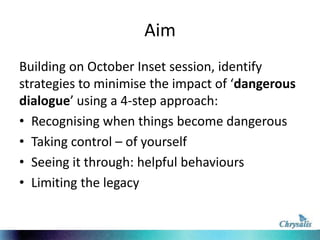
Aim
Identify strategies to minimise the impact of
‘dangerous dialogue’ – conversations that take
you unaware and stay with you long afterwards
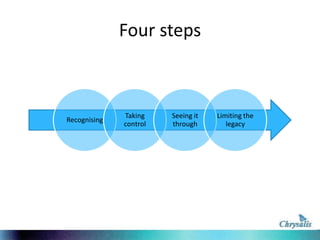
4-step approach:
• Recognising when things become dangerous
• Taking control – of yourself
• Seeing it through: helpful behaviours
• Limiting the legacy
‘Dangerous dialogue’
Dangerous

Dialogue

adj: able or likely to
cause harm or injury

n: conversation between
two or more people
conversation, talk
discussion, interchange,

likely to cause problems
or to have adverse
consequences
menacing, threatening,
hazardous, perilous

v: take part in a
conversation or discussion
to resolve a problem.
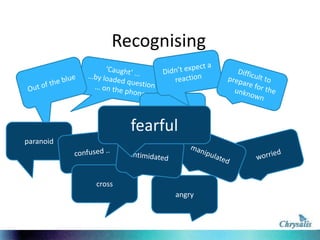
Recognising

Not in control

fearful
paranoid

cross
angry
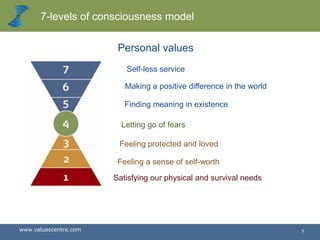
7-levels of consciousness model
Personal values
Self-less service
Making a positive difference in the world
Know and
Understand

Self-esteem

Finding meaning in existence
Letting go of fears

Love & Belonging

Feeling protected and loved

Safety

Feeling a sense of self-worth

Physiological

www.valuescentre.com

Satisfying our physical and survival needs

5
Fear …

What’s it for?
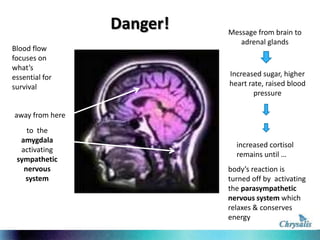
Danger!
Blood flow
focuses on
what’s
essential for
survival

Message from brain to
adrenal glands

Increased sugar, higher
heart rate, raised blood
pressure

away from here
to the
amygdala
activating
sympathetic
nervous
system

increased cortisol
remains until …
body’s reaction is
turned off by activating
the parasympathetic
nervous system which
relaxes & conserves
energy
What triggers your emotional
reaction?
• Individually spend a few minutes
listing situations/events that have
caused stress
• With a colleague, consider an
appropriate ‘antidote’
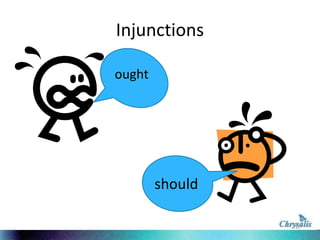
Injunctions
ought

should
10
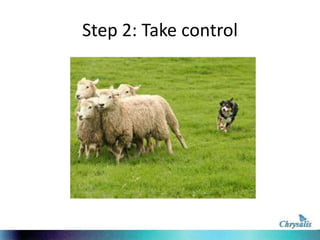
Step 2: Take control
Step 3: guiding the dialogue
Listen
Empathise
Establish what they want
Accept responsibility - carefully; apologise if
appropriate

Follow-up - if necessary and report back
‘No one can make you feel inferior without your
consent’
Eleanor Roosevelt
Step 4: Limiting the Legacy
• Process the event
• Identify the learning
• Let go
Identify and record helpful and unhelpful
practices. What will help you to use one rather
than the other?
Four steps

Recognising

Taking
control

Seeing it
through

Limiting the
legacy

Dealing with difficult dialogue

  • 1.
    Dealing with DangerousDialogue When conversations could turn critical Julia Steward www.chrysalisleadershipdevelopment.com
  • 2.
    Aim Identify strategies tominimise the impact of ‘dangerous dialogue’ – conversations that take you unaware and stay with you long afterwards 4-step approach: • Recognising when things become dangerous • Taking control – of yourself • Seeing it through: helpful behaviours • Limiting the legacy
  • 3.
    ‘Dangerous dialogue’ Dangerous Dialogue adj: ableor likely to cause harm or injury n: conversation between two or more people conversation, talk discussion, interchange, likely to cause problems or to have adverse consequences menacing, threatening, hazardous, perilous v: take part in a conversation or discussion to resolve a problem.
  • 4.
  • 5.
    7-levels of consciousnessmodel Personal values Self-less service Making a positive difference in the world Know and Understand Self-esteem Finding meaning in existence Letting go of fears Love & Belonging Feeling protected and loved Safety Feeling a sense of self-worth Physiological www.valuescentre.com Satisfying our physical and survival needs 5
  • 6.
  • 7.
    Danger! Blood flow focuses on what’s essentialfor survival Message from brain to adrenal glands Increased sugar, higher heart rate, raised blood pressure away from here to the amygdala activating sympathetic nervous system increased cortisol remains until … body’s reaction is turned off by activating the parasympathetic nervous system which relaxes & conserves energy
  • 8.
    What triggers youremotional reaction? • Individually spend a few minutes listing situations/events that have caused stress • With a colleague, consider an appropriate ‘antidote’
  • 10.
  • 11.
    Step 2: Takecontrol
  • 12.
    Step 3: guidingthe dialogue Listen Empathise Establish what they want Accept responsibility - carefully; apologise if appropriate Follow-up - if necessary and report back
  • 13.
    ‘No one canmake you feel inferior without your consent’ Eleanor Roosevelt
  • 14.
    Step 4: Limitingthe Legacy • Process the event • Identify the learning • Let go Identify and record helpful and unhelpful practices. What will help you to use one rather than the other?
  • 15.

Editor's Notes

  • #5 Comments from participants‘Logic goes out of the window when put on the spot’‘Difficult to manage professionalism when emotionally challenged’Stakes are high; you haven’t prepared (feedback suggested it was better when you had); emotions are triggeredAll down to the ‘amygdala’ – reacts ahead of our rational brain
  • #7 Keeps us safe – can also overwhelm us
  • #8 What’s going on in our brainsOften hear people saying ‘I didn’t even think’ or ‘I couldn’t think straight ‘ (losing your head)Cognitive stuff closes down (amygdala hijack) Emotions react before we have time to think (this is why we can become ‘unreasonable’ when we’re under stressStress can build up , so first encounter with stressful situation …..
  • #12 Purpose of antidote – to begin to take control – what else can you do?
  • #13 Summarise helpful behavioursUse acronym : try it out with each other in groupsRemember the mountain