
Collaborative Data Exploration using
Conversational AI
Anand Ranganathan
Co-Founder & Chief AI Officer
anand@unscrambl.com
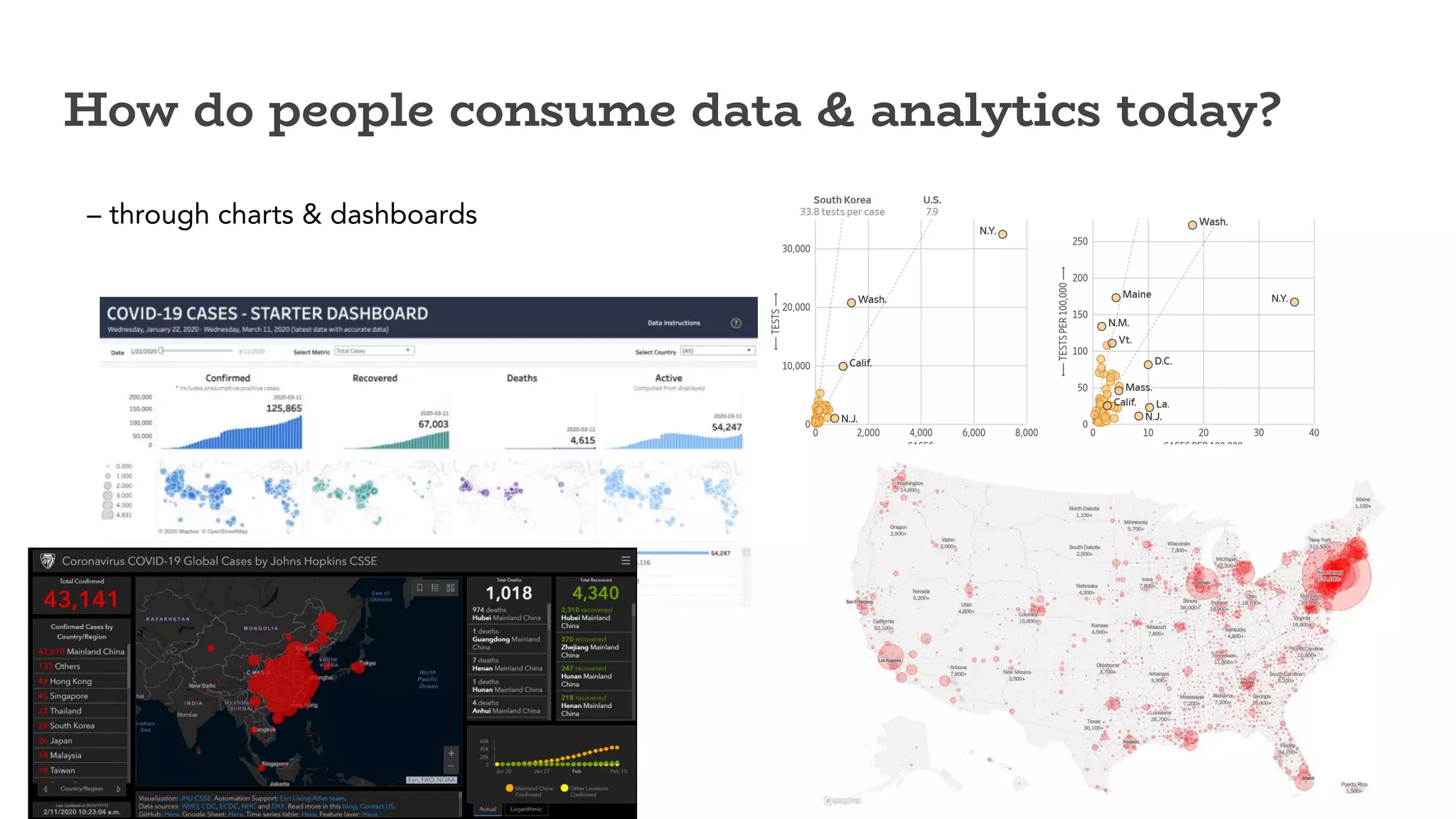
How do people consume data & analytics today?
– through charts & dashboards
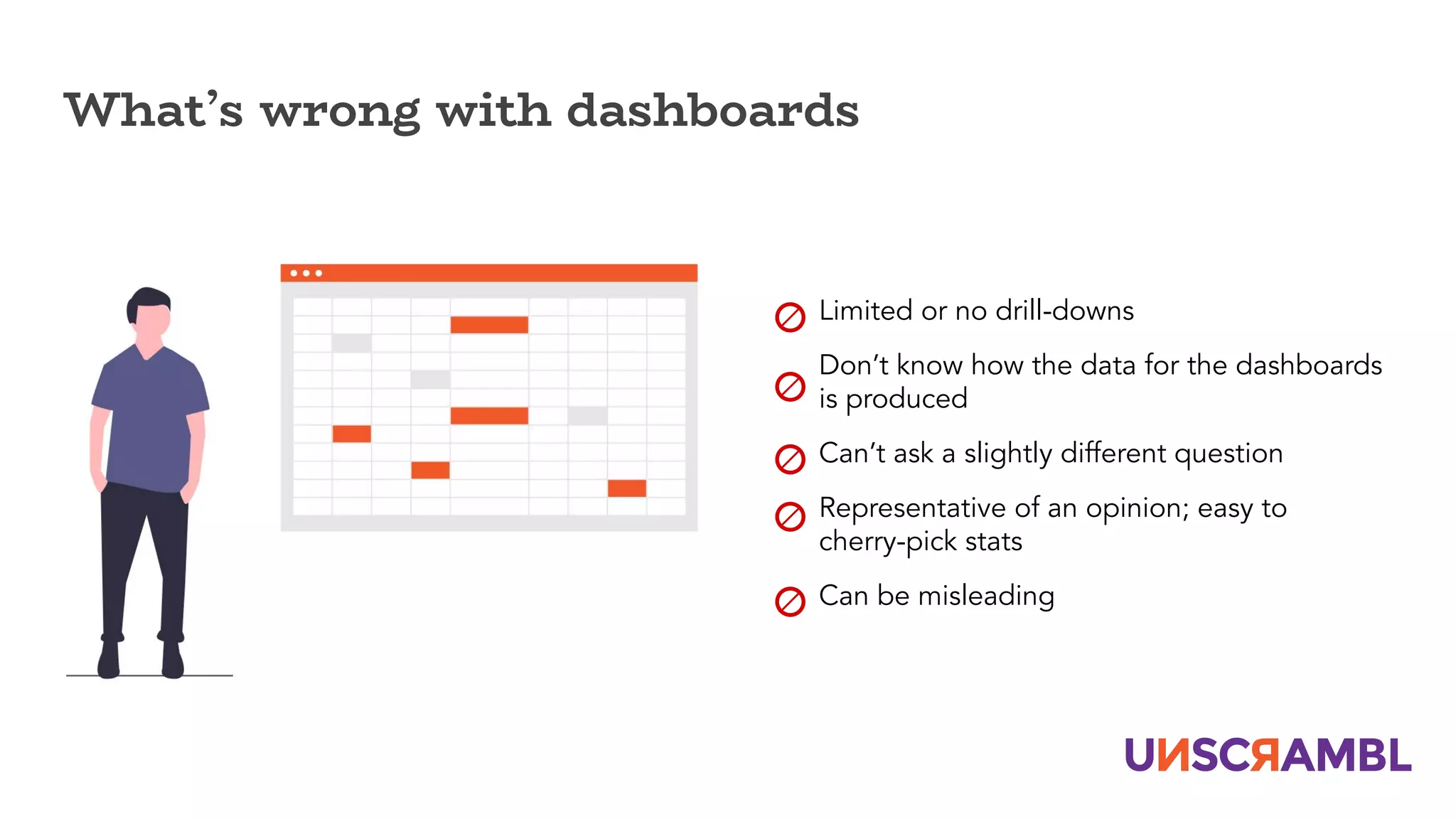
What’s wrong with dashboards
Limited or no drill-downs
Don’t know how the data for the dashboards
is produced
Can’t ask a slightly different question
Representative of an opinion; easy to
cherry-pick stats
Can be misleading
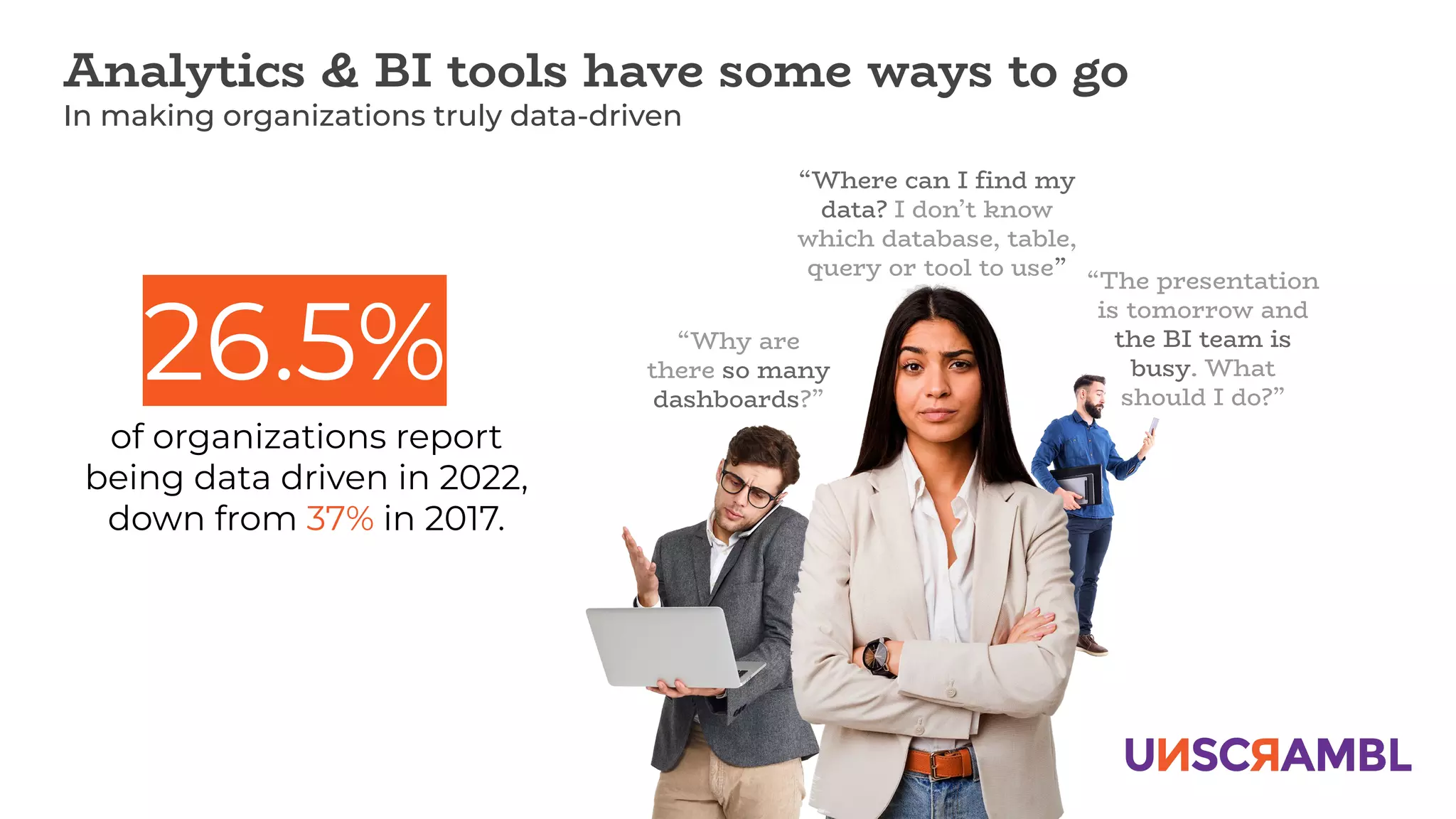
Analytics & BI tools have some ways to go
In making organizations truly data-driven
“Where can I find my
data? I don’t know
which database, table,
query or tool to use”
“The presentation
is tomorrow and
the BI team is
busy. What
should I do?”
“Why are
there so many
dashboards?”
26.5%
of organizations report
being data driven in 2022,
down from 37% in 2017.
Allow any user to ask text or voice questions of their data
and
receive back a natural language + visual analysis
of statistically relevant and actionable insights for that user.
What is Conversational Analytics?
*Note that in this talk, we focus on structured data stored in
relational format (e.g. SQL databases, Excel sheets, etc)
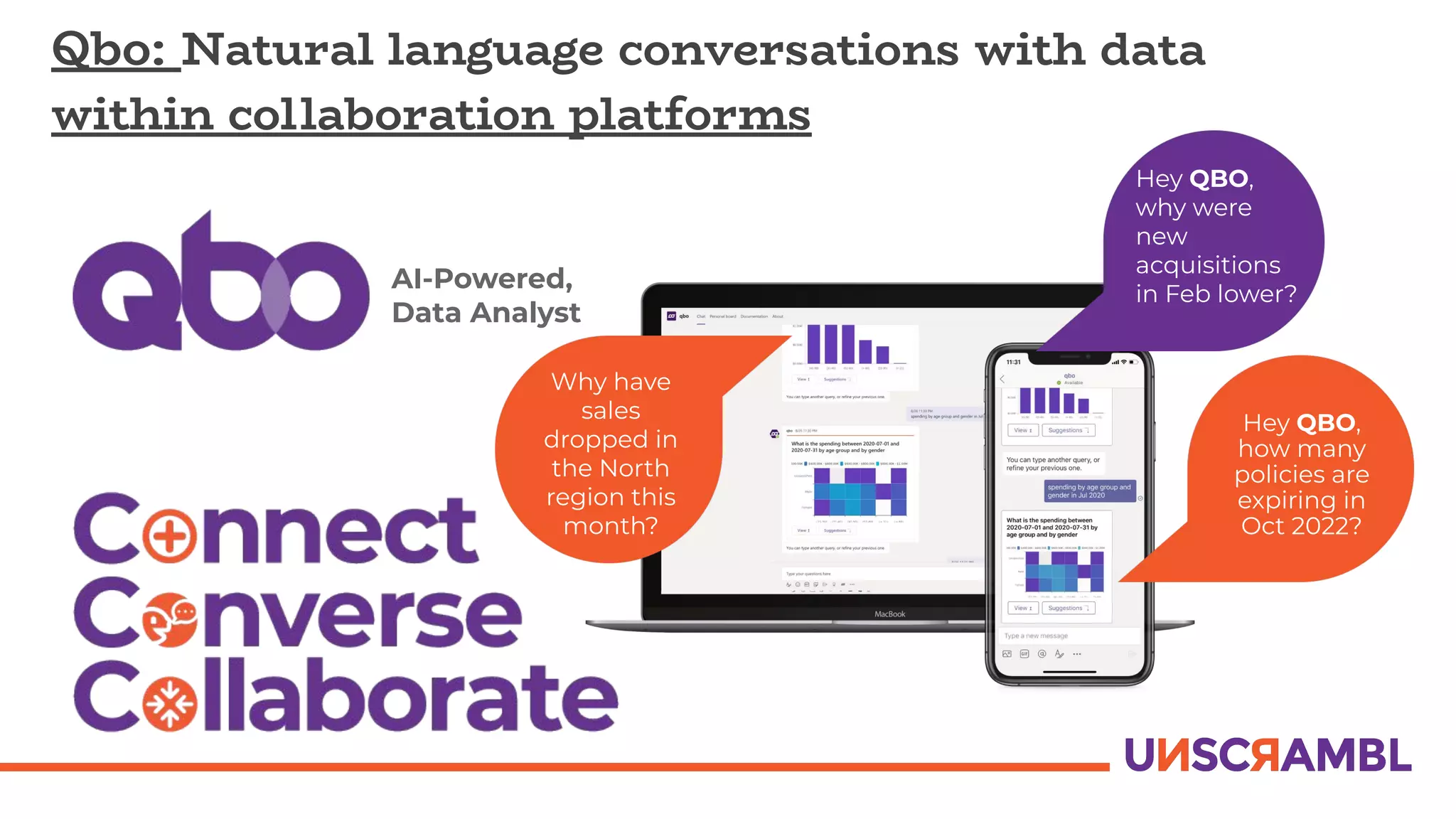
Qbo: Natural language conversations with data
within collaboration platforms
Hey QBO,
how many
policies are
expiring in
Oct 2022?
Hey QBO,
why were
new
acquisitions
in Feb lower?
Why have
sales
dropped in
the North
region this
month?
AI-Powered,
Data Analyst
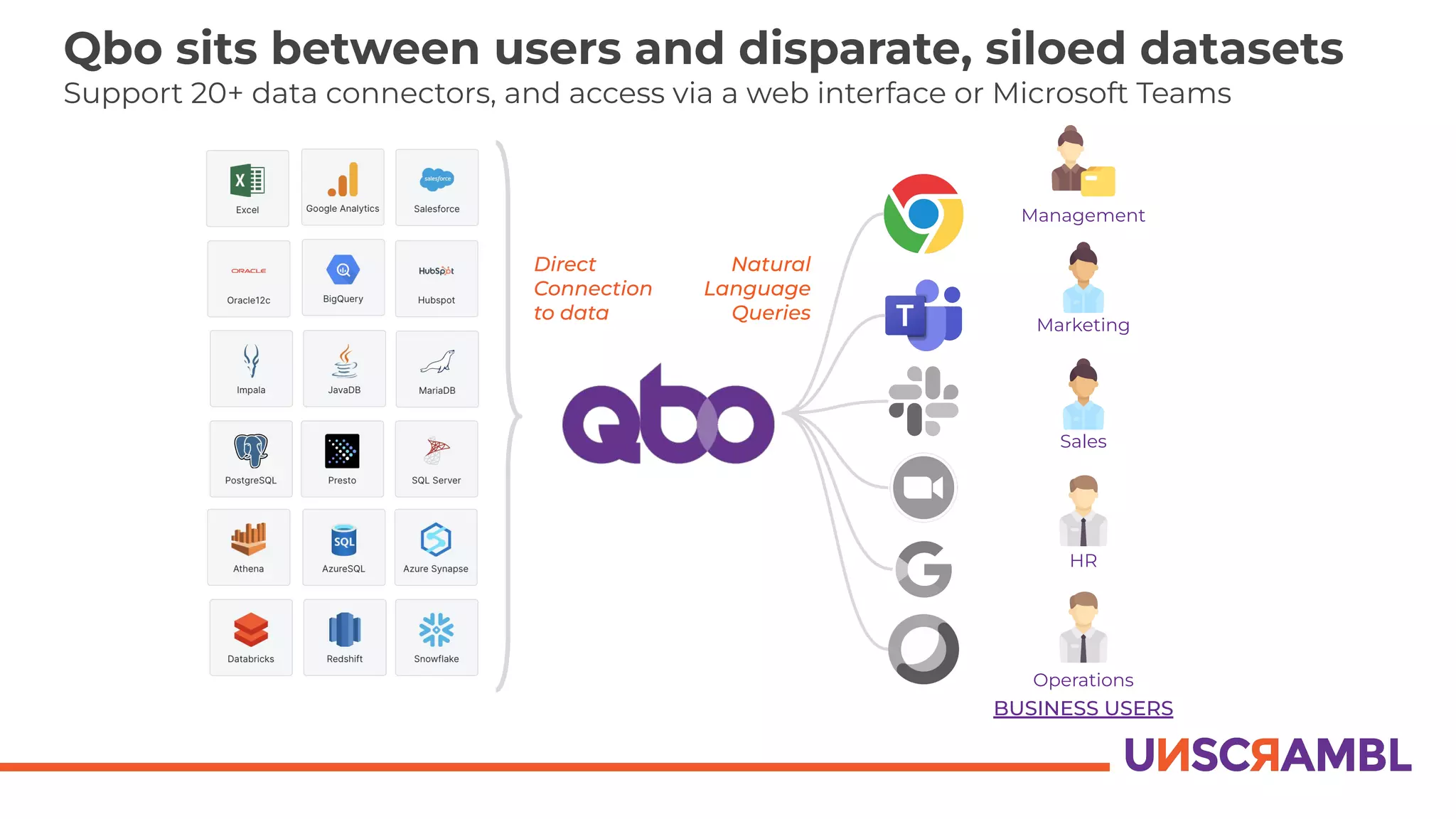
Direct
Connection
to data
Sales
Management
Marketing
Natural
Language
Queries
Operations
HR
BUSINESS USERS
Qbo sits between users and disparate, siloed datasets
Support 20+ data connectors, and access via a web interface or Microsoft Teams
Unscrambl Qbo Demo :
on Covid Data
Demo
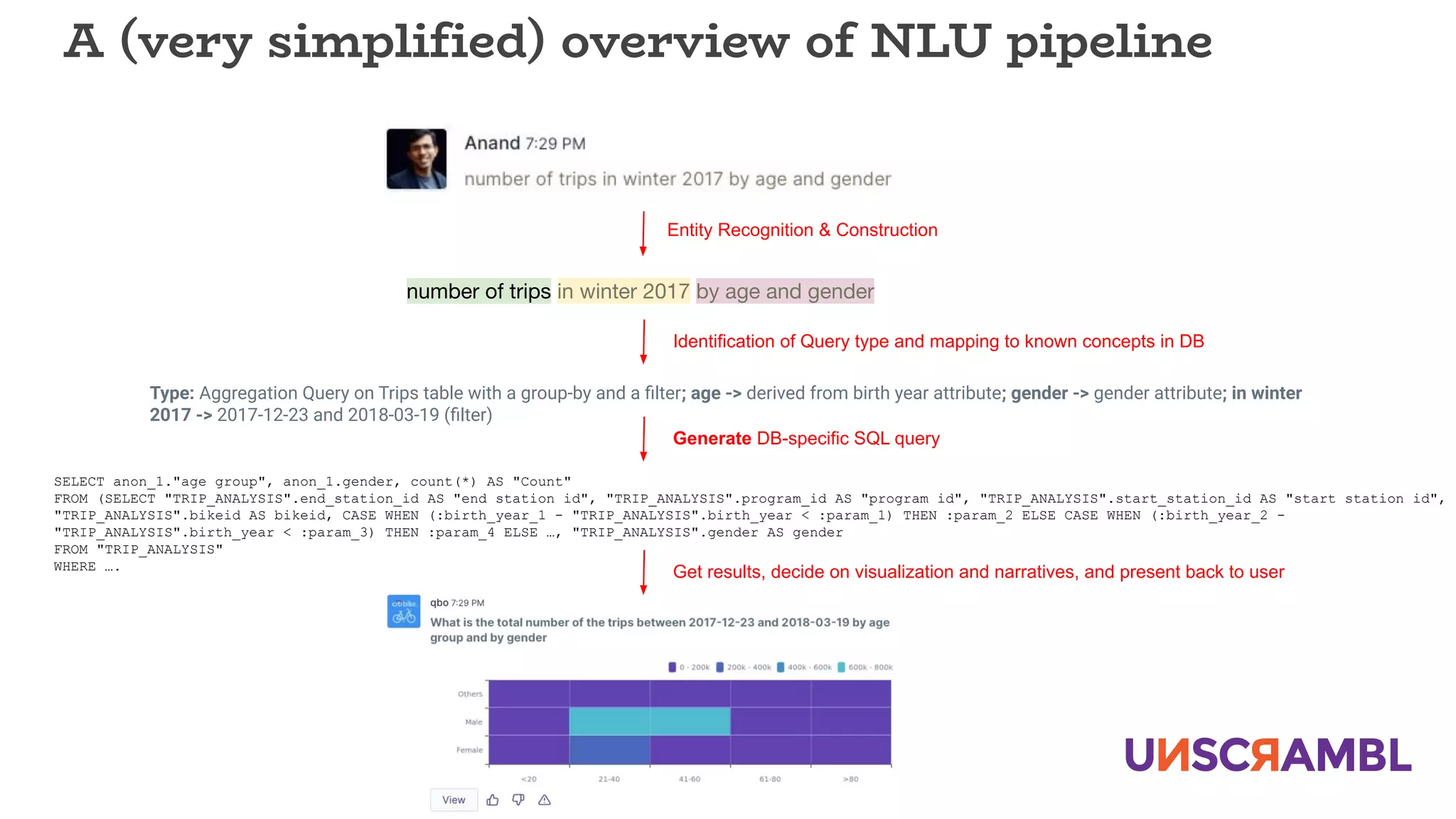
A (very simplified) overview of NLU pipeline
number of trips in winter 2017 by age and gender
Entity Recognition & Construction
SELECT anon_1."age group", anon_1.gender, count(*) AS "Count"
FROM (SELECT "TRIP_ANALYSIS".end_station_id AS "end station id", "TRIP_ANALYSIS".program_id AS "program id", "TRIP_ANALYSIS".start_station_id AS "start station id",
"TRIP_ANALYSIS".bikeid AS bikeid, CASE WHEN (:birth_year_1 - "TRIP_ANALYSIS".birth_year < :param_1) THEN :param_2 ELSE CASE WHEN (:birth_year_2 -
"TRIP_ANALYSIS".birth_year < :param_3) THEN :param_4 ELSE …, "TRIP_ANALYSIS".gender AS gender
FROM "TRIP_ANALYSIS"
WHERE ….
Identification of Query type and mapping to known concepts in DB
Type: Aggregation Query on Trips table with a group-by and a filter; age -> derived from birth year attribute; gender -> gender attribute; in winter
2017 -> 2017-12-23 and 2018-03-19 (filter)
Generate DB-specific SQL query
Get results, decide on visualization and narratives, and present back to user
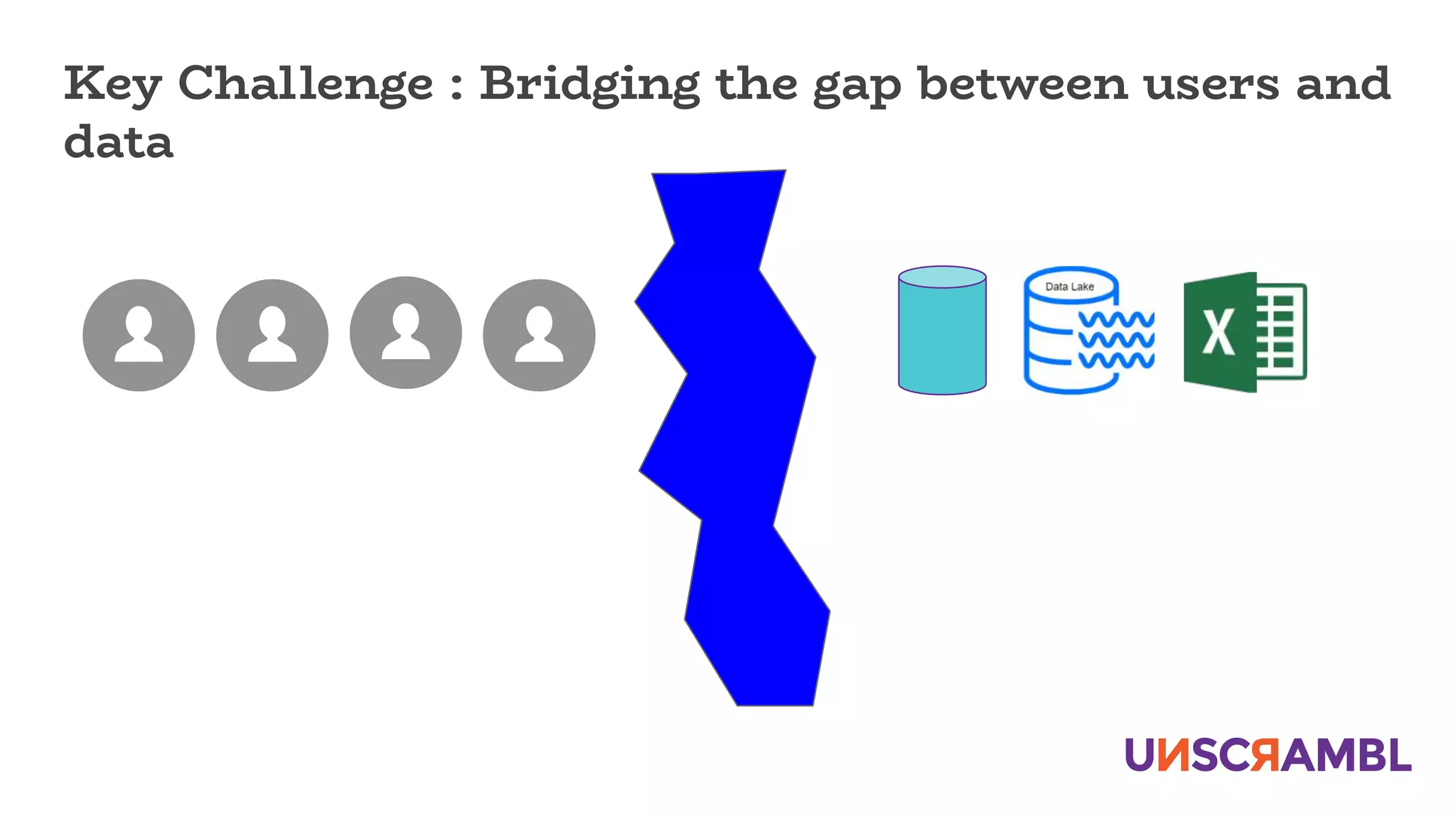
Key Challenge : Bridging the gap between users and
data
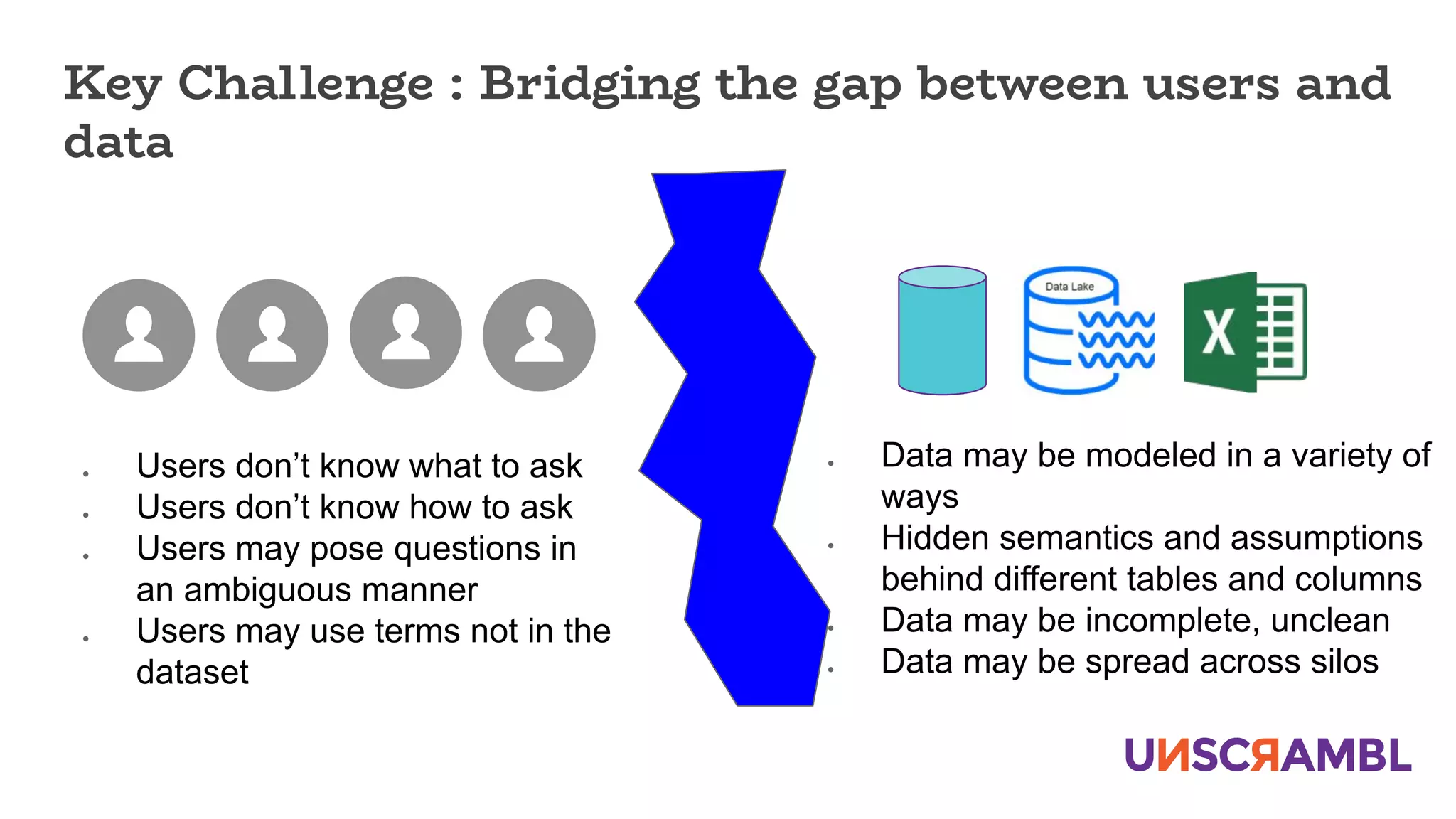
● Users don’t know what to ask
● Users don’t know how to ask
● Users may pose questions in
an ambiguous manner
● Users may use terms not in the
dataset
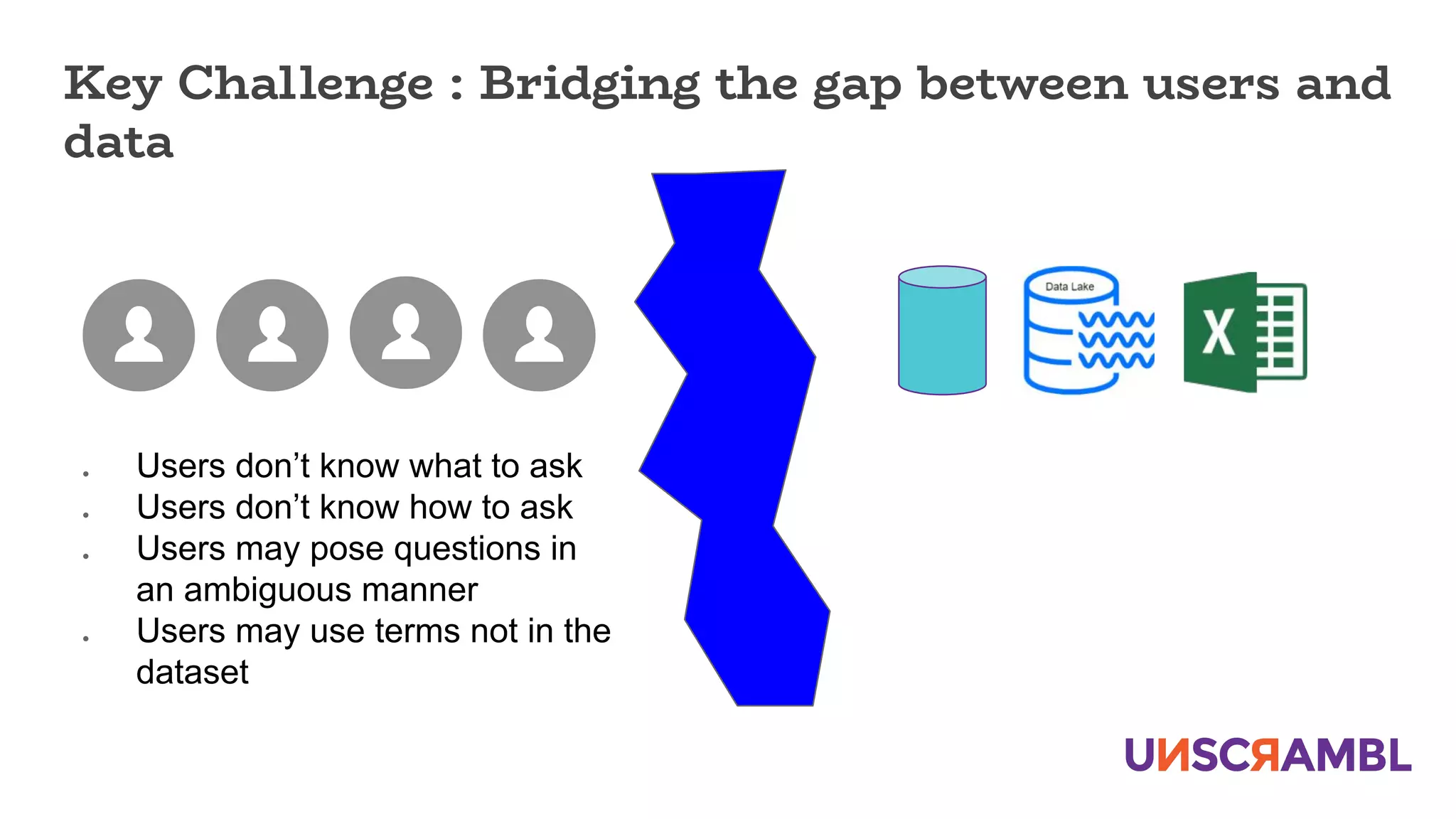
Key Challenge : Bridging the gap between users and
data
● Users don’t know what to ask
● Users don’t know how to ask
● Users may pose questions in
an ambiguous manner
● Users may use terms not in the
dataset
Key Challenge : Bridging the gap between users and
data
● Data may be modeled in a variety of
ways
● Hidden semantics and assumptions
behind different tables and columns
● Data may be incomplete, unclean
● Data may be spread across silos
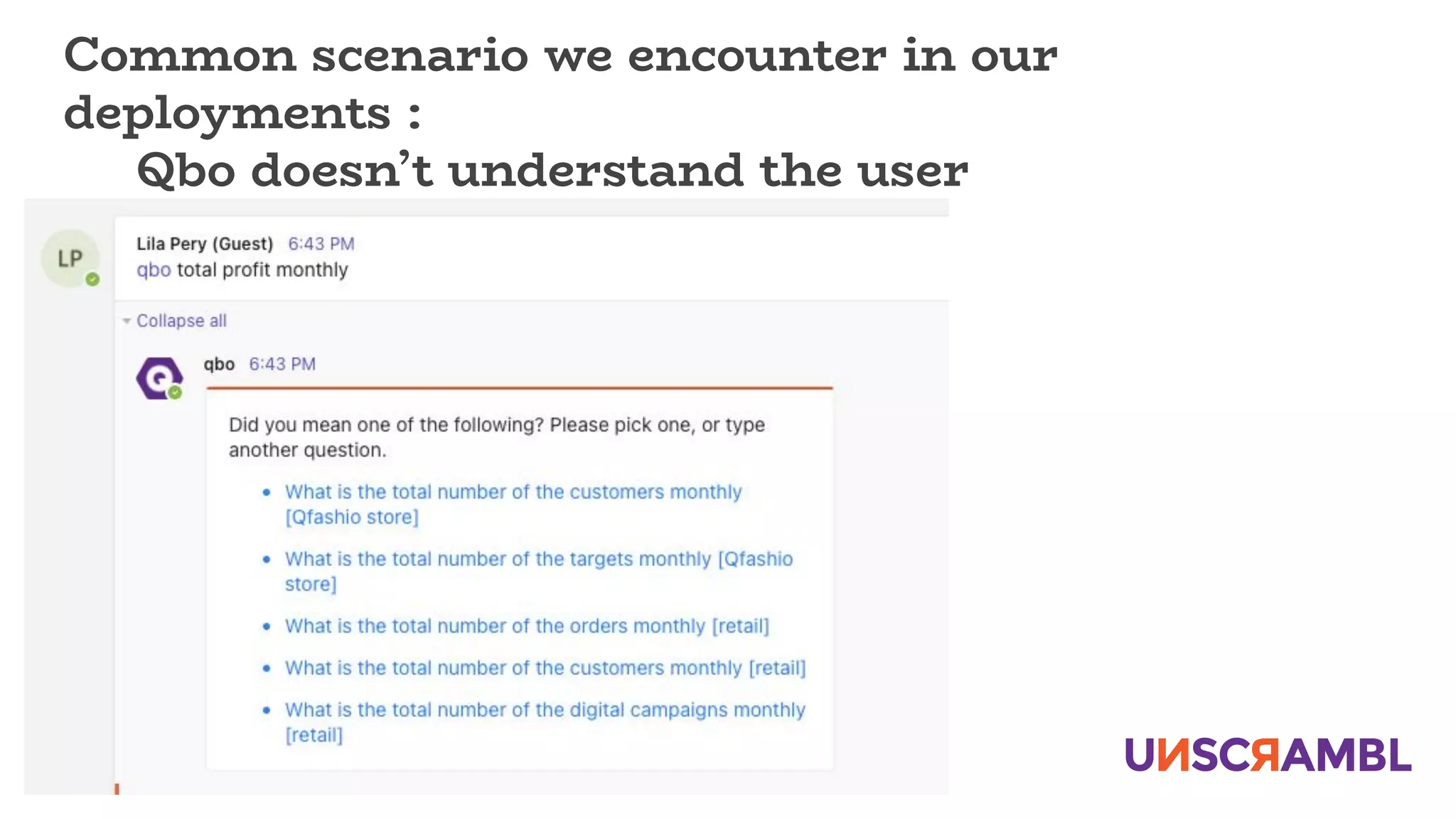
Common scenario we encounter in our
deployments :
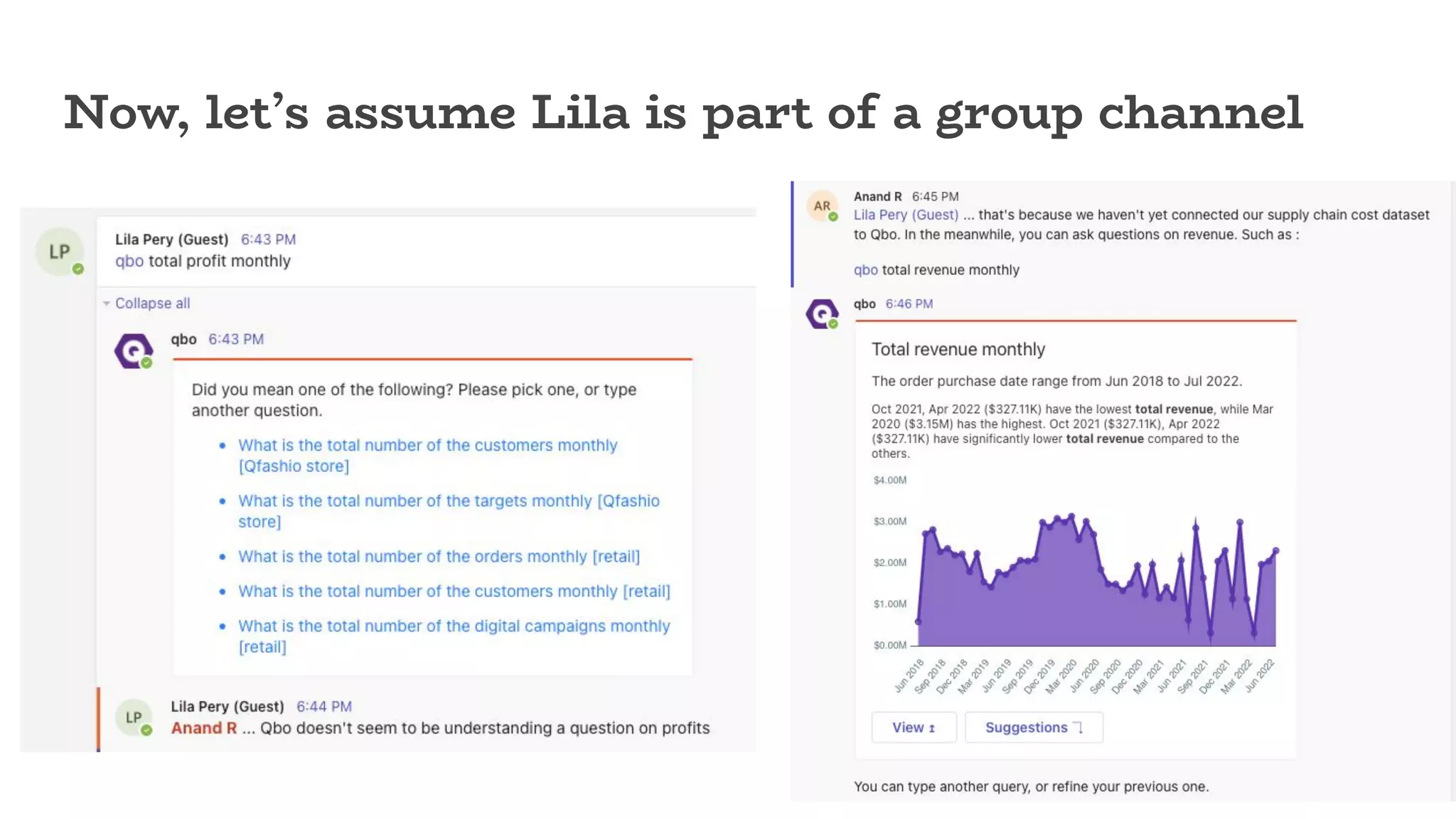
Qbo doesn’t understand the user
Now, let’s assume Lila is part of a group channel
Collaborative data exploration to the rescue
● Many organizations and teams contain people with different levels
of data skills
● In the past, the data-have-nots were dependent on the data-haves
● Conversational AI can help them collaborate. Allow the
data-have-nots serve themselves sometimes, and the data-haves
jump in when they can’t
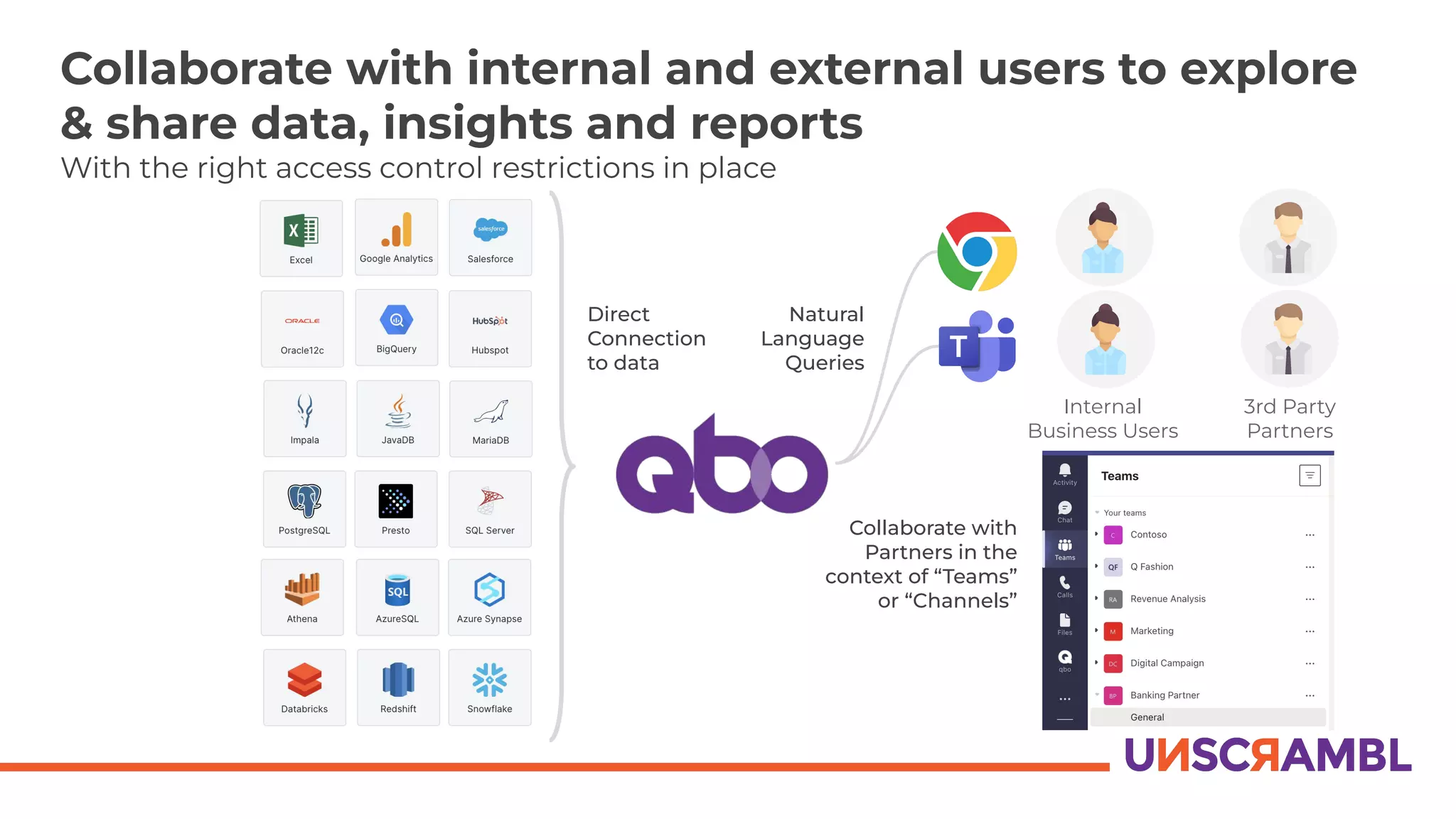
Direct
Connection
to data
Natural
Language
Queries
Collaborate with internal and external users to explore
& share data, insights and reports
With the right access control restrictions in place
Internal
Business Users
3rd Party
Partners
Collaborate with
Partners in the
context of “Teams”
or “Channels”
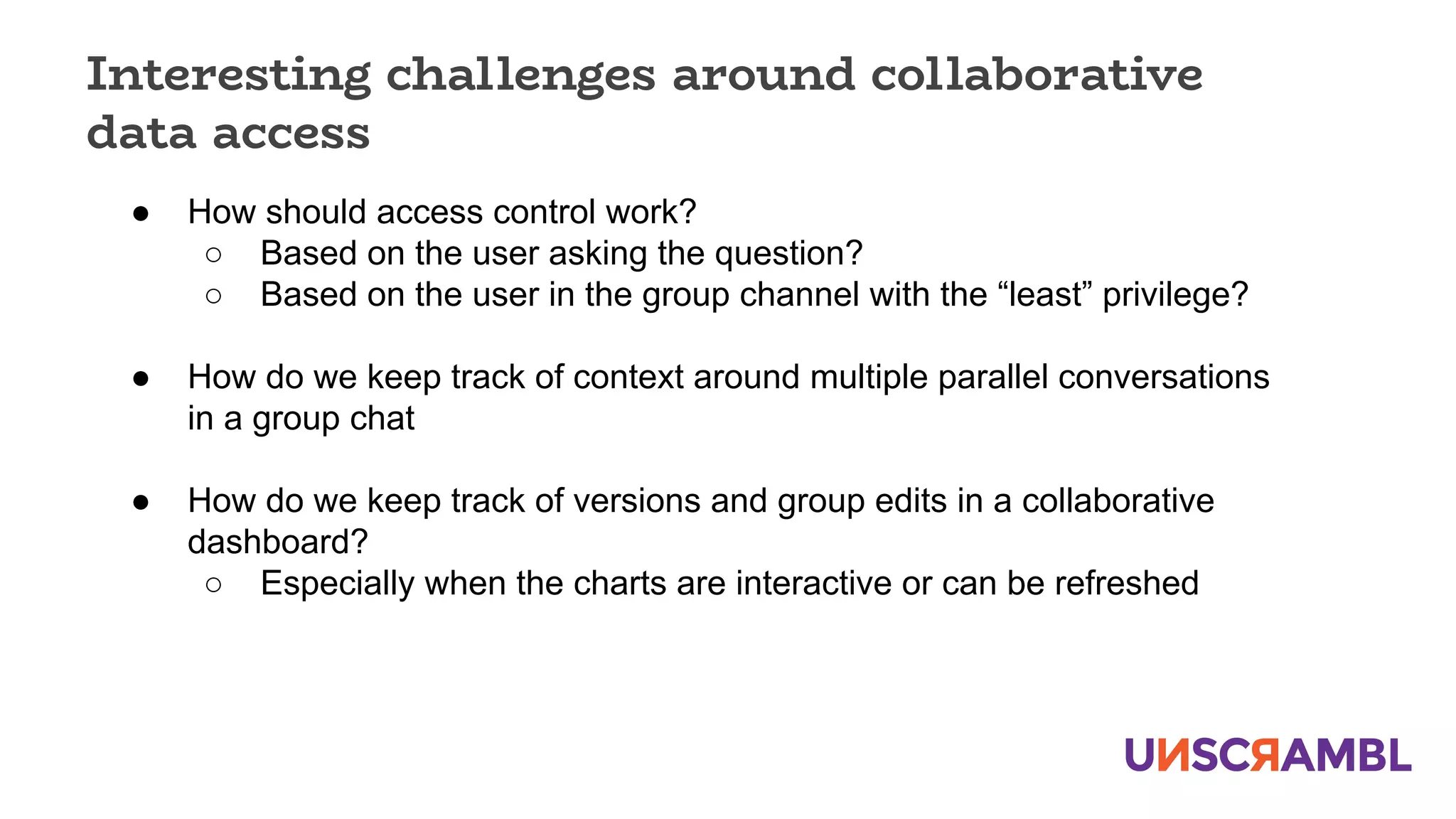
Interesting challenges around collaborative
data access
● How should access control work?
○ Based on the user asking the question?
○ Based on the user in the group channel with the “least” privilege?
● How do we keep track of context around multiple parallel conversations
in a group chat
● How do we keep track of versions and group edits in a collaborative
dashboard?
○ Especially when the charts are interactive or can be refreshed
Imagine…
#futureofwork
#futureofdata

Data Con LA 2022 - Collaborative Data Exploration using Conversational AI

  • 1.
    Collaborative Data Explorationusing Conversational AI Anand Ranganathan Co-Founder & Chief AI Officer anand@unscrambl.com
  • 2.
    How do peopleconsume data & analytics today? – through charts & dashboards
  • 3.
    What’s wrong withdashboards Limited or no drill-downs Don’t know how the data for the dashboards is produced Can’t ask a slightly different question Representative of an opinion; easy to cherry-pick stats Can be misleading
  • 4.
    Analytics & BItools have some ways to go In making organizations truly data-driven “Where can I find my data? I don’t know which database, table, query or tool to use” “The presentation is tomorrow and the BI team is busy. What should I do?” “Why are there so many dashboards?” 26.5% of organizations report being data driven in 2022, down from 37% in 2017.
  • 6.
    Allow any userto ask text or voice questions of their data and receive back a natural language + visual analysis of statistically relevant and actionable insights for that user. What is Conversational Analytics? *Note that in this talk, we focus on structured data stored in relational format (e.g. SQL databases, Excel sheets, etc)
  • 7.
    Qbo: Natural languageconversations with data within collaboration platforms Hey QBO, how many policies are expiring in Oct 2022? Hey QBO, why were new acquisitions in Feb lower? Why have sales dropped in the North region this month? AI-Powered, Data Analyst
  • 8.
    Direct Connection to data Sales Management Marketing Natural Language Queries Operations HR BUSINESS USERS Qbosits between users and disparate, siloed datasets Support 20+ data connectors, and access via a web interface or Microsoft Teams
  • 9.
    Unscrambl Qbo Demo: on Covid Data
  • 10.
  • 11.
    A (very simplified)overview of NLU pipeline number of trips in winter 2017 by age and gender Entity Recognition & Construction SELECT anon_1."age group", anon_1.gender, count(*) AS "Count" FROM (SELECT "TRIP_ANALYSIS".end_station_id AS "end station id", "TRIP_ANALYSIS".program_id AS "program id", "TRIP_ANALYSIS".start_station_id AS "start station id", "TRIP_ANALYSIS".bikeid AS bikeid, CASE WHEN (:birth_year_1 - "TRIP_ANALYSIS".birth_year < :param_1) THEN :param_2 ELSE CASE WHEN (:birth_year_2 - "TRIP_ANALYSIS".birth_year < :param_3) THEN :param_4 ELSE …, "TRIP_ANALYSIS".gender AS gender FROM "TRIP_ANALYSIS" WHERE …. Identification of Query type and mapping to known concepts in DB Type: Aggregation Query on Trips table with a group-by and a filter; age -> derived from birth year attribute; gender -> gender attribute; in winter 2017 -> 2017-12-23 and 2018-03-19 (filter) Generate DB-specific SQL query Get results, decide on visualization and narratives, and present back to user
  • 12.
    Key Challenge :Bridging the gap between users and data
  • 13.
    ● Users don’tknow what to ask ● Users don’t know how to ask ● Users may pose questions in an ambiguous manner ● Users may use terms not in the dataset Key Challenge : Bridging the gap between users and data
  • 14.
    ● Users don’tknow what to ask ● Users don’t know how to ask ● Users may pose questions in an ambiguous manner ● Users may use terms not in the dataset Key Challenge : Bridging the gap between users and data ● Data may be modeled in a variety of ways ● Hidden semantics and assumptions behind different tables and columns ● Data may be incomplete, unclean ● Data may be spread across silos
  • 15.
    Common scenario weencounter in our deployments : Qbo doesn’t understand the user
  • 16.
    Now, let’s assumeLila is part of a group channel
  • 17.
    Collaborative data explorationto the rescue ● Many organizations and teams contain people with different levels of data skills ● In the past, the data-have-nots were dependent on the data-haves ● Conversational AI can help them collaborate. Allow the data-have-nots serve themselves sometimes, and the data-haves jump in when they can’t
  • 18.
    Direct Connection to data Natural Language Queries Collaborate withinternal and external users to explore & share data, insights and reports With the right access control restrictions in place Internal Business Users 3rd Party Partners Collaborate with Partners in the context of “Teams” or “Channels”
  • 19.
    Interesting challenges aroundcollaborative data access ● How should access control work? ○ Based on the user asking the question? ○ Based on the user in the group channel with the “least” privilege? ● How do we keep track of context around multiple parallel conversations in a group chat ● How do we keep track of versions and group edits in a collaborative dashboard? ○ Especially when the charts are interactive or can be refreshed
  • 20.