1
2
By 2025, the landscape of global business has been fundamentally transformed, with data
analytics emerging as a non-negotiable imperative for success. Across diverse economic hubs,
from the bustling IT corridors of Noida and Delhi to the industrial heartlands of Kanpur and
Ludhiana, and the growing commercial centers like Moradabad, businesses are increasingly
relying on sophisticated data insights. The era of decision-making based solely on intuition is
rapidly receding, replaced by a strategic embrace of data-driven intelligence that fosters
precision, proactive measures, and enhanced profitability.
The Evolution of Insights: Beyond Historical Reporting
The understanding of data analytics has significantly matured. What was once predominantly a
tool for generating descriptive reports about past events has evolved into a dynamic, forward-
looking discipline. Its current integration with advanced technologies like Artificial Intelligence
(AI) and Machine Learning (ML) allows organizations to move beyond merely understanding
"what happened" to confidently predicting "what will happen" and prescribing "what should be
done."
 Predictive Capabilities: This aspect focuses on forecasting future trends and
probabilities by analyzing historical datasets. For instance, companies in the retail sector
across India now predict consumer demand fluctuations with impressive accuracy,
allowing for optimized inventory management and waste reduction.
 Prescriptive Recommendations: Building on predictive insights, prescriptive analytics
suggests optimal courses of action to achieve specific objectives. Supply chain
managers, for example, are leveraging this to identify the most efficient logistics routes,
while manufacturers employ it for predictive maintenance, anticipating equipment
failures to minimize costly downtime.
Core Areas Transformed by Data Analytics
The profound impact of data analytics in 2025 is evident across several critical business
functions.
Enhanced Customer Experiences Through Hyper-Personalization
In today's highly competitive environment, a deep understanding of individual customers is
paramount. Data analytics facilitates hyper-personalization, enabling businesses to tailor
products, services, and communications precisely to individual preferences.
 Targeted Engagement: Customer behavior data, including Browse history, purchase
patterns, and social media interactions, is analyzed to craft highly segmented and
personalized marketing campaigns. This strategy is being adopted by enterprises
throughout India, significantly boosting customer engagement and conversion rates.
 Customer-Centric Innovation: Insights gleaned from customer feedback and usage
data directly inform product development. This ensures that new offerings align with
actual market needs, reducing the risk of product failure and accelerating market
adoption.
 Superior Service Delivery: AI-powered chatbots, informed by extensive customer
interaction data, provide instant, personalized support. This efficiency leads to faster
issue resolution and improved overall customer satisfaction, thereby strengthening brand
loyalty.
3
Optimizing Operational Efficiency and Cost Reduction
Within organizations, data analytics is revolutionizing internal processes, leading to remarkable
improvements in efficiency and significant cost savings.
 Intelligent Supply Chains: Real-time tracking of goods, combined with predictive
analytics for demand forecasting, allows for agile adjustments in logistics and inventory.
This minimizes holding costs and ensures timely deliveries, a crucial factor for
companies with complex distribution networks spanning multiple cities and states.
 Strategic Resource Allocation: Human resource departments are increasingly utilizing
analytics to optimize workforce planning, identify skill gaps, and predict employee
attrition. This ensures the right talent is in the right place at the opportune moment,
fostering a more productive environment.
 Robust Fraud and Risk Management: In financial services, advanced analytical
models meticulously scrutinize transactions in real-time to identify anomalous patterns
indicative of fraud. This proactive stance saves substantial amounts annually and
protects the financial security of customers, a vital function in India's rapidly digitizing
economy.
Empowering Strategic Decision-Making and Innovation
The influence of data analytics on strategic planning has expanded dramatically. Leadership
teams no longer rely solely on intuition; major decisions are systematically supported by
rigorous data analysis.
 Uncovering Market Opportunities: By analyzing vast datasets, businesses can identify
nascent market trends and shifts in consumer sentiment much earlier. This agility allows
for rapid adaptation of business strategies, helping companies capitalize on emerging
opportunities.
 Gaining Competitive Advantage: Analytics provides deep insights into competitor
strategies, pricing models, and customer acquisition tactics. This intelligence is
invaluable for maintaining a competitive edge in dynamic markets.
 Accelerating Innovation Cycles: Experimentation and innovation are increasingly
data-driven. A/B testing, for example, is widely employed to validate new product
features or marketing approaches, ensuring that innovative efforts are guided by
measurable outcomes.
Emerging Trends and Future Directions in Data Analytics (2025)
The field of data analytics continues its rapid evolution, with several key trends shaping its
trajectory.
 Integration of AI and Machine Learning: The symbiotic relationship between data
analytics and AI/ML is perhaps the most defining trend. Automated Machine Learning
(AutoML) platforms enable quicker model deployment and iteration, making advanced
analytics more accessible. From pattern identification in customer data in Delhi to
optimizing manufacturing in Kanpur, AI is accelerating the pace of insight generation.
 Real-time Data Processing: The ability to process and analyze data as it is generated,
rather than in batches, has become essential. This facilitates instantaneous decision-
making, which is critical for sectors like e-commerce and financial trading. Businesses in
4
Ludhiana, Moradabad, and other industrial areas are adopting this for immediate quality
control and operational monitoring.
 Data Democratization and Literacy: Data is becoming accessible to a broader range
of personnel within organizations, extending beyond specialized data scientists. Self-
service analytics tools empower employees across various departments to derive
insights relevant to their roles. This shift necessitates improved data literacy across the
workforce, a skill actively being fostered through various educational programs
nationwide.
 Edge Analytics Adoption: With the proliferation of IoT devices, data processing is
increasingly being performed at the "edge" closer to the data source rather than relying
solely on centralized cloud infrastructure. This reduces latency and enhances security,
especially for critical real-time applications in smart cities and industrial IoT deployments.
 Emphasis on Data Governance and Ethics: As the volume and sensitivity of data
continue to grow, robust data governance frameworks and ethical considerations are
paramount. Companies are investing significantly in ensuring data quality, privacy, and
compliance with evolving regulations. Responsible data use is a major area of focus for
businesses across India.
The Indispensable Human Element: Skills and Professional Development
While technological advancements are powerful enablers, the human expertise required to wield
these tools remains critical. The demand for skilled data analytics professionals continues to
surge. These individuals possess a unique blend of technical proficiency, business acumen, and
sophisticated problem-solving capabilities.
To address this growing need, numerous educational institutions and training providers offer
specialized programs. For those seeking to launch or advance their careers in this dynamic
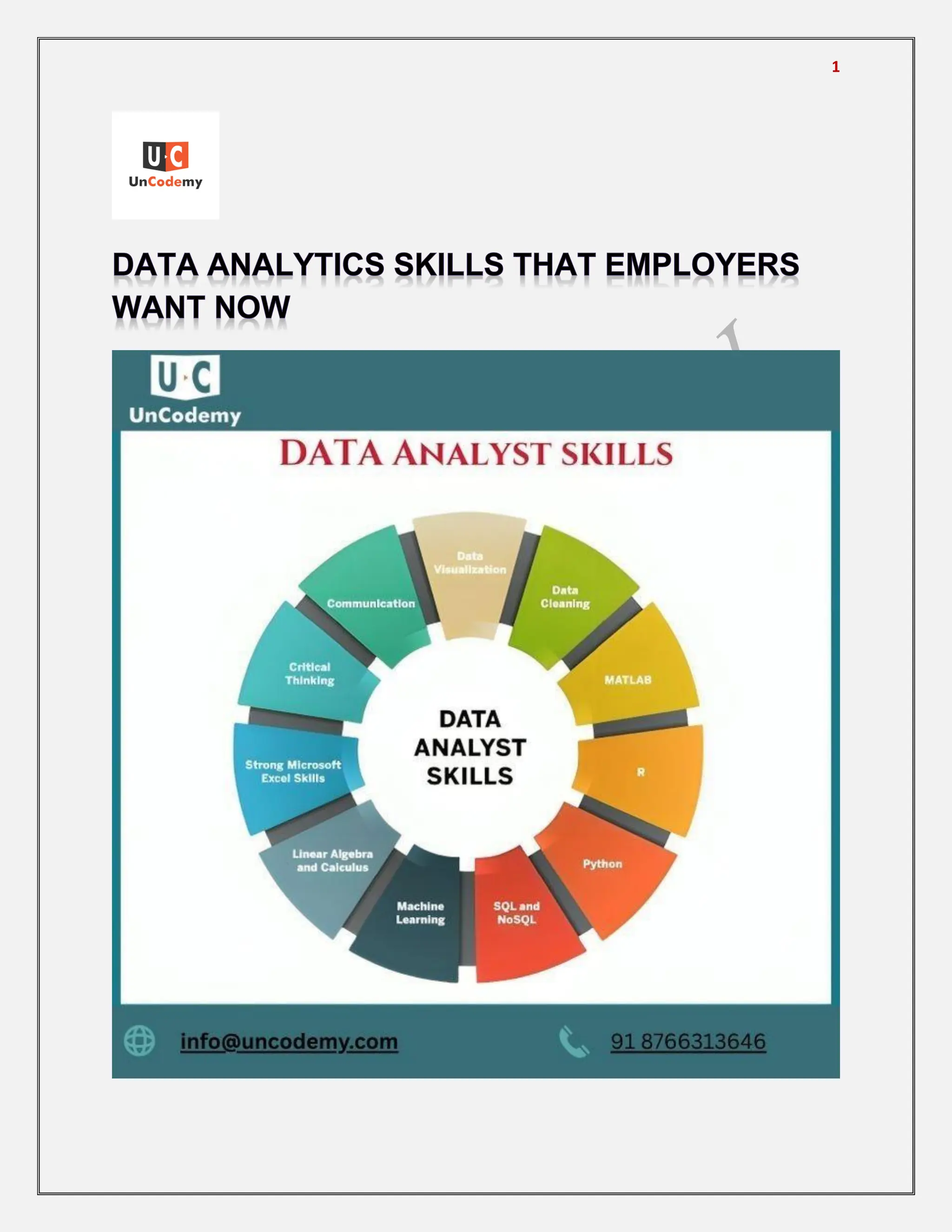
field, a Data Analytics Certification course in Delhi provides comprehensive training in
essential tools like SQL, Python, R, Tableau, and Power BI. Similar, high-quality programs are
available in other major cities like Noida, Kanpur, Ludhiana, and Moradabad, catering to
aspiring analysts across the nation. These courses emphasize practical, hands-on experience,
preparing students for real-world challenges. Beyond technical skills, such certifications often
incorporate modules on data storytelling, effective communication, and ethical considerations,
ensuring a well-rounded professional is developed. The availability of diverse learning formats,
from online modules to intensive bootcamps, ensures accessibility for learners throughout India.
Illustrative Examples of Transformation
The transformative power of data analytics is evident across numerous industries:
 Retail Sector: Personalized product recommendations, optimized pricing strategies, and
efficient inventory management are direct outcomes of advanced analytics. A prominent
e-commerce platform operating extensively across various Indian cities leveraged data
to accurately predict fashion trends, resulting in a significant reduction in unsold
inventory and increased customer satisfaction.
 Healthcare Industry: Predictive analytics is being employed to forecast disease
outbreaks, personalize patient treatment plans, and optimize hospital resource
allocation. In several healthcare facilities, the analysis of patient data has led to more
precise diagnoses and improved patient outcomes.
5
 Manufacturing Domain: Sensor data from industrial machinery is continuously
analyzed for predictive maintenance, minimizing downtime and extending equipment
lifespan. A manufacturing unit near Kanpur reported a substantial increase in operational
uptime after implementing a data-driven predictive maintenance system.
 Financial Services: Real-time fraud detection systems, sophisticated risk assessment
models, and personalized financial product recommendations are all powered by
advanced data analytics. Banks in metropolitan areas like Delhi and Mumbai are at the
forefront of this transformation, enhancing security and tailoring offerings to individual
clients.
Charting the Future Course
In 2025, data analytics is no longer a specialized technological function; it is intrinsically woven
into the operational fabric of every successful business. Organizations that cultivate a data-
driven culture demonstrate greater agility, efficiency, and innovation. The competitive landscape
will continue to be shaped by those entities that can effectively leverage their data assets. For
professionals, acquiring and refining analytical competencies will be crucial for navigating this
data-centric future and contributing to the ongoing reshaping of the business world. The ability
to extract meaningful insights, communicate compelling data narratives, and drive strategic
action will ultimately define the successful enterprises and individuals of tomorrow.

DATA ANALYTICS SKILLS THAT EMPLOYERS WANT NOW.pdf

  • 1.
  • 2.
    2 By 2025, thelandscape of global business has been fundamentally transformed, with data analytics emerging as a non-negotiable imperative for success. Across diverse economic hubs, from the bustling IT corridors of Noida and Delhi to the industrial heartlands of Kanpur and Ludhiana, and the growing commercial centers like Moradabad, businesses are increasingly relying on sophisticated data insights. The era of decision-making based solely on intuition is rapidly receding, replaced by a strategic embrace of data-driven intelligence that fosters precision, proactive measures, and enhanced profitability. The Evolution of Insights: Beyond Historical Reporting The understanding of data analytics has significantly matured. What was once predominantly a tool for generating descriptive reports about past events has evolved into a dynamic, forward- looking discipline. Its current integration with advanced technologies like Artificial Intelligence (AI) and Machine Learning (ML) allows organizations to move beyond merely understanding "what happened" to confidently predicting "what will happen" and prescribing "what should be done."  Predictive Capabilities: This aspect focuses on forecasting future trends and probabilities by analyzing historical datasets. For instance, companies in the retail sector across India now predict consumer demand fluctuations with impressive accuracy, allowing for optimized inventory management and waste reduction.  Prescriptive Recommendations: Building on predictive insights, prescriptive analytics suggests optimal courses of action to achieve specific objectives. Supply chain managers, for example, are leveraging this to identify the most efficient logistics routes, while manufacturers employ it for predictive maintenance, anticipating equipment failures to minimize costly downtime. Core Areas Transformed by Data Analytics The profound impact of data analytics in 2025 is evident across several critical business functions. Enhanced Customer Experiences Through Hyper-Personalization In today's highly competitive environment, a deep understanding of individual customers is paramount. Data analytics facilitates hyper-personalization, enabling businesses to tailor products, services, and communications precisely to individual preferences.  Targeted Engagement: Customer behavior data, including Browse history, purchase patterns, and social media interactions, is analyzed to craft highly segmented and personalized marketing campaigns. This strategy is being adopted by enterprises throughout India, significantly boosting customer engagement and conversion rates.  Customer-Centric Innovation: Insights gleaned from customer feedback and usage data directly inform product development. This ensures that new offerings align with actual market needs, reducing the risk of product failure and accelerating market adoption.  Superior Service Delivery: AI-powered chatbots, informed by extensive customer interaction data, provide instant, personalized support. This efficiency leads to faster issue resolution and improved overall customer satisfaction, thereby strengthening brand loyalty.
  • 3.
    3 Optimizing Operational Efficiencyand Cost Reduction Within organizations, data analytics is revolutionizing internal processes, leading to remarkable improvements in efficiency and significant cost savings.  Intelligent Supply Chains: Real-time tracking of goods, combined with predictive analytics for demand forecasting, allows for agile adjustments in logistics and inventory. This minimizes holding costs and ensures timely deliveries, a crucial factor for companies with complex distribution networks spanning multiple cities and states.  Strategic Resource Allocation: Human resource departments are increasingly utilizing analytics to optimize workforce planning, identify skill gaps, and predict employee attrition. This ensures the right talent is in the right place at the opportune moment, fostering a more productive environment.  Robust Fraud and Risk Management: In financial services, advanced analytical models meticulously scrutinize transactions in real-time to identify anomalous patterns indicative of fraud. This proactive stance saves substantial amounts annually and protects the financial security of customers, a vital function in India's rapidly digitizing economy. Empowering Strategic Decision-Making and Innovation The influence of data analytics on strategic planning has expanded dramatically. Leadership teams no longer rely solely on intuition; major decisions are systematically supported by rigorous data analysis.  Uncovering Market Opportunities: By analyzing vast datasets, businesses can identify nascent market trends and shifts in consumer sentiment much earlier. This agility allows for rapid adaptation of business strategies, helping companies capitalize on emerging opportunities.  Gaining Competitive Advantage: Analytics provides deep insights into competitor strategies, pricing models, and customer acquisition tactics. This intelligence is invaluable for maintaining a competitive edge in dynamic markets.  Accelerating Innovation Cycles: Experimentation and innovation are increasingly data-driven. A/B testing, for example, is widely employed to validate new product features or marketing approaches, ensuring that innovative efforts are guided by measurable outcomes. Emerging Trends and Future Directions in Data Analytics (2025) The field of data analytics continues its rapid evolution, with several key trends shaping its trajectory.  Integration of AI and Machine Learning: The symbiotic relationship between data analytics and AI/ML is perhaps the most defining trend. Automated Machine Learning (AutoML) platforms enable quicker model deployment and iteration, making advanced analytics more accessible. From pattern identification in customer data in Delhi to optimizing manufacturing in Kanpur, AI is accelerating the pace of insight generation.  Real-time Data Processing: The ability to process and analyze data as it is generated, rather than in batches, has become essential. This facilitates instantaneous decision- making, which is critical for sectors like e-commerce and financial trading. Businesses in
  • 4.
    4 Ludhiana, Moradabad, andother industrial areas are adopting this for immediate quality control and operational monitoring.  Data Democratization and Literacy: Data is becoming accessible to a broader range of personnel within organizations, extending beyond specialized data scientists. Self- service analytics tools empower employees across various departments to derive insights relevant to their roles. This shift necessitates improved data literacy across the workforce, a skill actively being fostered through various educational programs nationwide.  Edge Analytics Adoption: With the proliferation of IoT devices, data processing is increasingly being performed at the "edge" closer to the data source rather than relying solely on centralized cloud infrastructure. This reduces latency and enhances security, especially for critical real-time applications in smart cities and industrial IoT deployments.  Emphasis on Data Governance and Ethics: As the volume and sensitivity of data continue to grow, robust data governance frameworks and ethical considerations are paramount. Companies are investing significantly in ensuring data quality, privacy, and compliance with evolving regulations. Responsible data use is a major area of focus for businesses across India. The Indispensable Human Element: Skills and Professional Development While technological advancements are powerful enablers, the human expertise required to wield these tools remains critical. The demand for skilled data analytics professionals continues to surge. These individuals possess a unique blend of technical proficiency, business acumen, and sophisticated problem-solving capabilities. To address this growing need, numerous educational institutions and training providers offer specialized programs. For those seeking to launch or advance their careers in this dynamic field, a Data Analytics Certification course in Delhi provides comprehensive training in essential tools like SQL, Python, R, Tableau, and Power BI. Similar, high-quality programs are available in other major cities like Noida, Kanpur, Ludhiana, and Moradabad, catering to aspiring analysts across the nation. These courses emphasize practical, hands-on experience, preparing students for real-world challenges. Beyond technical skills, such certifications often incorporate modules on data storytelling, effective communication, and ethical considerations, ensuring a well-rounded professional is developed. The availability of diverse learning formats, from online modules to intensive bootcamps, ensures accessibility for learners throughout India. Illustrative Examples of Transformation The transformative power of data analytics is evident across numerous industries:  Retail Sector: Personalized product recommendations, optimized pricing strategies, and efficient inventory management are direct outcomes of advanced analytics. A prominent e-commerce platform operating extensively across various Indian cities leveraged data to accurately predict fashion trends, resulting in a significant reduction in unsold inventory and increased customer satisfaction.  Healthcare Industry: Predictive analytics is being employed to forecast disease outbreaks, personalize patient treatment plans, and optimize hospital resource allocation. In several healthcare facilities, the analysis of patient data has led to more precise diagnoses and improved patient outcomes.
  • 5.
    5  Manufacturing Domain:Sensor data from industrial machinery is continuously analyzed for predictive maintenance, minimizing downtime and extending equipment lifespan. A manufacturing unit near Kanpur reported a substantial increase in operational uptime after implementing a data-driven predictive maintenance system.  Financial Services: Real-time fraud detection systems, sophisticated risk assessment models, and personalized financial product recommendations are all powered by advanced data analytics. Banks in metropolitan areas like Delhi and Mumbai are at the forefront of this transformation, enhancing security and tailoring offerings to individual clients. Charting the Future Course In 2025, data analytics is no longer a specialized technological function; it is intrinsically woven into the operational fabric of every successful business. Organizations that cultivate a data- driven culture demonstrate greater agility, efficiency, and innovation. The competitive landscape will continue to be shaped by those entities that can effectively leverage their data assets. For professionals, acquiring and refining analytical competencies will be crucial for navigating this data-centric future and contributing to the ongoing reshaping of the business world. The ability to extract meaningful insights, communicate compelling data narratives, and drive strategic action will ultimately define the successful enterprises and individuals of tomorrow.