Pharmacotherapy of
Cutaneous Leishmaniasis
Dr. Karabi Adak
MBBS, MD
---Kala azar is a deadly disease caused by the parasitic
protozoa Leishmania donovani and transmitted to
humans by the bite of infected female sand fly,
Phlebotomus argentipes.
Historical Landmarks of kala-azar & its Indian
connection-
■ The name ‘Kala-azar’ came from Sanskrit.
■ ‘Delhi boil’---- for cutaneous form of Leishmaniasis.
■ Kala-azar in Assam (Assam fever)- was first identified
by Clarke in 1882.
■ McNaught, a Civil Medical Officer of Tura,of Garo Hills
district in Assam called this disease ‘Kala-hazar’.
■ William B. Leishman reported in 1900, of peculiar bodies in the
spleen pulp of a soldier who died of Dum-Dum Fever at Netely
Hospital.
■ Published in British Medical Journal in 1903 “On the Possibility of
the Occurrence of Trypanosomiasis in India”
■ In July 1903, Charles Donovan reported the finding of similar
bodies from the spleen of patients suffering from prolonged fever
with splenomegaly in Madras. described them as new parasite not
Trypanosomiasis.
■ The link between these organisms and kala azar was eventually
discovered by Ronald Ross----named them as Leishmania
donovani in November,1903.
Kala-Azar: The Indian Scenario
■ In India, it is a serious problem in Bihar, West Bengal
and eastern Uttar Pradesh.
■ Lymphadenopathy is a major presenting feature in
India.
■ The widespread co-existence of malaria and kala-
azar in India---- difficulty in diagnosis and treatment.
■ Organism developing resistance to antimony
compounds (main drug for treatment) in India.
Life Cycle
Cutaneous Leishmaniasis: Epidemiology
■ There are 1-1.5 million cases of cutaneous leishmaniasis
reported yearly world wide. There has been a sharp increase
in recorded cases over the last 10 years.
■ More than 90% of cutaneous disease occurs in Afghanistan,
Peru, Brazil, Iran, Saudi Arabia and Syria.
---Epidemiology of visceral leishmaniasis in India. Bora D. Helminthology Division, National Institute of Communicable Diseases, New
Delhi, India. Natl Med J India. 1999 Mar-Apr;12(2):62-8.
■ Old World Leishmaniasis ---India/Middle
East/Africa.
--- benign, self-limiting
■ New World Leishmaniasis ---Latin America/North
America/Europe
---Broad spectrum of
conditions benign to
severe
manifestations,
including mucosal
involvement.
---Complexity of Treating New World Cutaneous Leishmaniasis. Byron Arana; Center for Health Studies. Universidad del Valle – Guatemala,
Prevalence of Leishmaniasis
*2018, Lancet
■ Cutaneous Leishmaniasis----- often self-limiting, can result
in significant scarring / invasive, mucocutaneous disease.
Therefore, treatment may be considered to prevent these
complications.
■ Cutaneous leishmaniasis -----L. major & L.tropica
■ Visceral leishmaniasis ---L. infantum & L donovani
Risk Factors For Cutaneous Leishmaniasis
■ Rural >> urban.
■ Ecologic region: rainforests to arid regions.
■ Dusk to dawn (sand flies typically feed / bite at night and
during twilight hours). Sand flies do not make noise, they are
small (one-third the size of mosquitoes), and their bites might
not be noticed.
■ Travelers like ecotourists, adventure travelers, bird watchers,
soldiers, construction workers.
Clinical Presentation:
■ Skin lesions---occur weeks/ months after exposure.
■ Small papules to nodular plaques, ulcer, can be covered with
scales /crust. The lesions usually----painless / painful (if
infected)
■ Satellite lesions, regional lymphadenopathy.
■ The lesions heal eventually, even without treatment------
ultimately result in scarring.
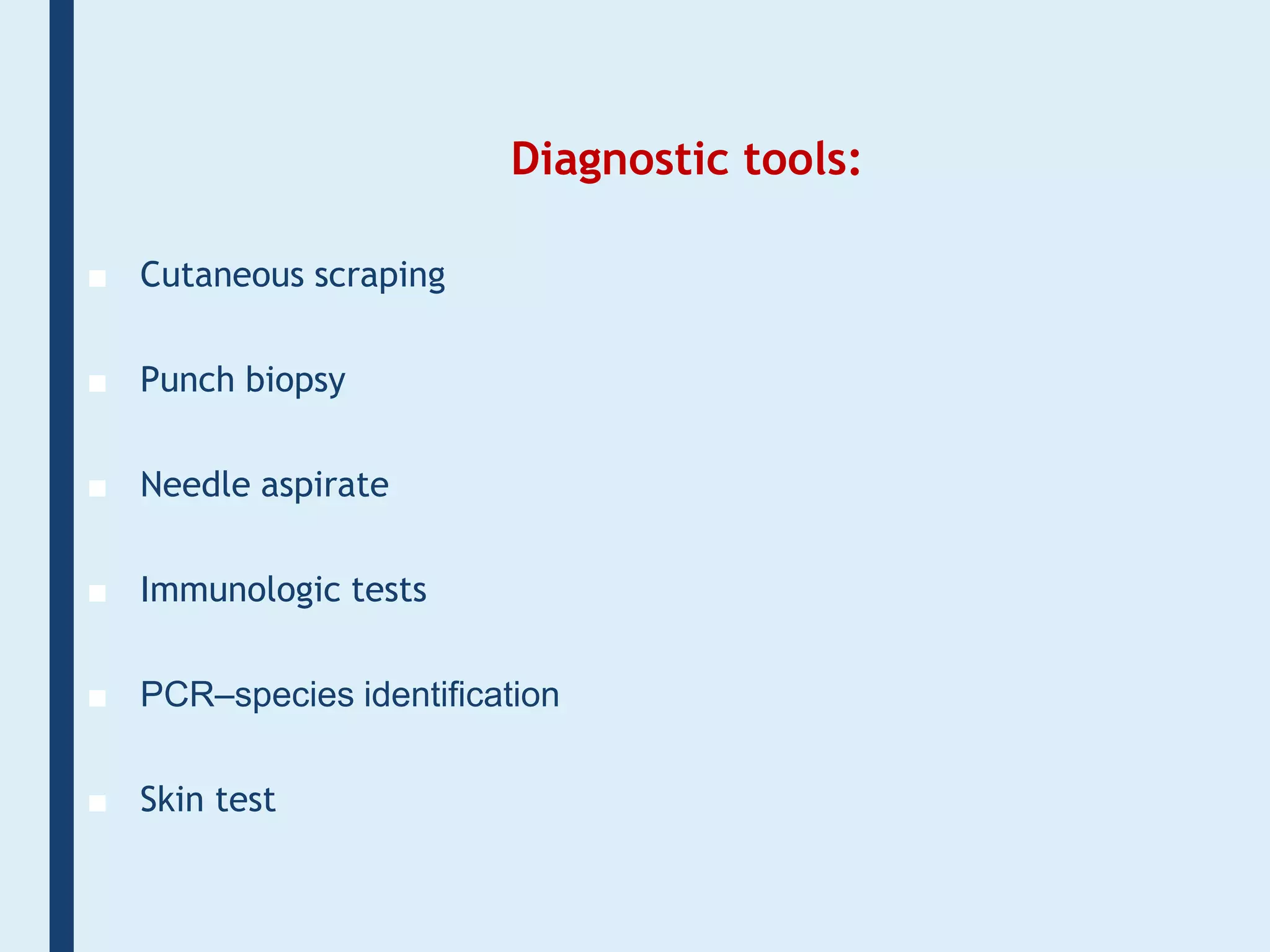
Diagnostic tools:
■ Cutaneous scraping
■ Punch biopsy
■ Needle aspirate
■ Immunologic tests
■ PCR–species identification
■ Skin test
Post Kala-azar Dermal Leishmaniasis
(PKDL)
■ Recurrence in----untreated/ partially treated/even in some
adequately treated. Can occur up to 20 years after
treatment.
■ Can be hypo-pigmented macules, papules, nodules, or facial
erythema.
■ It is commonly associated with L. donovani.
■ Sodium stibogluconate alone or in combination with
Rifampicin is used for a course up to 4 months.
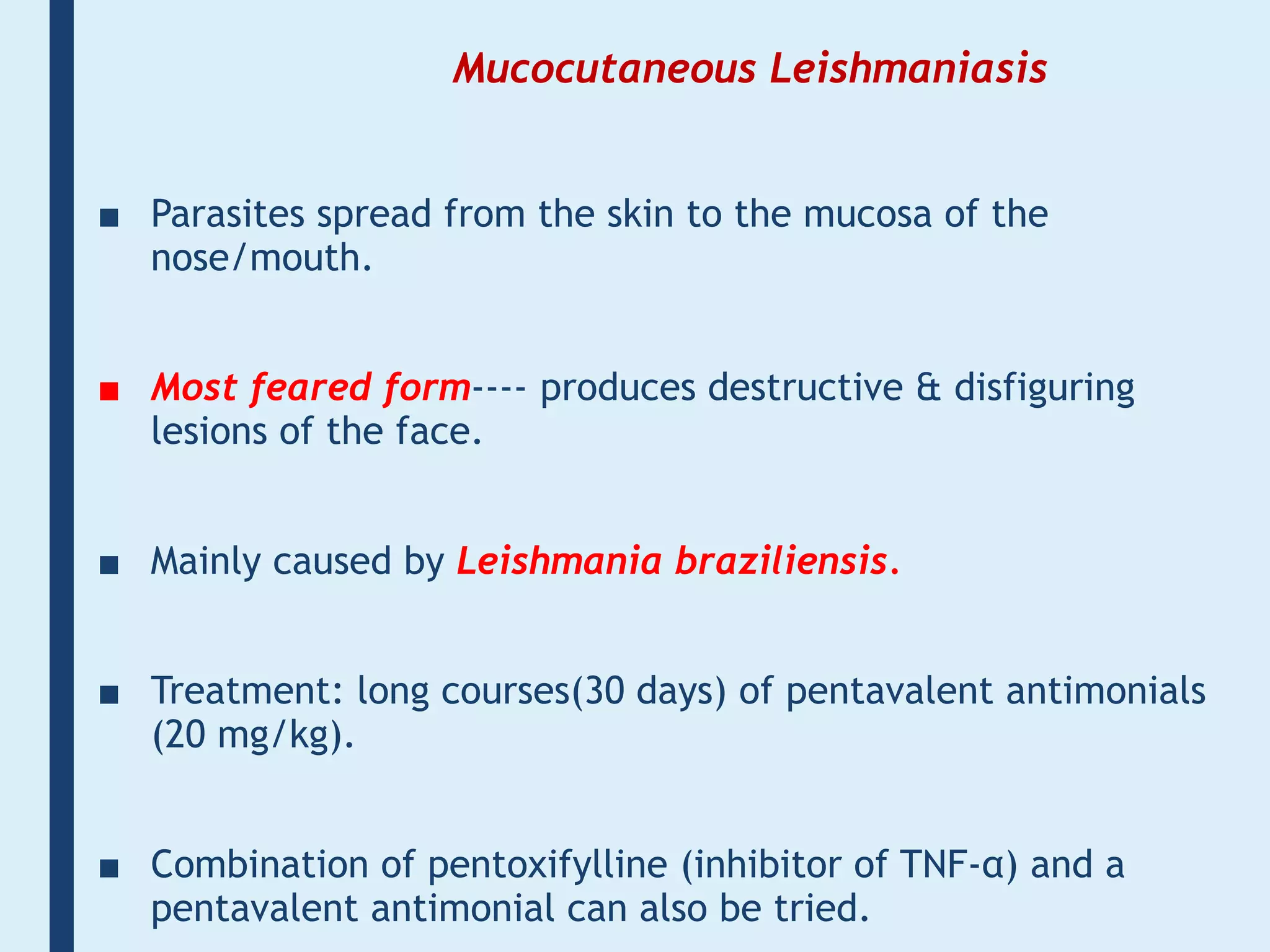
Mucocutaneous Leishmaniasis
■ Parasites spread from the skin to the mucosa of the
nose/mouth.
■ Most feared form---- produces destructive & disfiguring
lesions of the face.
■ Mainly caused by Leishmania braziliensis.
■ Treatment: long courses(30 days) of pentavalent antimonials
(20 mg/kg).
■ Combination of pentoxifylline (inhibitor of TNF-α) and a
pentavalent antimonial can also be tried.
When to Treat Cutaneous Leishmaniasis?
■ Cosmetically unacceptable lesions
■ Chronic lesions
■ Large lesions
■ Lesions in immunosuppressed/HIV patients
■ Lesions over joints
■ Mucosal disease
■ Multiple lesions
■ Nodular lymphangitis
■ Worsening lesions
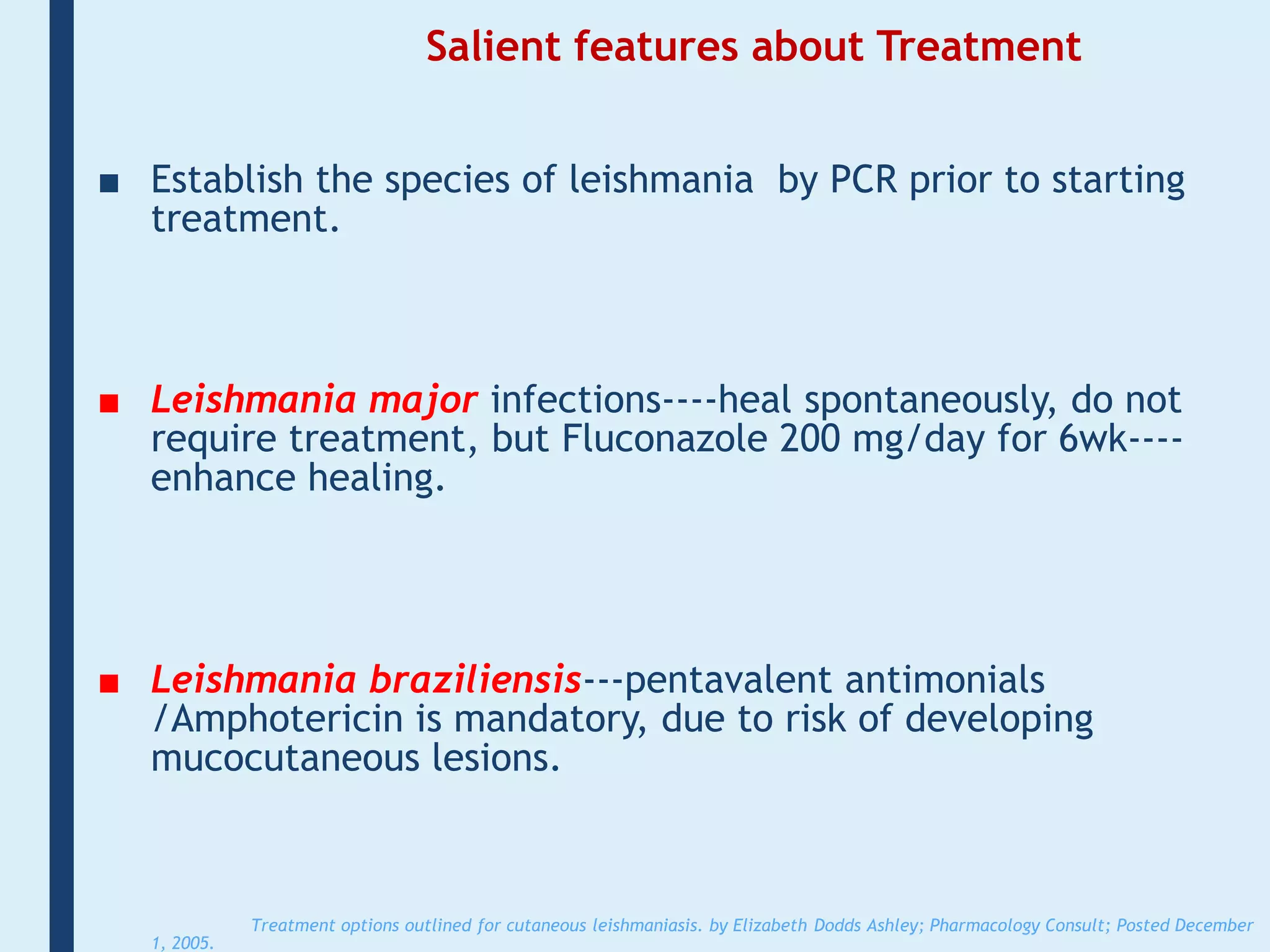
Salient features about Treatment
■ Establish the species of leishmania by PCR prior to starting
treatment.
■ Leishmania major infections----heal spontaneously, do not
require treatment, but Fluconazole 200 mg/day for 6wk----
enhance healing.
■ Leishmania braziliensis---pentavalent antimonials
/Amphotericin is mandatory, due to risk of developing
mucocutaneous lesions.
Treatment options outlined for cutaneous leishmaniasis. by Elizabeth Dodds Ashley; Pharmacology Consult; Posted December
1, 2005.
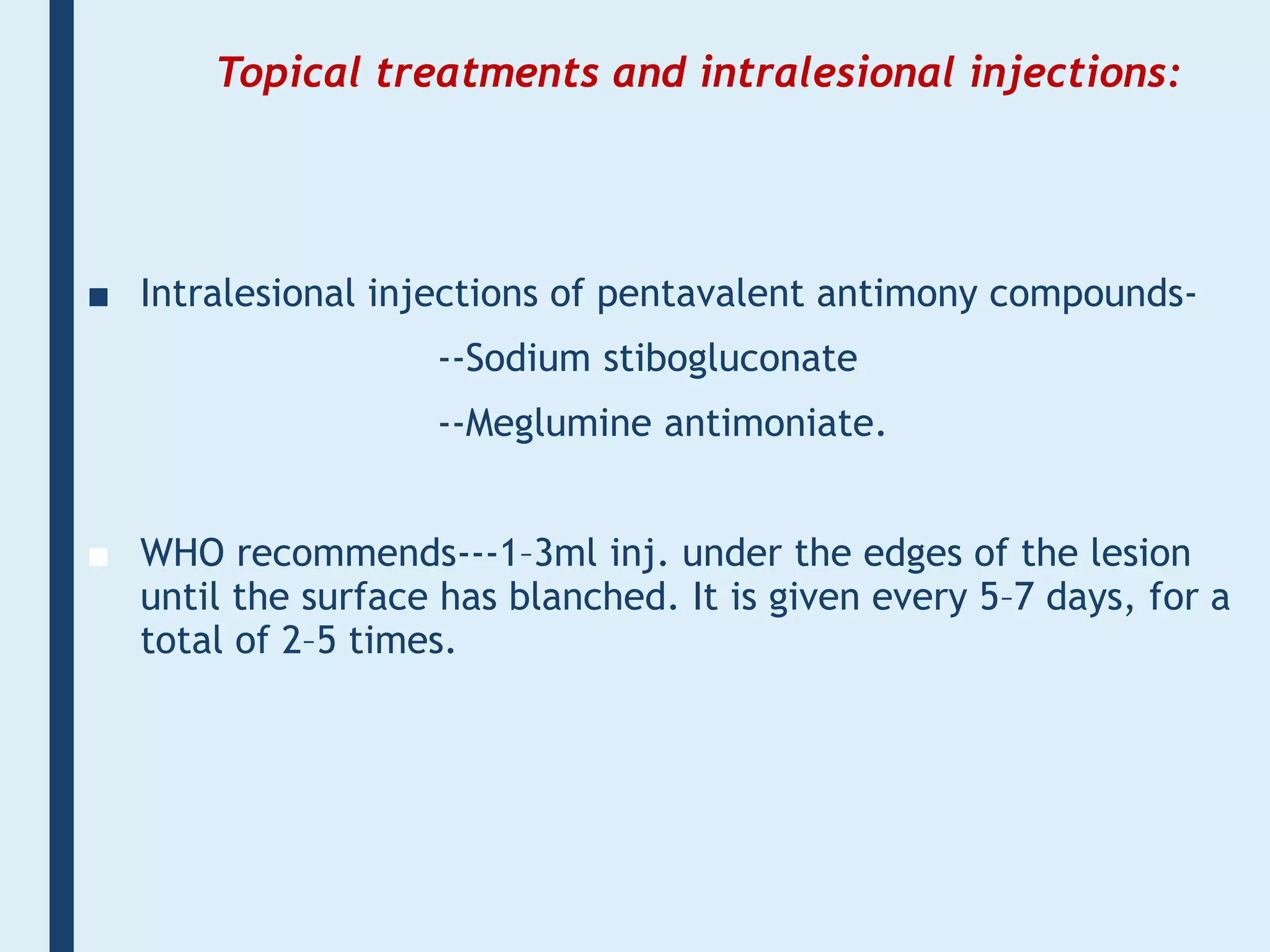
Topical treatments and intralesional injections:
■ Intralesional injections of pentavalent antimony compounds-
--Sodium stibogluconate
--Meglumine antimoniate.
■ WHO recommends---1–3ml inj. under the edges of the lesion
until the surface has blanched. It is given every 5–7 days, for a
total of 2–5 times.
Other intra-lesional injections:
■ Local injections of-
---Hypertonic sodium chloride solution
---Zinc sulphate
■ Excision is not recommended because of the high risk of
local relapse and disfiguration.
Topical treatment for cutaneous leishmaniasis. Tracy Garnier & Simon L Croft. Current Opinion in Investigational Drugs 2002 3(4): PharmaPress ISSN
1472-4472.
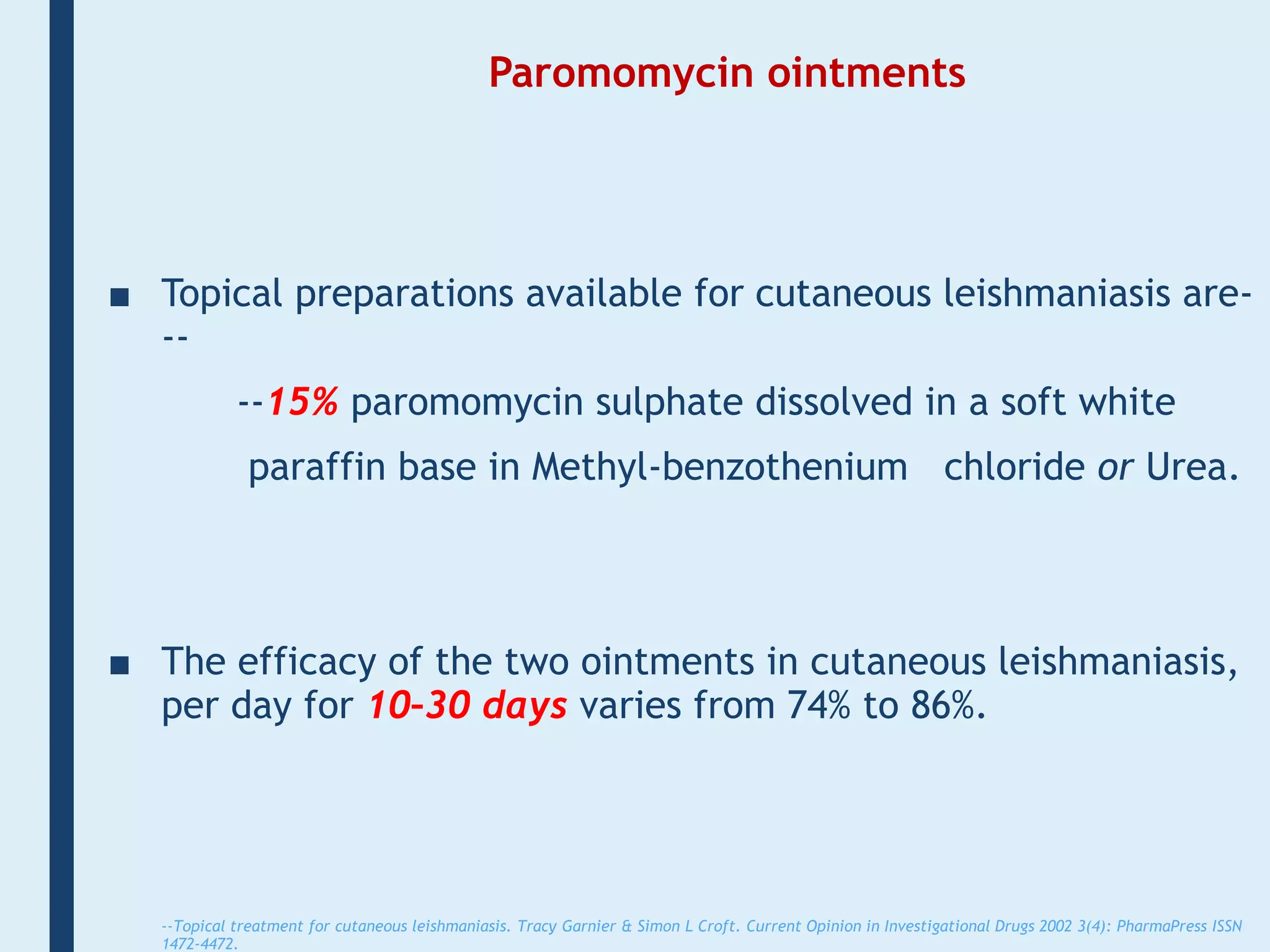
Paromomycin ointments
■ Topical preparations available for cutaneous leishmaniasis are-
--
--15% paromomycin sulphate dissolved in a soft white
paraffin base in Methyl-benzothenium chloride or Urea.
■ The efficacy of the two ointments in cutaneous leishmaniasis,
per day for 10–30 days varies from 74% to 86%.
--Topical treatment for cutaneous leishmaniasis. Tracy Garnier & Simon L Croft. Current Opinion in Investigational Drugs 2002 3(4): PharmaPress ISSN
1472-4472.
Imiquimod
■ This is an immune response modifier that targets
preferentially monocytes and macrophages.
■ Imiquimod demonstrates a leishmanicidal activity by releasing
of nitric oxide.
■ Imiquimod 5% cream every other day for 20 days upto 8
weeks is recommended.
REVIEW- Cutaneous leishmaniasis treatment. Philippe Minodiera,, Philippe Parolab. Travel Medicine and Infectious Disease (2007) 5, 150–158. Available
at www.sciencedirect.com.
Topical amphotericin B
■ Colloidal dispersion of amphotericin B and cholesteryl
sulphate can also be tried as an alternative in cutaneous
leishmaniasis.
■ It is mainly effective in L. major species.
Cryotherapy
■ Cryotherapy with liquid nitrogen two cycles of 10–30 sec
freezing time are sufficient for L.tropica lesions.
Cutaneous Leishmaniasis: Recognition and Treatment. William H. Markel, And Khaldoun Makhoul. Downloaded from the American Family
Localized controlled heat
■ ThermoMeds is an FDA-approved device that delivers
localized radiofrequency-generated heat directly to a
lesion through prongs placed onto it.
■ Heat may be controlled locally and 500C for 30 sec are
used.
■ The procedure is painful and requires local anesthetic.
Localized controlled heat was found to be as effective as
meglumine antimoniate in some cases.
Cutaneous Leishmaniasis: Recognition and Treatment. William H. Markel, And Khaldoun Makhoul. Downloaded from the American Family Physician Web site at
www.aafp.org/afp. Copyright© 2004 American Academy of Family Physicians.
CO2 laser
■ Used to vaporize cutaneous leishmaniasis lesions.
■ A power of 30W (maximum 100 W) and a pulse width of 0.5–5
s, until the ulcer bed turned brown.
Photodynamic therapy
■ A 10% d-aminolevulinic acid (porphyrin compounds) emulsion
is locally applied for 4 hr. Then, irradiation was done using
570–670 nm red light. Treatment is repeated weekly.
REVIEW- Cutaneous leishmaniasis treatment. Philippe Minodiera,, Philippe Parolab. Travel Medicine and Infectious Disease (2007) 5, 150–158.
Available at www.sciencedirect.com.
Peter J. Weina, et al has suggested criteria for
starting systemic therapy-----
■ Lesions on the face/ear/cosmetically evident areas
■ Lesions have not healed for many months
■ Lesions over the joints
■ Lesions are present on the hands & feet
■ Local evidence of dissemination
■ Immunocompromised hosts
■ Multiple lesions (more than 5)
■ Large lesions (>4 cm)
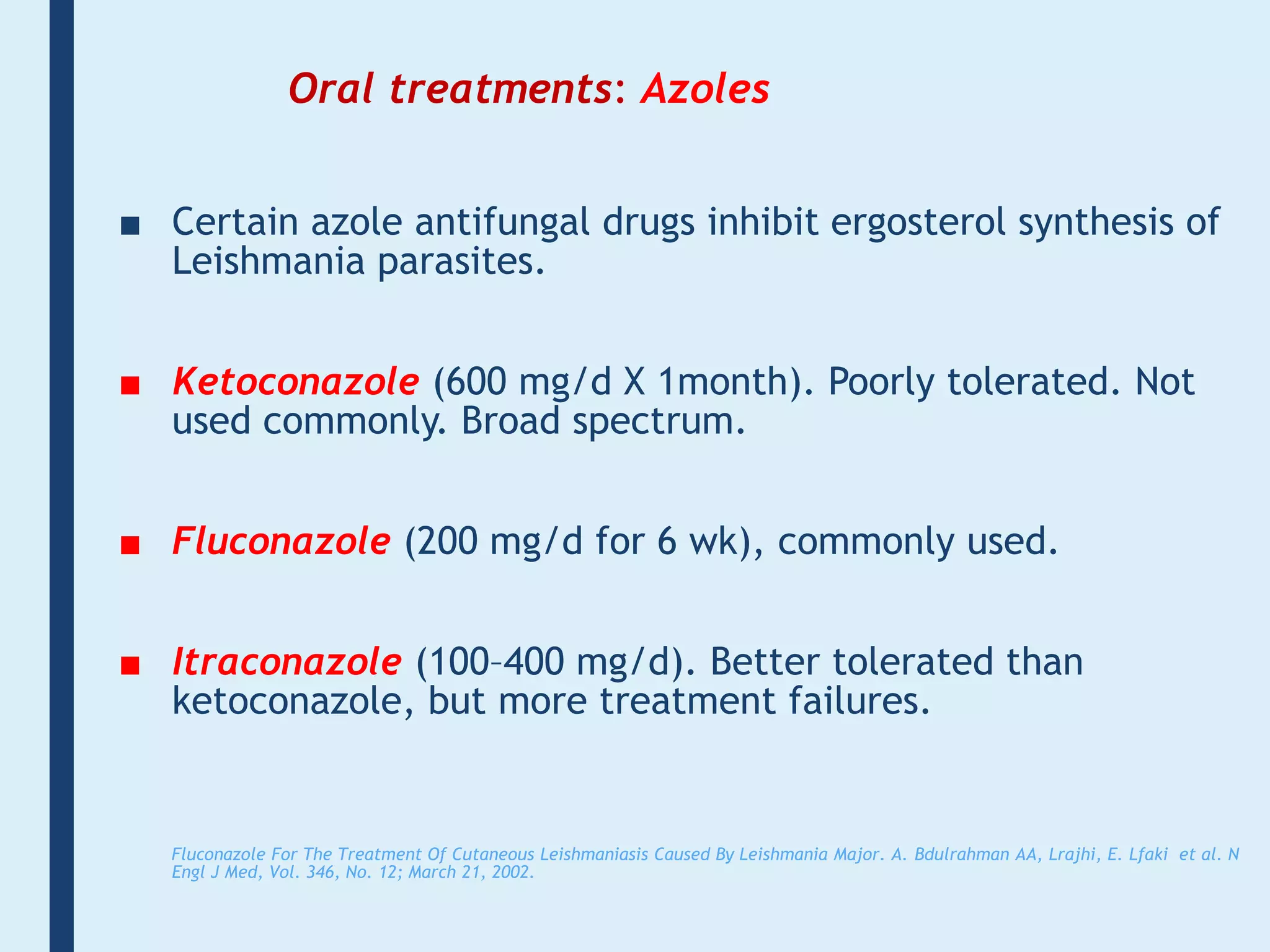
Oral treatments: Azoles
■ Certain azole antifungal drugs inhibit ergosterol synthesis of
Leishmania parasites.
■ Ketoconazole (600 mg/d X 1month). Poorly tolerated. Not
used commonly. Broad spectrum.
■ Fluconazole (200 mg/d for 6 wk), commonly used.
■ Itraconazole (100–400 mg/d). Better tolerated than
ketoconazole, but more treatment failures.
Fluconazole For The Treatment Of Cutaneous Leishmaniasis Caused By Leishmania Major. A. Bdulrahman AA, Lrajhi, E. Lfaki et al. N
Engl J Med, Vol. 346, No. 12; March 21, 2002.
Azithromycin
■ It concentrates in tissues especially in macrophages that are
infected by Leishmania parasites.
■ Its oral administration, its long half-life, and its safety in
children is advantage for the treatment of leishmaniasis.
REVIEW- Cutaneous leishmaniasis treatment. Philippe Minodiera,, Philippe Parolab. Travel Medicine and Infectious Disease (2007) 5,
150–158. Available at www.sciencedirect.com.
Oral zinc sulfate
■ Sensitivities of L. major and L. tropica strains to zinc was
reported to be higher than those to pentavalent Antimony.
■ It is also delivered intralesionally with success in cutaneous
leishmaniasis.
■ Mechanisms of action are--- direct antileishmanial effect,
immunomodulatory effect, effect on macrophages function
and wound-healing effect.
REVIEW- Cutaneous leishmaniasis treatment. Philippe Minodiera,, Philippe Parolab. Travel Medicine and Infectious Disease (2007) 5, 150–
158. Available at www.sciencedirect.com.
Miltefosine
■ It’s a new treatment option that has recently been approved
for use in Columbia, Germany and India for treatment of
leishmaniasis.
■ This phospholipid agent was originally developed as a
therapeutic agent for breast cancer.
■ Miltefosine is an oral antitumor agent, that interferes with
cell signal-transduction pathways and inhibits phospholipids
and sterol biosynthesis.
■ In India, Miltefosine (2.5 mg/kg/d for 28 days) is given
in leishmaniasis due to L. donovani.
■ Miltefosine was successfully used in an HIV infected
patient with a L. major diffuse cutaneous leishmaniasis.
■ It is not, however, without adverse effects. Elevated
transaminases and reproductive health risks do occur.
IM / IV drugs: Systemic antimonials
■ Systemic antimonials are generally required for the
treatment of cutaneous leishmaniasis because of the risk of
mucosal involvement.
■ WHO recommendations are 10–20 mg pentavalent
antimony/kg/day dose for 20 days, and for 30 days in
patients with mucous involvement.
■ Meglumine antimoniate (Glucantime)
Dosage: 20 mg/ kg/ day for 20 days.Cure rate: around 94
percent . Eliminated by kidneys.
■ Stibogluconate
It is supplied as 100 mg/mL solution.
Dose is: 12-20 mL which is diluted in 50 mL of 5% dextrose,
infused IV over 10-15 minutes.
ADR of antimonials--- pancreatitis, hepatitis, marrow
suppression, QT prolongation, myalgias, fatigue, headache,
rash, nausea.
Drugs Combinations With Antimonials
■ In order to enhance the efficacy of antimony, combinations
with other drugs have been used.
■ Combination of antimony (20 mg/kg/d) and Allopurinol (20
mg/kg/d) have been proposed in cases nonresponsiveness to
antimonial drugs.
■ Oral Pentoxifylline (400 mg/day) plus pentavalent antimony
(15–20 mg/kg/d) for a month can be tried.
Treatment options outlined for cutaneous leishmaniasis. Elizabeth Dodds Ashley, PharmD, BCPS. Pharmacology Consult; Posted December
1, 2005.
Pentamidine
■ Pentamidine was used in visceral leishmaniasis treatment for
years, also can be tried in cutaneous leishmaniasis---
■ Two IM injections (days 1 and 4) of 4 mg/kg pentamidine-base
(7 mg/kg Pentacarinats) are used
OR
2 mg/kg IM every other day for 7 days.
Amphotericin B
■ Liposomal amphotericin B replaces antimony in the
treatment of pediatric VL due to L.infantum. Its role in
cutaneous leishmaniasis is still controversial.
■ Reserved for antimony failures, 2nd line drug.
■ Dosage: 0.5-1 mg/kg every other day for up to 8 wks; total
dosage is 1.5-2 g for the treatment period
Rifampicin
■ Rifampicin 1200mg/day for 4 weeks can heal cutaneous
leishmaniasis.
■ The effect of rifampicin is through its property of blocking
RNA synthesis by specifically binding and inhibiting DNA
dependent RNA polymerase.
---The role of Rifampicin in the management of cutaneous leishmaniasis. Kocher DK, Aseri S, Sarma BV. Q J Med, 2000; 93,
733-737.
Other treatment modalities
(contradictory study results)
■ Antibiotics-- kanamycin and gentamycin.
■ Immunomodulators including BCG, IFNγ and Colony
Stimulating Factors have been used.
■ Emetine, metronidazole, co-trimoxazole.
■ Vaccine-- (killed Leishmania organism with BCG as an
adjuvant) have also yielded promising results.
-- REVIEW- Cutaneous leishmaniasis treatment. Philippe Minodiera,, Philippe Parolab. Travel Medicine and Infectious Disease (2007) 5, 150–158. Available at
www.sciencedirect.com.
Advice/Precaution to Travelers
■ Avoid outdoor activities from dusk to dawn--- most active
time of sand flies.
■ Wear protective clothing/Apply insect repellent.
■ Sleep in air-conditioned or well-screened areas. Fans or
ventilators may also help.
■ Sand flies are small (2–3 mm)----can pass through holes in
ordinary bed nets. Effectiveness of nets can be enhanced by
treatment with Permethrin.
---Infectious Diseases Related To Travel. Barbara L. Herwaldt,
Alan J. Magill.
Conclusion:
■ Limited treatment options available----its important for
clinicians to understand the available agents.
■ Selection of therapeutic agent depends on the potential
treatment benefit vs. toxicities, no one is better than the
other.
■ The prognosis is related to the species.
■ The lack of comparative studies of treatment hinders
consensual recommendations.
CUTANEOUS LEISHMANIASIS.pptx

CUTANEOUS LEISHMANIASIS.pptx

  • 1.
  • 2.
    ---Kala azar isa deadly disease caused by the parasitic protozoa Leishmania donovani and transmitted to humans by the bite of infected female sand fly, Phlebotomus argentipes. Historical Landmarks of kala-azar & its Indian connection- ■ The name ‘Kala-azar’ came from Sanskrit. ■ ‘Delhi boil’---- for cutaneous form of Leishmaniasis. ■ Kala-azar in Assam (Assam fever)- was first identified by Clarke in 1882. ■ McNaught, a Civil Medical Officer of Tura,of Garo Hills district in Assam called this disease ‘Kala-hazar’.
  • 3.
    ■ William B.Leishman reported in 1900, of peculiar bodies in the spleen pulp of a soldier who died of Dum-Dum Fever at Netely Hospital. ■ Published in British Medical Journal in 1903 “On the Possibility of the Occurrence of Trypanosomiasis in India”
  • 4.
    ■ In July1903, Charles Donovan reported the finding of similar bodies from the spleen of patients suffering from prolonged fever with splenomegaly in Madras. described them as new parasite not Trypanosomiasis.
  • 5.
    ■ The linkbetween these organisms and kala azar was eventually discovered by Ronald Ross----named them as Leishmania donovani in November,1903.
  • 6.
    Kala-Azar: The IndianScenario ■ In India, it is a serious problem in Bihar, West Bengal and eastern Uttar Pradesh. ■ Lymphadenopathy is a major presenting feature in India. ■ The widespread co-existence of malaria and kala- azar in India---- difficulty in diagnosis and treatment. ■ Organism developing resistance to antimony compounds (main drug for treatment) in India.
  • 7.
  • 8.
    Cutaneous Leishmaniasis: Epidemiology ■There are 1-1.5 million cases of cutaneous leishmaniasis reported yearly world wide. There has been a sharp increase in recorded cases over the last 10 years. ■ More than 90% of cutaneous disease occurs in Afghanistan, Peru, Brazil, Iran, Saudi Arabia and Syria. ---Epidemiology of visceral leishmaniasis in India. Bora D. Helminthology Division, National Institute of Communicable Diseases, New Delhi, India. Natl Med J India. 1999 Mar-Apr;12(2):62-8.
  • 9.
    ■ Old WorldLeishmaniasis ---India/Middle East/Africa. --- benign, self-limiting ■ New World Leishmaniasis ---Latin America/North America/Europe ---Broad spectrum of conditions benign to severe manifestations, including mucosal involvement. ---Complexity of Treating New World Cutaneous Leishmaniasis. Byron Arana; Center for Health Studies. Universidad del Valle – Guatemala,
  • 10.
  • 11.
    ■ Cutaneous Leishmaniasis-----often self-limiting, can result in significant scarring / invasive, mucocutaneous disease. Therefore, treatment may be considered to prevent these complications. ■ Cutaneous leishmaniasis -----L. major & L.tropica ■ Visceral leishmaniasis ---L. infantum & L donovani
  • 12.
    Risk Factors ForCutaneous Leishmaniasis ■ Rural >> urban. ■ Ecologic region: rainforests to arid regions. ■ Dusk to dawn (sand flies typically feed / bite at night and during twilight hours). Sand flies do not make noise, they are small (one-third the size of mosquitoes), and their bites might not be noticed. ■ Travelers like ecotourists, adventure travelers, bird watchers, soldiers, construction workers.
  • 13.
    Clinical Presentation: ■ Skinlesions---occur weeks/ months after exposure. ■ Small papules to nodular plaques, ulcer, can be covered with scales /crust. The lesions usually----painless / painful (if infected) ■ Satellite lesions, regional lymphadenopathy. ■ The lesions heal eventually, even without treatment------ ultimately result in scarring.
  • 15.
    Diagnostic tools: ■ Cutaneousscraping ■ Punch biopsy ■ Needle aspirate ■ Immunologic tests ■ PCR–species identification ■ Skin test
  • 16.
    Post Kala-azar DermalLeishmaniasis (PKDL) ■ Recurrence in----untreated/ partially treated/even in some adequately treated. Can occur up to 20 years after treatment. ■ Can be hypo-pigmented macules, papules, nodules, or facial erythema. ■ It is commonly associated with L. donovani. ■ Sodium stibogluconate alone or in combination with Rifampicin is used for a course up to 4 months.
  • 17.
    Mucocutaneous Leishmaniasis ■ Parasitesspread from the skin to the mucosa of the nose/mouth. ■ Most feared form---- produces destructive & disfiguring lesions of the face. ■ Mainly caused by Leishmania braziliensis. ■ Treatment: long courses(30 days) of pentavalent antimonials (20 mg/kg). ■ Combination of pentoxifylline (inhibitor of TNF-α) and a pentavalent antimonial can also be tried.
  • 18.
    When to TreatCutaneous Leishmaniasis? ■ Cosmetically unacceptable lesions ■ Chronic lesions ■ Large lesions ■ Lesions in immunosuppressed/HIV patients ■ Lesions over joints ■ Mucosal disease ■ Multiple lesions ■ Nodular lymphangitis ■ Worsening lesions
  • 19.
    Salient features aboutTreatment ■ Establish the species of leishmania by PCR prior to starting treatment. ■ Leishmania major infections----heal spontaneously, do not require treatment, but Fluconazole 200 mg/day for 6wk---- enhance healing. ■ Leishmania braziliensis---pentavalent antimonials /Amphotericin is mandatory, due to risk of developing mucocutaneous lesions. Treatment options outlined for cutaneous leishmaniasis. by Elizabeth Dodds Ashley; Pharmacology Consult; Posted December 1, 2005.
  • 20.
    Topical treatments andintralesional injections: ■ Intralesional injections of pentavalent antimony compounds- --Sodium stibogluconate --Meglumine antimoniate. ■ WHO recommends---1–3ml inj. under the edges of the lesion until the surface has blanched. It is given every 5–7 days, for a total of 2–5 times.
  • 21.
    Other intra-lesional injections: ■Local injections of- ---Hypertonic sodium chloride solution ---Zinc sulphate ■ Excision is not recommended because of the high risk of local relapse and disfiguration. Topical treatment for cutaneous leishmaniasis. Tracy Garnier & Simon L Croft. Current Opinion in Investigational Drugs 2002 3(4): PharmaPress ISSN 1472-4472.
  • 22.
    Paromomycin ointments ■ Topicalpreparations available for cutaneous leishmaniasis are- -- --15% paromomycin sulphate dissolved in a soft white paraffin base in Methyl-benzothenium chloride or Urea. ■ The efficacy of the two ointments in cutaneous leishmaniasis, per day for 10–30 days varies from 74% to 86%. --Topical treatment for cutaneous leishmaniasis. Tracy Garnier & Simon L Croft. Current Opinion in Investigational Drugs 2002 3(4): PharmaPress ISSN 1472-4472.
  • 23.
    Imiquimod ■ This isan immune response modifier that targets preferentially monocytes and macrophages. ■ Imiquimod demonstrates a leishmanicidal activity by releasing of nitric oxide. ■ Imiquimod 5% cream every other day for 20 days upto 8 weeks is recommended. REVIEW- Cutaneous leishmaniasis treatment. Philippe Minodiera,, Philippe Parolab. Travel Medicine and Infectious Disease (2007) 5, 150–158. Available at www.sciencedirect.com.
  • 24.
    Topical amphotericin B ■Colloidal dispersion of amphotericin B and cholesteryl sulphate can also be tried as an alternative in cutaneous leishmaniasis. ■ It is mainly effective in L. major species. Cryotherapy ■ Cryotherapy with liquid nitrogen two cycles of 10–30 sec freezing time are sufficient for L.tropica lesions. Cutaneous Leishmaniasis: Recognition and Treatment. William H. Markel, And Khaldoun Makhoul. Downloaded from the American Family
  • 25.
    Localized controlled heat ■ThermoMeds is an FDA-approved device that delivers localized radiofrequency-generated heat directly to a lesion through prongs placed onto it. ■ Heat may be controlled locally and 500C for 30 sec are used. ■ The procedure is painful and requires local anesthetic. Localized controlled heat was found to be as effective as meglumine antimoniate in some cases. Cutaneous Leishmaniasis: Recognition and Treatment. William H. Markel, And Khaldoun Makhoul. Downloaded from the American Family Physician Web site at www.aafp.org/afp. Copyright© 2004 American Academy of Family Physicians.
  • 26.
    CO2 laser ■ Usedto vaporize cutaneous leishmaniasis lesions. ■ A power of 30W (maximum 100 W) and a pulse width of 0.5–5 s, until the ulcer bed turned brown. Photodynamic therapy ■ A 10% d-aminolevulinic acid (porphyrin compounds) emulsion is locally applied for 4 hr. Then, irradiation was done using 570–670 nm red light. Treatment is repeated weekly. REVIEW- Cutaneous leishmaniasis treatment. Philippe Minodiera,, Philippe Parolab. Travel Medicine and Infectious Disease (2007) 5, 150–158. Available at www.sciencedirect.com.
  • 27.
    Peter J. Weina,et al has suggested criteria for starting systemic therapy----- ■ Lesions on the face/ear/cosmetically evident areas ■ Lesions have not healed for many months ■ Lesions over the joints ■ Lesions are present on the hands & feet ■ Local evidence of dissemination ■ Immunocompromised hosts ■ Multiple lesions (more than 5) ■ Large lesions (>4 cm)
  • 28.
    Oral treatments: Azoles ■Certain azole antifungal drugs inhibit ergosterol synthesis of Leishmania parasites. ■ Ketoconazole (600 mg/d X 1month). Poorly tolerated. Not used commonly. Broad spectrum. ■ Fluconazole (200 mg/d for 6 wk), commonly used. ■ Itraconazole (100–400 mg/d). Better tolerated than ketoconazole, but more treatment failures. Fluconazole For The Treatment Of Cutaneous Leishmaniasis Caused By Leishmania Major. A. Bdulrahman AA, Lrajhi, E. Lfaki et al. N Engl J Med, Vol. 346, No. 12; March 21, 2002.
  • 29.
    Azithromycin ■ It concentratesin tissues especially in macrophages that are infected by Leishmania parasites. ■ Its oral administration, its long half-life, and its safety in children is advantage for the treatment of leishmaniasis. REVIEW- Cutaneous leishmaniasis treatment. Philippe Minodiera,, Philippe Parolab. Travel Medicine and Infectious Disease (2007) 5, 150–158. Available at www.sciencedirect.com.
  • 30.
    Oral zinc sulfate ■Sensitivities of L. major and L. tropica strains to zinc was reported to be higher than those to pentavalent Antimony. ■ It is also delivered intralesionally with success in cutaneous leishmaniasis. ■ Mechanisms of action are--- direct antileishmanial effect, immunomodulatory effect, effect on macrophages function and wound-healing effect. REVIEW- Cutaneous leishmaniasis treatment. Philippe Minodiera,, Philippe Parolab. Travel Medicine and Infectious Disease (2007) 5, 150– 158. Available at www.sciencedirect.com.
  • 31.
    Miltefosine ■ It’s anew treatment option that has recently been approved for use in Columbia, Germany and India for treatment of leishmaniasis. ■ This phospholipid agent was originally developed as a therapeutic agent for breast cancer. ■ Miltefosine is an oral antitumor agent, that interferes with cell signal-transduction pathways and inhibits phospholipids and sterol biosynthesis.
  • 32.
    ■ In India,Miltefosine (2.5 mg/kg/d for 28 days) is given in leishmaniasis due to L. donovani. ■ Miltefosine was successfully used in an HIV infected patient with a L. major diffuse cutaneous leishmaniasis. ■ It is not, however, without adverse effects. Elevated transaminases and reproductive health risks do occur.
  • 33.
    IM / IVdrugs: Systemic antimonials ■ Systemic antimonials are generally required for the treatment of cutaneous leishmaniasis because of the risk of mucosal involvement. ■ WHO recommendations are 10–20 mg pentavalent antimony/kg/day dose for 20 days, and for 30 days in patients with mucous involvement.
  • 34.
    ■ Meglumine antimoniate(Glucantime) Dosage: 20 mg/ kg/ day for 20 days.Cure rate: around 94 percent . Eliminated by kidneys. ■ Stibogluconate It is supplied as 100 mg/mL solution. Dose is: 12-20 mL which is diluted in 50 mL of 5% dextrose, infused IV over 10-15 minutes. ADR of antimonials--- pancreatitis, hepatitis, marrow suppression, QT prolongation, myalgias, fatigue, headache, rash, nausea.
  • 35.
    Drugs Combinations WithAntimonials ■ In order to enhance the efficacy of antimony, combinations with other drugs have been used. ■ Combination of antimony (20 mg/kg/d) and Allopurinol (20 mg/kg/d) have been proposed in cases nonresponsiveness to antimonial drugs. ■ Oral Pentoxifylline (400 mg/day) plus pentavalent antimony (15–20 mg/kg/d) for a month can be tried. Treatment options outlined for cutaneous leishmaniasis. Elizabeth Dodds Ashley, PharmD, BCPS. Pharmacology Consult; Posted December 1, 2005.
  • 36.
    Pentamidine ■ Pentamidine wasused in visceral leishmaniasis treatment for years, also can be tried in cutaneous leishmaniasis--- ■ Two IM injections (days 1 and 4) of 4 mg/kg pentamidine-base (7 mg/kg Pentacarinats) are used OR 2 mg/kg IM every other day for 7 days.
  • 37.
    Amphotericin B ■ Liposomalamphotericin B replaces antimony in the treatment of pediatric VL due to L.infantum. Its role in cutaneous leishmaniasis is still controversial. ■ Reserved for antimony failures, 2nd line drug. ■ Dosage: 0.5-1 mg/kg every other day for up to 8 wks; total dosage is 1.5-2 g for the treatment period
  • 38.
    Rifampicin ■ Rifampicin 1200mg/dayfor 4 weeks can heal cutaneous leishmaniasis. ■ The effect of rifampicin is through its property of blocking RNA synthesis by specifically binding and inhibiting DNA dependent RNA polymerase. ---The role of Rifampicin in the management of cutaneous leishmaniasis. Kocher DK, Aseri S, Sarma BV. Q J Med, 2000; 93, 733-737.
  • 39.
    Other treatment modalities (contradictorystudy results) ■ Antibiotics-- kanamycin and gentamycin. ■ Immunomodulators including BCG, IFNγ and Colony Stimulating Factors have been used. ■ Emetine, metronidazole, co-trimoxazole. ■ Vaccine-- (killed Leishmania organism with BCG as an adjuvant) have also yielded promising results. -- REVIEW- Cutaneous leishmaniasis treatment. Philippe Minodiera,, Philippe Parolab. Travel Medicine and Infectious Disease (2007) 5, 150–158. Available at www.sciencedirect.com.
  • 40.
    Advice/Precaution to Travelers ■Avoid outdoor activities from dusk to dawn--- most active time of sand flies. ■ Wear protective clothing/Apply insect repellent. ■ Sleep in air-conditioned or well-screened areas. Fans or ventilators may also help. ■ Sand flies are small (2–3 mm)----can pass through holes in ordinary bed nets. Effectiveness of nets can be enhanced by treatment with Permethrin. ---Infectious Diseases Related To Travel. Barbara L. Herwaldt, Alan J. Magill.
  • 41.
    Conclusion: ■ Limited treatmentoptions available----its important for clinicians to understand the available agents. ■ Selection of therapeutic agent depends on the potential treatment benefit vs. toxicities, no one is better than the other. ■ The prognosis is related to the species. ■ The lack of comparative studies of treatment hinders consensual recommendations.