1. Neuroscience of CEM: Ian Rheeder, Chartered Marketer, MSc. Innovation
The Psychology of Customer
Experience Management (CEM)
Ian Rheeder, Chartered Marketer (SA), MSc. Innovation
www.markitects.co.za
Neuroscience of CEM: Ian Rheeder
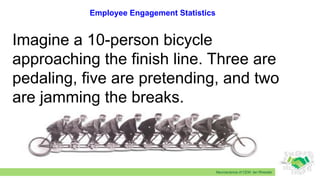
Imagine a 10-person bicycle
approaching the finish line. Three are
pedaling, five are pretending, and two
are jamming the breaks.
Employee Engagement Statistics
Neuroscience of CEM: Ian Rheeder
CUSTOMERS
Neuroscience of CEM: Ian Rheeder
Every audit was a terrible experience.
No one is delighting customers. Why?
HIDDEN
CAMERA
Winning ways to win customers
7x
Neuroscience of CEM: Ian Rheeder
The Initial “Hello” Face
Neuroscience of CEM: Ian Rheeder
Moment-of-Truth
Neuroscience of CEM: Ian Rheeder
Touch-point #2
Security Guard
Touch-point #1
Neuroscience of CEM: Ian Rheeder
Achor, S. (2013). Before Happiness. Pp.189-191 (Ritz-Carlton Hotel, Sam Walton,)
One major solution?
Neuroscience of CEM: Ian Rheeder
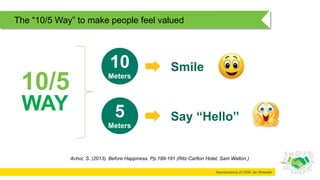
The “10/5 Way” to make people feel valued
Achor, S. (2013). Before Happiness. Pp.189-191 (Ritz-Carlton Hotel, Sam Walton,)
10
Meters
Smile
5
Meters
Say “Hello”
10/5
WAY
Neuroscience of CEM: Ian Rheeder
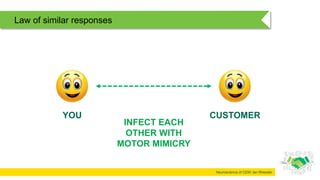
Law of similar responses
INFECT EACH
OTHER WITH
MOTOR MIMICRY
YOU CUSTOMER
Neuroscience of CEM: Ian Rheeder
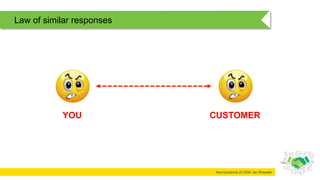
Law of similar responses
YOU CUSTOMER
Neuroscience of CEM: Ian Rheeder
STOP Trying to
Delight Your
Customers
July - Aug 2010
Dixon, Mathew. Freeman, Karen and Toman, Nicholas, “STOP Trying to Delight Your Customers”,
Harvard Business Review, July-August, 2010, p116
Neuroscience of CEM: Ian Rheeder
CUSTOMERS
Stop delighting customers and get back to basics.
Neuroscience of CEM: Ian Rheeder
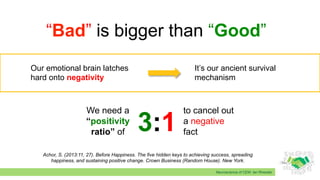
“Bad” is bigger than “Good”
Achor, S. (2013:11, 27). Before Happiness. The five hidden keys to achieving success, spreading
happiness, and sustaining positive change. Crown Business (Random House). New York.
Our emotional brain latches
hard onto negativity
It’s our ancient survival
mechanism
3:1
We need a
“positivity
ratio” of
to cancel out
a negative
fact
Neuroscience of CEM: Ian Rheeder
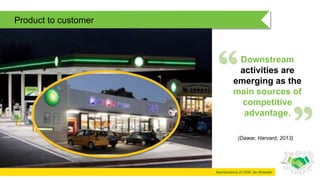
Product to customer
(Dawar, Harvard, 2013)
Downstream
activities are
emerging as the
main sources of
competitive
advantage.
Neuroscience of CEM: Ian Rheeder
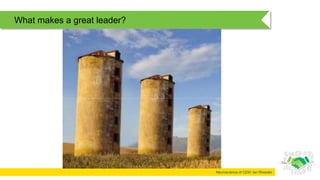
What makes a great leader?
Neuroscience of CEM: Ian Rheeder
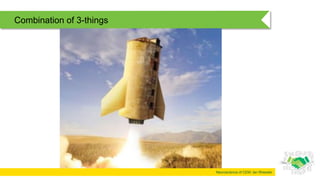
Combination of 3-things
Neuroscience of CEM: Ian Rheeder
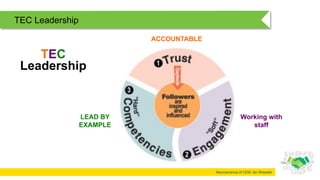
TEC
Neuroscience of CEM: Ian Rheeder
TEC
Leadership
LEAD BY
EXAMPLE
Working with
staff
ACCOUNTABLE
TEC Leadership
Neuroscience of CEM: Ian Rheeder
Part 2: Understanding Consumer Behaviour
Part 3: Customer Experience Management (CEM)
The Psychology of Customer Experience
Management (CEM)
Part 1 of 3
CENTRICITY
BEGINS AT HOMEPart 1
Neuroscience of CEM: Ian Rheeder
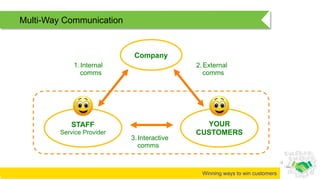
Multi-Way Communication
Company
1.Internal
comms
2.External
comms
Winning ways to win customers
STAFF
Service Provider
YOUR
CUSTOMERS
3.Interactive
comms
Neuroscience of CEM: Ian Rheeder
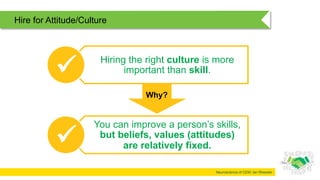
Hire for Attitude/Culture
Hiring the right culture is more
important than skill.!
You can improve a person’s skills,
but beliefs, values (attitudes)
are relatively fixed.!
Why?
Neuroscience of CEM: Ian Rheeder
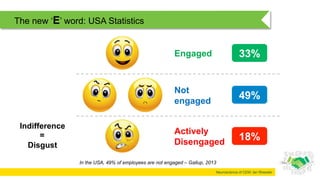
Indifference
=
Disgust
The new ‘E’ word: USA Statistics
Engaged 33%
Not
engaged
49%
Actively
Disengaged
18%
In the USA, 49% of employees are not engaged – Gallup, 2013
Neuroscience of CEM: Ian Rheeder
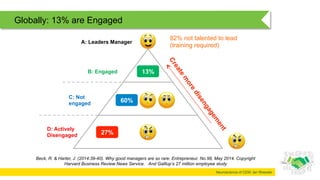
Globally: 13% are Engaged
B: Engaged 13%
C: Not
engaged 60%
D: Actively
Disengaged 27%
Beck, R. & Harter, J. (2014:39-40). Why good managers are so rare. Entrepreneur. No.98, May 2014. Copyright
Harvard Business Review News Service. And Galllup’s 27 million employee study
A: Leaders Manager
82% not talented to lead
(training required)
Neuroscience of CEM: Ian Rheeder
When you love your
work, then….
Neuroscience of CEM: Ian Rheeder
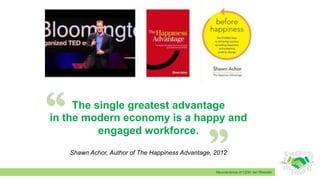
The single greatest advantage
in the modern economy is a happy and
engaged workforce.
Shawn Achor, Author of The Happiness Advantage, 2012
Neuroscience of CEM: Ian Rheeder
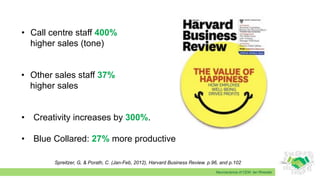
•  Creativity increases by 300%.
•  Blue Collared: 27% more productive
•  Call centre staff 400%
higher sales (tone)
•  Other sales staff 37%
higher sales
Spreitzer, G, & Porath, C. (Jan-Feb, 2012), Harvard Business Review. p.96, and p.102
Neuroscience of CEM: Ian Rheeder
Part 3: Customer Experience Management (CEM)
The Psychology of Customer Experience
Management (CEM)
Part 2 of 3
UNDERSTANDING
CONSUMER BEHAVIOURPart 2
Part 1: Centricity begins at home
Neuroscience of CEM: Ian Rheeder
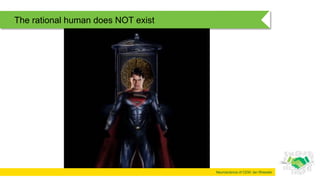
The rational human does NOT exist
Neuroscience of CEM: Ian Rheeder
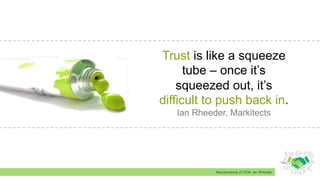
Trust is like a squeeze
tube – once it’s
squeezed out, it’s
difficult to push back in.
Ian Rheeder, Markitects
Neuroscience of CEM: Ian Rheeder
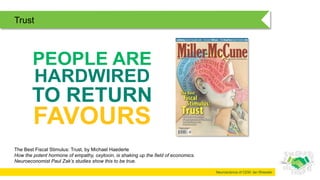
The Best Fiscal Stimulus: Trust, by Michael Haederle
How the potent hormone of empathy, oxytocin, is shaking up the field of economics.
Neuroeconomist Paul Zak’s studies show this to be true.
Trust
Neuroscience of CEM: Ian Rheeder
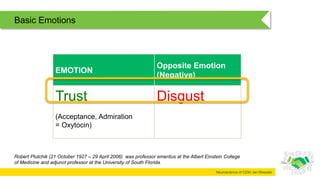
Basic Emotions
EMOTION
Opposite Emotion
(Negative)
Trust
(Acceptance, Admiration
= Oxytocin)
Disgust
Robert Plutchik (21 October 1927 – 29 April 2006) was professor emeritus at the Albert Einstein College
of Medicine and adjunct professor at the University of South Florida.
Neuroscience of CEM: Ian Rheeder
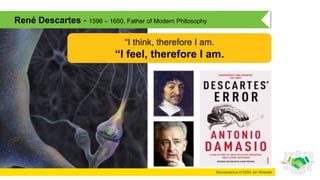
René Descartes - 1596 – 1650, Father of Modern Philosophy
“I think, therefore I am.
“I feel, therefore I am.
Neuroscience of CEM: Ian Rheeder
We are driven by EMOTIONS
Neuroscience of CEM: Ian Rheeder
EMOTIONS Drive PEOPLE – PEOPLE Drive PERFORMANCE
Neuroscience of CEM: Ian Rheeder
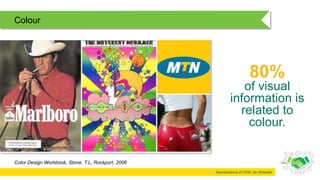
Colour
80%
of visual
information is
related to
colour.
Color Design Workbook, Stone. T.L, Rockport, 2006
Neuroscience of CEM: Ian Rheeder
Red is Edible!
Neuroscience of CEM: Ian Rheeder
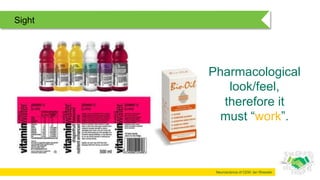
Sight
Pharmacological
look/feel,
therefore it
must “work”.
Neuroscience of CEM: Ian Rheeder
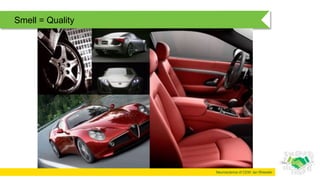
Smell = Quality
Neuroscience of CEM: Ian Rheeder
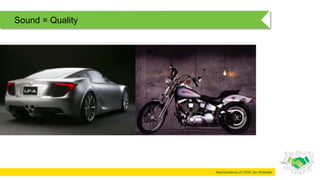
Sound = Quality
Neuroscience of CEM: Ian Rheeder
Part 2: Understanding Consumer Behaviour
The Psychology of Customer Experience Management (CEM)
Part 3 of 3
CUSTOMER
EXPERIENCE
MANAGEMENT (CEM)
Part 3
Part 1: Centricity begins at home
Neuroscience of CEM: Ian Rheeder
TOILETS
Farewell (last impression)
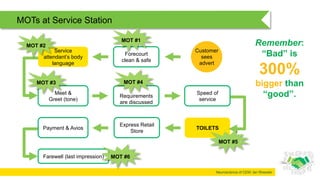
MOTs at Service Station
Forecourt
clean & safe
Customer
sees
advert
MOT #1
Remember:
“Bad” is
300%
bigger than
“good”.Meet &
Greet (tone)
Requirements
are discussed
Express Retail
Store
Service
attendant’s body
language
MOT #4
MOT #2
MOT #6
Speed of
service
MOT #5
MOT #3
Payment & Avios
Neuroscience of CEM: Ian Rheeder
When YOU love your work, then
CUSTOMERS love your work!
Neuroscience of CEM: Ian Rheeder
Thank you!
ian@markitects.co.za www.markitects.co.za

Customer experience management by Ian Rheeder

  • 1.
    1. Neuroscience ofCEM: Ian Rheeder, Chartered Marketer, MSc. Innovation The Psychology of Customer Experience Management (CEM) Ian Rheeder, Chartered Marketer (SA), MSc. Innovation www.markitects.co.za
  • 2.
    Neuroscience of CEM:Ian Rheeder Imagine a 10-person bicycle approaching the finish line. Three are pedaling, five are pretending, and two are jamming the breaks. Employee Engagement Statistics
  • 3.
    Neuroscience of CEM:Ian Rheeder CUSTOMERS
  • 4.
    Neuroscience of CEM:Ian Rheeder Every audit was a terrible experience. No one is delighting customers. Why? HIDDEN CAMERA Winning ways to win customers 7x
  • 5.
    Neuroscience of CEM:Ian Rheeder The Initial “Hello” Face
  • 6.
    Neuroscience of CEM:Ian Rheeder Moment-of-Truth
  • 7.
    Neuroscience of CEM:Ian Rheeder Touch-point #2 Security Guard Touch-point #1
  • 8.
    Neuroscience of CEM:Ian Rheeder Achor, S. (2013). Before Happiness. Pp.189-191 (Ritz-Carlton Hotel, Sam Walton,) One major solution?
  • 9.
    Neuroscience of CEM:Ian Rheeder The “10/5 Way” to make people feel valued Achor, S. (2013). Before Happiness. Pp.189-191 (Ritz-Carlton Hotel, Sam Walton,) 10 Meters Smile 5 Meters Say “Hello” 10/5 WAY
  • 10.
    Neuroscience of CEM:Ian Rheeder Law of similar responses INFECT EACH OTHER WITH MOTOR MIMICRY YOU CUSTOMER
  • 11.
    Neuroscience of CEM:Ian Rheeder Law of similar responses YOU CUSTOMER
  • 12.
  • 13.
    Neuroscience of CEM:Ian Rheeder STOP Trying to Delight Your Customers July - Aug 2010 Dixon, Mathew. Freeman, Karen and Toman, Nicholas, “STOP Trying to Delight Your Customers”, Harvard Business Review, July-August, 2010, p116
  • 14.
    Neuroscience of CEM:Ian Rheeder CUSTOMERS Stop delighting customers and get back to basics.
  • 15.
    Neuroscience of CEM:Ian Rheeder “Bad” is bigger than “Good” Achor, S. (2013:11, 27). Before Happiness. The five hidden keys to achieving success, spreading happiness, and sustaining positive change. Crown Business (Random House). New York. Our emotional brain latches hard onto negativity It’s our ancient survival mechanism 3:1 We need a “positivity ratio” of to cancel out a negative fact
  • 16.
    Neuroscience of CEM:Ian Rheeder Product to customer (Dawar, Harvard, 2013) Downstream activities are emerging as the main sources of competitive advantage.
  • 17.
    Neuroscience of CEM:Ian Rheeder What makes a great leader?
  • 18.
    Neuroscience of CEM:Ian Rheeder Combination of 3-things
  • 19.
    Neuroscience of CEM:Ian Rheeder TEC
  • 20.
    Neuroscience of CEM:Ian Rheeder TEC Leadership LEAD BY EXAMPLE Working with staff ACCOUNTABLE TEC Leadership
  • 21.
    Neuroscience of CEM:Ian Rheeder Part 2: Understanding Consumer Behaviour Part 3: Customer Experience Management (CEM) The Psychology of Customer Experience Management (CEM) Part 1 of 3 CENTRICITY BEGINS AT HOMEPart 1
  • 22.
    Neuroscience of CEM:Ian Rheeder Multi-Way Communication Company 1.Internal comms 2.External comms Winning ways to win customers STAFF Service Provider YOUR CUSTOMERS 3.Interactive comms
  • 23.
    Neuroscience of CEM:Ian Rheeder Hire for Attitude/Culture Hiring the right culture is more important than skill.! You can improve a person’s skills, but beliefs, values (attitudes) are relatively fixed.! Why?
  • 24.
    Neuroscience of CEM:Ian Rheeder Indifference = Disgust The new ‘E’ word: USA Statistics Engaged 33% Not engaged 49% Actively Disengaged 18% In the USA, 49% of employees are not engaged – Gallup, 2013
  • 25.
    Neuroscience of CEM:Ian Rheeder Globally: 13% are Engaged B: Engaged 13% C: Not engaged 60% D: Actively Disengaged 27% Beck, R. & Harter, J. (2014:39-40). Why good managers are so rare. Entrepreneur. No.98, May 2014. Copyright Harvard Business Review News Service. And Galllup’s 27 million employee study A: Leaders Manager 82% not talented to lead (training required)
  • 26.
    Neuroscience of CEM:Ian Rheeder When you love your work, then….
  • 27.
    Neuroscience of CEM:Ian Rheeder The single greatest advantage in the modern economy is a happy and engaged workforce. Shawn Achor, Author of The Happiness Advantage, 2012
  • 28.
    Neuroscience of CEM:Ian Rheeder •  Creativity increases by 300%. •  Blue Collared: 27% more productive •  Call centre staff 400% higher sales (tone) •  Other sales staff 37% higher sales Spreitzer, G, & Porath, C. (Jan-Feb, 2012), Harvard Business Review. p.96, and p.102
  • 29.
    Neuroscience of CEM:Ian Rheeder Part 3: Customer Experience Management (CEM) The Psychology of Customer Experience Management (CEM) Part 2 of 3 UNDERSTANDING CONSUMER BEHAVIOURPart 2 Part 1: Centricity begins at home
  • 30.
    Neuroscience of CEM:Ian Rheeder The rational human does NOT exist
  • 31.
    Neuroscience of CEM:Ian Rheeder Trust is like a squeeze tube – once it’s squeezed out, it’s difficult to push back in. Ian Rheeder, Markitects
  • 32.
    Neuroscience of CEM:Ian Rheeder The Best Fiscal Stimulus: Trust, by Michael Haederle How the potent hormone of empathy, oxytocin, is shaking up the field of economics. Neuroeconomist Paul Zak’s studies show this to be true. Trust
  • 33.
    Neuroscience of CEM:Ian Rheeder Basic Emotions EMOTION Opposite Emotion (Negative) Trust (Acceptance, Admiration = Oxytocin) Disgust Robert Plutchik (21 October 1927 – 29 April 2006) was professor emeritus at the Albert Einstein College of Medicine and adjunct professor at the University of South Florida.
  • 34.
    Neuroscience of CEM:Ian Rheeder René Descartes - 1596 – 1650, Father of Modern Philosophy “I think, therefore I am. “I feel, therefore I am.
  • 35.
    Neuroscience of CEM:Ian Rheeder We are driven by EMOTIONS
  • 36.
    Neuroscience of CEM:Ian Rheeder EMOTIONS Drive PEOPLE – PEOPLE Drive PERFORMANCE
  • 37.
    Neuroscience of CEM:Ian Rheeder Colour 80% of visual information is related to colour. Color Design Workbook, Stone. T.L, Rockport, 2006
  • 38.
    Neuroscience of CEM:Ian Rheeder Red is Edible!
  • 39.
    Neuroscience of CEM:Ian Rheeder Sight Pharmacological look/feel, therefore it must “work”.
  • 40.
    Neuroscience of CEM:Ian Rheeder Smell = Quality
  • 41.
    Neuroscience of CEM:Ian Rheeder Sound = Quality
  • 42.
    Neuroscience of CEM:Ian Rheeder Part 2: Understanding Consumer Behaviour The Psychology of Customer Experience Management (CEM) Part 3 of 3 CUSTOMER EXPERIENCE MANAGEMENT (CEM) Part 3 Part 1: Centricity begins at home
  • 43.
    Neuroscience of CEM:Ian Rheeder TOILETS Farewell (last impression) MOTs at Service Station Forecourt clean & safe Customer sees advert MOT #1 Remember: “Bad” is 300% bigger than “good”.Meet & Greet (tone) Requirements are discussed Express Retail Store Service attendant’s body language MOT #4 MOT #2 MOT #6 Speed of service MOT #5 MOT #3 Payment & Avios
  • 44.
    Neuroscience of CEM:Ian Rheeder When YOU love your work, then CUSTOMERS love your work!
  • 45.
    Neuroscience of CEM:Ian Rheeder Thank you! ian@markitects.co.za www.markitects.co.za