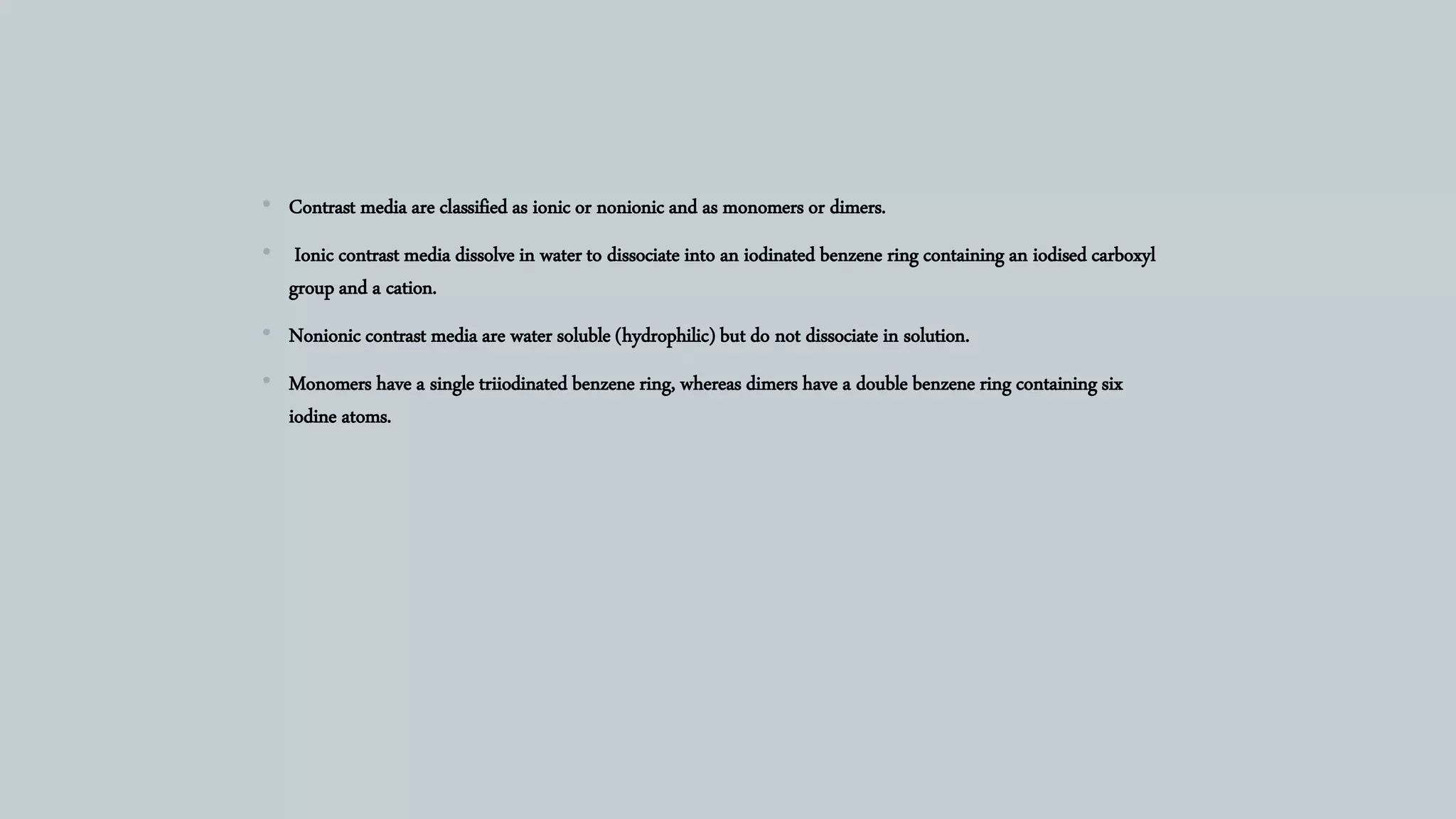
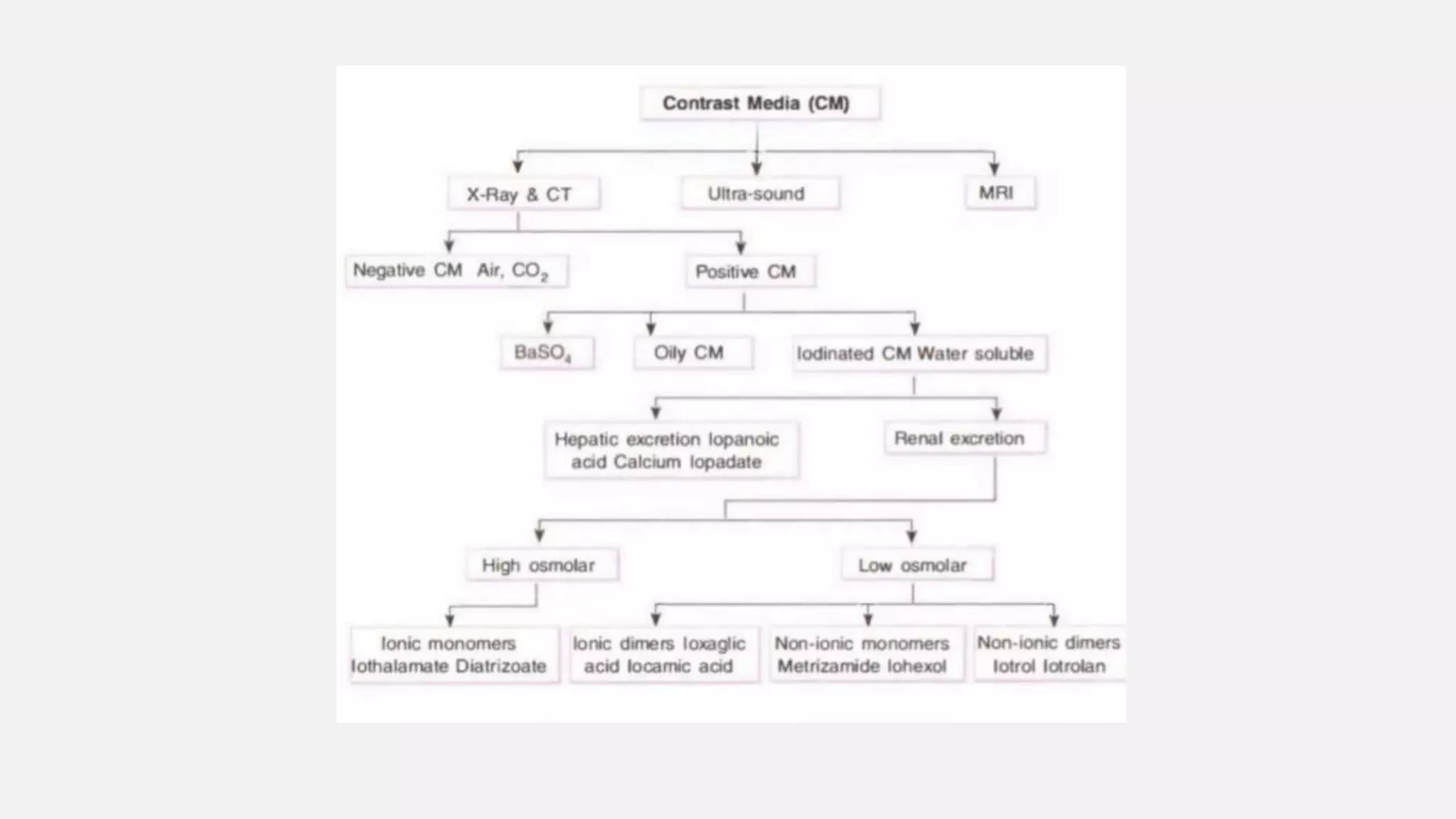
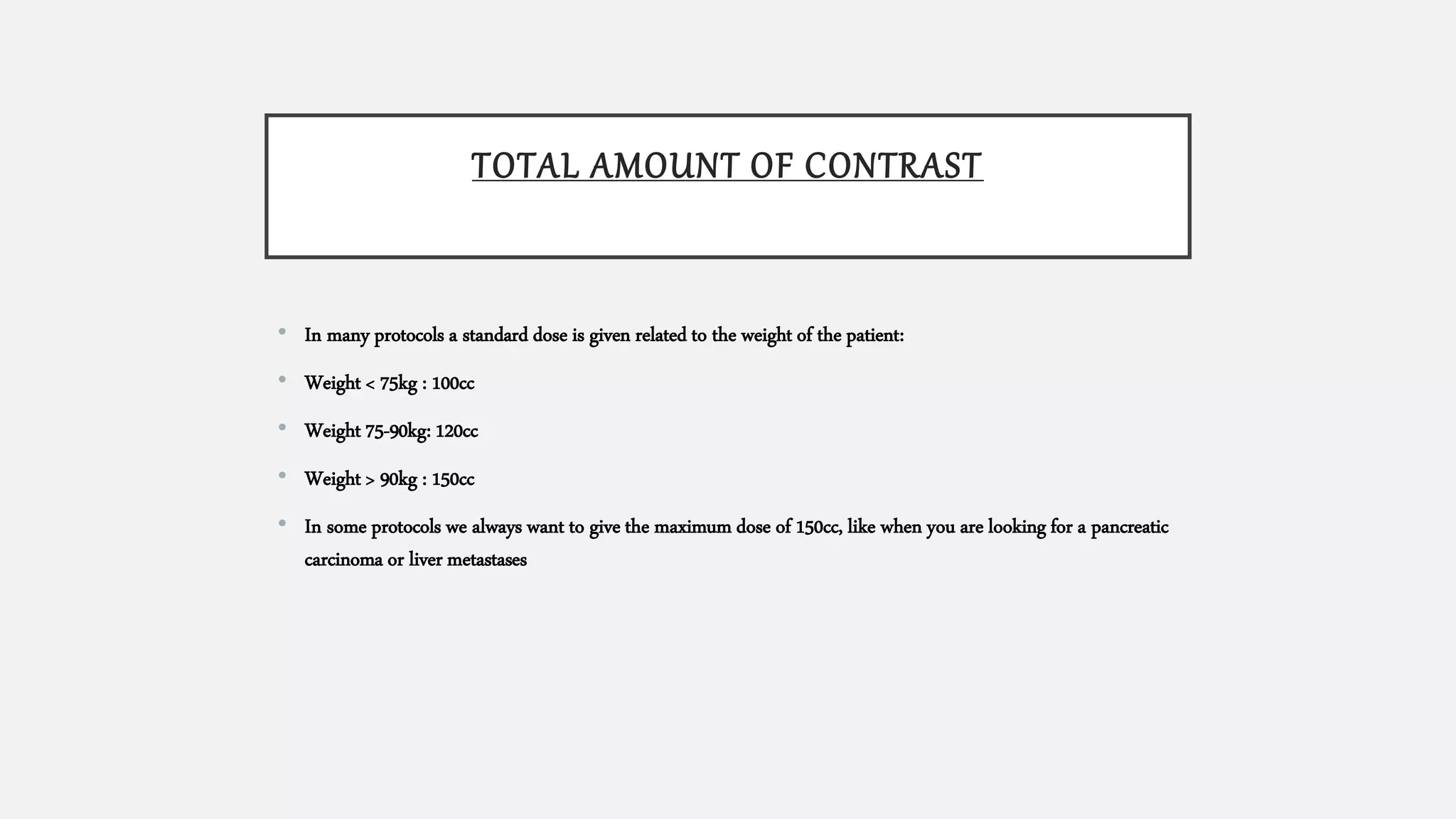
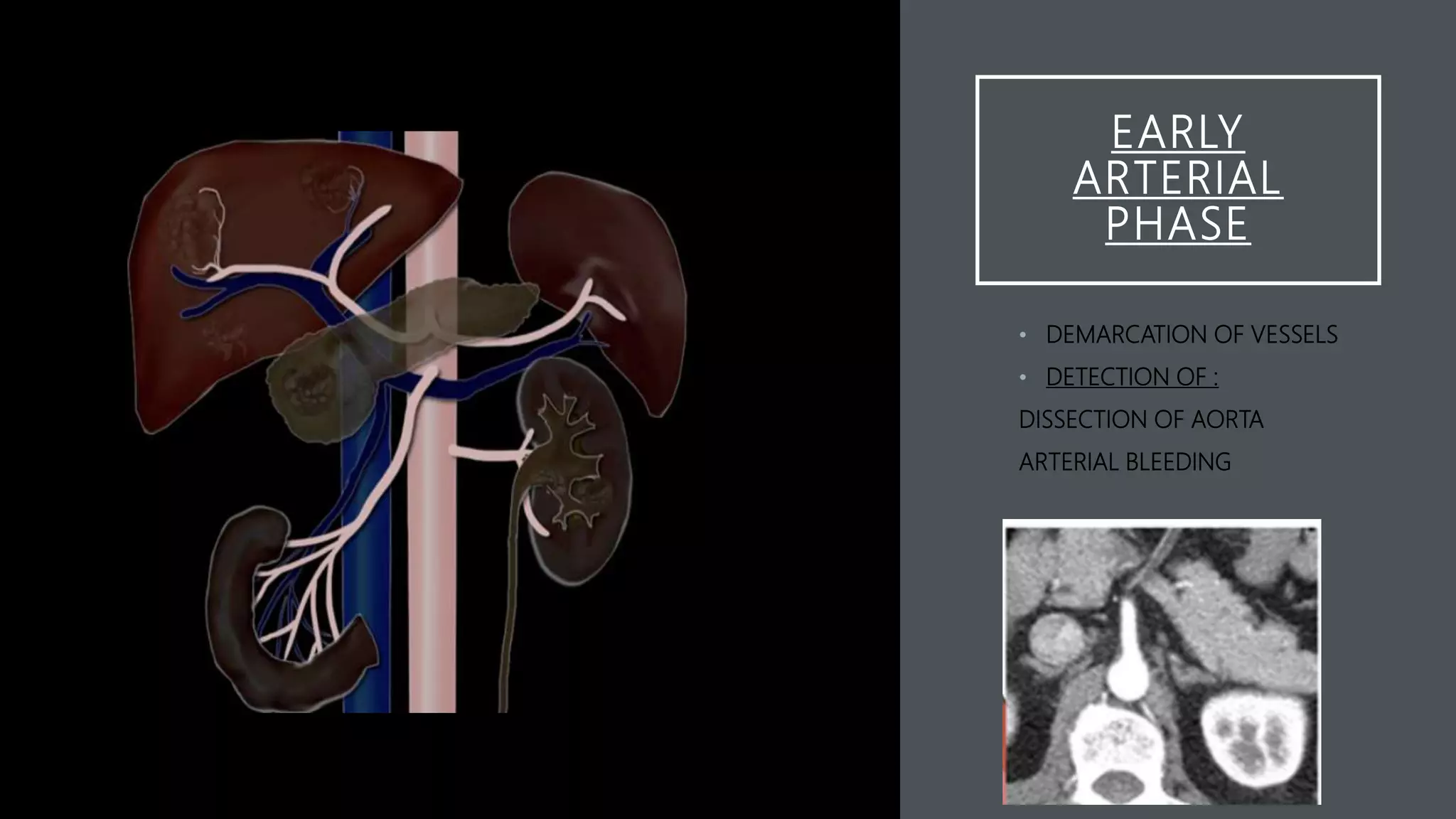
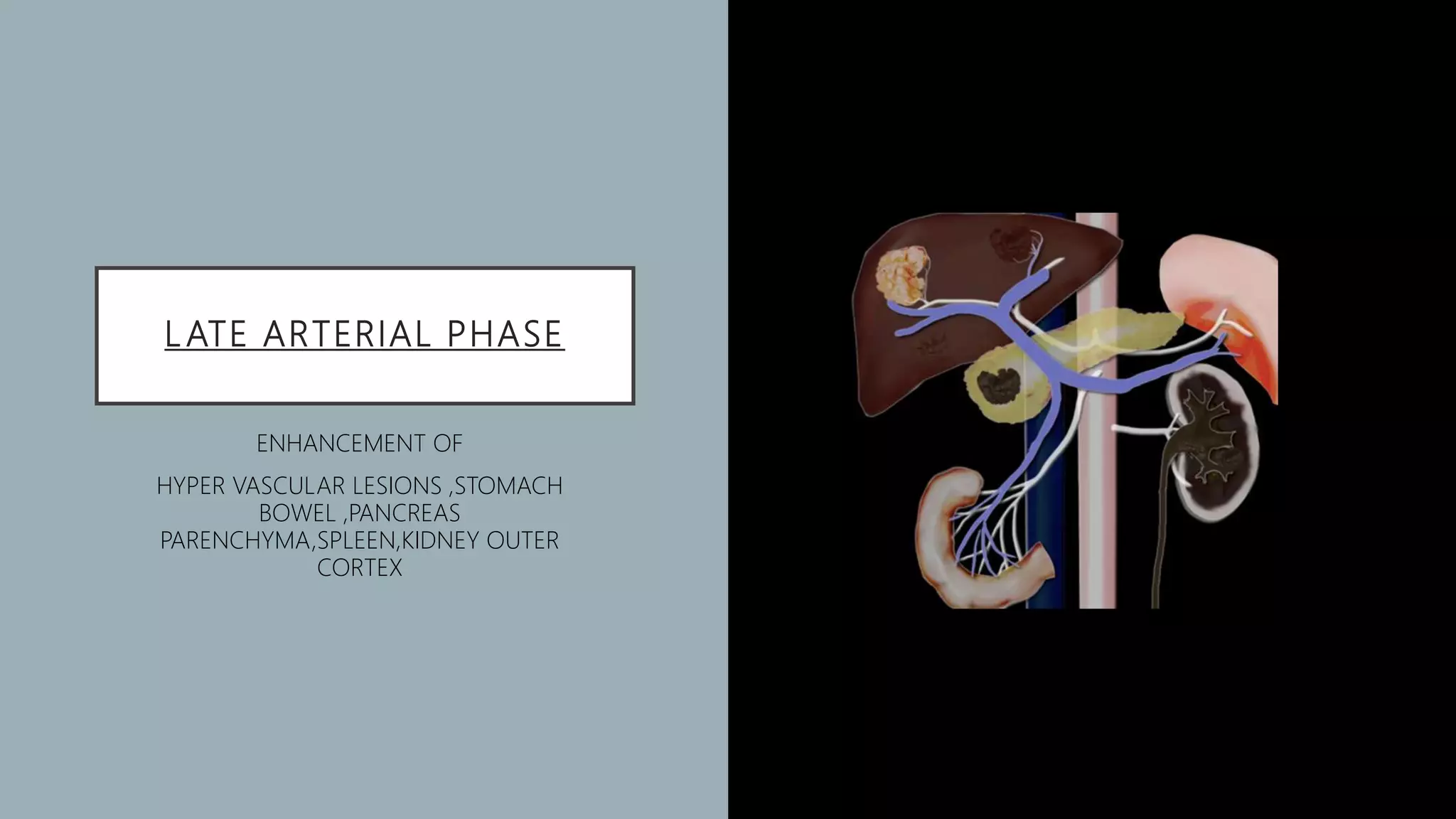
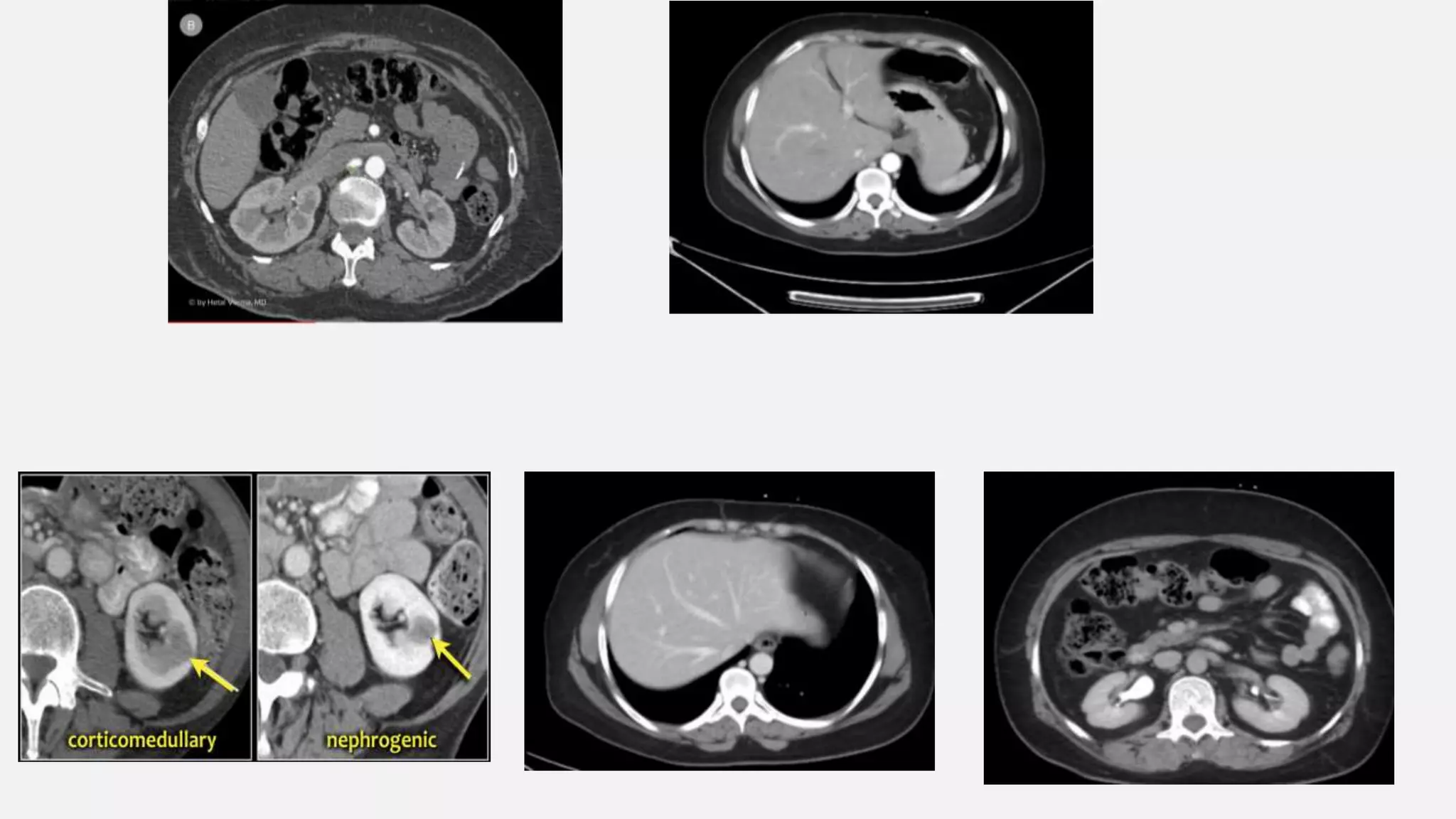
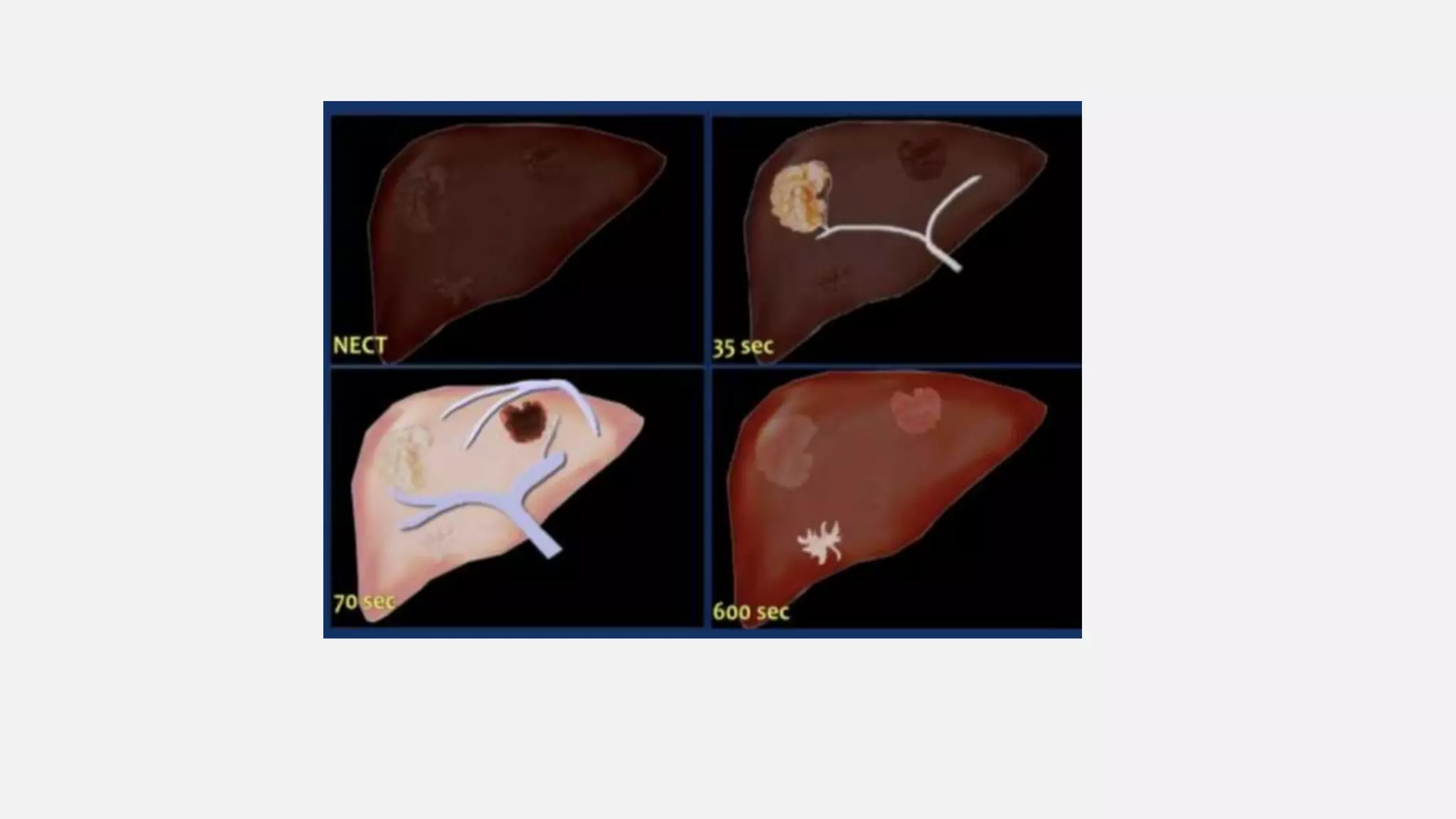
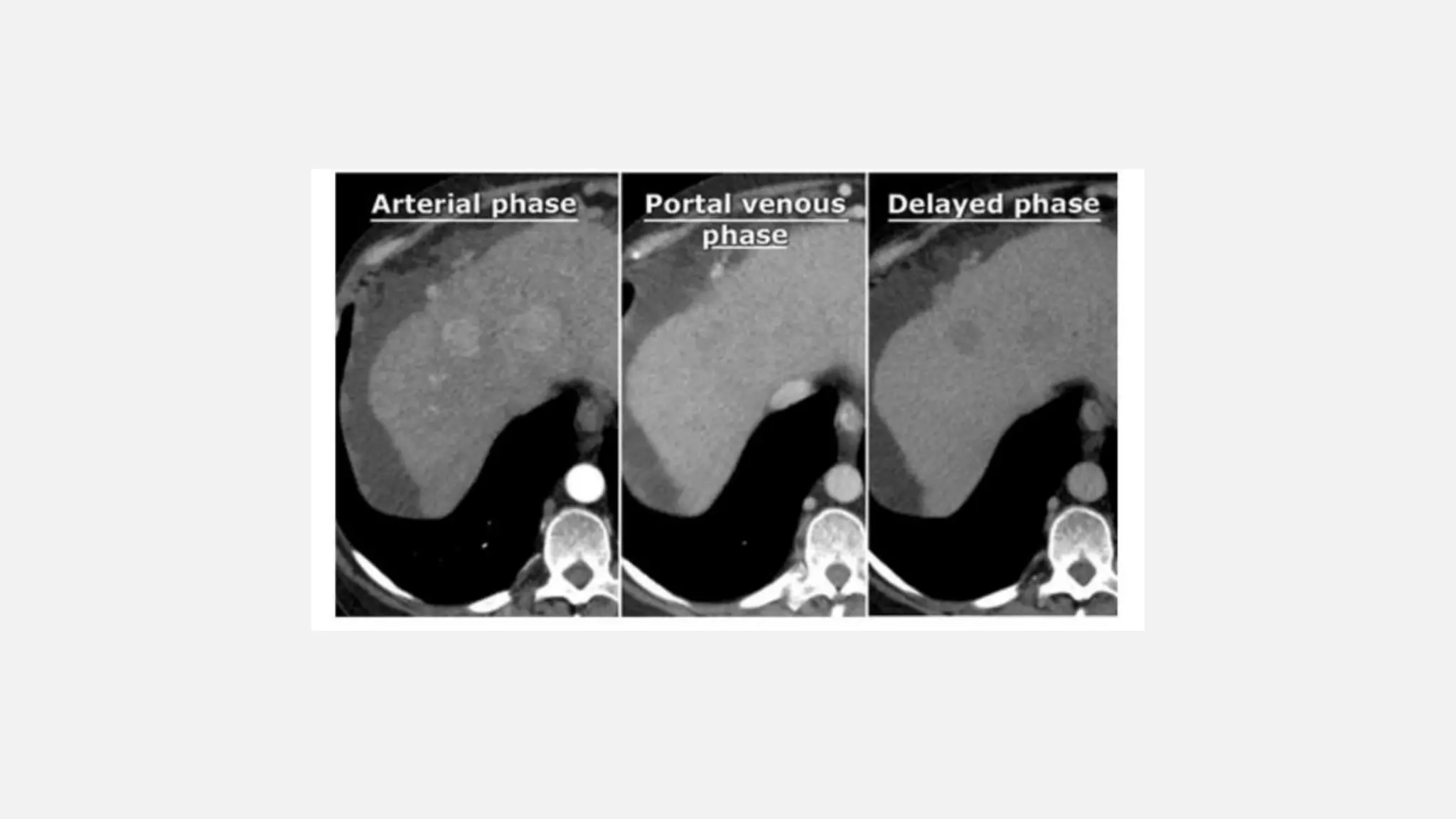
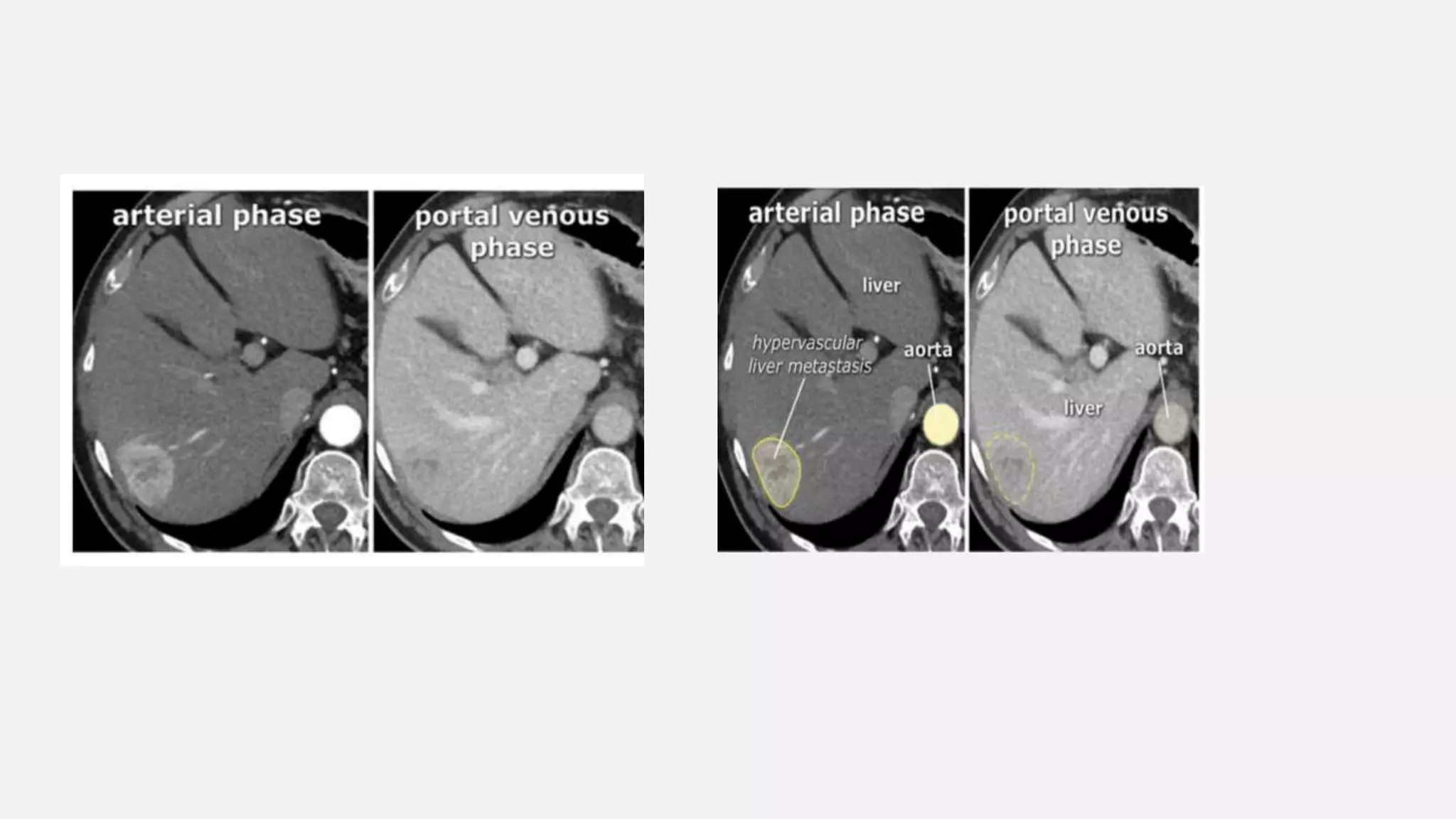
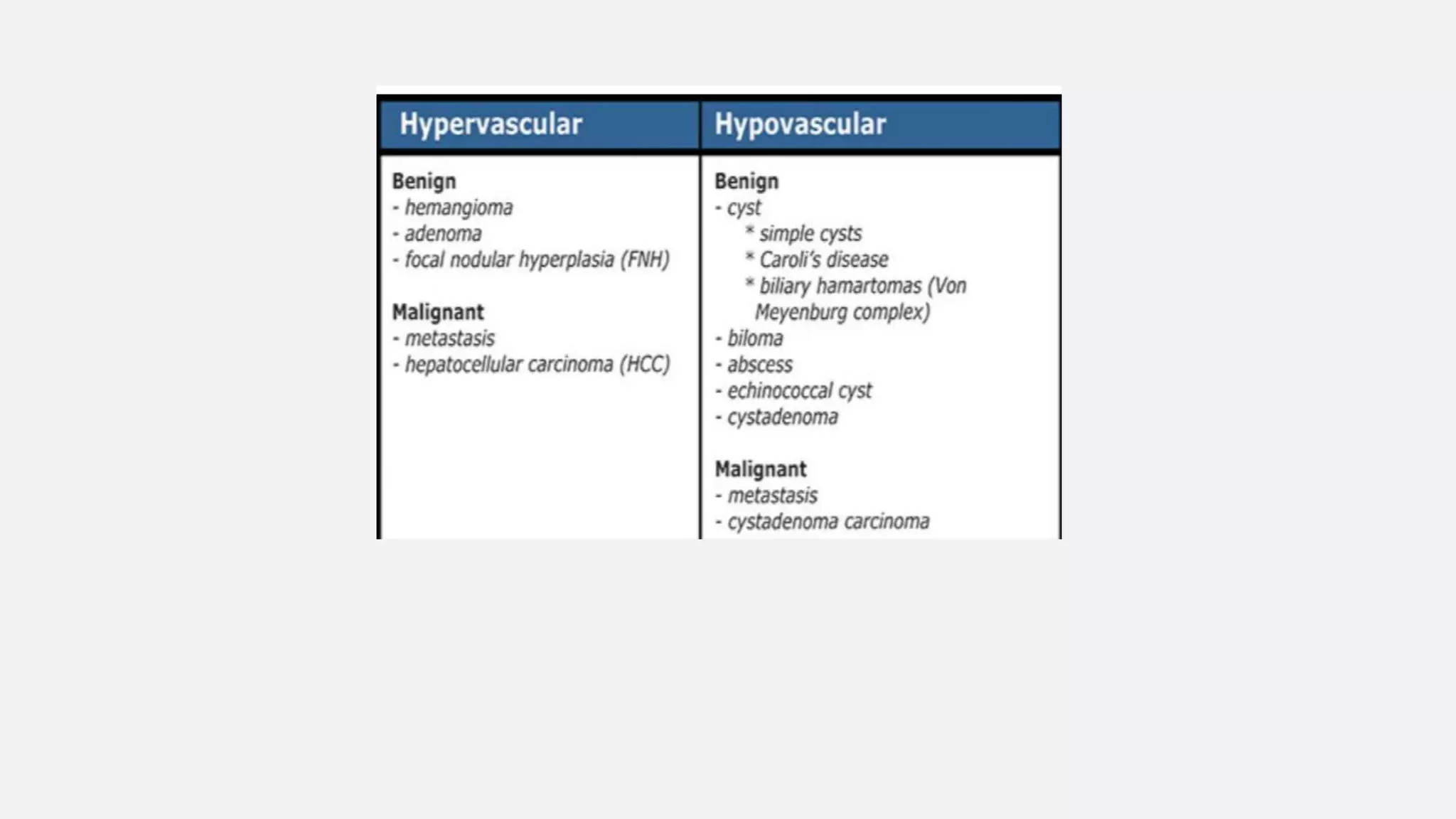
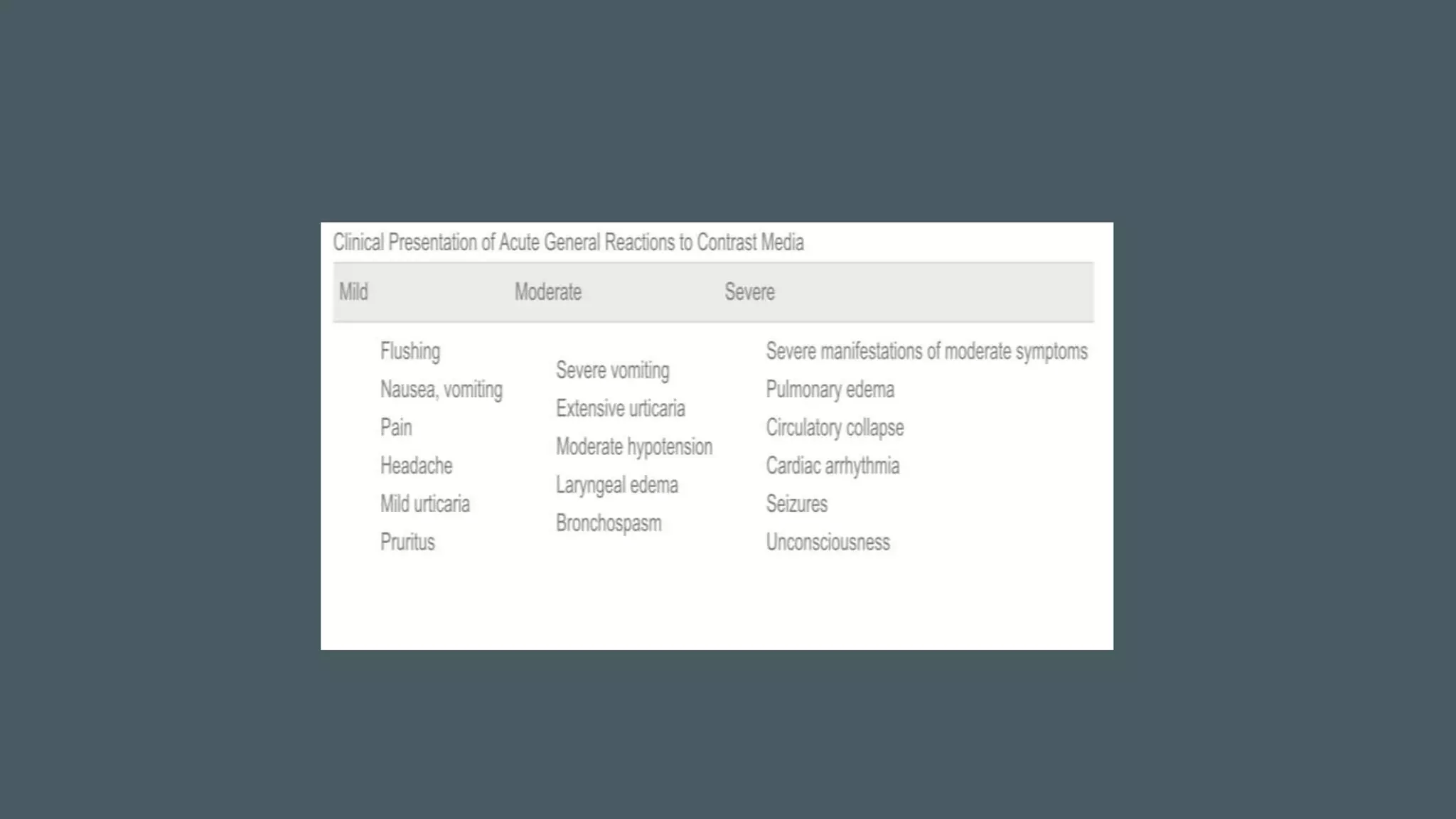
Contrast agents allow for better visualization of internal body structures on CT scans. They are classified as ionic or nonionic, and as monomers or dimers. Contrast is administered orally, rectally, or intravenously depending on the area of interest. The distribution and timing of contrast enhancement is dependent on vascular anatomy and flow. Optimizing the contrast dose, injection rate, and timing of scans based on the clinical question is important for diagnostic accuracy.