Social Media Policy Tips + Guidelines
                             Preliminary Tips

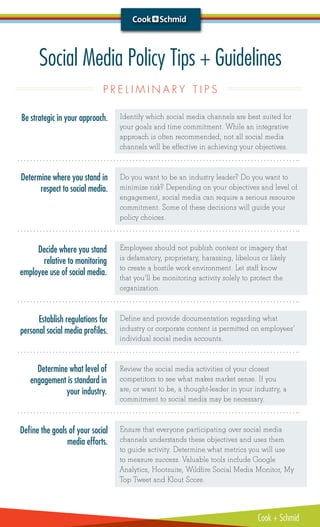
Be strategic in your approach.    Identify which social media channels are best suited for
                                  your goals and time commitment. While an integrative
                                  approach is often recommended, not all social media
                                  channels will be effective in achieving your objectives.


Determine where you stand in      Do you want to be an industry leader? Do you want to
      respect to social media.    minimize risk? Depending on your objectives and level of
                                  engagement, social media can require a serious resource
                                  commitment. Some of these decisions will guide your
                                  policy choices.


     Decide where you stand       Employees should not publish content or imagery that
       relative to monitoring     is defamatory, proprietary, harassing, libelous or likely
                                  to create a hostile work environment. Let staff know
employee use of social media.
                                  that you’ll be monitoring activity solely to protect the
                                  organization.


      Establish regulations for   Define and provide documentation regarding what
personal social media profiles.   industry or corporate content is permitted on employees’
                                  individual social media accounts.


     Determine what level of      Review the social media activities of your closest
   engagement is standard in      competitors to see what makes market sense. If you
              your industry.      are, or want to be, a thought-leader in your industry, a
                                  commitment to social media may be necessary.


Define the goals of your social   Ensure that everyone participating over social media
                media efforts.    channels understands these objectives and uses them
                                  to guide activity. Determine what metrics you will use
                                  to measure success. Valuable tools include Google
                                  Analytics, Hootsuite, Wildfire Social Media Monitor, My
                                  Top Tweet and Klout Score.


                                                                                Cook + Schmid
Social Media Policy Tips + Guidelines
                     Sample Guidelines

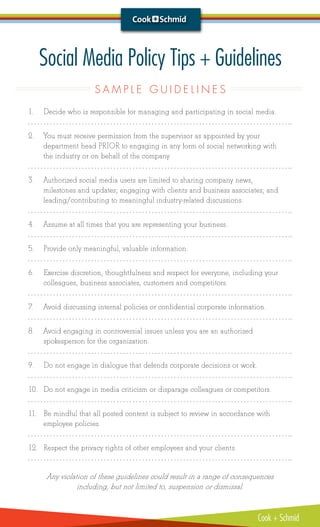
1.	 Decide who is responsible for managing and participating in social media.

2.	 You must receive permission from the supervisor as appointed by your
    department head PRIOR to engaging in any form of social networking with
    the industry or on behalf of the company.

3.	 Authorized social media users are limited to sharing company news,
    milestones and updates; engaging with clients and business associates; and
    leading/contributing to meaningful industry-related discussions.

4.	 Assume at all times that you are representing your business.

5.	 Provide only meaningful, valuable information.

6.	 Exercise discretion, thoughtfulness and respect for everyone, including your
    colleagues, business associates, customers and competitors.

7.	 Avoid discussing internal policies or confidential corporate information.

8.	 Avoid engaging in controversial issues unless you are an authorized
    spokesperson for the organization.

9.	 Do not engage in dialogue that defends corporate decisions or work.

10.	 Do not engage in media criticism or disparage colleagues or competitors.

11.	 Be mindful that all posted content is subject to review in accordance with
     employee policies.

12.	 Respect the privacy rights of other employees and your clients.


     Any violation of these guidelines could result in a range of consequences
               including, but not limited to, suspension or dismissal.


                                                                           Cook + Schmid

Cs blog-social mediapolicy

  • 1.
    Social Media PolicyTips + Guidelines Preliminary Tips Be strategic in your approach. Identify which social media channels are best suited for your goals and time commitment. While an integrative approach is often recommended, not all social media channels will be effective in achieving your objectives. Determine where you stand in Do you want to be an industry leader? Do you want to respect to social media. minimize risk? Depending on your objectives and level of engagement, social media can require a serious resource commitment. Some of these decisions will guide your policy choices. Decide where you stand Employees should not publish content or imagery that relative to monitoring is defamatory, proprietary, harassing, libelous or likely to create a hostile work environment. Let staff know employee use of social media. that you’ll be monitoring activity solely to protect the organization. Establish regulations for Define and provide documentation regarding what personal social media profiles. industry or corporate content is permitted on employees’ individual social media accounts. Determine what level of Review the social media activities of your closest engagement is standard in competitors to see what makes market sense. If you your industry. are, or want to be, a thought-leader in your industry, a commitment to social media may be necessary. Define the goals of your social Ensure that everyone participating over social media media efforts. channels understands these objectives and uses them to guide activity. Determine what metrics you will use to measure success. Valuable tools include Google Analytics, Hootsuite, Wildfire Social Media Monitor, My Top Tweet and Klout Score. Cook + Schmid
  • 2.
    Social Media PolicyTips + Guidelines Sample Guidelines 1. Decide who is responsible for managing and participating in social media. 2. You must receive permission from the supervisor as appointed by your department head PRIOR to engaging in any form of social networking with the industry or on behalf of the company. 3. Authorized social media users are limited to sharing company news, milestones and updates; engaging with clients and business associates; and leading/contributing to meaningful industry-related discussions. 4. Assume at all times that you are representing your business. 5. Provide only meaningful, valuable information. 6. Exercise discretion, thoughtfulness and respect for everyone, including your colleagues, business associates, customers and competitors. 7. Avoid discussing internal policies or confidential corporate information. 8. Avoid engaging in controversial issues unless you are an authorized spokesperson for the organization. 9. Do not engage in dialogue that defends corporate decisions or work. 10. Do not engage in media criticism or disparage colleagues or competitors. 11. Be mindful that all posted content is subject to review in accordance with employee policies. 12. Respect the privacy rights of other employees and your clients. Any violation of these guidelines could result in a range of consequences including, but not limited to, suspension or dismissal. Cook + Schmid