Creative Character Friday We are going to have some fun creating new characters for our writing and art today.
Tuning In Watch  http://www.youtube.com/watch?v=7hzVCyQTE3I
Task 1 Start a list in your art scrapbook. Use the title ~ “Taniwhas” Put in todays date - Friday 5 th  June
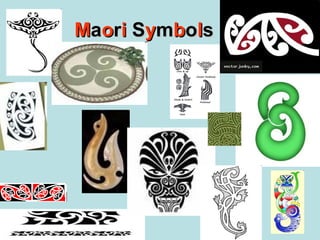
Brainstorm TANIWHA How many different Maori symbols can you come up with?
Tuning In Watch http://www.youtube.com/watch?v=fbCr7Hlp3rQ
As we talk and share ideas today, add to your brainstorm on taniwhas and Maori symbols. You need to keep ‘notes’ which are a record of your thinking.
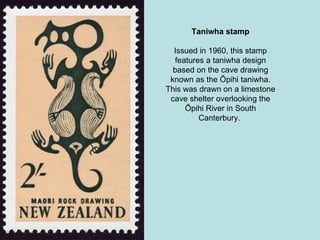
Taniwha stamp Issued in 1960, this stamp features a taniwha design based on the cave drawing known as the Ōpihi taniwha. This was drawn on a limestone cave shelter overlooking the Ōpihi River in South Canterbury.
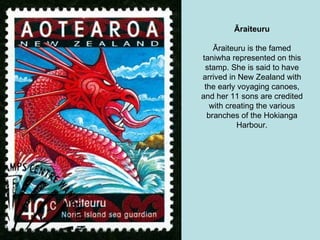
Āraiteuru Āraiteuru is the famed taniwha represented on this stamp. She is said to have arrived in New Zealand with the early voyaging canoes, and her 11 sons are credited with creating the various branches of the Hokianga Harbour.
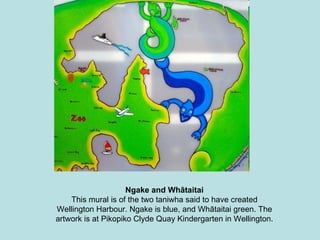
Ngake and Whātaitai This mural is of the two taniwha said to have created Wellington Harbour. Ngake is blue, and Whātaitai green. The artwork is at Pikopiko Clyde Quay Kindergarten in Wellington.
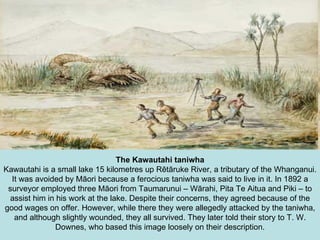
The Kawautahi taniwha Kawautahi is a small lake 15 kilometres up Rētāruke River, a tributary of the Whanganui. It was avoided by Māori because a ferocious taniwha was said to live in it. In 1892 a surveyor employed three Māori from Taumarunui – Wārahi, Pita Te Aitua and Piki – to assist him in his work at the lake. Despite their concerns, they agreed because of the good wages on offer. However, while there they were allegedly attacked by the taniwha, and although slightly wounded, they all survived. They later told their story to T. W. Downes, who based this image loosely on their description.
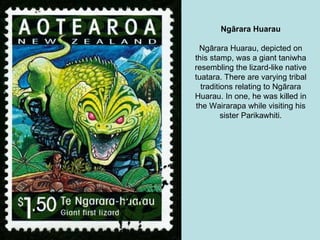
Ngārara Huarau Ngārara Huarau, depicted on this stamp, was a giant taniwha resembling the lizard-like native tuatara. There are varying tribal traditions relating to Ngārara Huarau. In one, he was killed in the Wairarapa while visiting his sister Parikawhiti.
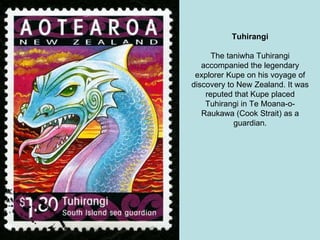
Tuhirangi The taniwha Tuhirangi accompanied the legendary explorer Kupe on his voyage of discovery to New Zealand. It was reputed that Kupe placed Tuhirangi in Te Moana-o-Raukawa (Cook Strait) as a guardian.
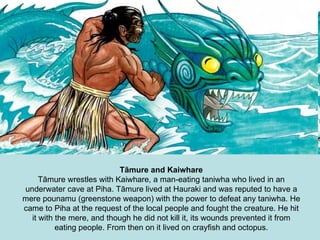
Tāmure and Kaiwhare Tāmure wrestles with Kaiwhare, a man-eating taniwha who lived in an underwater cave at Piha. Tāmure lived at Hauraki and was reputed to have a mere pounamu (greenstone weapon) with the power to defeat any taniwha. He came to Piha at the request of the local people and fought the creature. He hit it with the mere, and though he did not kill it, its wounds prevented it from eating people. From then on it lived on crayfish and octopus.
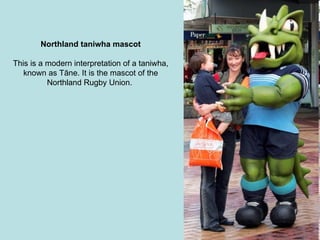
Northland taniwha mascot This is a modern interpretation of a taniwha, known as Tāne. It is the mascot of the Northland Rugby Union.
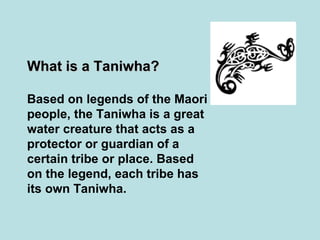
What is a Taniwha? Based on legends of the Maori people, the Taniwha is a great water creature that acts as a protector or guardian of a certain tribe or place. Based on the legend, each tribe has its own Taniwha.
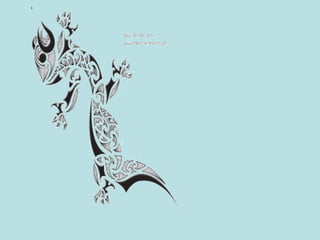
Description: Taniwhas come in many different forms. If the Taniwha appears in the seas or oceans, it takes the form of either a very huge shark or a whale. When it is spotted in lakes or other inland waters, the Taniwha comes in the form of a gecko or a spined lizard. In some encounters it appears as a log or a “wheke” which means octopus”.   Taniwhas can be both male and female.
Because of its size and strength, it is said that Taniwhas are capable of tunnelling through the ground, uprooting trees and overturning houses in the process.  Some Taniwhas have been recognised as creators of certain harbours that form channels to the sea. Among these harbours is the Wellington harbour.  According to the story, the area was created by two Taniwhas. Aside from channels, natives point out that the bends in the river of Waikato were made by Taniwhas. Landslides in the area are often regarded as the works of Taniwhas as well.
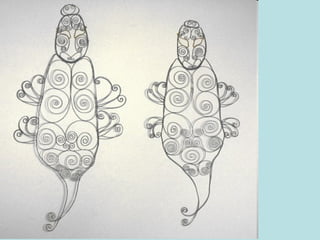
Computer Suite   Use Google images to locate pictures of taniwhas and Maori symbols Add to your notes by listing or drawing & labelling: Colours Size Shapes Maori symbols Habitat Patterns
M a o r i  S y m b o l s


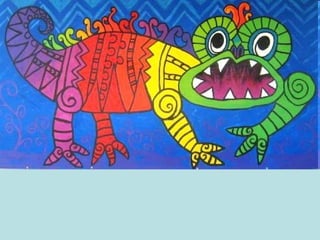
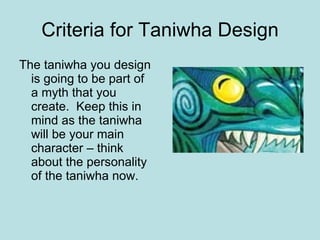
Criteria for Taniwha Design The taniwha you design is going to be part of a myth that you create.  Keep this in mind as the taniwha will be your main character – think about the personality of the taniwha now.
Criteria for Taniwha Design Your taniwha must: Be big on the paper Look like a taniwha creature Be colourful – but think about colour choices Show Maori symbols Have personality

Creative character Friday

  • 1.
    Creative Character FridayWe are going to have some fun creating new characters for our writing and art today.
  • 2.
    Tuning In Watch http://www.youtube.com/watch?v=7hzVCyQTE3I
  • 3.
    Task 1 Starta list in your art scrapbook. Use the title ~ “Taniwhas” Put in todays date - Friday 5 th June
  • 4.
    Brainstorm TANIWHA Howmany different Maori symbols can you come up with?
  • 5.
    Tuning In Watchhttp://www.youtube.com/watch?v=fbCr7Hlp3rQ
  • 6.
    As we talkand share ideas today, add to your brainstorm on taniwhas and Maori symbols. You need to keep ‘notes’ which are a record of your thinking.
  • 7.
    Taniwha stamp Issuedin 1960, this stamp features a taniwha design based on the cave drawing known as the Ōpihi taniwha. This was drawn on a limestone cave shelter overlooking the Ōpihi River in South Canterbury.
  • 8.
    Āraiteuru Āraiteuru isthe famed taniwha represented on this stamp. She is said to have arrived in New Zealand with the early voyaging canoes, and her 11 sons are credited with creating the various branches of the Hokianga Harbour.
  • 9.
    Ngake and WhātaitaiThis mural is of the two taniwha said to have created Wellington Harbour. Ngake is blue, and Whātaitai green. The artwork is at Pikopiko Clyde Quay Kindergarten in Wellington.
  • 10.
    The Kawautahi taniwhaKawautahi is a small lake 15 kilometres up Rētāruke River, a tributary of the Whanganui. It was avoided by Māori because a ferocious taniwha was said to live in it. In 1892 a surveyor employed three Māori from Taumarunui – Wārahi, Pita Te Aitua and Piki – to assist him in his work at the lake. Despite their concerns, they agreed because of the good wages on offer. However, while there they were allegedly attacked by the taniwha, and although slightly wounded, they all survived. They later told their story to T. W. Downes, who based this image loosely on their description.
  • 11.
    Ngārara Huarau NgāraraHuarau, depicted on this stamp, was a giant taniwha resembling the lizard-like native tuatara. There are varying tribal traditions relating to Ngārara Huarau. In one, he was killed in the Wairarapa while visiting his sister Parikawhiti.
  • 12.
    Tuhirangi The taniwhaTuhirangi accompanied the legendary explorer Kupe on his voyage of discovery to New Zealand. It was reputed that Kupe placed Tuhirangi in Te Moana-o-Raukawa (Cook Strait) as a guardian.
  • 13.
    Tāmure and KaiwhareTāmure wrestles with Kaiwhare, a man-eating taniwha who lived in an underwater cave at Piha. Tāmure lived at Hauraki and was reputed to have a mere pounamu (greenstone weapon) with the power to defeat any taniwha. He came to Piha at the request of the local people and fought the creature. He hit it with the mere, and though he did not kill it, its wounds prevented it from eating people. From then on it lived on crayfish and octopus.
  • 14.
    Northland taniwha mascotThis is a modern interpretation of a taniwha, known as Tāne. It is the mascot of the Northland Rugby Union.
  • 15.
    What is aTaniwha? Based on legends of the Maori people, the Taniwha is a great water creature that acts as a protector or guardian of a certain tribe or place. Based on the legend, each tribe has its own Taniwha.
  • 16.
    Description: Taniwhas comein many different forms. If the Taniwha appears in the seas or oceans, it takes the form of either a very huge shark or a whale. When it is spotted in lakes or other inland waters, the Taniwha comes in the form of a gecko or a spined lizard. In some encounters it appears as a log or a “wheke” which means octopus”. Taniwhas can be both male and female.
  • 17.
    Because of itssize and strength, it is said that Taniwhas are capable of tunnelling through the ground, uprooting trees and overturning houses in the process. Some Taniwhas have been recognised as creators of certain harbours that form channels to the sea. Among these harbours is the Wellington harbour. According to the story, the area was created by two Taniwhas. Aside from channels, natives point out that the bends in the river of Waikato were made by Taniwhas. Landslides in the area are often regarded as the works of Taniwhas as well.
  • 18.
    Computer Suite Use Google images to locate pictures of taniwhas and Maori symbols Add to your notes by listing or drawing & labelling: Colours Size Shapes Maori symbols Habitat Patterns
  • 19.
    M a or i S y m b o l s
  • 20.
  • 21.
  • 22.
  • 23.
  • 24.
    Criteria for TaniwhaDesign The taniwha you design is going to be part of a myth that you create. Keep this in mind as the taniwha will be your main character – think about the personality of the taniwha now.
  • 25.
    Criteria for TaniwhaDesign Your taniwha must: Be big on the paper Look like a taniwha creature Be colourful – but think about colour choices Show Maori symbols Have personality