CRAFTING STRATEGY
• Image of strategy:
– Rational control,
– Systematic analysis,
– Clear strategies,
– >>> a “planning” Image > not necessarily accurate
• Crafting Strategy:>>> better captures the process of
strategy development, and how strategies get made
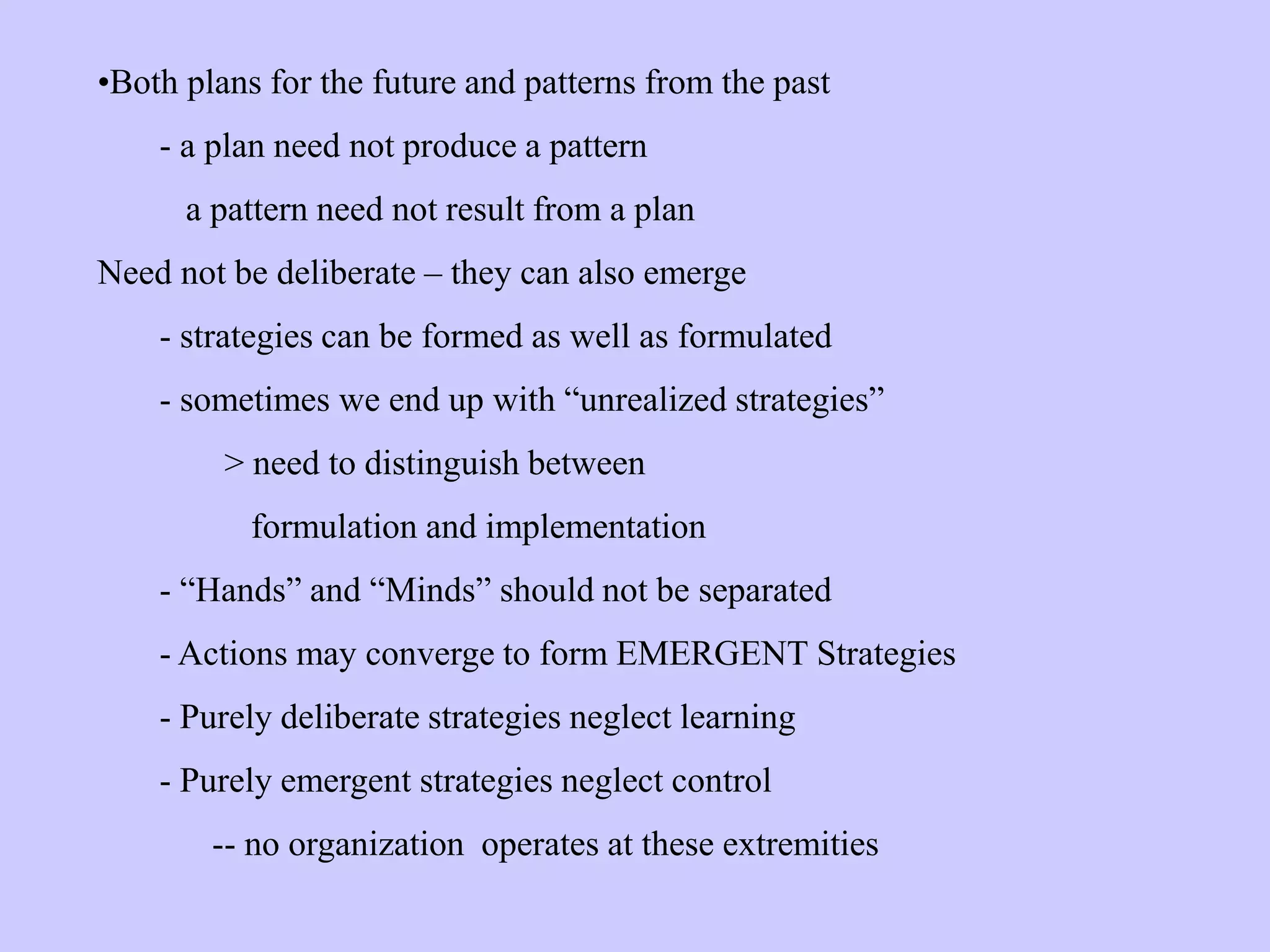
•Both plans for the future and patterns from the past
- a plan need not produce a pattern
a pattern need not result from a plan
Need not be deliberate – they can also emerge
- strategies can be formed as well as formulated
- sometimes we end up with “unrealized strategies”
> need to distinguish between
formulation and implementation
- “Hands” and “Minds” should not be separated
- Actions may converge to form EMERGENT Strategies
- Purely deliberate strategies neglect learning
- Purely emergent strategies neglect control
-- no organization operates at these extremities
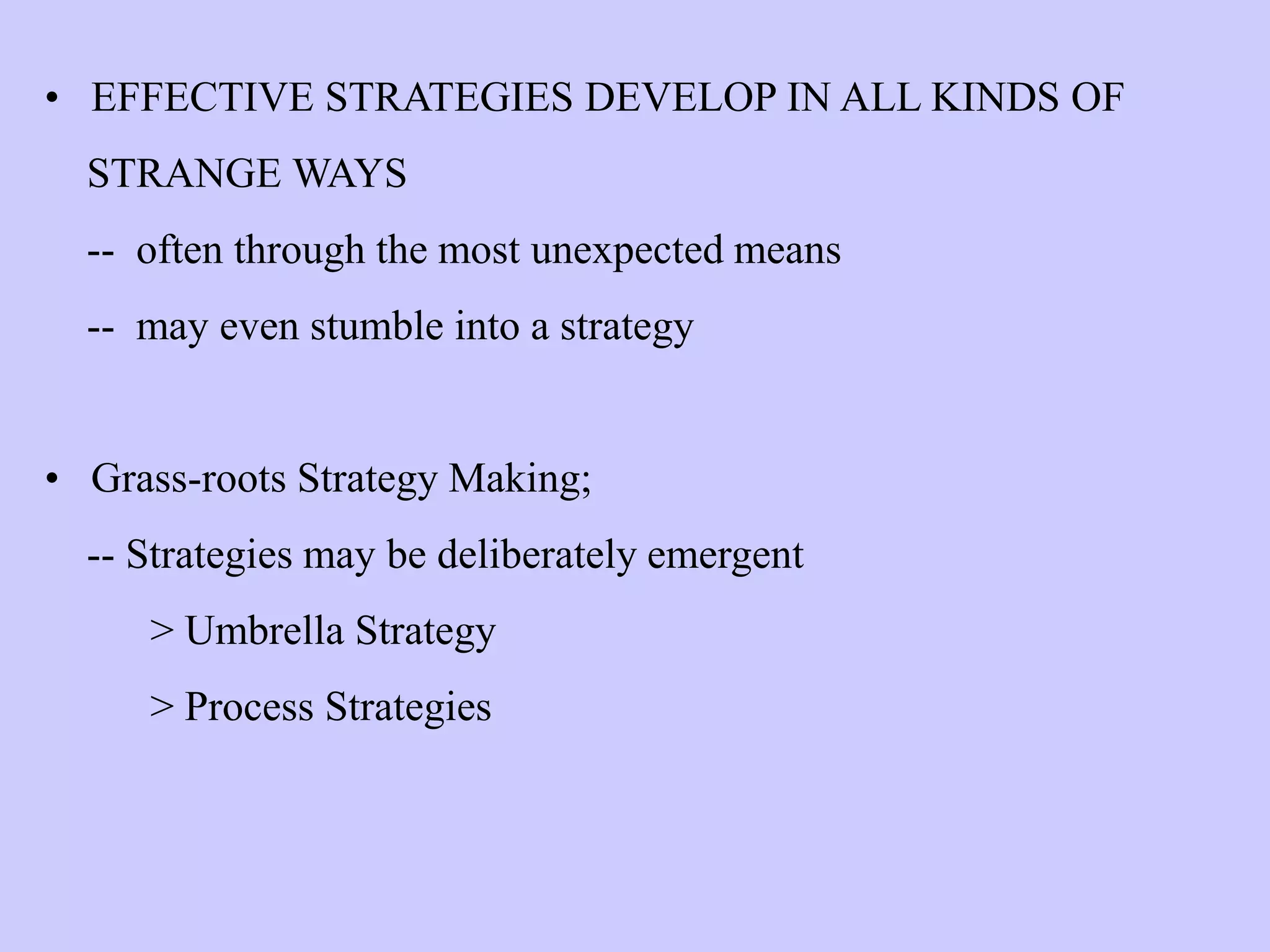
• EFFECTIVE STRATEGIES DEVELOP IN ALL KINDS OF
STRANGE WAYS
-- often through the most unexpected means
-- may even stumble into a strategy
• Grass-roots Strategy Making;
-- Strategies may be deliberately emergent
> Umbrella Strategy
> Process Strategies
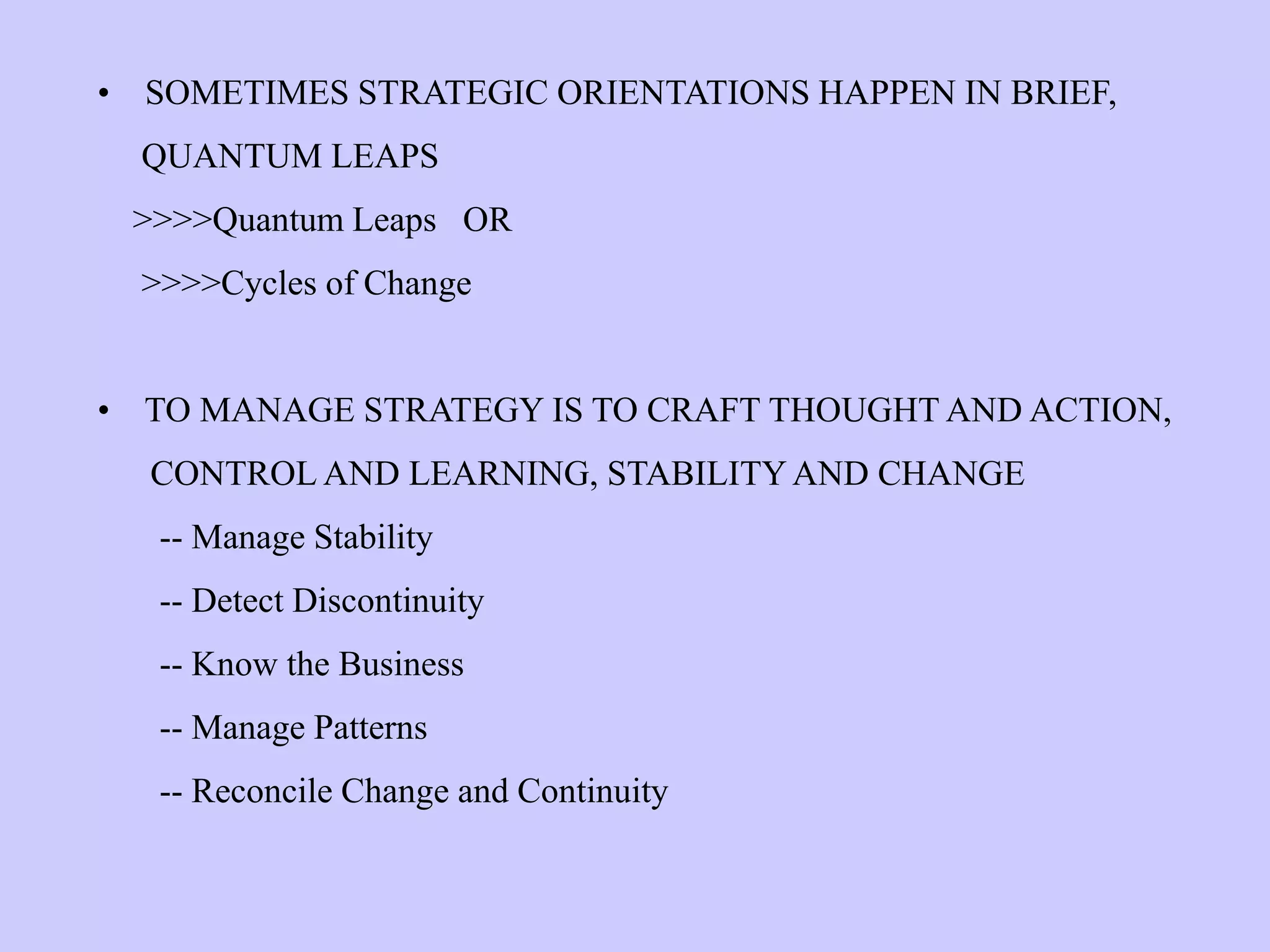
• SOMETIMES STRATEGIC ORIENTATIONS HAPPEN IN BRIEF,
QUANTUM LEAPS
>>>>Quantum Leaps OR
>>>>Cycles of Change
• TO MANAGE STRATEGY IS TO CRAFT THOUGHT AND ACTION,
CONTROL AND LEARNING, STABILITYAND CHANGE
-- Manage Stability
-- Detect Discontinuity
-- Know the Business
-- Manage Patterns
-- Reconcile Change and Continuity
WHAT THE HELL IS
“MARKET ORIENTED?”
• Information on all important buying influences
permeates all corporate functions
• Strategic and tactical decisions are made
interfunctionally and interdivisionally
• Divisions and functions make well-coordinated
decisions and execute them with a sense of
commitment.

CRAFTING STRATEGY (1).ppt

  • 1.
    CRAFTING STRATEGY • Imageof strategy: – Rational control, – Systematic analysis, – Clear strategies, – >>> a “planning” Image > not necessarily accurate • Crafting Strategy:>>> better captures the process of strategy development, and how strategies get made
  • 2.
    •Both plans forthe future and patterns from the past - a plan need not produce a pattern a pattern need not result from a plan Need not be deliberate – they can also emerge - strategies can be formed as well as formulated - sometimes we end up with “unrealized strategies” > need to distinguish between formulation and implementation - “Hands” and “Minds” should not be separated - Actions may converge to form EMERGENT Strategies - Purely deliberate strategies neglect learning - Purely emergent strategies neglect control -- no organization operates at these extremities
  • 3.
    • EFFECTIVE STRATEGIESDEVELOP IN ALL KINDS OF STRANGE WAYS -- often through the most unexpected means -- may even stumble into a strategy • Grass-roots Strategy Making; -- Strategies may be deliberately emergent > Umbrella Strategy > Process Strategies
  • 4.
    • SOMETIMES STRATEGICORIENTATIONS HAPPEN IN BRIEF, QUANTUM LEAPS >>>>Quantum Leaps OR >>>>Cycles of Change • TO MANAGE STRATEGY IS TO CRAFT THOUGHT AND ACTION, CONTROL AND LEARNING, STABILITYAND CHANGE -- Manage Stability -- Detect Discontinuity -- Know the Business -- Manage Patterns -- Reconcile Change and Continuity
  • 5.
    WHAT THE HELLIS “MARKET ORIENTED?” • Information on all important buying influences permeates all corporate functions • Strategic and tactical decisions are made interfunctionally and interdivisionally • Divisions and functions make well-coordinated decisions and execute them with a sense of commitment.