
1
CPCSEA GUIDELINES
(COMMITTE FOR THE PURPOSE OF CONTROL & SUPERVISION ON EXPERIMENT ON ANIMAL)
PRESENTED BY : VINAY G. POLPELLIWAR
2
CONTENTS :
• INTRODUCTION
• GUIDELINE FOR EXPERIMENT ON ANIMAL
• OBJECTIVES
• VETERNARY CARE
• ANIMAL PROCURMENT
• QUARANTINE ,STABILIZATION AND SEPRATION
• SURVEILLANCE, DIAGNOSIS ,TREATMENT AND
CONTROL OF DISEASE
• PERSONAL HYGIENE
• MULTIPLE SURGICAL PROCEDURES ON SINGLE ANIMAL
• DURATION OF EXPERIMENT
• PHYSICAL RELATIONSHIP OF ANIMAL
FACILITIES TO LABORATORIES
• PHYSICAL FACILITES
• ENVIORNMENTAL CONDITION
• ANIMAL HUSBANDRY
• FOOD AND WATER
• BEDDING
• SANITATION AND CLEANNING
• WASTE DISPOSAL
• RECORD KEPPING
• SOPs
• PERSONNEL AND TRAINING
• TRANSPORT OF LAB ANIMALS
• ANAESTHESIAAND EUTHANASIA
• REFRANCES
3
INTRODUCTION
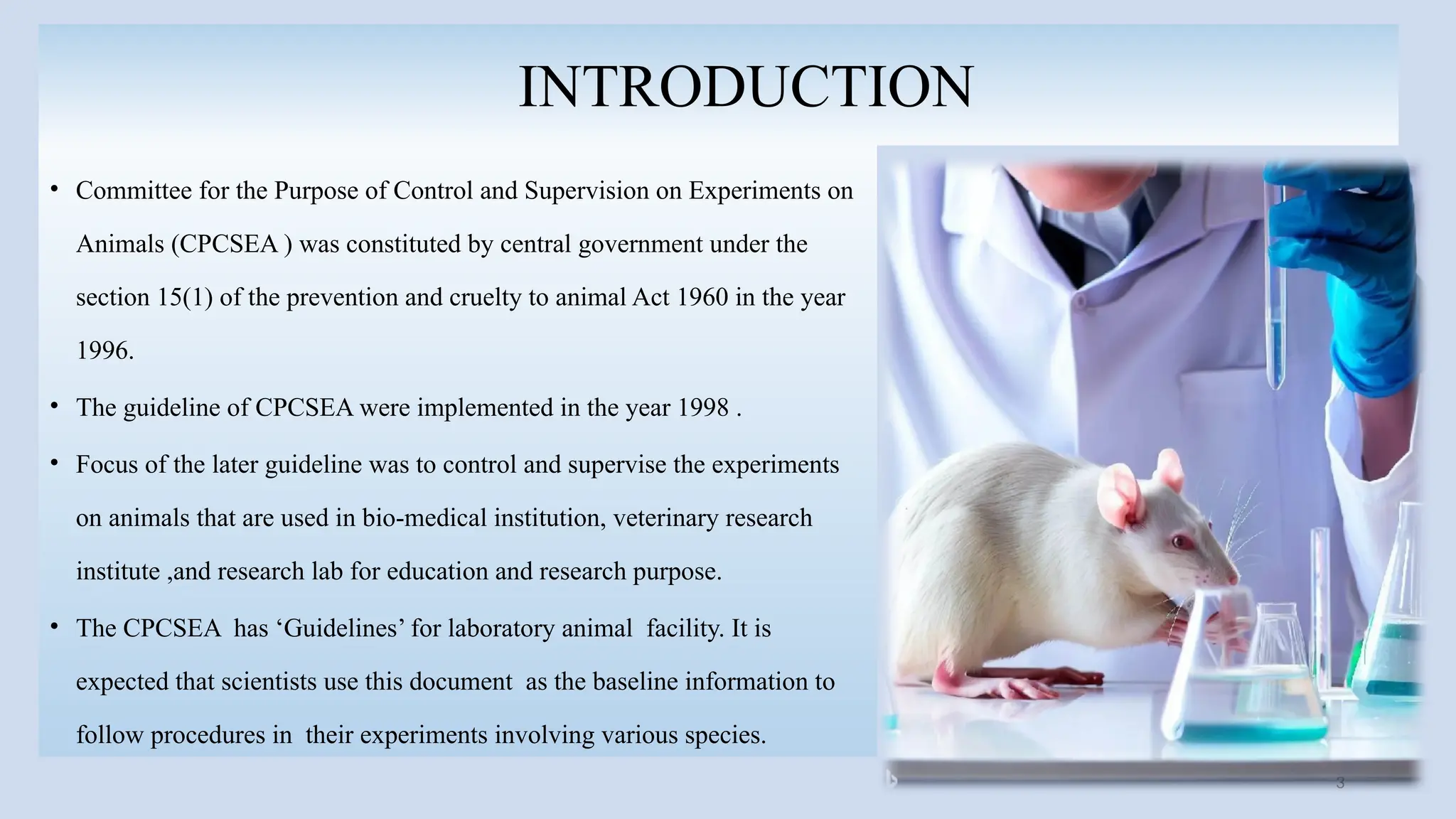
• Committee for the Purpose of Control and Supervision on Experiments on
Animals (CPCSEA ) was constituted by central government under the
section 15(1) of the prevention and cruelty to animal Act 1960 in the year
1996.
• The guideline of CPCSEA were implemented in the year 1998 .
• Focus of the later guideline was to control and supervise the experiments
on animals that are used in bio-medical institution, veterinary research
institute ,and research lab for education and research purpose.
• The CPCSEA has ‘Guidelines’ for laboratory animal facility. It is
expected that scientists use this document as the baseline information to
follow procedures in their experiments involving various species.
4
GUIDELINES FOR EXPERIMENT ON ANIMALS
1. CPCSEA Guidelines on the norms and practices for regulation of animal
experimentation.
2. CPCSEA Guidelines for laboratory animal facility.
3. Indian National Science Academy (INSA) Guidelines for care and use of animals in
scientific research.
4. ICMR Guidelines for use of laboratory animals in Medical Colleges.
ACT & RULES FOR EXPERIMENT ON ANIMALS
1. The Prevention of Cruelty to Animals Act, 1960
2. The Breeding of and Experiments on Animals (Control & Supervision)
Rules, 1998
3. The Breeding of and Experiments on Animals (Control & Supervision)
Amendment Rules, 2001
5
The goal of these Guidelines is to promote the humane care of
animals used in biomedical and behavioral research and
testing.
Avoid unnecessary pain before, during and after experiment .
To provide guideline for :
Housing ,care , breeding , and maintenance.
Source of experiment animal.
Acceptable experiment procedure for anaesthesia and
euthanasia.
6
VETERNARY CARE
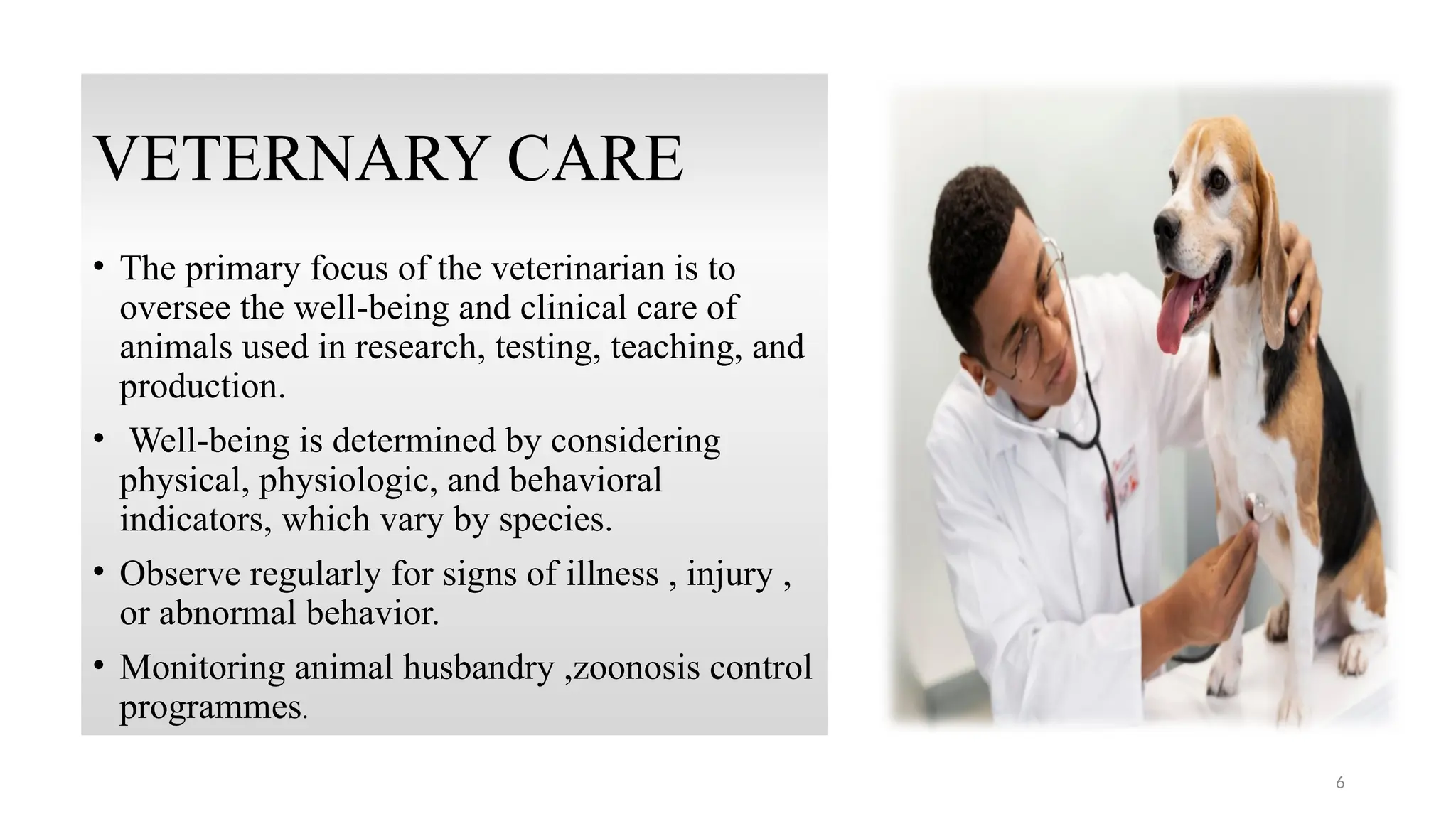
• The primary focus of the veterinarian is to
oversee the well-being and clinical care of
animals used in research, testing, teaching, and
production.
• Well-being is determined by considering
physical, physiologic, and behavioral
indicators, which vary by species.
• Observe regularly for signs of illness , injury ,
or abnormal behavior.
• Monitoring animal husbandry ,zoonosis control
programmes.
ANIMAL PROCUREMENT
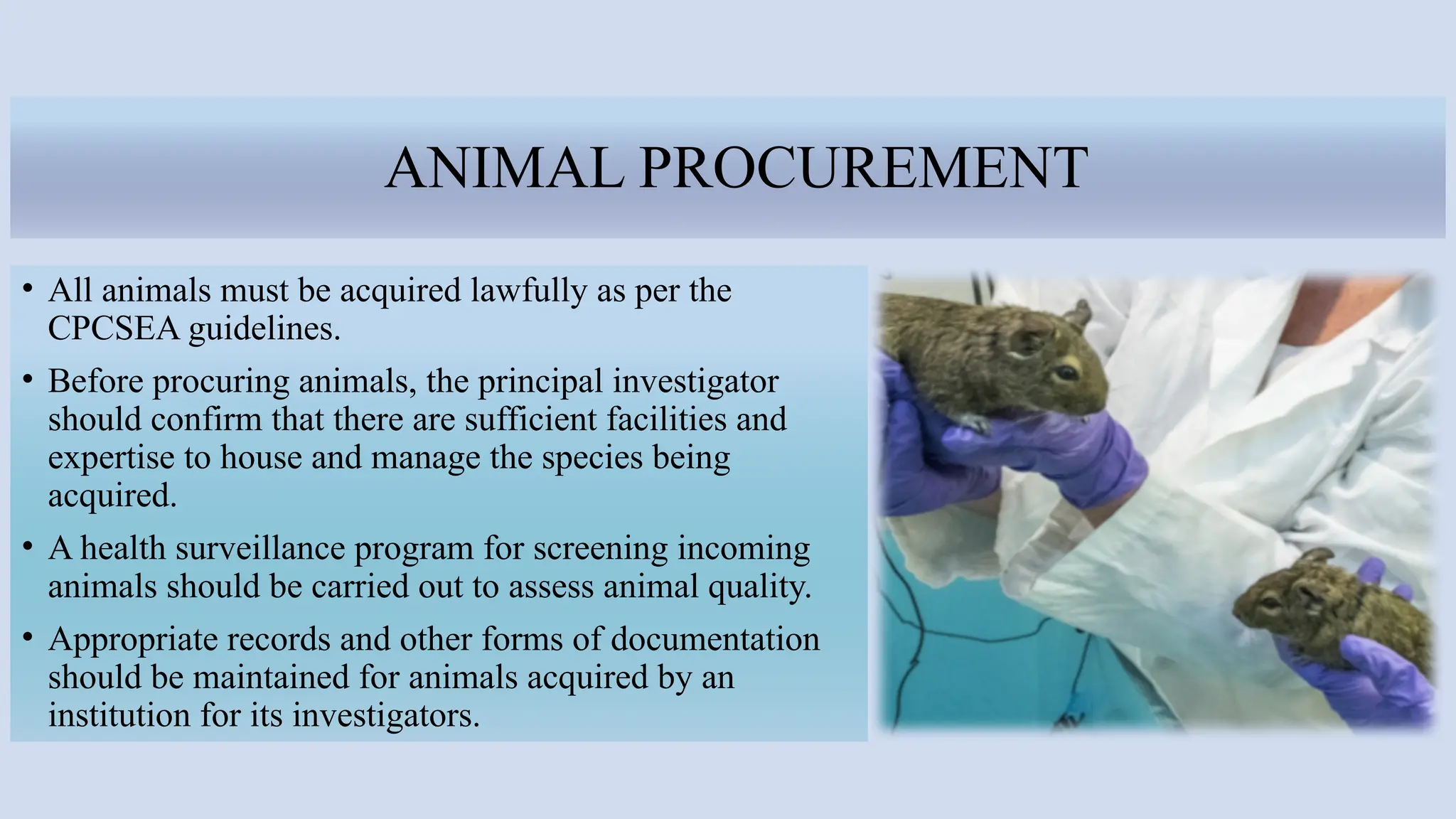
• All animals must be acquired lawfully as per the
CPCSEA guidelines.
• Before procuring animals, the principal investigator
should confirm that there are sufficient facilities and
expertise to house and manage the species being
acquired.
• A health surveillance program for screening incoming
animals should be carried out to assess animal quality.
• Appropriate records and other forms of documentation
should be maintained for animals acquired by an
institution for its investigators.
8
QUARANTINE ,STABILIZATION AND
SEPRATION
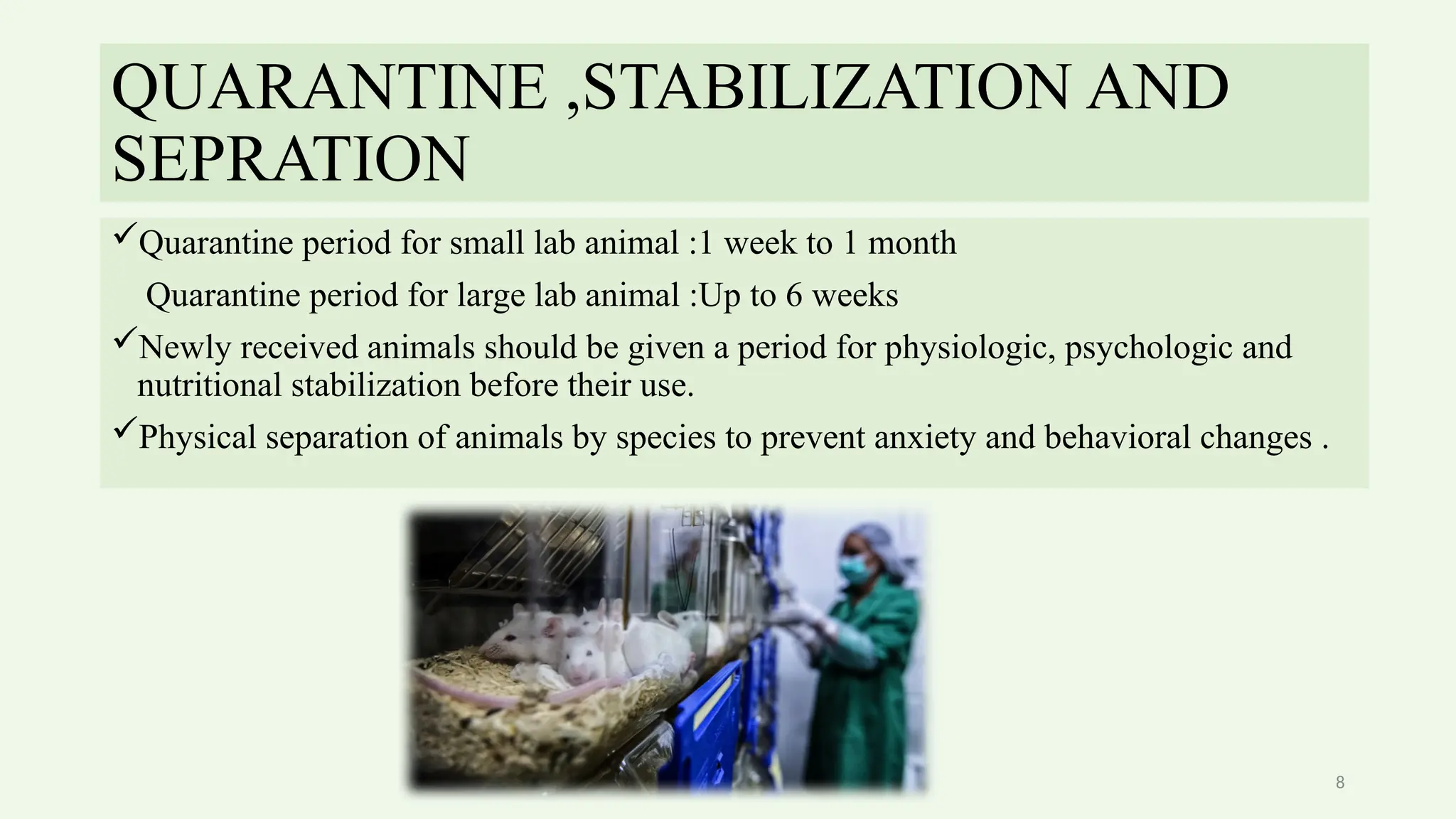
Quarantine period for small lab animal :1 week to 1 month
Quarantine period for large lab animal :Up to 6 weeks
Newly received animals should be given a period for physiologic, psychologic and
nutritional stabilization before their use.
Physical separation of animals by species to prevent anxiety and behavioral changes .
9
SURVEILLANCE, DIAGNOSIS ,TREATMENT
AND CONTROL OF DISEASE
All animals should be observed for signs of illness, injury, or abnormal
behavior by animal house staff.
Unexpected deaths and signs of illness, distress, or other deviations from
normal health condition in animals should be reported promptly to ensure
appropriate and timely delivery of veterinary medical care.
Animals that show signs of a contagious disease should be isolated from
healthy animals in the colony.
Diagnostic clinical laboratory may be made available.
10
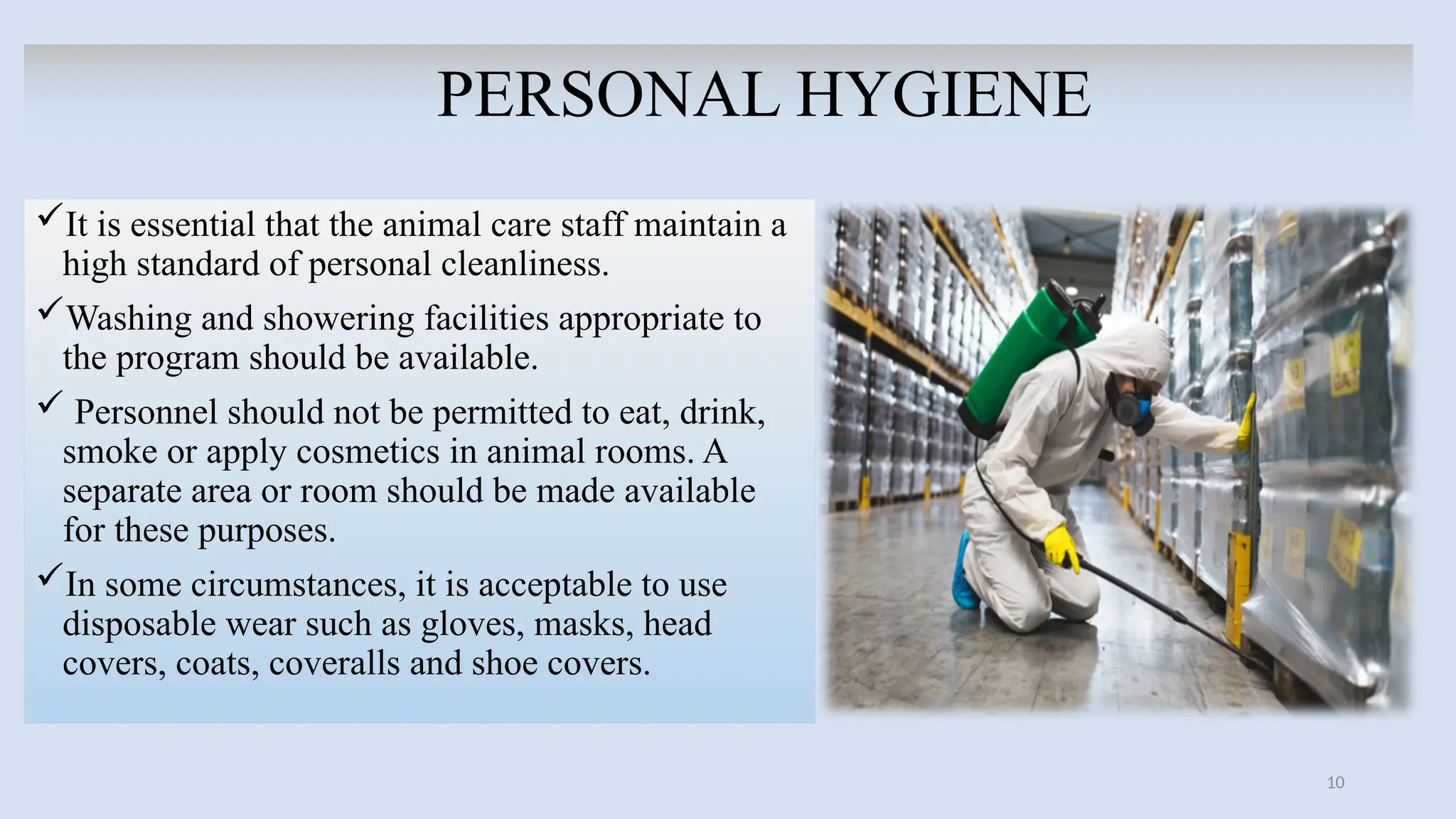
PERSONAL HYGIENE
It is essential that the animal care staff maintain a
high standard of personal cleanliness.
Washing and showering facilities appropriate to
the program should be available.
 Personnel should not be permitted to eat, drink,
smoke or apply cosmetics in animal rooms. A
separate area or room should be made available
for these purposes.
In some circumstances, it is acceptable to use
disposable wear such as gloves, masks, head
covers, coats, coveralls and shoe covers.
11
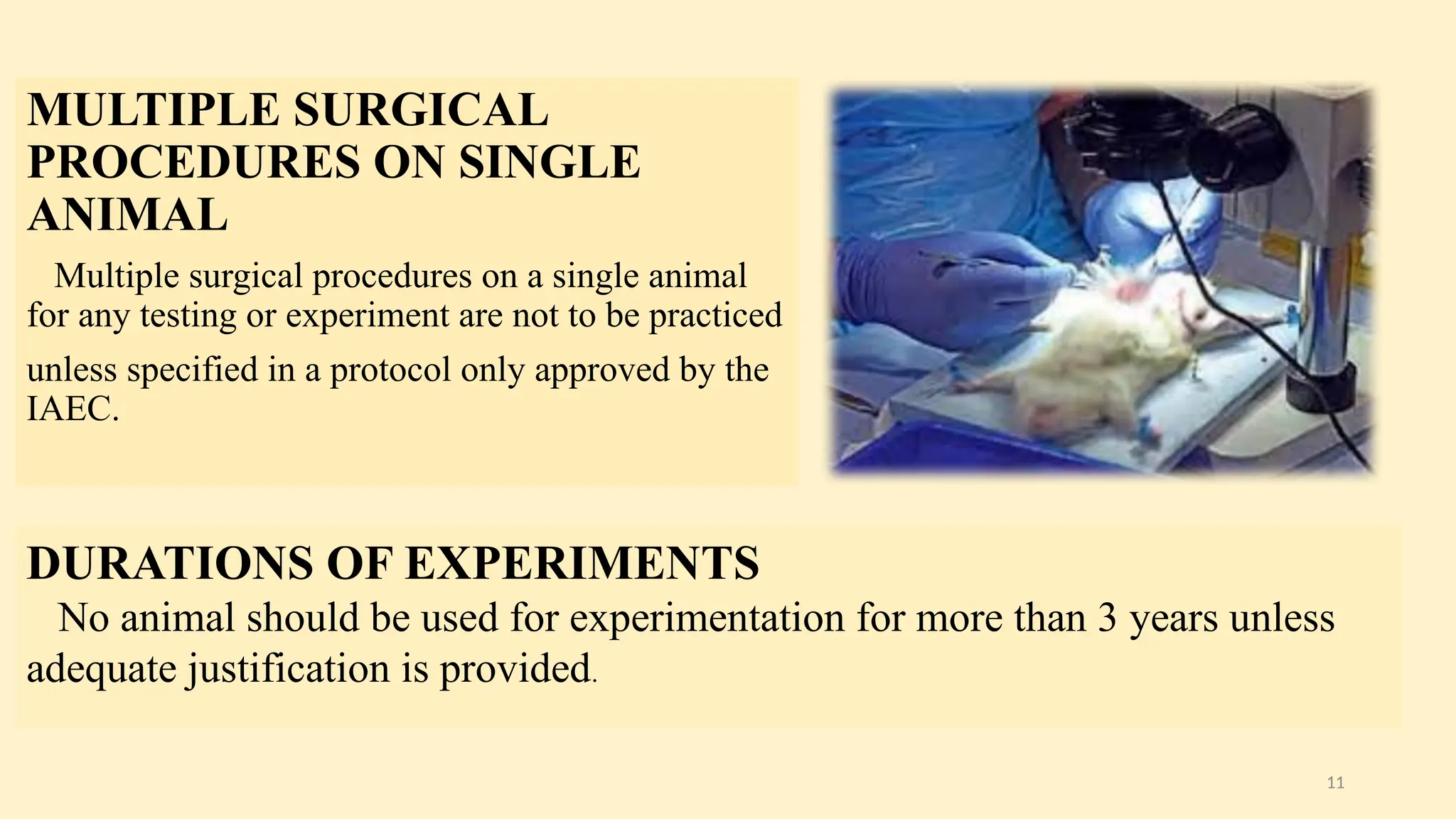
MULTIPLE SURGICAL
PROCEDURES ON SINGLE
ANIMAL
Multiple surgical procedures on a single animal
for any testing or experiment are not to be practiced
unless specified in a protocol only approved by the
IAEC.
DURATIONS OF EXPERIMENTS
No animal should be used for experimentation for more than 3 years unless
adequate justification is provided.
12
PHYSICAL RELATIONSHIP OF ANIMAL
FACILITIES TO LABORATORIES
Good animal husbandry and human comfort and health protection require
separation of animal facilities from personnel areas such as offices, conference
rooms, and most laboratories.
Laboratory animals are very sensitive to their living conditions. It is important that
they shall be housed in an isolated building located as far away from human
habitations as possible and not exposed to dust, smoke, noise, wild rodents, insects
and birds.
The building, cages and environment of animal rooms are the major factors, which
affect the quality of animals.
The animal rooms should occupy about 50-60% of the total constructed area and
the remaining area should be utilized for services such as stores, washing, office and
staff, machine rooms, quarantine and corridors.
13
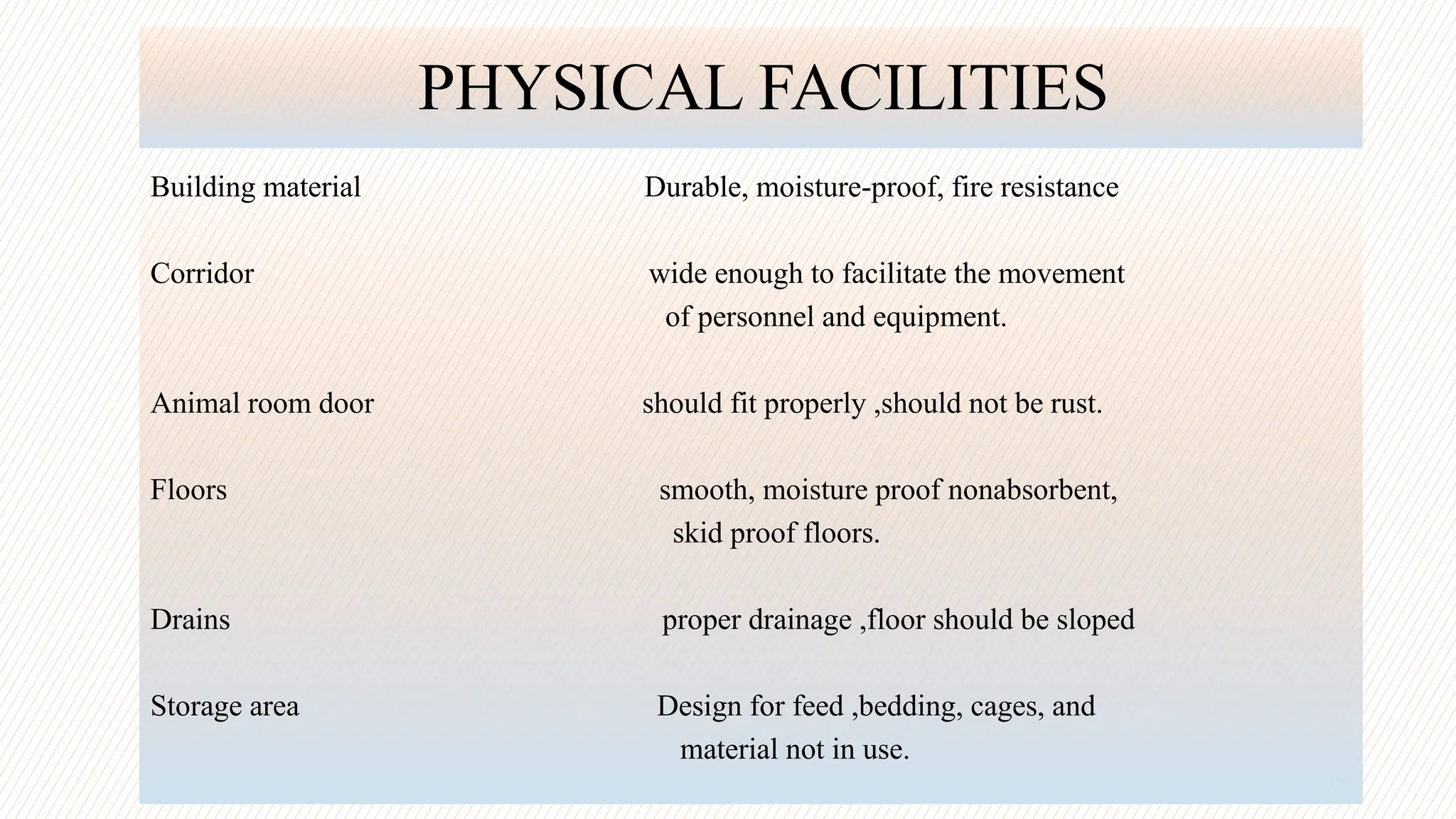
PHYSICAL FACILITIES
Building material Durable, moisture-proof, fire resistance
Corridor wide enough to facilitate the movement
of personnel and equipment.
Animal room door should fit properly ,should not be rust.
Floors smooth, moisture proof nonabsorbent,
skid proof floors.
Drains proper drainage ,floor should be sloped
Storage area Design for feed ,bedding, cages, and
material not in use.
14
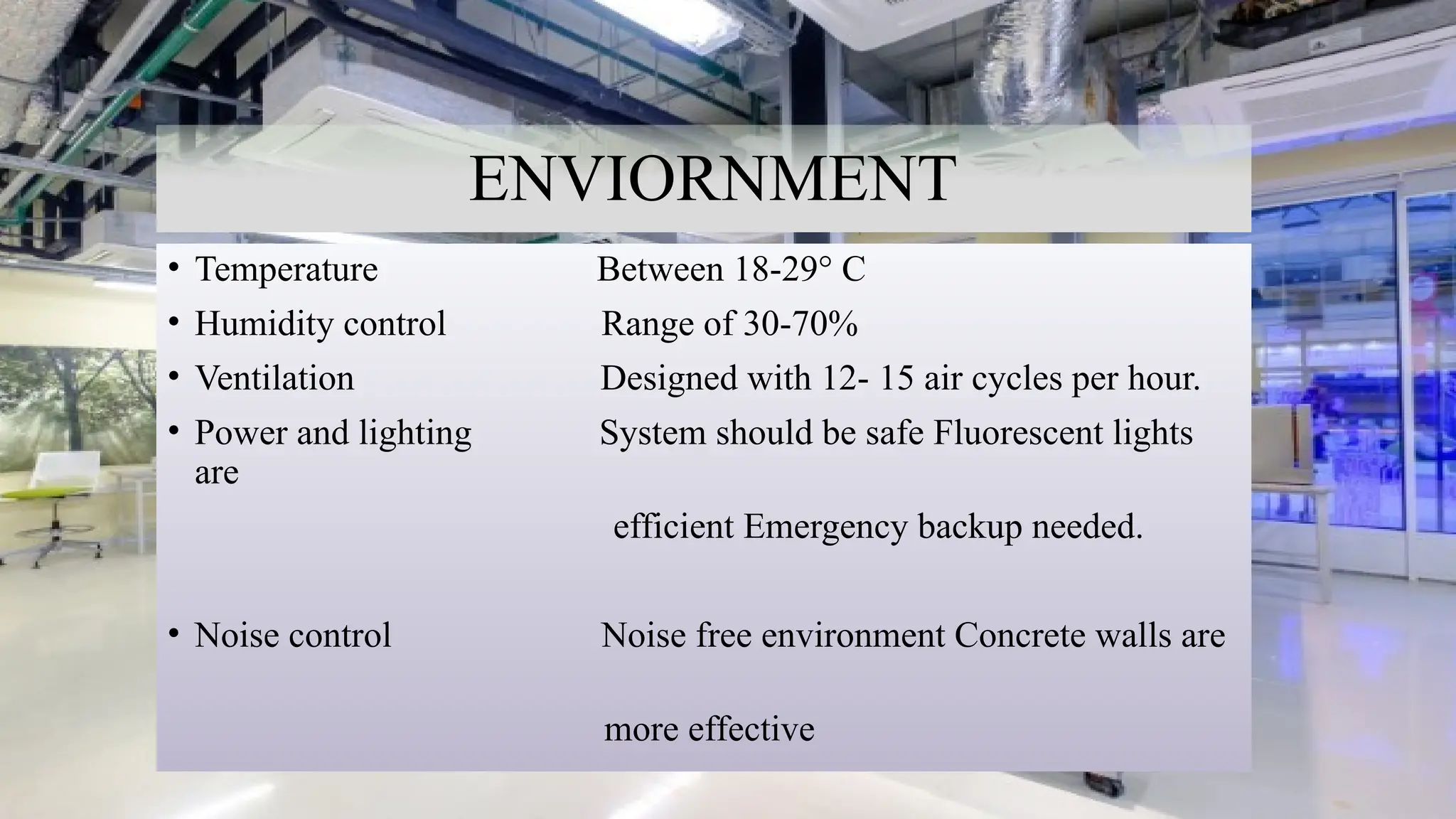
ENVIORNMENT
• Temperature Between 18-29° C
• Humidity control Range of 30-70%
• Ventilation Designed with 12- 15 air cycles per hour.
• Power and lighting System should be safe Fluorescent lights
are
efficient Emergency backup needed.
• Noise control Noise free environment Concrete walls are
more effective
15
ANIMAL HUSBANDARY
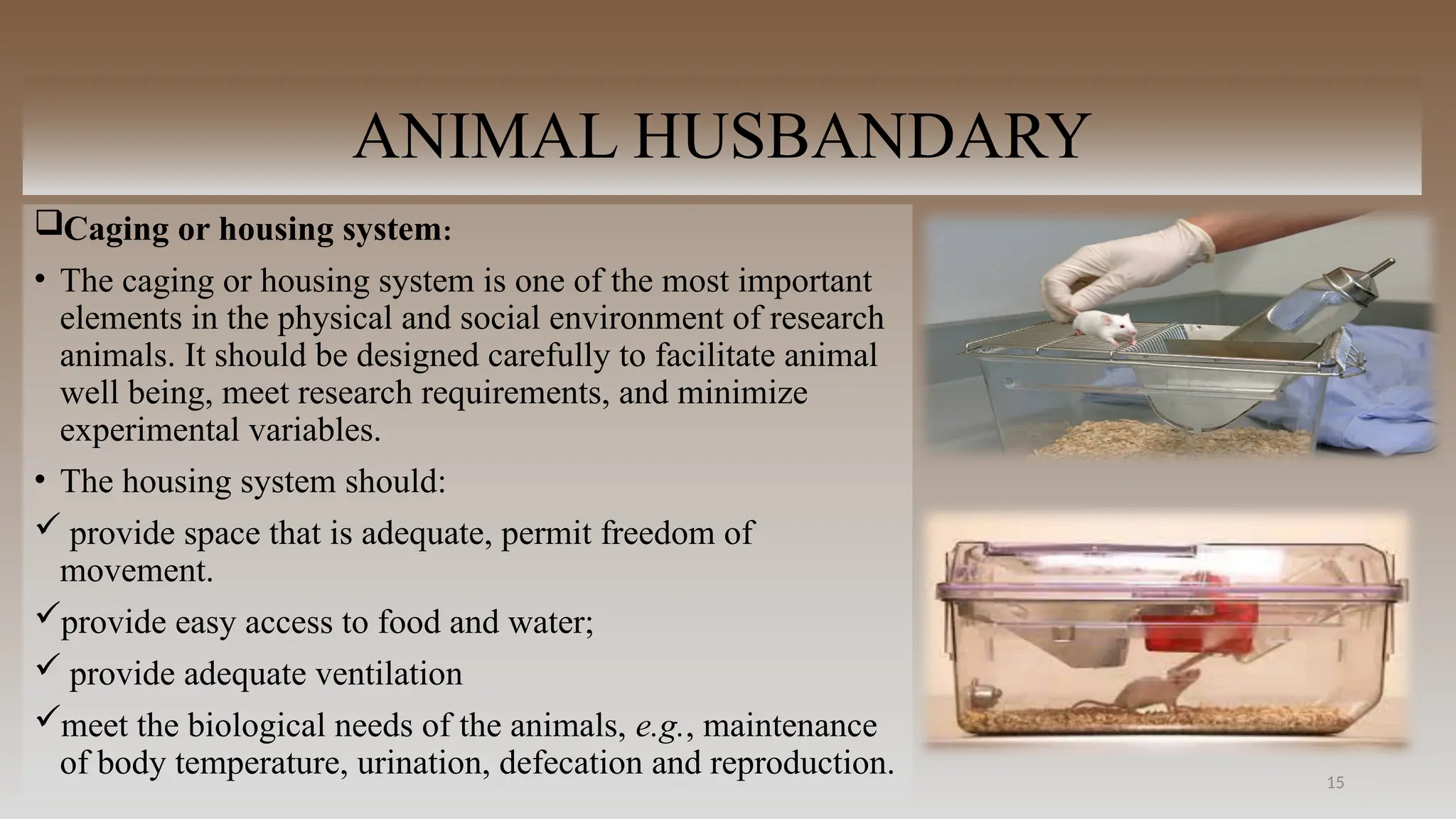
Caging or housing system:
• The caging or housing system is one of the most important
elements in the physical and social environment of research
animals. It should be designed carefully to facilitate animal
well being, meet research requirements, and minimize
experimental variables.
• The housing system should:
 provide space that is adequate, permit freedom of
movement.
provide easy access to food and water;
 provide adequate ventilation
meet the biological needs of the animals, e.g., maintenance
of body temperature, urination, defecation and reproduction.
16
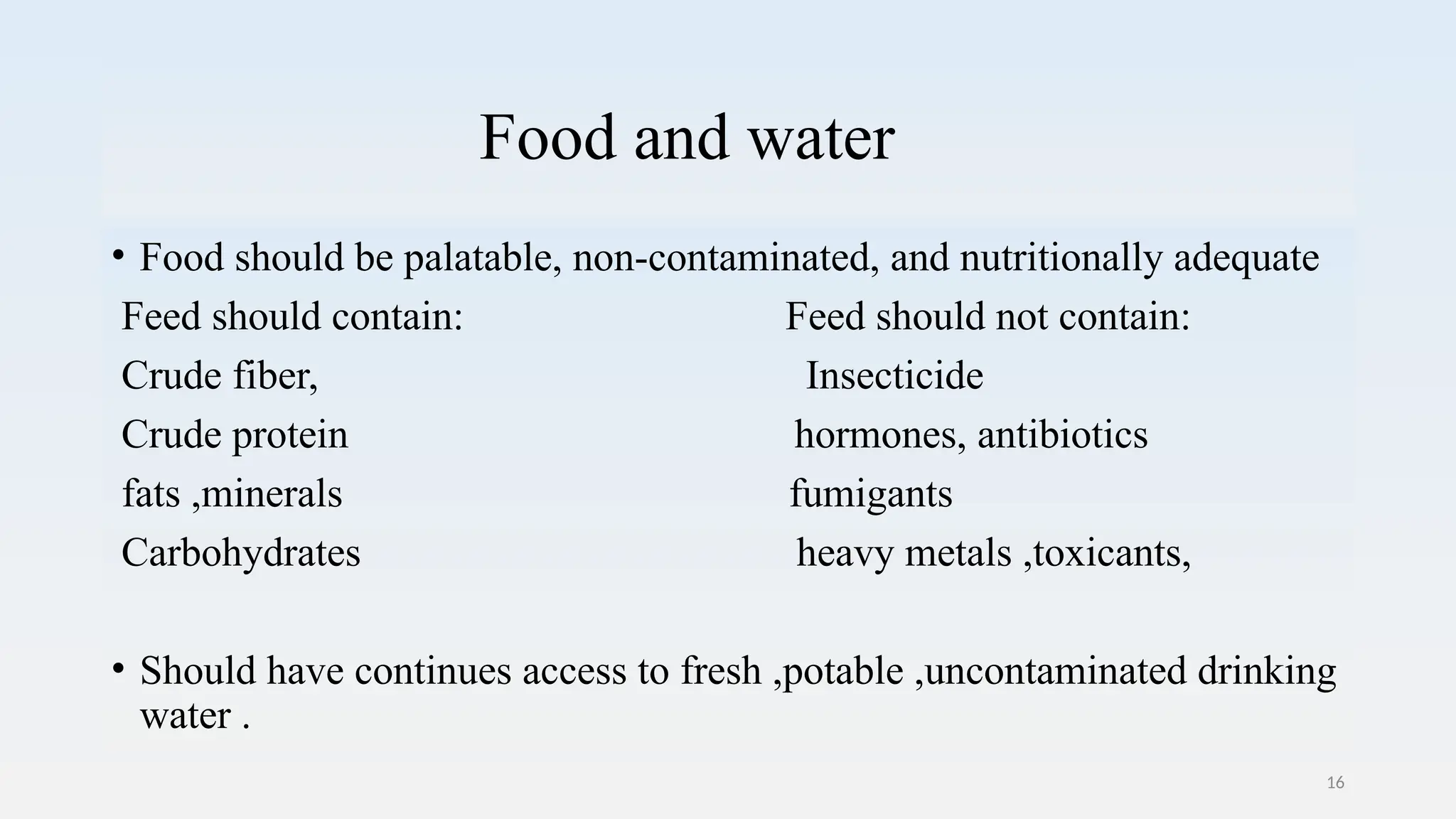
Food and water
• Food should be palatable, non-contaminated, and nutritionally adequate
Feed should contain: Feed should not contain:
Crude fiber, Insecticide
Crude protein hormones, antibiotics
fats ,minerals fumigants
Carbohydrates heavy metals ,toxicants,
• Should have continues access to fresh ,potable ,uncontaminated drinking
water .
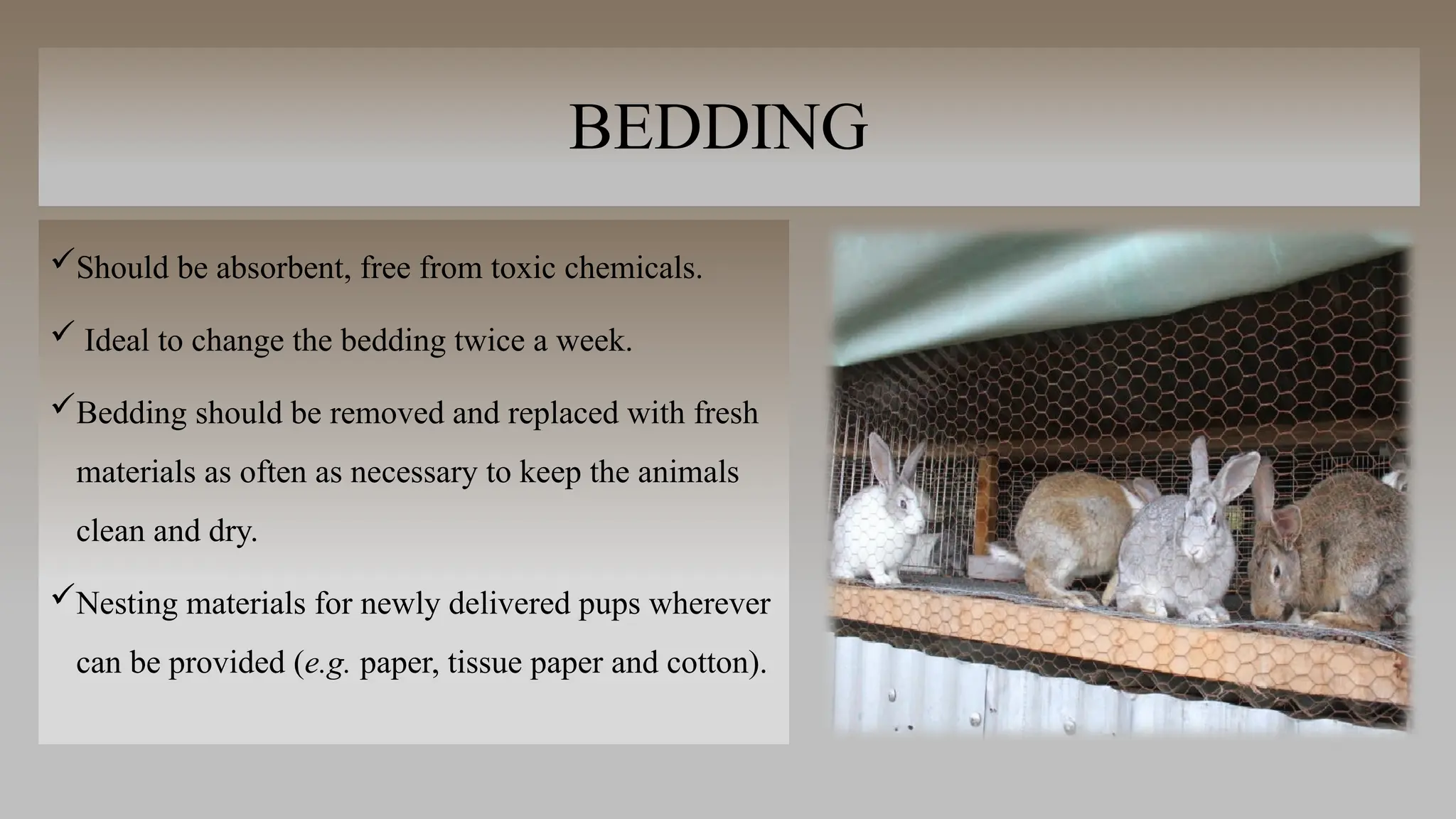
BEDDING
Should be absorbent, free from toxic chemicals.
 Ideal to change the bedding twice a week.
Bedding should be removed and replaced with fresh
materials as often as necessary to keep the animals
clean and dry.
Nesting materials for newly delivered pups wherever
can be provided (e.g. paper, tissue paper and cotton).
18
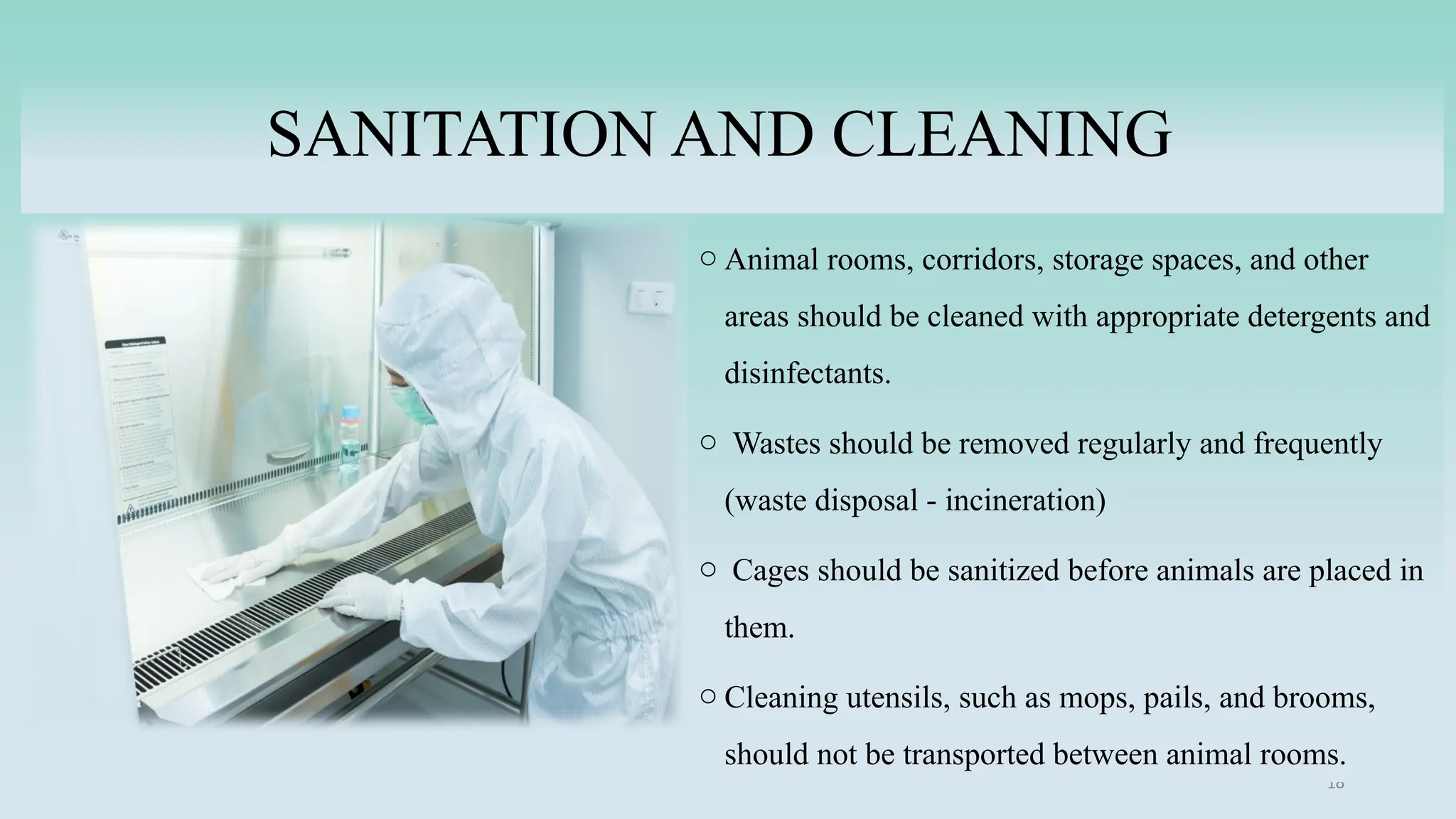
SANITATION AND CLEANING
o Animal rooms, corridors, storage spaces, and other
areas should be cleaned with appropriate detergents and
disinfectants.
o Wastes should be removed regularly and frequently
(waste disposal - incineration)
o Cages should be sanitized before animals are placed in
them.
o Cleaning utensils, such as mops, pails, and brooms,
should not be transported between animal rooms.
19
WASTE DISPOSAL
Wastes should be removed regularly and frequently.
All waste should be collected and disposed of in a safe and sanitary manner.
 The most preferred method of waste disposal is incineration.
 Incinerators should be in compliance with all central, state, and local regulations.
Cold storage might be necessary to prevent decomposition of biological wastes.
20
RECORD KEEPING
• The animal house should maintain the following records:
 Animal house plans, which includes typical floor plan.
 Animal house staff record-both technical and non-technical.
 Health record of staff/ animals.
 All standard operating procedures (SOPs) relevant to the animals.
 Breeding, stock, purchase and sales records.
 Minutes of institute Animals Ethics Committee Meetings.
 Records of experiments conducted with the number of animals used.
 Death Record.
 Clinical record of sick animals
21
SOPs(standard operating procedure )
• The Institute shall maintain SOPs describing procedures / methods adapted with regard to animal husbandry,
maintenance, breeding, animal house microbial analysis and experimentation records.
• A SOP should contain the following items:
• Name of the Author
• Title of the SOP
• Date of preparation
• Reference of previous SOP on the same subject
and date (Issue no and Date)
• Location and distribution of SOPs with sign of each
recipient.
• Objectives
• Detailed information of the instruments used in relation with animals with methodology (Model no.,Serial no.
and Date of commissioning)
22
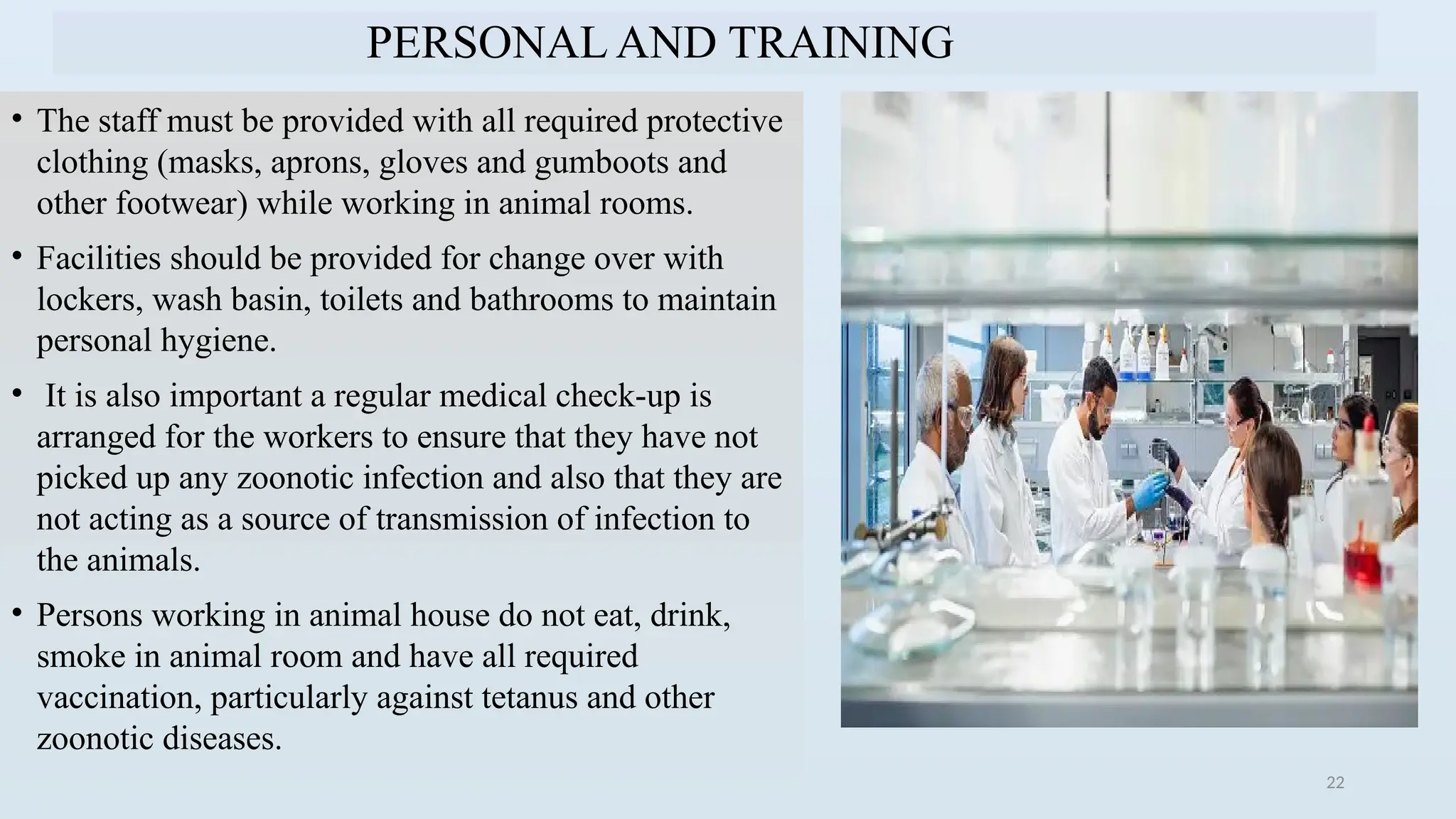
PERSONAL AND TRAINING
• The staff must be provided with all required protective
clothing (masks, aprons, gloves and gumboots and
other footwear) while working in animal rooms.
• Facilities should be provided for change over with
lockers, wash basin, toilets and bathrooms to maintain
personal hygiene.
• It is also important a regular medical check-up is
arranged for the workers to ensure that they have not
picked up any zoonotic infection and also that they are
not acting as a source of transmission of infection to
the animals.
• Persons working in animal house do not eat, drink,
smoke in animal room and have all required
vaccination, particularly against tetanus and other
zoonotic diseases.
23
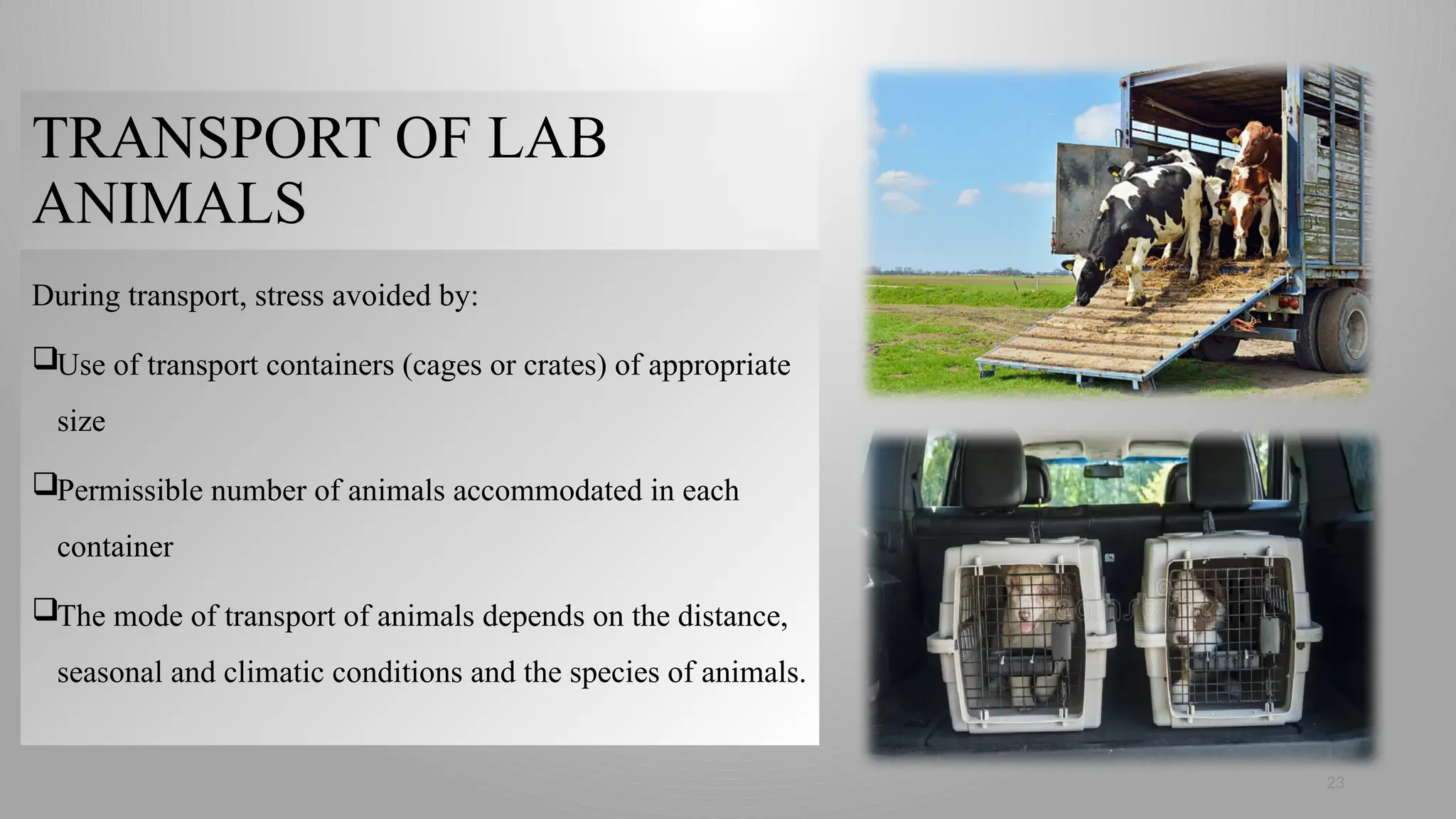
TRANSPORT OF LAB
ANIMALS
During transport, stress avoided by:
Use of transport containers (cages or crates) of appropriate
size
Permissible number of animals accommodated in each
container
The mode of transport of animals depends on the distance,
seasonal and climatic conditions and the species of animals.
24
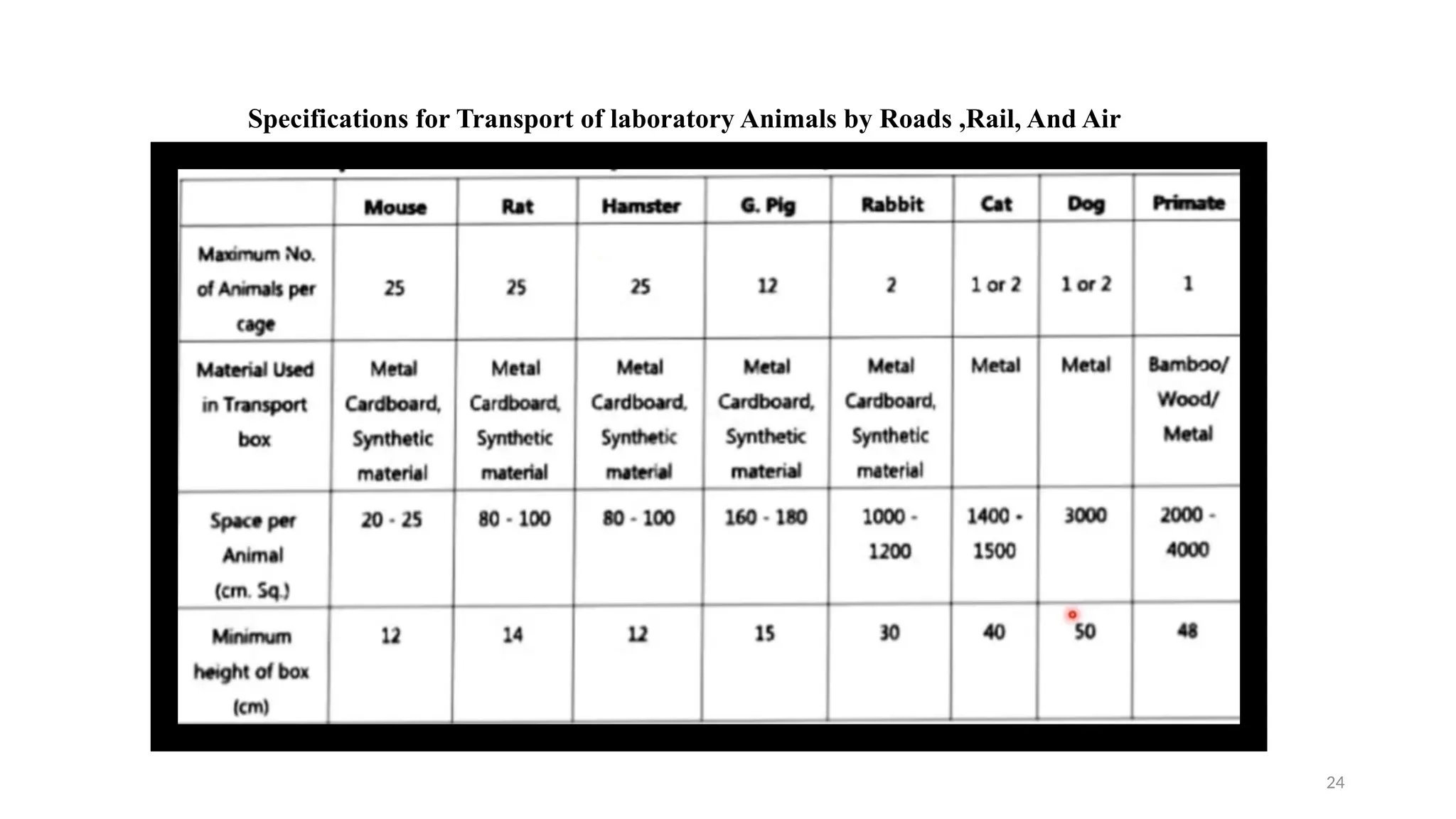
Specifications for Transport of laboratory Animals by Roads ,Rail, And Air
25
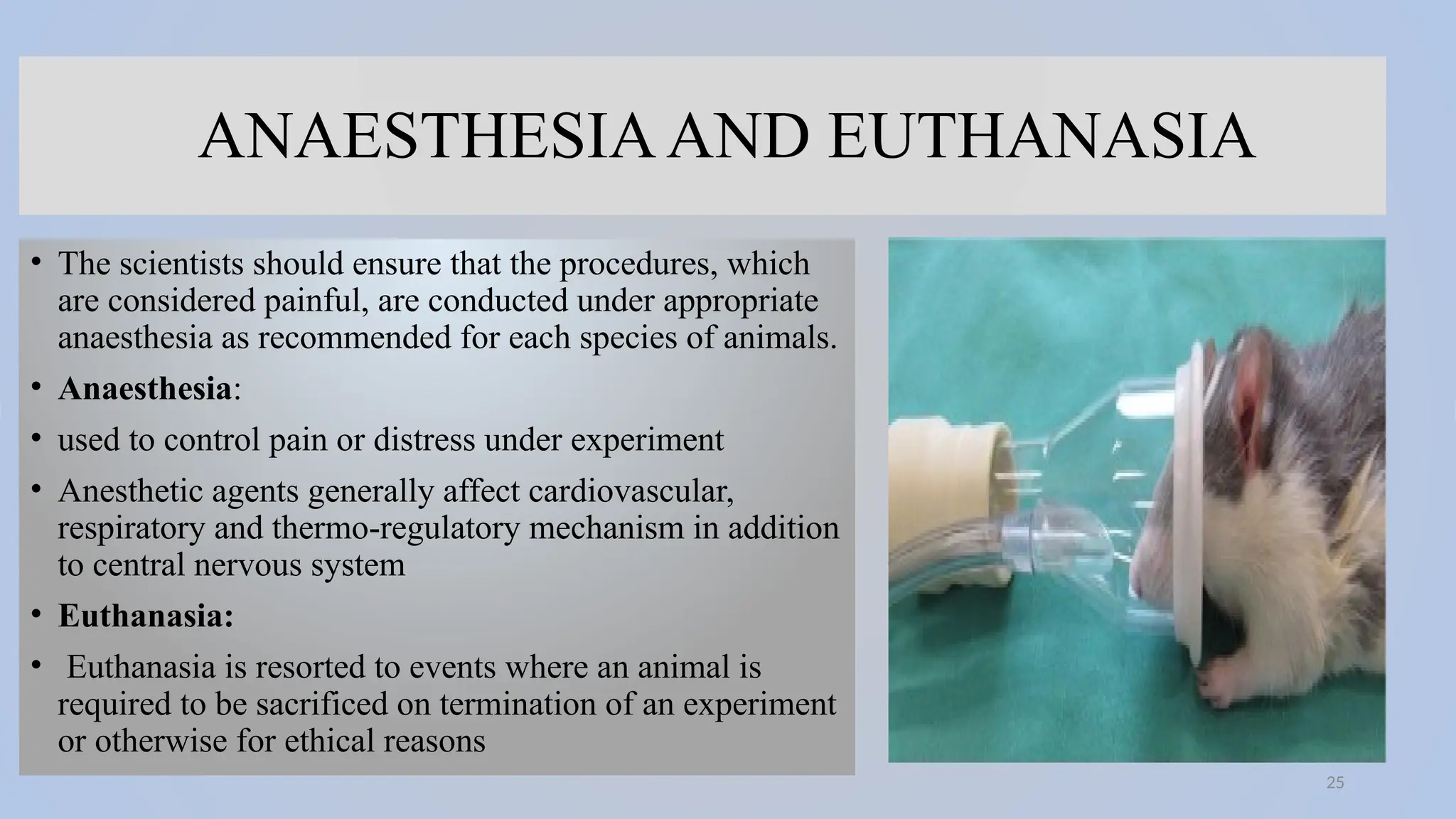
ANAESTHESIAAND EUTHANASIA
• The scientists should ensure that the procedures, which
are considered painful, are conducted under appropriate
anaesthesia as recommended for each species of animals.
• Anaesthesia:
• used to control pain or distress under experiment
• Anesthetic agents generally affect cardiovascular,
respiratory and thermo-regulatory mechanism in addition
to central nervous system
• Euthanasia:
• Euthanasia is resorted to events where an animal is
required to be sacrificed on termination of an experiment
or otherwise for ethical reasons
26
REFERENCES
1. S.), I. for L.A.R. (U. and S., N.A.P. (U (2011a) Guide for the care and use of Laboratory Animals
(8th edition). National Academies Press.
2.Yadav, A.R. (2020) ‘CPCSEA guidelines for Laboratory Animal Facility’, International Journal of
Pharmacology and Clinical Research, 2(1), pp. 09–13. doi:10.33545/26647613.2020.v2.i1a.10.
3.CPCSEA guidelines for Laboratory Animal Facility - care. Available at: https://care.edu.in/wp-
content/uploads/2020/03/cpcsea.pdf .
4. Suárez C, Guevara CA (2022) CPCSEA Guidelines for Laboratory Animal. J Vet Med Health 6:
143.
5. Pandey, Govind and Sharma, M. (2011). Guidelines of CPCSEA for conducting the experiment on
animals. Souvenir: 25 (Paper presented during January 5-6, 2011)
27

CPCSEA GUIDELINE (COMMITTEE FOR THE PURPOSE OF CONTROL AND SUPERVISION OF EXPERIMENTS ON ANIMALS).pptx

  • 1.
    1 CPCSEA GUIDELINES (COMMITTE FORTHE PURPOSE OF CONTROL & SUPERVISION ON EXPERIMENT ON ANIMAL) PRESENTED BY : VINAY G. POLPELLIWAR
  • 2.
    2 CONTENTS : • INTRODUCTION •GUIDELINE FOR EXPERIMENT ON ANIMAL • OBJECTIVES • VETERNARY CARE • ANIMAL PROCURMENT • QUARANTINE ,STABILIZATION AND SEPRATION • SURVEILLANCE, DIAGNOSIS ,TREATMENT AND CONTROL OF DISEASE • PERSONAL HYGIENE • MULTIPLE SURGICAL PROCEDURES ON SINGLE ANIMAL • DURATION OF EXPERIMENT • PHYSICAL RELATIONSHIP OF ANIMAL FACILITIES TO LABORATORIES • PHYSICAL FACILITES • ENVIORNMENTAL CONDITION • ANIMAL HUSBANDRY • FOOD AND WATER • BEDDING • SANITATION AND CLEANNING • WASTE DISPOSAL • RECORD KEPPING • SOPs • PERSONNEL AND TRAINING • TRANSPORT OF LAB ANIMALS • ANAESTHESIAAND EUTHANASIA • REFRANCES
  • 3.
    3 INTRODUCTION • Committee forthe Purpose of Control and Supervision on Experiments on Animals (CPCSEA ) was constituted by central government under the section 15(1) of the prevention and cruelty to animal Act 1960 in the year 1996. • The guideline of CPCSEA were implemented in the year 1998 . • Focus of the later guideline was to control and supervise the experiments on animals that are used in bio-medical institution, veterinary research institute ,and research lab for education and research purpose. • The CPCSEA has ‘Guidelines’ for laboratory animal facility. It is expected that scientists use this document as the baseline information to follow procedures in their experiments involving various species.
  • 4.
    4 GUIDELINES FOR EXPERIMENTON ANIMALS 1. CPCSEA Guidelines on the norms and practices for regulation of animal experimentation. 2. CPCSEA Guidelines for laboratory animal facility. 3. Indian National Science Academy (INSA) Guidelines for care and use of animals in scientific research. 4. ICMR Guidelines for use of laboratory animals in Medical Colleges. ACT & RULES FOR EXPERIMENT ON ANIMALS 1. The Prevention of Cruelty to Animals Act, 1960 2. The Breeding of and Experiments on Animals (Control & Supervision) Rules, 1998 3. The Breeding of and Experiments on Animals (Control & Supervision) Amendment Rules, 2001
  • 5.
    5 The goal ofthese Guidelines is to promote the humane care of animals used in biomedical and behavioral research and testing. Avoid unnecessary pain before, during and after experiment . To provide guideline for : Housing ,care , breeding , and maintenance. Source of experiment animal. Acceptable experiment procedure for anaesthesia and euthanasia.
  • 6.
    6 VETERNARY CARE • Theprimary focus of the veterinarian is to oversee the well-being and clinical care of animals used in research, testing, teaching, and production. • Well-being is determined by considering physical, physiologic, and behavioral indicators, which vary by species. • Observe regularly for signs of illness , injury , or abnormal behavior. • Monitoring animal husbandry ,zoonosis control programmes.
  • 7.
    ANIMAL PROCUREMENT • Allanimals must be acquired lawfully as per the CPCSEA guidelines. • Before procuring animals, the principal investigator should confirm that there are sufficient facilities and expertise to house and manage the species being acquired. • A health surveillance program for screening incoming animals should be carried out to assess animal quality. • Appropriate records and other forms of documentation should be maintained for animals acquired by an institution for its investigators.
  • 8.
    8 QUARANTINE ,STABILIZATION AND SEPRATION Quarantineperiod for small lab animal :1 week to 1 month Quarantine period for large lab animal :Up to 6 weeks Newly received animals should be given a period for physiologic, psychologic and nutritional stabilization before their use. Physical separation of animals by species to prevent anxiety and behavioral changes .
  • 9.
    9 SURVEILLANCE, DIAGNOSIS ,TREATMENT ANDCONTROL OF DISEASE All animals should be observed for signs of illness, injury, or abnormal behavior by animal house staff. Unexpected deaths and signs of illness, distress, or other deviations from normal health condition in animals should be reported promptly to ensure appropriate and timely delivery of veterinary medical care. Animals that show signs of a contagious disease should be isolated from healthy animals in the colony. Diagnostic clinical laboratory may be made available.
  • 10.
    10 PERSONAL HYGIENE It isessential that the animal care staff maintain a high standard of personal cleanliness. Washing and showering facilities appropriate to the program should be available.  Personnel should not be permitted to eat, drink, smoke or apply cosmetics in animal rooms. A separate area or room should be made available for these purposes. In some circumstances, it is acceptable to use disposable wear such as gloves, masks, head covers, coats, coveralls and shoe covers.
  • 11.
    11 MULTIPLE SURGICAL PROCEDURES ONSINGLE ANIMAL Multiple surgical procedures on a single animal for any testing or experiment are not to be practiced unless specified in a protocol only approved by the IAEC. DURATIONS OF EXPERIMENTS No animal should be used for experimentation for more than 3 years unless adequate justification is provided.
  • 12.
    12 PHYSICAL RELATIONSHIP OFANIMAL FACILITIES TO LABORATORIES Good animal husbandry and human comfort and health protection require separation of animal facilities from personnel areas such as offices, conference rooms, and most laboratories. Laboratory animals are very sensitive to their living conditions. It is important that they shall be housed in an isolated building located as far away from human habitations as possible and not exposed to dust, smoke, noise, wild rodents, insects and birds. The building, cages and environment of animal rooms are the major factors, which affect the quality of animals. The animal rooms should occupy about 50-60% of the total constructed area and the remaining area should be utilized for services such as stores, washing, office and staff, machine rooms, quarantine and corridors.
  • 13.
    13 PHYSICAL FACILITIES Building materialDurable, moisture-proof, fire resistance Corridor wide enough to facilitate the movement of personnel and equipment. Animal room door should fit properly ,should not be rust. Floors smooth, moisture proof nonabsorbent, skid proof floors. Drains proper drainage ,floor should be sloped Storage area Design for feed ,bedding, cages, and material not in use.
  • 14.
    14 ENVIORNMENT • Temperature Between18-29° C • Humidity control Range of 30-70% • Ventilation Designed with 12- 15 air cycles per hour. • Power and lighting System should be safe Fluorescent lights are efficient Emergency backup needed. • Noise control Noise free environment Concrete walls are more effective
  • 15.
    15 ANIMAL HUSBANDARY Caging orhousing system: • The caging or housing system is one of the most important elements in the physical and social environment of research animals. It should be designed carefully to facilitate animal well being, meet research requirements, and minimize experimental variables. • The housing system should:  provide space that is adequate, permit freedom of movement. provide easy access to food and water;  provide adequate ventilation meet the biological needs of the animals, e.g., maintenance of body temperature, urination, defecation and reproduction.
  • 16.
    16 Food and water •Food should be palatable, non-contaminated, and nutritionally adequate Feed should contain: Feed should not contain: Crude fiber, Insecticide Crude protein hormones, antibiotics fats ,minerals fumigants Carbohydrates heavy metals ,toxicants, • Should have continues access to fresh ,potable ,uncontaminated drinking water .
  • 17.
    BEDDING Should be absorbent,free from toxic chemicals.  Ideal to change the bedding twice a week. Bedding should be removed and replaced with fresh materials as often as necessary to keep the animals clean and dry. Nesting materials for newly delivered pups wherever can be provided (e.g. paper, tissue paper and cotton).
  • 18.
    18 SANITATION AND CLEANING oAnimal rooms, corridors, storage spaces, and other areas should be cleaned with appropriate detergents and disinfectants. o Wastes should be removed regularly and frequently (waste disposal - incineration) o Cages should be sanitized before animals are placed in them. o Cleaning utensils, such as mops, pails, and brooms, should not be transported between animal rooms.
  • 19.
    19 WASTE DISPOSAL Wastes shouldbe removed regularly and frequently. All waste should be collected and disposed of in a safe and sanitary manner.  The most preferred method of waste disposal is incineration.  Incinerators should be in compliance with all central, state, and local regulations. Cold storage might be necessary to prevent decomposition of biological wastes.
  • 20.
    20 RECORD KEEPING • Theanimal house should maintain the following records:  Animal house plans, which includes typical floor plan.  Animal house staff record-both technical and non-technical.  Health record of staff/ animals.  All standard operating procedures (SOPs) relevant to the animals.  Breeding, stock, purchase and sales records.  Minutes of institute Animals Ethics Committee Meetings.  Records of experiments conducted with the number of animals used.  Death Record.  Clinical record of sick animals
  • 21.
    21 SOPs(standard operating procedure) • The Institute shall maintain SOPs describing procedures / methods adapted with regard to animal husbandry, maintenance, breeding, animal house microbial analysis and experimentation records. • A SOP should contain the following items: • Name of the Author • Title of the SOP • Date of preparation • Reference of previous SOP on the same subject and date (Issue no and Date) • Location and distribution of SOPs with sign of each recipient. • Objectives • Detailed information of the instruments used in relation with animals with methodology (Model no.,Serial no. and Date of commissioning)
  • 22.
    22 PERSONAL AND TRAINING •The staff must be provided with all required protective clothing (masks, aprons, gloves and gumboots and other footwear) while working in animal rooms. • Facilities should be provided for change over with lockers, wash basin, toilets and bathrooms to maintain personal hygiene. • It is also important a regular medical check-up is arranged for the workers to ensure that they have not picked up any zoonotic infection and also that they are not acting as a source of transmission of infection to the animals. • Persons working in animal house do not eat, drink, smoke in animal room and have all required vaccination, particularly against tetanus and other zoonotic diseases.
  • 23.
    23 TRANSPORT OF LAB ANIMALS Duringtransport, stress avoided by: Use of transport containers (cages or crates) of appropriate size Permissible number of animals accommodated in each container The mode of transport of animals depends on the distance, seasonal and climatic conditions and the species of animals.
  • 24.
    24 Specifications for Transportof laboratory Animals by Roads ,Rail, And Air
  • 25.
    25 ANAESTHESIAAND EUTHANASIA • Thescientists should ensure that the procedures, which are considered painful, are conducted under appropriate anaesthesia as recommended for each species of animals. • Anaesthesia: • used to control pain or distress under experiment • Anesthetic agents generally affect cardiovascular, respiratory and thermo-regulatory mechanism in addition to central nervous system • Euthanasia: • Euthanasia is resorted to events where an animal is required to be sacrificed on termination of an experiment or otherwise for ethical reasons
  • 26.
    26 REFERENCES 1. S.), I.for L.A.R. (U. and S., N.A.P. (U (2011a) Guide for the care and use of Laboratory Animals (8th edition). National Academies Press. 2.Yadav, A.R. (2020) ‘CPCSEA guidelines for Laboratory Animal Facility’, International Journal of Pharmacology and Clinical Research, 2(1), pp. 09–13. doi:10.33545/26647613.2020.v2.i1a.10. 3.CPCSEA guidelines for Laboratory Animal Facility - care. Available at: https://care.edu.in/wp- content/uploads/2020/03/cpcsea.pdf . 4. Suárez C, Guevara CA (2022) CPCSEA Guidelines for Laboratory Animal. J Vet Med Health 6: 143. 5. Pandey, Govind and Sharma, M. (2011). Guidelines of CPCSEA for conducting the experiment on animals. Souvenir: 25 (Paper presented during January 5-6, 2011)
  • 27.