Cosmid
• Cosmids are medium sized cloning vectors.
• The cloning capacity of these vectors is 35-45
kbp.
• Cosmid vector are developed by combining
the features of plasmid vector and
bacteriophage vector.
• The first cosmid vector was described by
Collins in 1978.
In Brief
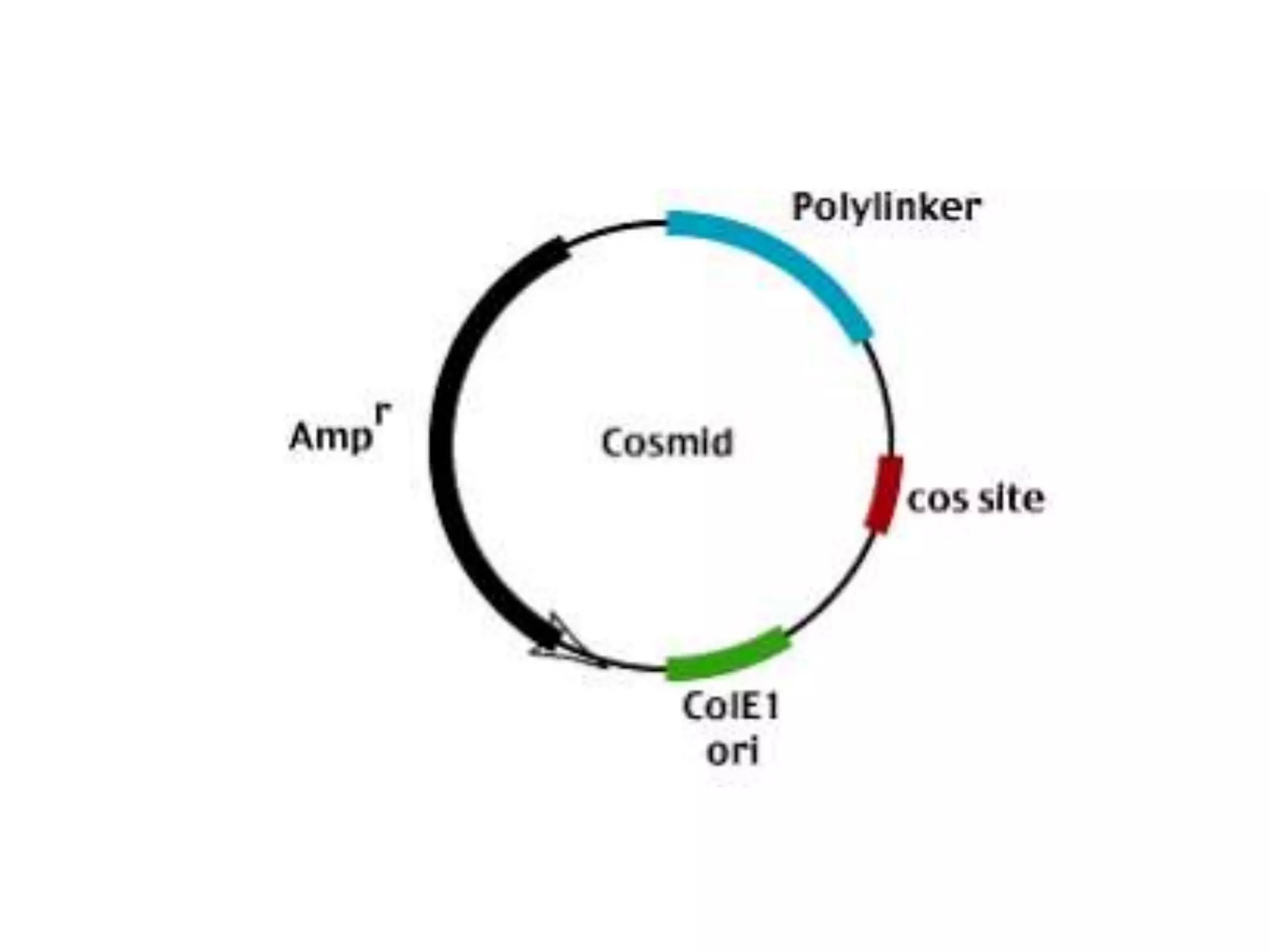
• A cosmid is a plasmid that contain phage
sequence that allows the vector to be packaged
and transmitted to bacteria like phage vector.
Or
• A cosmid is a type of hybrid plasmid that
contains a Lambda phage cos sequence. Cosmids
(cos sites + plasmid = cosmids) DNA sequences
are originally from the lambda phage.
Plasmid
• A plasmid is a small DNA molecule within a
cell that is physically separated from a
chromosomal DNA and can replicate
independently.
• They are most commonly found as small
circular, double-stranded DNA molecules in
bacteria.
• plasmids are sometimes present in archaea
and eukaryotic organisms.
Lambda genome
• A linear DNA molecule, has a 12 base long ,
single stranded complementary overhang at
both ends.
Which emerge during the packaging process
into phage particle through splitting of cos
site.
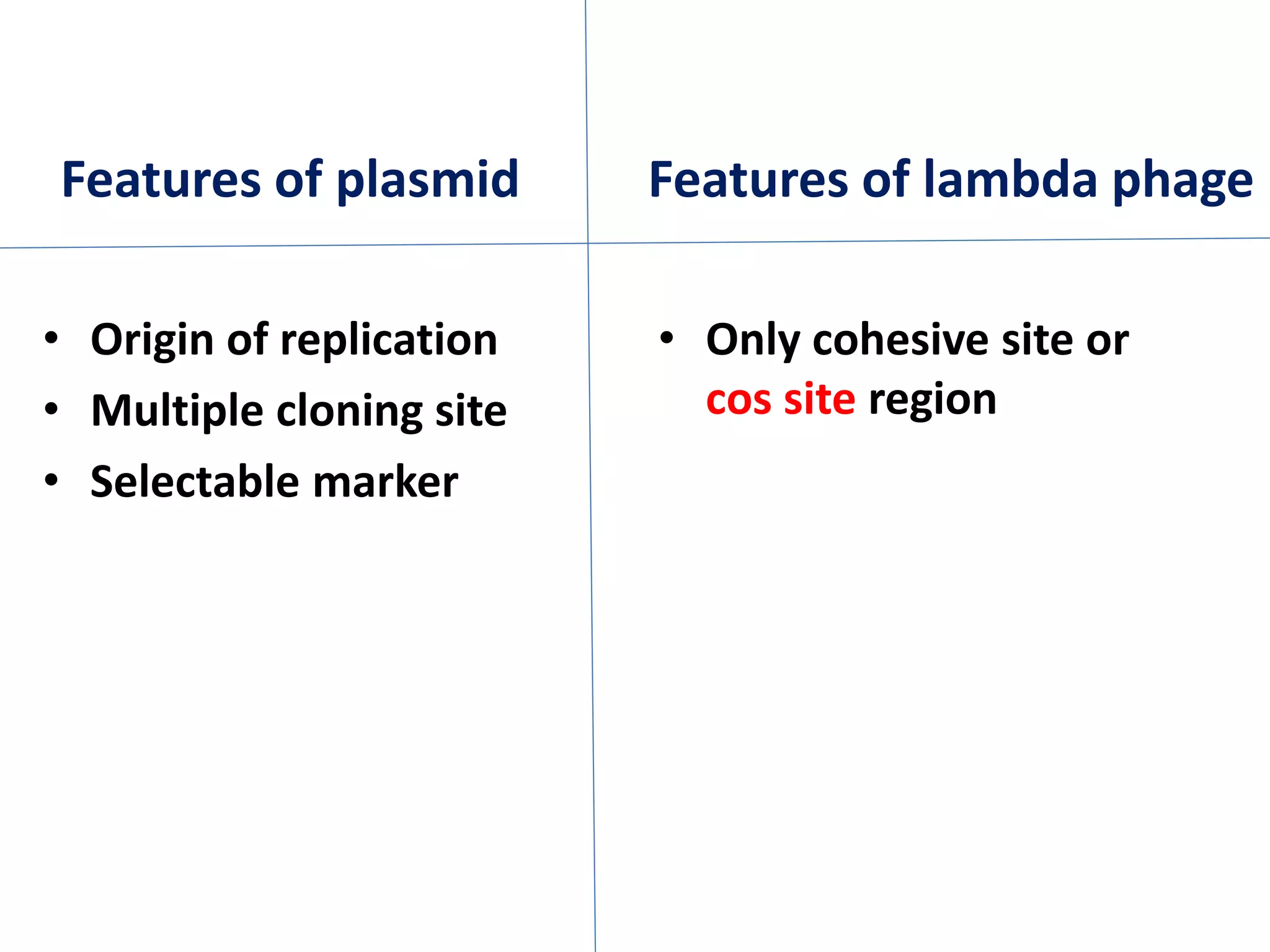
Features of plasmid
• Origin of replication
• Multiple cloning site
• Selectable marker
Features of lambda phage
• Only cohesive site or
cos site region
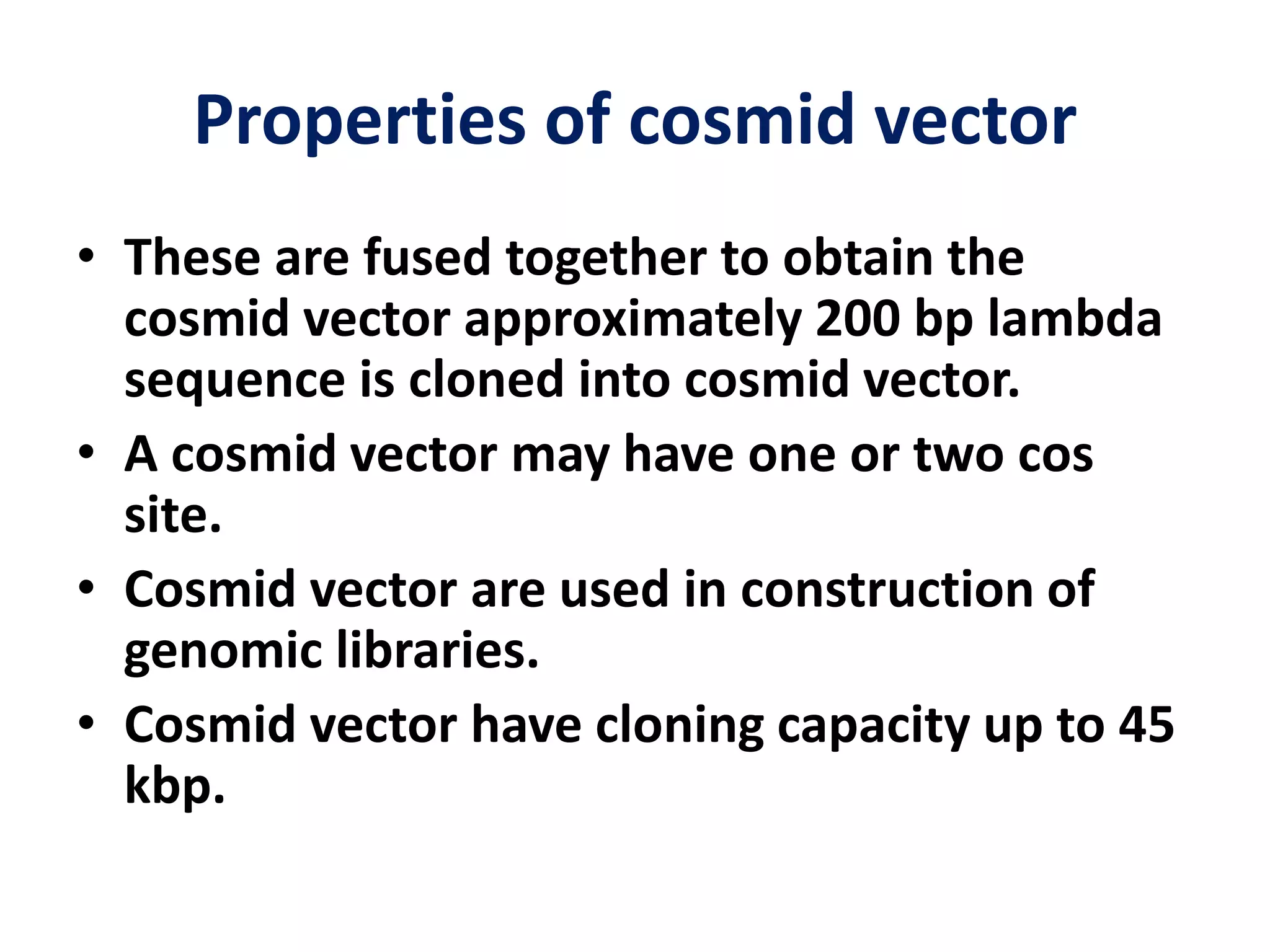
Properties of cosmid vector
• These are fused together to obtain the
cosmid vector approximately 200 bp lambda
sequence is cloned into cosmid vector.
• A cosmid vector may have one or two cos
site.
• Cosmid vector are used in construction of
genomic libraries.
• Cosmid vector have cloning capacity up to 45
kbp.
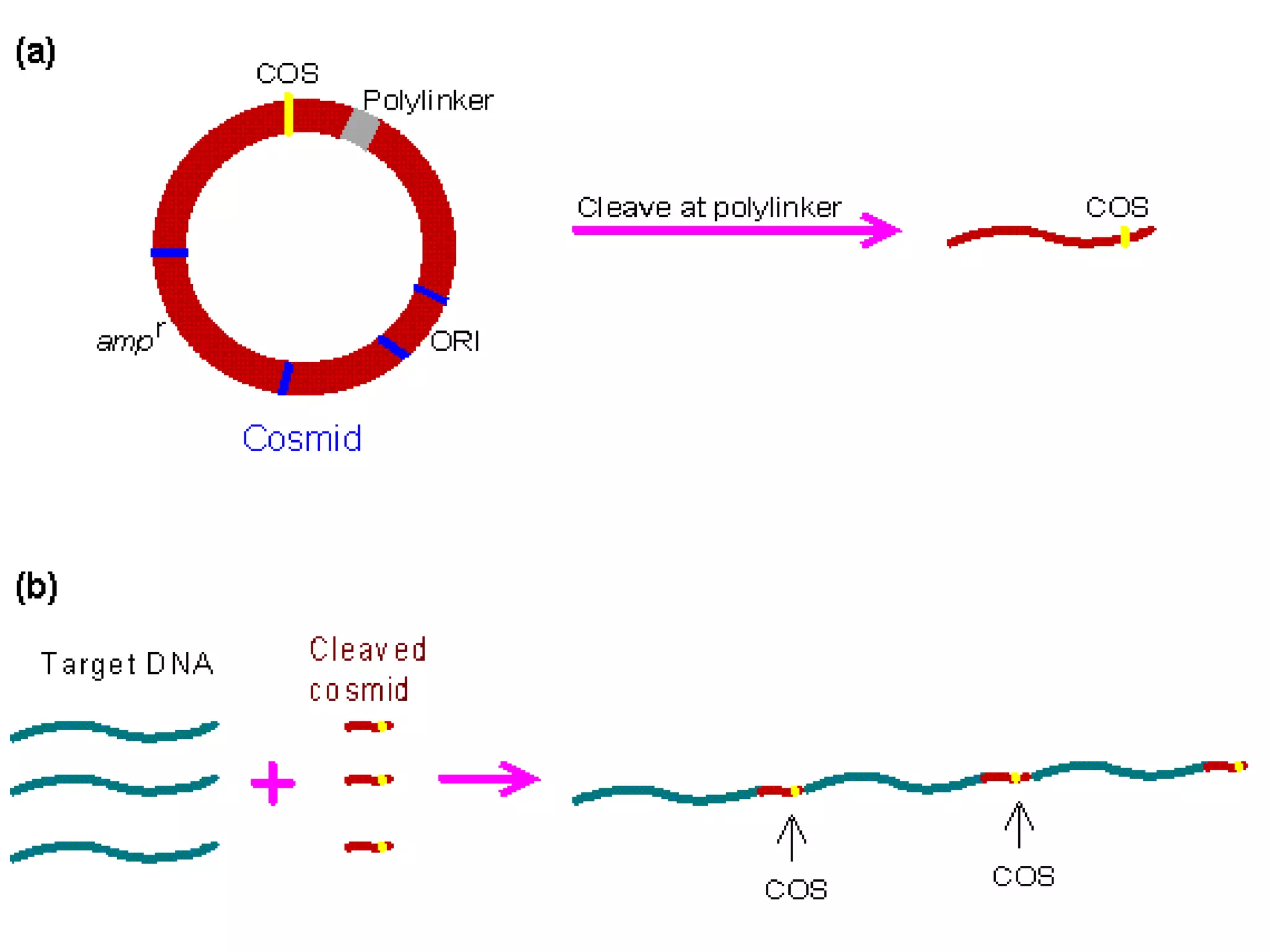
Cloning of foreign DNA in cosmid
vector involves the following steps
1. Ligation of foreign DNA between two cos site.
2. Making a concatemeric DNA.
3. Invitro packaging to introduce the DNA into
phage head to form the matured phage
particle.
4. Introduction of the cloned DNA into E.coli by
transduction.
5. After their entry into host cell the cosmid are
maintained as plasmid.
Thank you

Cosmid

  • 1.
  • 2.
    • Cosmids aremedium sized cloning vectors. • The cloning capacity of these vectors is 35-45 kbp. • Cosmid vector are developed by combining the features of plasmid vector and bacteriophage vector. • The first cosmid vector was described by Collins in 1978.
  • 3.
    In Brief • Acosmid is a plasmid that contain phage sequence that allows the vector to be packaged and transmitted to bacteria like phage vector. Or • A cosmid is a type of hybrid plasmid that contains a Lambda phage cos sequence. Cosmids (cos sites + plasmid = cosmids) DNA sequences are originally from the lambda phage.
  • 5.
    Plasmid • A plasmidis a small DNA molecule within a cell that is physically separated from a chromosomal DNA and can replicate independently. • They are most commonly found as small circular, double-stranded DNA molecules in bacteria. • plasmids are sometimes present in archaea and eukaryotic organisms.
  • 6.
    Lambda genome • Alinear DNA molecule, has a 12 base long , single stranded complementary overhang at both ends. Which emerge during the packaging process into phage particle through splitting of cos site.
  • 7.
    Features of plasmid •Origin of replication • Multiple cloning site • Selectable marker Features of lambda phage • Only cohesive site or cos site region
  • 8.
    Properties of cosmidvector • These are fused together to obtain the cosmid vector approximately 200 bp lambda sequence is cloned into cosmid vector. • A cosmid vector may have one or two cos site. • Cosmid vector are used in construction of genomic libraries. • Cosmid vector have cloning capacity up to 45 kbp.
  • 9.
    Cloning of foreignDNA in cosmid vector involves the following steps 1. Ligation of foreign DNA between two cos site. 2. Making a concatemeric DNA. 3. Invitro packaging to introduce the DNA into phage head to form the matured phage particle. 4. Introduction of the cloned DNA into E.coli by transduction. 5. After their entry into host cell the cosmid are maintained as plasmid.
  • 11.