CORRECTION SLIP, MISTAKE, ERROR by Claudete Mello,2008
PRACTICE! Drills Essay
SLIP The learner knows how to do, but due to distraction – lack of attention, or focus, production results do not correspond to standards. Ex. She  don’t  eat meat for lunch. (comparing to other exercises, by sampling, the instructor identifies the nature of the  deviation). Usually spelling, agreement...
MISTAKE I  to eat  apples for lunch. The student thinks he knows, but he needs extra guidance. Usually tenses, structures...
ERROR I eat  sleeves  for lunch. The learner does not know. The coach must go over the subject completely. Usually lack of vocabulary, “guessing”, etc...
Oral Correction When How?
ORAL CORRECTION What are the aims of the task? ACCURACY FLUENCY
Written Correction Goals Techniques Correction keys Essays correction
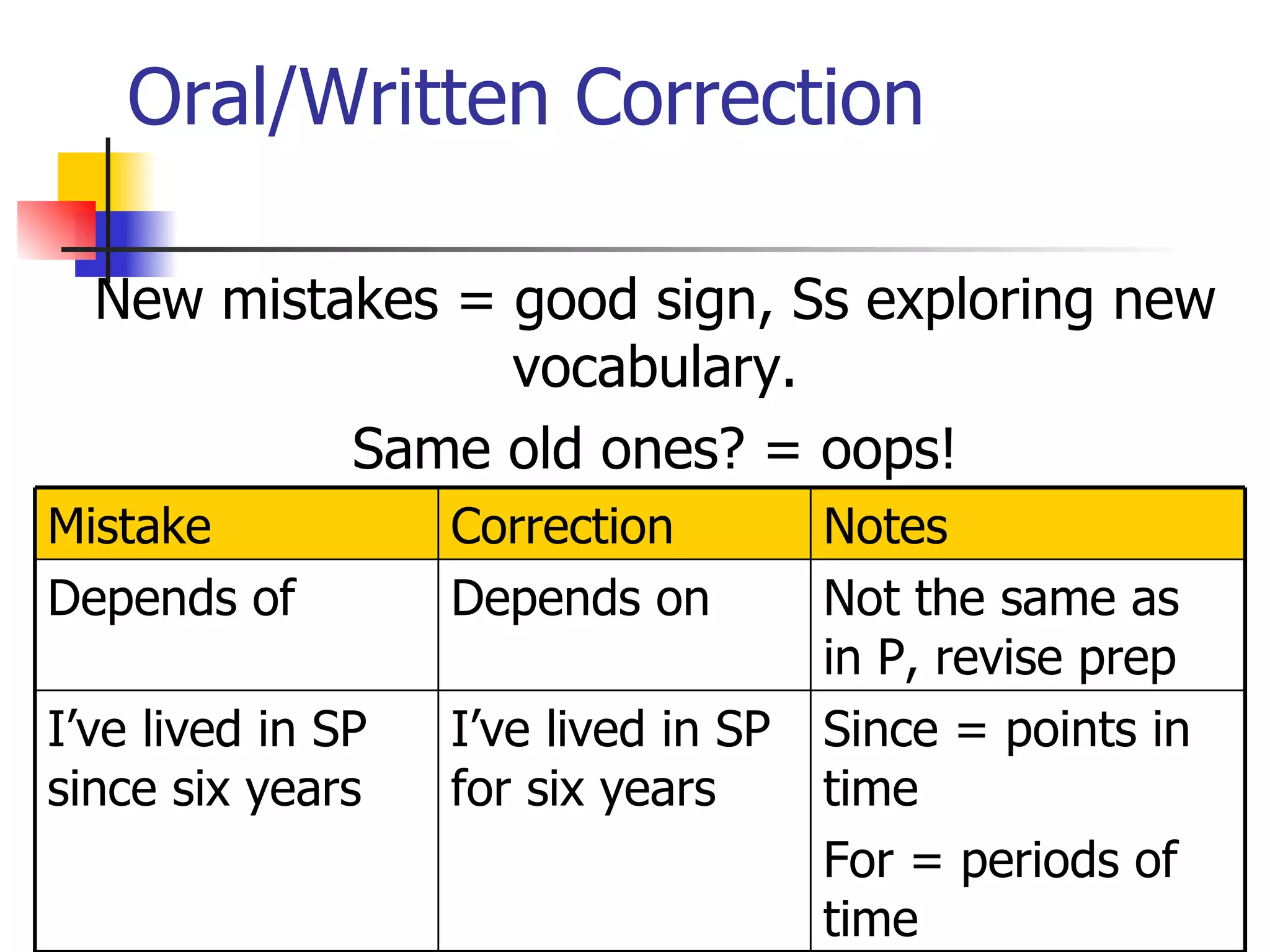
Oral/Written Correction New mistakes = good sign, Ss exploring new vocabulary. Same old ones? = oops! Since = points in time For = periods of time I’ve lived in SP for six years I’ve lived in SP since six years Not the same as in P, revise prep Depends on Depends of Notes Correction Mistake
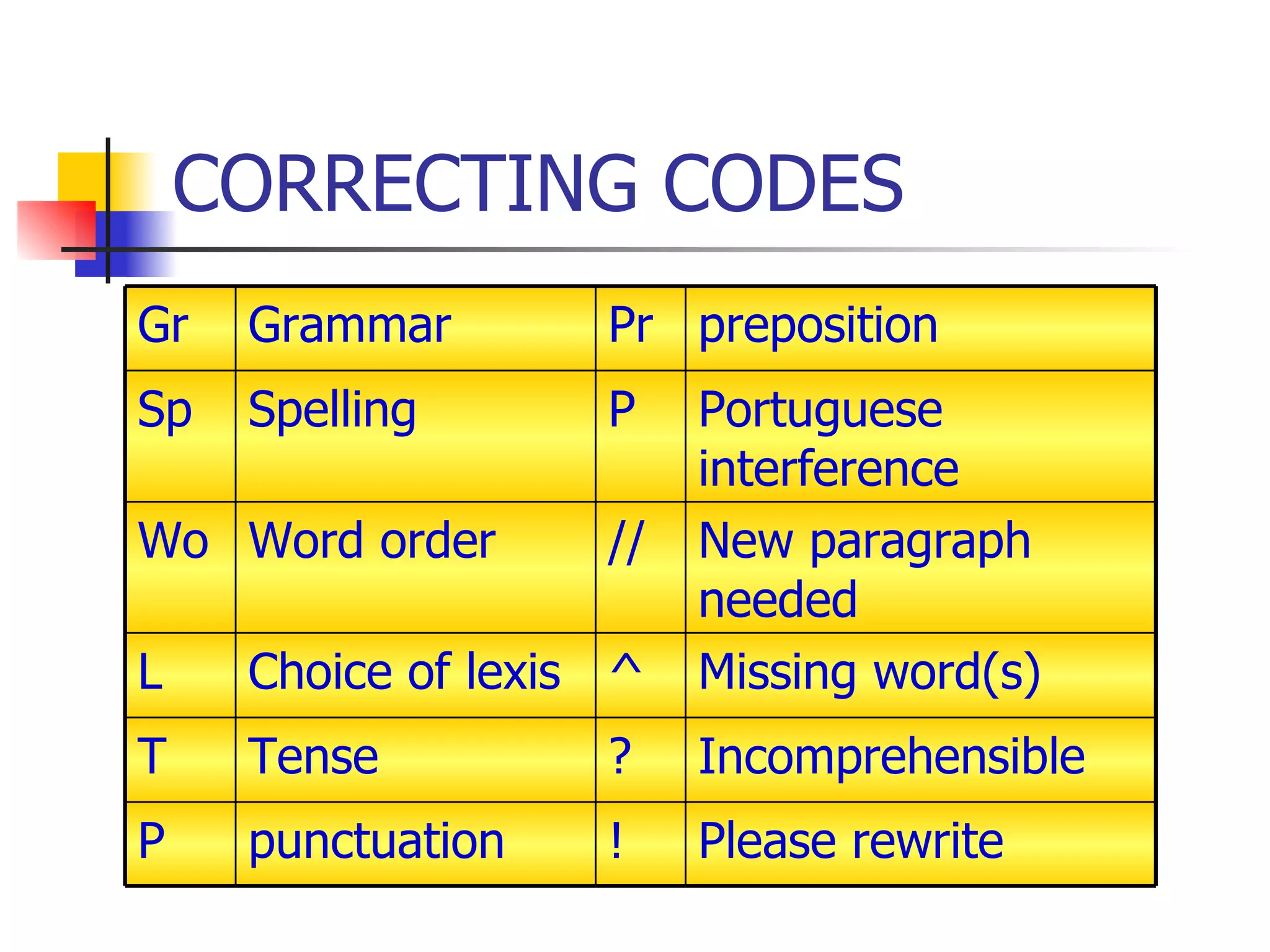
CORRECTING CODES Please rewrite ! punctuation P Incomprehensible ? Tense T Missing word(s) ^ Choice of lexis L New paragraph needed // Word order Wo Portuguese interference P Spelling Sp preposition Pr Grammar Gr
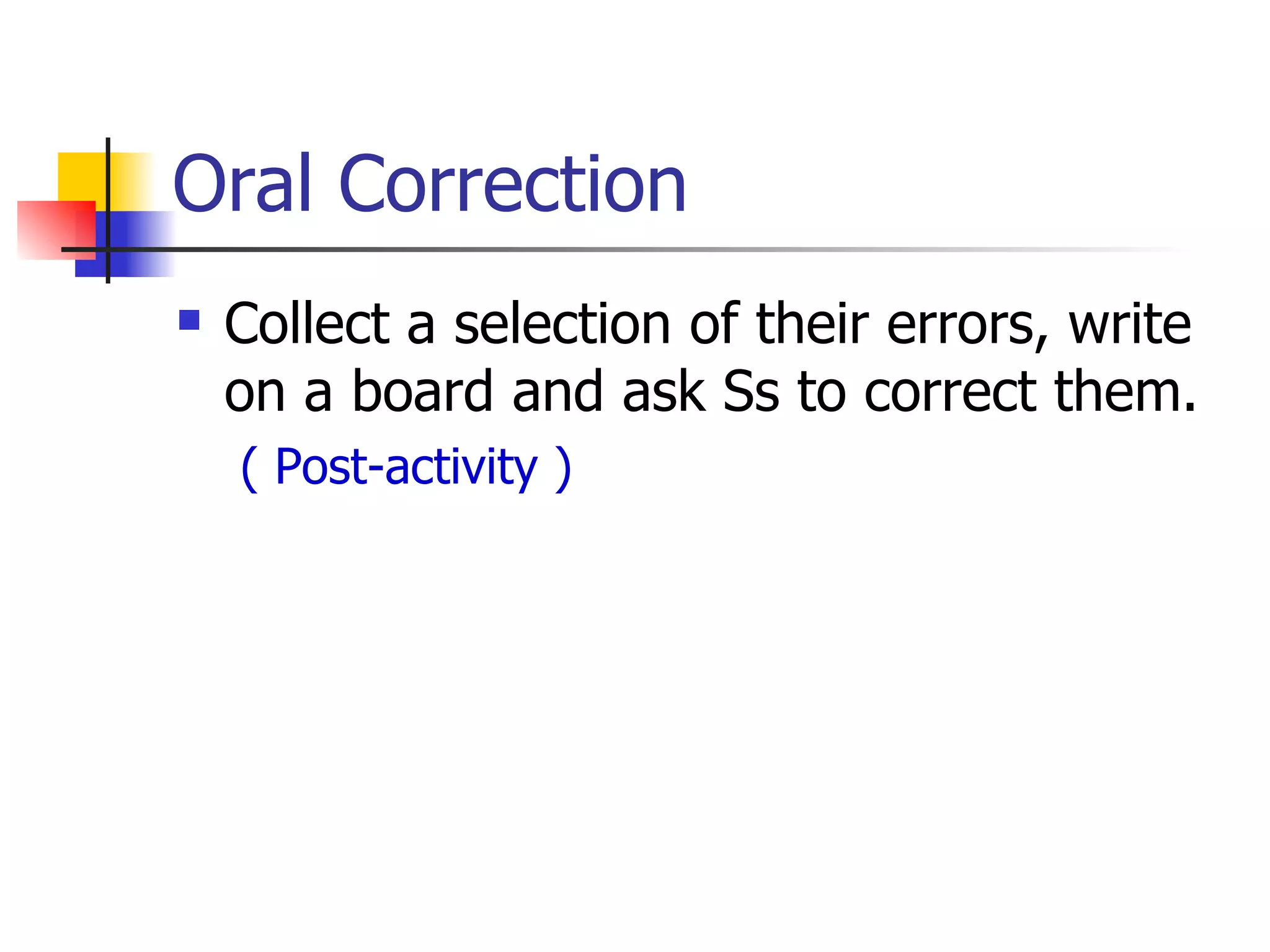
Oral Correction Collect a selection of their errors, write on a board and ask Ss to correct them. ( Post-activity )
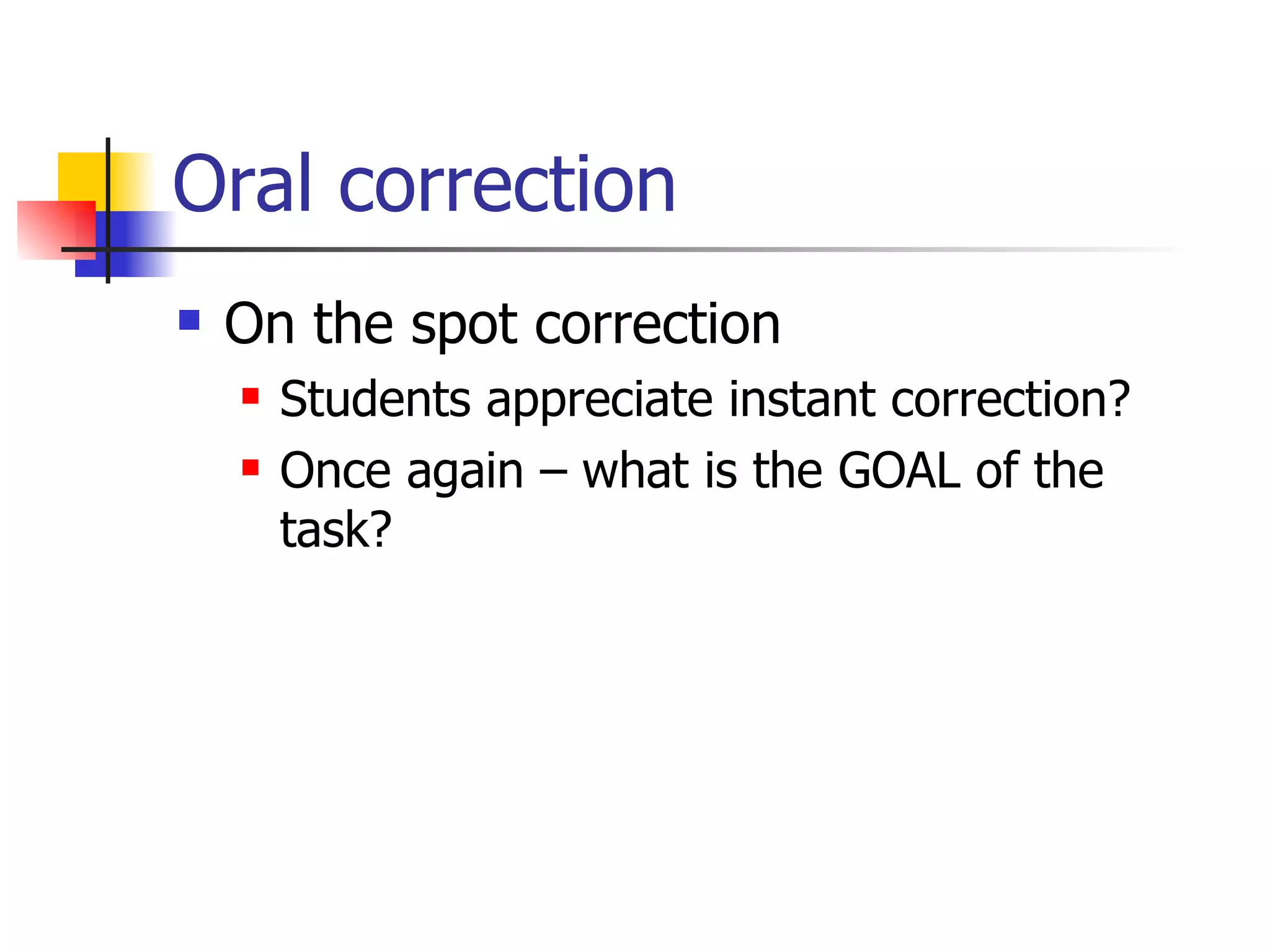
Oral correction On the spot correction Students appreciate instant correction? Once again – what is the GOAL of the task?
CONCLUSION  YOU LEARN FROM YOUR MISTAKES

Correcting MISTAKES, ESL

  • 1.
    CORRECTION SLIP, MISTAKE,ERROR by Claudete Mello,2008
  • 2.
  • 3.
    SLIP The learnerknows how to do, but due to distraction – lack of attention, or focus, production results do not correspond to standards. Ex. She don’t eat meat for lunch. (comparing to other exercises, by sampling, the instructor identifies the nature of the deviation). Usually spelling, agreement...
  • 4.
    MISTAKE I to eat apples for lunch. The student thinks he knows, but he needs extra guidance. Usually tenses, structures...
  • 5.
    ERROR I eat sleeves for lunch. The learner does not know. The coach must go over the subject completely. Usually lack of vocabulary, “guessing”, etc...
  • 6.
  • 7.
    ORAL CORRECTION Whatare the aims of the task? ACCURACY FLUENCY
  • 8.
    Written Correction GoalsTechniques Correction keys Essays correction
  • 9.
    Oral/Written Correction Newmistakes = good sign, Ss exploring new vocabulary. Same old ones? = oops! Since = points in time For = periods of time I’ve lived in SP for six years I’ve lived in SP since six years Not the same as in P, revise prep Depends on Depends of Notes Correction Mistake
  • 10.
    CORRECTING CODES Pleaserewrite ! punctuation P Incomprehensible ? Tense T Missing word(s) ^ Choice of lexis L New paragraph needed // Word order Wo Portuguese interference P Spelling Sp preposition Pr Grammar Gr
  • 11.
    Oral Correction Collecta selection of their errors, write on a board and ask Ss to correct them. ( Post-activity )
  • 12.
    Oral correction Onthe spot correction Students appreciate instant correction? Once again – what is the GOAL of the task?
  • 13.
    CONCLUSION YOULEARN FROM YOUR MISTAKES

Editor's Notes

  • #2 It’s always tricky to know when and if correct
  • #7 Are you working on accuracy or fluency? For a class discussion fluency would be appropriate – students expressing themselves and thinking on their feet. However, in a role play you may want to encourage accuracy. AIMS
  • #8 ACCURACY, PLANNED ACTIVITY AS A ROLE PLAY // FLUENCY = CLASS DISCUSSION, DEBATE – SELF CORRECTION : give Ss a chance to correct themselves
  • #11 FEEDBACK ON WRITTEN PRODUCTION: A DISCUSSION, codes or a set of symbols are quite often used to provide adult students with feedback on their written production. ; advantages and drawbacks / INVOLVE STUDENTS IN THE PREPARATION OF CODE / DRAFT – REDRAFT / SECOND DRAFT – TEACHER add some kind of written comment