*Students correction
When and how to 
It is necessary to discriminate WHEN and HOWto CORRECT, so Ss do not 
get frustrated and inhibited to learning and it helps to improve their English. 
(Torres. M. 2010; pg. 134)
It depends on the kind of activity and its aim. (Torres. M. 
2010; pg. 134)
Categories of S 
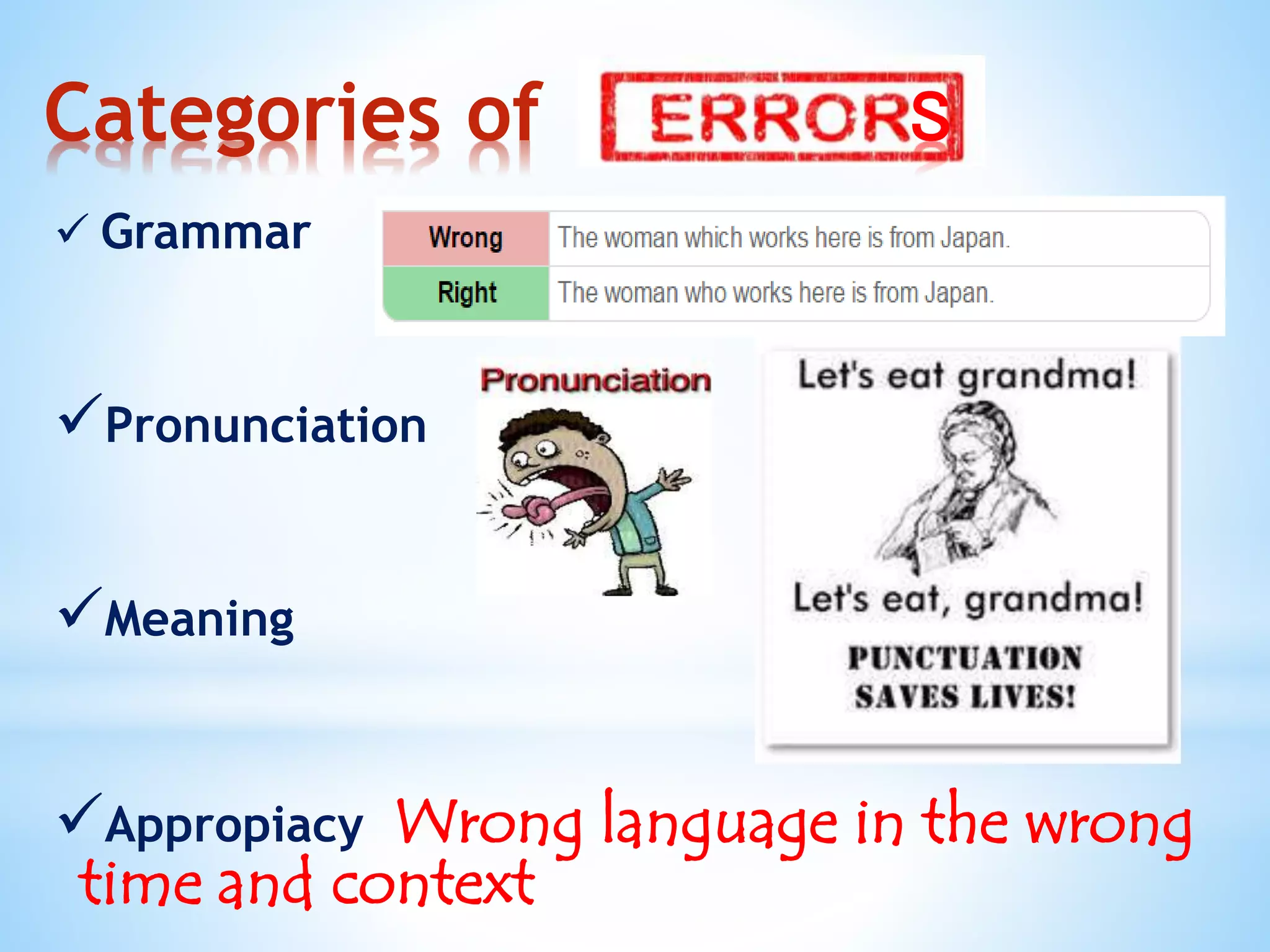
 Grammar 
Pronunciation 
Meaning 
Appropiacy Wrong language in the wrong 
time and context
Types 
*Meaning and communication blockers 
*Native speaker shockers 
*Hugh-frequency errors 
*The structure of the day 
*Mistakes of form
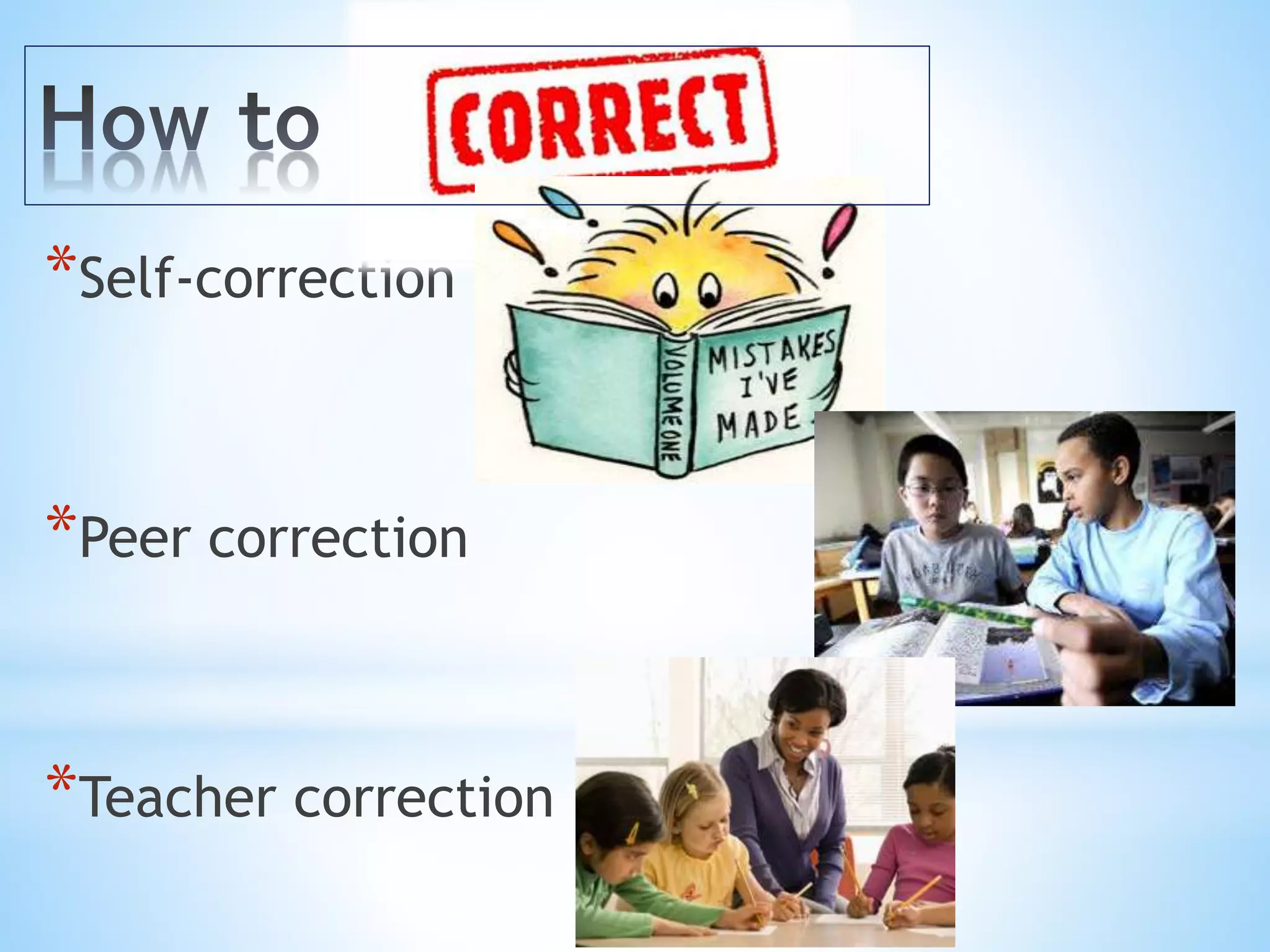
*Self-correction 
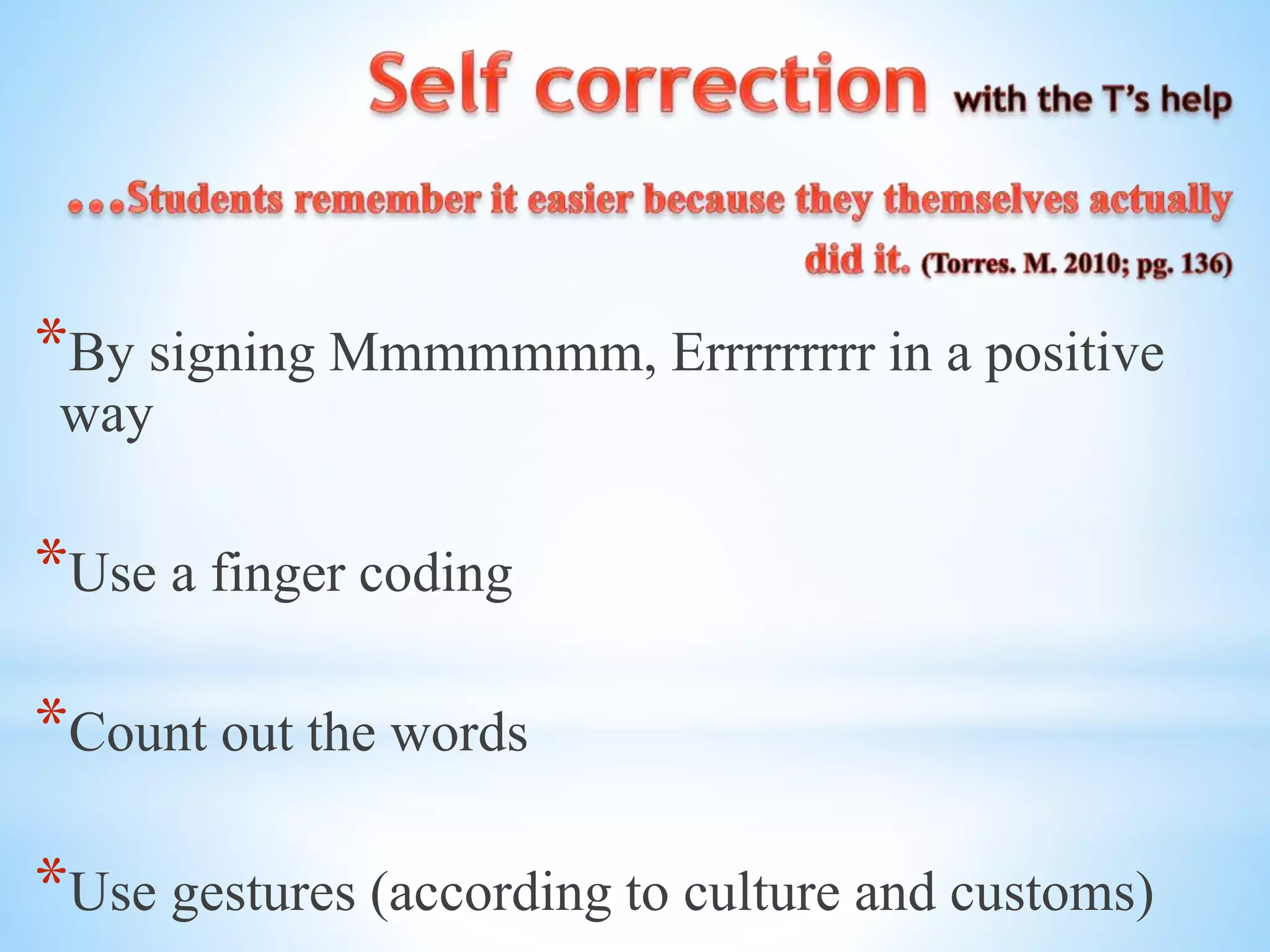
*Peer correction 
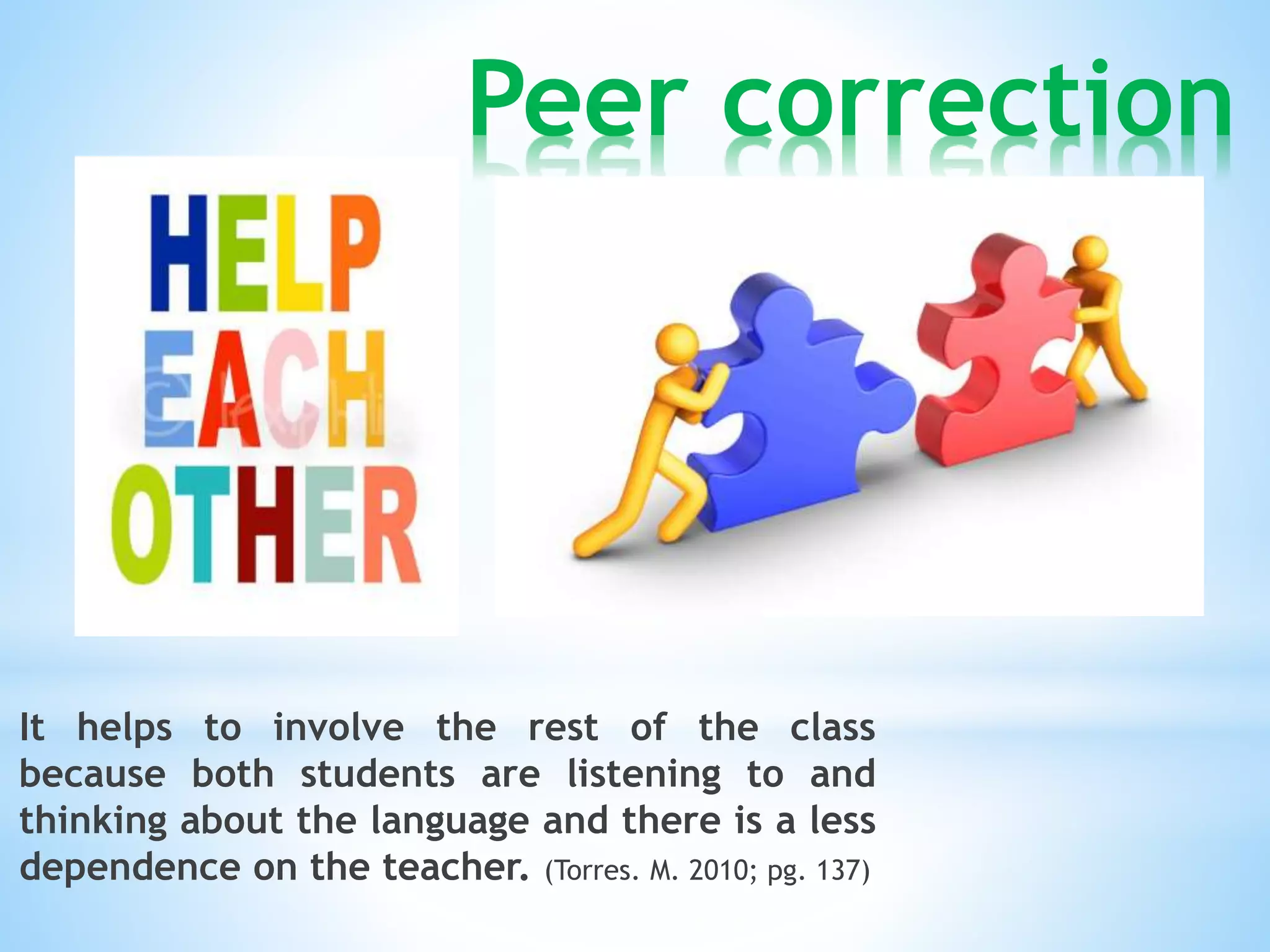
*Teacher correction
*By signing Mmmmmmm, Errrrrrrrr in a positive 
way 
*Use a finger coding 
*Count out the words 
*Use gestures (according to culture and customs)
Peer correction 
It helps to involve the rest of the class 
because both students are listening to and 
thinking about the language and there is a less 
dependence on the teacher. (Torres. M. 2010; pg. 137)
Teacher correction 
Repeat the sentence by making pauses 
Repeat the sentence including the mistake, showing 
with the face and voice where it is. 
Accept the answer and price the students but then say 
the correct form yourself (Torres. M. 2010; pg. 138)
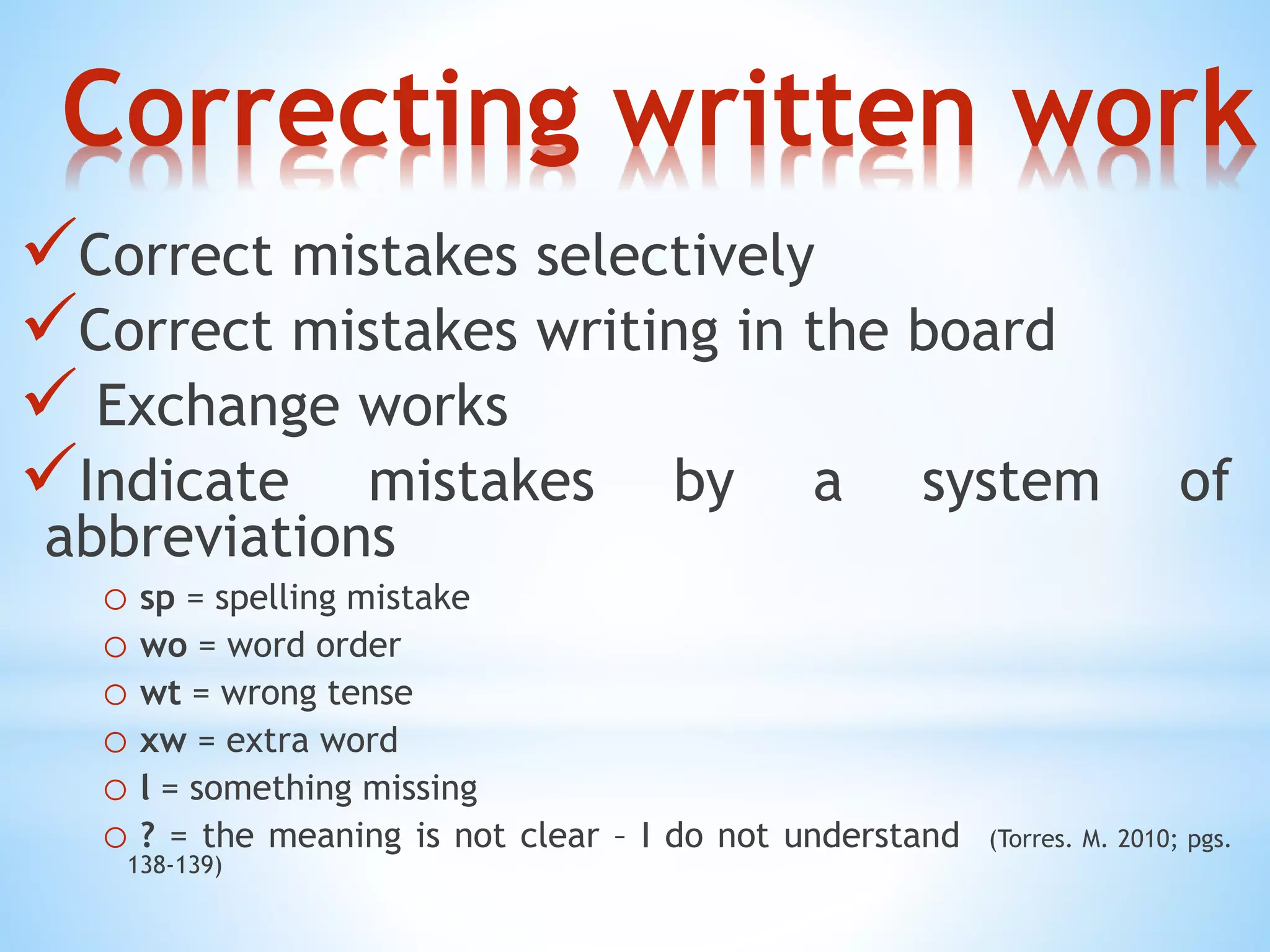
Correcting written work 
Correct mistakes selectively 
Correct mistakes writing in the board 
 Exchange works 
Indicate mistakes by a system of 
abbreviations 
o sp = spelling mistake 
o wo = word order 
o wt = wrong tense 
o xw = extra word 
o l = something missing 
o ? = the meaning is not clear – I do not understand (Torres. M. 2010; pgs. 
138-139)
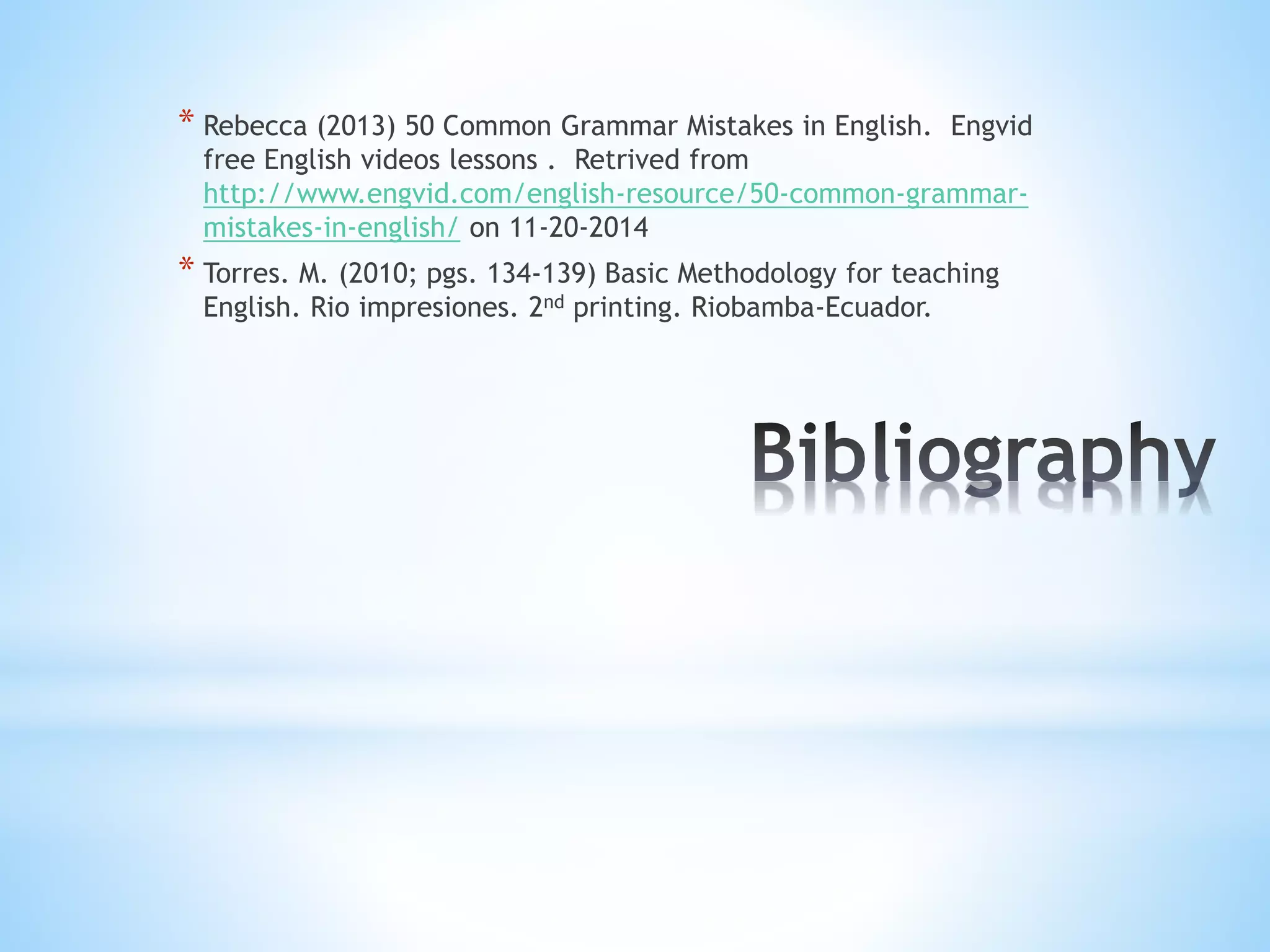
* Rebecca (2013) 50 Common Grammar Mistakes in English. Engvid 
free English videos lessons . Retrived from 
http://www.engvid.com/english-resource/50-common-grammar-mistakes- 
in-english/ on 11-20-2014 
* Torres. M. (2010; pgs. 134-139) Basic Methodology for teaching 
English. Rio impresiones. 2nd printing. Riobamba-Ecuador.

Students error correction

  • 1.
  • 2.
    When and howto It is necessary to discriminate WHEN and HOWto CORRECT, so Ss do not get frustrated and inhibited to learning and it helps to improve their English. (Torres. M. 2010; pg. 134)
  • 3.
    It depends onthe kind of activity and its aim. (Torres. M. 2010; pg. 134)
  • 4.
    Categories of S  Grammar Pronunciation Meaning Appropiacy Wrong language in the wrong time and context
  • 5.
    Types *Meaning andcommunication blockers *Native speaker shockers *Hugh-frequency errors *The structure of the day *Mistakes of form
  • 6.
  • 7.
    *By signing Mmmmmmm,Errrrrrrrr in a positive way *Use a finger coding *Count out the words *Use gestures (according to culture and customs)
  • 8.
    Peer correction Ithelps to involve the rest of the class because both students are listening to and thinking about the language and there is a less dependence on the teacher. (Torres. M. 2010; pg. 137)
  • 9.
    Teacher correction Repeatthe sentence by making pauses Repeat the sentence including the mistake, showing with the face and voice where it is. Accept the answer and price the students but then say the correct form yourself (Torres. M. 2010; pg. 138)
  • 10.
    Correcting written work Correct mistakes selectively Correct mistakes writing in the board  Exchange works Indicate mistakes by a system of abbreviations o sp = spelling mistake o wo = word order o wt = wrong tense o xw = extra word o l = something missing o ? = the meaning is not clear – I do not understand (Torres. M. 2010; pgs. 138-139)
  • 11.
    * Rebecca (2013)50 Common Grammar Mistakes in English. Engvid free English videos lessons . Retrived from http://www.engvid.com/english-resource/50-common-grammar-mistakes- in-english/ on 11-20-2014 * Torres. M. (2010; pgs. 134-139) Basic Methodology for teaching English. Rio impresiones. 2nd printing. Riobamba-Ecuador.