Convocation vs. Degree
Certificate: Key
Differences and When to
Use Each
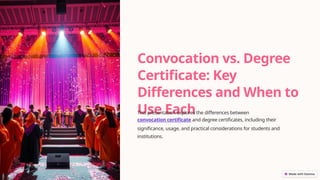
This presentation explores the differences between
convocation certificate and degree certificates, including their
significance, usage, and practical considerations for students and
institutions.
What is a Convocation?
A convocation is a formal ceremony where a university or
college officially recognizes its graduates. It's a celebratory
event, often held in a large hall or auditorium, where
graduates receive their degrees in person.
The ceremony usually involves speeches, awards, and the
conferral of degrees. It marks a significant milestone in the
academic journey of graduates, signifying the successful
completion of their studies.
What is a Degree
Certificate?
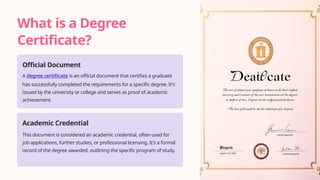
Official Document
A degree certificate is an official document that certifies a graduate
has successfully completed the requirements for a specific degree. It's
issued by the university or college and serves as proof of academic
achievement.
Academic Credential
This document is considered an academic credential, often used for
job applications, further studies, or professional licensing. It's a formal
record of the degree awarded, outlining the specific program of study.
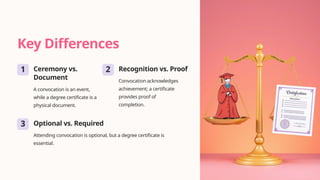
Key Differences
1 Ceremony vs.
Document
A convocation is an event,
while a degree certificate is a
physical document.
2 Recognition vs. Proof
Convocation acknowledges
achievement; a certificate
provides proof of
completion.
3 Optional vs. Required
Attending convocation is optional, but a degree certificate is
essential.
When to Use Each
Convocation
For celebrating academic
achievement, attending a formal
event, and experiencing the pride of
graduation with fellow students.
Degree Certificate
For applying to jobs, pursuing
further studies, professional
licensing, and providing official
proof of academic qualifications.
Understanding the Difference: Why It Matters
1
2
3
Academic Integrity
It ensures accurate representation of
academic achievements and prevents
confusion about qualifications.
Professionalism
Understanding the distinction demonstrates
a graduate's awareness of academic
protocols and their commitment to
professionalism.
Clarity and Transparency
It avoids misunderstandings between
students, institutions, and employers
regarding academic credentials and
expectations.
Practical Considerations
1 Student Perspective
Students should understand both the significance of the
convocation ceremony and the importance of obtaining
their degree certificate.
2 Institutional Perspective
Institutions must ensure that degree certificates are
issued accurately and timely and that convocation
ceremonies are well-organized and meaningful.
Common Misconceptions
Convocation Required for Graduation
Attending convocation is optional and doesn't affect the
awarding of a degree.
Degree Certificate is Only for Jobs
It's also used for higher education, professional licensing,
and other purposes.
Conclusion and Takeaways
Distinct Roles
Convocation is a celebration, a degree certificate is official proof.
Importance of Understanding
Knowledge of these differences promotes academic integrity and
professionalism.
Value of Both
Both are vital for a successful academic journey and career.
Do you have any Questions?
Email: info@worlddocservices.com
Phone No: +91 6232670879
Website: worlddocservices.com

Convocation vs. Degree Certificate: Key Differences and When to Use Each

  • 1.
    Convocation vs. Degree Certificate:Key Differences and When to Use Each This presentation explores the differences between convocation certificate and degree certificates, including their significance, usage, and practical considerations for students and institutions.
  • 2.
    What is aConvocation? A convocation is a formal ceremony where a university or college officially recognizes its graduates. It's a celebratory event, often held in a large hall or auditorium, where graduates receive their degrees in person. The ceremony usually involves speeches, awards, and the conferral of degrees. It marks a significant milestone in the academic journey of graduates, signifying the successful completion of their studies.
  • 3.
    What is aDegree Certificate? Official Document A degree certificate is an official document that certifies a graduate has successfully completed the requirements for a specific degree. It's issued by the university or college and serves as proof of academic achievement. Academic Credential This document is considered an academic credential, often used for job applications, further studies, or professional licensing. It's a formal record of the degree awarded, outlining the specific program of study.
  • 4.
    Key Differences 1 Ceremonyvs. Document A convocation is an event, while a degree certificate is a physical document. 2 Recognition vs. Proof Convocation acknowledges achievement; a certificate provides proof of completion. 3 Optional vs. Required Attending convocation is optional, but a degree certificate is essential.
  • 5.
    When to UseEach Convocation For celebrating academic achievement, attending a formal event, and experiencing the pride of graduation with fellow students. Degree Certificate For applying to jobs, pursuing further studies, professional licensing, and providing official proof of academic qualifications.
  • 6.
    Understanding the Difference:Why It Matters 1 2 3 Academic Integrity It ensures accurate representation of academic achievements and prevents confusion about qualifications. Professionalism Understanding the distinction demonstrates a graduate's awareness of academic protocols and their commitment to professionalism. Clarity and Transparency It avoids misunderstandings between students, institutions, and employers regarding academic credentials and expectations.
  • 7.
    Practical Considerations 1 StudentPerspective Students should understand both the significance of the convocation ceremony and the importance of obtaining their degree certificate. 2 Institutional Perspective Institutions must ensure that degree certificates are issued accurately and timely and that convocation ceremonies are well-organized and meaningful.
  • 8.
    Common Misconceptions Convocation Requiredfor Graduation Attending convocation is optional and doesn't affect the awarding of a degree. Degree Certificate is Only for Jobs It's also used for higher education, professional licensing, and other purposes.
  • 9.
    Conclusion and Takeaways DistinctRoles Convocation is a celebration, a degree certificate is official proof. Importance of Understanding Knowledge of these differences promotes academic integrity and professionalism. Value of Both Both are vital for a successful academic journey and career.
  • 10.
    Do you haveany Questions? Email: info@worlddocservices.com Phone No: +91 6232670879 Website: worlddocservices.com