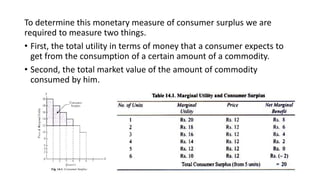
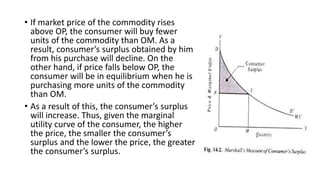
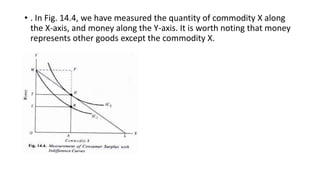
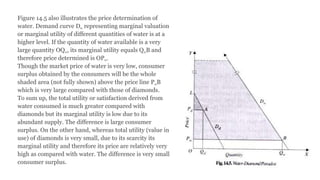
Consumer surplus refers to the extra satisfaction or benefit consumers receive from purchasing goods or services beyond the price they pay. It is measured as the difference between the maximum price a consumer is willing to pay and the actual market price. Consumer surplus can be represented graphically as the area under a demand curve above the market price. It helps explain why seemingly less useful goods like diamonds command a higher price than more essential goods like water, due to differences in available supply affecting marginal utility and willingness to pay. Consumer surplus also demonstrates that total usefulness cannot be inferred from price alone.