Constructing Heterogeneous K8s
control plane with Konnectivity /K8s
apiserver network proxy
Tamil Vanan
Tech Lead, Arcesium
Overview
● What?
What you meant by “Heterogeneous/Remote control Plane”
● Why?
Example use cases for Heterogeneous control plane
● How ?
Building blocks and concepts to make this happen
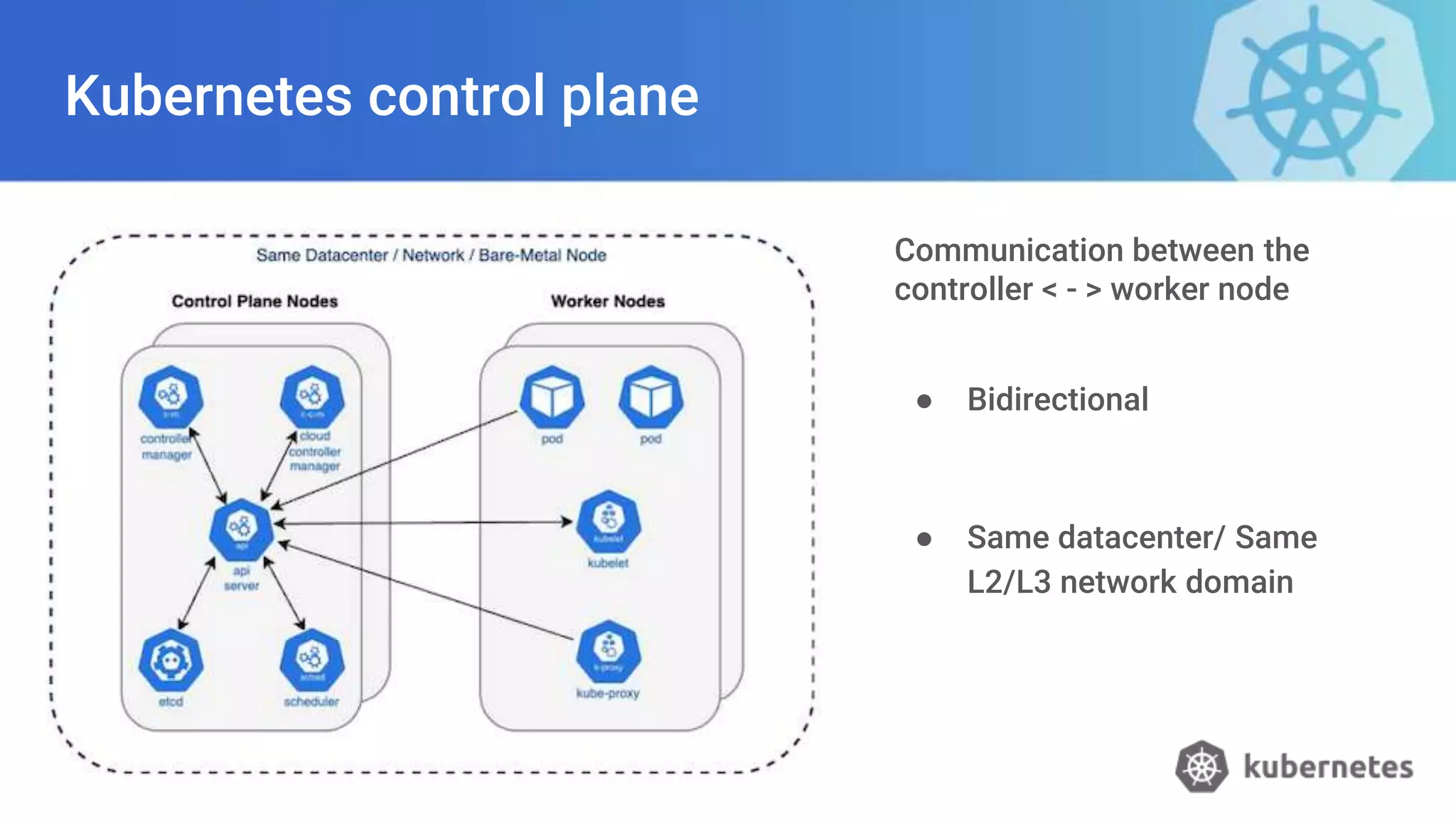
Kubernetes control plane
Communication between the
controller < - > worker node
● Bidirectional
● Same datacenter/ Same
L2/L3 network domain
Use cases
● Kubernetes at Edge - Worker nodes (e.g. resource-constrained) at edge,
control plane in a cloud/datacenter
○ Internet of Things (IoT) and Edge Devices
○ Telecommunications and 5G Networks
○ Autonomous Vehicles
● Hybrid Cloud
○ Worker nodes on different platform / cloud than the control plane
○ Easy migration of worker-nodes between platforms
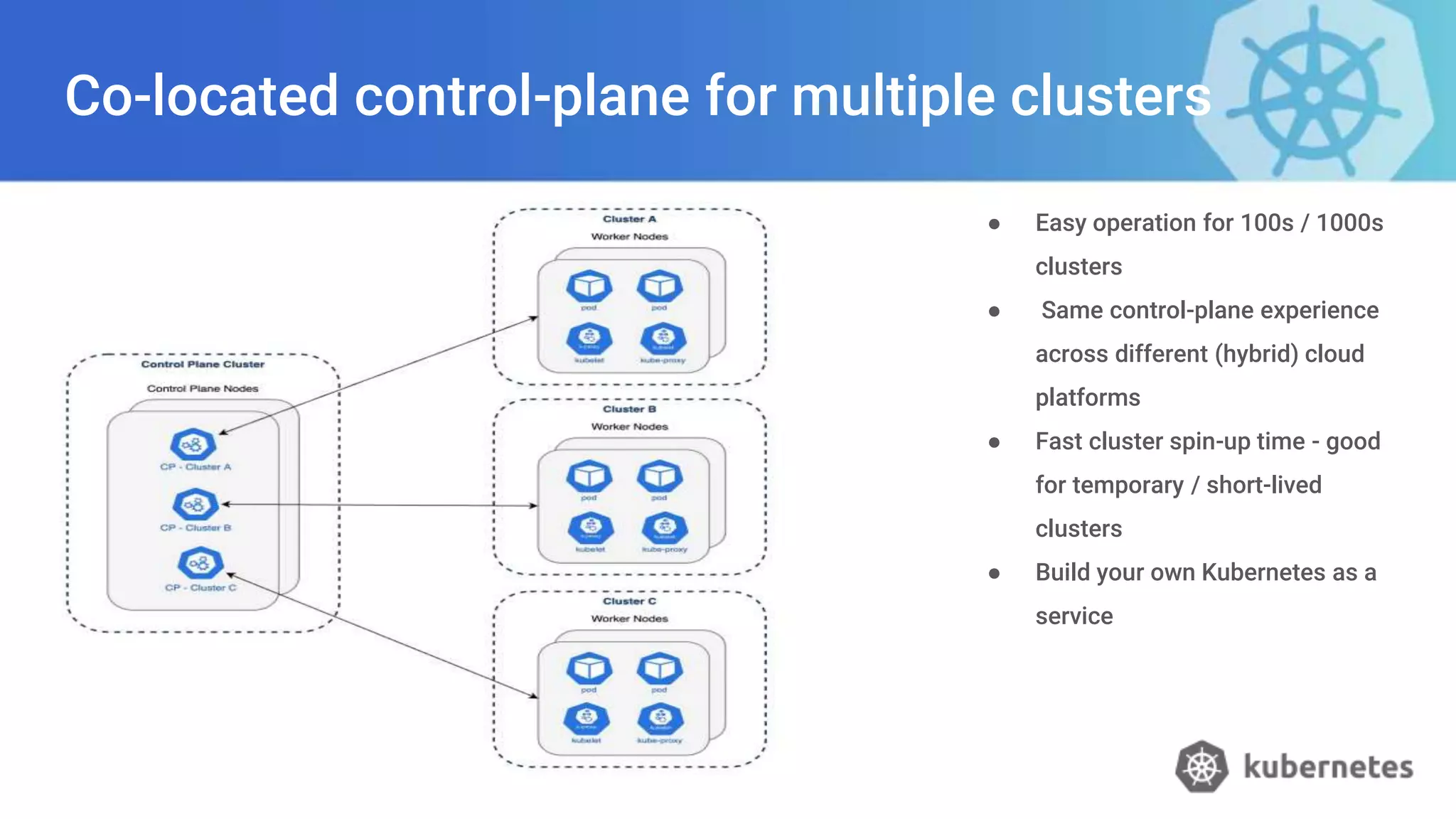
● Co-located control-plane for multiple clusters:
○ Easy operation for 100s / 1000s clusters
Co-located control-plane for multiple clusters
● Easy operation for 100s / 1000s
clusters
● Same control-plane experience
across different (hybrid) cloud
platforms
● Fast cluster spin-up time - good
for temporary / short-lived
clusters
● Build your own Kubernetes as a
service
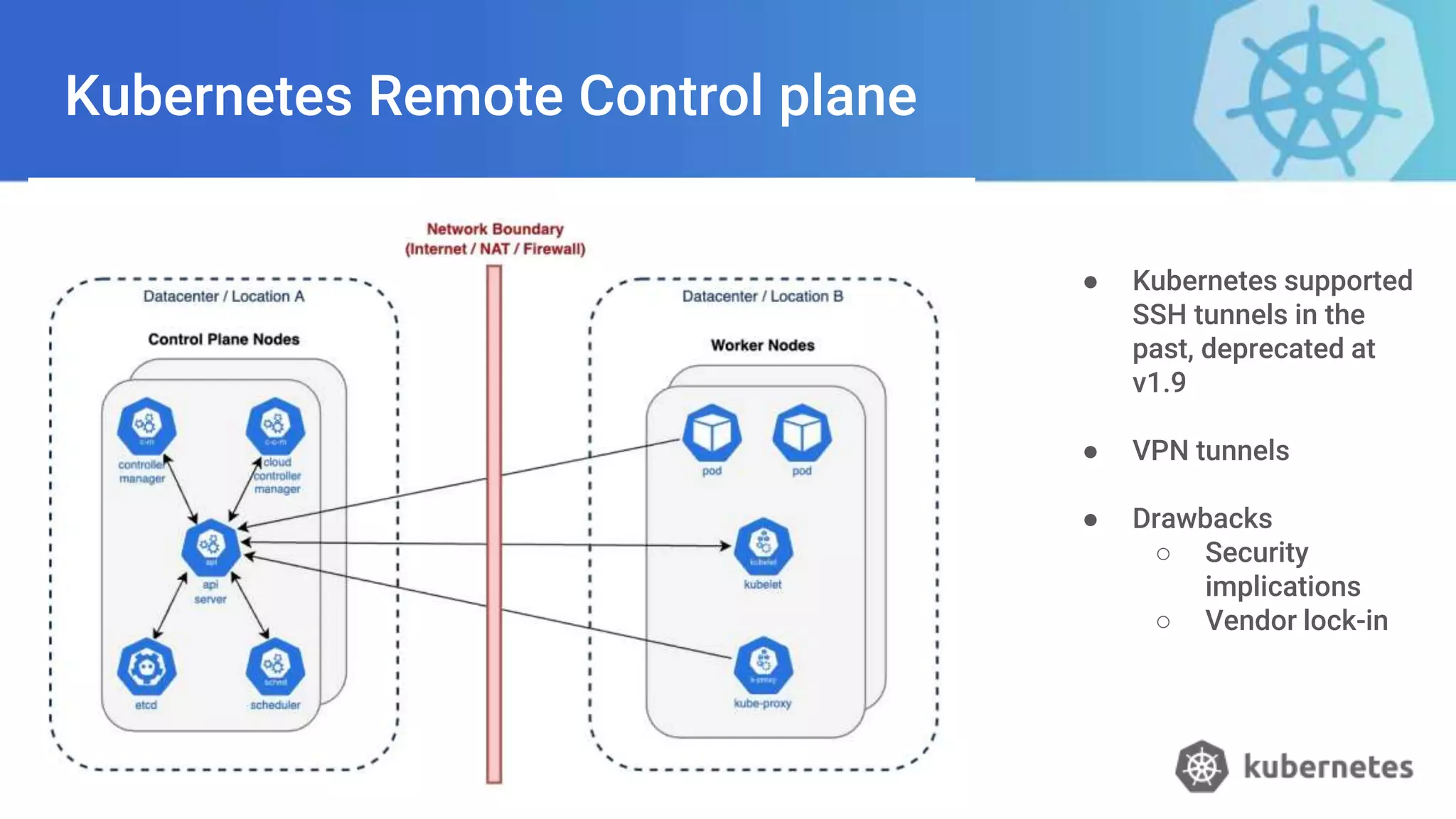
Kubernetes Remote Control plane
● Kubernetes supported
SSH tunnels in the
past, deprecated at
v1.9
● VPN tunnels
● Drawbacks
○ Security
implications
○ Vendor lock-in
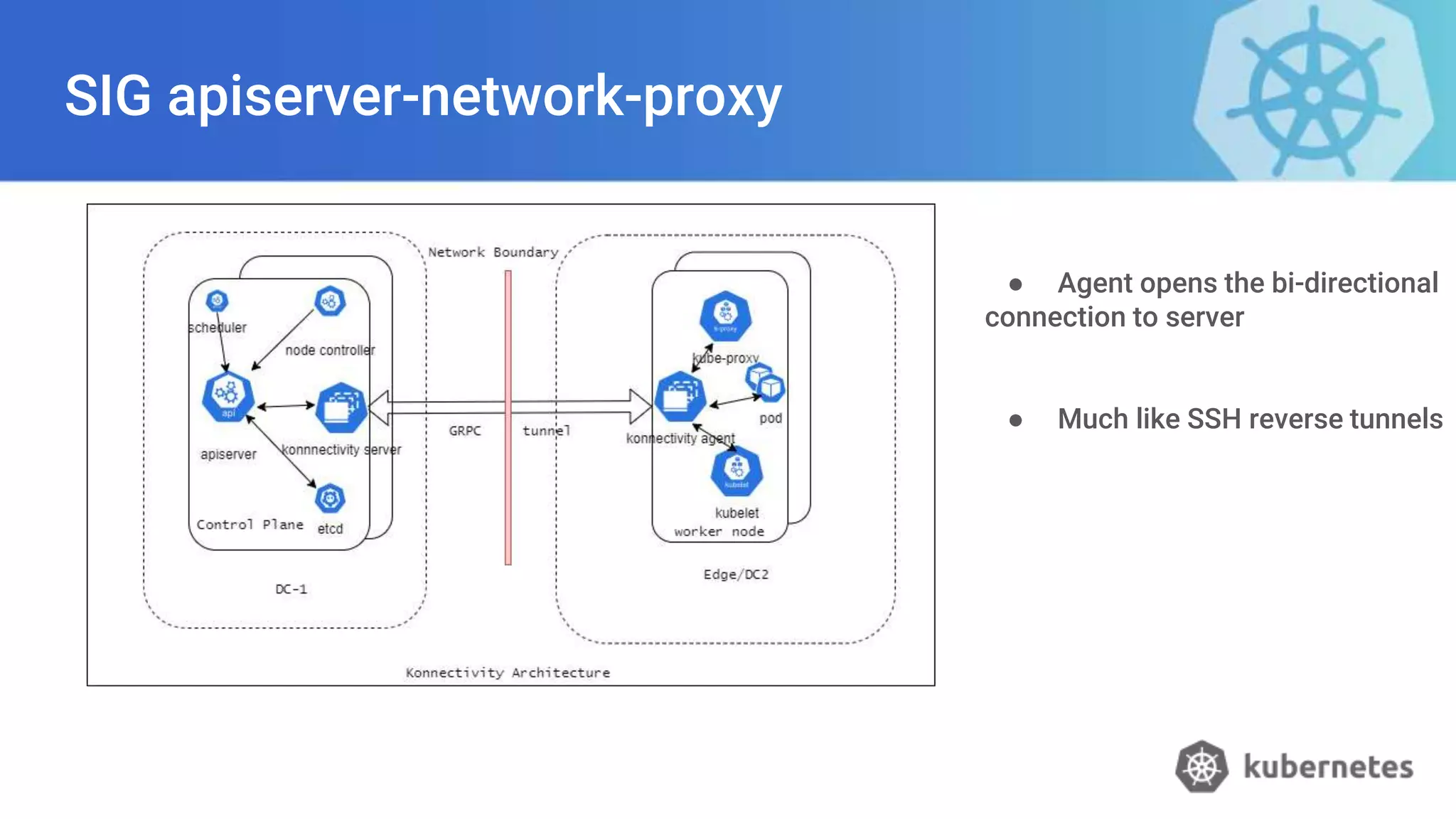
SIG apiserver-network-proxy
● Agent opens the bi-directional
connection to server
● Much like SSH reverse tunnels
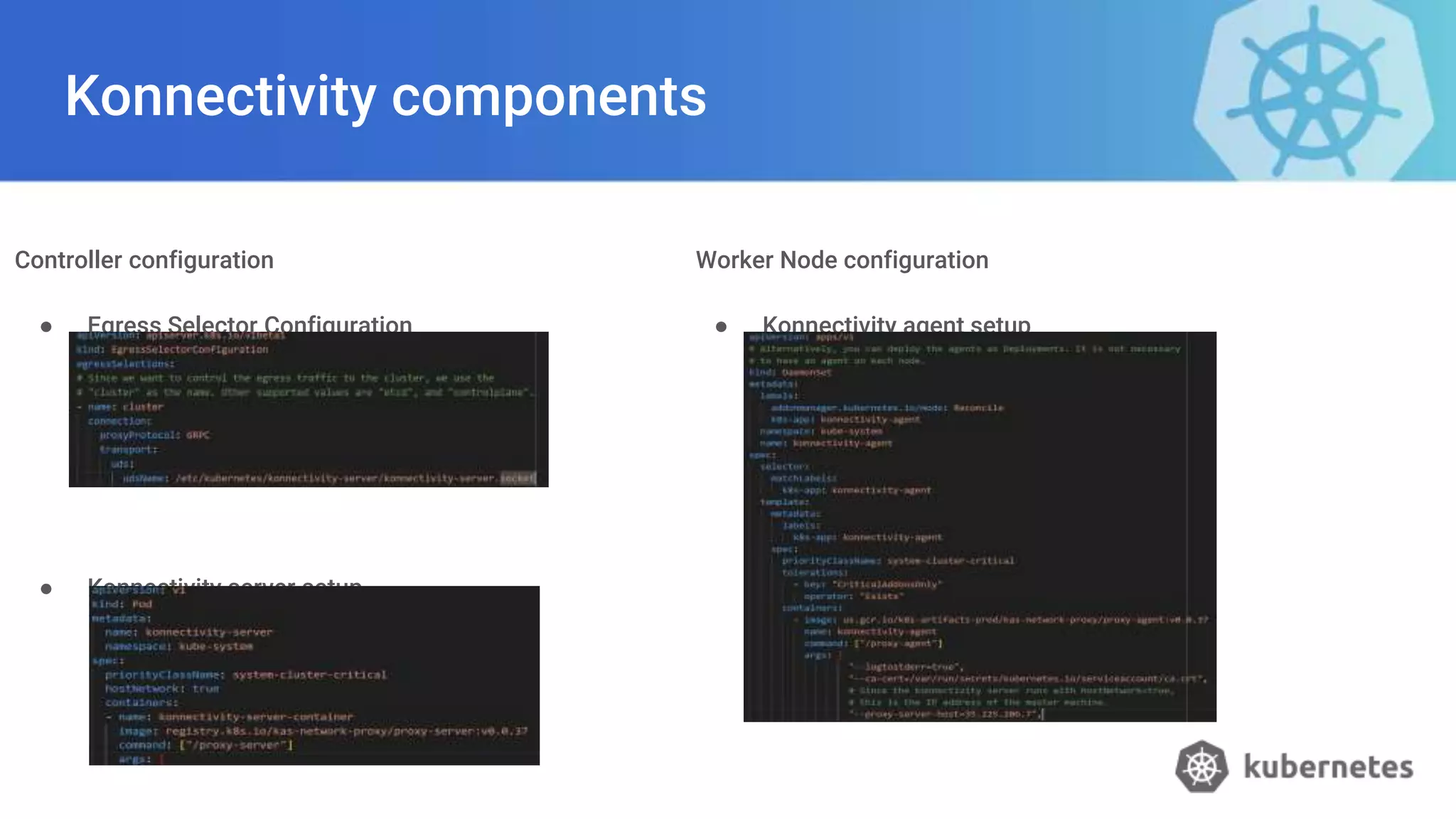
Konnectivity components
Controller configuration
● Egress Selector Configuration
● Konnectivity server setup
Worker Node configuration
● Konnectivity agent setup
Thank you
● Slack #api-server-network-proxy
● References
○ https://github.com/kubernetes-sigs/apiserver-network-proxy
○ https://kubernetes.io/docs/concepts/architecture/control-plane-
node-communication
Contact: @tamilhce

Constructing Heterogeneous K8s control plane with Konnectivity (1).pptx

  • 1.
    Constructing Heterogeneous K8s controlplane with Konnectivity /K8s apiserver network proxy Tamil Vanan Tech Lead, Arcesium
  • 2.
    Overview ● What? What youmeant by “Heterogeneous/Remote control Plane” ● Why? Example use cases for Heterogeneous control plane ● How ? Building blocks and concepts to make this happen
  • 3.
    Kubernetes control plane Communicationbetween the controller < - > worker node ● Bidirectional ● Same datacenter/ Same L2/L3 network domain
  • 4.
    Use cases ● Kubernetesat Edge - Worker nodes (e.g. resource-constrained) at edge, control plane in a cloud/datacenter ○ Internet of Things (IoT) and Edge Devices ○ Telecommunications and 5G Networks ○ Autonomous Vehicles ● Hybrid Cloud ○ Worker nodes on different platform / cloud than the control plane ○ Easy migration of worker-nodes between platforms ● Co-located control-plane for multiple clusters: ○ Easy operation for 100s / 1000s clusters
  • 5.
    Co-located control-plane formultiple clusters ● Easy operation for 100s / 1000s clusters ● Same control-plane experience across different (hybrid) cloud platforms ● Fast cluster spin-up time - good for temporary / short-lived clusters ● Build your own Kubernetes as a service
  • 6.
    Kubernetes Remote Controlplane ● Kubernetes supported SSH tunnels in the past, deprecated at v1.9 ● VPN tunnels ● Drawbacks ○ Security implications ○ Vendor lock-in
  • 7.
    SIG apiserver-network-proxy ● Agentopens the bi-directional connection to server ● Much like SSH reverse tunnels
  • 8.
    Konnectivity components Controller configuration ●Egress Selector Configuration ● Konnectivity server setup Worker Node configuration ● Konnectivity agent setup
  • 9.
    Thank you ● Slack#api-server-network-proxy ● References ○ https://github.com/kubernetes-sigs/apiserver-network-proxy ○ https://kubernetes.io/docs/concepts/architecture/control-plane- node-communication Contact: @tamilhce