Directions: Identify different meanings of the
underlined content-specific words:
connotation and denotation. Write C if it
expresses connotation and D if it expresses
denotation. Write your answers on your
answer sheet.
1. A dove is a bird.
2. A dove signifies peace.
3. An alligator is a reptile.
4. Pen is mightier than sword.
5. A pen is used for writing.
Figurative: don’t say exactly what you mean. You DO
compare, exaggerate, and understate the situation. You
use similes, metaphors, hyperboles, and other figures
of speech to make your writing more exciting.
Denotation is the strict dictionary meaning of
a word.
Connotation and Denotation
Connotation is the
emotional and
imaginative
association
surrounding a
word.
Denotation is the
strict dictionary
meaning of a
word.
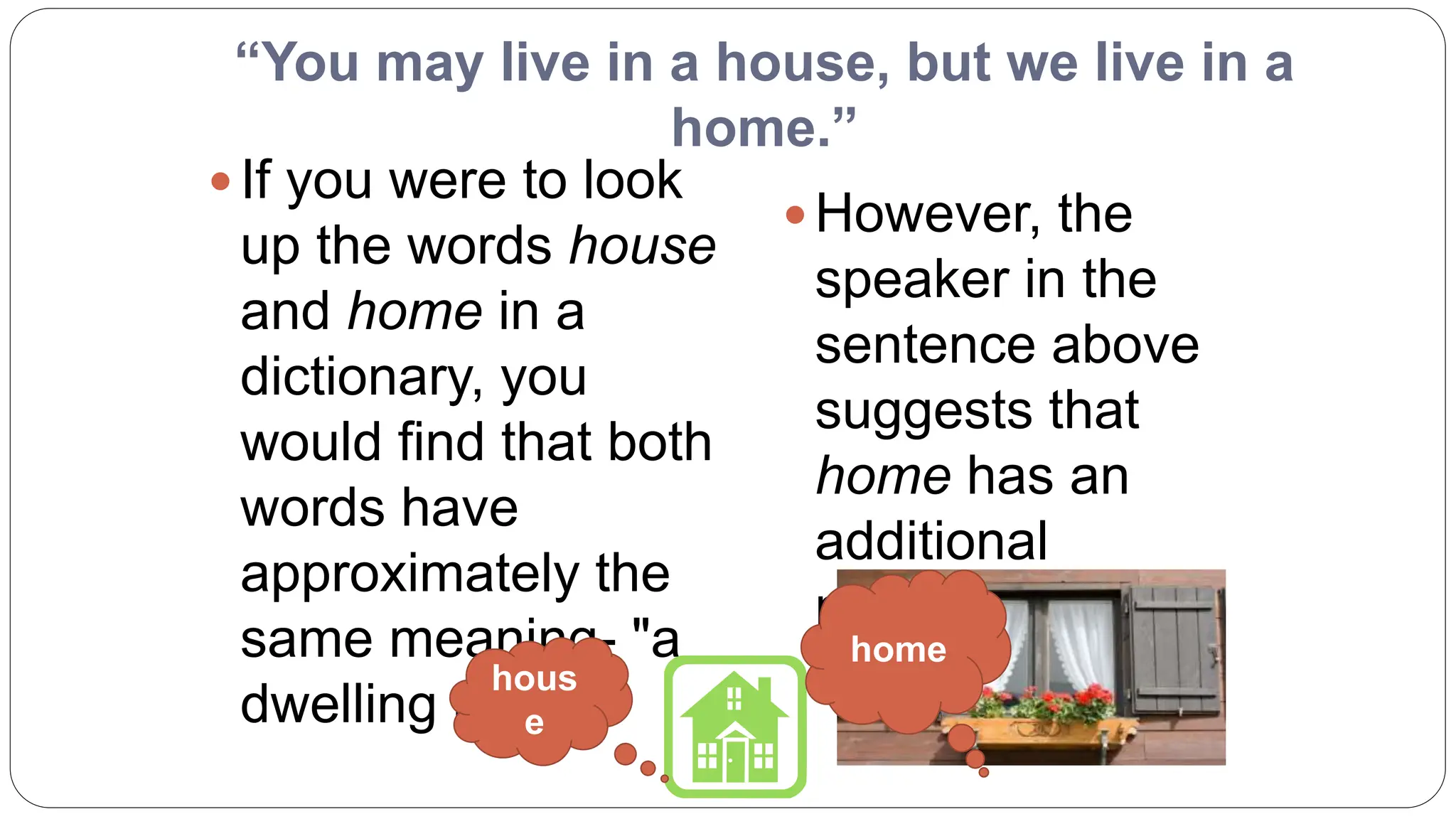
“You may live in a house, but we live in a
home.”
If you were to look
up the words house
and home in a
dictionary, you
would find that both
words have
approximately the
same meaning- "a
dwelling place."
However, the
speaker in the
sentence above
suggests that
home has an
additional
meaning.
hous
e
home
Connotation and denotation
 Aside from the strict
dictionary definition,
or denotation,
many people
associate such
things as comfort,
love, security, or
privacy with a home
but do not
necessarily make
the same
associations with a
love
securit
y
comfort
privacy securit
y
HOME
Connotation
The various
feelings, images,
and memories that
surround a word
make up its
connotation.
Although both
house and home
have the same
denotation, or
dictionary meaning,
Connotati
on
memories
feelings
images
“I know what you said, but what did
you mean?”
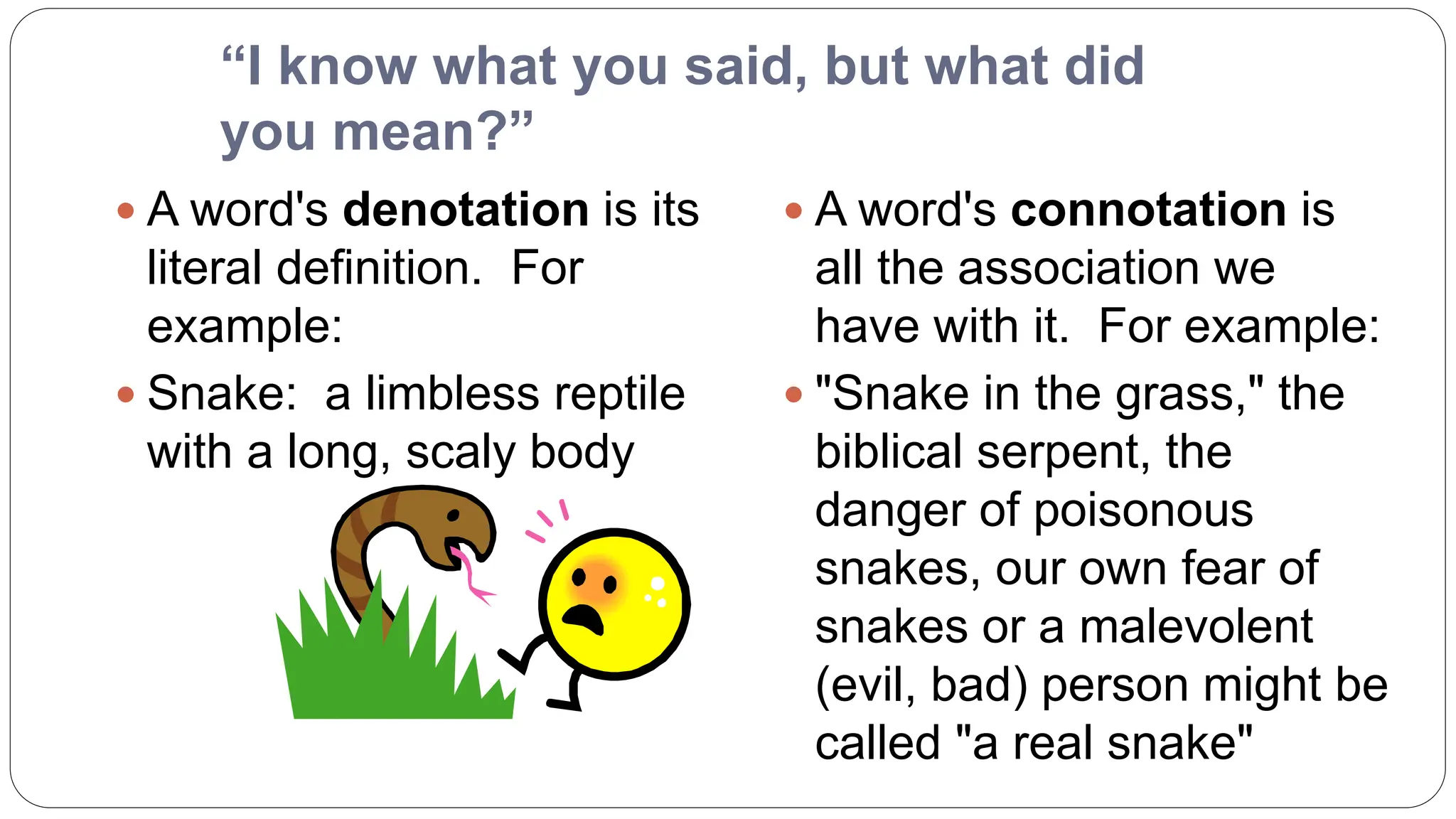
 A word's denotation is its
literal definition. For
example:
 Snake: a limbless reptile
with a long, scaly body
 A word's connotation is
all the association we
have with it. For example:
 "Snake in the grass," the
biblical serpent, the
danger of poisonous
snakes, our own fear of
snakes or a malevolent
(evil, bad) person might be
called "a real snake"
Who is hearing the word?
 Connotation can
depend on the person
who hears the word
and brings his or her
own associations to it.
 * A plumber might
immediately think of a
plumbing tool called a
snake.
 *A biologist might think
of the rare Indigo Snake
he felt lucky to see the
past weekend.
Shades of meaning…
 Some words, though, have shades of meaning that are
commonly recognized.
 While "serpent" is literally a snake, the word "serpent"
is usually associated with evil.
 In today's society, "politician" has somewhat negative
associations, while "statesman" sounds more positive.
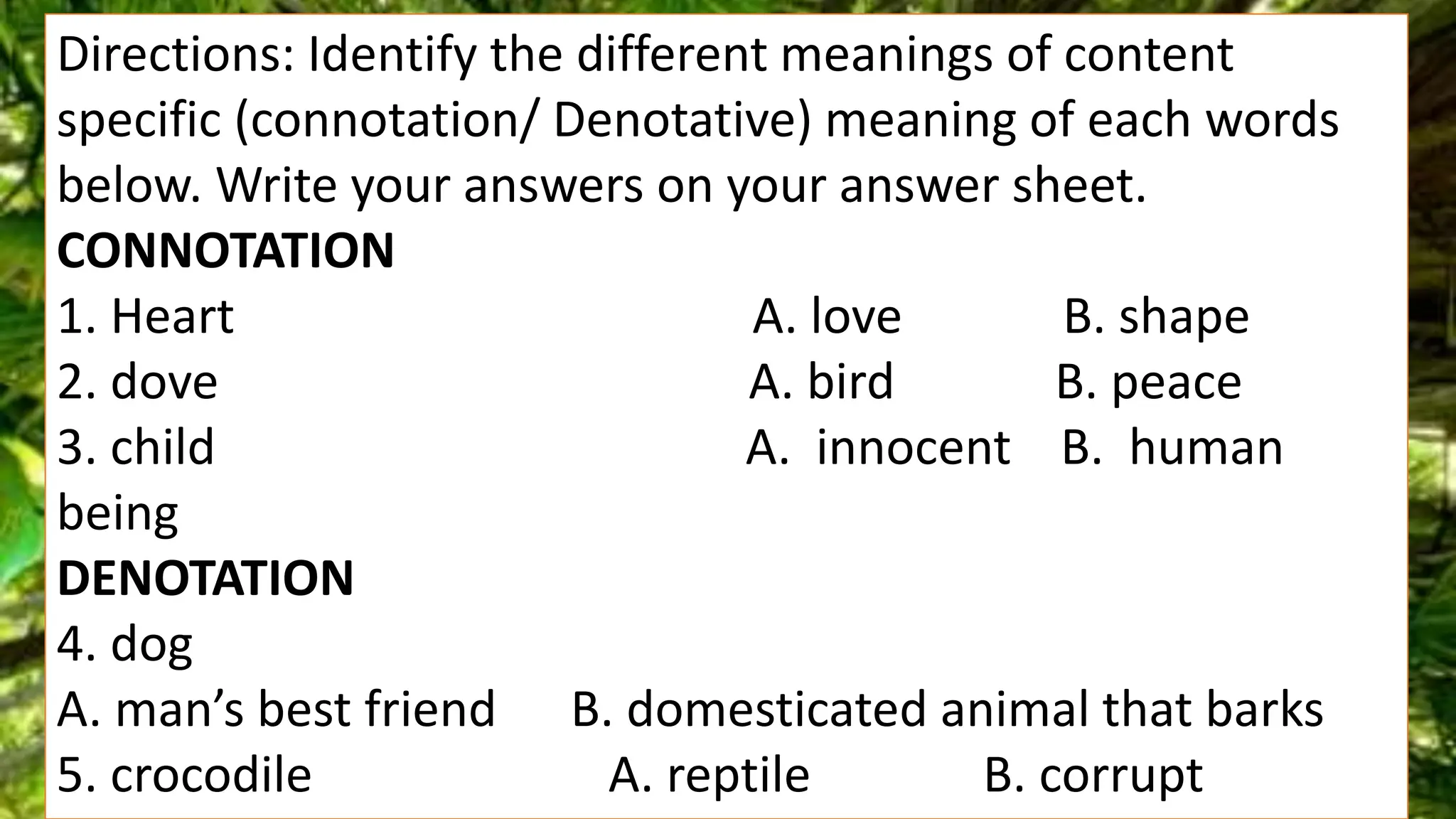
Directions: Identify the different meanings of content
specific (connotation/ Denotative) meaning of each words
below. Write your answers on your answer sheet.
CONNOTATION
1. Heart A. love B. shape
2. dove A. bird B. peace
3. child A. innocent B. human
being
DENOTATION
4. dog
A. man’s best friend B. domesticated animal that barks
5. crocodile A. reptile B. corrupt

connotative and denotative English2.pptx

  • 2.
    Directions: Identify differentmeanings of the underlined content-specific words: connotation and denotation. Write C if it expresses connotation and D if it expresses denotation. Write your answers on your answer sheet.
  • 3.
    1. A doveis a bird. 2. A dove signifies peace. 3. An alligator is a reptile. 4. Pen is mightier than sword. 5. A pen is used for writing.
  • 5.
    Figurative: don’t sayexactly what you mean. You DO compare, exaggerate, and understate the situation. You use similes, metaphors, hyperboles, and other figures of speech to make your writing more exciting.
  • 6.
    Denotation is thestrict dictionary meaning of a word.
  • 7.
    Connotation and Denotation Connotationis the emotional and imaginative association surrounding a word. Denotation is the strict dictionary meaning of a word.
  • 8.
    “You may livein a house, but we live in a home.” If you were to look up the words house and home in a dictionary, you would find that both words have approximately the same meaning- "a dwelling place." However, the speaker in the sentence above suggests that home has an additional meaning. hous e home
  • 9.
    Connotation and denotation Aside from the strict dictionary definition, or denotation, many people associate such things as comfort, love, security, or privacy with a home but do not necessarily make the same associations with a love securit y comfort privacy securit y HOME
  • 10.
    Connotation The various feelings, images, andmemories that surround a word make up its connotation. Although both house and home have the same denotation, or dictionary meaning, Connotati on memories feelings images
  • 11.
    “I know whatyou said, but what did you mean?”  A word's denotation is its literal definition. For example:  Snake: a limbless reptile with a long, scaly body  A word's connotation is all the association we have with it. For example:  "Snake in the grass," the biblical serpent, the danger of poisonous snakes, our own fear of snakes or a malevolent (evil, bad) person might be called "a real snake"
  • 12.
    Who is hearingthe word?  Connotation can depend on the person who hears the word and brings his or her own associations to it.  * A plumber might immediately think of a plumbing tool called a snake.  *A biologist might think of the rare Indigo Snake he felt lucky to see the past weekend.
  • 13.
    Shades of meaning… Some words, though, have shades of meaning that are commonly recognized.  While "serpent" is literally a snake, the word "serpent" is usually associated with evil.  In today's society, "politician" has somewhat negative associations, while "statesman" sounds more positive.
  • 14.
    Directions: Identify thedifferent meanings of content specific (connotation/ Denotative) meaning of each words below. Write your answers on your answer sheet. CONNOTATION 1. Heart A. love B. shape 2. dove A. bird B. peace 3. child A. innocent B. human being DENOTATION 4. dog A. man’s best friend B. domesticated animal that barks 5. crocodile A. reptile B. corrupt