Complementary Feeding
Presented By: Dr Bijan Das
State RMNCHA Consultant
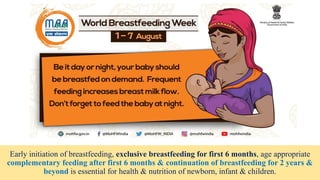
Early initiation of breastfeeding, exclusive breastfeeding for first 6 months, age appropriate
complementary feeding after first 6 months & continuation of breastfeeding for 2 years &
beyond is essential for health & nutrition of newborn, infant & children.
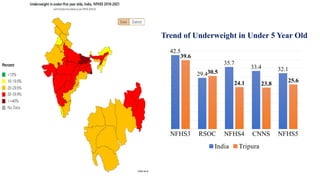
NFHS3 RSOC NFHS4 CNNS NFHS5
42.5
29.4
35.7
33.4 32.1
39.6
30.5
24.1 23.8
25.6
India Tripura
Trend of Underweight in Under 5 Year Old
Understanding the reason for child underweight
• Inadequate food intake
• Adequate nutritional deficiency
• Failure to assimilate or inability to absorb
• Psychological and behavioral problems
• Food intolerance or metabolic disorder
• Chronic or recurring infections
• Underlying disease or condition
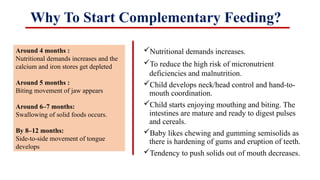
Why To Start Complementary Feeding?
Nutritional demands increases.
To reduce the high risk of micronutrient
deficiencies and malnutrition.
Child develops neck/head control and hand-to-
mouth coordination.
Child starts enjoying mouthing and biting. The
intestines are mature and ready to digest pulses
and cereals.
Baby likes chewing and gumming semisolids as
there is hardening of gums and eruption of teeth.
Tendency to push solids out of mouth decreases.
Around 4 months :
Nutritional demands increases and the
calcium and iron stores get depleted
Around 5 months :
Biting movement of jaw appears
Around 6–7 months:
Swallowing of solid foods occurs.
By 8–12 months:
Side-to-side movement of tongue
develops
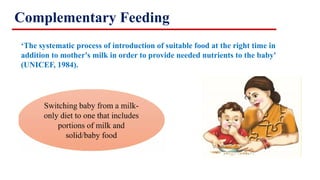
Complementary Feeding
‘The systematic process of introduction of suitable food at the right time in
addition to mother's milk in order to provide needed nutrients to the baby'
(UNICEF, 1984).
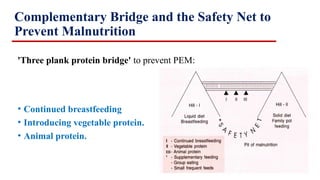
Complementary Bridge and the Safety Net to
Prevent Malnutrition
'Three plank protein bridge' to prevent PEM:
• Continued breastfeeding
• Introducing vegetable protein.
• Animal protein.
Principles to be followed for complementary
feeding
 Start complementary feeds after completion of 180 days.
 Continue breastfeeding up to 2 years of age along with appropriate complementary
feeding.
 Give semi-solid food (Avoid watery food such as soups, fruit juices, and animal milk)
 Prefer home-made food (clean, fresh, cheap, and easily available)
 Introduce one food at one time; once child starts accepting it, introduce another
preparation.
 Addition of ghee, oil, oil-seed powder, fats adds to energy, and palatability of food
(except in children who are overweight or obese)
 Give as much as child consumes. Monitor weight of the child.
Important attributes of foods for complementary
feeding
• Simple and less time-consuming method to
prepare/cook the foods.
• Prefer the regular family food that is locally available
and culturally acceptable rather than cooking special
foods. The recent concept of “Baby-led Weaning”,
• Nutritive value of the food as per the requirement of
growing infant.
• Easily digestible and nourishing food.
• Taste and palatability of food for the infant.
• Start feeding with small amounts and gradually
increase the quantity with the increasing age of the
child
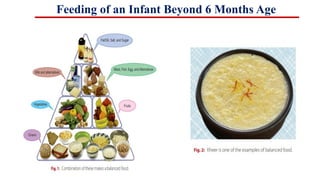
Feeding of an Infant Beyond 6 Months Age
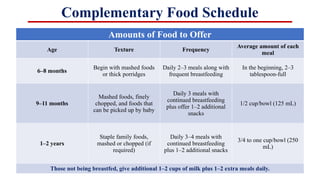
Complementary Food Schedule
Amounts of Food to Offer
Age Texture Frequency
Average amount of each
meal
6–8 months
Begin with mashed foods
or thick porridges
Daily 2–3 meals along with
frequent breastfeeding
In the beginning, 2–3
tablespoon-full
9–11 months
Mashed foods, finely
chopped, and foods that
can be picked up by baby
Daily 3 meals with
continued breastfeeding
plus offer 1–2 additional
snacks
1/2 cup/bowl (125 mL)
1–2 years
Staple family foods,
mashed or chopped (if
required)
Daily 3–4 meals with
continued breastfeeding
plus 1–2 additional snacks
3/4 to one cup/bowl (250
mL)
Those not being breastfed, give additional 1–2 cups of milk plus 1–2 extra meals daily.
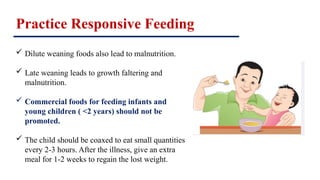
Practice Responsive Feeding
 Dilute weaning foods also lead to malnutrition.
 Late weaning leads to growth faltering and
malnutrition.
 Commercial foods for feeding infants and
young children ( <2 years) should not be
promoted.
 The child should be coaxed to eat small quantities
every 2-3 hours. After the illness, give an extra
meal for 1-2 weeks to regain the lost weight.
Principles of Psychosocial Growth and Development
 The parents should promote direct feeding and assist the children in self-feeding.
 Many food preparations may be refused by the child; hence, try different food combinations,
with different tastes, textures and methods of encouragement.
 The feeding times are periods of learning and love—hence, talk to children while feeding
and maintain eye-to-eye contact.
 Children under 1 year should be fed by mother/caregiver. Eating at the same time and same
place by family members helps in improving appetite and avoids distractions.
 The distractions such as viewing TV or mobile phone while feeding is strongly discouraged.
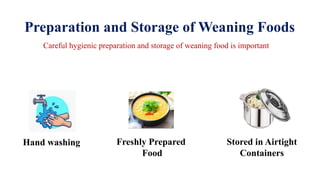
Preparation and Storage of Weaning Foods
Hand washing
Careful hygienic preparation and storage of weaning food is important
Freshly Prepared
Food
Stored in Airtight
Containers
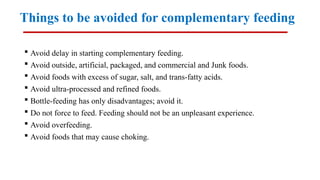
Things to be avoided for complementary feeding
 Avoid delay in starting complementary feeding.
 Avoid outside, artificial, packaged, and commercial and Junk foods.
 Avoid foods with excess of sugar, salt, and trans-fatty acids.
 Avoid ultra-processed and refined foods.
 Bottle-feeding has only disadvantages; avoid it.
 Do not force to feed. Feeding should not be an unpleasant experience.
 Avoid overfeeding.
 Avoid foods that may cause choking.
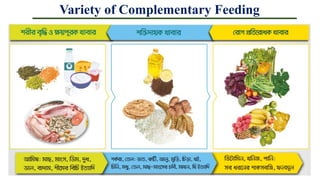
Variety of Complementary Feeding
Thank You
"Nutrition is the basis of all our interventions with the
children... if we don’t address adequately the nutritional
needs of the children, our interventions may be
jeopardised and the desired impact on the children’s
condition jeopardised...
- Wesley Charles

Complementary Feeding Practices_ Dr Bijan Das.pptx

  • 1.
    Complementary Feeding Presented By:Dr Bijan Das State RMNCHA Consultant
  • 2.
    Early initiation ofbreastfeeding, exclusive breastfeeding for first 6 months, age appropriate complementary feeding after first 6 months & continuation of breastfeeding for 2 years & beyond is essential for health & nutrition of newborn, infant & children.
  • 3.
    NFHS3 RSOC NFHS4CNNS NFHS5 42.5 29.4 35.7 33.4 32.1 39.6 30.5 24.1 23.8 25.6 India Tripura Trend of Underweight in Under 5 Year Old
  • 4.
    Understanding the reasonfor child underweight • Inadequate food intake • Adequate nutritional deficiency • Failure to assimilate or inability to absorb • Psychological and behavioral problems • Food intolerance or metabolic disorder • Chronic or recurring infections • Underlying disease or condition
  • 5.
    Why To StartComplementary Feeding? Nutritional demands increases. To reduce the high risk of micronutrient deficiencies and malnutrition. Child develops neck/head control and hand-to- mouth coordination. Child starts enjoying mouthing and biting. The intestines are mature and ready to digest pulses and cereals. Baby likes chewing and gumming semisolids as there is hardening of gums and eruption of teeth. Tendency to push solids out of mouth decreases. Around 4 months : Nutritional demands increases and the calcium and iron stores get depleted Around 5 months : Biting movement of jaw appears Around 6–7 months: Swallowing of solid foods occurs. By 8–12 months: Side-to-side movement of tongue develops
  • 6.
    Complementary Feeding ‘The systematicprocess of introduction of suitable food at the right time in addition to mother's milk in order to provide needed nutrients to the baby' (UNICEF, 1984).
  • 7.
    Complementary Bridge andthe Safety Net to Prevent Malnutrition 'Three plank protein bridge' to prevent PEM: • Continued breastfeeding • Introducing vegetable protein. • Animal protein.
  • 8.
    Principles to befollowed for complementary feeding  Start complementary feeds after completion of 180 days.  Continue breastfeeding up to 2 years of age along with appropriate complementary feeding.  Give semi-solid food (Avoid watery food such as soups, fruit juices, and animal milk)  Prefer home-made food (clean, fresh, cheap, and easily available)  Introduce one food at one time; once child starts accepting it, introduce another preparation.  Addition of ghee, oil, oil-seed powder, fats adds to energy, and palatability of food (except in children who are overweight or obese)  Give as much as child consumes. Monitor weight of the child.
  • 9.
    Important attributes offoods for complementary feeding • Simple and less time-consuming method to prepare/cook the foods. • Prefer the regular family food that is locally available and culturally acceptable rather than cooking special foods. The recent concept of “Baby-led Weaning”, • Nutritive value of the food as per the requirement of growing infant. • Easily digestible and nourishing food. • Taste and palatability of food for the infant. • Start feeding with small amounts and gradually increase the quantity with the increasing age of the child
  • 10.
    Feeding of anInfant Beyond 6 Months Age
  • 11.
    Complementary Food Schedule Amountsof Food to Offer Age Texture Frequency Average amount of each meal 6–8 months Begin with mashed foods or thick porridges Daily 2–3 meals along with frequent breastfeeding In the beginning, 2–3 tablespoon-full 9–11 months Mashed foods, finely chopped, and foods that can be picked up by baby Daily 3 meals with continued breastfeeding plus offer 1–2 additional snacks 1/2 cup/bowl (125 mL) 1–2 years Staple family foods, mashed or chopped (if required) Daily 3–4 meals with continued breastfeeding plus 1–2 additional snacks 3/4 to one cup/bowl (250 mL) Those not being breastfed, give additional 1–2 cups of milk plus 1–2 extra meals daily.
  • 12.
    Practice Responsive Feeding Dilute weaning foods also lead to malnutrition.  Late weaning leads to growth faltering and malnutrition.  Commercial foods for feeding infants and young children ( <2 years) should not be promoted.  The child should be coaxed to eat small quantities every 2-3 hours. After the illness, give an extra meal for 1-2 weeks to regain the lost weight.
  • 13.
    Principles of PsychosocialGrowth and Development  The parents should promote direct feeding and assist the children in self-feeding.  Many food preparations may be refused by the child; hence, try different food combinations, with different tastes, textures and methods of encouragement.  The feeding times are periods of learning and love—hence, talk to children while feeding and maintain eye-to-eye contact.  Children under 1 year should be fed by mother/caregiver. Eating at the same time and same place by family members helps in improving appetite and avoids distractions.  The distractions such as viewing TV or mobile phone while feeding is strongly discouraged.
  • 14.
    Preparation and Storageof Weaning Foods Hand washing Careful hygienic preparation and storage of weaning food is important Freshly Prepared Food Stored in Airtight Containers
  • 15.
    Things to beavoided for complementary feeding  Avoid delay in starting complementary feeding.  Avoid outside, artificial, packaged, and commercial and Junk foods.  Avoid foods with excess of sugar, salt, and trans-fatty acids.  Avoid ultra-processed and refined foods.  Bottle-feeding has only disadvantages; avoid it.  Do not force to feed. Feeding should not be an unpleasant experience.  Avoid overfeeding.  Avoid foods that may cause choking.
  • 16.
  • 17.
    Thank You "Nutrition isthe basis of all our interventions with the children... if we don’t address adequately the nutritional needs of the children, our interventions may be jeopardised and the desired impact on the children’s condition jeopardised... - Wesley Charles