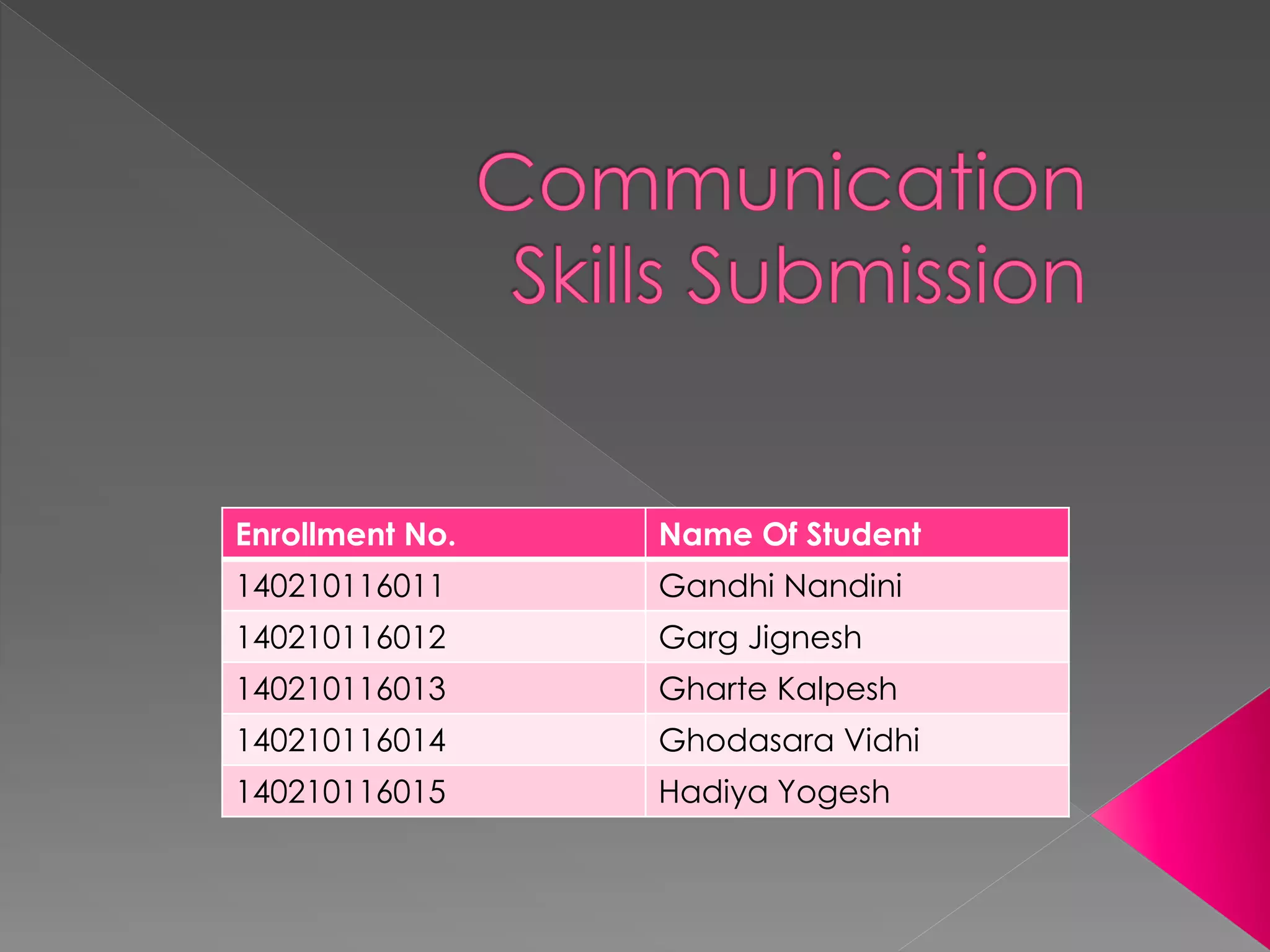
Enrollment No. Name Of Student 
140210116011 Gandhi Nandini 
140210116012 Garg Jignesh 
140210116013 Gharte Kalpesh 
140210116014 Ghodasara Vidhi 
140210116015 Hadiya Yogesh
 A Marathi speaking Jewish Indian English 
Poet who studied in Mumbai, retired as 
professor of English at University of 
Bombay 
 His verse collection includes Time to 
Change, Sixty Poems, The Unfinished 
Man, Hymns and darkness etc. 
 Winner of Sahitya Academy award in 
1983.
 The theme of poems consists of love, sex, 
alienation, death, loneliness, Indian 
scenes, urban life and spiritual values. 
 Ironic perception and the distancing of 
emotions have been his major focus.
• The poem is a part of his collection “Hymns 
and Darkness” 
• A parody and satire on the usage of English 
language by some Indians e.g. the habit of 
using present continuous tense in place of 
simple present and rambling style of 
conversation 
• Written in the form of dramatic monologue 
where the speech made by the narrator 
reflects more about him than about others
• The occasion is the farewell party being 
hosted by a group of friends to Miss 
Pushpa who is going abroad 
• Use of grammatically incorrect and 
inappropriate phrases and expressions 
mark the poem bringing out the 
outrageous use of English by the native 
speakers e.g. “departing for foreign”, “all 
knowing friends”, coming from very high 
family”
• Miss Pushpa, although depicted as a 
pleasing personality, is not without the 
pretentious manners reflected through the 
speakers lines “Miss Pushpa is never saying 
no/Whatever I or anybody is asking she is 
always saying yes”. 
• The party ends with the summing up and 
the concluding remarks made by Miss 
Pushpa after the speaker invites her and 
other members to the dais. 
• The tone of the poem is humorous although 
sarcastic is devoid of stingy bitternes.
• The other aberrations are incorrect use of 
tense such as in “I am not remembering”, 
“his wife was cooking nicely”, “she was 
saying”, “that is showing”, “is never saying 
no”, “am always appreciating”, “we are 
wishing her bon voyage” etc. 
• Attitude of the speaker is reflected through 
his conscious effort at styling the language 
and the flattering tone of the speech 
suggesting a hypocritical and sham 
personality.
Thank you 
- Dr. Chetan Trivedi

Communication skills submission_1(0)[1]

  • 1.
    Enrollment No. NameOf Student 140210116011 Gandhi Nandini 140210116012 Garg Jignesh 140210116013 Gharte Kalpesh 140210116014 Ghodasara Vidhi 140210116015 Hadiya Yogesh
  • 4.
     A Marathispeaking Jewish Indian English Poet who studied in Mumbai, retired as professor of English at University of Bombay  His verse collection includes Time to Change, Sixty Poems, The Unfinished Man, Hymns and darkness etc.  Winner of Sahitya Academy award in 1983.
  • 5.
     The themeof poems consists of love, sex, alienation, death, loneliness, Indian scenes, urban life and spiritual values.  Ironic perception and the distancing of emotions have been his major focus.
  • 6.
    • The poemis a part of his collection “Hymns and Darkness” • A parody and satire on the usage of English language by some Indians e.g. the habit of using present continuous tense in place of simple present and rambling style of conversation • Written in the form of dramatic monologue where the speech made by the narrator reflects more about him than about others
  • 7.
    • The occasionis the farewell party being hosted by a group of friends to Miss Pushpa who is going abroad • Use of grammatically incorrect and inappropriate phrases and expressions mark the poem bringing out the outrageous use of English by the native speakers e.g. “departing for foreign”, “all knowing friends”, coming from very high family”
  • 8.
    • Miss Pushpa,although depicted as a pleasing personality, is not without the pretentious manners reflected through the speakers lines “Miss Pushpa is never saying no/Whatever I or anybody is asking she is always saying yes”. • The party ends with the summing up and the concluding remarks made by Miss Pushpa after the speaker invites her and other members to the dais. • The tone of the poem is humorous although sarcastic is devoid of stingy bitternes.
  • 9.
    • The otheraberrations are incorrect use of tense such as in “I am not remembering”, “his wife was cooking nicely”, “she was saying”, “that is showing”, “is never saying no”, “am always appreciating”, “we are wishing her bon voyage” etc. • Attitude of the speaker is reflected through his conscious effort at styling the language and the flattering tone of the speech suggesting a hypocritical and sham personality.
  • 10.
    Thank you -Dr. Chetan Trivedi