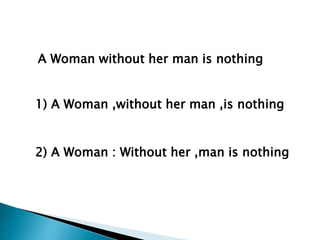
A Woman without her man is nothing
2) A Woman : Without her ,man is nothing
1) A Woman ,without her man ,is nothing
Growth
1
Day
15
Day
30
Day
Growth
What is there for the Day !!!!!!!
We’ll Share Knowledge
We’ll Have Fun
We’ll Play Roles
We’ll Learn
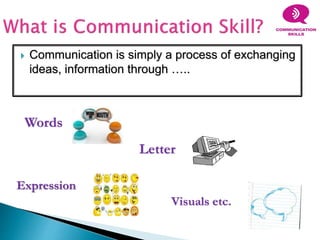
 Communication is simply a process of exchanging
ideas, information through …..
Words
Letter
Visuals etc.
Expression
The Objective of Communication is to get your
message across to other clearly and without
ambiguity.
The Ways of Communication can be :-
 One way (For information & revert not required)
 Two way ( eg. Telephonic conversation)
 Collaborative (eg. Group discussion , meeting etc.)
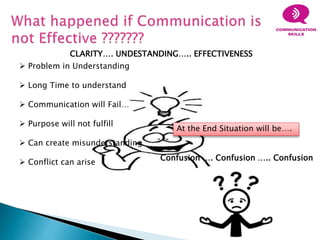
 Problem in Understanding
 Long Time to understand
 Communication will Fail…
 Purpose will not fulfill
 Can create misunderstanding
 Conflict can arise
At the End Situation will be….
Confusion …. Confusion ….. Confusion
CLARITY…. UNDESTANDING….. EFFECTIVENESS
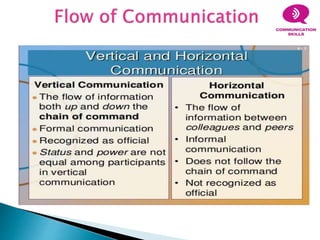
Vertical Horizontal
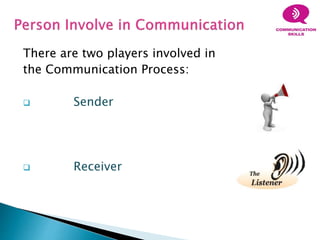
There are two players involved in
the Communication Process:
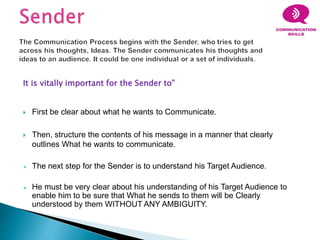
 Sender
 Receiver
It is vitally important for the Sender to”
 First be clear about what he wants to Communicate.
 Then, structure the contents of his message in a manner that clearly
outlines What he wants to communicate.
 The next step for the Sender is to understand his Target Audience.
 He must be very clear about his understanding of his Target Audience to
enable him to be sure that What he sends to them will be Clearly
understood by them WITHOUT ANY AMBIGUITY.
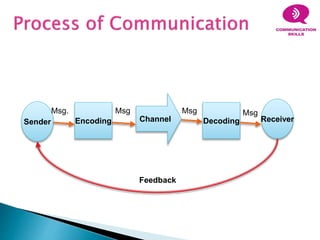
Sender Encoding Channel Decoding Receiver
Msg. Msg Msg Msg
Feedback
Messages are conveyed through Channels:
 Face to Face meetings.
 Telephone
 Video Conferencing
 Letter, memos, emails and reports.
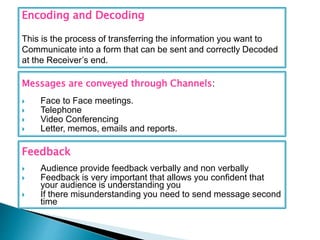
Encoding and Decoding
This is the process of transferring the information you want to
Communicate into a form that can be sent and correctly Decoded
at the Receiver’s end.
Feedback
 Audience provide feedback verbally and non verbally
 Feedback is very important that allows you confident that
your audience is understanding you
 If there misunderstanding you need to send message second
time
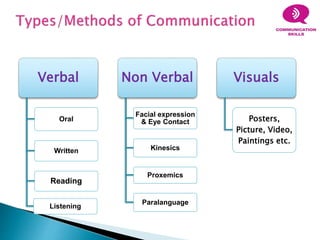
Verbal
Oral
Written
Reading
Listening
Non Verbal
Facial expression
& Eye Contact
Kinesics
Proxemics
Paralanguage
Visuals
Posters,
Picture, Video,
Paintings etc.
Writing
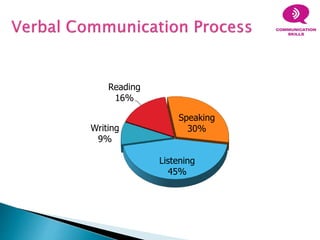
9%
Reading
16%
Speaking
30%
Listening
45%
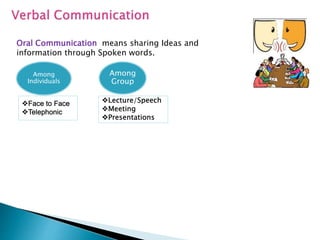
Oral Communication means sharing Ideas and
information through Spoken words.
Among
Group
Among
Individuals
Three Important Points
 Structure (the way the content is laid out)
(e.g. Layout, Heading , Sub heading & sequence etc.)
 Style (the way it is written)
(e.g. Neat ,Elegant, concise , simple, bullets, familiar words)
 Content (what you are writing about)
(e.g. spelling & punctuation, clear objective)
Written Communication:- Points to Remember
Plan what you want to say
Check spelling and grammar
Font size and Color
Use simple language, heading and Sub Headings
 Be creative (Use graphs charts & tables etc.)
Punctuations play the role of Body Language
 At the End Reread before send
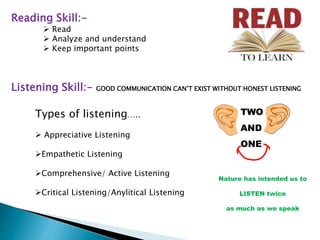
Reading Skill:-
 Read
 Analyze and understand
 Keep important points
Listening Skill:- GOOD COMMUNICATION CAN’T EXIST WITHOUT HONEST LISTENING
Types of listening…..
 Appreciative Listening
Empathetic Listening
Comprehensive/ Active Listening
Critical Listening/Anylitical Listening
TWO
AND
ONE
Nature has intended us to
LISTEN twice
as much as we speak
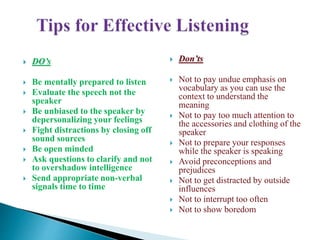
 DO’s
 Be mentally prepared to listen
 Evaluate the speech not the
speaker
 Be unbiased to the speaker by
depersonalizing your feelings
 Fight distractions by closing off
sound sources
 Be open minded
 Ask questions to clarify and not
to overshadow intelligence
 Send appropriate non-verbal
signals time to time
 Don’ts
 Not to pay undue emphasis on
vocabulary as you can use the
context to understand the
meaning
 Not to pay too much attention to
the accessories and clothing of the
speaker
 Not to prepare your responses
while the speaker is speaking
 Avoid preconceptions and
prejudices
 Not to get distracted by outside
influences
 Not to interrupt too often
 Not to show boredom
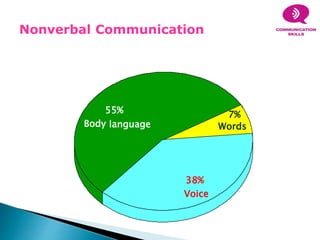
Nonverbal Communication
Body language
55%
Words
7%
Voice
38%
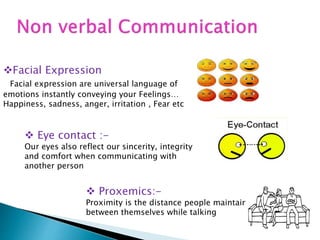
Facial Expression
Facial expression are universal language of
emotions instantly conveying your Feelings…
Happiness, sadness, anger, irritation , Fear etc
 Proxemics:-
Proximity is the distance people maintain
between themselves while talking
 Eye contact :-
Our eyes also reflect our sincerity, integrity
and comfort when communicating with
another person
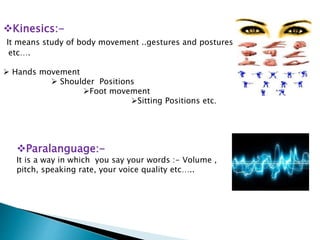
Paralanguage:-
It is a way in which you say your words :- Volume ,
pitch, speaking rate, your voice quality etc…..
Kinesics:-
It means study of body movement ..gestures and postures
etc….
 Hands movement
 Shoulder Positions
Foot movement
Sitting Positions etc.
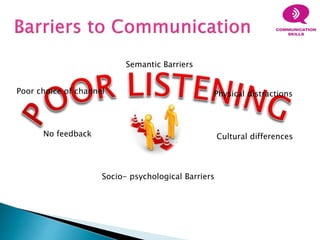
Semantic Barriers
Cultural differences
Physical distractionsPoor choice of channel
Socio- psychological Barriers
No feedback
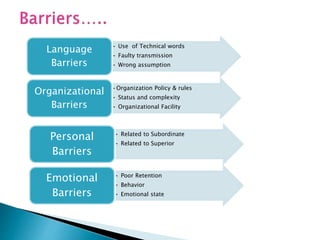
• Use of Technical words
• Faulty transmission
• Wrong assumption
Language
Barriers
•Organization Policy & rules
• Status and complexity
• Organizational Facility
Organizational
Barriers
• Related to Subordinate
• Related to Superior
Personal
Barriers
• Poor Retention
• Behavior
• Emotional state
Emotional
Barriers
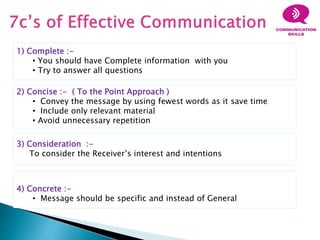
1) Complete :-
• You should have Complete information with you
• Try to answer all questions
2) Concise :- ( To the Point Approach )
• Convey the message by using fewest words as it save time
• Include only relevant material
• Avoid unnecessary repetition
3) Consideration :-
To consider the Receiver’s interest and intentions
4) Concrete :-
• Message should be specific and instead of General
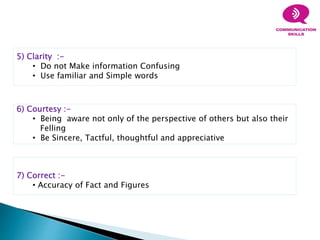
5) Clarity :-
• Do not Make information Confusing
• Use familiar and Simple words
6) Courtesy :-
• Being aware not only of the perspective of others but also their
Felling
• Be Sincere, Tactful, thoughtful and appreciative
7) Correct :-
• Accuracy of Fact and Figures
Communication

Communication

  • 2.
    A Woman withouther man is nothing 2) A Woman : Without her ,man is nothing 1) A Woman ,without her man ,is nothing
  • 3.
  • 4.
    What is therefor the Day !!!!!!! We’ll Share Knowledge We’ll Have Fun We’ll Play Roles We’ll Learn
  • 5.
     Communication issimply a process of exchanging ideas, information through ….. Words Letter Visuals etc. Expression
  • 6.
    The Objective ofCommunication is to get your message across to other clearly and without ambiguity. The Ways of Communication can be :-  One way (For information & revert not required)  Two way ( eg. Telephonic conversation)  Collaborative (eg. Group discussion , meeting etc.)
  • 7.
     Problem inUnderstanding  Long Time to understand  Communication will Fail…  Purpose will not fulfill  Can create misunderstanding  Conflict can arise At the End Situation will be…. Confusion …. Confusion ….. Confusion CLARITY…. UNDESTANDING….. EFFECTIVENESS
  • 8.
  • 9.
    There are twoplayers involved in the Communication Process:  Sender  Receiver
  • 10.
    It is vitallyimportant for the Sender to”  First be clear about what he wants to Communicate.  Then, structure the contents of his message in a manner that clearly outlines What he wants to communicate.  The next step for the Sender is to understand his Target Audience.  He must be very clear about his understanding of his Target Audience to enable him to be sure that What he sends to them will be Clearly understood by them WITHOUT ANY AMBIGUITY.
  • 11.
    Sender Encoding ChannelDecoding Receiver Msg. Msg Msg Msg Feedback
  • 12.
    Messages are conveyedthrough Channels:  Face to Face meetings.  Telephone  Video Conferencing  Letter, memos, emails and reports. Encoding and Decoding This is the process of transferring the information you want to Communicate into a form that can be sent and correctly Decoded at the Receiver’s end. Feedback  Audience provide feedback verbally and non verbally  Feedback is very important that allows you confident that your audience is understanding you  If there misunderstanding you need to send message second time
  • 13.
    Verbal Oral Written Reading Listening Non Verbal Facial expression &Eye Contact Kinesics Proxemics Paralanguage Visuals Posters, Picture, Video, Paintings etc.
  • 14.
  • 15.
    Oral Communication meanssharing Ideas and information through Spoken words. Among Group Among Individuals
  • 16.
    Three Important Points Structure (the way the content is laid out) (e.g. Layout, Heading , Sub heading & sequence etc.)  Style (the way it is written) (e.g. Neat ,Elegant, concise , simple, bullets, familiar words)  Content (what you are writing about) (e.g. spelling & punctuation, clear objective) Written Communication:- Points to Remember Plan what you want to say Check spelling and grammar Font size and Color Use simple language, heading and Sub Headings  Be creative (Use graphs charts & tables etc.) Punctuations play the role of Body Language  At the End Reread before send
  • 17.
    Reading Skill:-  Read Analyze and understand  Keep important points Listening Skill:- GOOD COMMUNICATION CAN’T EXIST WITHOUT HONEST LISTENING Types of listening…..  Appreciative Listening Empathetic Listening Comprehensive/ Active Listening Critical Listening/Anylitical Listening TWO AND ONE Nature has intended us to LISTEN twice as much as we speak
  • 18.
     DO’s  Bementally prepared to listen  Evaluate the speech not the speaker  Be unbiased to the speaker by depersonalizing your feelings  Fight distractions by closing off sound sources  Be open minded  Ask questions to clarify and not to overshadow intelligence  Send appropriate non-verbal signals time to time  Don’ts  Not to pay undue emphasis on vocabulary as you can use the context to understand the meaning  Not to pay too much attention to the accessories and clothing of the speaker  Not to prepare your responses while the speaker is speaking  Avoid preconceptions and prejudices  Not to get distracted by outside influences  Not to interrupt too often  Not to show boredom
  • 19.
  • 20.
    Facial Expression Facial expressionare universal language of emotions instantly conveying your Feelings… Happiness, sadness, anger, irritation , Fear etc  Proxemics:- Proximity is the distance people maintain between themselves while talking  Eye contact :- Our eyes also reflect our sincerity, integrity and comfort when communicating with another person
  • 21.
    Paralanguage:- It is away in which you say your words :- Volume , pitch, speaking rate, your voice quality etc….. Kinesics:- It means study of body movement ..gestures and postures etc….  Hands movement  Shoulder Positions Foot movement Sitting Positions etc.
  • 22.
    Semantic Barriers Cultural differences PhysicaldistractionsPoor choice of channel Socio- psychological Barriers No feedback
  • 23.
    • Use ofTechnical words • Faulty transmission • Wrong assumption Language Barriers •Organization Policy & rules • Status and complexity • Organizational Facility Organizational Barriers • Related to Subordinate • Related to Superior Personal Barriers • Poor Retention • Behavior • Emotional state Emotional Barriers
  • 24.
    1) Complete :- •You should have Complete information with you • Try to answer all questions 2) Concise :- ( To the Point Approach ) • Convey the message by using fewest words as it save time • Include only relevant material • Avoid unnecessary repetition 3) Consideration :- To consider the Receiver’s interest and intentions 4) Concrete :- • Message should be specific and instead of General
  • 25.
    5) Clarity :- •Do not Make information Confusing • Use familiar and Simple words 6) Courtesy :- • Being aware not only of the perspective of others but also their Felling • Be Sincere, Tactful, thoughtful and appreciative 7) Correct :- • Accuracy of Fact and Figures

Editor's Notes

  • #12 Your success in encoding depends: on your ability to convey information CLEARLY & SIMPLY. On your ability to anticipate & eliminate sources of confusion. On your ability to know your audience…who you are Communicating with.
  • #17 Example of writing skill… Rs.100000000 or Rs. 10,00,00,000 or Rs. 10 crore
  • #18 Good listening helps you to take better decisions and make better policies in organization. On the contrary lack of proper listening can lead to embarrassing situations because of a gap in understanding. Appreciative Listening – listen for Pleasure and entertainment as when we listen to music comedy or entertaining speech Empathetic listening – to provide emotional support to speaker as we lend sympathetic ear to friend . To Understand how other person is feeling Comprehensive Listening – to understand a message of speaker as in classroom , lecture etc. focus is to properly understanding speaker words, non-verbal clues , gesture, expressions etc. eg. During question answer conversation Critical listening - listening a msg to evaluate for the purpose of accepting or rejecting it. When we listen to sales person or politician etc. Focus on whether the msg is logical or reasonable . Where you need to give your judgment
  • #23 Semantic - Interpretation of words. Eg - what is the value of Ring (Value can be price or significance), They give us cheap stuff 2. At this shop they sell things cheap ( in 1 talking about quality and in 2 about rate) Physical distraction - Noise, time or distance etc. Socio – psychological - related to attitude, emotions, opinion , close minded etc.
  • #24 Personal- Related to subordinate– Attitude of Superior , Lack of Confidence , Fear of Position, Lack of attention , shortage of time Related to superior – Lack of Trust, unwilling to communicate , Behavior issue