Presented By
Sarnali Paul
Department of Food Science, MAKAUT, WB
Coffee is one of the world's most beloved beverages,
consumed by millions of people around the globe every
day. Beyond its delightful aroma and rich flavor, coffee
has become an integral part of many cultures, serving as
a social catalyst, a morning ritual, and a source of energy
and inspiration. This introduction will explore the
fascinating history, global impact, and diverse varieties of
this ubiquitous drink that has captivated hearts and minds
for centuries.
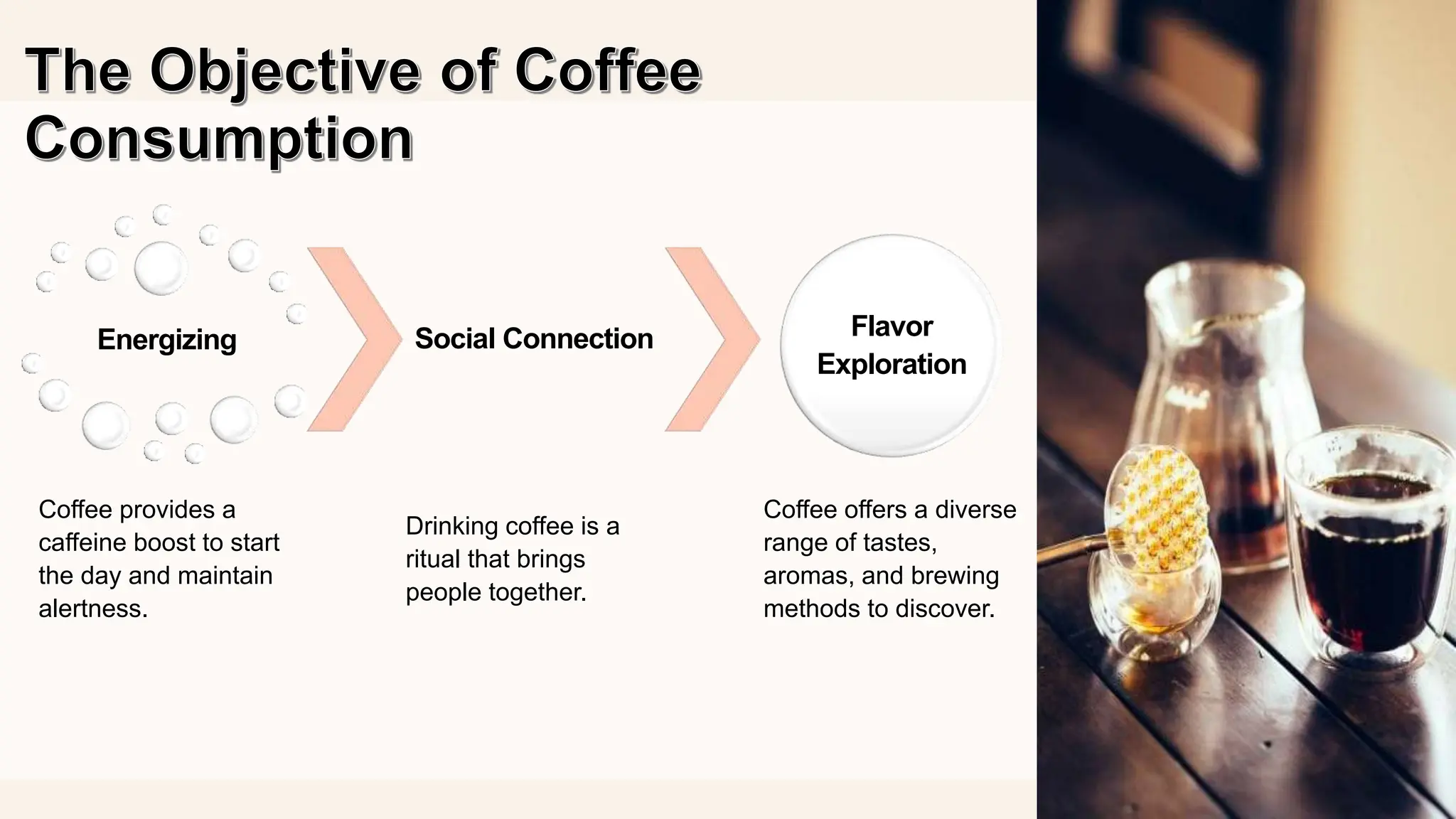
Energizing
Coffee provides a
caffeine boost to start
the day and maintain
alertness.
Social Connection
Drinking coffee is a
ritual that brings
people together.
Flavor
Exploration
Coffee offers a diverse
range of tastes,
aromas, and brewing
methods to discover.
1
Chemical Composition
Coffee contains over a thousand compounds, with caffeine providing its
energy boost and trigonelline giving it its unique flavor and aroma, making it
a complex and fascinating beverage.
Nutrient Profile
Coffee has many nutrients, including B vitamins and magnesium, along
antioxidants like chlorogenic acid and polyphenols, which are connected to
benefits like better brain function and lower risk of some chronic illnesses.
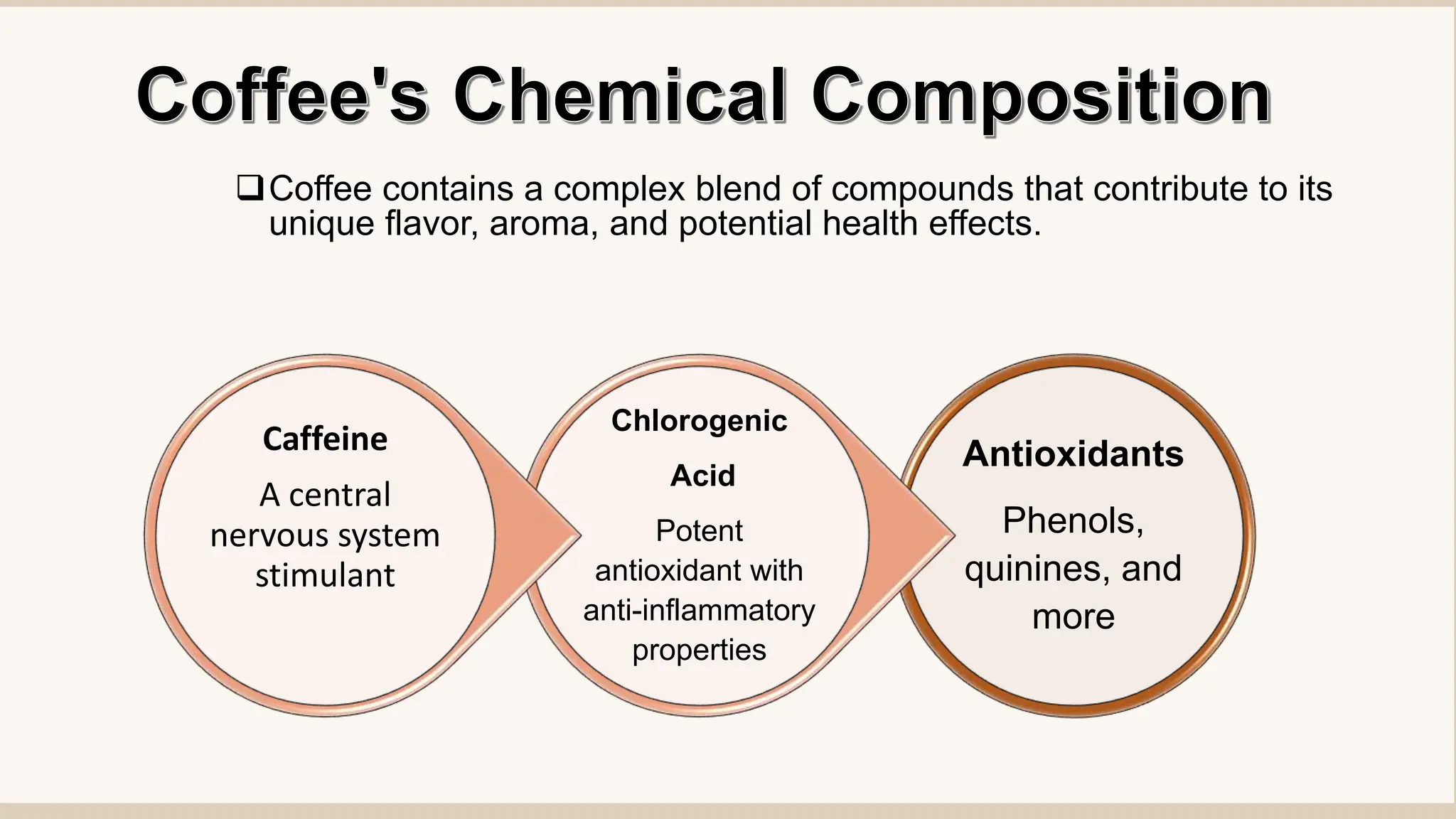
Coffee contains a complex blend of compounds that contribute to its
unique flavor, aroma, and potential health effects.
Antioxidants
Phenols,
quinines, and
more
Chlorogenic
Acid
Potent
antioxidant with
anti-inflammatory
properties
Caffeine
A central
nervous system
stimulant
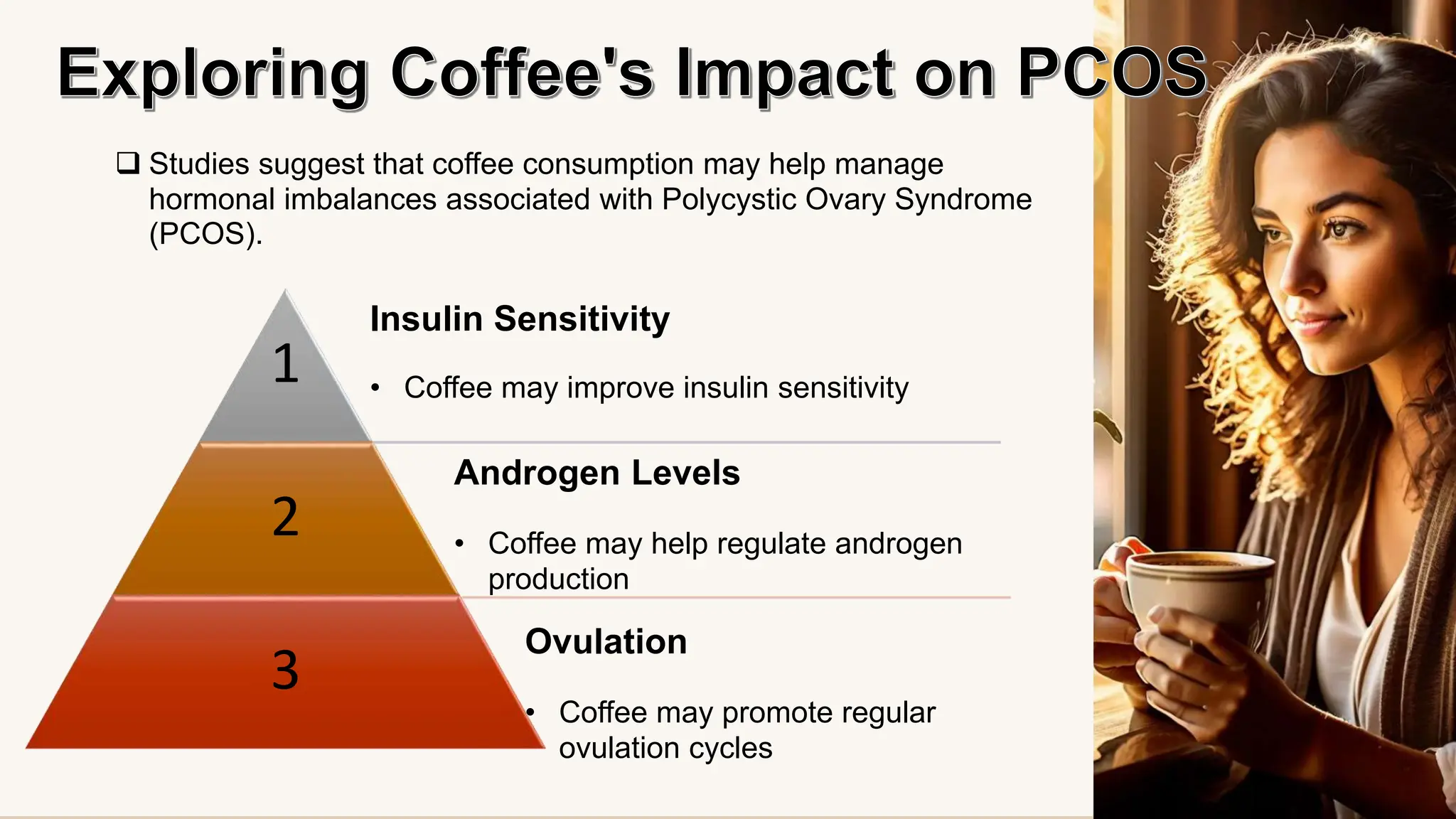
 Studies suggest that coffee consumption may help manage
hormonal imbalances associated with Polycystic Ovary Syndrome
(PCOS).
1
2
3
Insulin Sensitivity
• Coffee may improve insulin sensitivity
Androgen Levels
• Coffee may help regulate androgen
production
Ovulation
• Coffee may promote regular
ovulation cycles
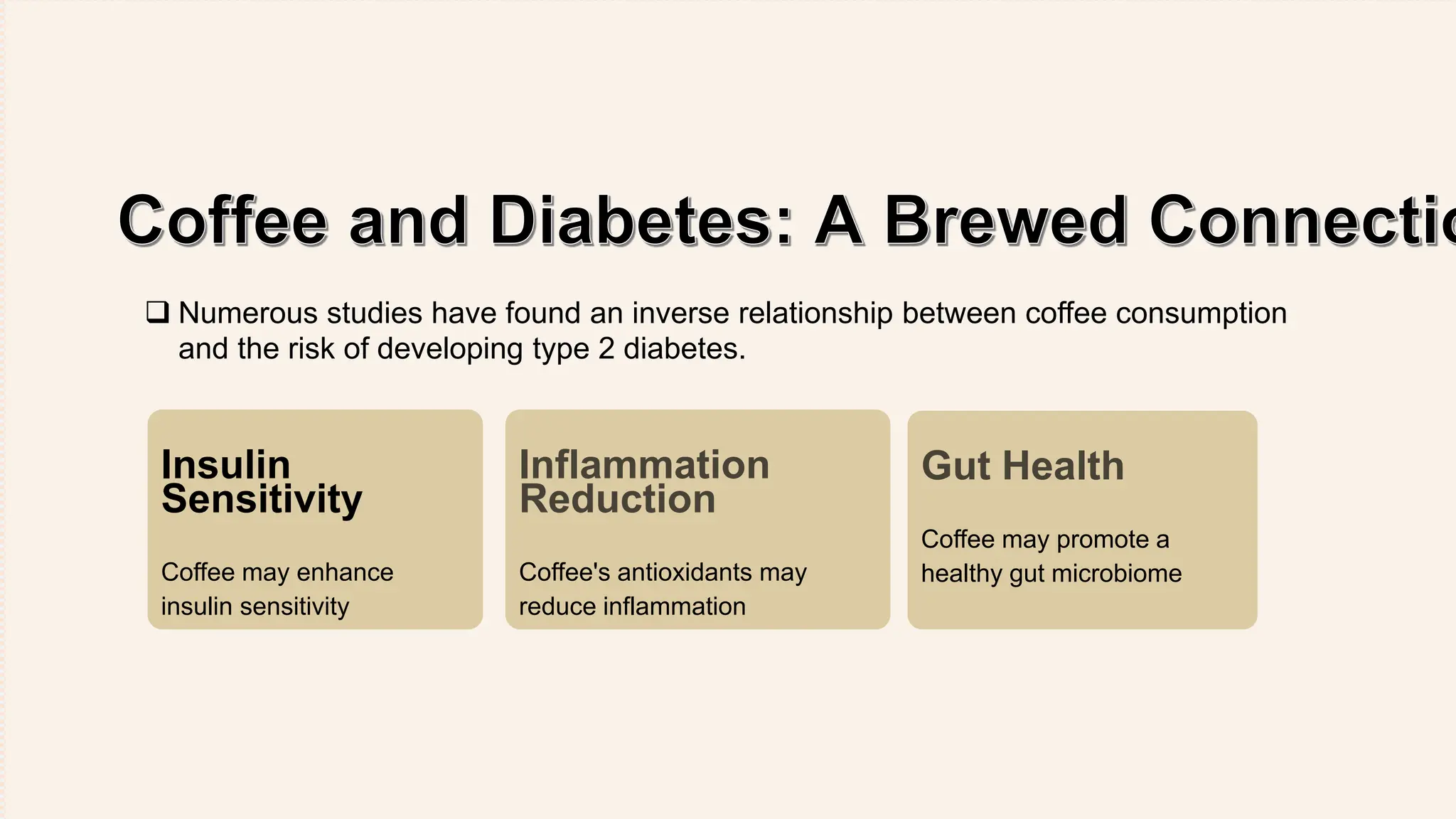
Insulin
Sensitivity
Coffee may enhance
insulin sensitivity
Inflammation
Reduction
Coffee's antioxidants may
reduce inflammation
Gut Health
Coffee may promote a
healthy gut microbiome
 Numerous studies have found an inverse relationship between coffee consumption
and the risk of developing type 2 diabetes.
Antioxidant Power
Coffee is rich in antioxidants,
which help combat oxidative stress
and reduce the risk of cancer
development.
Anti-Inflammatory Effects
Components in coffee exhibit anti-
inflammatory properties that may
inhibit tumor growth
and progression.
.
Potential for Cancer Prevention
The bioactive compounds in coffee, such as chlorogenic acids and caffeine, have
shown promise in reducing cancer risk through various mechanisms.
1
• Caffeine Absorption
 Rapid absorption from digestive tract into bloodstream.
2
• Stimulation of Central Nervous System
 Caffeine blocks adenosine receptors, increasing neural activity.
3
• Cardiovascular Effects
 Increased heart rate, blood pressure, and blood flow
4
• Metabolic Responses
 Elevation of glucose, fatty acids, and adrenaline levels.
5
• Potential Health Outcomes
 Impacts on sleep, digestion, and long-term disease risk.
Cardiovascular
High intake may
affect blood
pressure and heart
health.
Sleep Disruption
Caffeine can
interfere with sleep
quality for some
individuals.
Pregnancy
Moderate intake is
generally safe, but
high intake is not
recommended.
Anxiety
Caffeine sensitivity
can exacerbate
anxiety in some
people.
Coffee is a complex and multi-faceted beverage with a wide
range of potential health benefits, as well as some risks to
consider. Understanding its chemical composition and effects on
the body can help individuals make informed choices about their
coffee consumption.
1. Butt, M. S., & Sultan, M. T. (2011) "Coffee and its consumption: benefits and risks."
Critical Reviews in Food Science and Nutrition, 51(4): 363-373.
2. Carlström, M., & Larsson, S. C. (2018) "Coffee consumption and reduced risk of
developing type 2 diabetes: a systematic review and meta-analysis." Nutrition Reviews,
76(6): 395-417.
3. Poole, R., Kennedy, O. J., Roderick, P., Fallowfield, J. A., Hayes, P. C., & Parkes, J. (2017)
"Coffee consumption and health: umbrella review of meta-analyses of multiple health
outcomes." BMJ, 359: j5024.
4. Tamuno, I., Omole, V. N., & Idris, S. H. (2012) "Coffee consumption and risk of cancers:
a meta-analysis of case-control studies." British Journal of Medicine and Medical
Research, 2(4): 574-584.
5. Szkudelski, T., & Szkudelska, K. (2019) "Resveratrol and diabetes: from animal to
human studies." Biochimica et Biophysica Acta (BBA) - Molecular Basis of Disease,
1865(6): 1559-1574.
Coffee: A Global Brew with Health Impact

Coffee: A Global Brew with Health Impact

  • 1.
    Presented By Sarnali Paul Departmentof Food Science, MAKAUT, WB
  • 2.
    Coffee is oneof the world's most beloved beverages, consumed by millions of people around the globe every day. Beyond its delightful aroma and rich flavor, coffee has become an integral part of many cultures, serving as a social catalyst, a morning ritual, and a source of energy and inspiration. This introduction will explore the fascinating history, global impact, and diverse varieties of this ubiquitous drink that has captivated hearts and minds for centuries.
  • 3.
    Energizing Coffee provides a caffeineboost to start the day and maintain alertness. Social Connection Drinking coffee is a ritual that brings people together. Flavor Exploration Coffee offers a diverse range of tastes, aromas, and brewing methods to discover.
  • 4.
    1 Chemical Composition Coffee containsover a thousand compounds, with caffeine providing its energy boost and trigonelline giving it its unique flavor and aroma, making it a complex and fascinating beverage. Nutrient Profile Coffee has many nutrients, including B vitamins and magnesium, along antioxidants like chlorogenic acid and polyphenols, which are connected to benefits like better brain function and lower risk of some chronic illnesses.
  • 5.
    Coffee contains acomplex blend of compounds that contribute to its unique flavor, aroma, and potential health effects. Antioxidants Phenols, quinines, and more Chlorogenic Acid Potent antioxidant with anti-inflammatory properties Caffeine A central nervous system stimulant
  • 6.
     Studies suggestthat coffee consumption may help manage hormonal imbalances associated with Polycystic Ovary Syndrome (PCOS). 1 2 3 Insulin Sensitivity • Coffee may improve insulin sensitivity Androgen Levels • Coffee may help regulate androgen production Ovulation • Coffee may promote regular ovulation cycles
  • 7.
    Insulin Sensitivity Coffee may enhance insulinsensitivity Inflammation Reduction Coffee's antioxidants may reduce inflammation Gut Health Coffee may promote a healthy gut microbiome  Numerous studies have found an inverse relationship between coffee consumption and the risk of developing type 2 diabetes.
  • 8.
    Antioxidant Power Coffee isrich in antioxidants, which help combat oxidative stress and reduce the risk of cancer development. Anti-Inflammatory Effects Components in coffee exhibit anti- inflammatory properties that may inhibit tumor growth and progression. . Potential for Cancer Prevention The bioactive compounds in coffee, such as chlorogenic acids and caffeine, have shown promise in reducing cancer risk through various mechanisms.
  • 9.
    1 • Caffeine Absorption Rapid absorption from digestive tract into bloodstream. 2 • Stimulation of Central Nervous System  Caffeine blocks adenosine receptors, increasing neural activity. 3 • Cardiovascular Effects  Increased heart rate, blood pressure, and blood flow 4 • Metabolic Responses  Elevation of glucose, fatty acids, and adrenaline levels. 5 • Potential Health Outcomes  Impacts on sleep, digestion, and long-term disease risk.
  • 10.
    Cardiovascular High intake may affectblood pressure and heart health. Sleep Disruption Caffeine can interfere with sleep quality for some individuals. Pregnancy Moderate intake is generally safe, but high intake is not recommended. Anxiety Caffeine sensitivity can exacerbate anxiety in some people.
  • 11.
    Coffee is acomplex and multi-faceted beverage with a wide range of potential health benefits, as well as some risks to consider. Understanding its chemical composition and effects on the body can help individuals make informed choices about their coffee consumption.
  • 12.
    1. Butt, M.S., & Sultan, M. T. (2011) "Coffee and its consumption: benefits and risks." Critical Reviews in Food Science and Nutrition, 51(4): 363-373. 2. Carlström, M., & Larsson, S. C. (2018) "Coffee consumption and reduced risk of developing type 2 diabetes: a systematic review and meta-analysis." Nutrition Reviews, 76(6): 395-417. 3. Poole, R., Kennedy, O. J., Roderick, P., Fallowfield, J. A., Hayes, P. C., & Parkes, J. (2017) "Coffee consumption and health: umbrella review of meta-analyses of multiple health outcomes." BMJ, 359: j5024. 4. Tamuno, I., Omole, V. N., & Idris, S. H. (2012) "Coffee consumption and risk of cancers: a meta-analysis of case-control studies." British Journal of Medicine and Medical Research, 2(4): 574-584. 5. Szkudelski, T., & Szkudelska, K. (2019) "Resveratrol and diabetes: from animal to human studies." Biochimica et Biophysica Acta (BBA) - Molecular Basis of Disease, 1865(6): 1559-1574.