Prepared by: Cabuang, Mary Kristine R.
Ethics, also known as moral philosophy, is a
branch
of
philosophy
that
involves
systematizing, defending and recommending concepts of
right and wrong conduct, often addressing disputes
of moral diversity. The term comes from the Greek
word ethos, which means "character". Ethics is a
complement to aesthetic in the philosophy field
of Axiology. In philosophy, ethics studies the
moral behavior in humans and how one should act.
 Students

are expected to adhere to and practice
the Code of Ethics on a District and college level
and while representing the District or college of
the District.
I. REPRESENTATION- Every student of the District is
expected to represent him or herself honestly and
respectfully in all situations, whether orally or in written
statements. Honest and respectful representation
includes, but is not limited to, providing only truthful
material information on all District applications.
II. ACADEMIC HONESTY- Students are expected to
maintain the highest standards of academic integrity.
Work that is not of the student's own creation will receive
no credit.
• The act of lying
• Cheating
• Stealing
•using unauthorized materials on any assignment, quiz
or exam.
III. RESPECT FOR DISTRICT
REGULATIONS
• School Property
• Illegal Substances
• Sexual Assault and Harassment

RULES

AND
IV. RESPECT FOR THE OPEN EXCHANGE OF IDEAS
Students shall be guaranteed that their First Amendment
right of Freedom of Speech will be observed by all college
members, including other students. Students are
encouraged to engage others in thoughtful and meaningful
dialogue while refraining from acting or using language
with
malicious
intent.
IV. RESPECT FOR THE OPEN EXCHANGE OF IDEAS
•Classroom Conduct:
Students must behave respectfully toward their peers and
professors. In the classroom setting, students may not
interrupt their classmates or professor, make fun of them
or their expressed views, or disrupt the learning
environment. It is important to maintain the best learning
environment
for
all
students
and
professors.
http://www.smccd.edu/accounts/smccd/ethics.s
html
Code of ethics for students

Code of ethics for students

  • 1.
    Prepared by: Cabuang,Mary Kristine R.
  • 2.
    Ethics, also knownas moral philosophy, is a branch of philosophy that involves systematizing, defending and recommending concepts of right and wrong conduct, often addressing disputes of moral diversity. The term comes from the Greek word ethos, which means "character". Ethics is a complement to aesthetic in the philosophy field of Axiology. In philosophy, ethics studies the moral behavior in humans and how one should act.
  • 3.
     Students are expectedto adhere to and practice the Code of Ethics on a District and college level and while representing the District or college of the District.
  • 5.
    I. REPRESENTATION- Everystudent of the District is expected to represent him or herself honestly and respectfully in all situations, whether orally or in written statements. Honest and respectful representation includes, but is not limited to, providing only truthful material information on all District applications.
  • 6.
    II. ACADEMIC HONESTY-Students are expected to maintain the highest standards of academic integrity. Work that is not of the student's own creation will receive no credit. • The act of lying • Cheating • Stealing •using unauthorized materials on any assignment, quiz or exam.
  • 7.
    III. RESPECT FORDISTRICT REGULATIONS • School Property • Illegal Substances • Sexual Assault and Harassment RULES AND
  • 8.
    IV. RESPECT FORTHE OPEN EXCHANGE OF IDEAS Students shall be guaranteed that their First Amendment right of Freedom of Speech will be observed by all college members, including other students. Students are encouraged to engage others in thoughtful and meaningful dialogue while refraining from acting or using language with malicious intent.
  • 9.
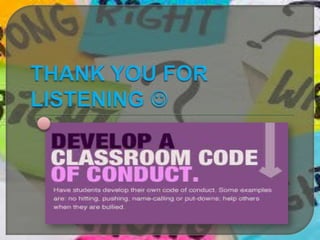
    IV. RESPECT FORTHE OPEN EXCHANGE OF IDEAS •Classroom Conduct: Students must behave respectfully toward their peers and professors. In the classroom setting, students may not interrupt their classmates or professor, make fun of them or their expressed views, or disrupt the learning environment. It is important to maintain the best learning environment for all students and professors.
  • 10.