Cloud-101
Introduction to cloud computing-
Ranjan Ghosh
If you cannot explain it simply, you have not understood it …
- Albert Einstein
What is covered…
• Origins of cloud
• Definitions
• Models
• Layers
• Virtualization
• SDN
• NFV
As old as Computing….
• …. Computing would be someday organized as
public utility … utility could become basis of
new important industry – John McCarthy -
1961
• Mainframe computer, terminal
• X-Windows
Examples of cloud service providers
– AWS
– Google
– Azure
– Big-daddy
– Rackspace
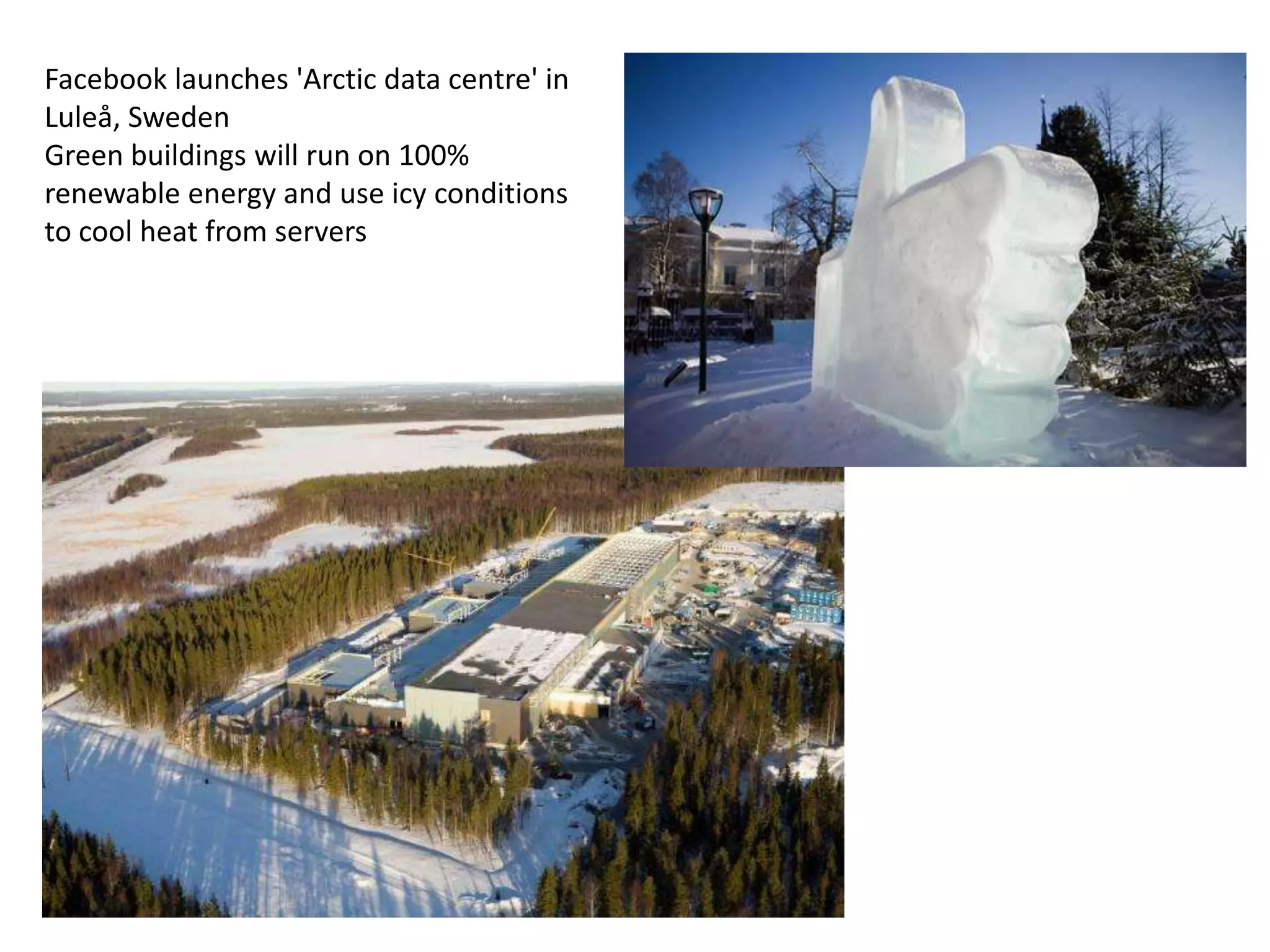
Facebook launches 'Arctic data centre' in
Luleå, Sweden
Green buildings will run on 100%
renewable energy and use icy conditions
to cool heat from servers
Characteristic of cloud
• Scalability
• Elasticity
• Low barrier to entry
• Utility
Cloud Applications
• Web server
• Collaboration
• Backup/storage
• Business applications
• Personal productivity
Definition
• Cloud computing refer to running of
applications and services on distributed
computing resources, using virtualized
resources, accessed over common internet
protocols.
Definition
• “...a standardized IT capability (services,
software, or infrastructure) delivered via
Internet technologies in a pay-per-use, self-
service way.” – Forrester Research
• “...a style of computing in which scalable and
elastic IT-enabled capabilities are delivered as
a service to external customers using Internet
technologies.” – Gartner
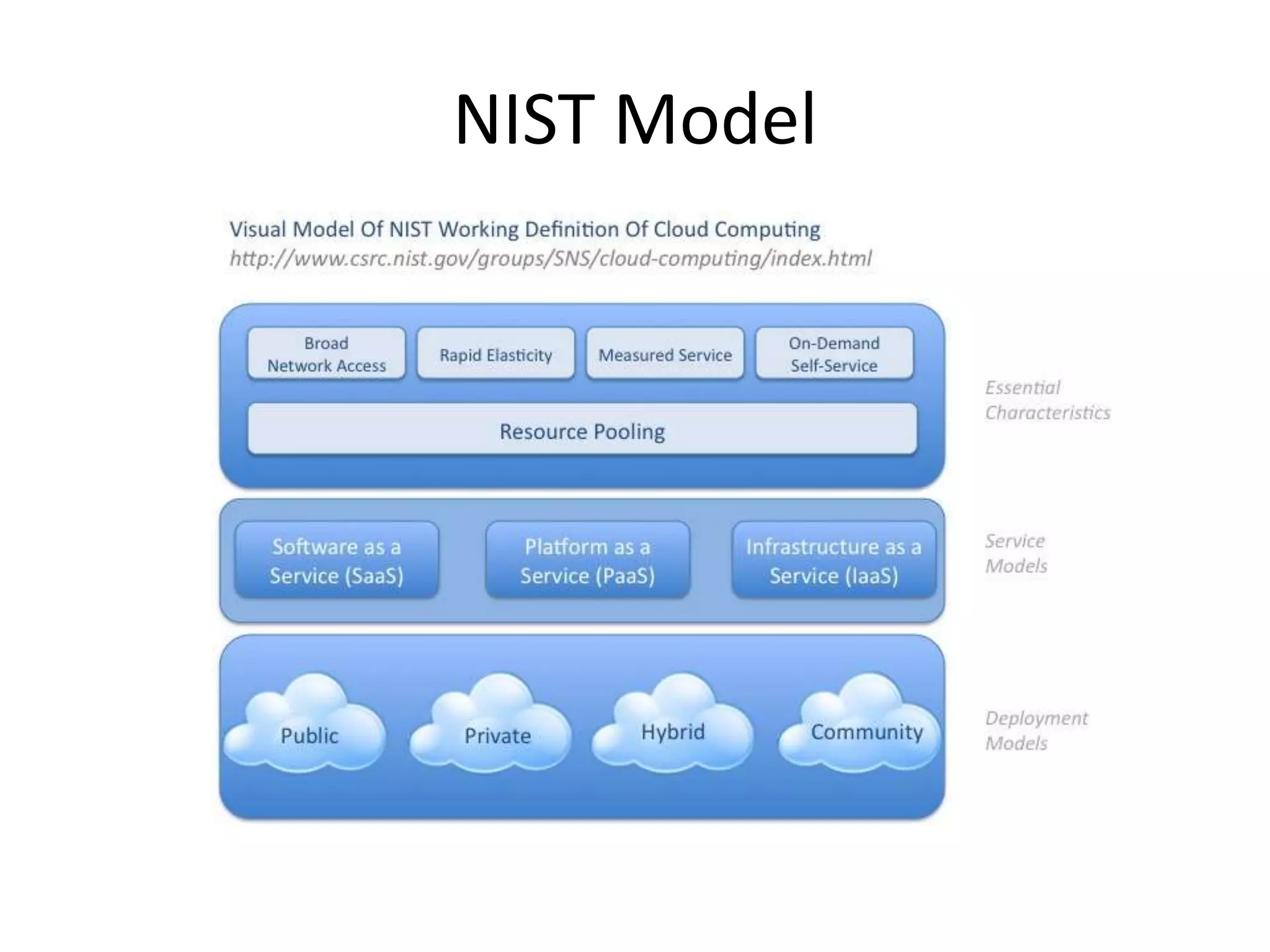
Definition (NIST)
• Cloud computing is a model for enabling
ubiquitous, convenient, on-demand network
access to a shared pool of configurable
computing resources (e.g., networks, servers,
storage, applications, and services) that can be
rapidly provisioned and released with minimal
management effort or service provider
interaction. This cloud model is composed of five
essential characteristics, three service models,
and four deployment models.”
NIST – National Institute of Standard and Technology
Model of Cloud
• NIST
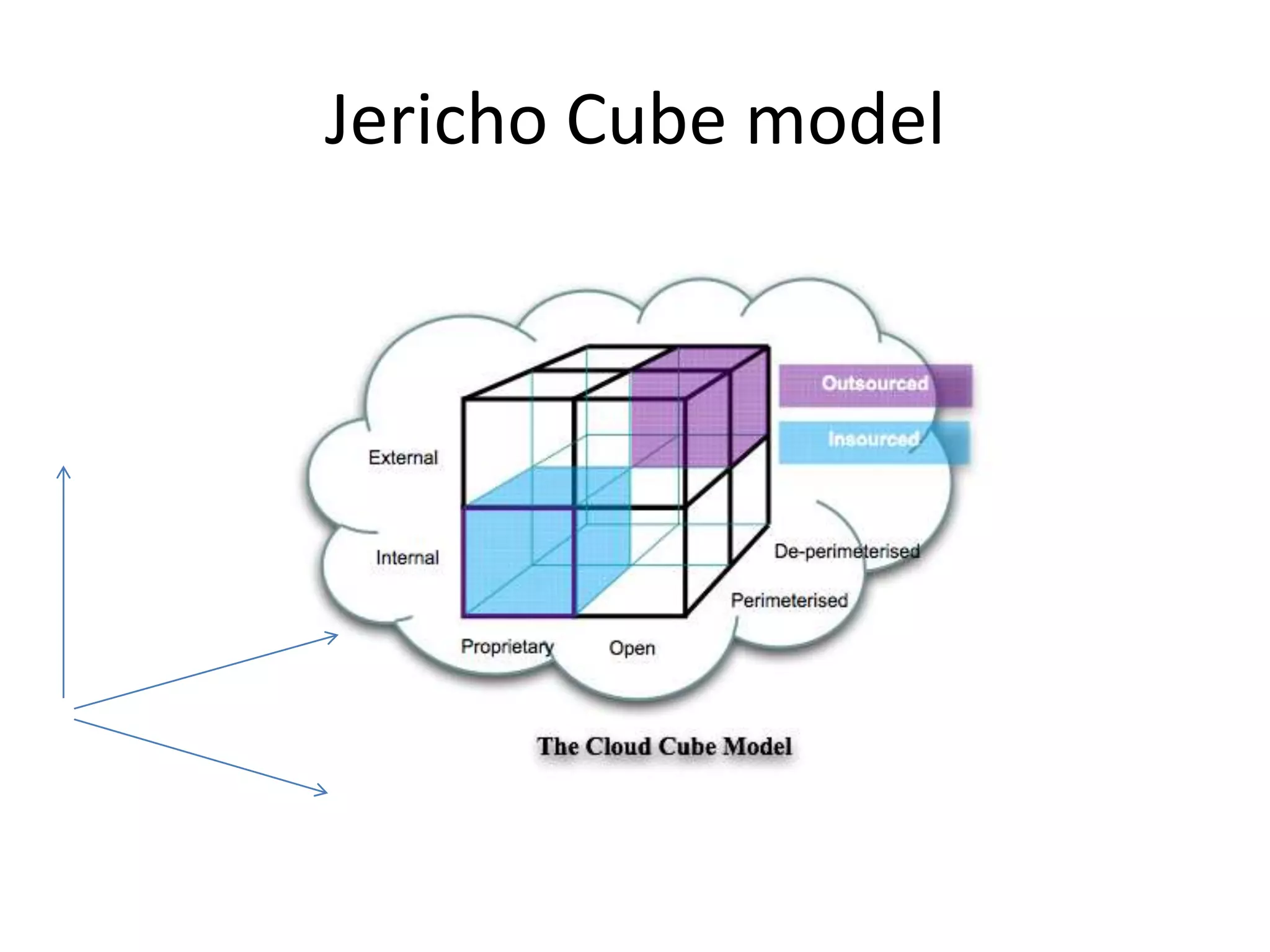
• Jericho forum – Cloud Cube model
Jericho Cube model
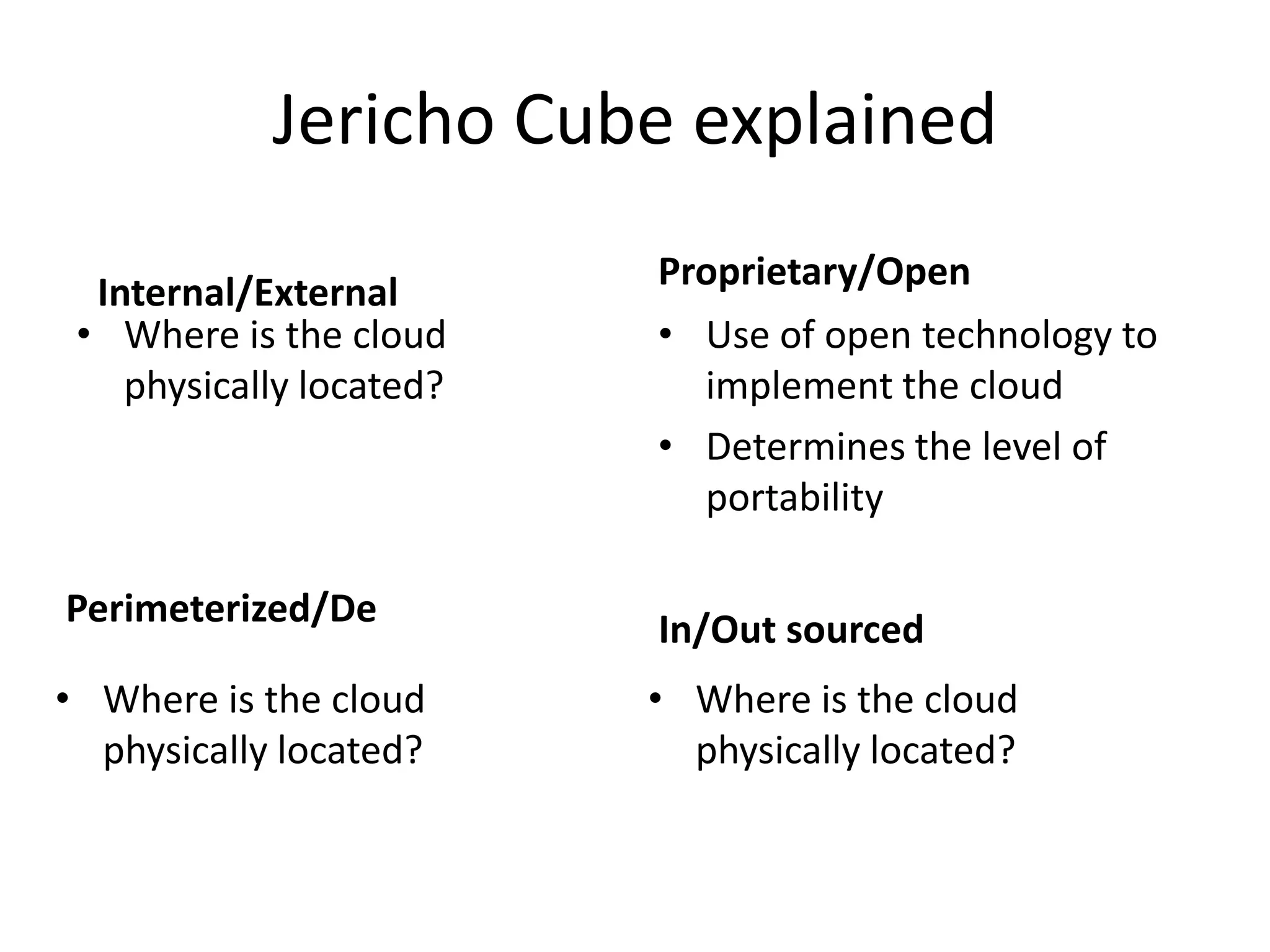
Jericho Cube explained
Perimeterized/De
• Where is the cloud
physically located?
Proprietary/Open
• Use of open technology to
implement the cloud
• Determines the level of
portability
Internal/External
In/Out sourced
• Where is the cloud
physically located?
• Where is the cloud
physically located?
NIST Model
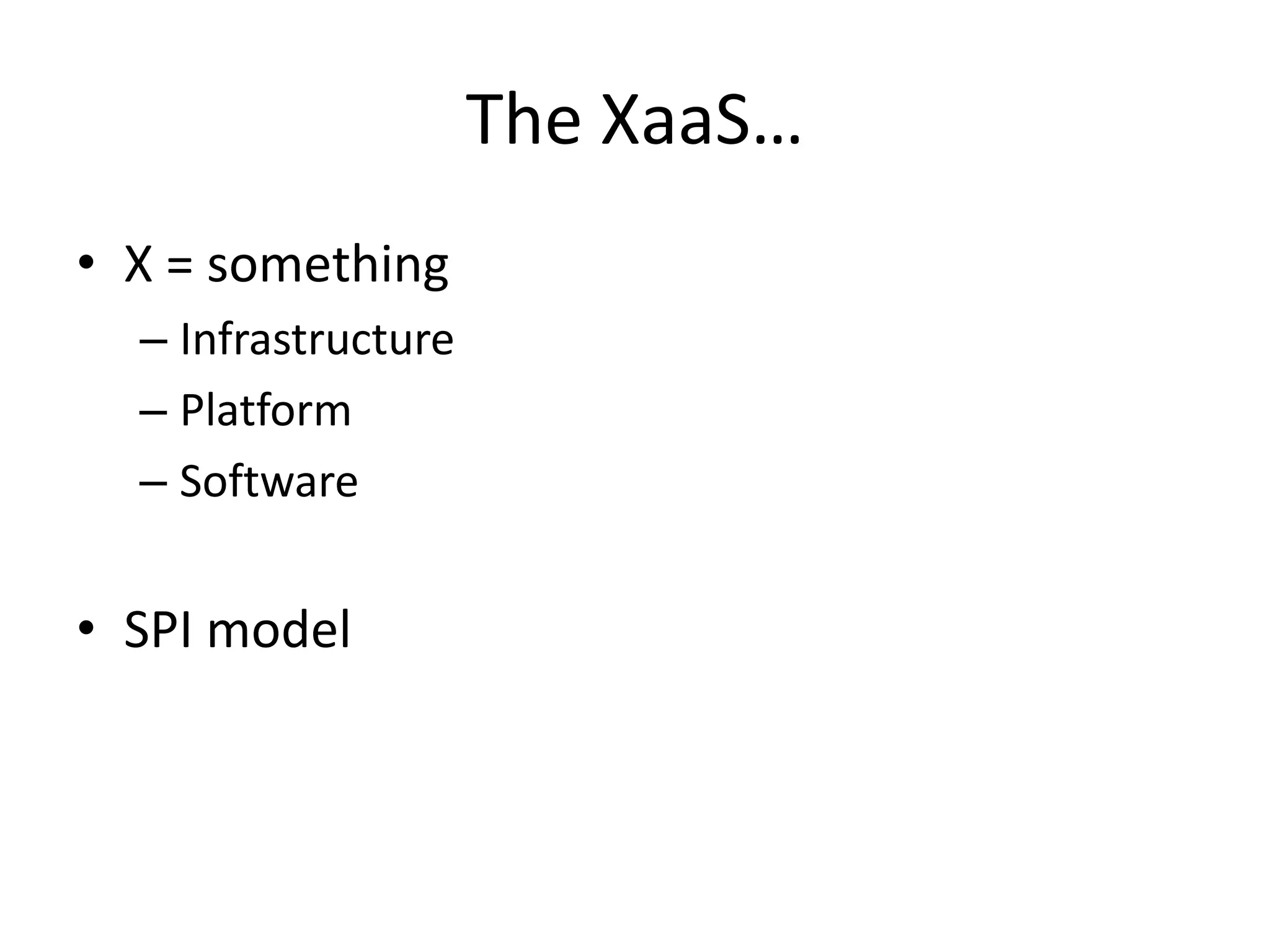
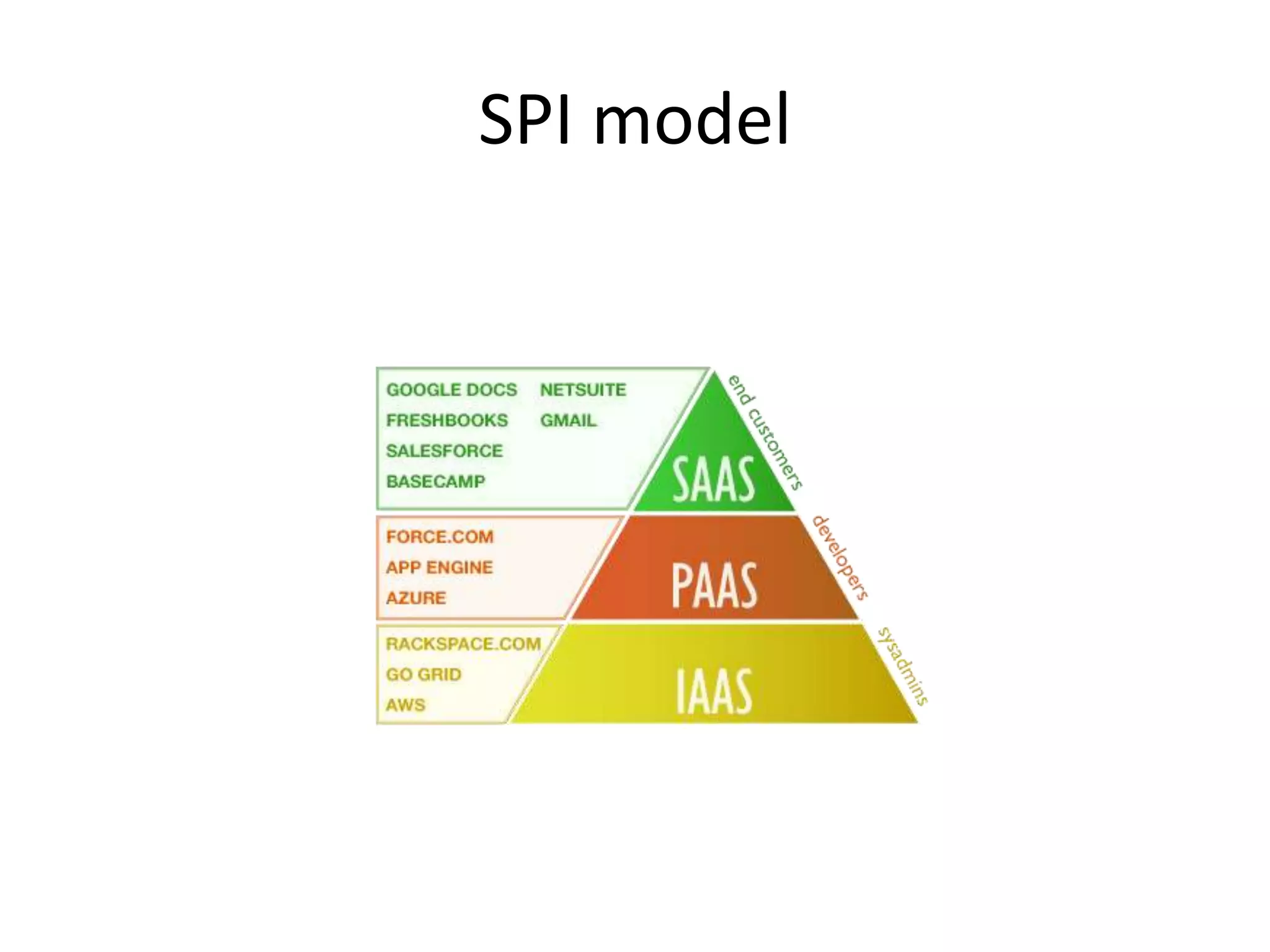
The XaaS…
• X = something
– Infrastructure
– Platform
– Software
• SPI model
SPI model
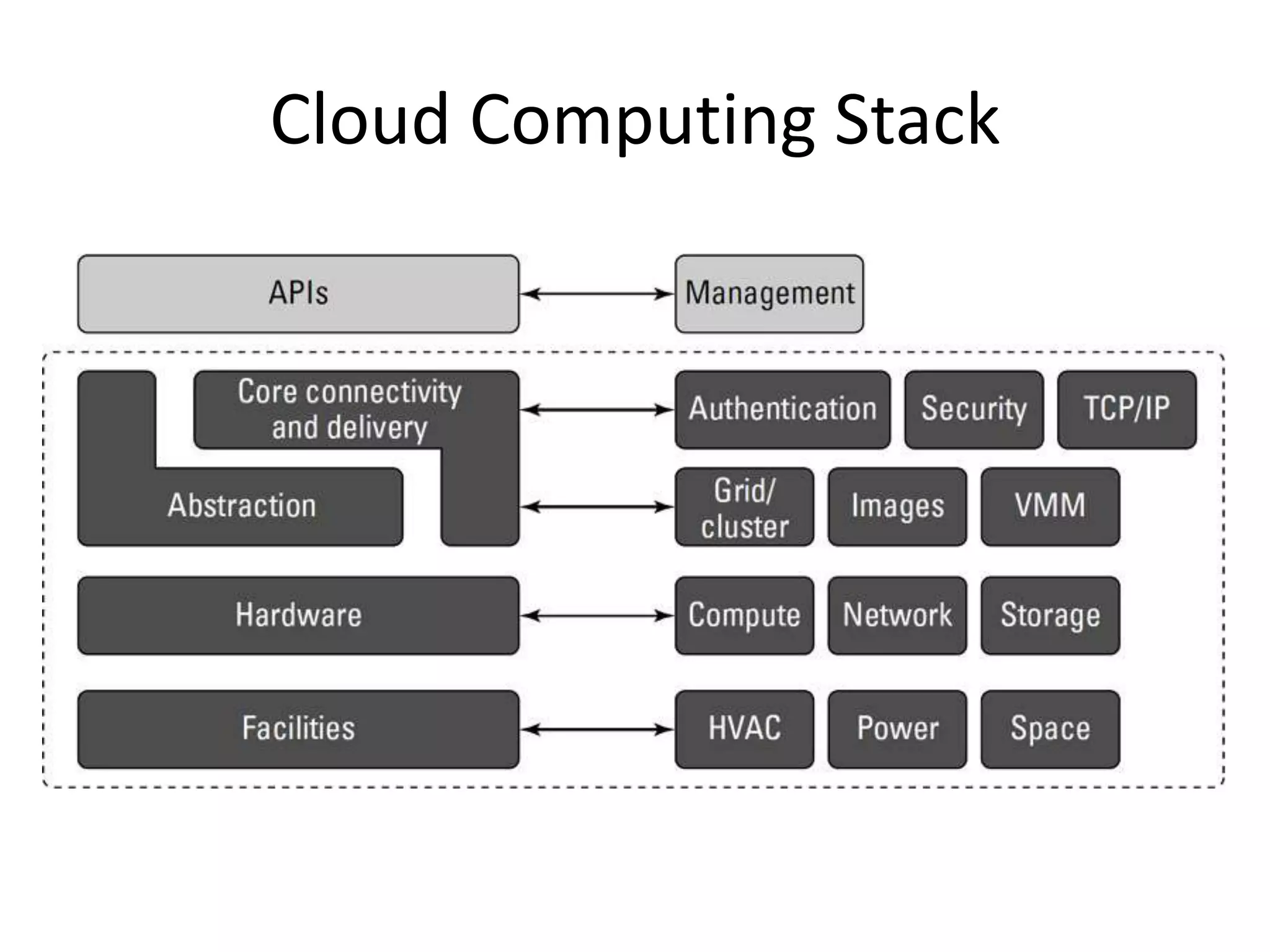
Cloud Computing Stack
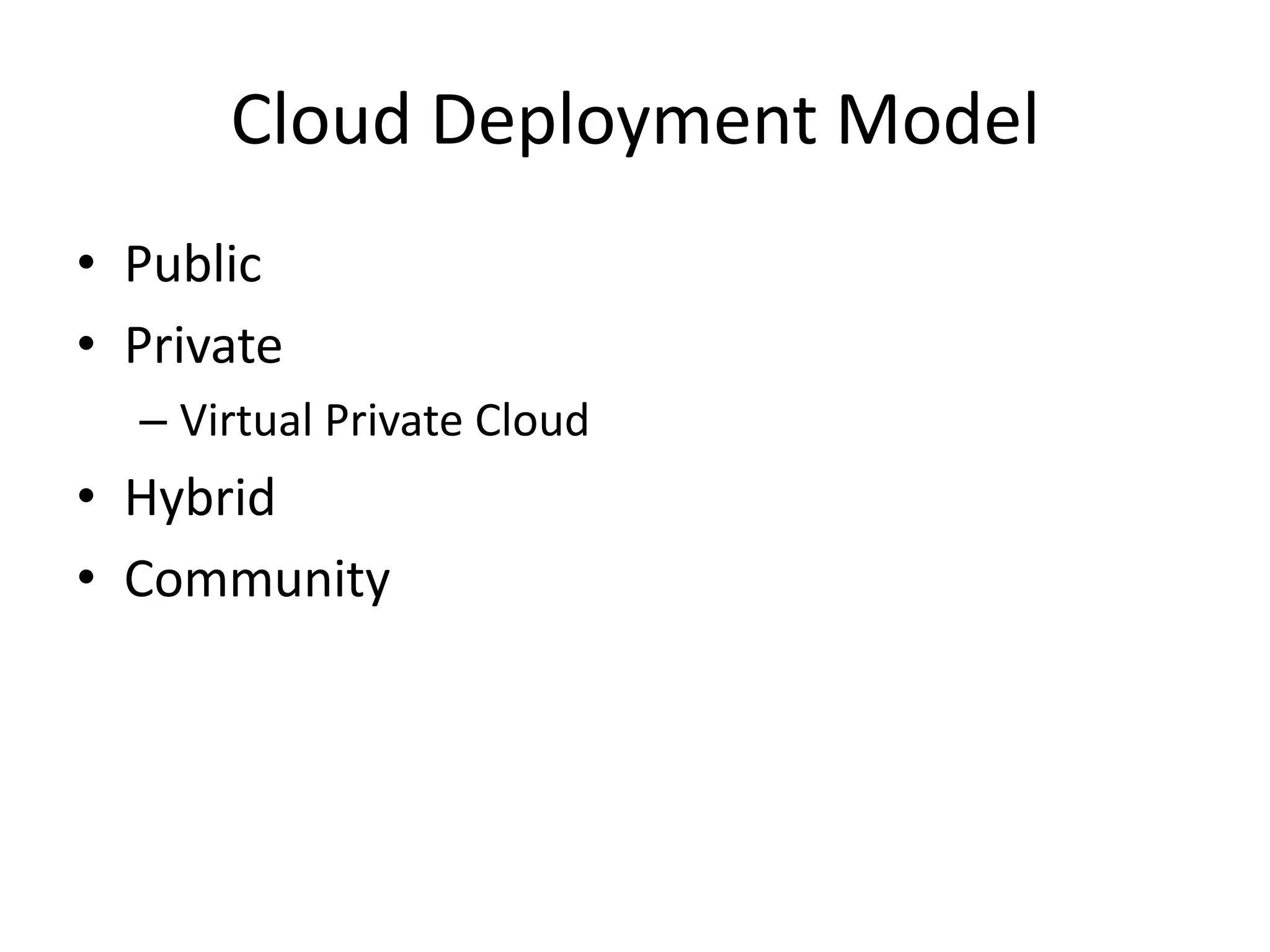
Cloud Deployment Model
• Public
• Private
– Virtual Private Cloud
• Hybrid
• Community
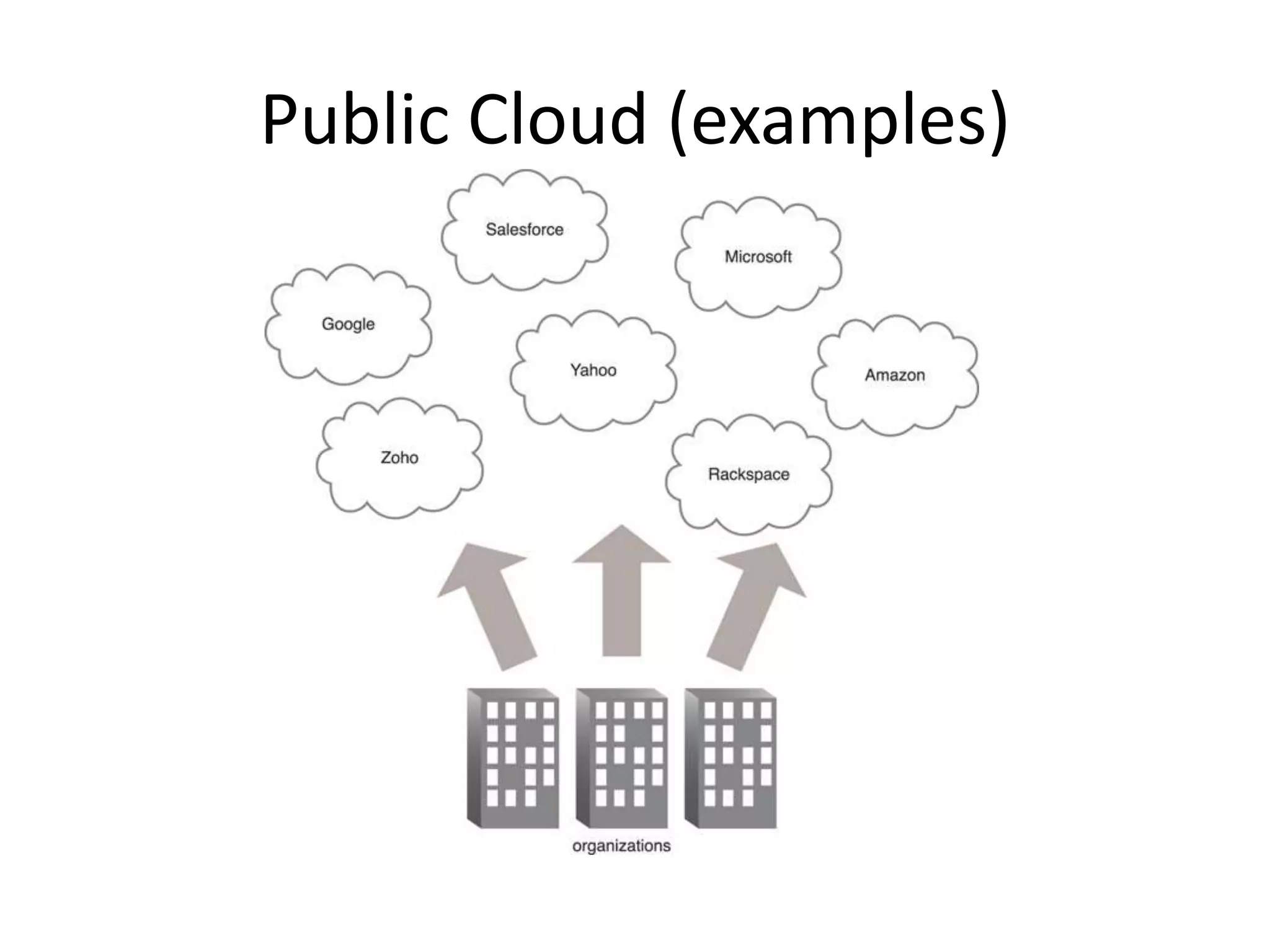
Public Cloud (examples)
Data centre
• Commodity compute HW
– x86 based rack-mounted server blades
• Storage
– NAS (network attached storage)
– SAN (storage area network)
• Networking
– Carrier & external network
– LAN fabric
• NAS gateway
– SAN fabric
– Load Balancing (layer 7)
• Infrastructure (cooling, power)
Key concepts
• Abstraction
• Virtualization
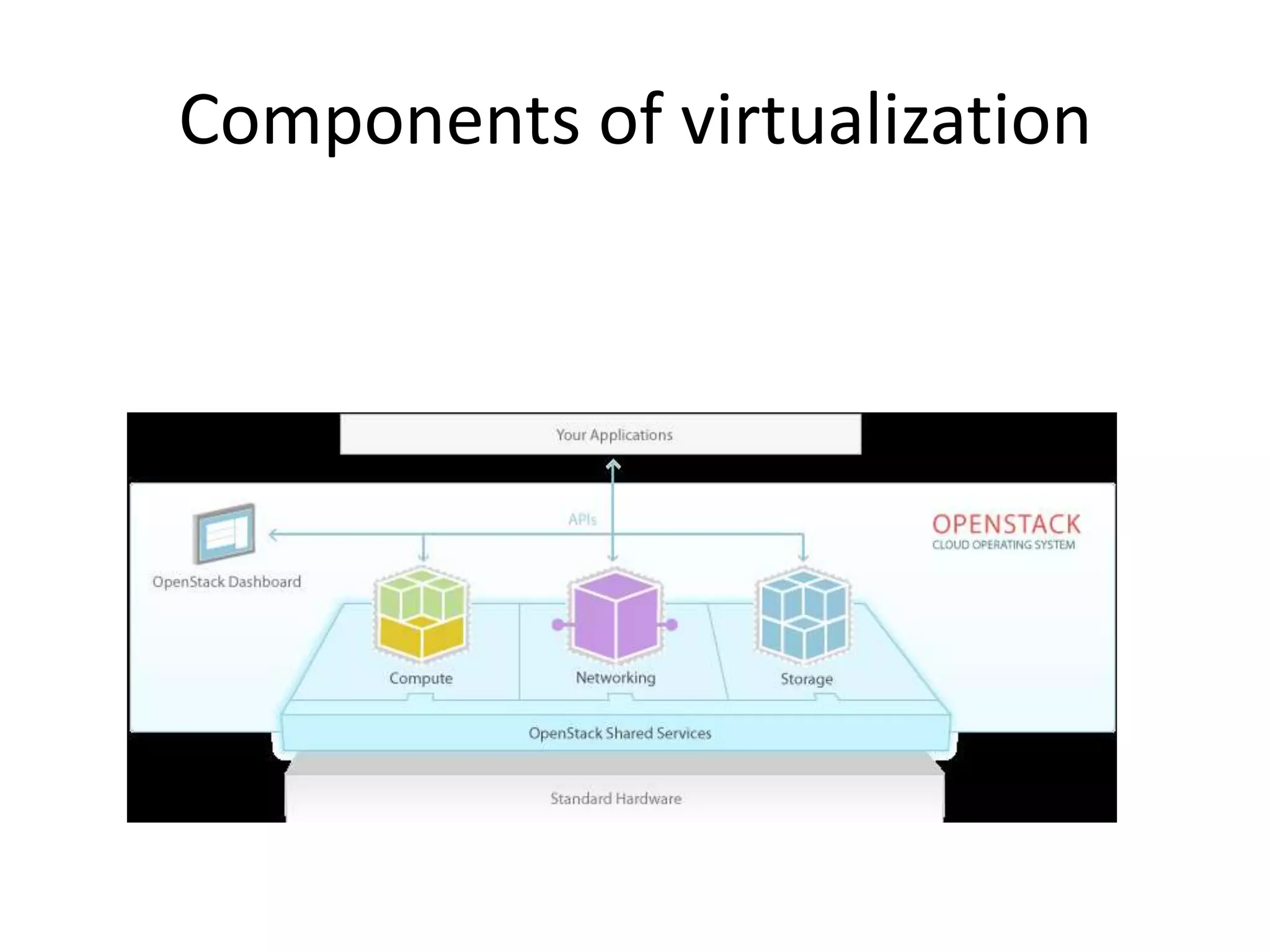
Components of virtualization
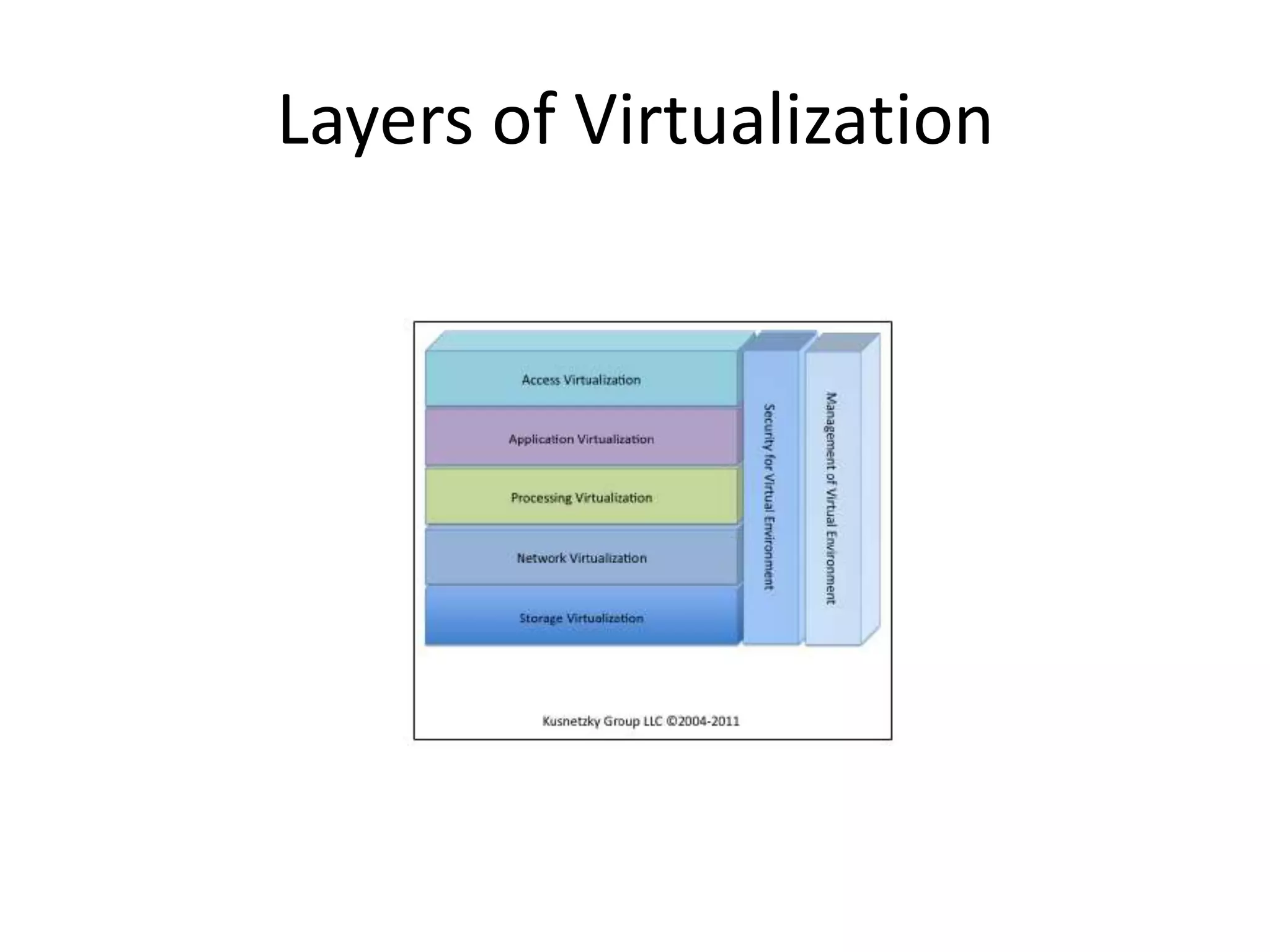
Layers of Virtualization
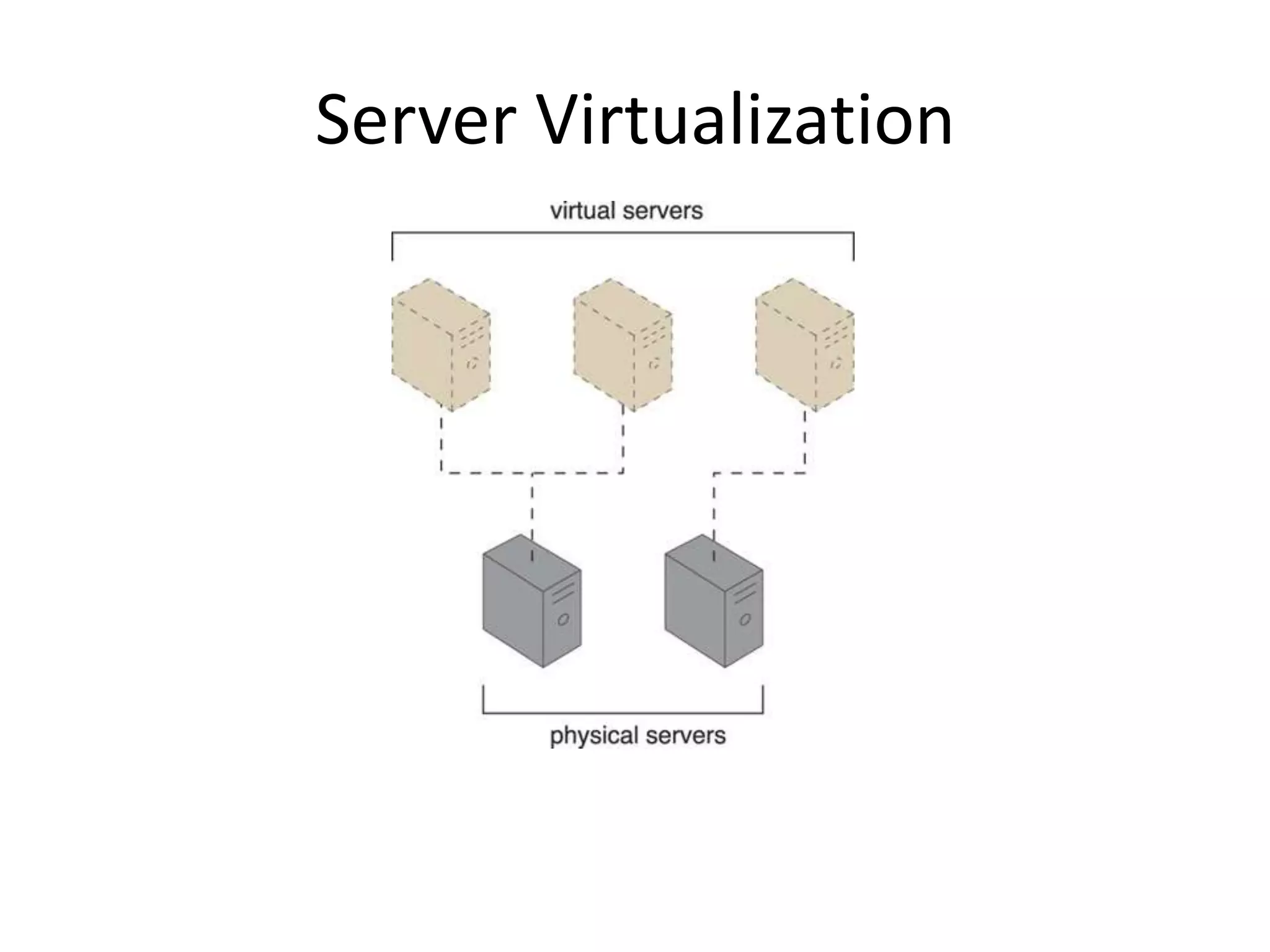
Server Virtualization
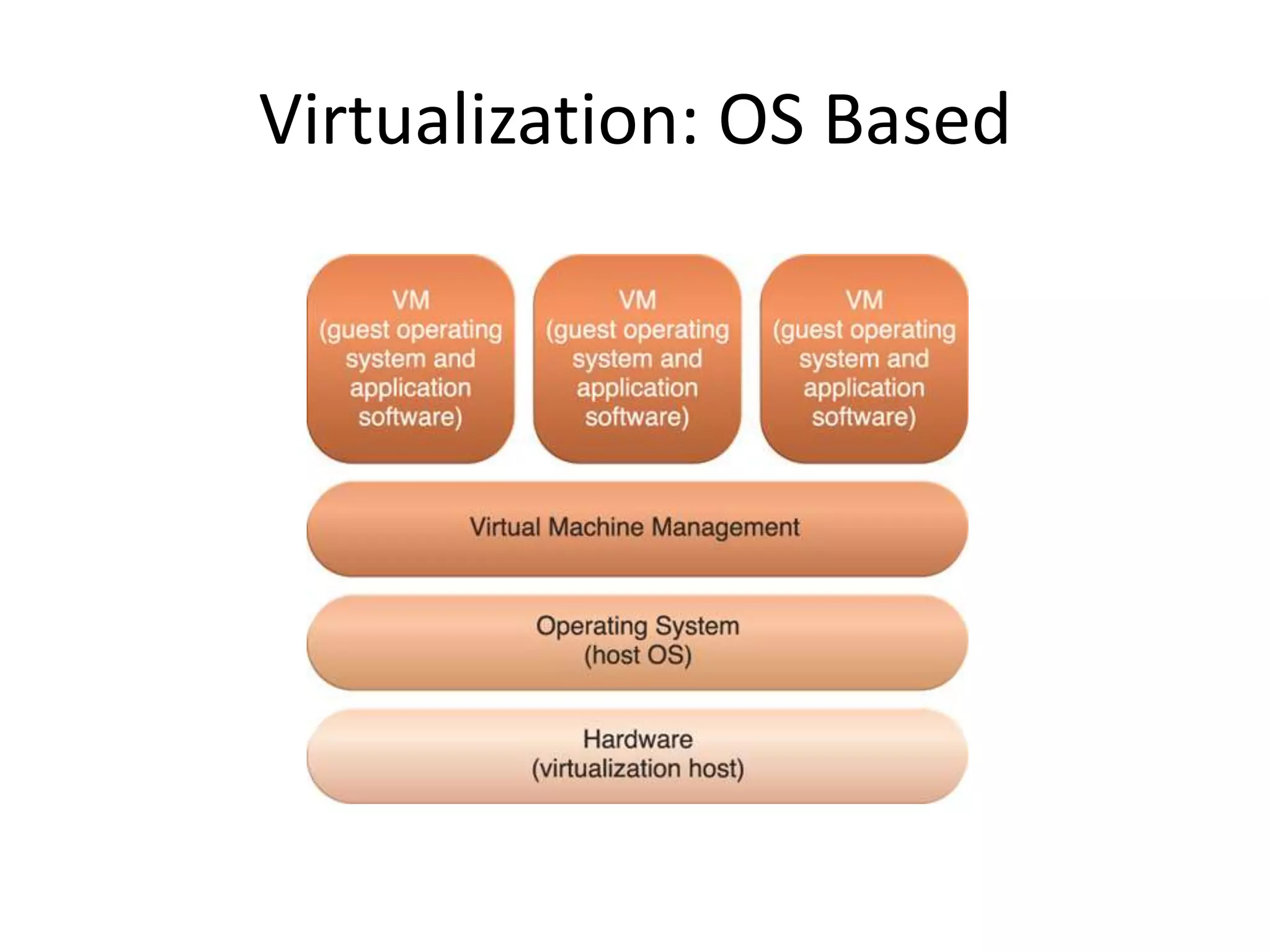
Virtualization: OS Based
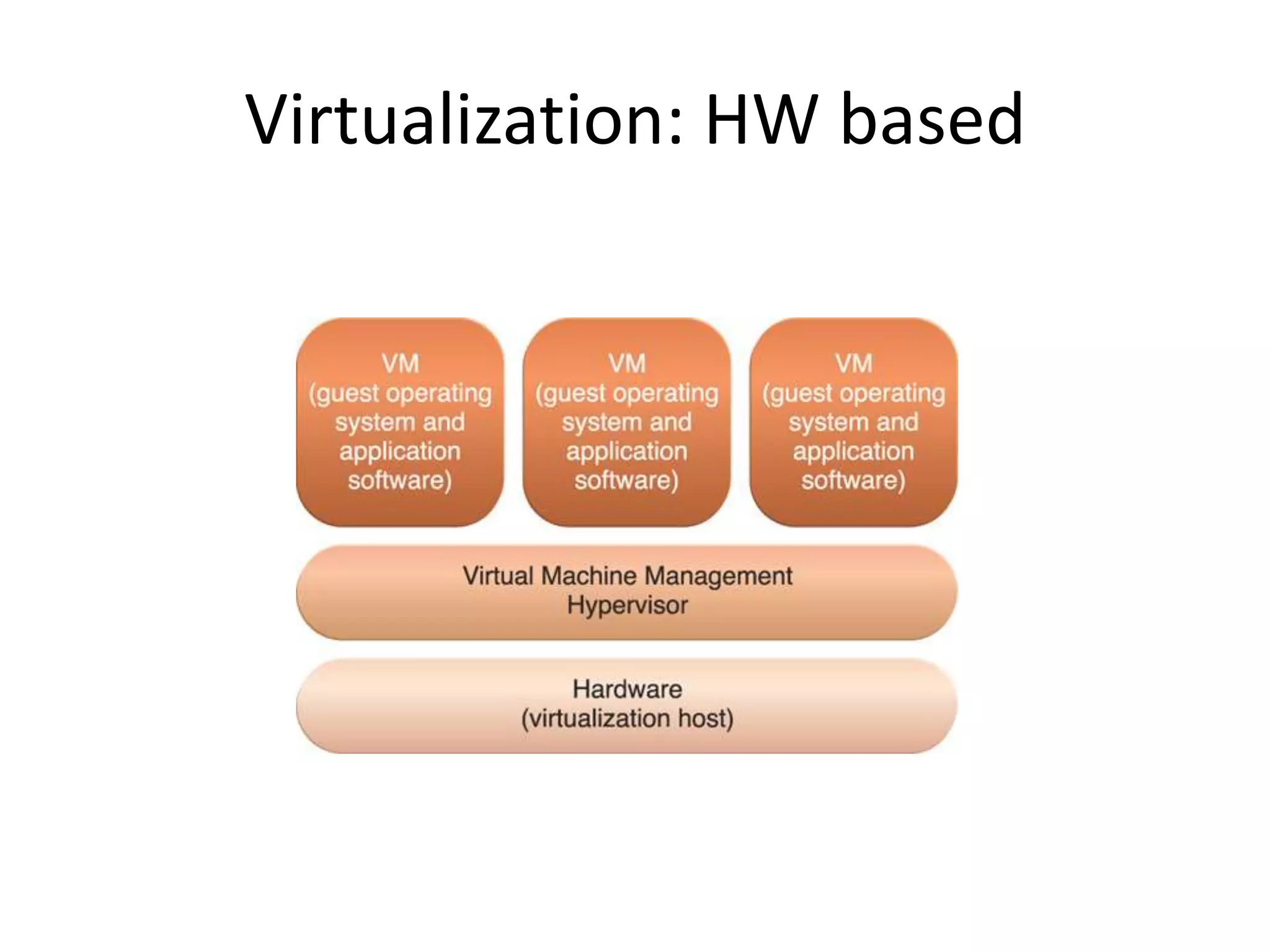
Virtualization: HW based
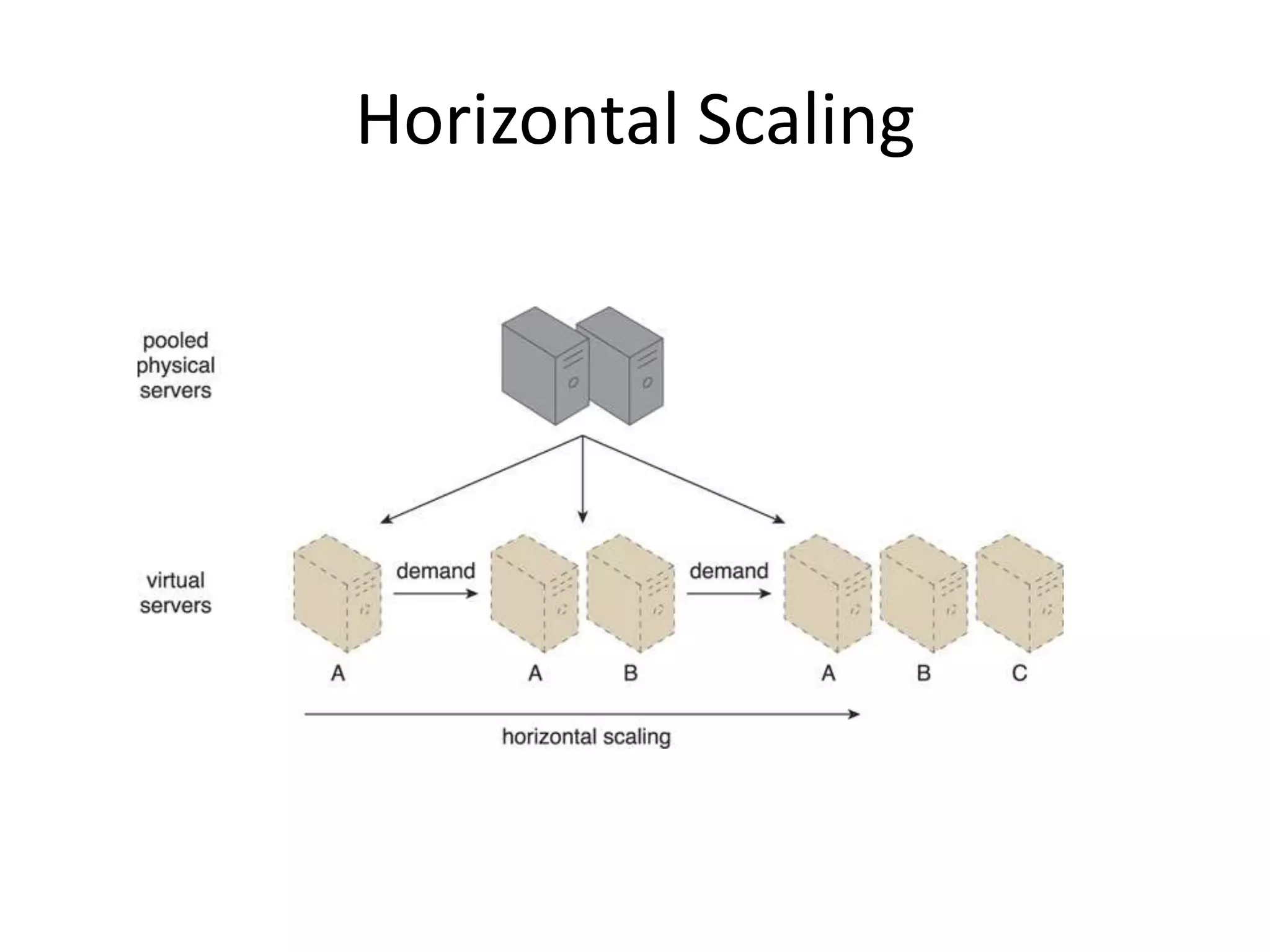
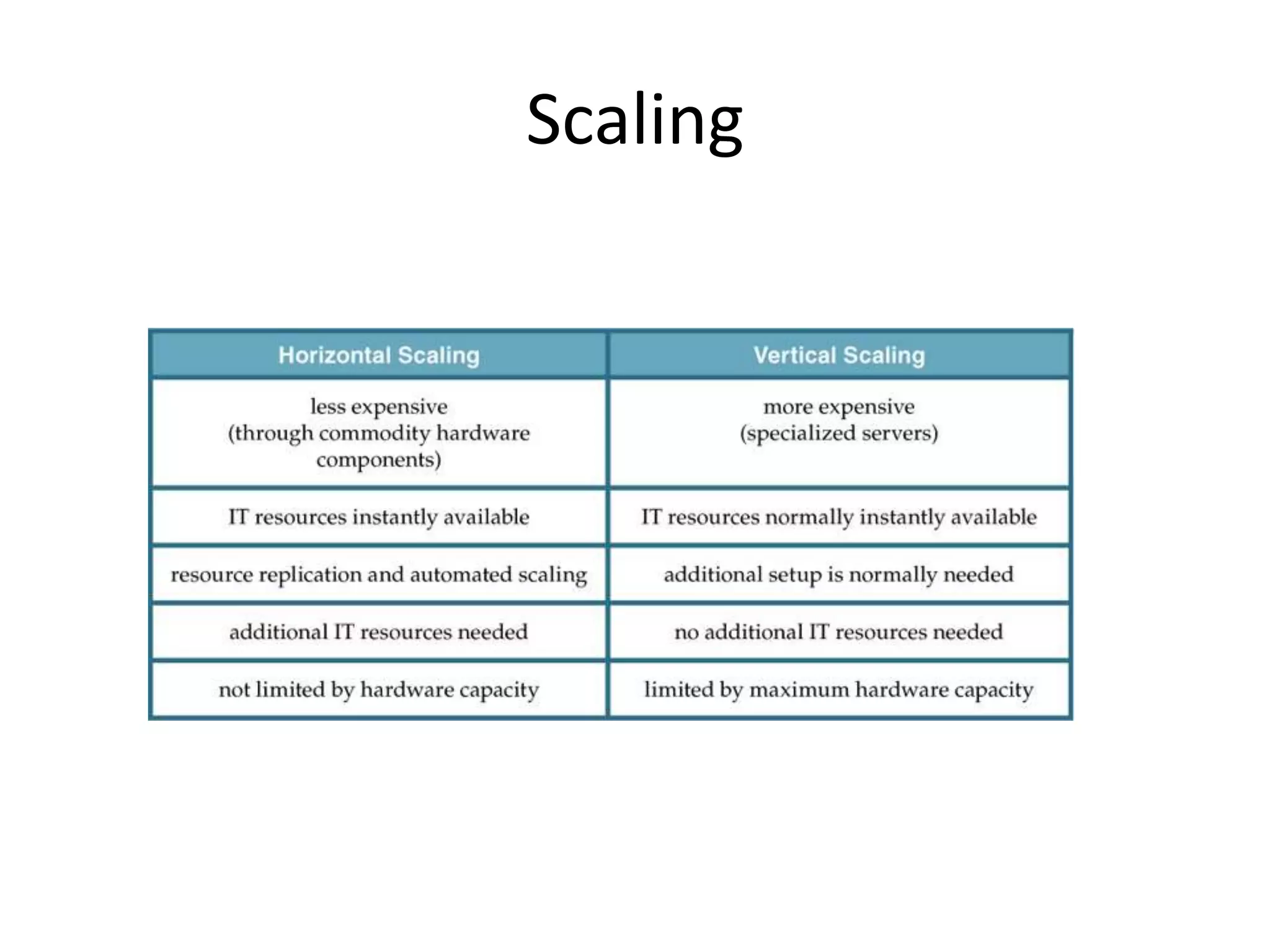
Horizontal Scaling
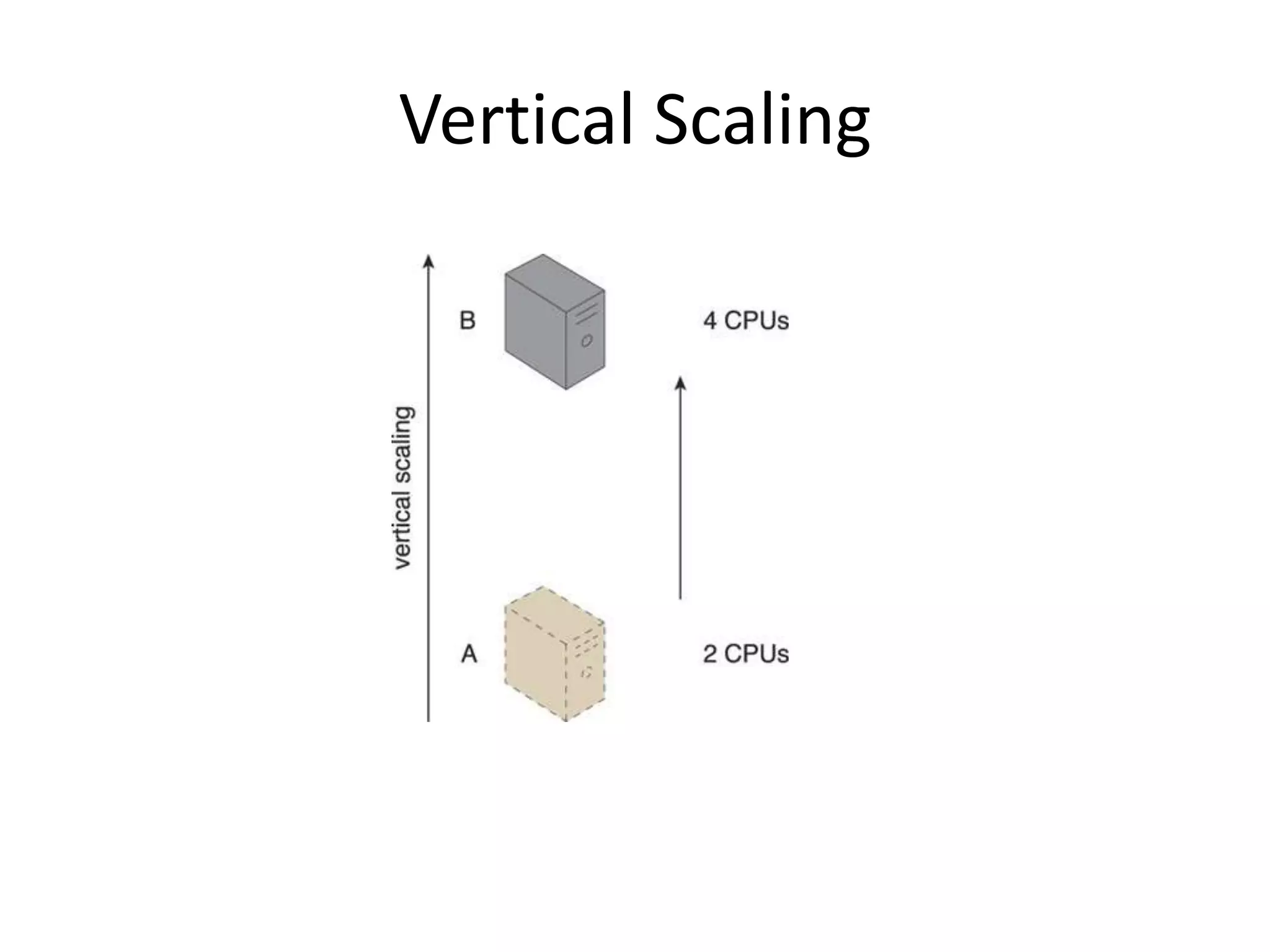
Vertical Scaling
Scaling
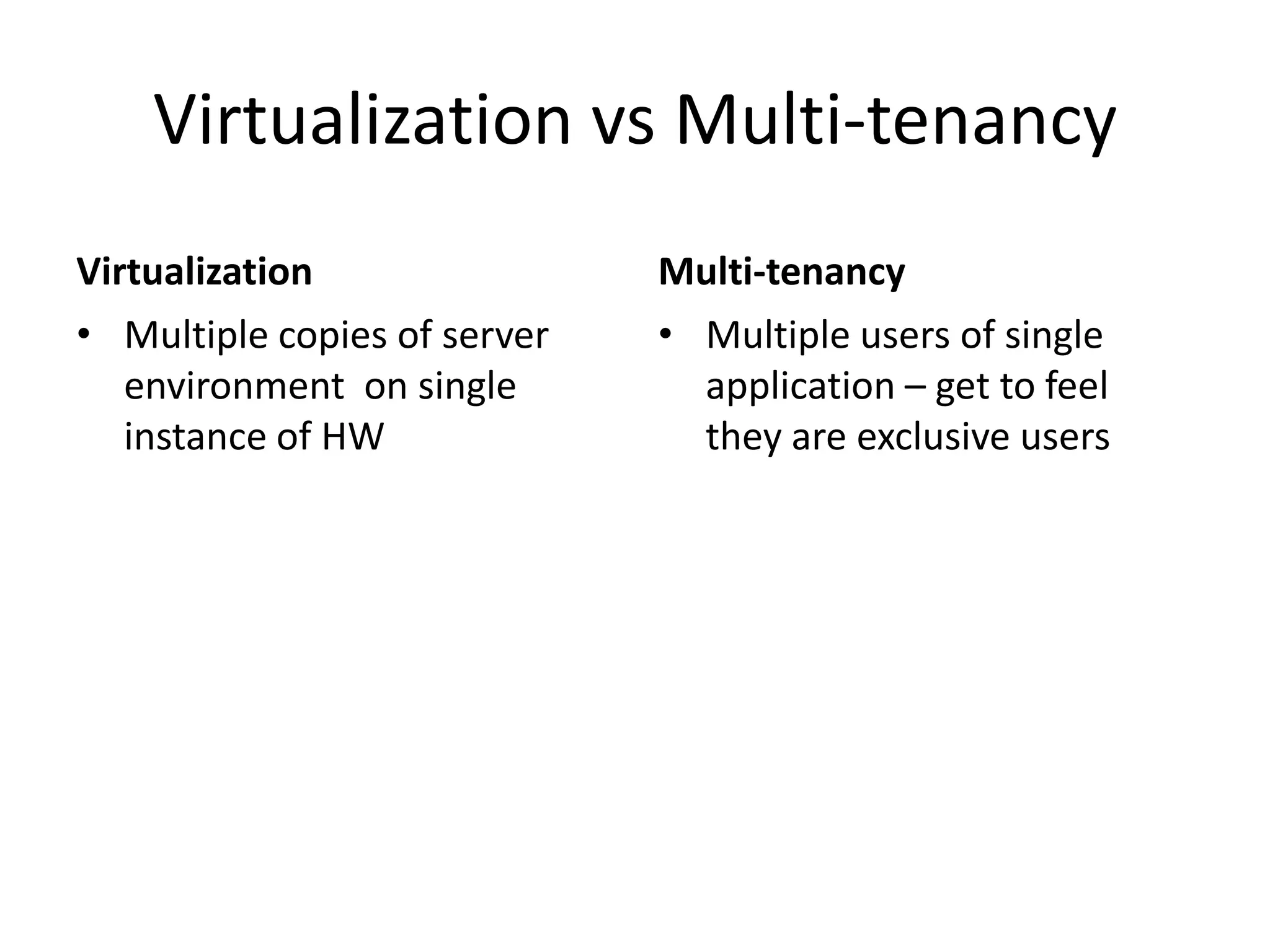
Virtualization vs Multi-tenancy
Virtualization
• Multiple copies of server
environment on single
instance of HW
Multi-tenancy
• Multiple users of single
application – get to feel
they are exclusive users
Architectural Standards
• SOA – Service oriented Architecture
• Virtualization of platform resources
• Web-app frame work
• Standardized web services
• Autonomic systems
• Grid computing
• Example – Openstack , Eucalyptus, IEEE-tcsc
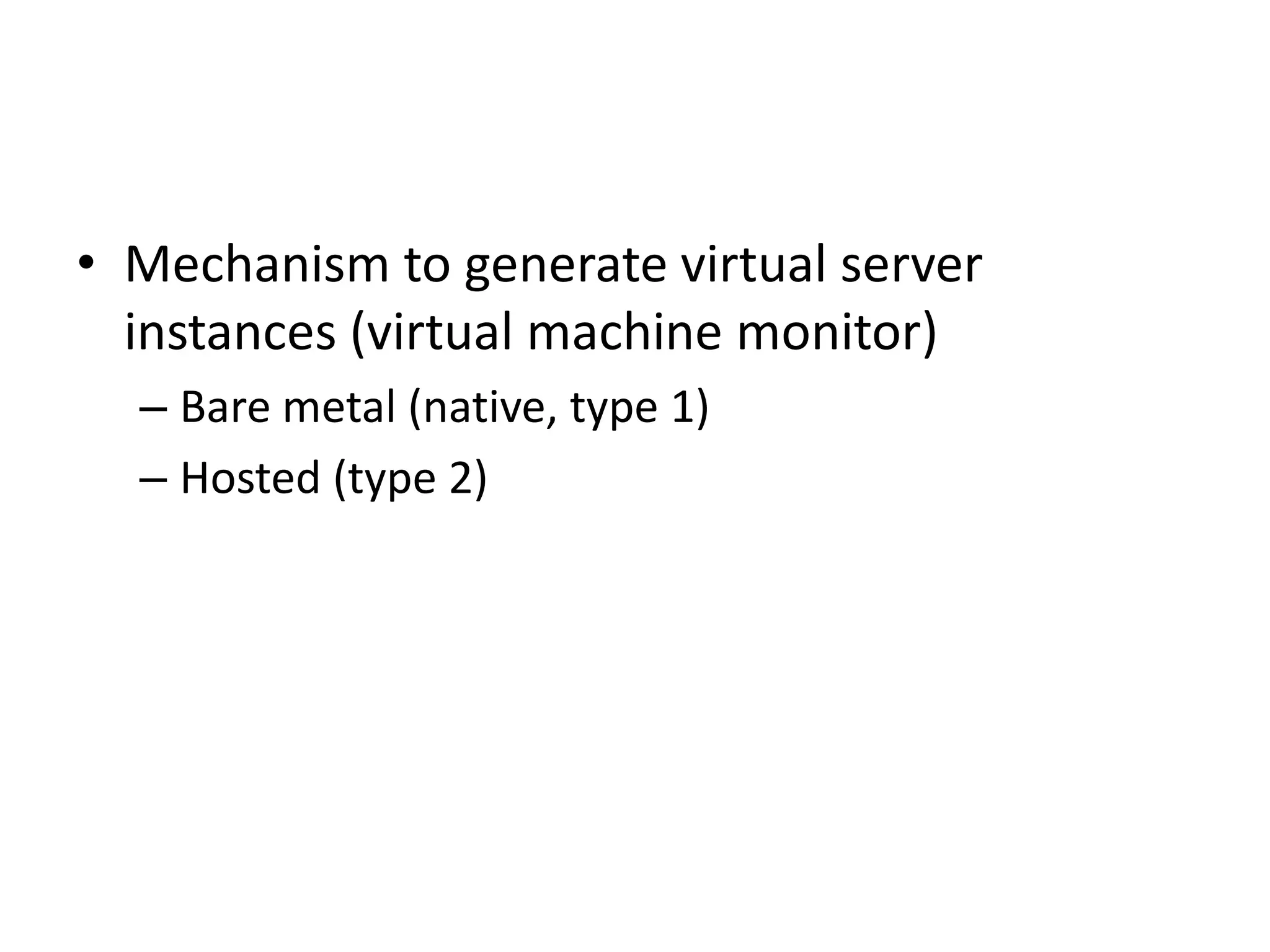
HYPERVISOR
• Mechanism to generate virtual server
instances (virtual machine monitor)
– Bare metal (native, type 1)
– Hosted (type 2)
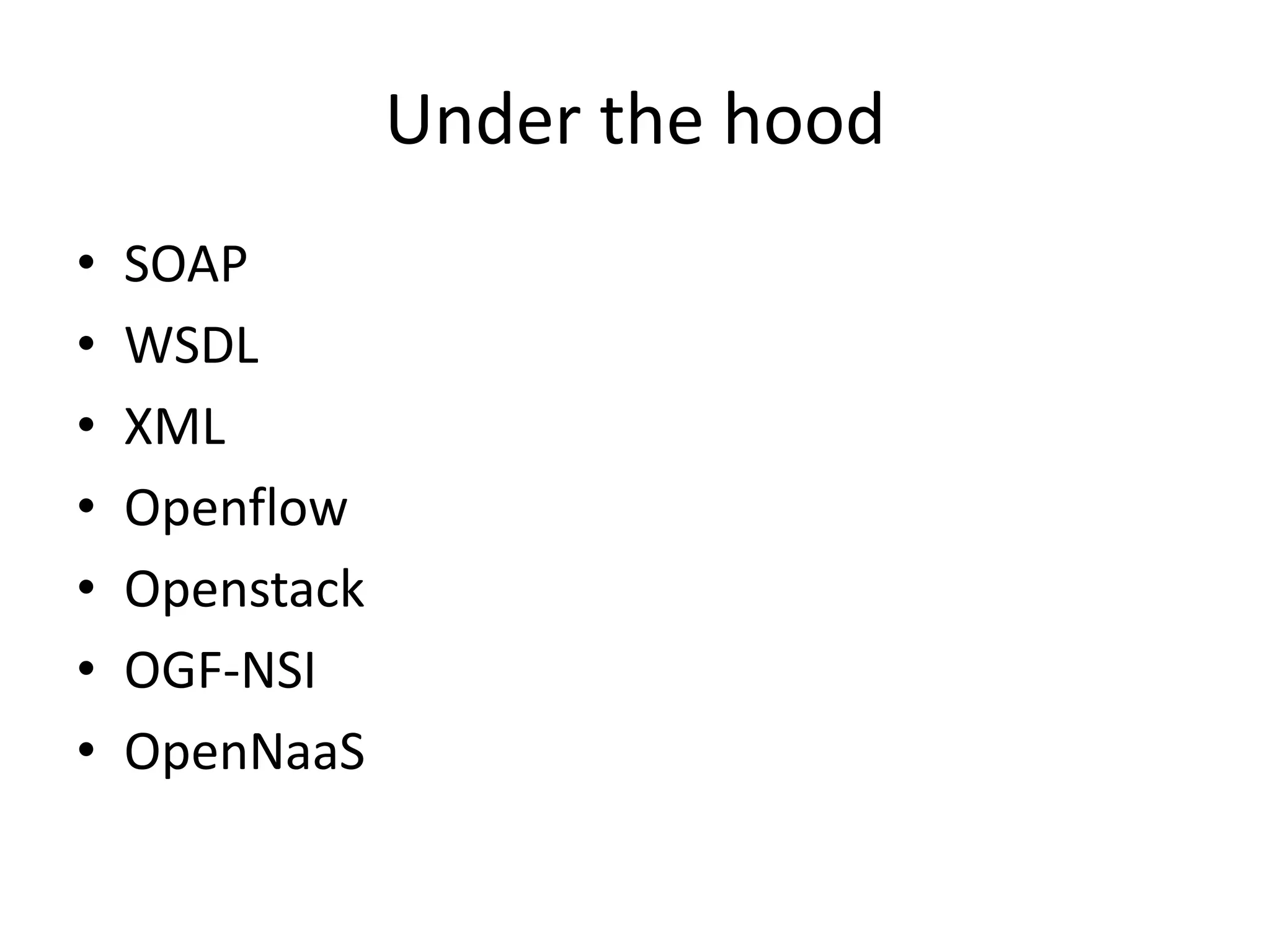
Under the hood
• SOAP
• WSDL
• XML
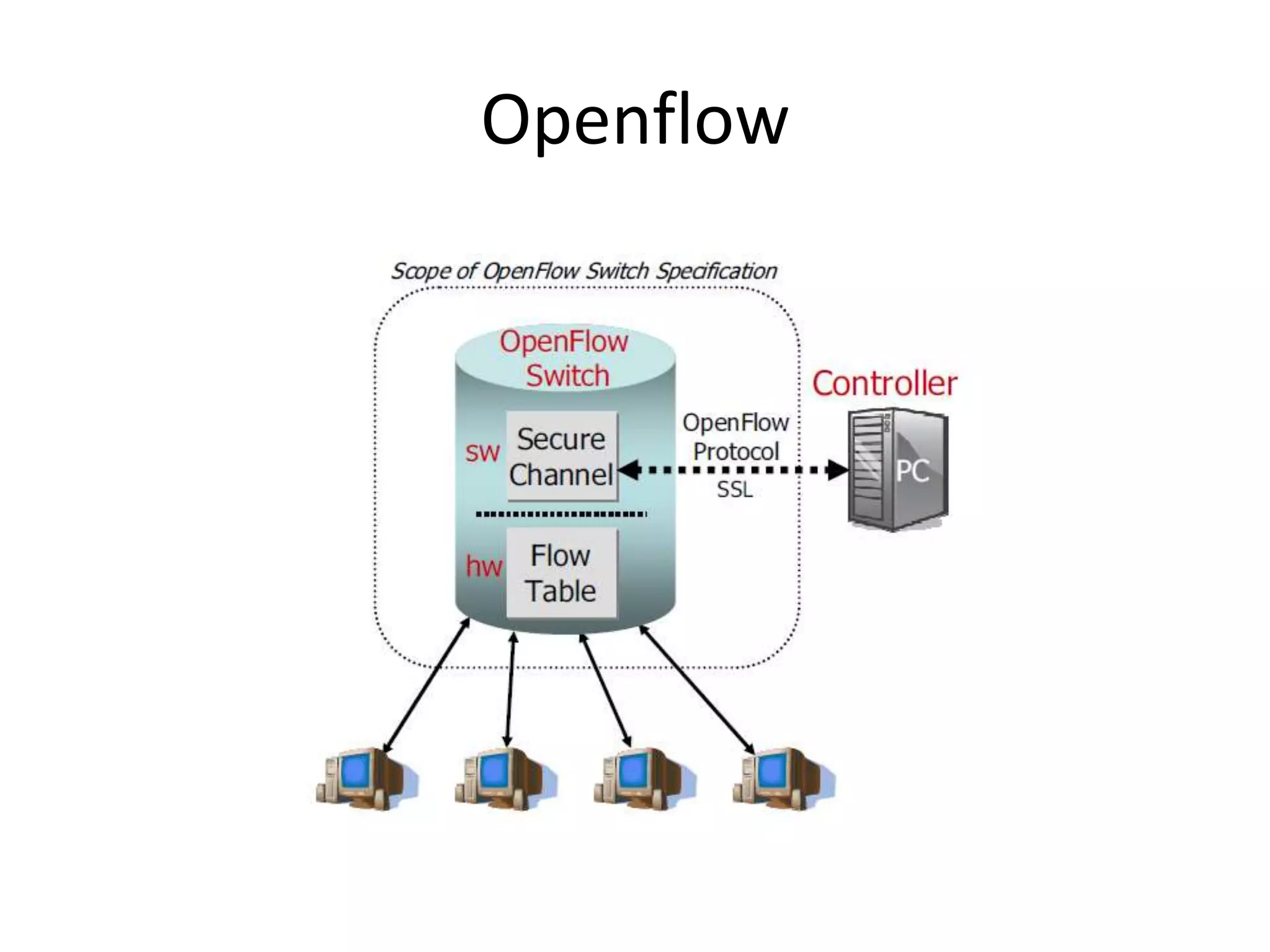
• Openflow
• Openstack
• OGF-NSI
• OpenNaaS
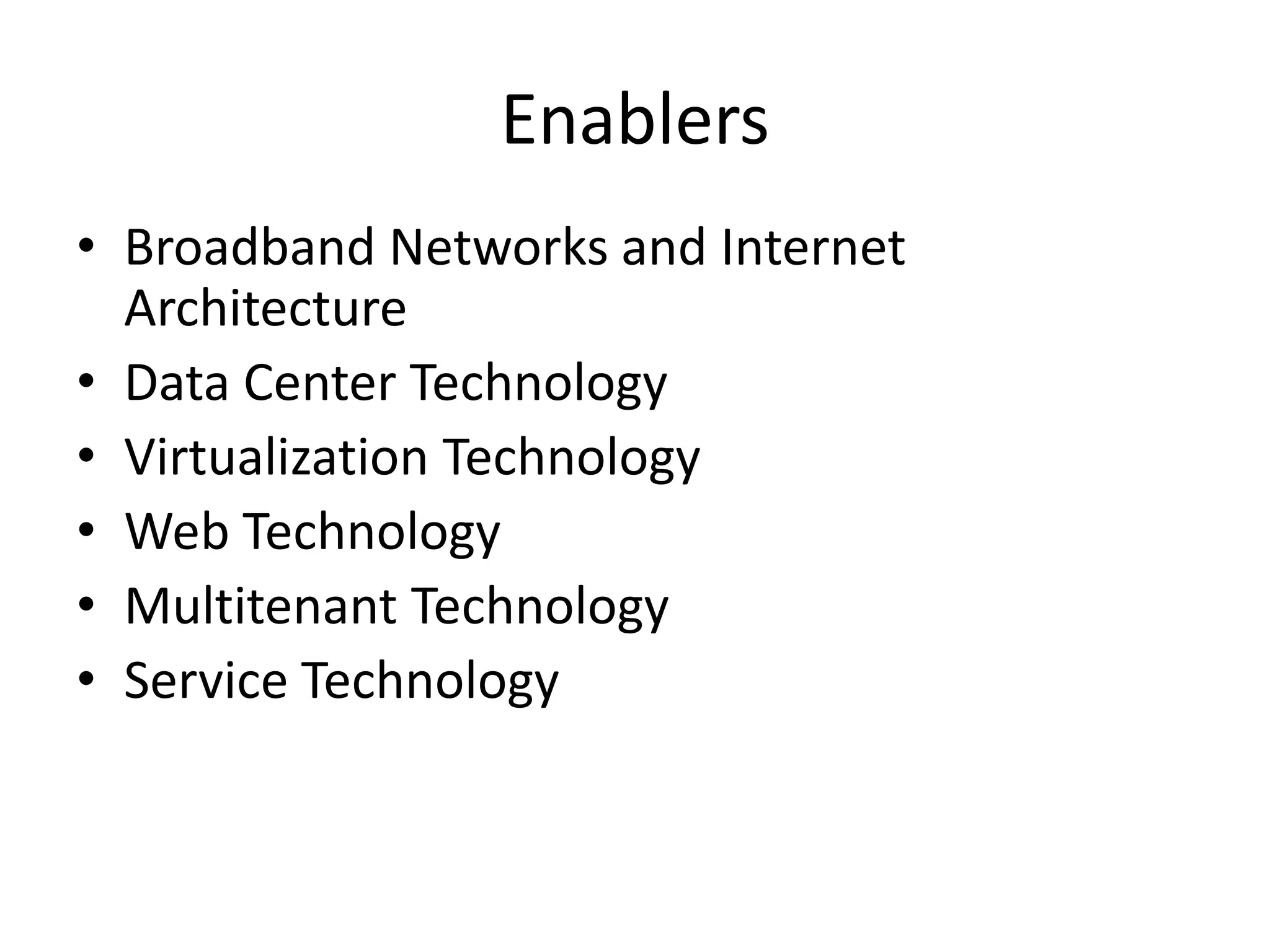
Enablers
• Broadband Networks and Internet
Architecture
• Data Center Technology
• Virtualization Technology
• Web Technology
• Multitenant Technology
• Service Technology
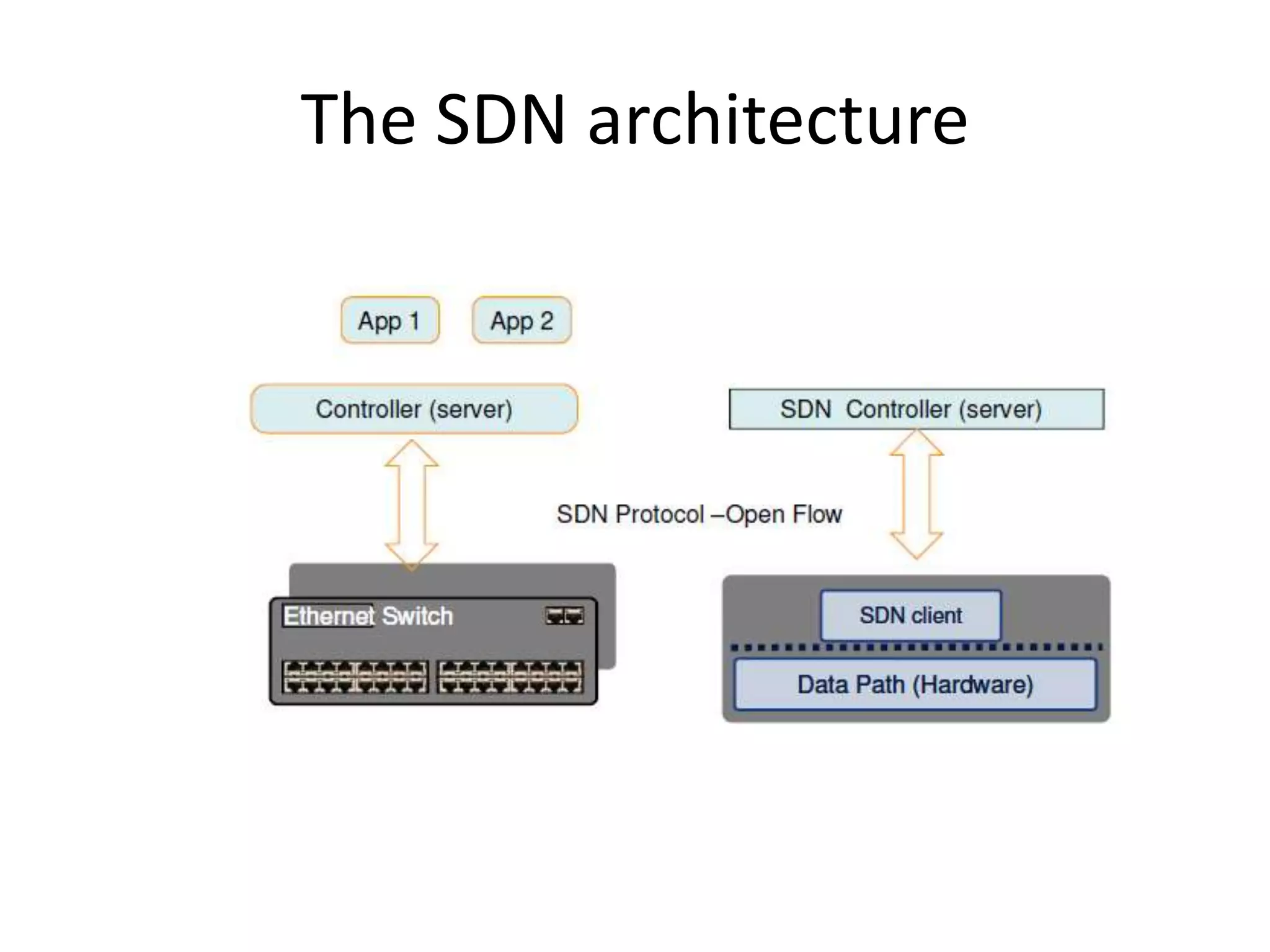
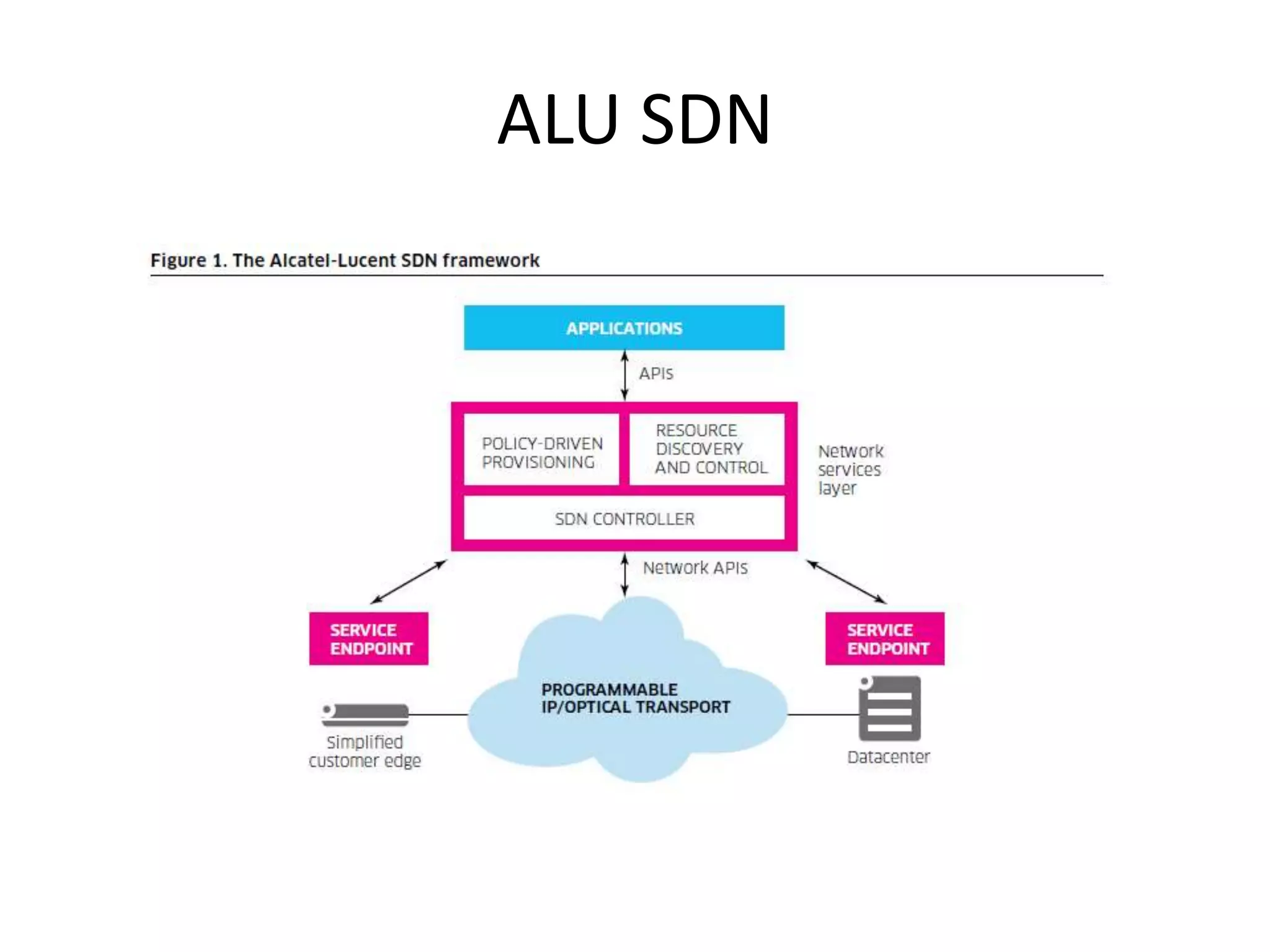
SDN
Software Defined Networking
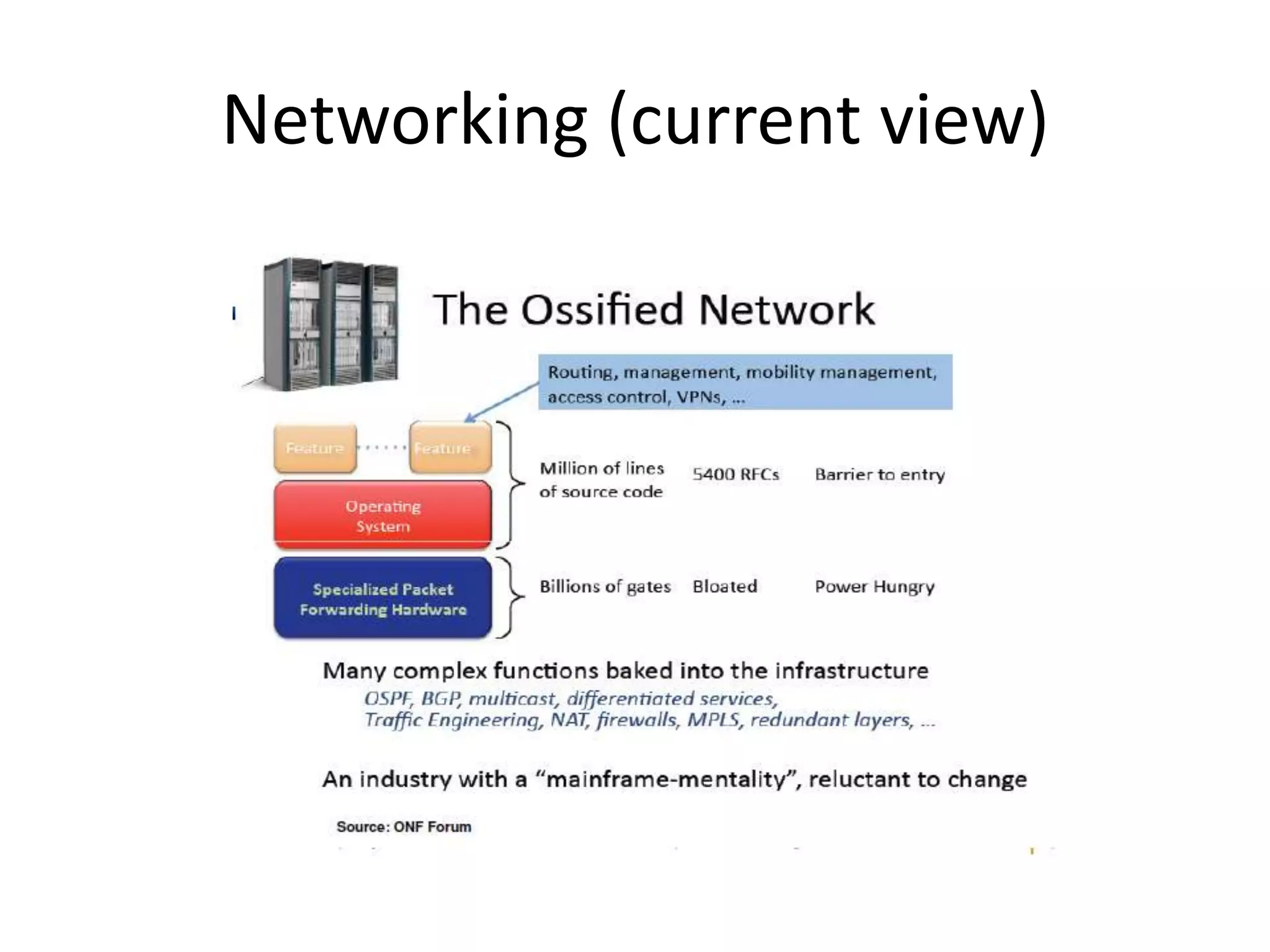
Networking (current view)
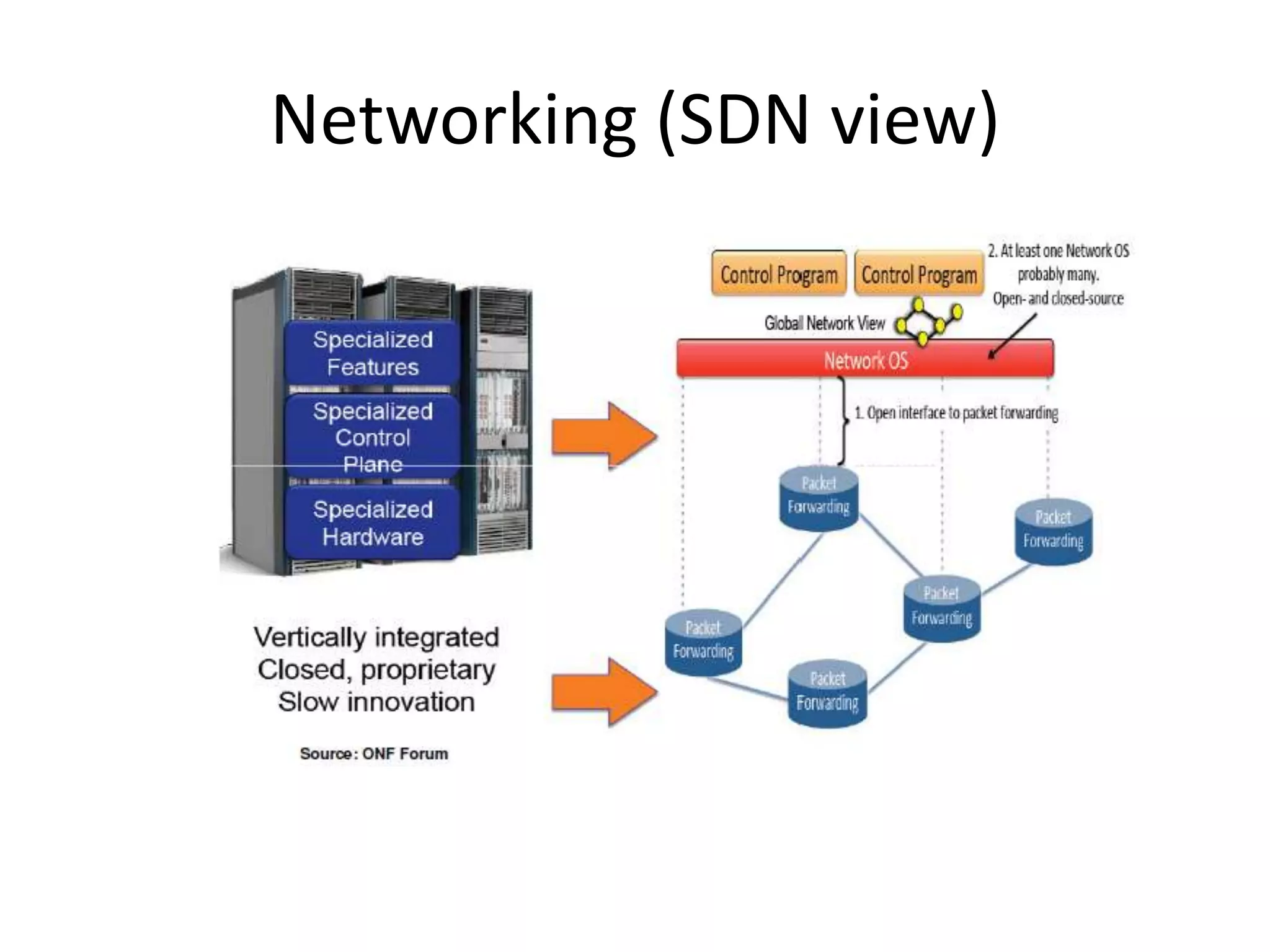
Networking (SDN view)
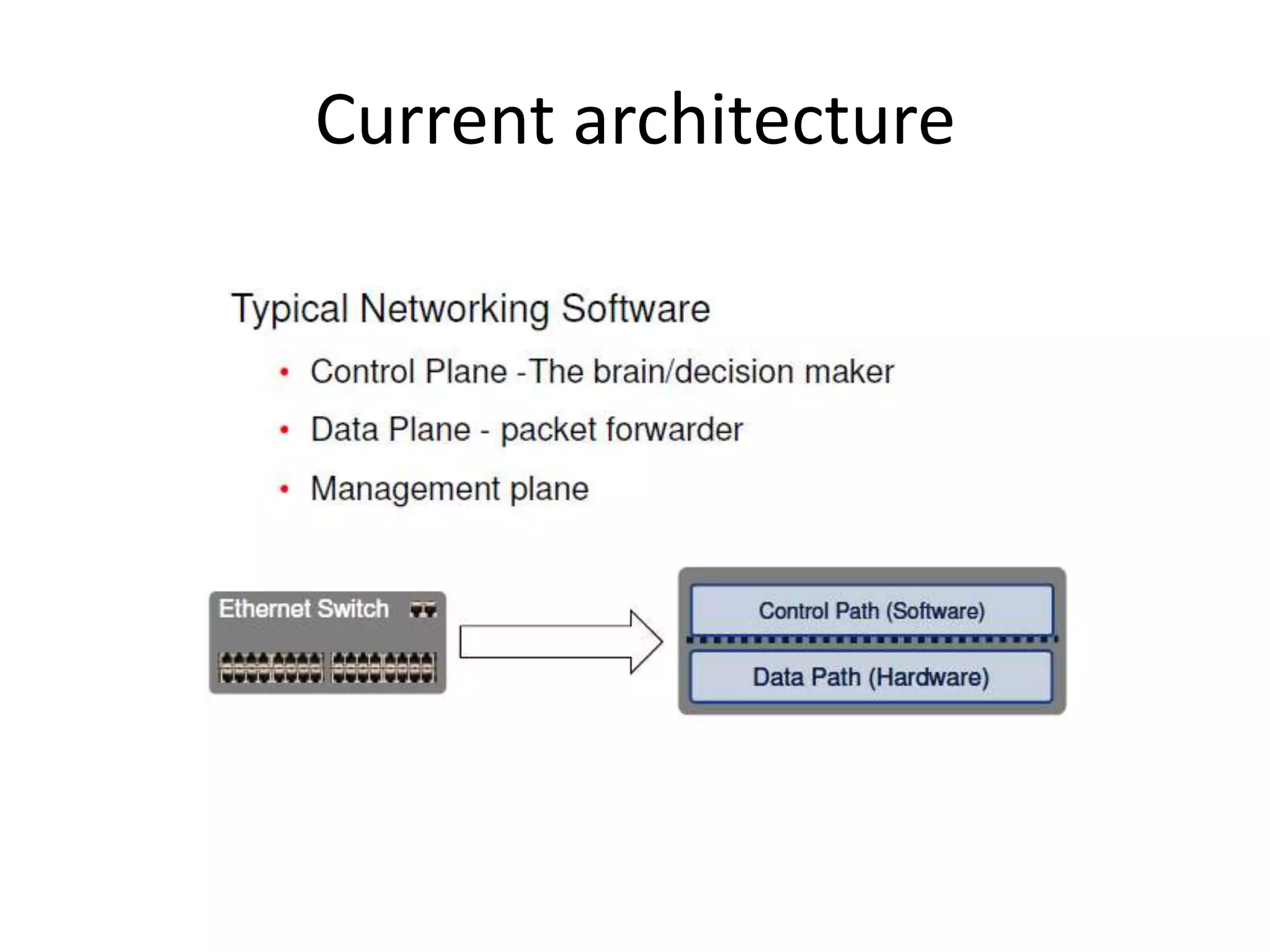
Current architecture
The SDN architecture
ALU SDN
Openflow
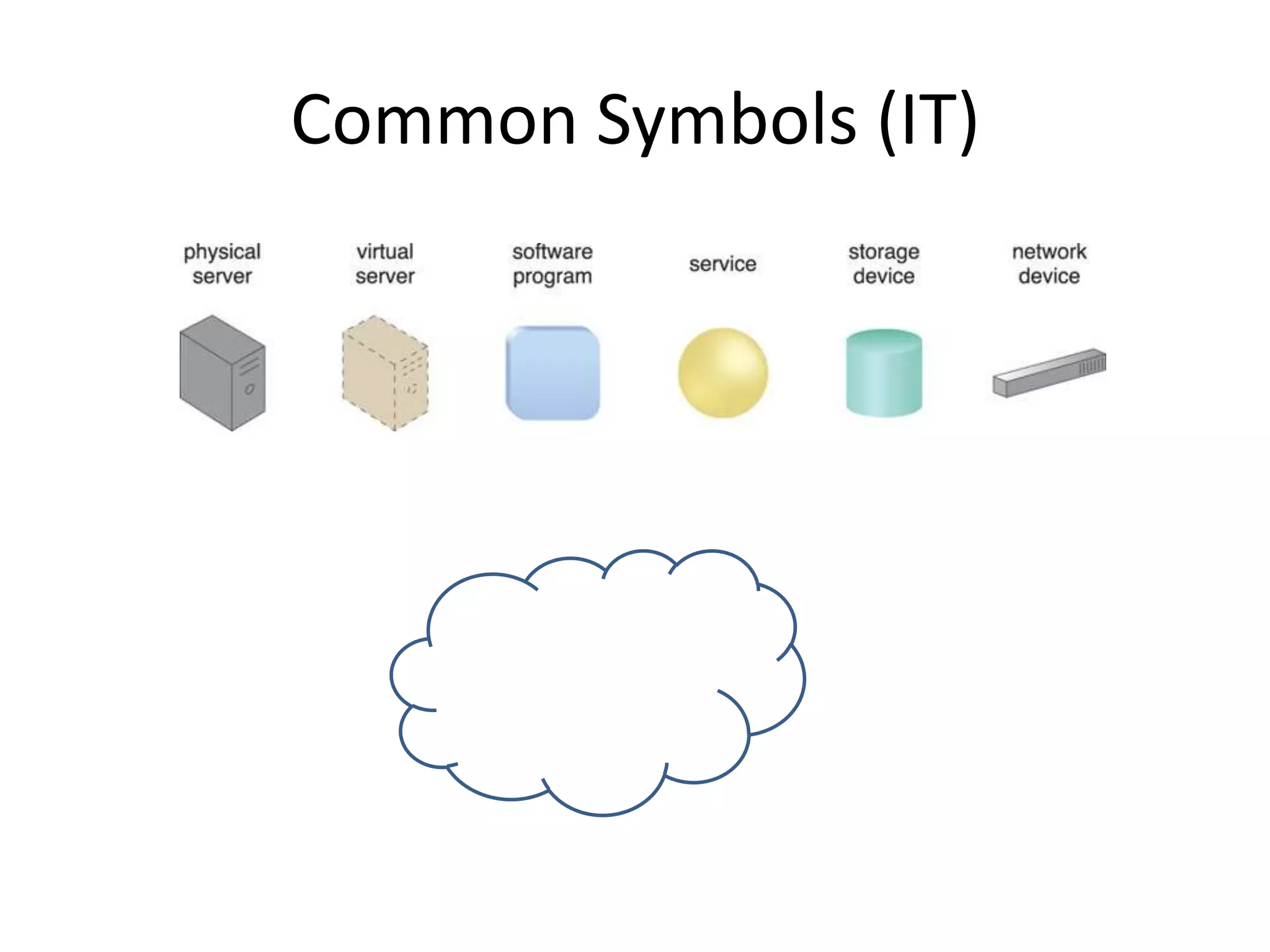
Common Symbols (IT)
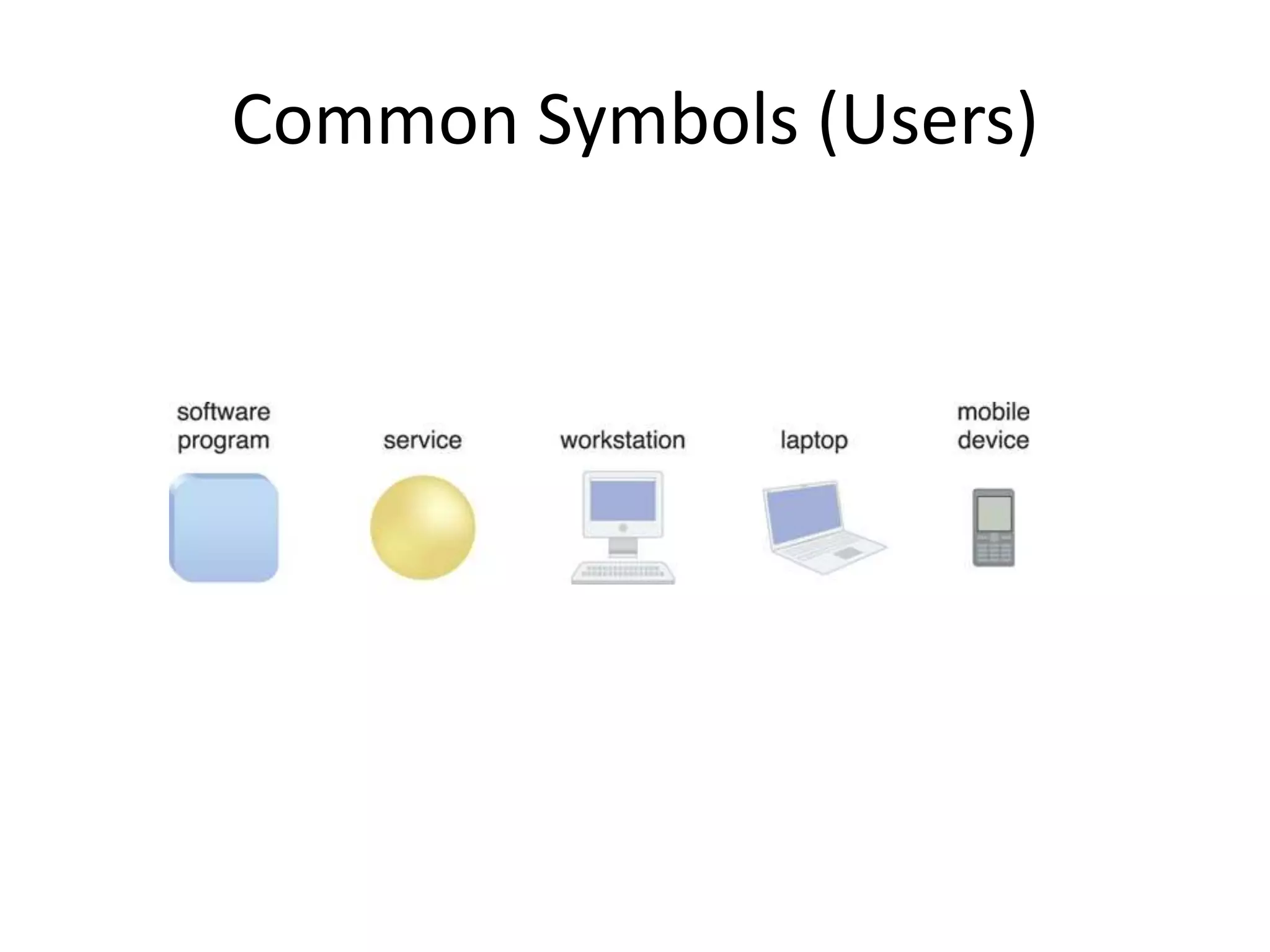
Common Symbols (Users)
Benefits of Cloud
• Scalability
• Reduced CAPEX and OPEX
• Availability
• Reliability
Characteristics of cloud computing
• On-demand usage
• Ubiquitous access
• Multi-tenancy (and resource pooling)
• Elasticity
• Measured usage
• Resiliency
Challenges
• Security
• Governance & control
• Portability
• Legal & compliance (multi country)
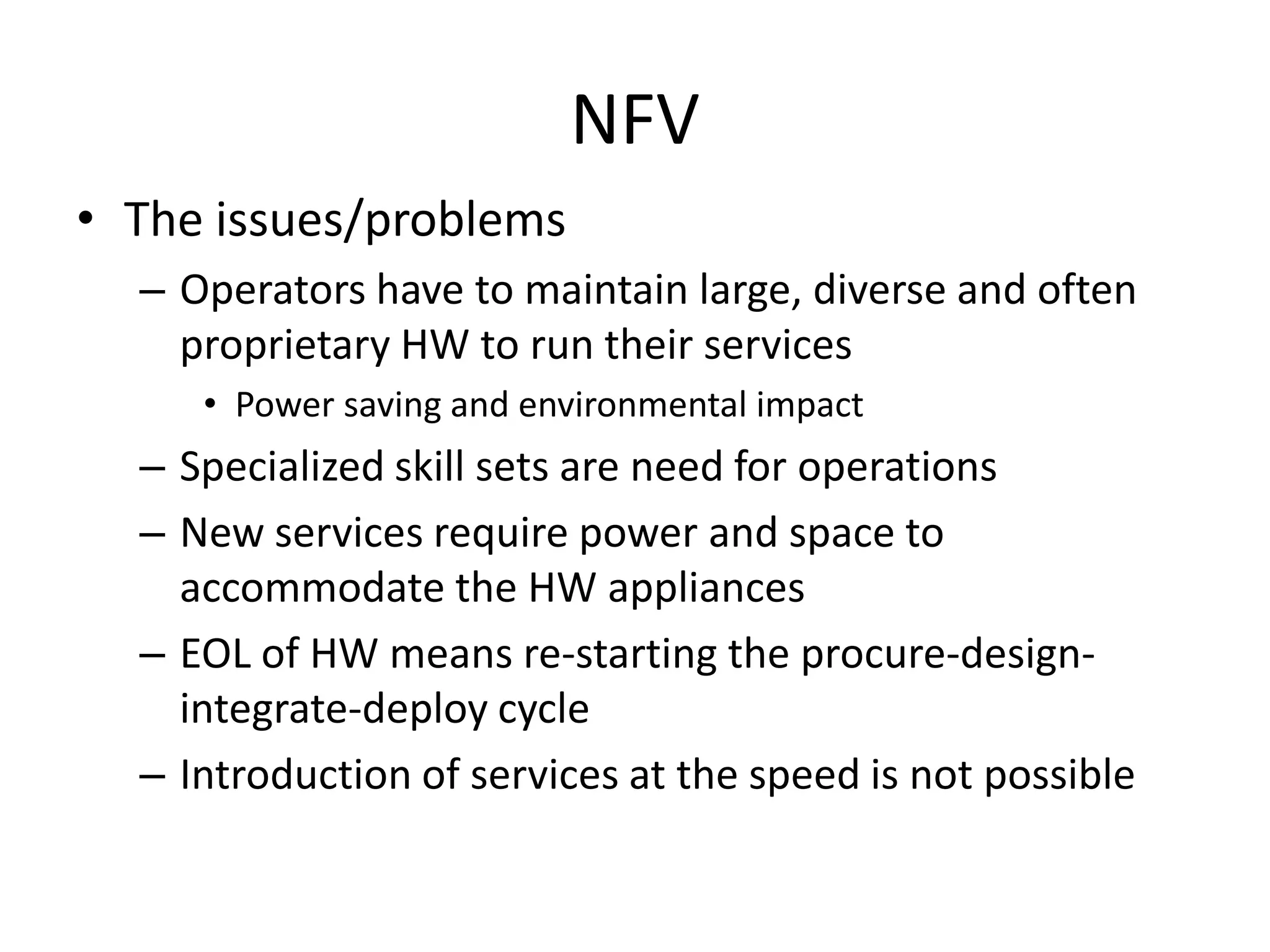
NVF
Network Virtual Function
NFV
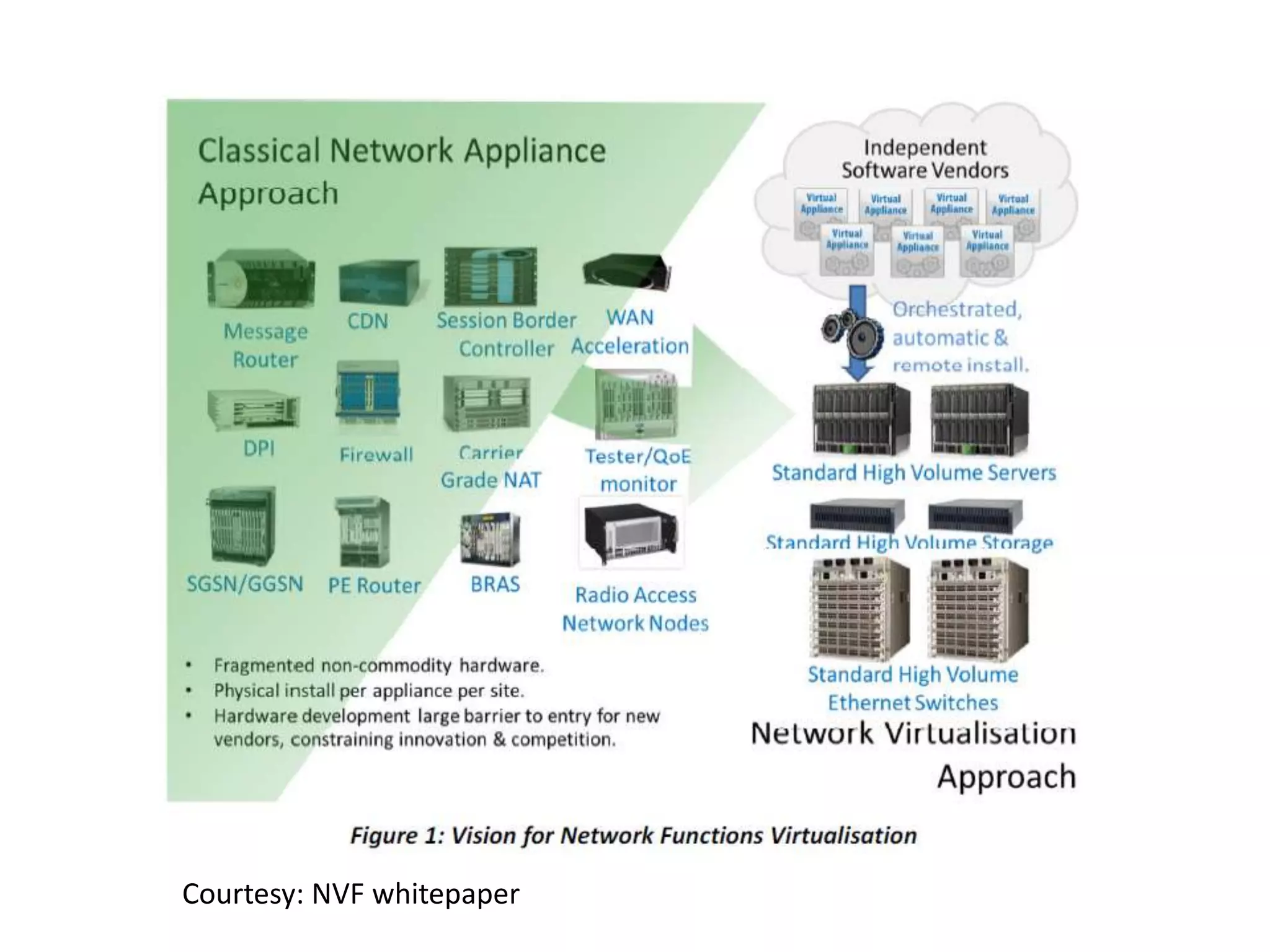
• The issues/problems
– Operators have to maintain large, diverse and often
proprietary HW to run their services
• Power saving and environmental impact
– Specialized skill sets are need for operations
– New services require power and space to
accommodate the HW appliances
– EOL of HW means re-starting the procure-design-
integrate-deploy cycle
– Introduction of services at the speed is not possible
Courtesy: NVF whitepaper
NFV
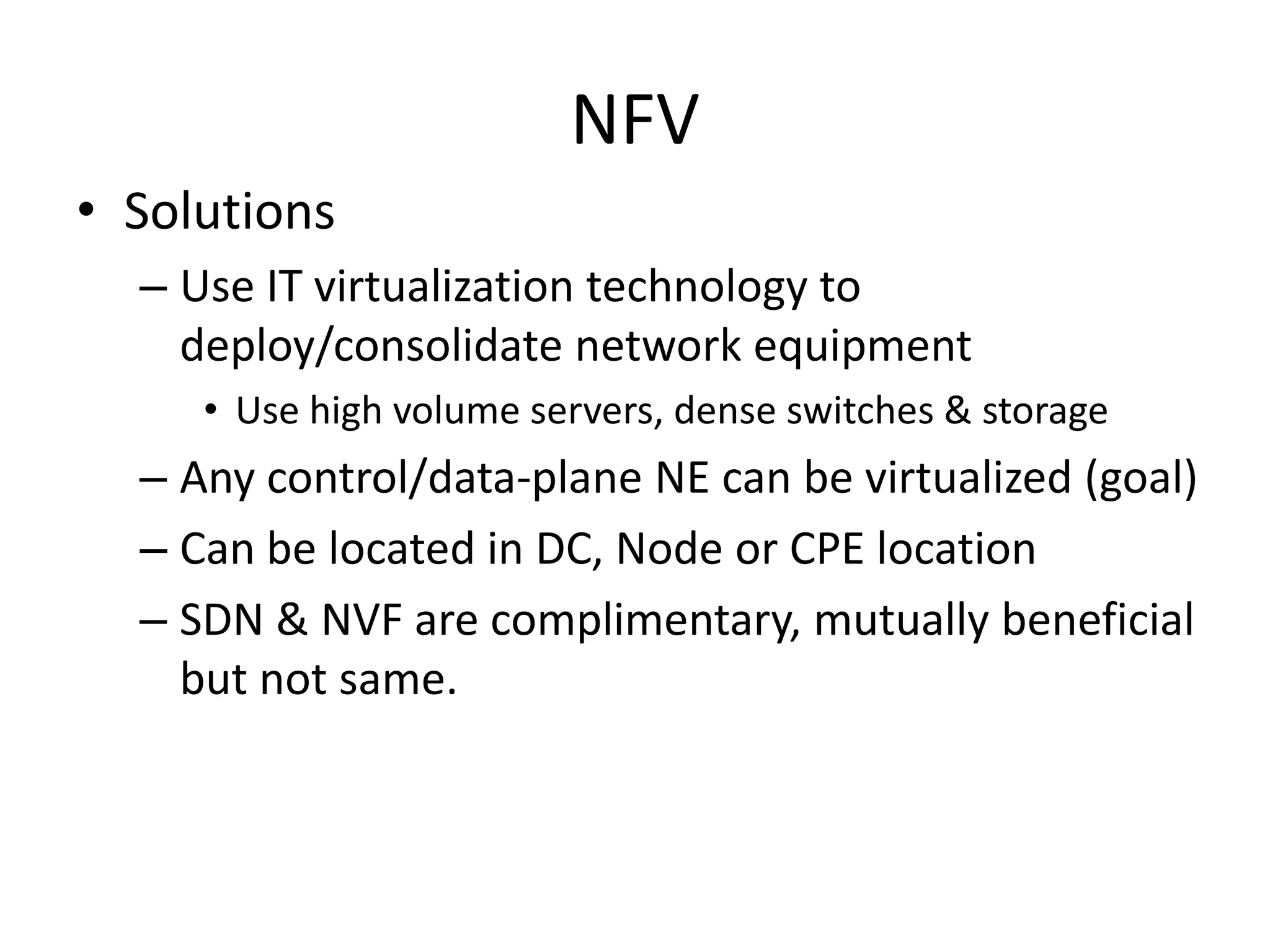
• Solutions
– Use IT virtualization technology to
deploy/consolidate network equipment
• Use high volume servers, dense switches & storage
– Any control/data-plane NE can be virtualized (goal)
– Can be located in DC, Node or CPE location
– SDN & NVF are complimentary, mutually beneficial
but not same.
NVF (benefits)
• Consolidation of equipment on IT servers
• Reduce entry barrier for creation of software
based Network elements (network virtual
appliance).
• Sharing of IT resources across services (no
dedicated HW).
• Scalable, reduced time to market
NVF (challenges)
• Reliability of the Network Virtual Appliance
(NVA)
• Portability of NVA across different virtual
platforms
• Coexistence of NVA (different types as well as
its legacy version)
• Performance – latency, thru-put and
overhead.
References
• Cloud Computing: Concepts, technology and
architecture – Thomas Erl, Zaigham
Mahmood, Ricardo Puttini (Prentice Hall )
• Computing Bible – Barrie Sosinsky (John Wiley
& Sons)
Backup
Cloud Types
• Deployment model
• Service model

Cloud101-Introduction to cloud