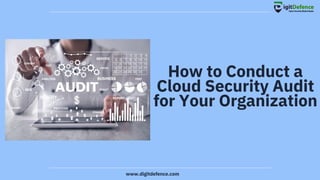
How to Conduct a
Cloud Security Audit
for Your Organization
www.digitdefence.com
AGENDA
•Introduction to Cloud Security Audits
•Defining the Scope of the Audit
•Assessing Security Policies and Practices
•Documenting Findings and Recommendations
•Implementing Remediation and Continuous Improvement
www.digitdefence.com
Introduction to Cloud Security Audits
●
●
●
Cloud security audits are systematic evaluations of cloud
infrastructure to ensure compliance with security standards and
best practices.
These audits are crucial for identifying vulnerabilities, ensuring
data protection, and maintaining regulatory compliance.
General objectives include assessing risk, validating security
controls, and providing actionable recommendations to mitigate
potential threats.
www.digitdefence.com
Defining the Scope of the Audit
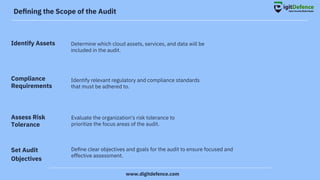
Determine which cloud assets, services, and data will be
included in the audit.
Identify relevant regulatory and compliance standards
that must be adhered to.
Evaluate the organization's risk tolerance to
prioritize the focus areas of the audit.
Define clear objectives and goals for the audit to ensure focused and
effective assessment.
Identify Assets
Compliance
Requirements
Assess Risk
Tolerance
Set Audit
Objectives
www.digitdefence.com
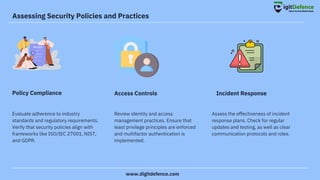
Assessing Security Policies and Practices
Policy Compliance
Evaluate adherence to industry
standards and regulatory requirements.
Verify that security policies align with
frameworks like ISO/IEC 27001, NIST,
and GDPR.
Access Controls
Review identity and access
management practices. Ensure that
least privilege principles are enforced
and multifactor authentication is
implemented.
Incident Response
Assess the effectiveness of incident
response plans. Check for regular
updates and testing, as well as clear
communication protocols and roles.
www.digitdefence.com
Documenting Findings and Recommendations
Steps to Document Findings and
Recommendations
●
●
●
●
Compile a comprehensive report detailing all audit findings, including both strengths and
weaknesses.
Categorize findings by severity and impact on the organization's overall
security posture.
Provide clear, actionable recommendations for each identified issue,
prioritizing high-risk vulnerabilities.
Ensure the documentation is accessible to all relevant stakeholders, with
executive summaries for high-level management.
www.digitdefence.com
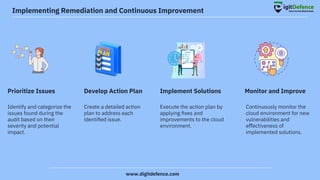
Identify and categorize the
issues found during the
audit based on their
severity and potential
impact.
Implementing Remediation and Continuous Improvement
Execute the action plan by
applying fixes and
improvements to the cloud
environment.
Continuously monitor the
cloud environment for new
vulnerabilities and
effectiveness of
implemented solutions.
Create a detailed action
plan to address each
identified issue.
Prioritize Issues Develop Action Plan Implement Solutions Monitor and Improve
www.digitdefence.com
Thank you
www.digitdefence.com

Cloud security Audits introduction presentation

  • 1.
    How to Conducta Cloud Security Audit for Your Organization www.digitdefence.com
  • 2.
    AGENDA •Introduction to CloudSecurity Audits •Defining the Scope of the Audit •Assessing Security Policies and Practices •Documenting Findings and Recommendations •Implementing Remediation and Continuous Improvement www.digitdefence.com
  • 3.
    Introduction to CloudSecurity Audits ● ● ● Cloud security audits are systematic evaluations of cloud infrastructure to ensure compliance with security standards and best practices. These audits are crucial for identifying vulnerabilities, ensuring data protection, and maintaining regulatory compliance. General objectives include assessing risk, validating security controls, and providing actionable recommendations to mitigate potential threats. www.digitdefence.com
  • 4.
    Defining the Scopeof the Audit Determine which cloud assets, services, and data will be included in the audit. Identify relevant regulatory and compliance standards that must be adhered to. Evaluate the organization's risk tolerance to prioritize the focus areas of the audit. Define clear objectives and goals for the audit to ensure focused and effective assessment. Identify Assets Compliance Requirements Assess Risk Tolerance Set Audit Objectives www.digitdefence.com
  • 5.
    Assessing Security Policiesand Practices Policy Compliance Evaluate adherence to industry standards and regulatory requirements. Verify that security policies align with frameworks like ISO/IEC 27001, NIST, and GDPR. Access Controls Review identity and access management practices. Ensure that least privilege principles are enforced and multifactor authentication is implemented. Incident Response Assess the effectiveness of incident response plans. Check for regular updates and testing, as well as clear communication protocols and roles. www.digitdefence.com
  • 6.
    Documenting Findings andRecommendations Steps to Document Findings and Recommendations ● ● ● ● Compile a comprehensive report detailing all audit findings, including both strengths and weaknesses. Categorize findings by severity and impact on the organization's overall security posture. Provide clear, actionable recommendations for each identified issue, prioritizing high-risk vulnerabilities. Ensure the documentation is accessible to all relevant stakeholders, with executive summaries for high-level management. www.digitdefence.com
  • 7.
    Identify and categorizethe issues found during the audit based on their severity and potential impact. Implementing Remediation and Continuous Improvement Execute the action plan by applying fixes and improvements to the cloud environment. Continuously monitor the cloud environment for new vulnerabilities and effectiveness of implemented solutions. Create a detailed action plan to address each identified issue. Prioritize Issues Develop Action Plan Implement Solutions Monitor and Improve www.digitdefence.com
  • 8.