Download to read offline


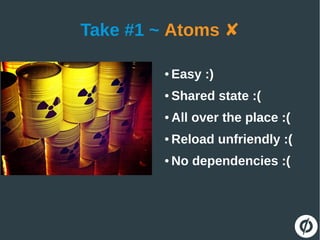
![Take #1 ~ Atoms ?
(def ^:dynamic server (atom nil))
(defn start [config]
(reset! server
(make-server config)))
(defn stop []
(.stop @server))](https://image.slidesharecdn.com/clj-components-150527045012-lva1-app6891/85/Taming-Clojure-applications-with-Components-4-320.jpg)
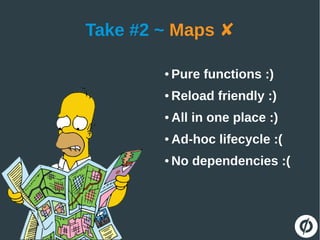
![Take #2 ~ Maps ?
(defn start [execution-context config]
(assoc execution-context
:server (make-server config)))
(defn stop [execution-context]
(.stop (:server execution-context))
(dissoc execution-context :server))](https://image.slidesharecdn.com/clj-components-150527045012-lva1-app6891/85/Taming-Clojure-applications-with-Components-6-320.jpg)
![Take #3 ~ Components ?
(defrecord Server [server config]
component/Lifecycle
(start [this]
(if server ; already started
this
(assoc this :server (make-server config))))
(stop [this]
(if-not server ; already stopped
this
(do
(.stop server)
(assoc this :server nil)))))](https://image.slidesharecdn.com/clj-components-150527045012-lva1-app6891/85/Taming-Clojure-applications-with-Components-8-320.jpg)
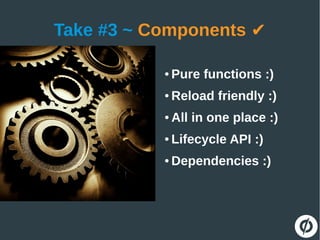
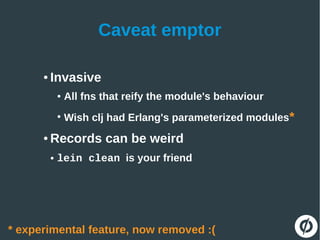

The document discusses different approaches for managing application lifecycles and dependencies in Clojure applications. It presents atoms, maps, and components as options, evaluating each approach. Components are determined to be the best option, as they provide lifecycle management capabilities, allow dependencies to be defined, and keep application logic together and reload-friendly, while still maintaining pure functions. Some caveats are mentioned, such as components being invasive and records sometimes being weird to work with.


