Climate
Change
Understanding the Impacts
and Taking Action
Let's discuss the
impacts of climate
change on our planet
and the steps we can
take to address them.
Table of Contents
• What is Climate Change?
• Causes of Climate Change
• Environmental Impacts
• Renewable Energy
• Mitigation Strategy
• Adaptation Strategy
What is Climate
Change?
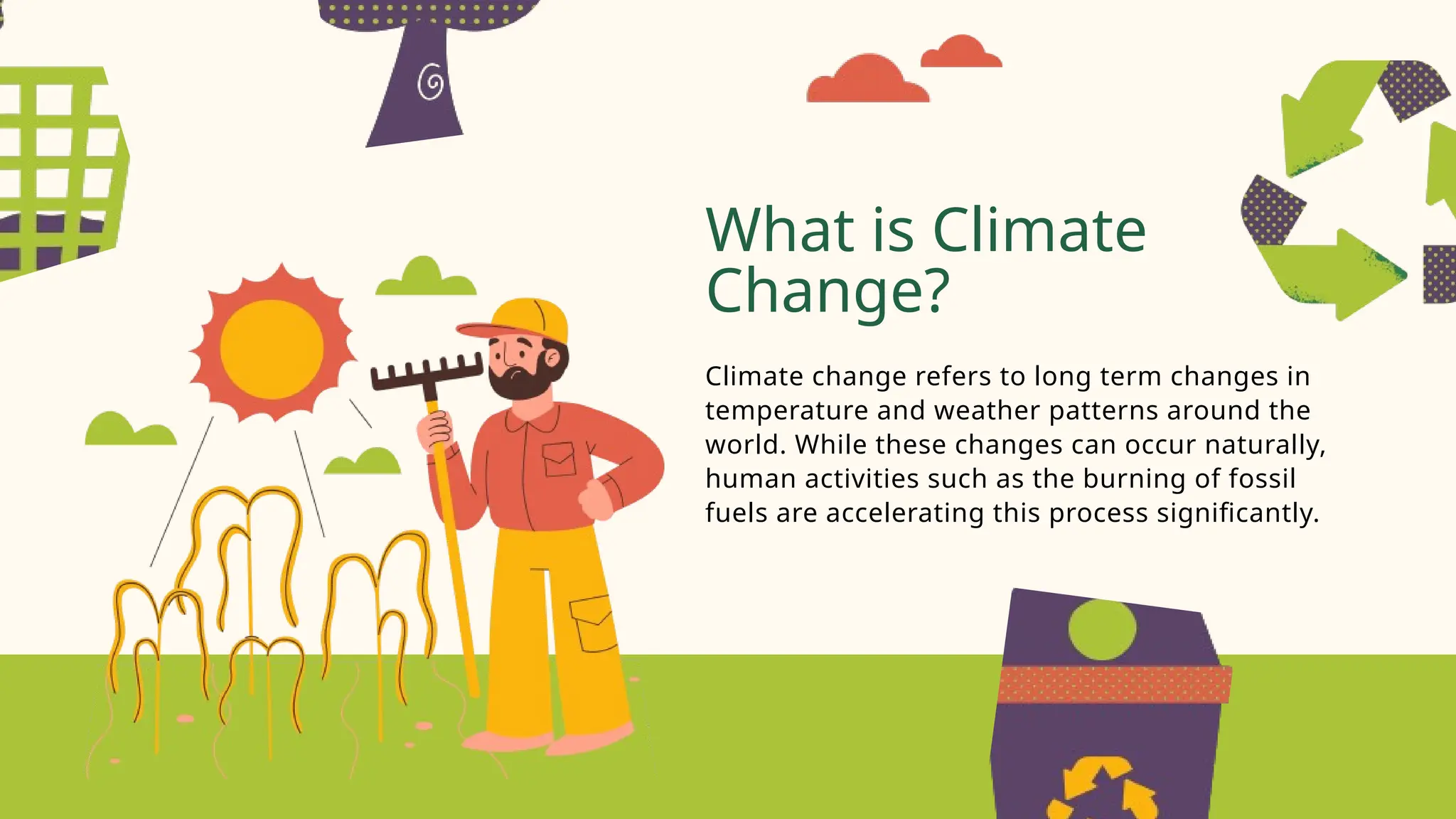
Climate change refers to long term changes in
temperature and weather patterns around the
world. While these changes can occur naturally,
human activities such as the burning of fossil
fuels are accelerating this process significantly.
Causes of
Climate
Change
The main cause of climate change is the
increase in greenhouse gas emissions such
as carbon dioxide (CO2) and methane (CH4).
The main sources include the burning of
fossil fuels, deforestation, and intensive
agriculture.
Environmental
Impacts
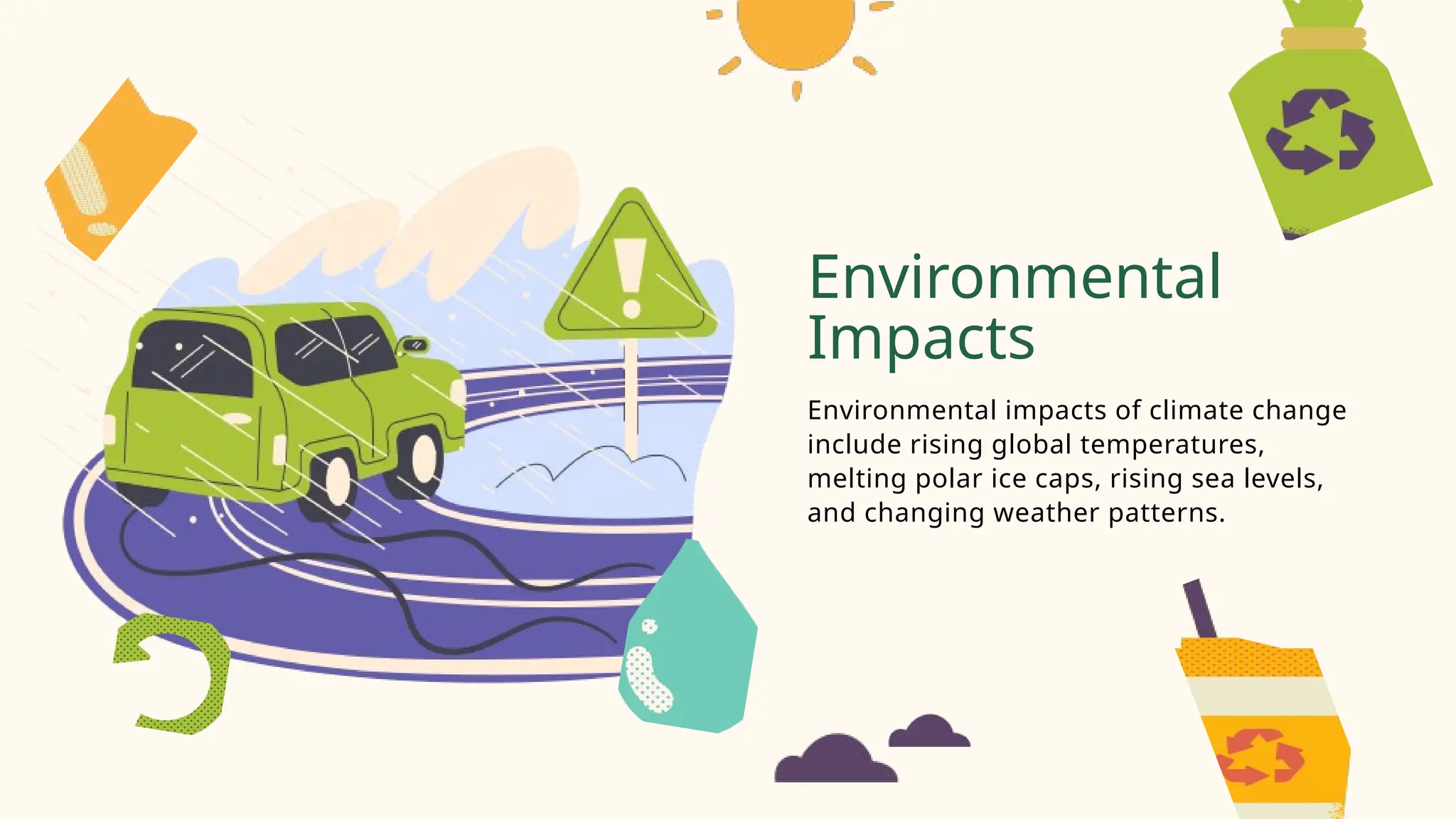
Environmental impacts of climate change
include rising global temperatures,
melting polar ice caps, rising sea levels,
and changing weather patterns.
Renewable Energy
One of the main solutions to addressing climate change is the
transition to renewable energy such as solar, wind, and
hydropower. These energies produce fewer emissions and are
key to a sustainable future.
Mitigation
Strategy
Other mitigation strategies include
increasing energy efficiency, reforestation,
and changing consumption and production
patterns.
Every individual can contribute by
reducing their carbon footprint.
Adaptation
Strategy
This includes building climate resilient
infrastructure, protecting ecosystems, and
better land use planning.
In addition to mitigation, we need to
adapt to the inevitable impacts of
climate change.
Climate change is a
global challenge that
requires collective action.
By raising awareness and
adopting sustainable
measures, we can protect the
planet for future generations.
you
Thank

Climate Change Grade 9 Third Quarter.pptx

  • 1.
  • 2.
    Let's discuss the impactsof climate change on our planet and the steps we can take to address them.
  • 3.
    Table of Contents •What is Climate Change? • Causes of Climate Change • Environmental Impacts • Renewable Energy • Mitigation Strategy • Adaptation Strategy
  • 4.
    What is Climate Change? Climatechange refers to long term changes in temperature and weather patterns around the world. While these changes can occur naturally, human activities such as the burning of fossil fuels are accelerating this process significantly.
  • 5.
    Causes of Climate Change The maincause of climate change is the increase in greenhouse gas emissions such as carbon dioxide (CO2) and methane (CH4). The main sources include the burning of fossil fuels, deforestation, and intensive agriculture.
  • 6.
    Environmental Impacts Environmental impacts ofclimate change include rising global temperatures, melting polar ice caps, rising sea levels, and changing weather patterns.
  • 7.
    Renewable Energy One ofthe main solutions to addressing climate change is the transition to renewable energy such as solar, wind, and hydropower. These energies produce fewer emissions and are key to a sustainable future.
  • 8.
    Mitigation Strategy Other mitigation strategiesinclude increasing energy efficiency, reforestation, and changing consumption and production patterns. Every individual can contribute by reducing their carbon footprint.
  • 9.
    Adaptation Strategy This includes buildingclimate resilient infrastructure, protecting ecosystems, and better land use planning. In addition to mitigation, we need to adapt to the inevitable impacts of climate change.
  • 10.
    Climate change isa global challenge that requires collective action. By raising awareness and adopting sustainable measures, we can protect the planet for future generations.
  • 11.