Classification of Bacterial Toxins
Dr Ravi Kant Agrawal, MVSc, PhD,
Senior Scientist (Veterinary Microbiology)
Food Microbiology Laboratory
Division of Livestock Products Technology
ICAR-Indian Veterinary Research Institute
Izatnagar 243122 (UP) India
Chemical Poisons Vs Biological Toxins
• Poison: A chemical substance that can cause illness or death when it enters our
bodies.
• Toxin: A poison of biological origin, specifically a protein molecule produced by a
plant, animal or microbe.
• The terms are often used interchangeably.
• Toxins from bacteria are large protein molecules.
• Mycotoxins from molds are much smaller.
• Frequently toxins are the main pathogenic factor.
• Toxigenicity: Ability of a microbe to produce toxins.
• Toxemia: Presence of toxins in the blood.
• Toxin effects: May include fever, cardiovascular problems, diarrhea, shock,
destruction of red blood cells and blood vessels, and nervous system disruptions.
• Of 220 known bacterial toxins, 40% damage eucaryotic cell membranes.
• Two types of toxins:
• Exotoxins
• Endotoxins
What are toxins?
 A toxin (from Ancient Greek Ancient Greek: toxikon) is
a poisonous substance produced within living cells or
organisms). Synthetic toxicants created by artificial
processes are thus excluded.
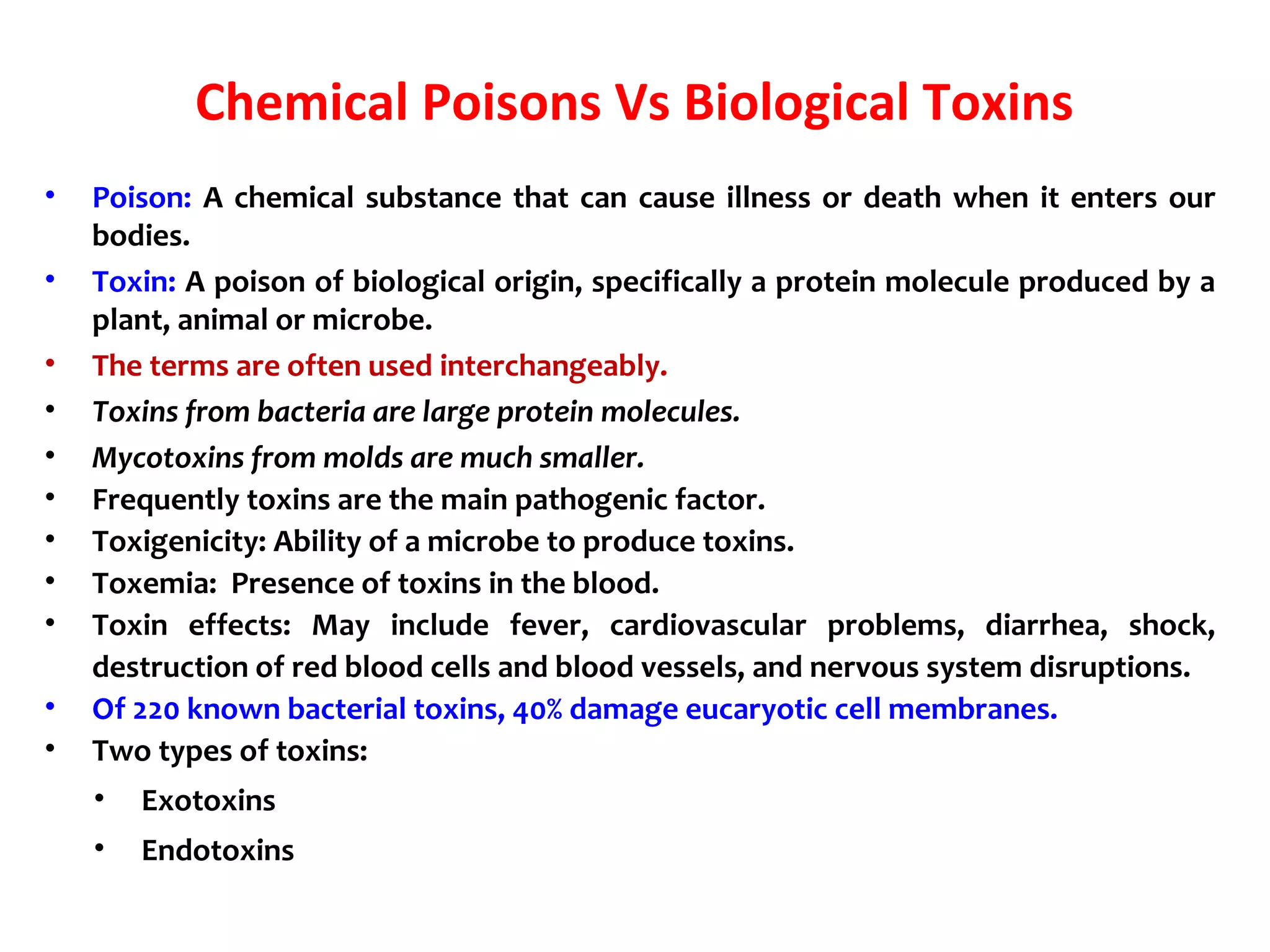
 The term was first used by organic chemist Ludwig
Brieger.
 Toxins can be small molecules, peptides,
or proteins that are capable of causing disease on
contact with or absorption by body tissues interacting
with biological macromolecules such
as enzymes or cellular receptors.
 Toxins vary greatly in their severity, ranging from
usually minor (such as a bee sting) to almost
immediately deadly (such as Botulinum toxin).
 Toxins were the first bacterial virulence factors to be
identified (Diphtheria toxin isolated in 1888), and were
also the first link between bacteria and cell biology.
 Cellular microbiology was, in fact, naturally born a
long time ago with the study of toxins, and only
recently, thanks to the sophisticated new
technologies, has it expanded to include the study of
many other aspects of the interactions between
bacteria and host cells.
 There goes an ongoing terminological dispute between
NATO and the Warsaw pact over whether to call a toxin a
biological or chemical agent, in which NATO opted for
biological agent, and the Warsaw pact, for chemical agent.
 According to Title 18 of united states code, the term “toxin”
means toxic material or product of plants, animals,
microorganisms (including but not limited to bacteria,
viruses, fungi, or protozoa) or infectious substances,
whatever their origin and method of production.
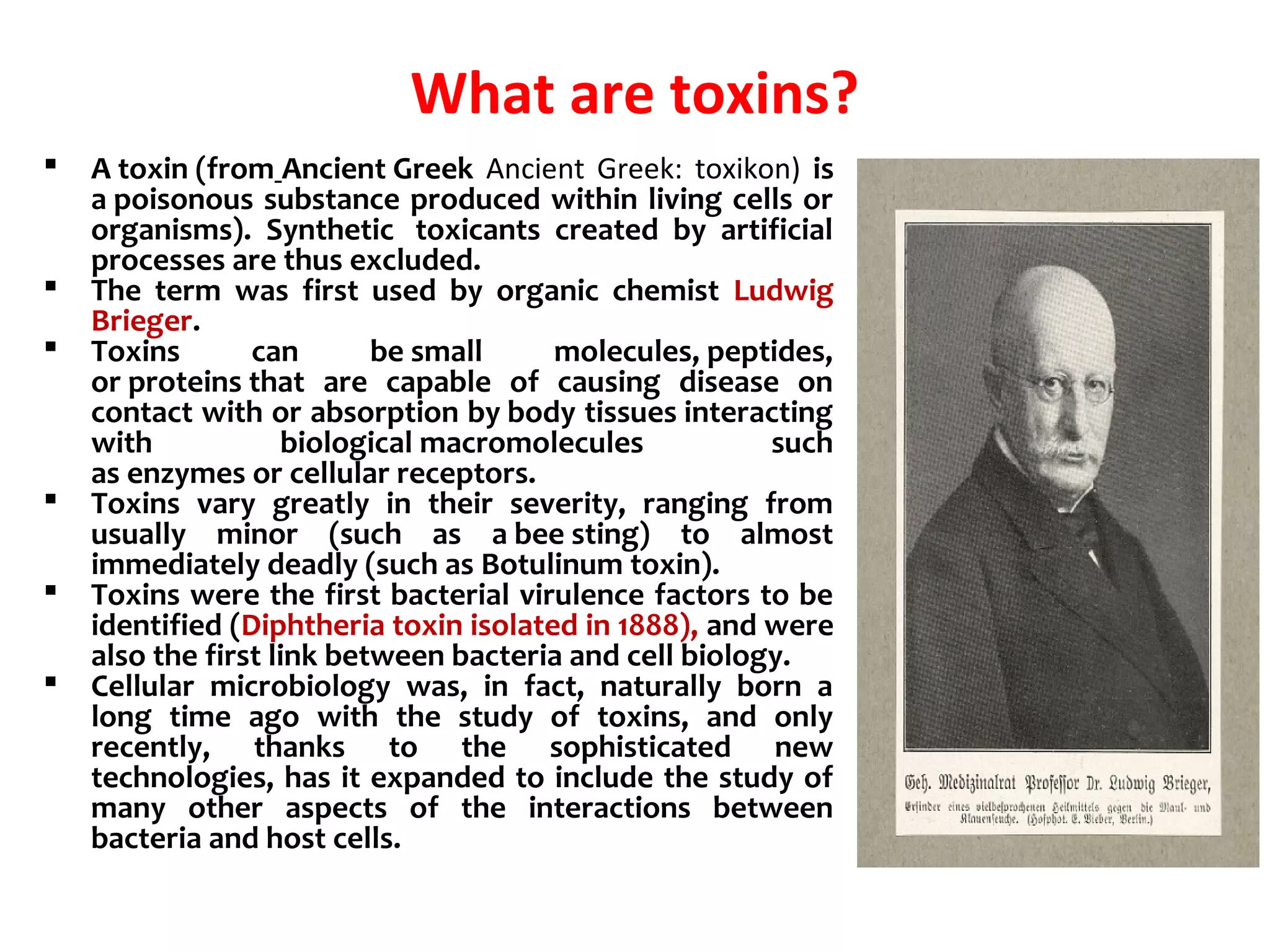
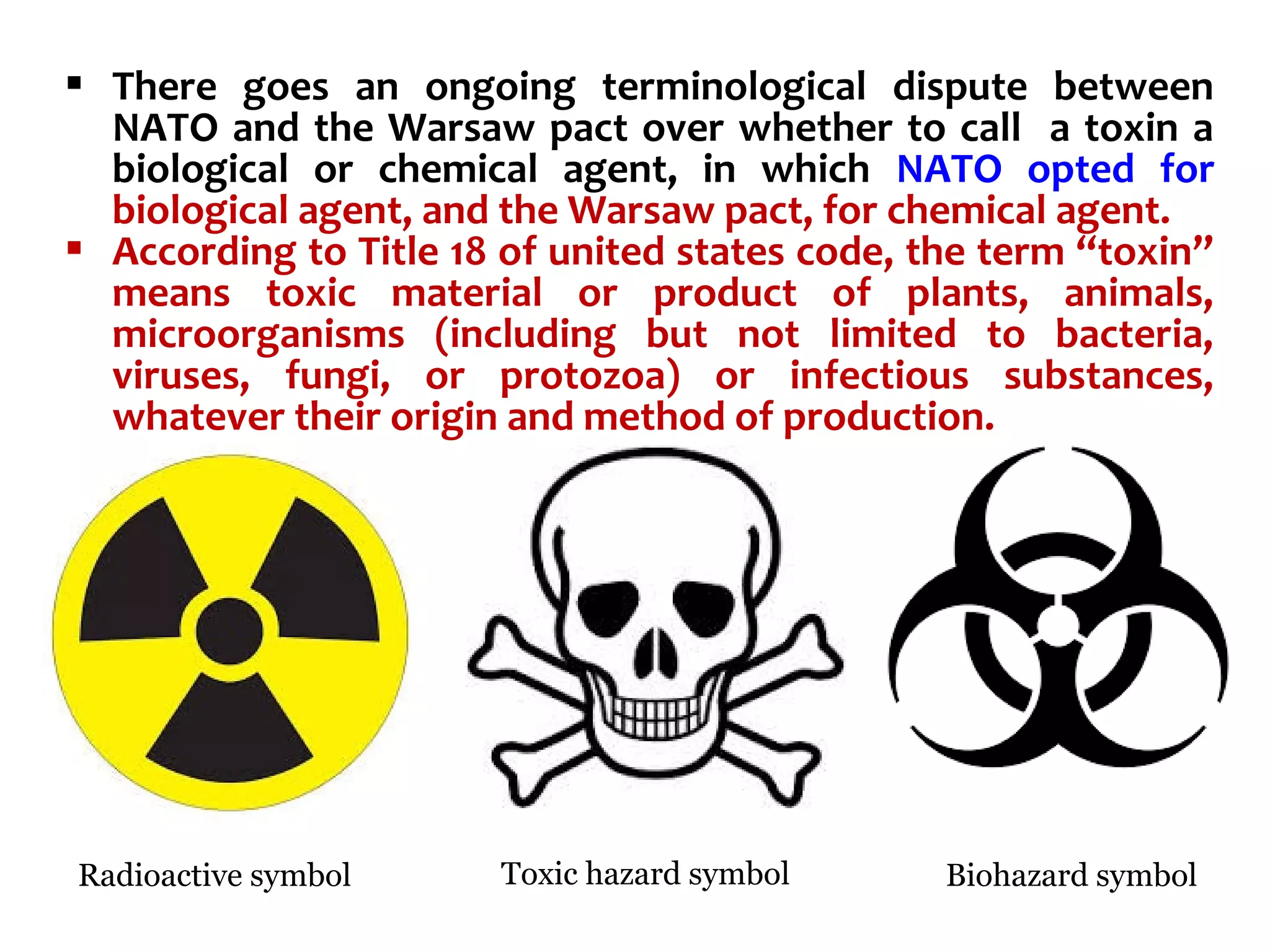
Radioactive symbol Toxic hazard symbol Biohazard symbol
Types of toxicity
• There are generally three types of toxic entities; chemical,
biological, and physical:
• Chemical toxicants include inorganic substances such
as lead, mercury, hydrofluoric acid, and chlorine gas, and organic
compounds such as methyl alcohol, most medications, and poisons
from living things.
• Biological toxicants include bacteria and viruses that can induce
disease in living organisms. Biological toxicity can be difficult to
measure because the "threshold dose" may be a single organism.
Theoretically one virus, bacterium or worm can reproduce to cause
a serious infection.
• Physical toxicants are substances that, due to their physical nature,
interfere with biological processes. Examples
include coal dust, asbestos fibers or finely divided silicon dioxide,
all of which can ultimately be fatal if inhaled. Corrosive chemicals
possess physical toxicity because they destroy tissues, but they're
not directly poisonous unless they interfere directly with biological
activity.
Toxicity definition
• The degree to which a substance (a toxin or poison) can harm humans or animals.
• Toxicity is the degree to which a substance can damage an organism.
• Toxicity can refer to the effect on a whole organism, such as an animal , bacterium , or plant ,
as well as the effect on a sub-structure of the organism, such as a cell (cytotoxicity) or an organ
such as the liver (hepatotoxicity).
• By extension, the word may be metaphorically used to describe toxic effects on larger and
more complex groups, such as the family unit or society at large.
Types:
• Acute toxicity involves harmful effects in an organism through a single or short-
term exposure.
• Subchronic toxicity is the ability of a toxic substance to cause effects for more than
one year but less than the lifetime of the exposed organism.
• Chronic toxicity is the ability of a substance or mixture of substances to cause
harmful effects over an extended period, usually upon repeated or continuous
exposure, sometimes lasting for the entire life of the exposed organism.
• Toxicity depends on dose.
• A central concept of toxicology is that effects are dose-dependent; even water can
lead to water intoxication when taken in too high a dose, whereas for even a very
toxic substance such as snake venom there is a dose below which there is no
detectable toxic effect.
• Some substances are beneficial at low concentration and toxic at high conc.
Measuring toxicity
• Assessing all aspects of the toxicity of cancer-causing agents involves
additional issues, since it is not certain if there is a minimal effective dose
for carcinogens , or whether the risk is just too small to see.
• It is more difficult to determine the toxicity of chemical mixtures than a
pure chemical, because each component displays its own toxicity, and
components may interact to produce enhanced or diminished effects.
Common mixtures include gasoline, cigarette smoke, and industrial waste.
Even more complex are situations with more than one type of toxic entity,
such as the discharge from a malfunctioning sewage treatment plant, with
both chemical and biological agents.
• The preclinical toxicity testing on various biological systems reveals the
species-, organ- and dose- specific toxic effects of an investigational
product.
• The toxicity of substances can be observed by (a) studying the accidental
exposures to a substance (b) in vitro studies using cells/ cell lines (c) in vivo
exposure on experimental animals.
• Toxicity tests are mostly used to examine specific adverse events or
specific end points such as cancer, cardiotoxicity, and skin/eye irritation.
• Toxicity testing also helps calculate the “No Observed Adverse Effect
Level” (NOAEL) dose and is helpful for clinical studies.
Antitoxin
• An antitoxin is an antibody with the ability to neutralize a specific toxin.
• This procedure involves injecting an animal with a safe amount of a
particular toxin. Then, the animal’s body makes the antitoxin needed to
neutralize the toxin. Later, the blood is withdrawn from the animal. When
the antitoxin is obtained from the blood, it is purified and injected into a
human or other animal, inducing passive immunity.
• Antitoxin, antibody, formed in the body by the introduction of a bacterial
poison, or toxin, and capable of neutralizing the toxin. People who have
recovered from bacterial illnesses often develop specific antitoxins that
confer immunity against recurrence.
• To prevent serum sickness, it is often best to use antitoxin generated from
the same species . (e.g. use human antitoxin to treat humans).
• Antitoxins to diphtheria and tetanus toxins were produced by
Emil Adolf von Behring and his colleagues from 1890 onwards.
• The use of diphtheria antitoxin for the treatment of diphtheria was
regarded by the Lancet as the "most important advance of the [19th]
Century in the medical treatment of acute infectious disease".
• For medical use in treating human infectious diseases, antitoxins are
produced by injecting an animal with toxin; the animal, most commonly a
horse, is given repeated small doses of toxin until a high concentration of
the antitoxin builds up in the blood. The resulting highly concentrated
preparation of antitoxins is called an antiserum.
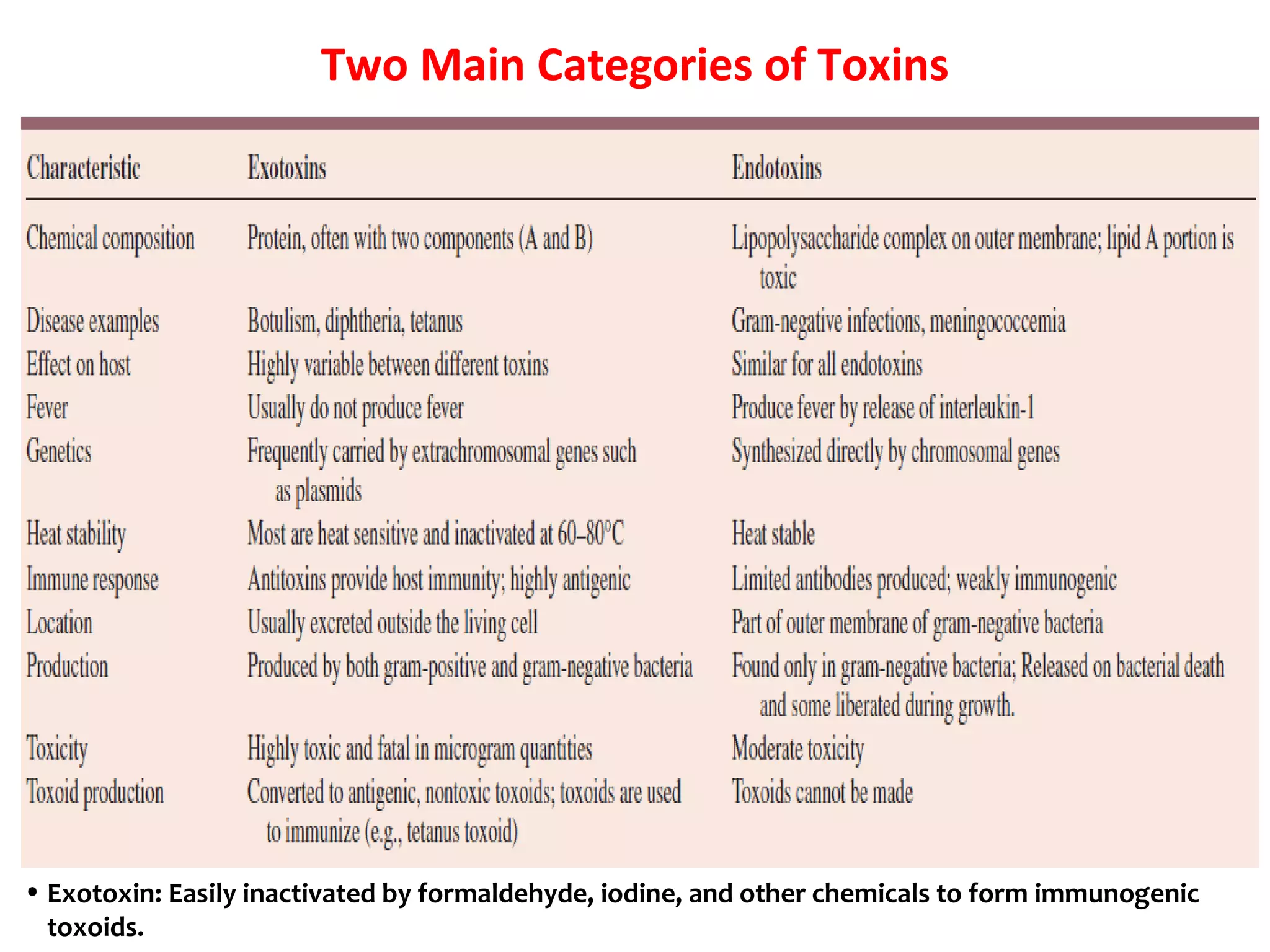
Two Main Categories of Toxins
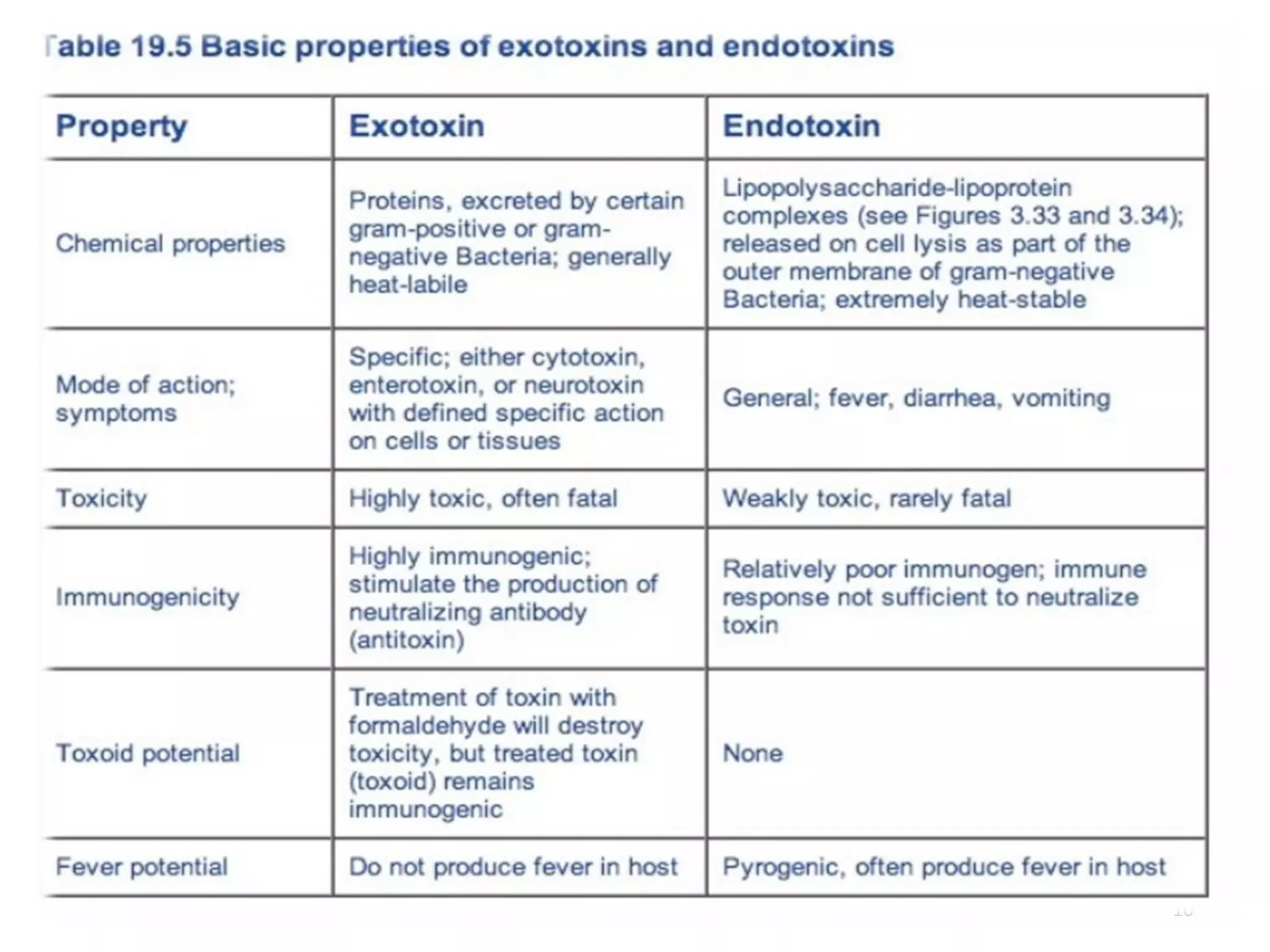
• Exotoxin: Easily inactivated by formaldehyde, iodine, and other chemicals to form immunogenic
toxoids.
10
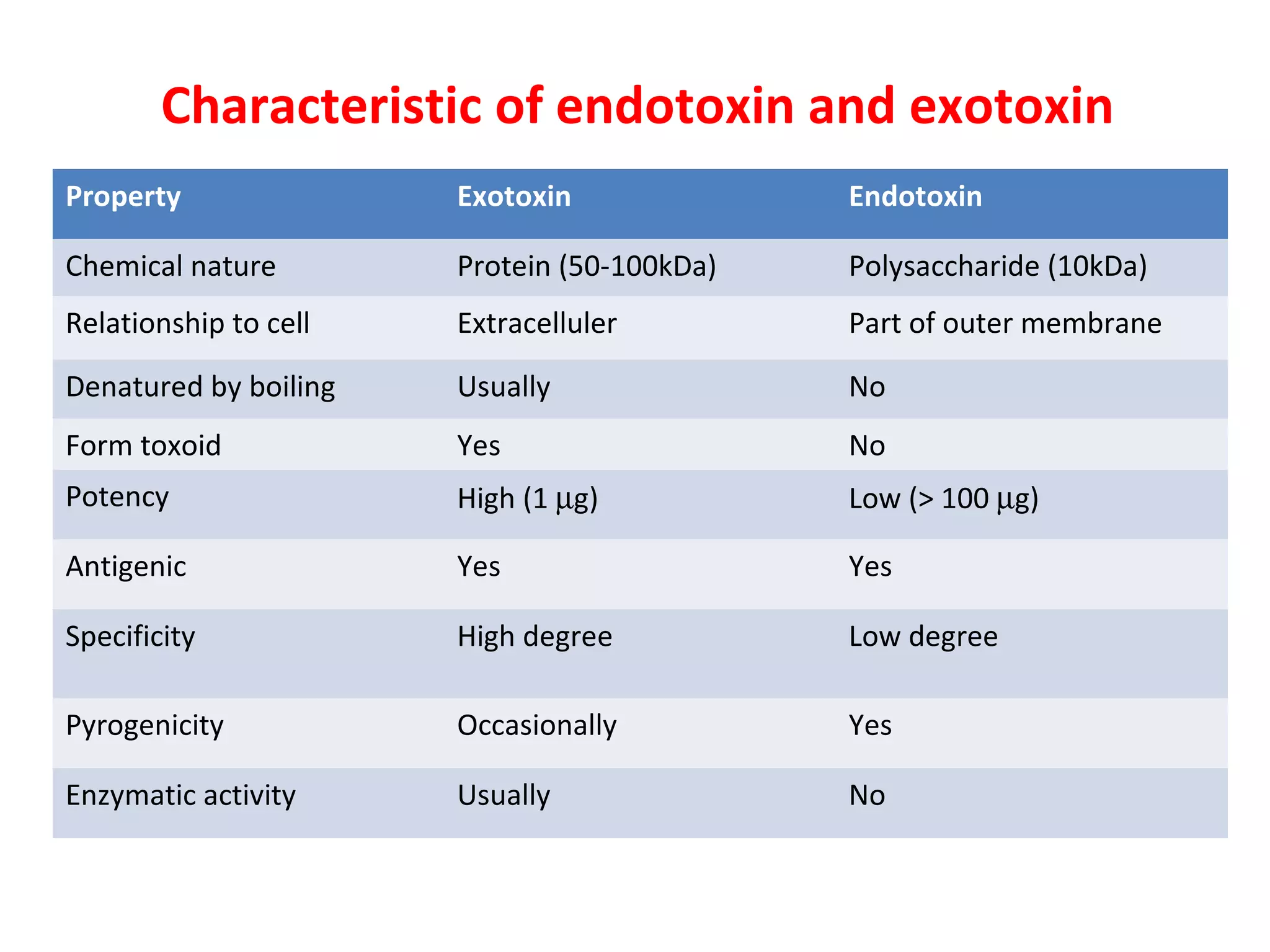
Characteristic of endotoxin and exotoxin
Property Exotoxin Endotoxin
Chemical nature Protein (50-100kDa) Polysaccharide (10kDa)
Relationship to cell Extracelluler Part of outer membrane
Denatured by boiling Usually No
Form toxoid Yes No
Potency High (1 µg) Low (> 100 µg)
Antigenic Yes Yes
Specificity High degree Low degree
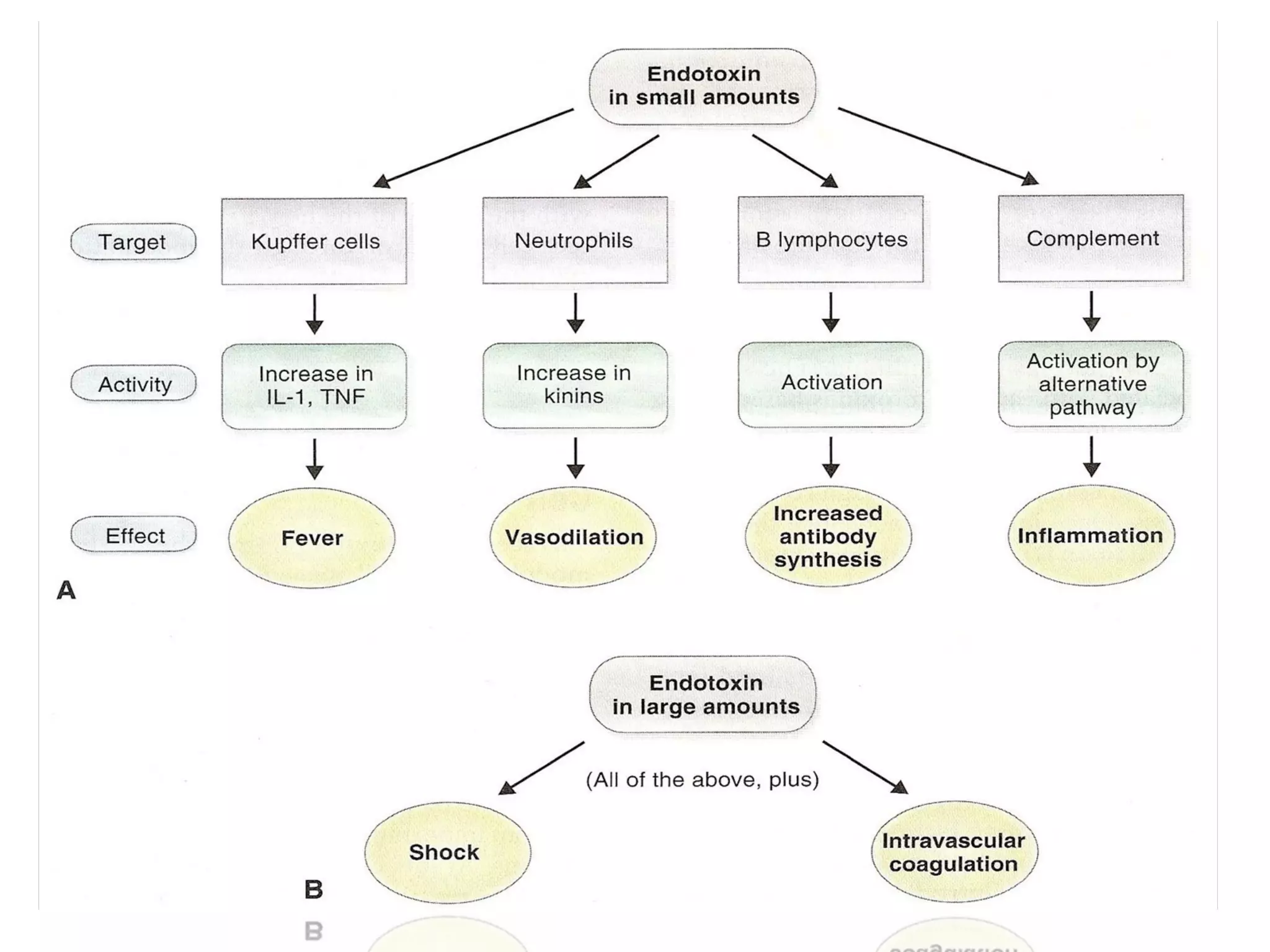
Pyrogenicity Occasionally Yes
Enzymatic activity Usually No
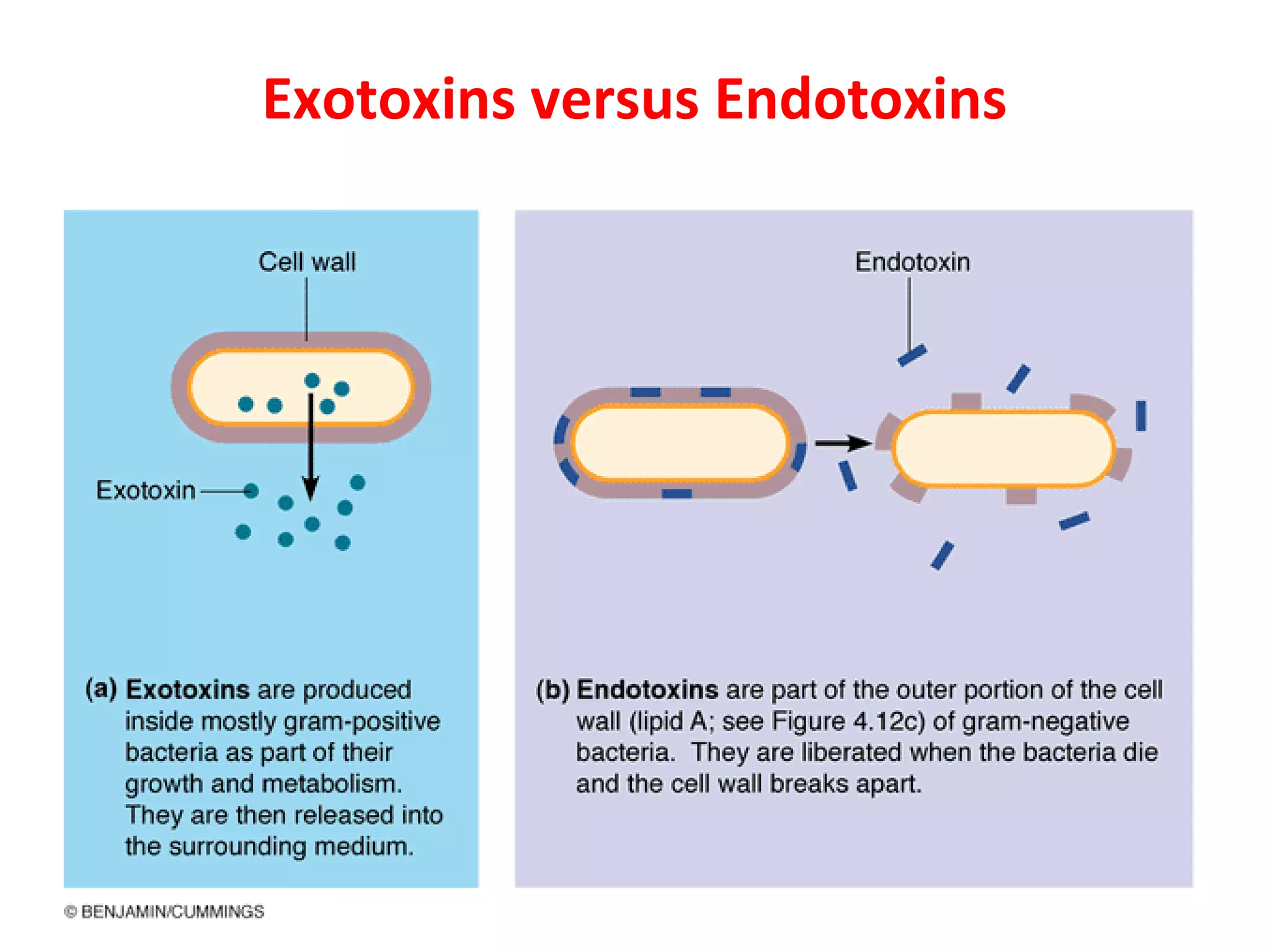
Exotoxins versus Endotoxins
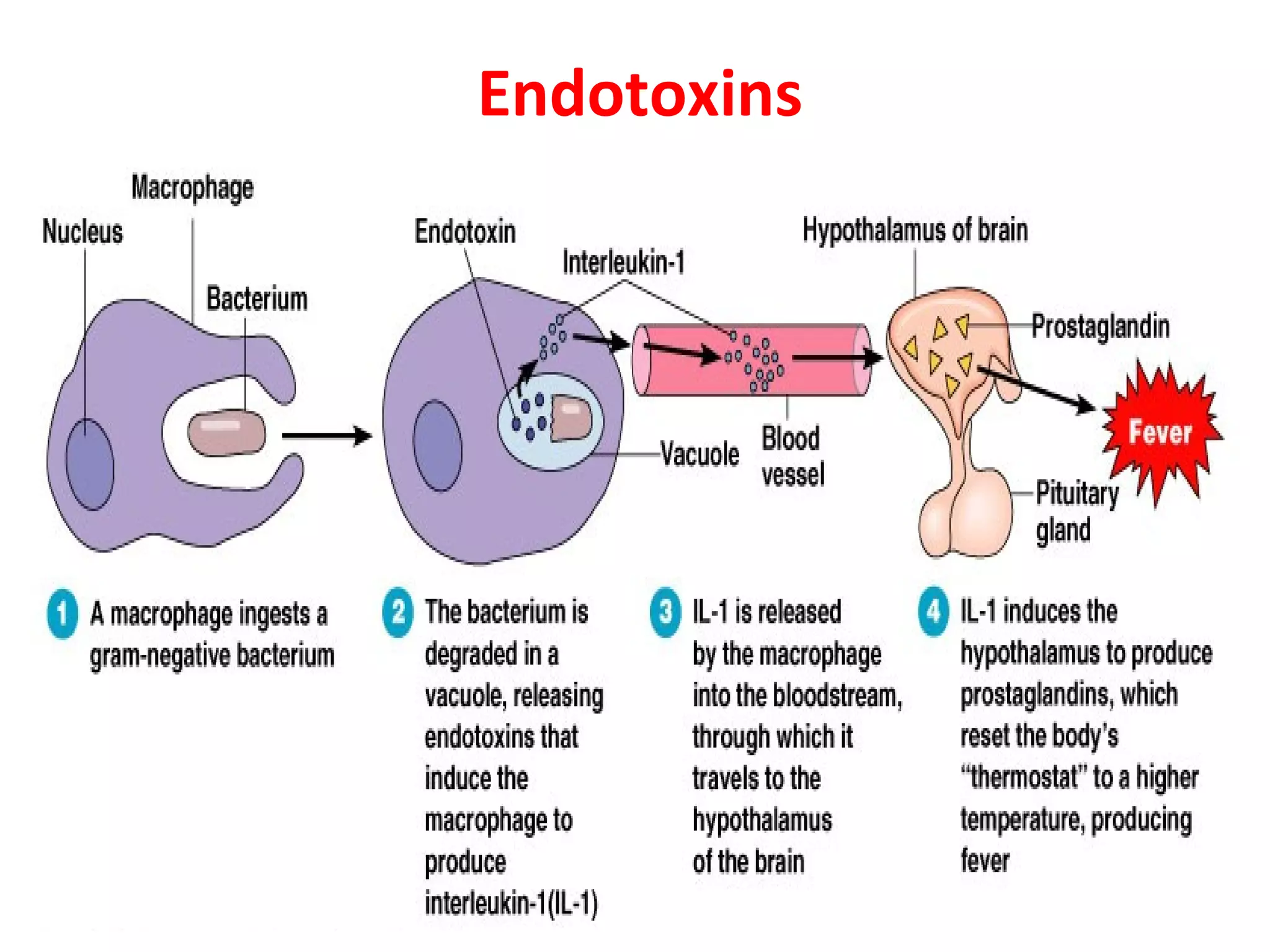
Endotoxins
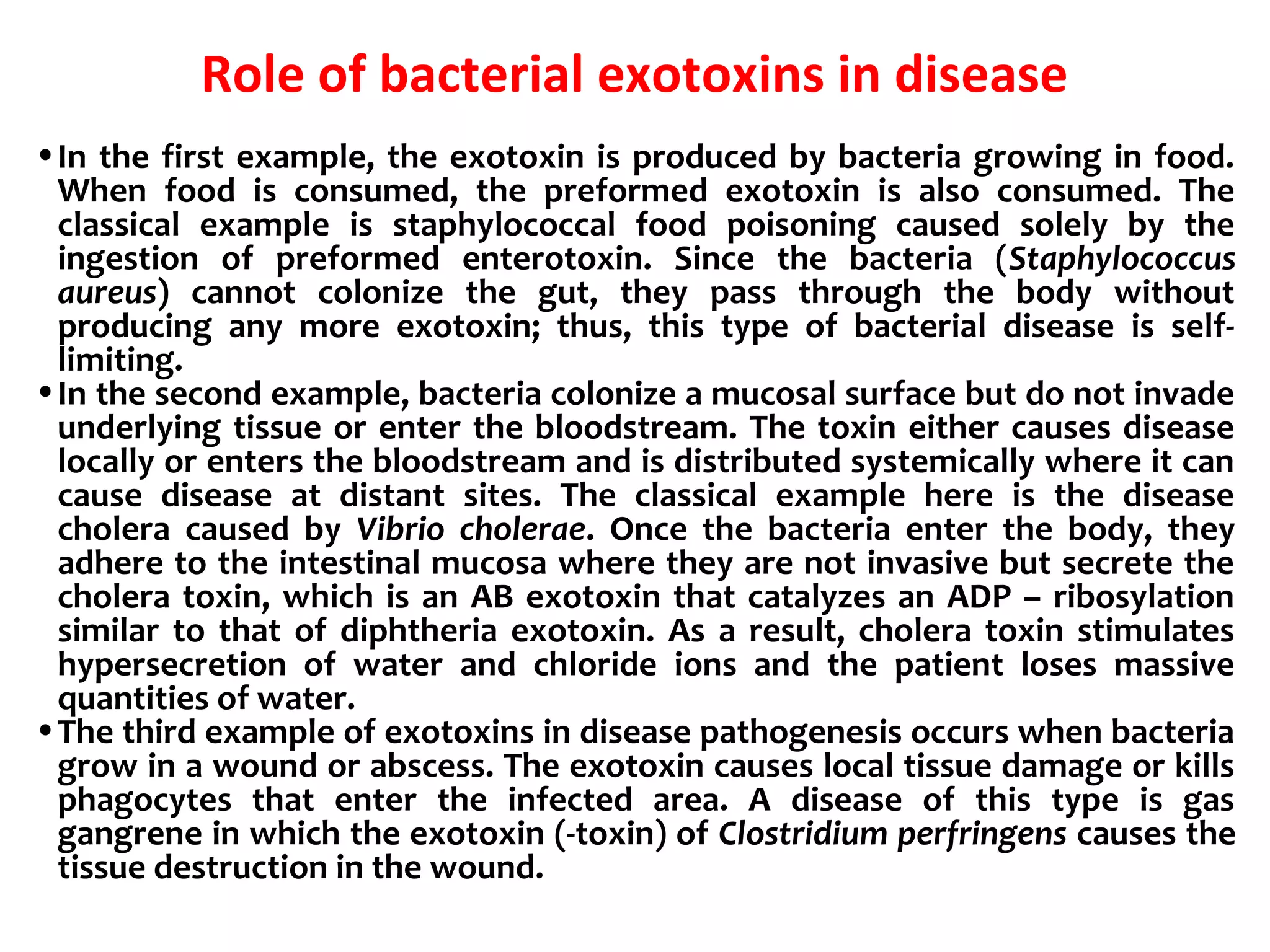
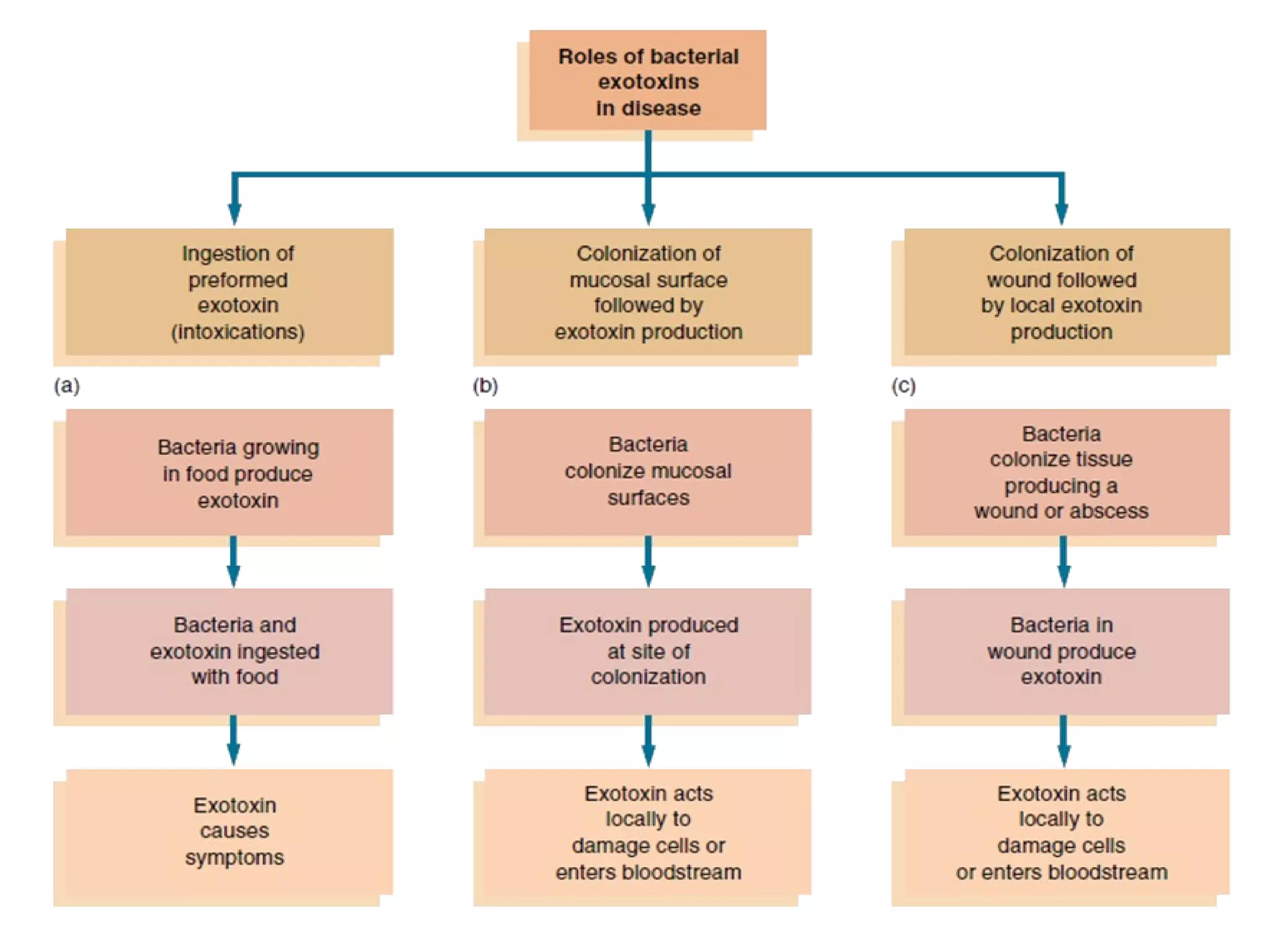
Role of bacterial exotoxins in disease
•In the first example, the exotoxin is produced by bacteria growing in food.
When food is consumed, the preformed exotoxin is also consumed. The
classical example is staphylococcal food poisoning caused solely by the
ingestion of preformed enterotoxin. Since the bacteria (Staphylococcus
aureus) cannot colonize the gut, they pass through the body without
producing any more exotoxin; thus, this type of bacterial disease is self-
limiting.
•In the second example, bacteria colonize a mucosal surface but do not invade
underlying tissue or enter the bloodstream. The toxin either causes disease
locally or enters the bloodstream and is distributed systemically where it can
cause disease at distant sites. The classical example here is the disease
cholera caused by Vibrio cholerae. Once the bacteria enter the body, they
adhere to the intestinal mucosa where they are not invasive but secrete the
cholera toxin, which is an AB exotoxin that catalyzes an ADP – ribosylation
similar to that of diphtheria exotoxin. As a result, cholera toxin stimulates
hypersecretion of water and chloride ions and the patient loses massive
quantities of water.
•The third example of exotoxins in disease pathogenesis occurs when bacteria
grow in a wound or abscess. The exotoxin causes local tissue damage or kills
phagocytes that enter the infected area. A disease of this type is gas
gangrene in which the exotoxin (-toxin) of Clostridium perfringens causes the
tissue destruction in the wound.
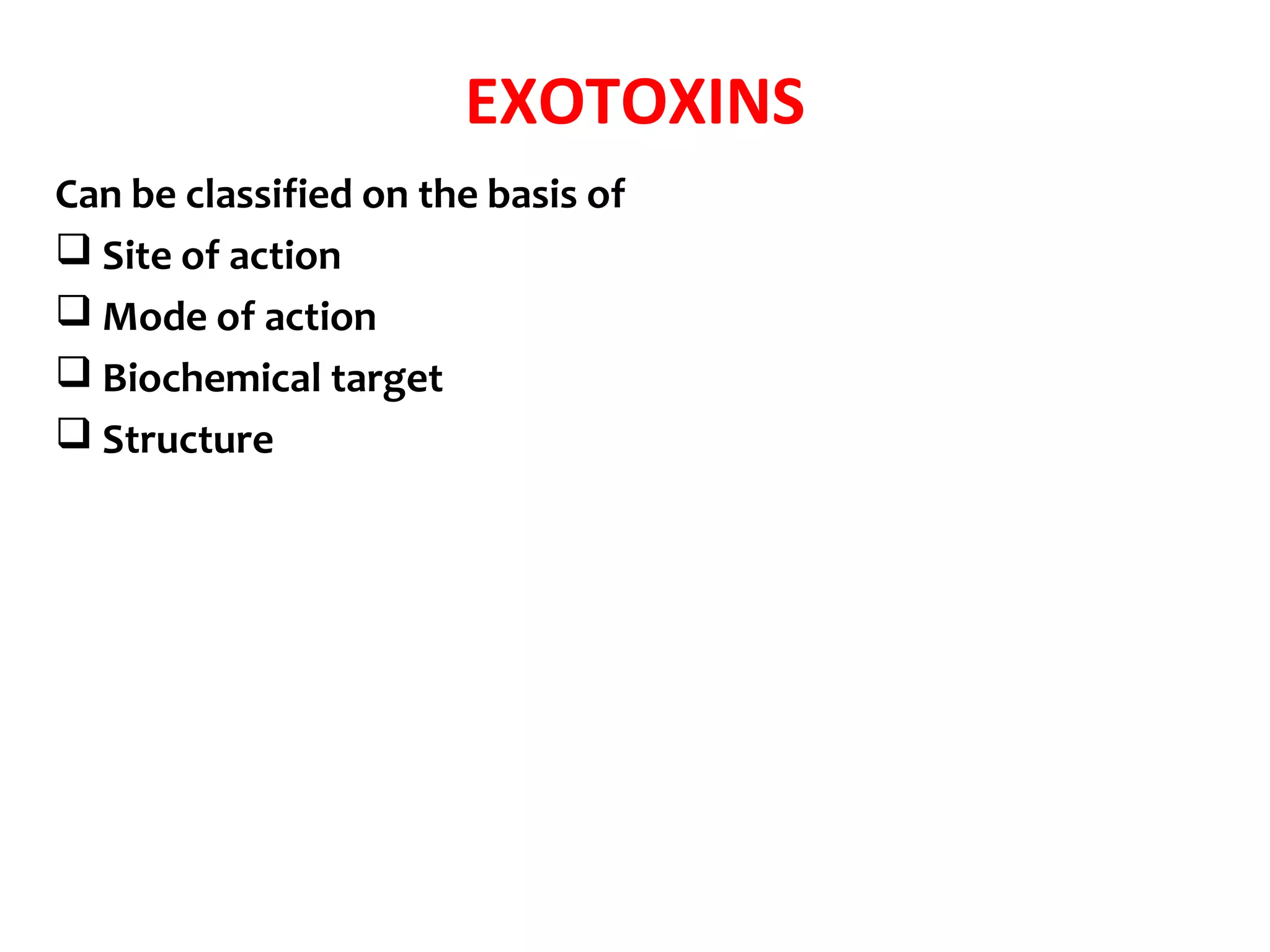
EXOTOXINS
Can be classified on the basis of
 Site of action
 Mode of action
 Biochemical target
 Structure
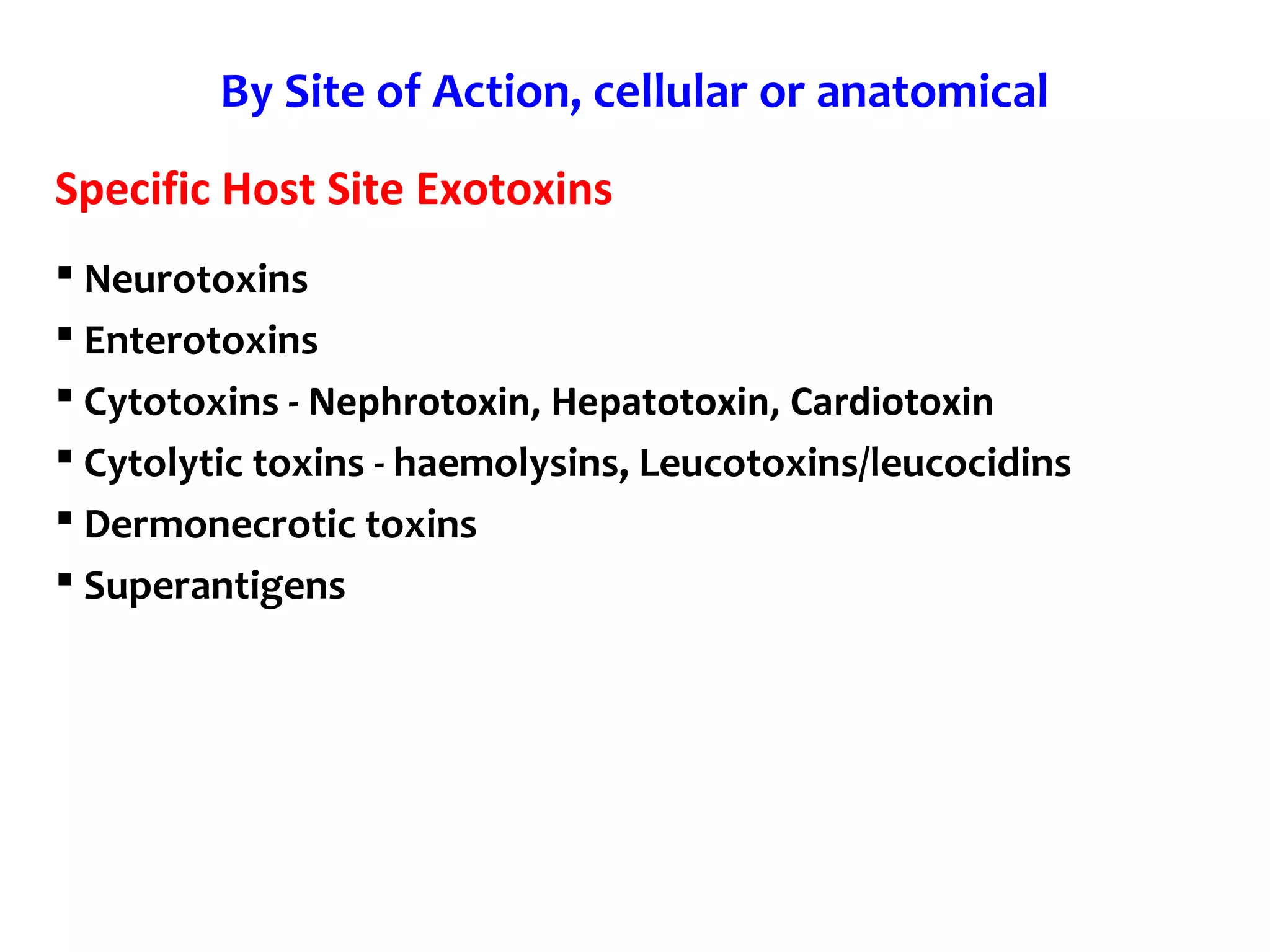
By Site of Action, cellular or anatomical
 Neurotoxins
 Enterotoxins
 Cytotoxins - Nephrotoxin, Hepatotoxin, Cardiotoxin
 Cytolytic toxins - haemolysins, Leucotoxins/leucocidins
 Dermonecrotic toxins
 Superantigens
Specific Host Site Exotoxins
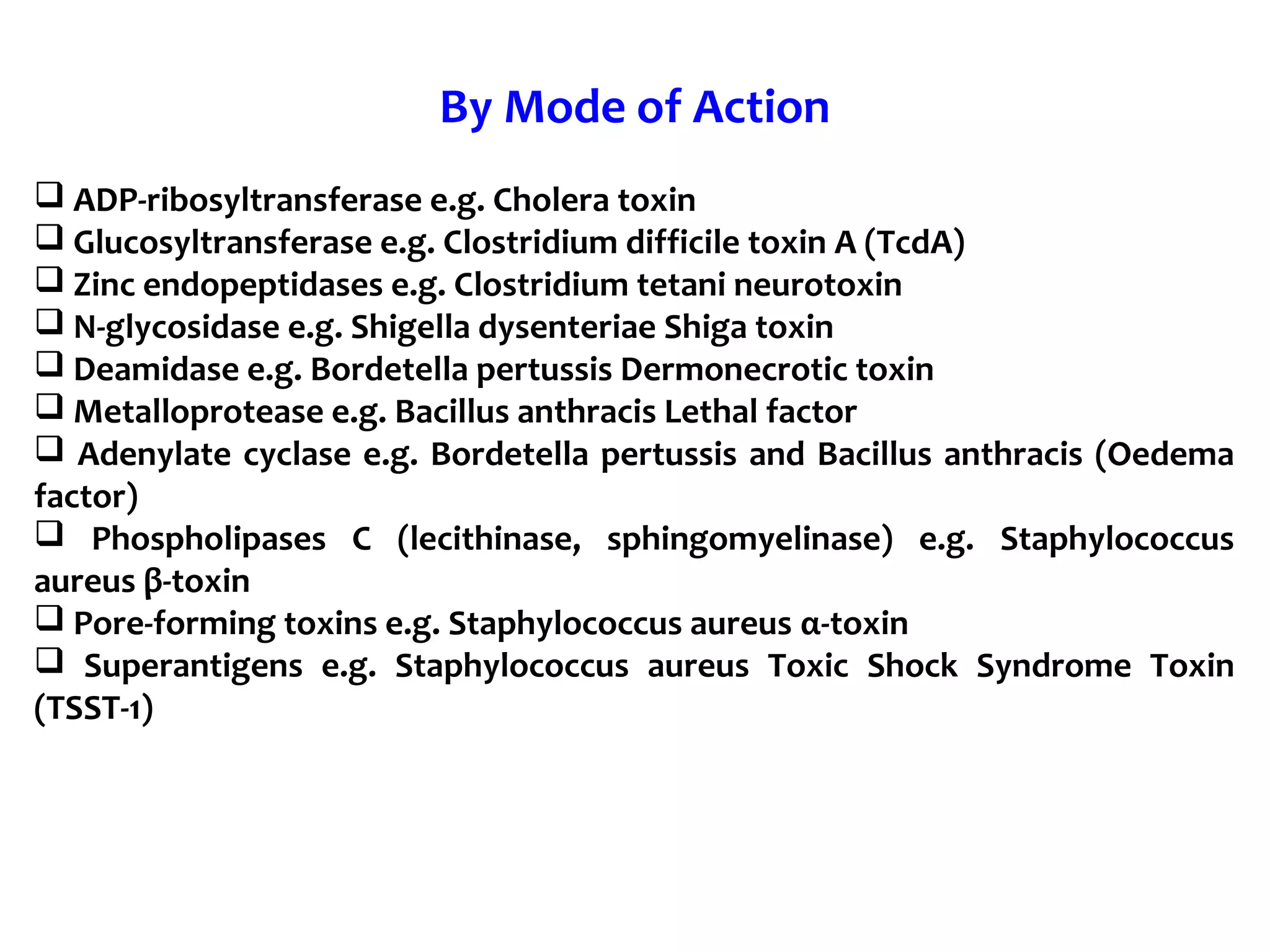
By Mode of Action
 ADP-ribosyltransferase e.g. Cholera toxin
 Glucosyltransferase e.g. Clostridium difficile toxin A (TcdA)
 Zinc endopeptidases e.g. Clostridium tetani neurotoxin
 N-glycosidase e.g. Shigella dysenteriae Shiga toxin
 Deamidase e.g. Bordetella pertussis Dermonecrotic toxin
 Metalloprotease e.g. Bacillus anthracis Lethal factor
 Adenylate cyclase e.g. Bordetella pertussis and Bacillus anthracis (Oedema
factor)
 Phospholipases C (lecithinase, sphingomyelinase) e.g. Staphylococcus
aureus β-toxin
 Pore-forming toxins e.g. Staphylococcus aureus α-toxin
 Superantigens e.g. Staphylococcus aureus Toxic Shock Syndrome Toxin
(TSST-1)
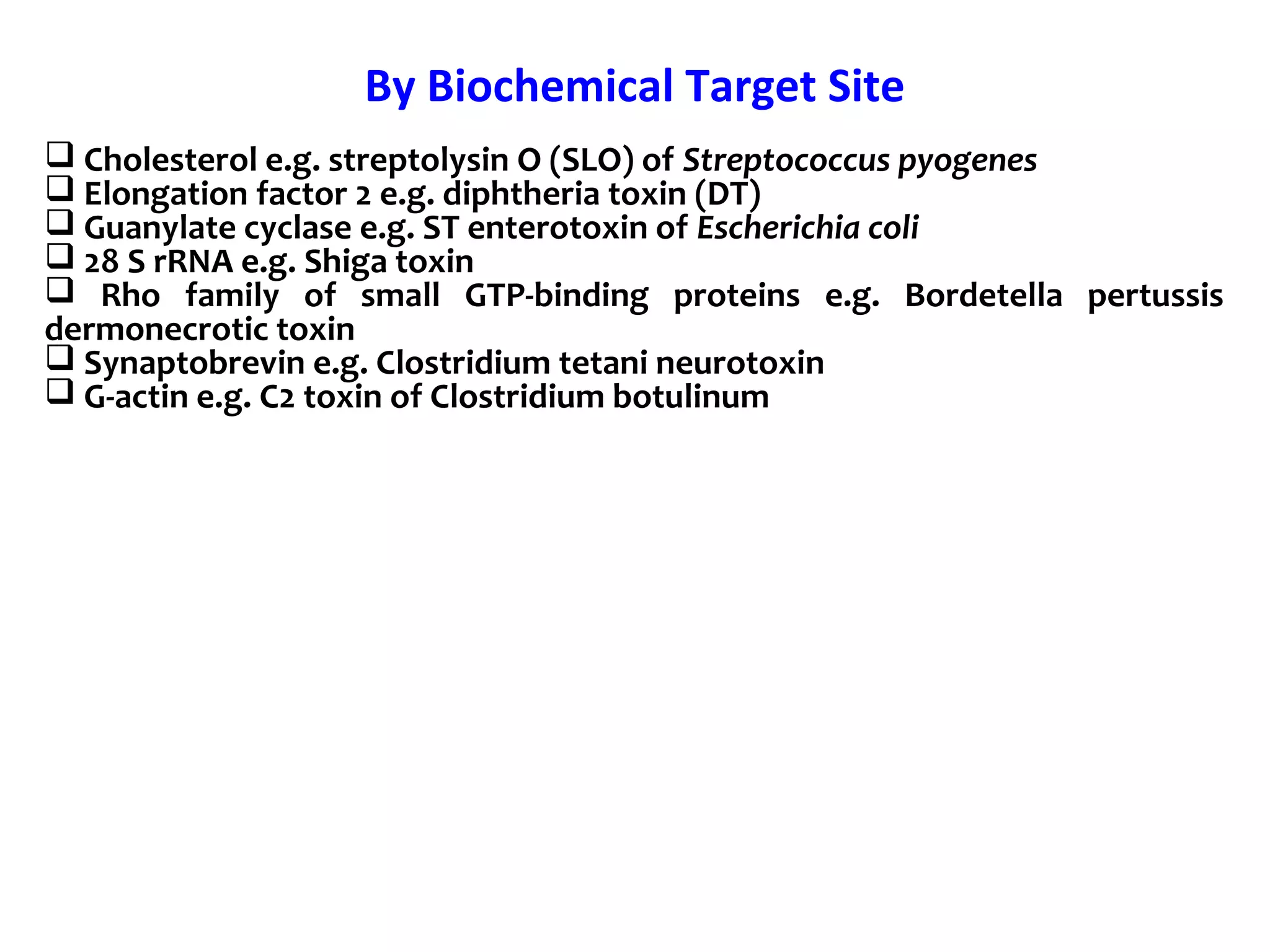
By Biochemical Target Site
 Cholesterol e.g. streptolysin O (SLO) of Streptococcus pyogenes
 Elongation factor 2 e.g. diphtheria toxin (DT)
 Guanylate cyclase e.g. ST enterotoxin of Escherichia coli
 28 S rRNA e.g. Shiga toxin
 Rho family of small GTP-binding proteins e.g. Bordetella pertussis
dermonecrotic toxin
 Synaptobrevin e.g. Clostridium tetani neurotoxin
 G-actin e.g. C2 toxin of Clostridium botulinum
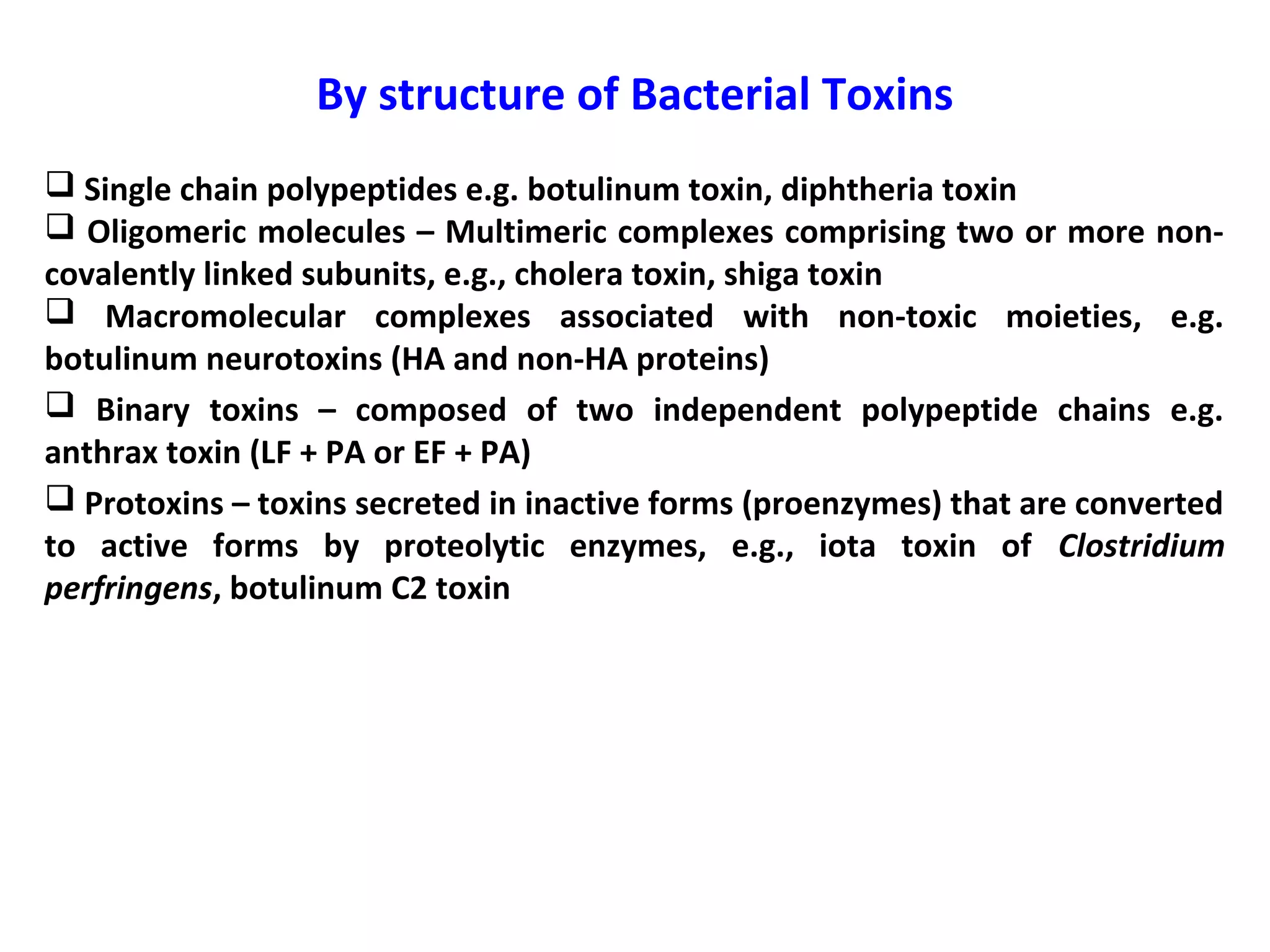
By structure of Bacterial Toxins
 Single chain polypeptides e.g. botulinum toxin, diphtheria toxin
 Oligomeric molecules – Multimeric complexes comprising two or more non-
covalently linked subunits, e.g., cholera toxin, shiga toxin
 Macromolecular complexes associated with non-toxic moieties, e.g.
botulinum neurotoxins (HA and non-HA proteins)
 Binary toxins – composed of two independent polypeptide chains e.g.
anthrax toxin (LF + PA or EF + PA)
 Protoxins – toxins secreted in inactive forms (proenzymes) that are converted
to active forms by proteolytic enzymes, e.g., iota toxin of Clostridium
perfringens, botulinum C2 toxin
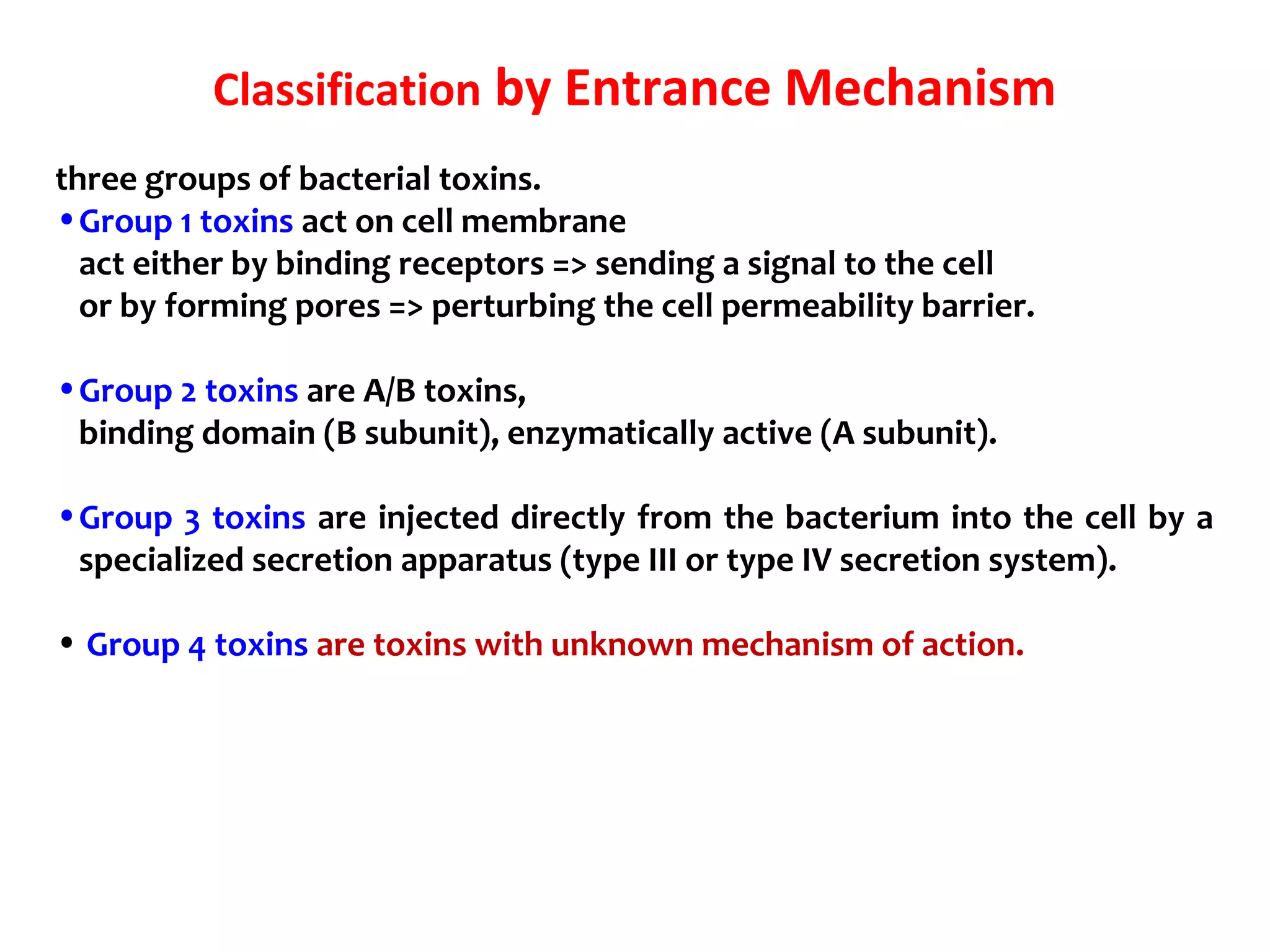
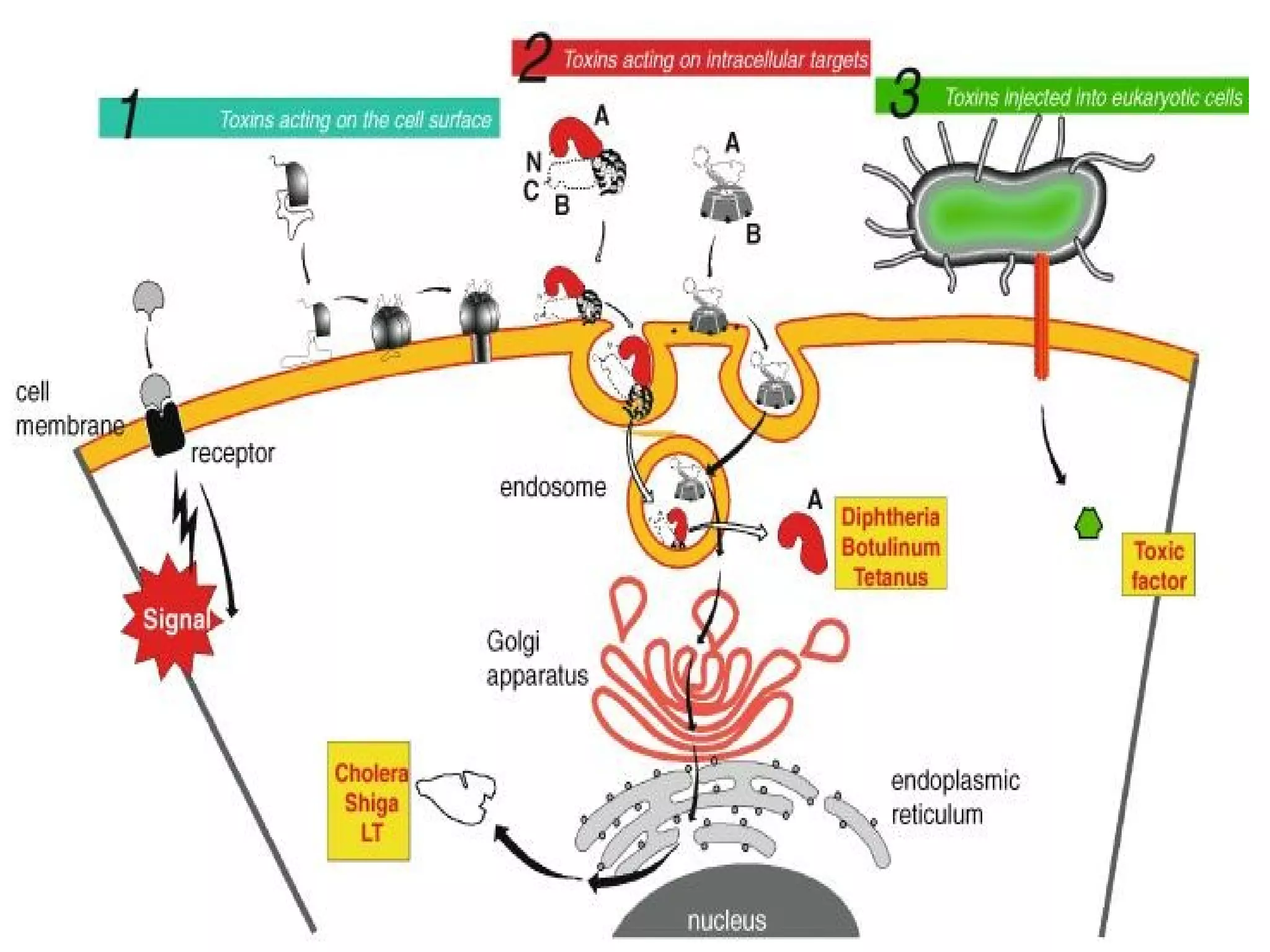
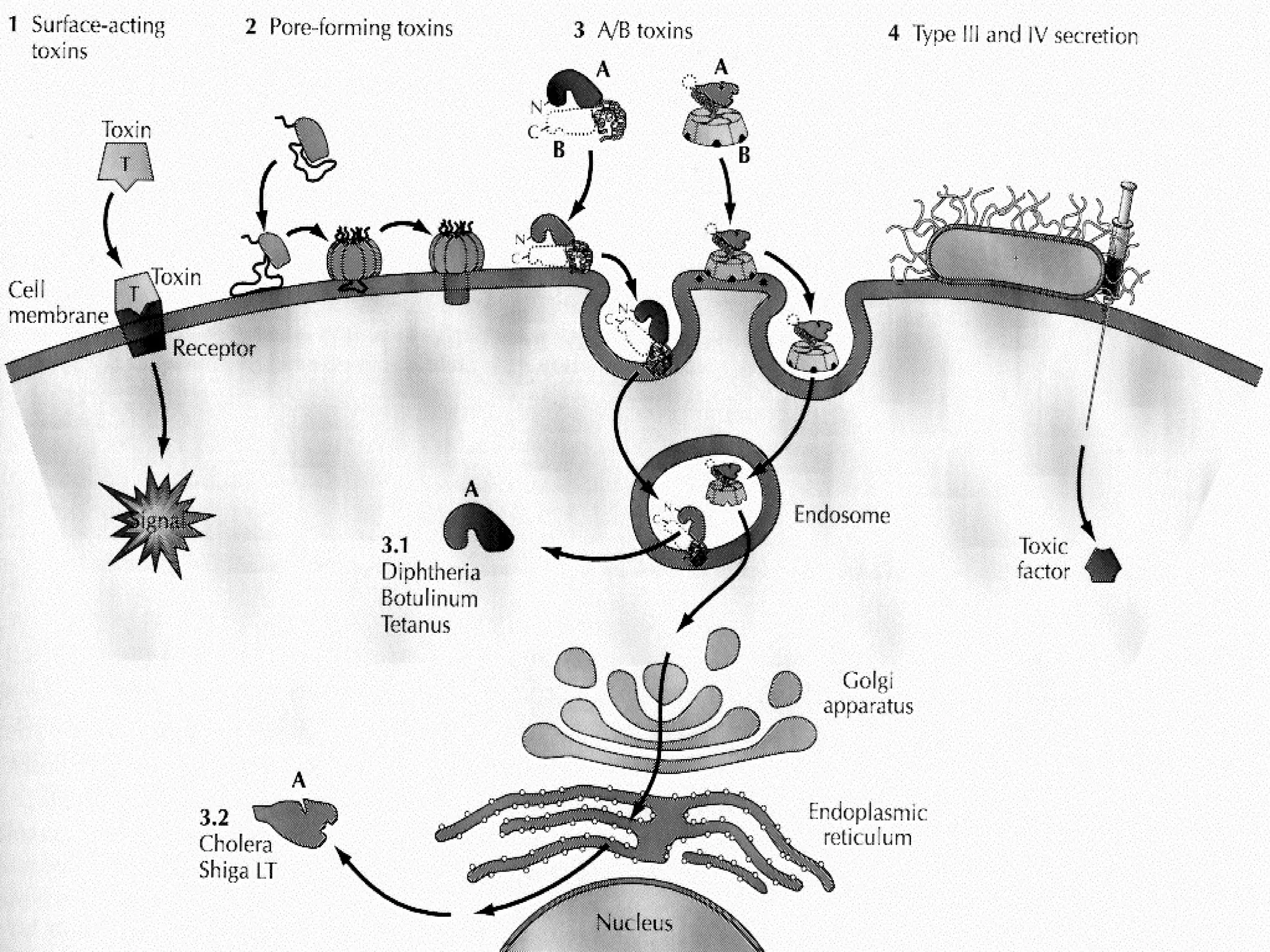
three groups of bacterial toxins.
•Group 1 toxins act on cell membrane
act either by binding receptors => sending a signal to the cell
or by forming pores => perturbing the cell permeability barrier.
•Group 2 toxins are A/B toxins,
binding domain (B subunit), enzymatically active (A subunit).
•Group 3 toxins are injected directly from the bacterium into the cell by a
specialized secretion apparatus (type III or type IV secretion system).
• Group 4 toxins are toxins with unknown mechanism of action.
Classification by Entrance Mechanism
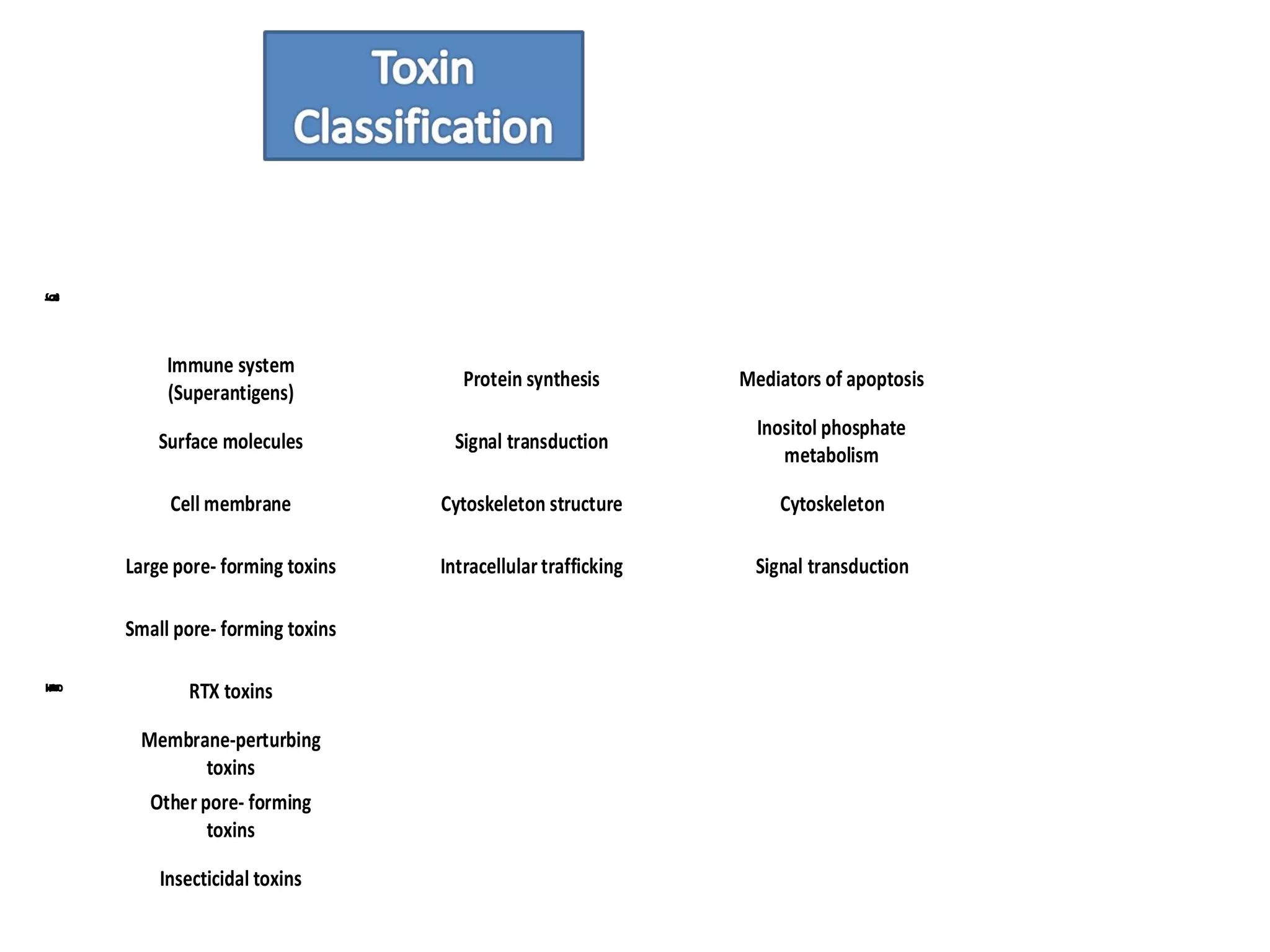
Acting on
intracellular
targets
Injected into
eukaryotic cells
Unknown
mechanism of
action
Acting on the
cell surface
Immune system
(Superantigens)
ClassTarget
Surface molecules
Cell membrane
Large pore- forming toxins
Small pore- forming toxins
Insecticidal toxins
Membrane-perturbing
toxins
Other pore- forming
toxins
RTX toxins
Protein synthesis Mediators of apoptosis
Signal transduction
Cytoskeleton structure
Intracellular trafficking
Inositol phosphate
metabolism
Cytoskeleton
Signal transduction
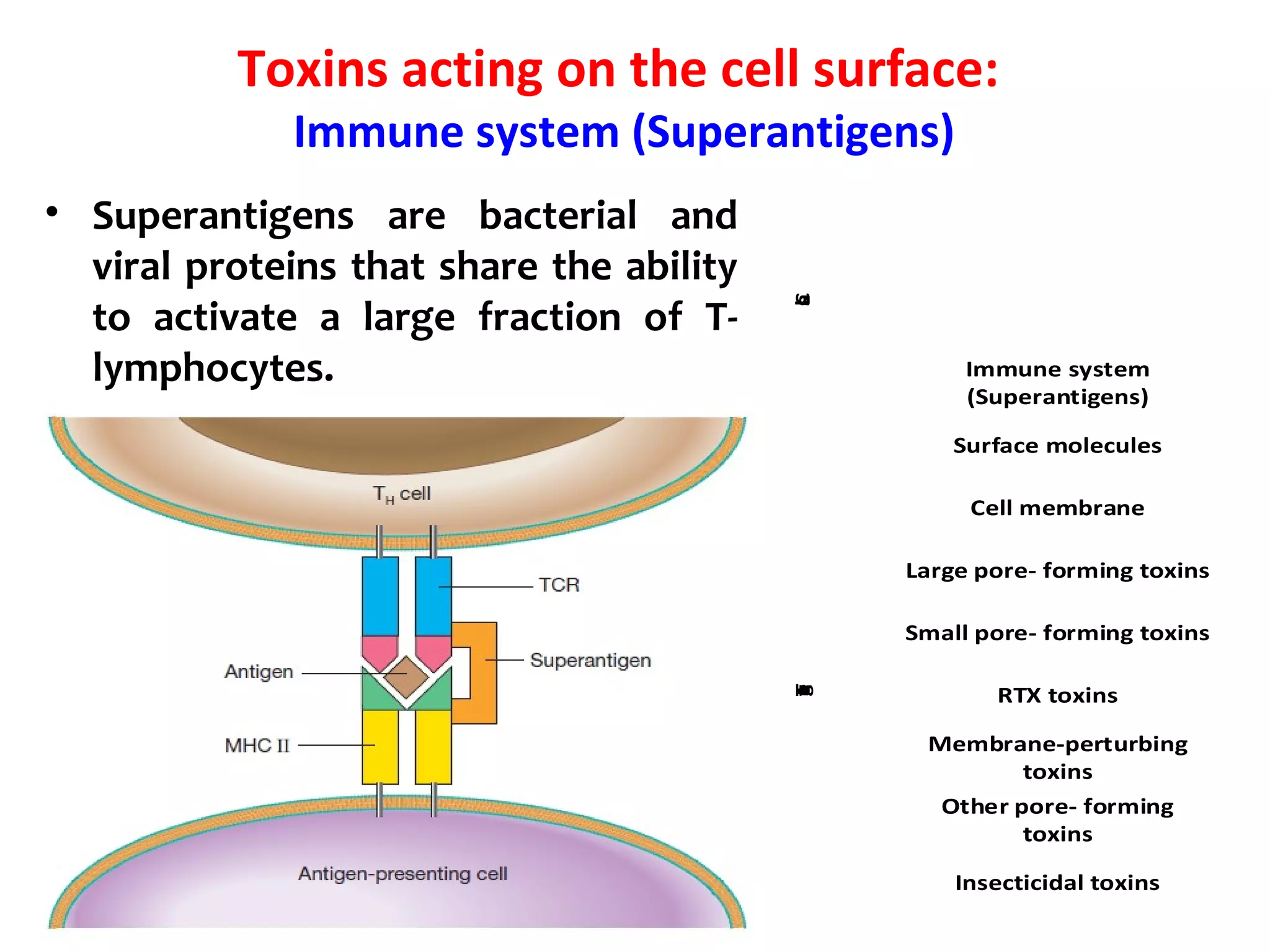
Toxins acting on the cell surface:
Immune system (Superantigens)
• Superantigens are bacterial and
viral proteins that share the ability
to activate a large fraction of T-
lymphocytes.
Acting on the
cell surface
Immune system
(Superantigens)
ClassTarget
Surface molecules
Cell membrane
Large pore- forming toxins
Small pore- forming toxins
Insecticidal toxins
Membrane-perturbing
toxins
Other pore- forming
toxins
RTX toxins
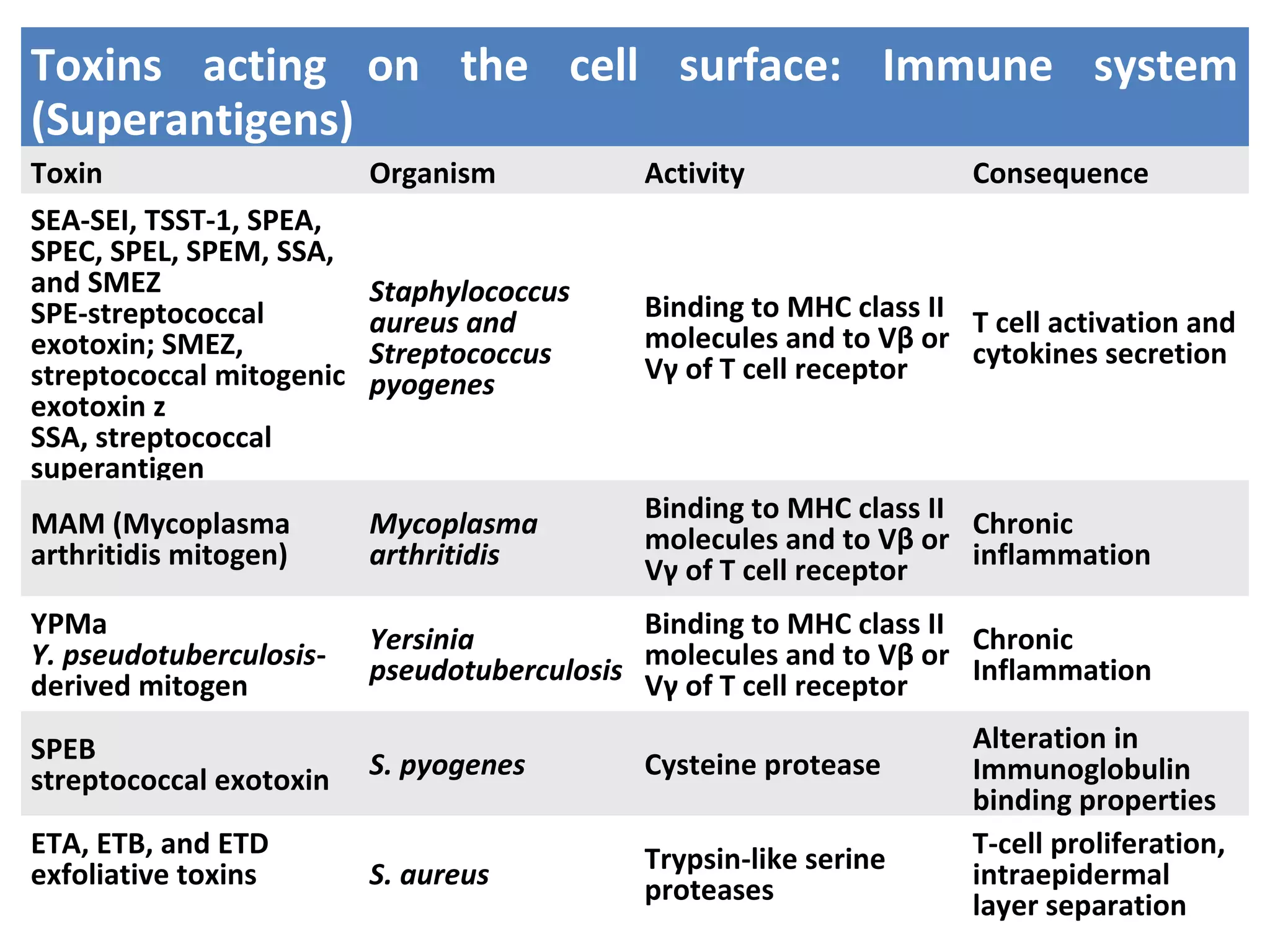
Toxins acting on the cell surface: Immune system
(Superantigens)
Toxin Organism Activity Consequence
SEA-SEI, TSST-1, SPEA,
SPEC, SPEL, SPEM, SSA,
and SMEZ
SPE-streptococcal
exotoxin; SMEZ,
streptococcal mitogenic
exotoxin z
SSA, streptococcal
superantigen
Staphylococcus
aureus and
Streptococcus
pyogenes
Binding to MHC class II
molecules and to Vβ or
Vγ of T cell receptor
T cell activation and
cytokines secretion
MAM (Mycoplasma
arthritidis mitogen)
Mycoplasma
arthritidis
Binding to MHC class II
molecules and to Vβ or
Vγ of T cell receptor
Chronic
inflammation
YPMa
Y. pseudotuberculosis-
derived mitogen
Yersinia
pseudotuberculosis
Binding to MHC class II
molecules and to Vβ or
Vγ of T cell receptor
Chronic
Inflammation
SPEB
streptococcal exotoxin S. pyogenes Cysteine protease
Alteration in
Immunoglobulin
binding properties
ETA, ETB, and ETD
exfoliative toxins S. aureus Trypsin-like serine
proteases
T-cell proliferation,
intraepidermal
layer separation
Toxins acting on the cell surface:
Surface molecules
 BFT enterotoxin: The pathogenicity of ETBF is ascribed to a
heat-labile 20-kDa toxin (∼ B. fragilis toxin [BFT], also called
fragilysin).
 This toxin binds to a specific intestinal epithelial cell receptor
and stimulates cell proliferation.
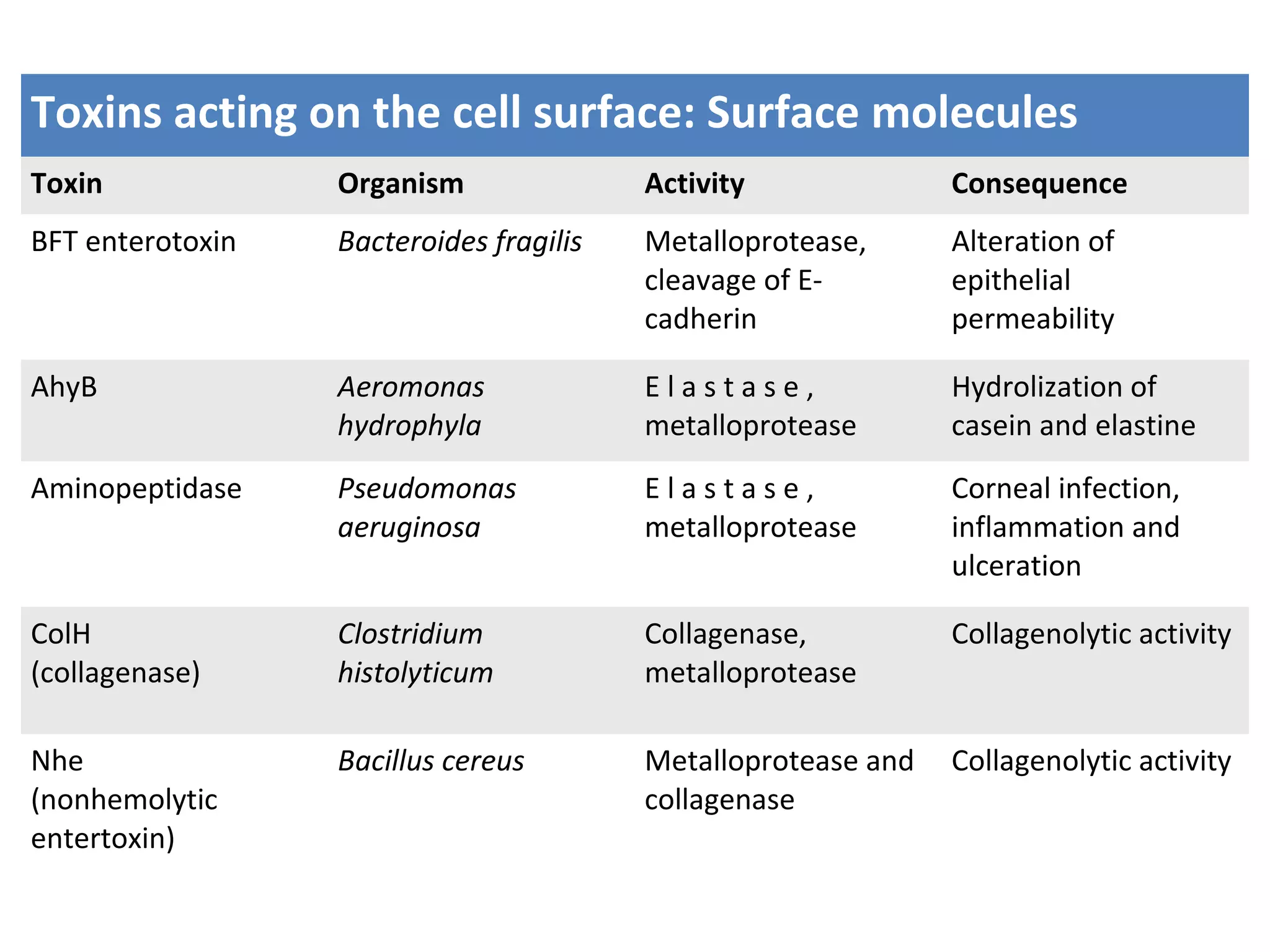
Toxins acting on the cell surface: Surface molecules
Toxin Organism Activity Consequence
BFT enterotoxin Bacteroides fragilis Metalloprotease,
cleavage of E-
cadherin
Alteration of
epithelial
permeability
AhyB Aeromonas
hydrophyla
E l a s t a s e ,
metalloprotease
Hydrolization of
casein and elastine
Aminopeptidase Pseudomonas
aeruginosa
E l a s t a s e ,
metalloprotease
Corneal infection,
inflammation and
ulceration
ColH
(collagenase)
Clostridium
histolyticum
Collagenase,
metalloprotease
Collagenolytic activity
Nhe
(nonhemolytic
entertoxin)
Bacillus cereus Metalloprotease and
collagenase
Collagenolytic activity
Toxins acting on the cell surface:
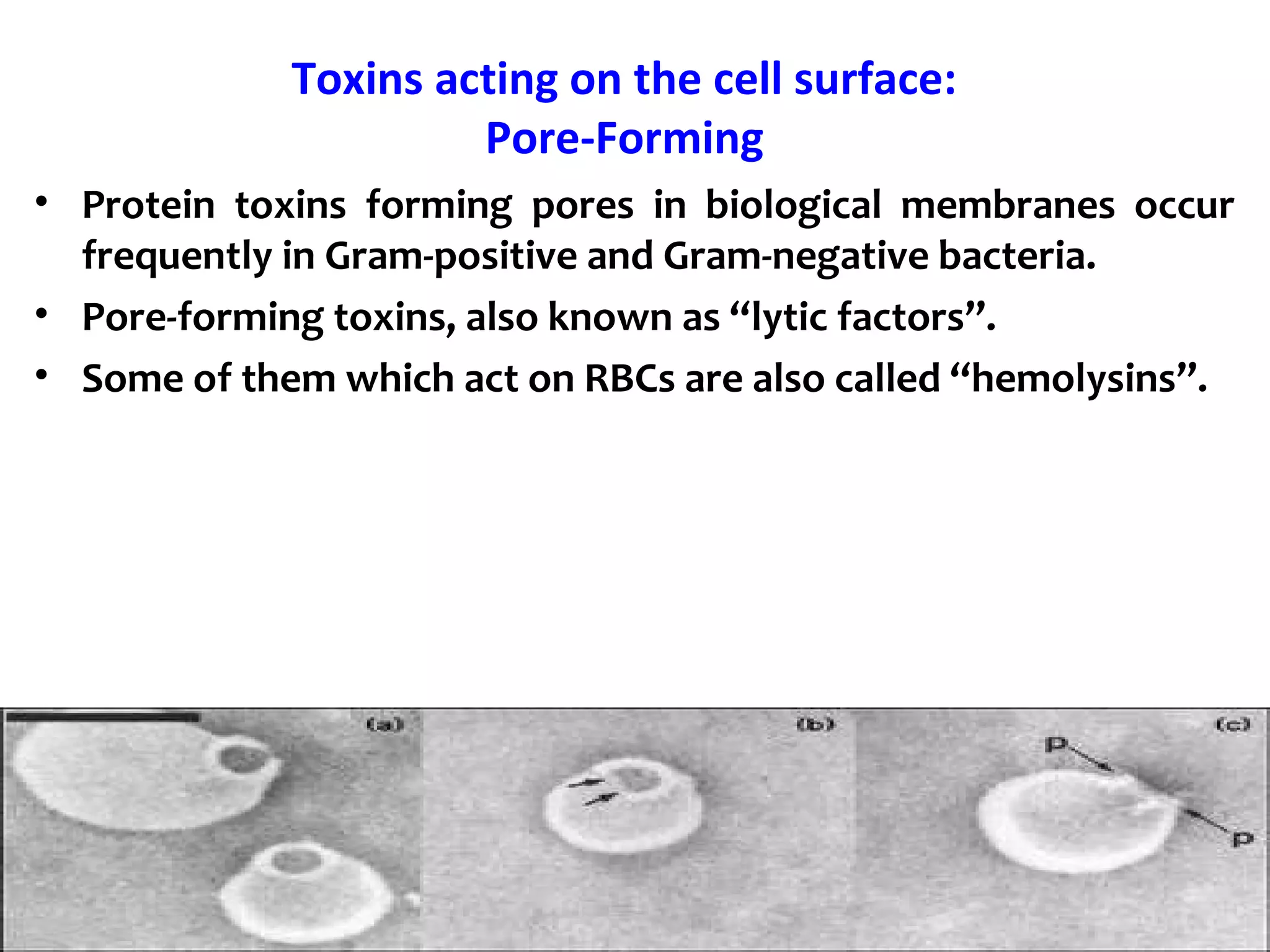
Pore-Forming
• Protein toxins forming pores in biological membranes occur
frequently in Gram-positive and Gram-negative bacteria.
• Pore-forming toxins, also known as “lytic factors”.
• Some of them which act on RBCs are also called “hemolysins”.
Toxins acting on the cell surface:
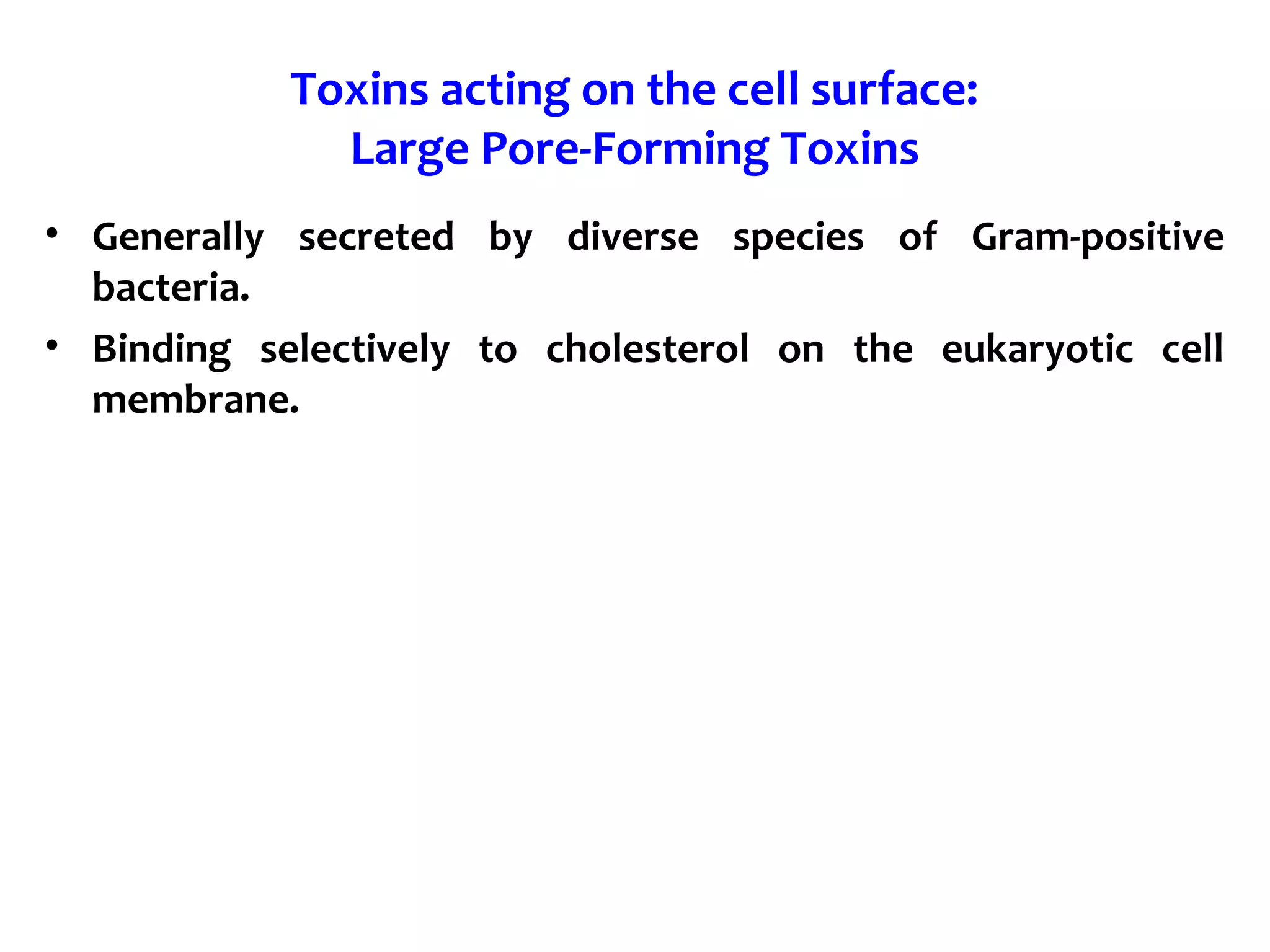
Large Pore-Forming Toxins
• Generally secreted by diverse species of Gram-positive
bacteria.
• Binding selectively to cholesterol on the eukaryotic cell
membrane.
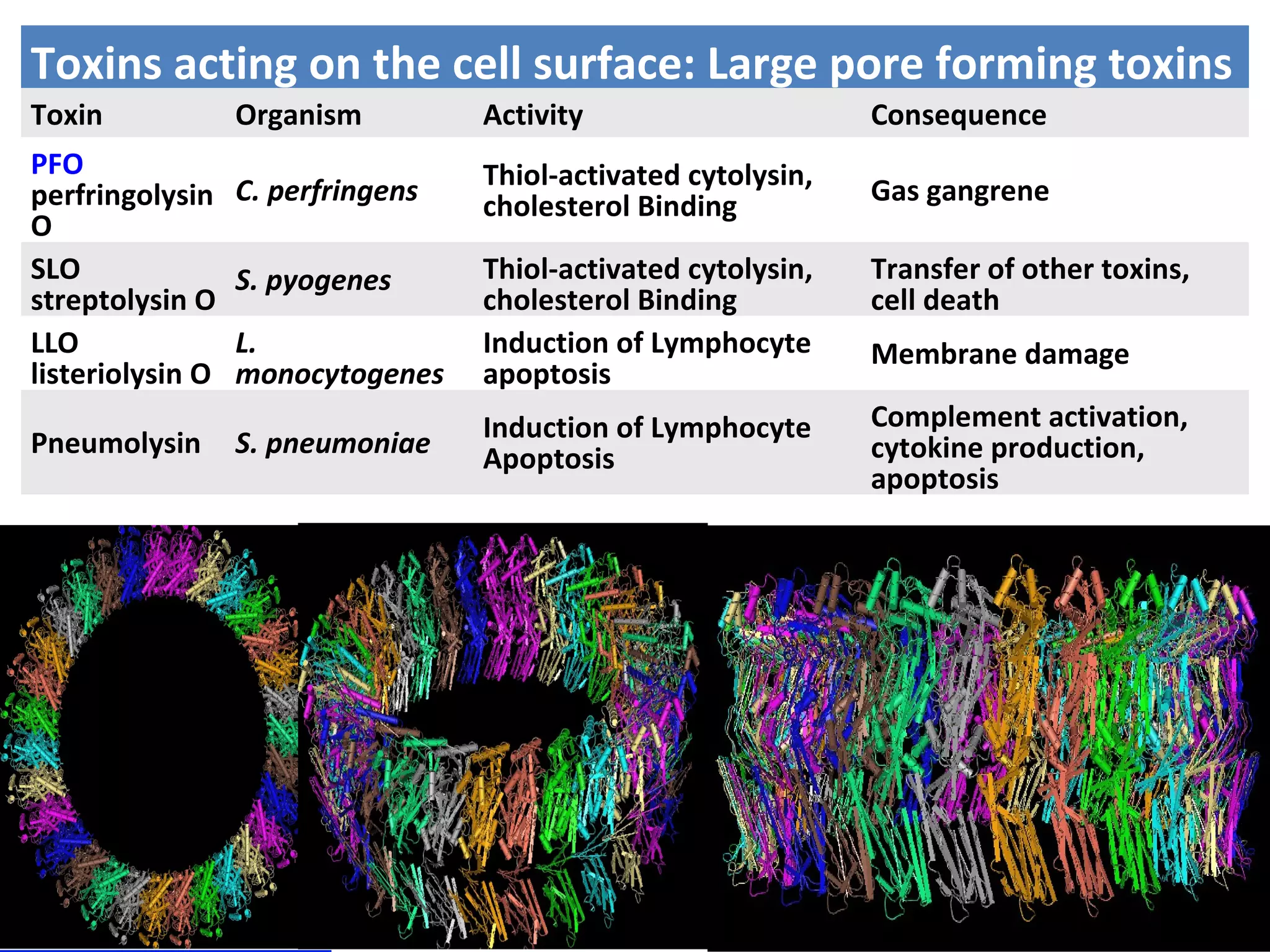
Toxins acting on the cell surface: Large pore forming toxins
Toxin Organism Activity Consequence
PFO
perfringolysin
O
C. perfringens Thiol-activated cytolysin,
cholesterol Binding Gas gangrene
SLO
streptolysin O
S. pyogenes Thiol-activated cytolysin,
cholesterol Binding
Transfer of other toxins,
cell death
LLO
listeriolysin O
L.
monocytogenes
Induction of Lymphocyte
apoptosis
Membrane damage
Pneumolysin S. pneumoniae Induction of Lymphocyte
Apoptosis
Complement activation,
cytokine production,
apoptosis
Toxins acting on the cell surface:
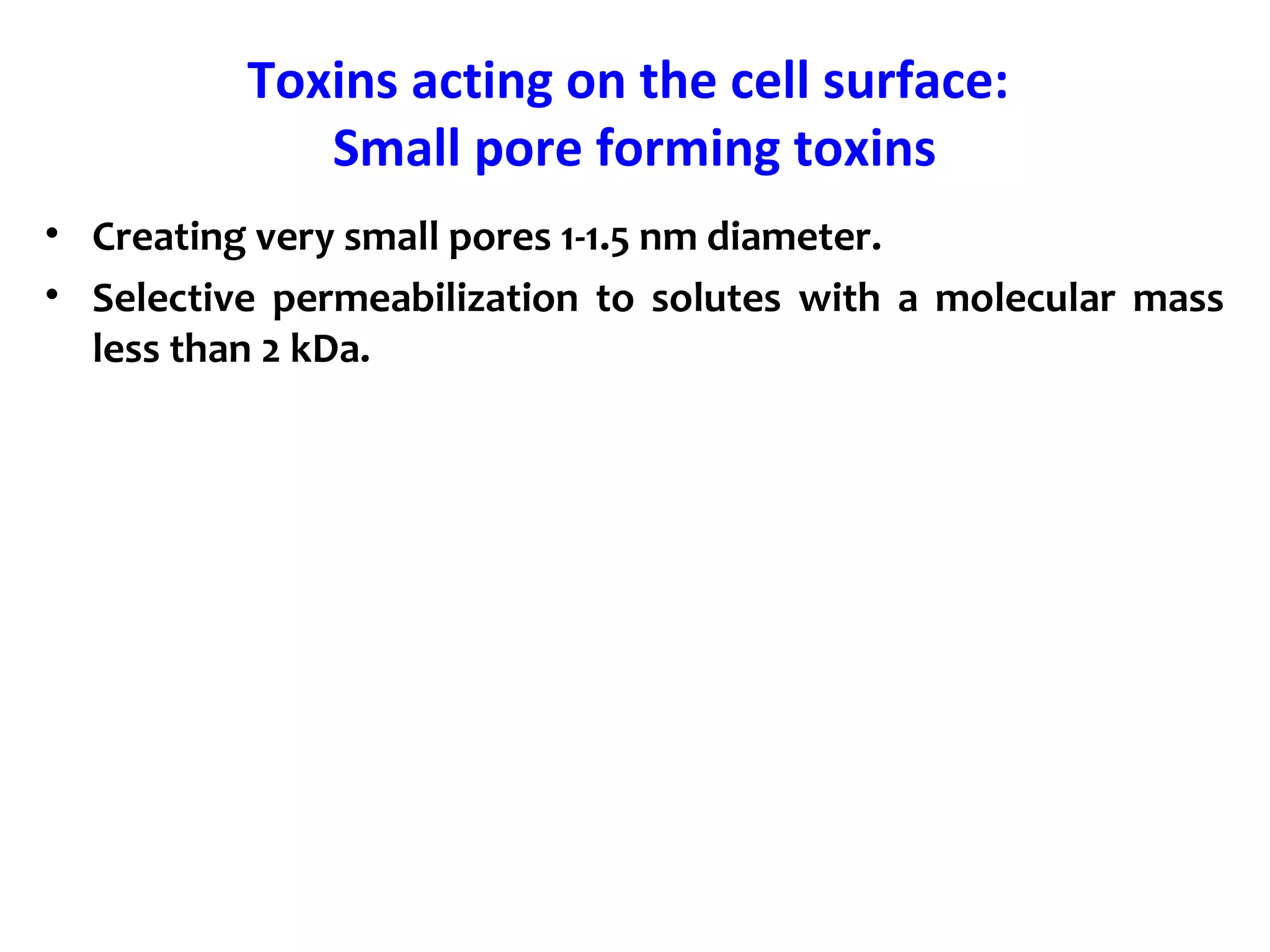
Small pore forming toxins
• Creating very small pores 1-1.5 nm diameter.
• Selective permeabilization to solutes with a molecular mass
less than 2 kDa.
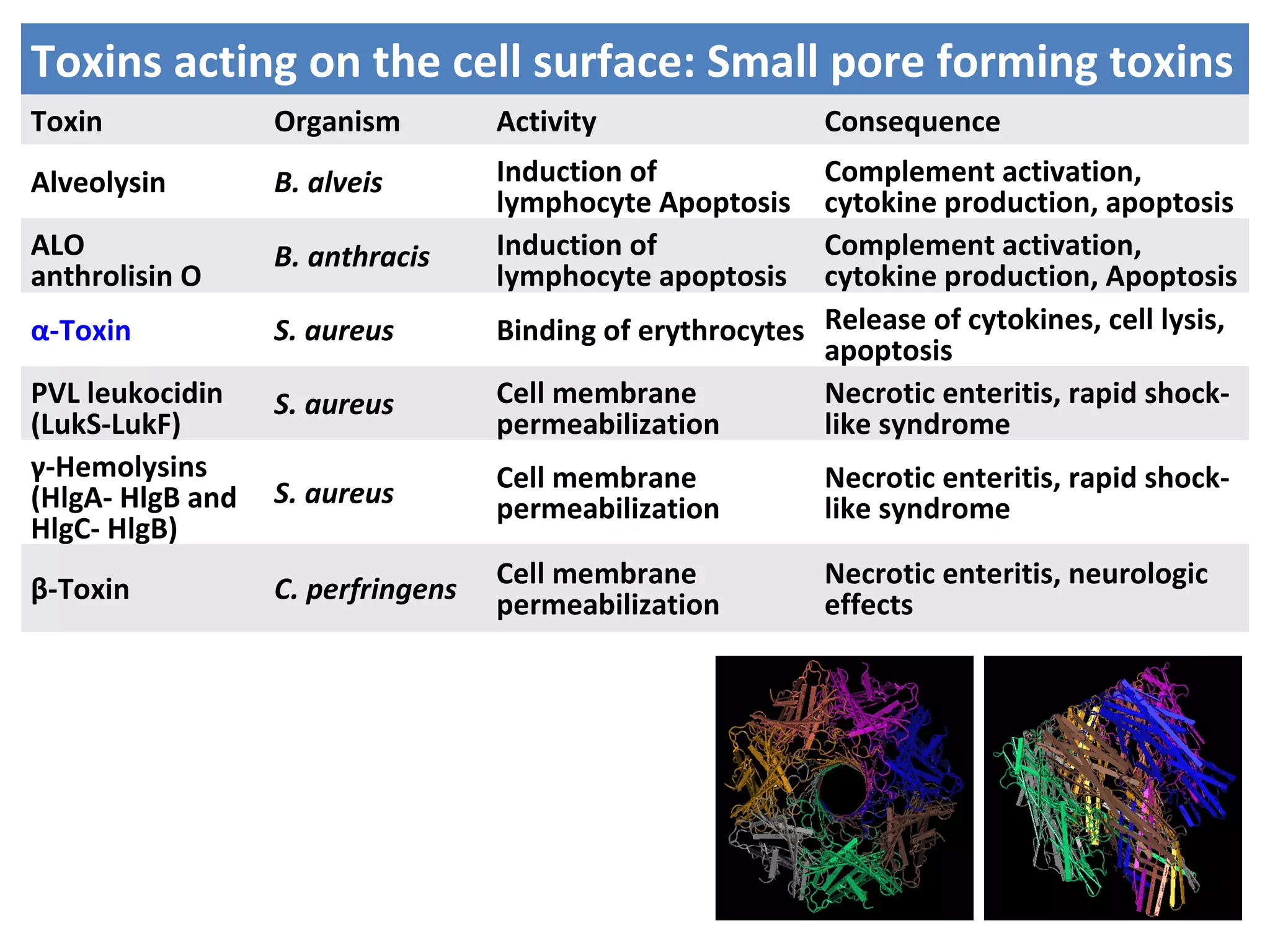
Toxins acting on the cell surface: Small pore forming toxins
Toxin Organism Activity Consequence
Alveolysin B. alveis Induction of
lymphocyte Apoptosis
Complement activation,
cytokine production, apoptosis
ALO
anthrolisin O
B. anthracis Induction of
lymphocyte apoptosis
Complement activation,
cytokine production, Apoptosis
α-Toxin S. aureus Binding of erythrocytes Release of cytokines, cell lysis,
apoptosis
PVL leukocidin
(LukS-LukF)
S. aureus Cell membrane
permeabilization
Necrotic enteritis, rapid shock-
like syndrome
γ-Hemolysins
(HlgA- HlgB and
HlgC- HlgB)
S. aureus Cell membrane
permeabilization
Necrotic enteritis, rapid shock-
like syndrome
β-Toxin C. perfringens Cell membrane
permeabilization
Necrotic enteritis, neurologic
effects
Toxins acting on the cell surface:
RTX toxins
• The RTX toxin family is a group of cytotoxins produced by
Gram-negative bacteria.
• There are over 1000 known members with a variety of
functions.
• The RTX family is defined by two common features:
characteristic repeats in the toxin protein sequences, and
extracellular secretion by the type I secretion system (T1SS).
• The name RTX (repeats in toxin) refers to the glycine and
aspartate-rich repeats located at the C-terminus of the toxin
proteins.
Genomic Structure
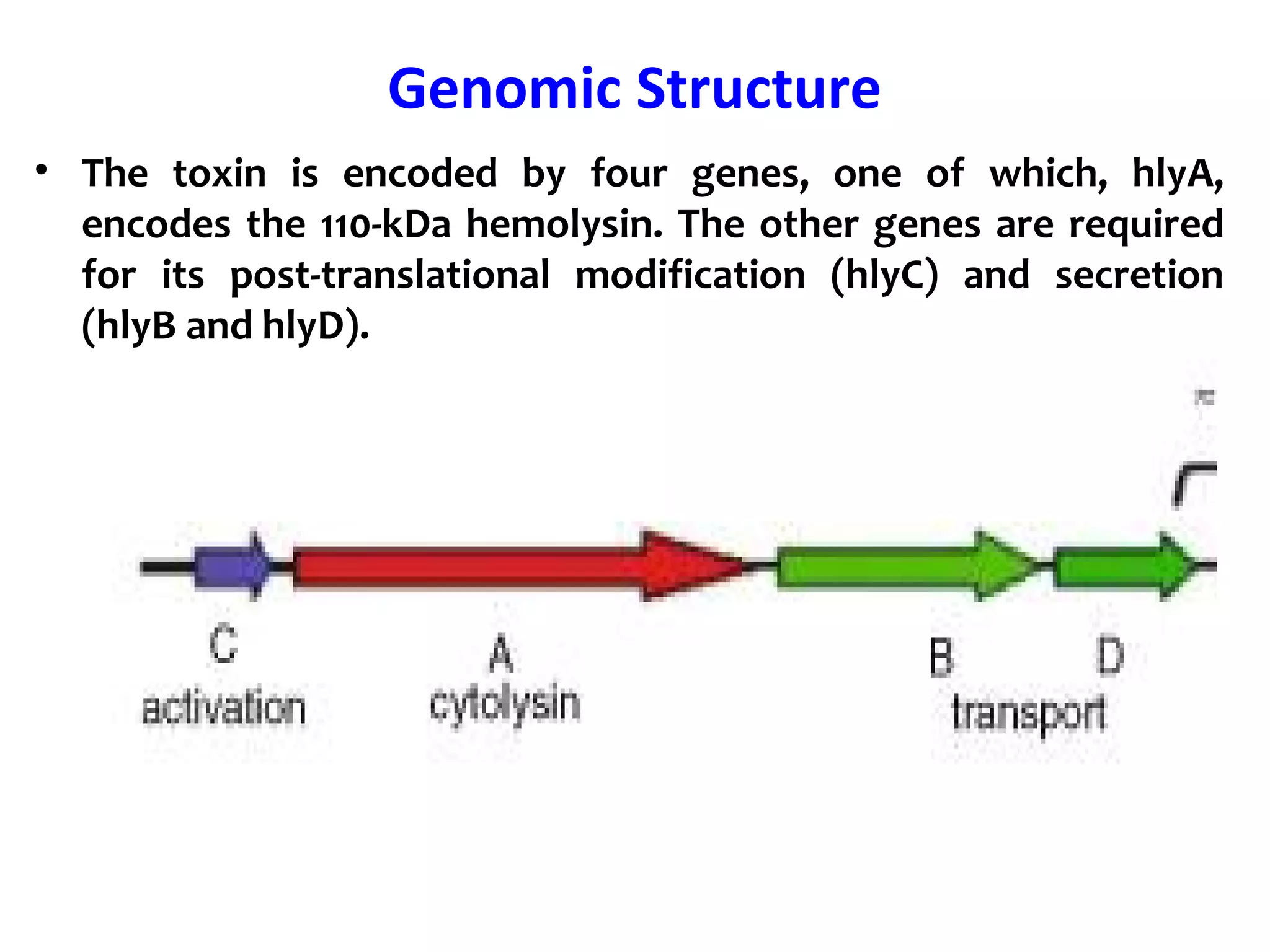
• The toxin is encoded by four genes, one of which, hlyA,
encodes the 110-kDa hemolysin. The other genes are required
for its post-translational modification (hlyC) and secretion
(hlyB and hlyD).
Toxins acting on the cell surface: RTX toxins
Toxin Organism Activity Consequence
Hemolysin II B. cereus Cell membrane permeabilization Hemolytic activity
CytK B. cereus Cell membrane Permeabilization Necrotic enteritis
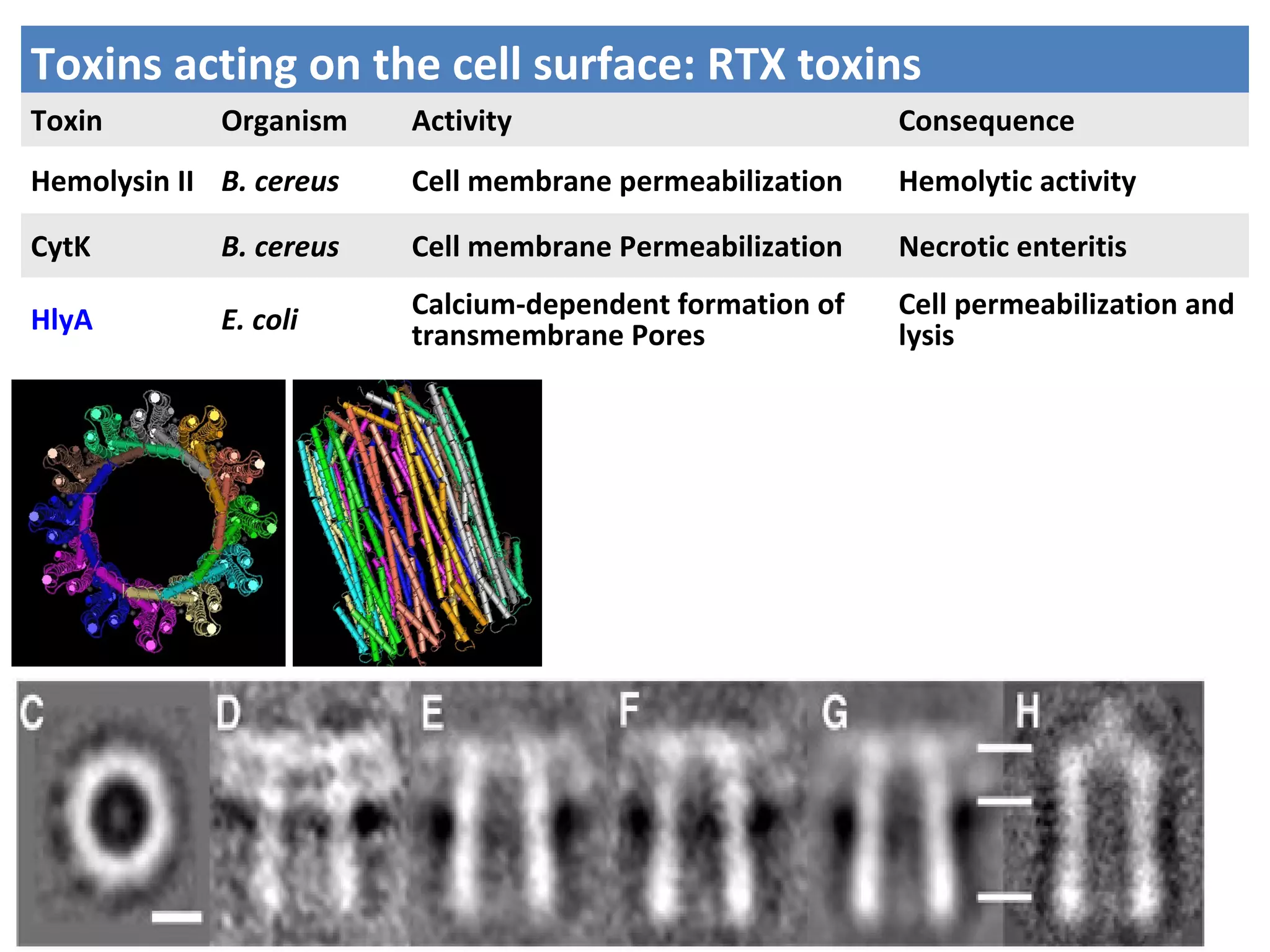
HlyA E. coli Calcium-dependent formation of
transmembrane Pores
Cell permeabilization and
lysis
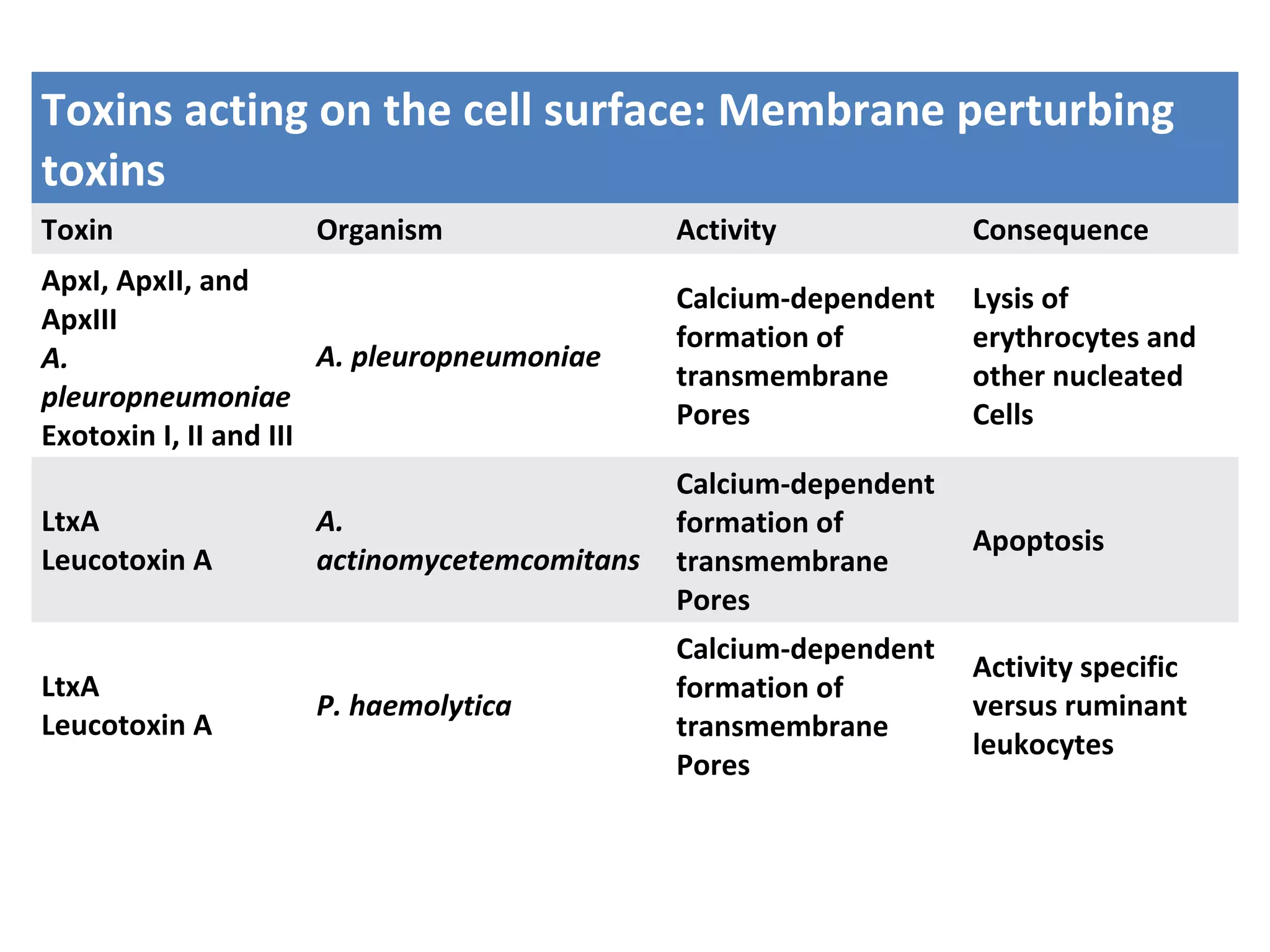
Toxins acting on the cell surface: Membrane
perturbing toxins
• Soap like structure.
• The toxin binds nonspecifically parallel to the surface of any
membrane without forming transmembrane channels.
• Cells first become permeable to small solutes and eventually
swell and lyse, releasing cell intracellular content.
Toxins acting on the cell surface: Membrane perturbing
toxins
Toxin Organism Activity Consequence
ApxI, ApxII, and
ApxIII
A.
pleuropneumoniae
Exotoxin I, II and III
A. pleuropneumoniae
Calcium-dependent
formation of
transmembrane
Pores
Lysis of
erythrocytes and
other nucleated
Cells
LtxA
Leucotoxin A
A.
actinomycetemcomitans
Calcium-dependent
formation of
transmembrane
Pores
Apoptosis
LtxA
Leucotoxin A
P. haemolytica
Calcium-dependent
formation of
transmembrane
Pores
Activity specific
versus ruminant
leukocytes
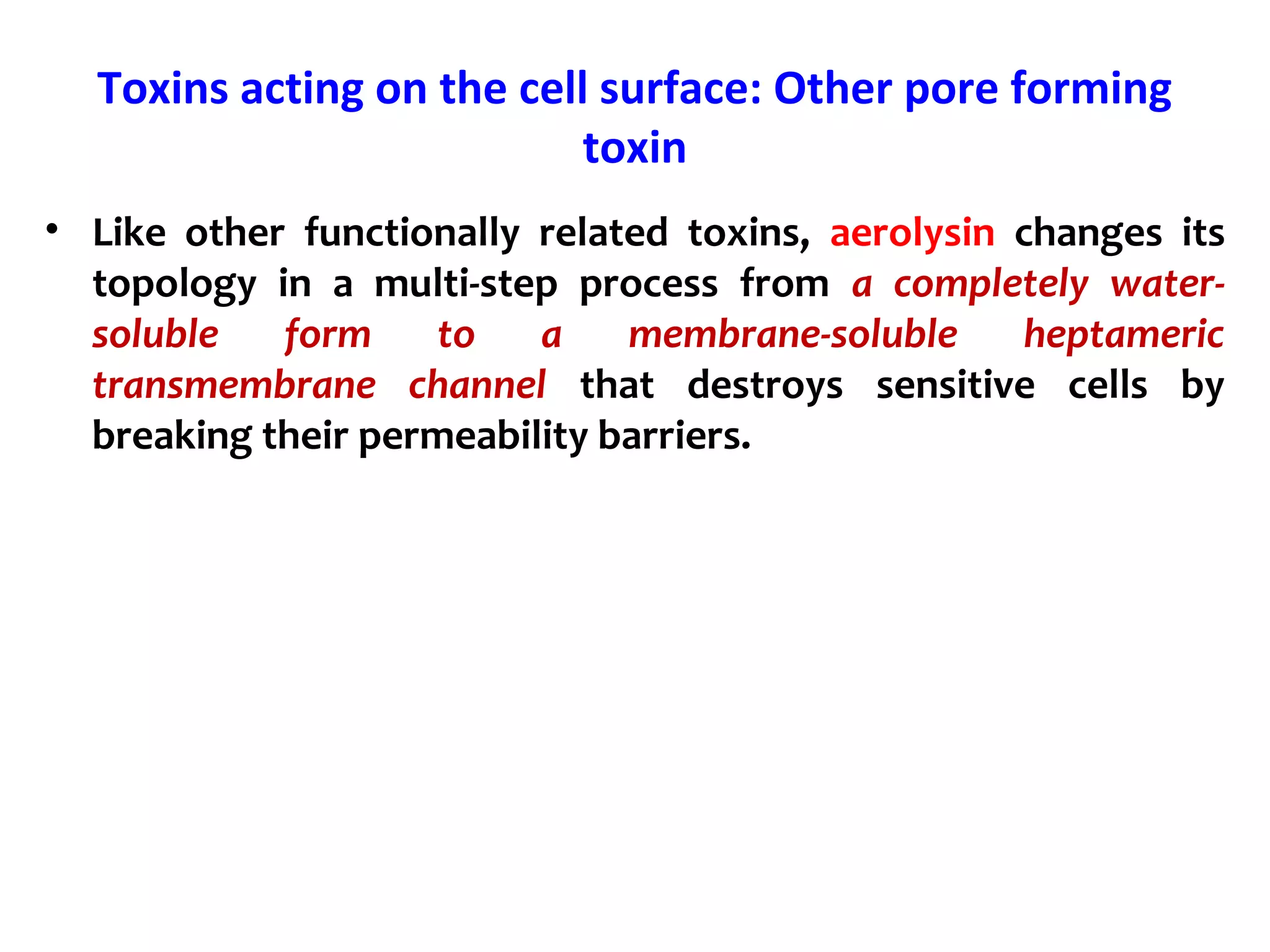
Toxins acting on the cell surface: Other pore forming
toxin
• Like other functionally related toxins, aerolysin changes its
topology in a multi-step process from a completely water-
soluble form to a membrane-soluble heptameric
transmembrane channel that destroys sensitive cells by
breaking their permeability barriers.
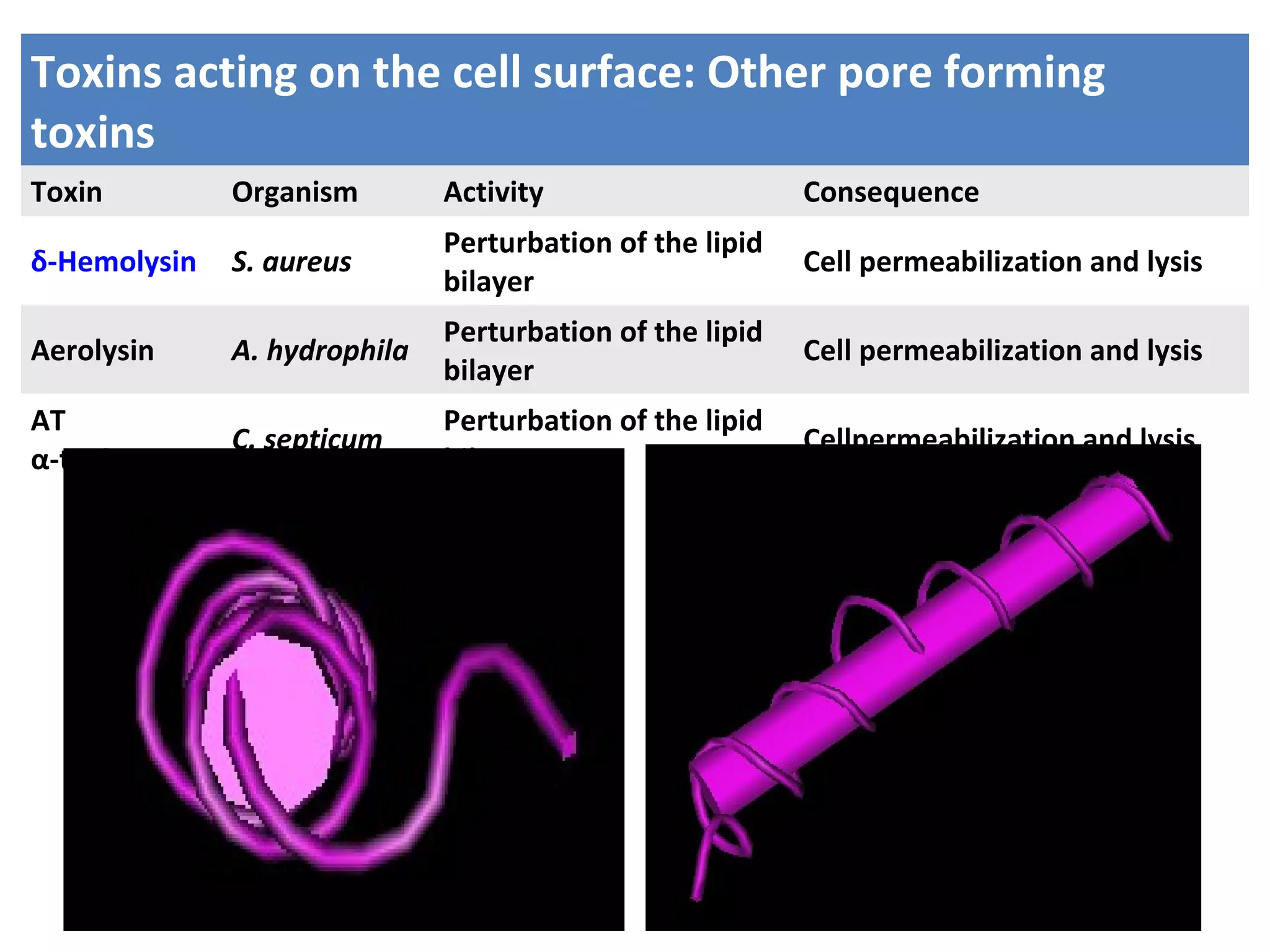
Toxins acting on the cell surface: Other pore forming
toxins
Toxin Organism Activity Consequence
δ-Hemolysin S. aureus
Perturbation of the lipid
bilayer
Cell permeabilization and lysis
Aerolysin A. hydrophila
Perturbation of the lipid
bilayer
Cell permeabilization and lysis
AT
α-toxin
C. septicum
Perturbation of the lipid
bilayer
Cellpermeabilization and lysis
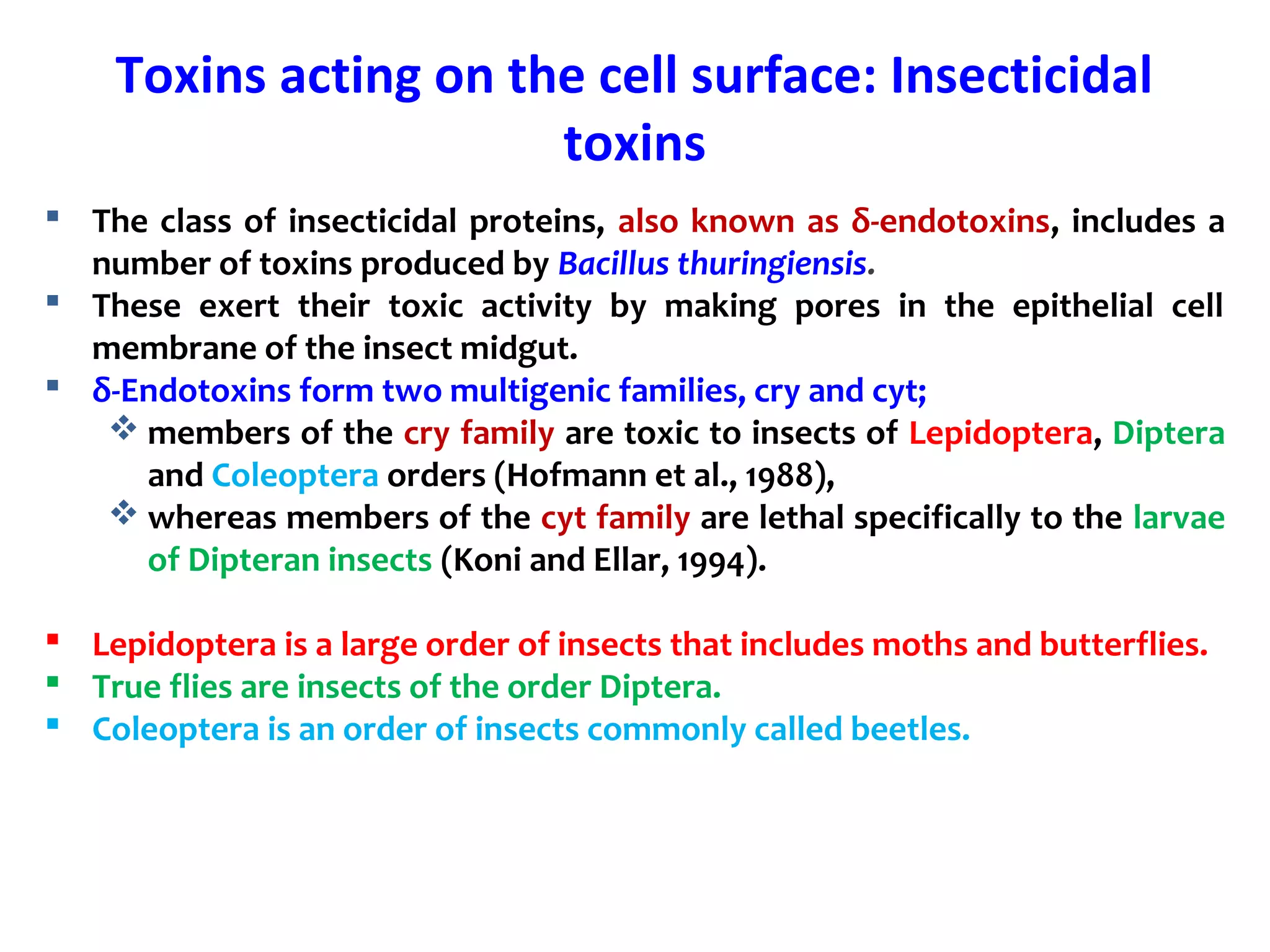
Toxins acting on the cell surface: Insecticidal
toxins
 The class of insecticidal proteins, also known as δ-endotoxins, includes a
number of toxins produced by Bacillus thuringiensis.
 These exert their toxic activity by making pores in the epithelial cell
membrane of the insect midgut.
 δ-Endotoxins form two multigenic families, cry and cyt;
 members of the cry family are toxic to insects of Lepidoptera, Diptera
and Coleoptera orders (Hofmann et al., 1988),
 whereas members of the cyt family are lethal specifically to the larvae
of Dipteran insects (Koni and Ellar, 1994).
 Lepidoptera is a large order of insects that includes moths and butterflies.
 True flies are insects of the order Diptera.
 Coleoptera is an order of insects commonly called beetles.
Toxins acting on the cell surface: Insecticidal toxins
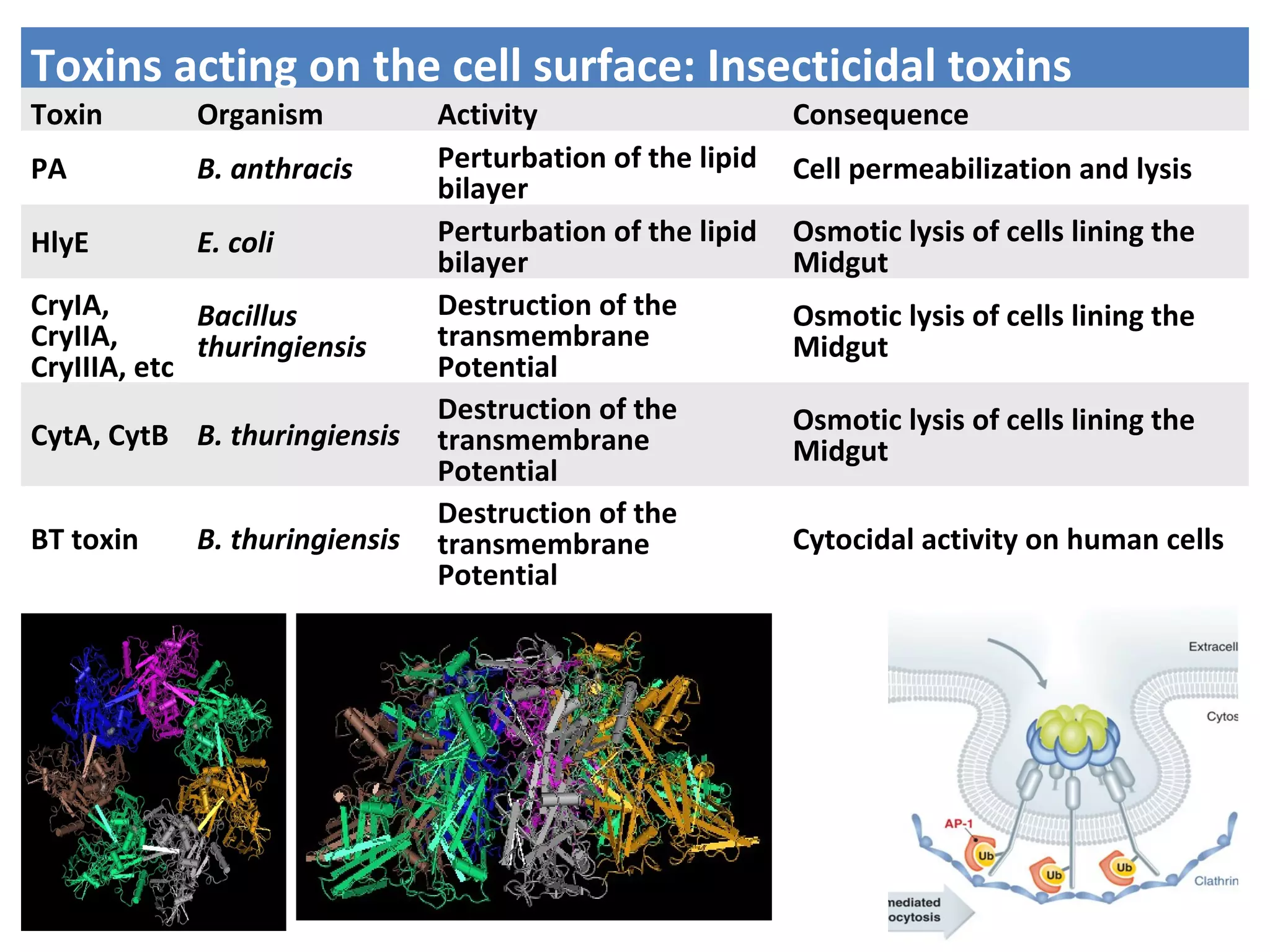
Toxin Organism Activity Consequence
PA B. anthracis Perturbation of the lipid
bilayer
Cell permeabilization and lysis
HlyE E. coli Perturbation of the lipid
bilayer
Osmotic lysis of cells lining the
Midgut
CryIA,
CryIIA,
CryIIIA, etc
Bacillus
thuringiensis
Destruction of the
transmembrane
Potential
Osmotic lysis of cells lining the
Midgut
CytA, CytB B. thuringiensis
Destruction of the
transmembrane
Potential
Osmotic lysis of cells lining the
Midgut
BT toxin B. thuringiensis
Destruction of the
transmembrane
Potential
Cytocidal activity on human cells
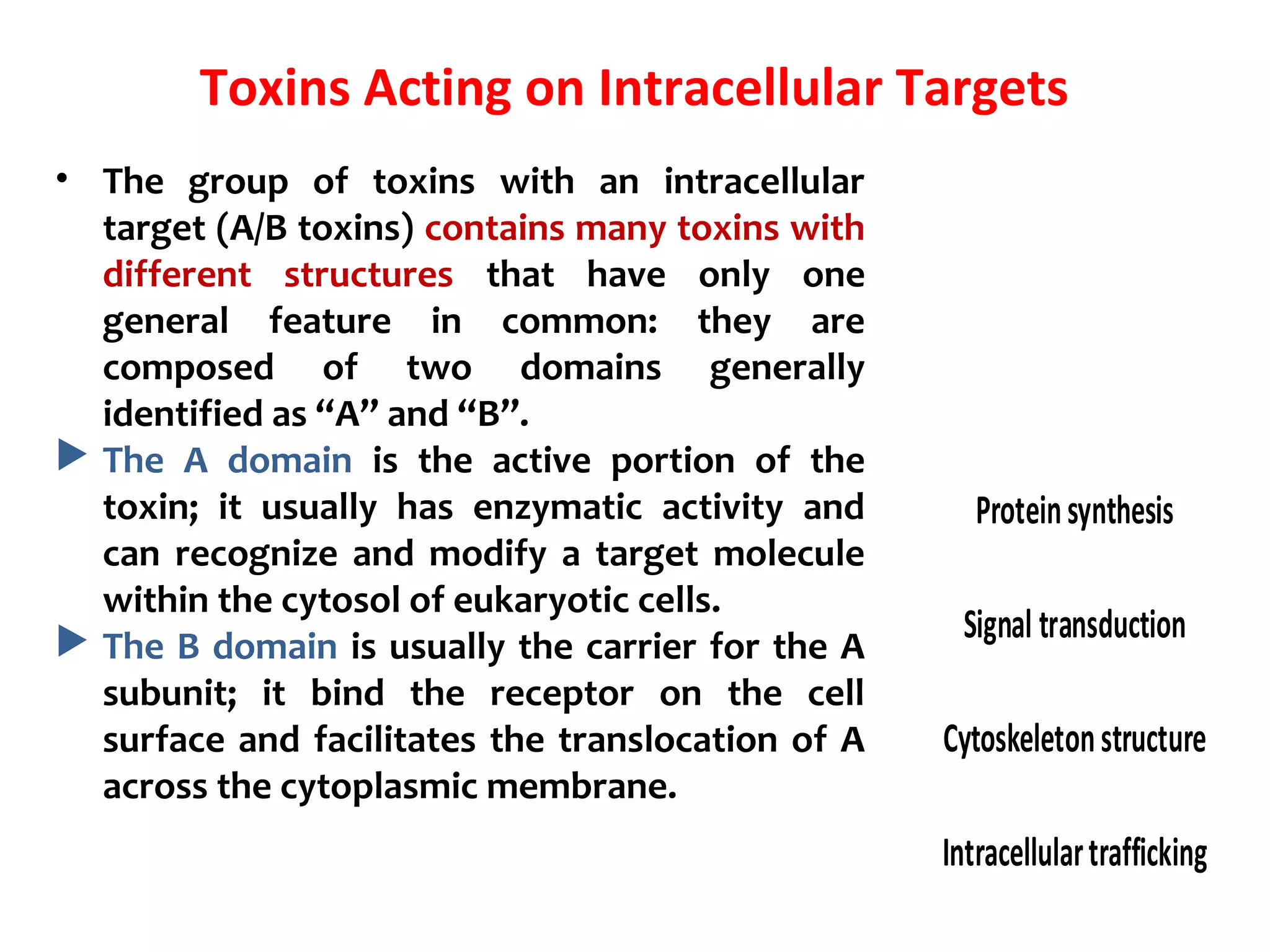
Toxins Acting on Intracellular Targets
• The group of toxins with an intracellular
target (A/B toxins) contains many toxins with
different structures that have only one
general feature in common: they are
composed of two domains generally
identified as “A” and “B”.
 The A domain is the active portion of the
toxin; it usually has enzymatic activity and
can recognize and modify a target molecule
within the cytosol of eukaryotic cells.
 The B domain is usually the carrier for the A
subunit; it bind the receptor on the cell
surface and facilitates the translocation of A
across the cytoplasmic membrane.
Actingon
intracellular
targets
Actingonthe
cell surface
Immune system
(Superantigens)
Class
Surface molecules
Cellmembrane
Largepore-forming toxins
Proteinsynthesis
Signal transduction
Cytoskeletonstructure
Intracellulartrafficking
Toxins acting on intracellular targets: Protein synthesis
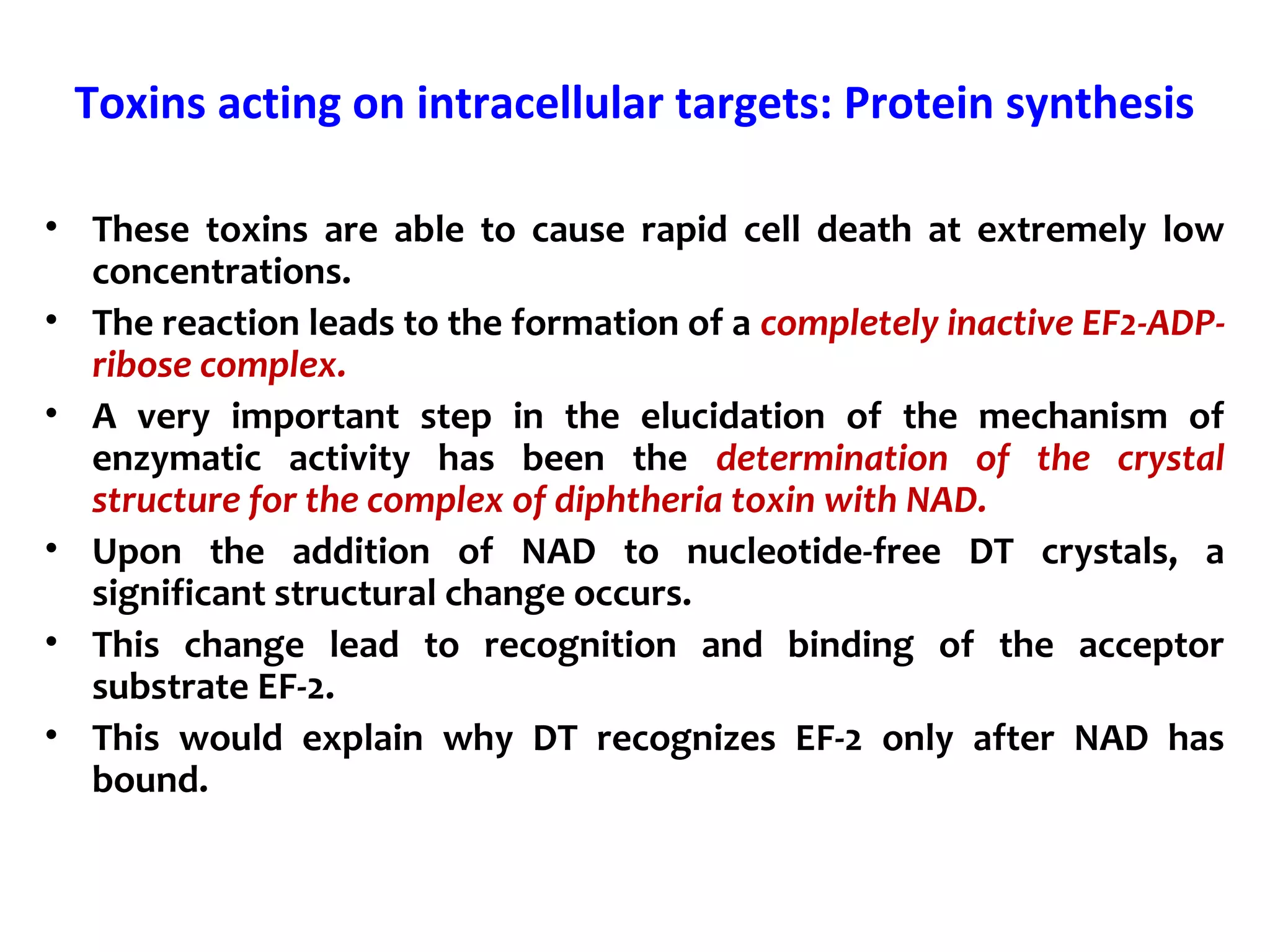
• These toxins are able to cause rapid cell death at extremely low
concentrations.
• The reaction leads to the formation of a completely inactive EF2-ADP-
ribose complex.
• A very important step in the elucidation of the mechanism of
enzymatic activity has been the determination of the crystal
structure for the complex of diphtheria toxin with NAD.
• Upon the addition of NAD to nucleotide-free DT crystals, a
significant structural change occurs.
• This change lead to recognition and binding of the acceptor
substrate EF-2.
• This would explain why DT recognizes EF-2 only after NAD has
bound.
Toxins acting on intracellular targets:
Protein synthesis
Toxins acting on intracellular targets: Protein synthesis
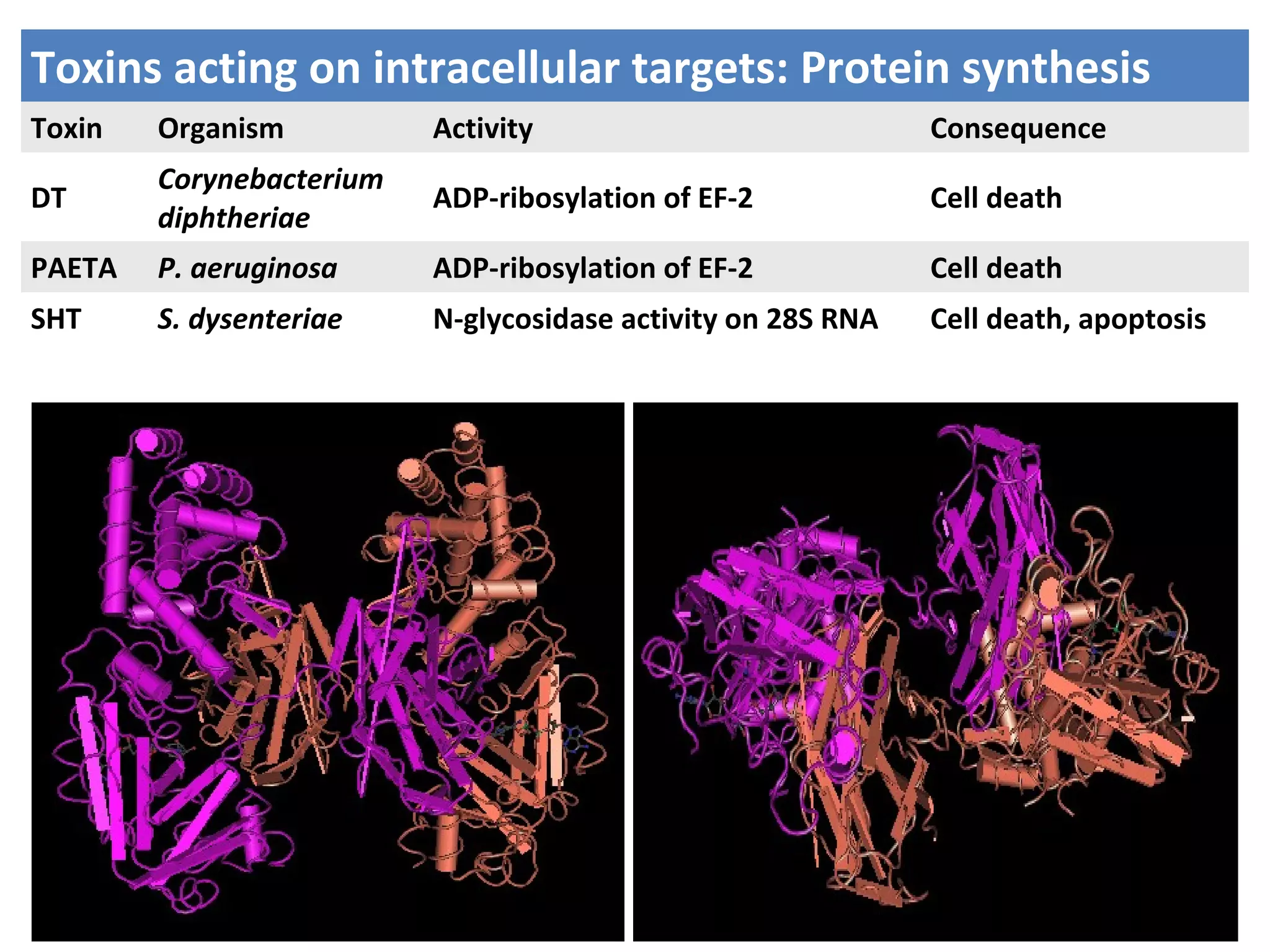
Toxin Organism Activity Consequence
DT
Corynebacterium
diphtheriae
ADP-ribosylation of EF-2 Cell death
PAETA P. aeruginosa ADP-ribosylation of EF-2 Cell death
SHT S. dysenteriae N-glycosidase activity on 28S RNA Cell death, apoptosis
Toxins acting on intracellular targets: Signal
transduction
• Two types of transduction mechanism:
– Tyrosine phosphorylation
– Modification of a receptor-coupled GTP-binding protein
• cyclic AMP
• inositol triphosphate
• diacylglycerol
Pertussis toxin
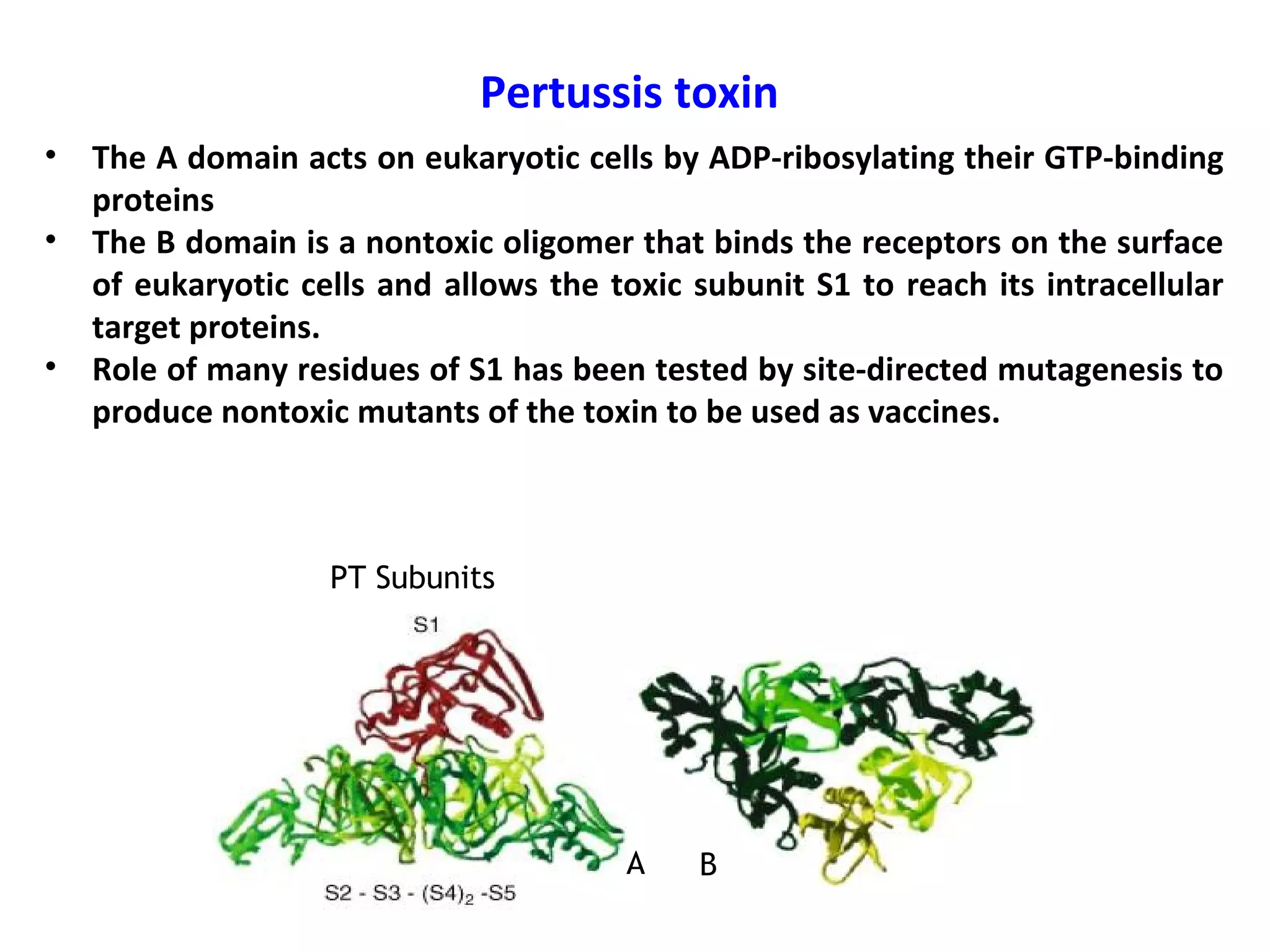
• The A domain acts on eukaryotic cells by ADP-ribosylating their GTP-binding
proteins
• The B domain is a nontoxic oligomer that binds the receptors on the surface
of eukaryotic cells and allows the toxic subunit S1 to reach its intracellular
target proteins.
• Role of many residues of S1 has been tested by site-directed mutagenesis to
produce nontoxic mutants of the toxin to be used as vaccines.
PT Subunits
A B
Cholera toxin (CT) and E. coli heat-labile enterotoxins (LT-I and
LT-II)
• Cholera toxin (CT) and E. coli heat-labile enterotoxins (LT-I and LT-II) share
an identical mechanism of action and homologous primary and 3D
structures.
• While V. cholerae exports the CT toxin into the culture medium, LT
remains associated to the outer membrane bound to lipopolysaccharide.
• The corresponding genes of CT and LT are organized in a bicistronic
operon and are located on a filamentous bacteriophage and on a plasmid,
respectively.
Clostridium difficile Toxins
• Enterotoxin A (TcdA) and cytotoxin B (TcdB) of Clostridium difficile are the
two virulence factors responsible for the induction of antibiotic-associated
diarrhea.
• The toxin genes tcdA and tcdB together with three accessory genes (tcdC-
E) constitute the pathogenicity locus (PaLoc) of C. difficile.
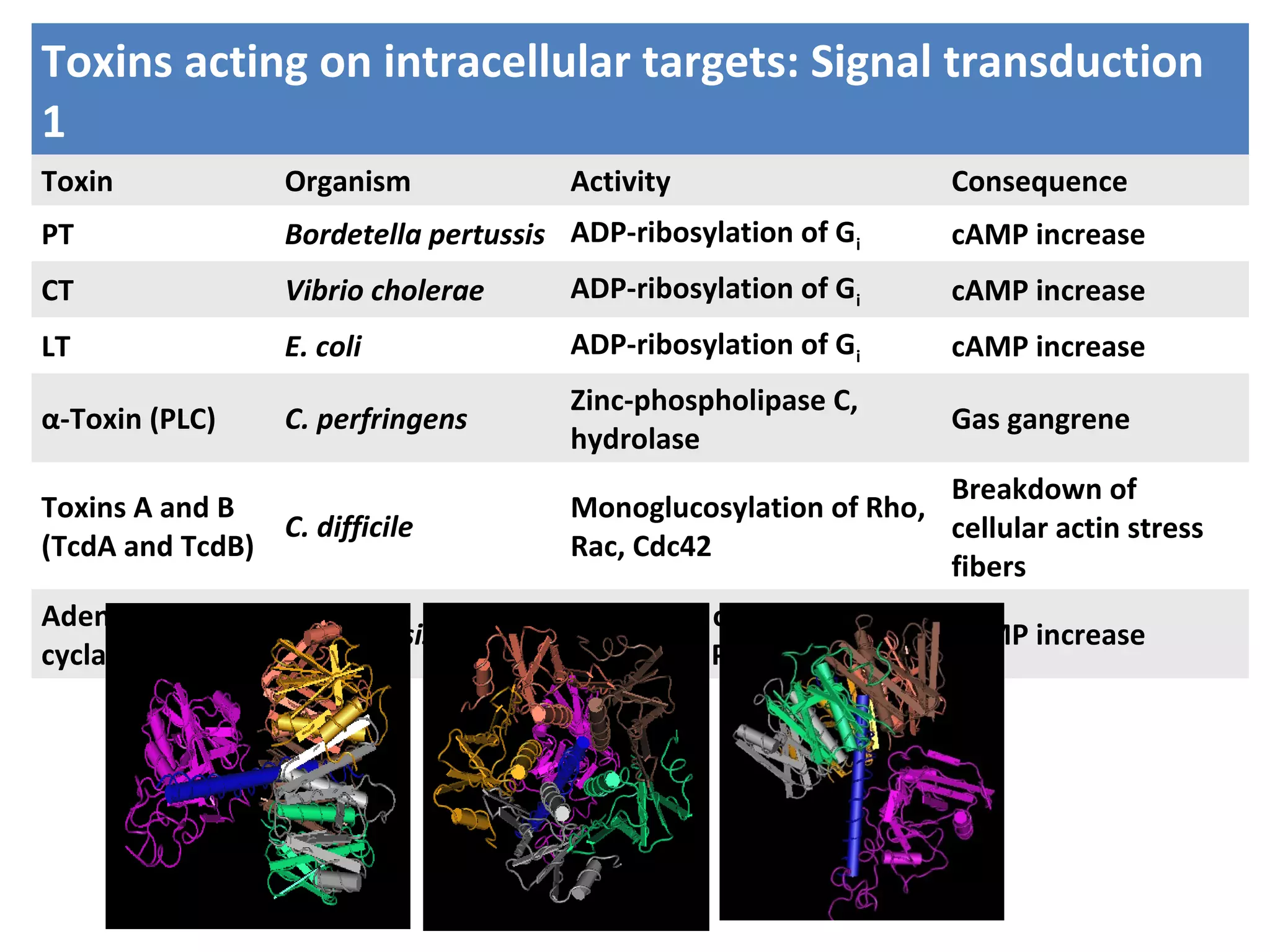
Toxins acting on intracellular targets: Signal transduction
1
Toxin Organism Activity Consequence
PT Bordetella pertussis ADP-ribosylation of Gi cAMP increase
CT Vibrio cholerae ADP-ribosylation of Gi cAMP increase
LT E. coli ADP-ribosylation of Gi cAMP increase
α-Toxin (PLC) C. perfringens
Zinc-phospholipase C,
hydrolase
Gas gangrene
Toxins A and B
(TcdA and TcdB)
C. difficile
Monoglucosylation of Rho,
Rac, Cdc42
Breakdown of
cellular actin stress
fibers
Adenylate
cyclase (CyaA)
B. pertussis
Binding to calmodulin
ATP→cAMP conversion
cAMP increase
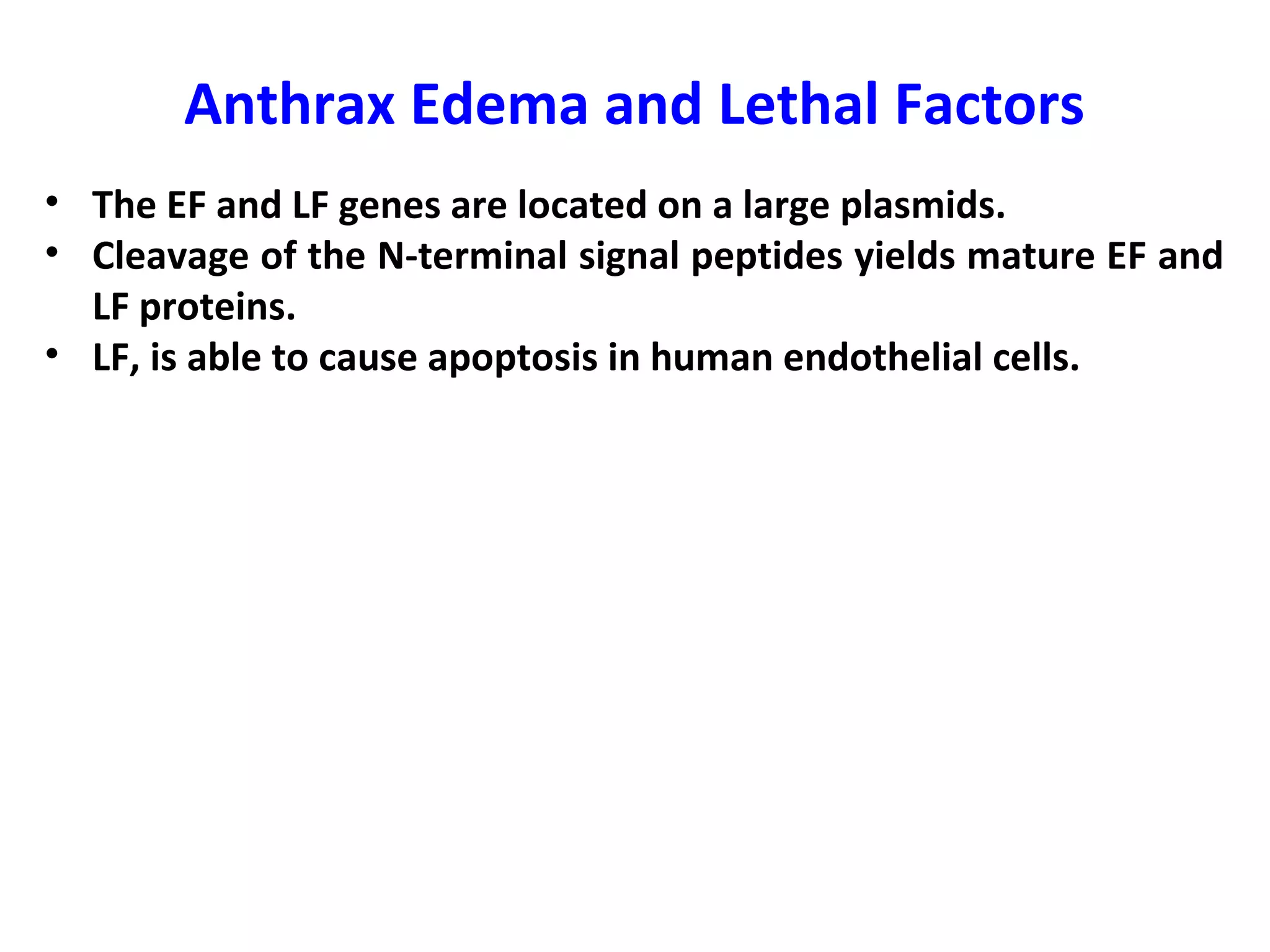
Anthrax Edema and Lethal Factors
• The EF and LF genes are located on a large plasmids.
• Cleavage of the N-terminal signal peptides yields mature EF and
LF proteins.
• LF, is able to cause apoptosis in human endothelial cells.
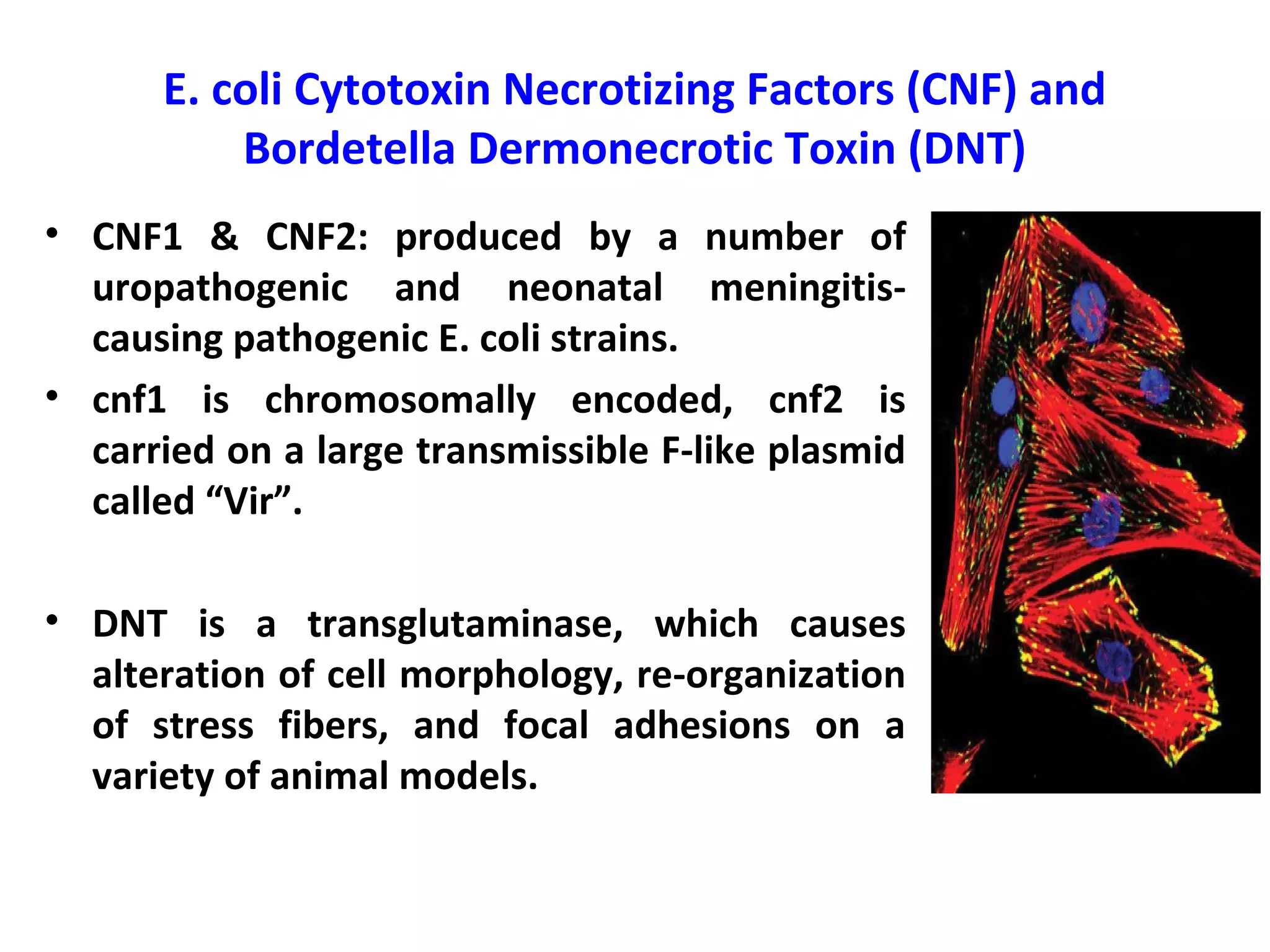
E. coli Cytotoxin Necrotizing Factors (CNF) and
Bordetella Dermonecrotic Toxin (DNT)
• CNF1 & CNF2: produced by a number of
uropathogenic and neonatal meningitis-
causing pathogenic E. coli strains.
• cnf1 is chromosomally encoded, cnf2 is
carried on a large transmissible F-like plasmid
called “Vir”.
• DNT is a transglutaminase, which causes
alteration of cell morphology, re-organization
of stress fibers, and focal adhesions on a
variety of animal models.
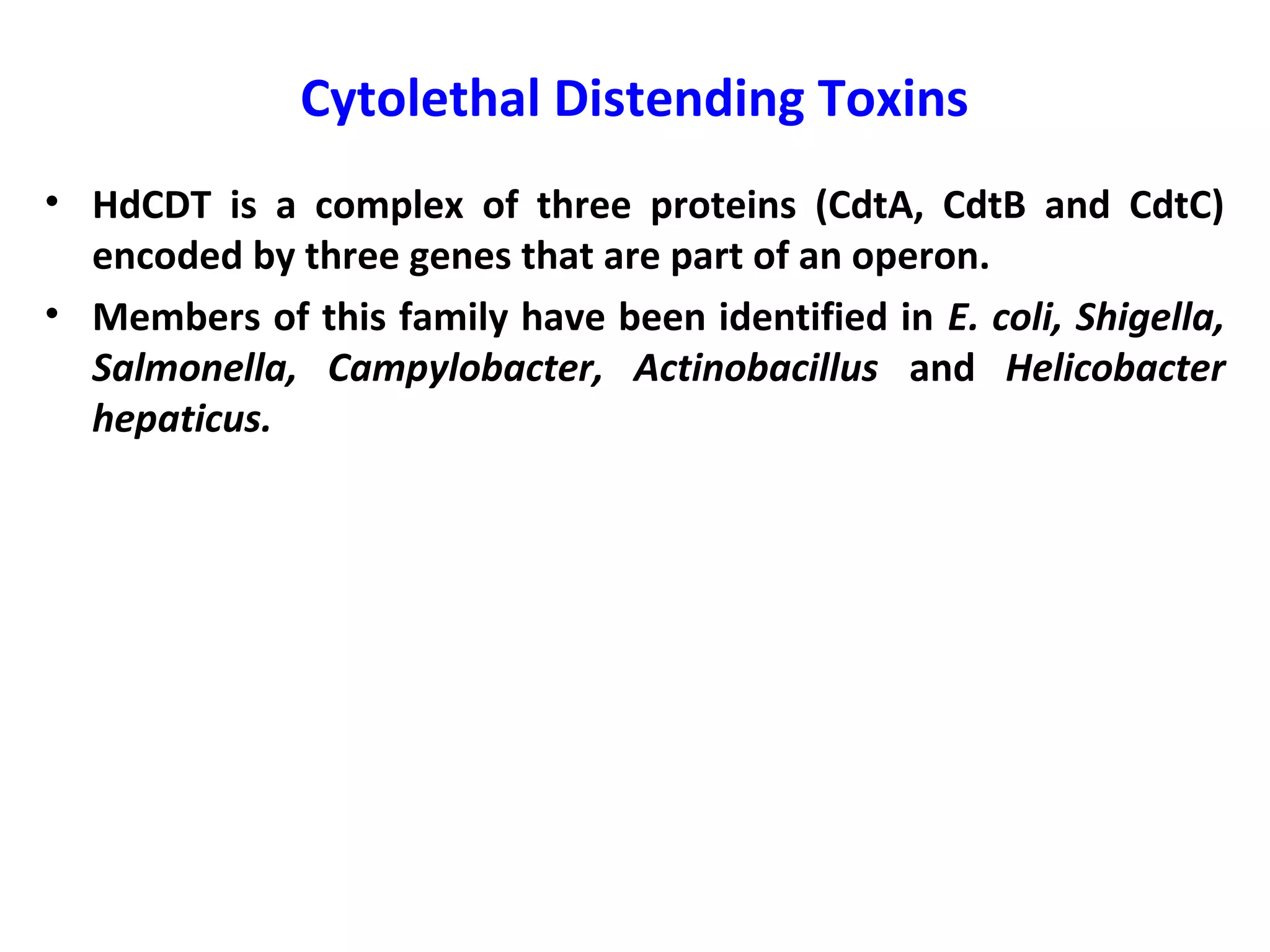
Cytolethal Distending Toxins
• HdCDT is a complex of three proteins (CdtA, CdtB and CdtC)
encoded by three genes that are part of an operon.
• Members of this family have been identified in E. coli, Shigella,
Salmonella, Campylobacter, Actinobacillus and Helicobacter
hepaticus.
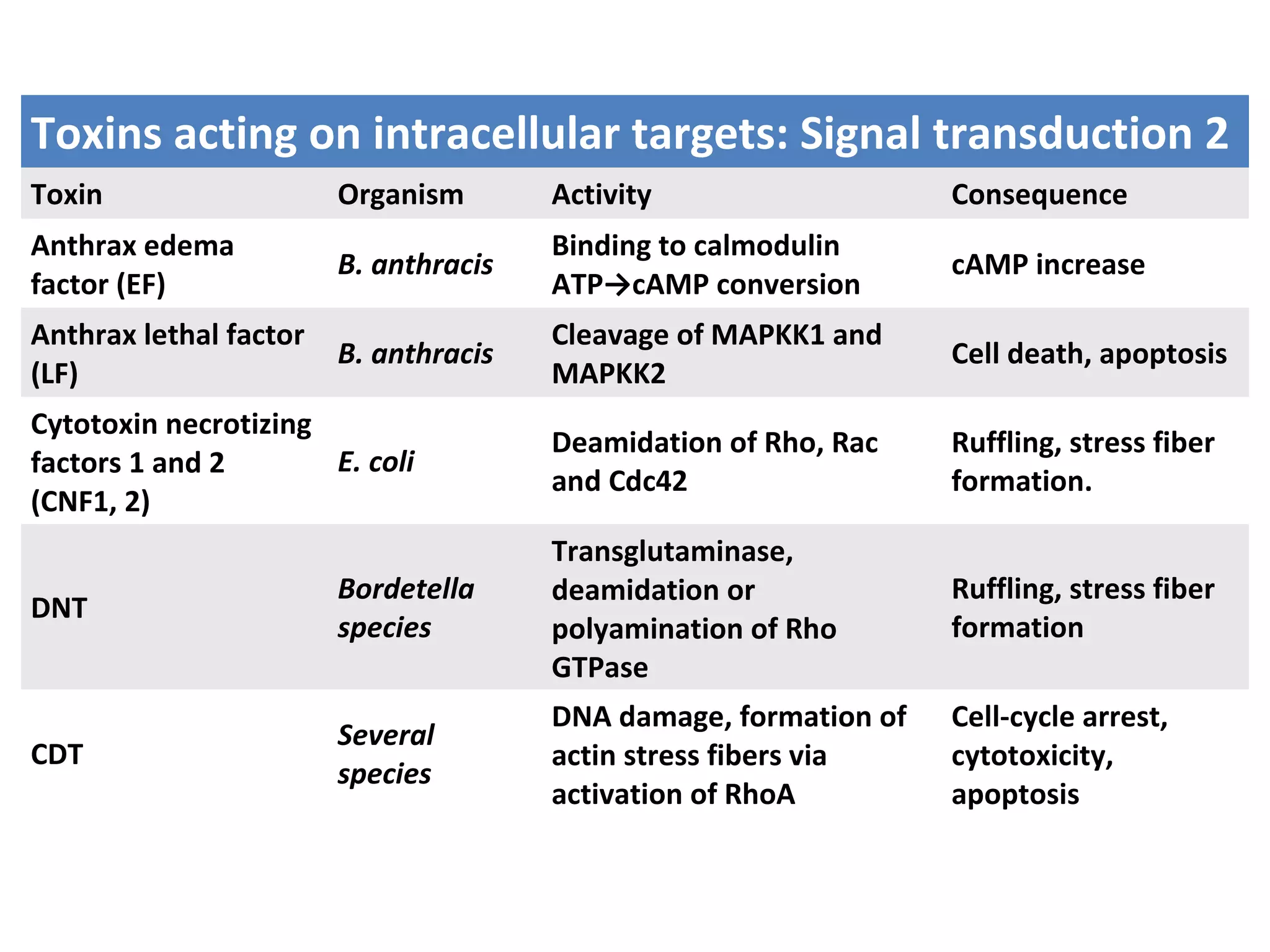
Toxins acting on intracellular targets: Signal transduction 2
Toxin Organism Activity Consequence
Anthrax edema
factor (EF)
B. anthracis
Binding to calmodulin
ATP→cAMP conversion
cAMP increase
Anthrax lethal factor
(LF)
B. anthracis
Cleavage of MAPKK1 and
MAPKK2
Cell death, apoptosis
Cytotoxin necrotizing
factors 1 and 2
(CNF1, 2)
E. coli
Deamidation of Rho, Rac
and Cdc42
Ruffling, stress fiber
formation.
DNT
Bordetella
species
Transglutaminase,
deamidation or
polyamination of Rho
GTPase
Ruffling, stress fiber
formation
CDT
Several
species
DNA damage, formation of
actin stress fibers via
activation of RhoA
Cell-cycle arrest,
cytotoxicity,
apoptosis
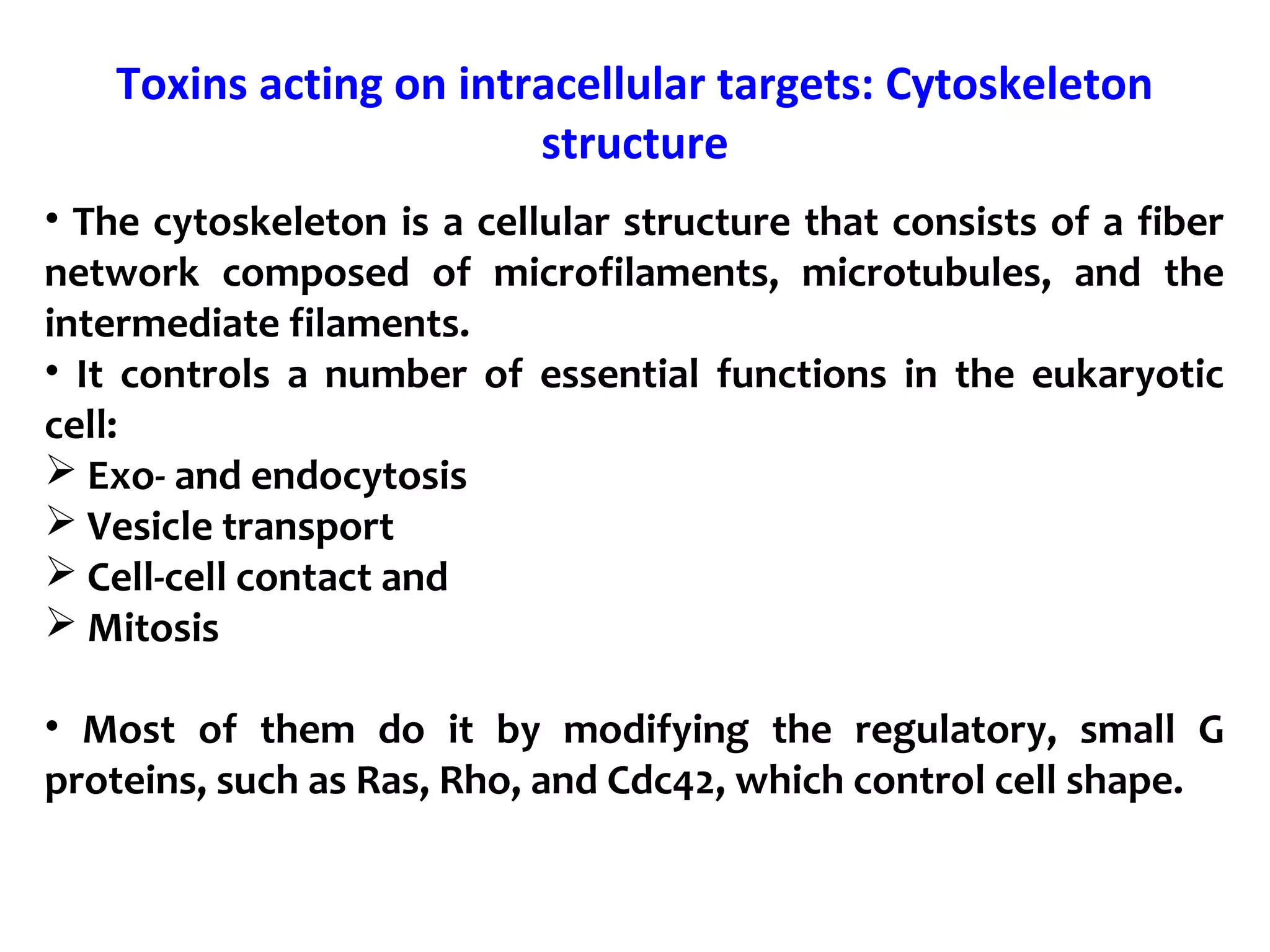
Toxins acting on intracellular targets: Cytoskeleton
structure
• The cytoskeleton is a cellular structure that consists of a fiber
network composed of microfilaments, microtubules, and the
intermediate filaments.
• It controls a number of essential functions in the eukaryotic
cell:
 Exo- and endocytosis
 Vesicle transport
 Cell-cell contact and
 Mitosis
• Most of them do it by modifying the regulatory, small G
proteins, such as Ras, Rho, and Cdc42, which control cell shape.
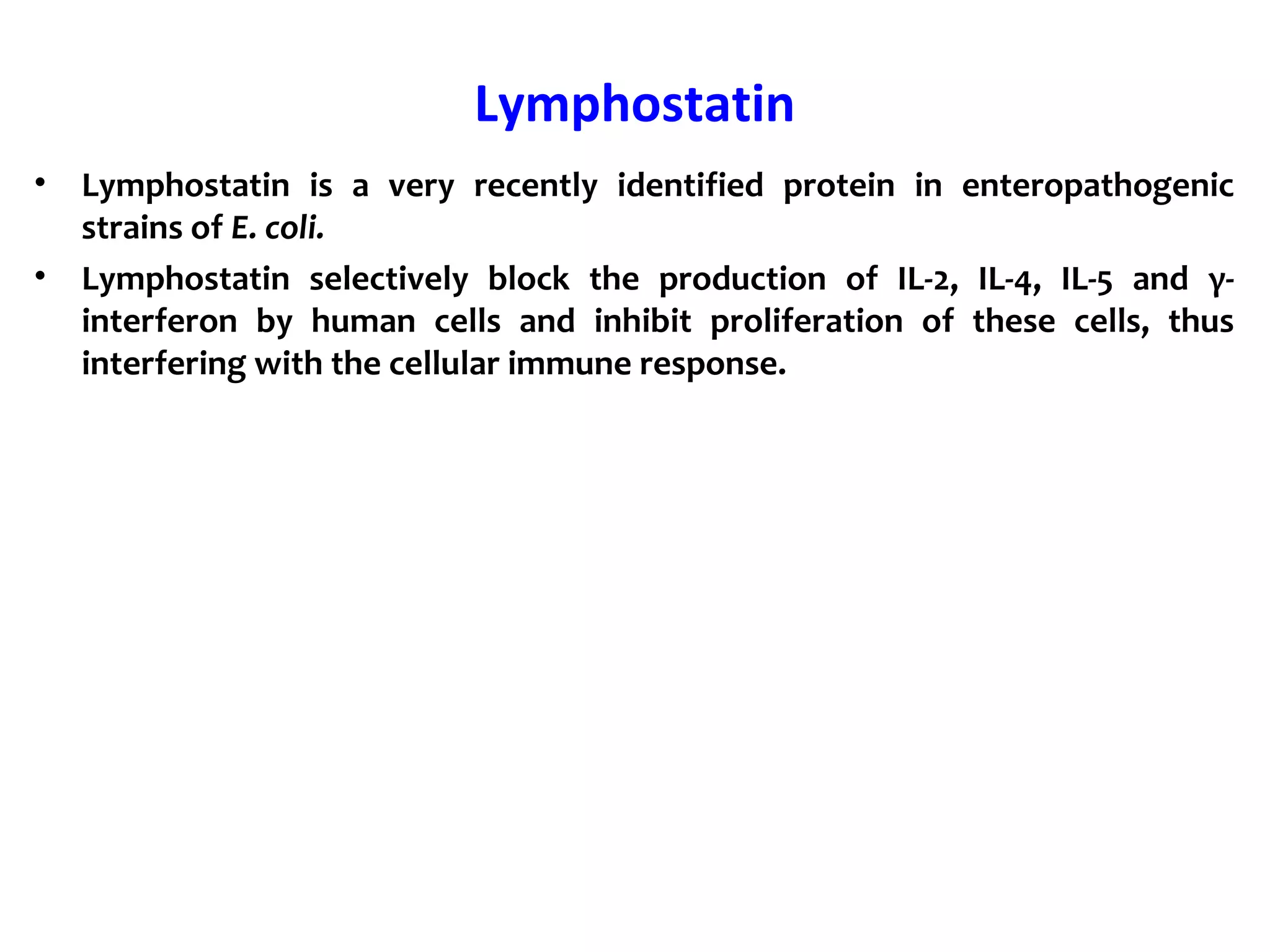
Lymphostatin
• Lymphostatin is a very recently identified protein in enteropathogenic
strains of E. coli.
• Lymphostatin selectively block the production of IL-2, IL-4, IL-5 and γ-
interferon by human cells and inhibit proliferation of these cells, thus
interfering with the cellular immune response.
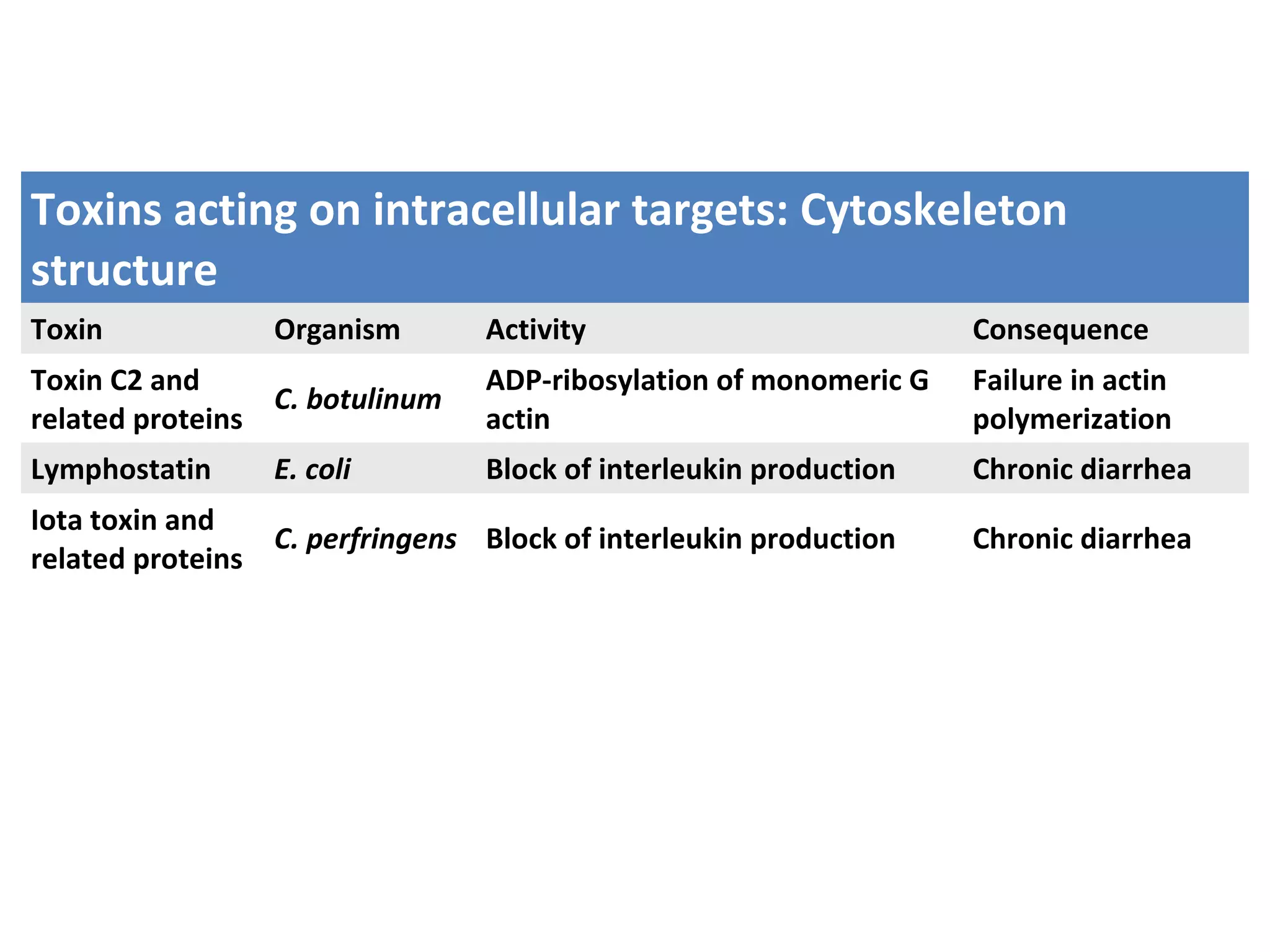
Toxins acting on intracellular targets: Cytoskeleton
structure
Toxin Organism Activity Consequence
Toxin C2 and
related proteins
C. botulinum
ADP-ribosylation of monomeric G
actin
Failure in actin
polymerization
Lymphostatin E. coli Block of interleukin production Chronic diarrhea
Iota toxin and
related proteins
C. perfringens Block of interleukin production Chronic diarrhea
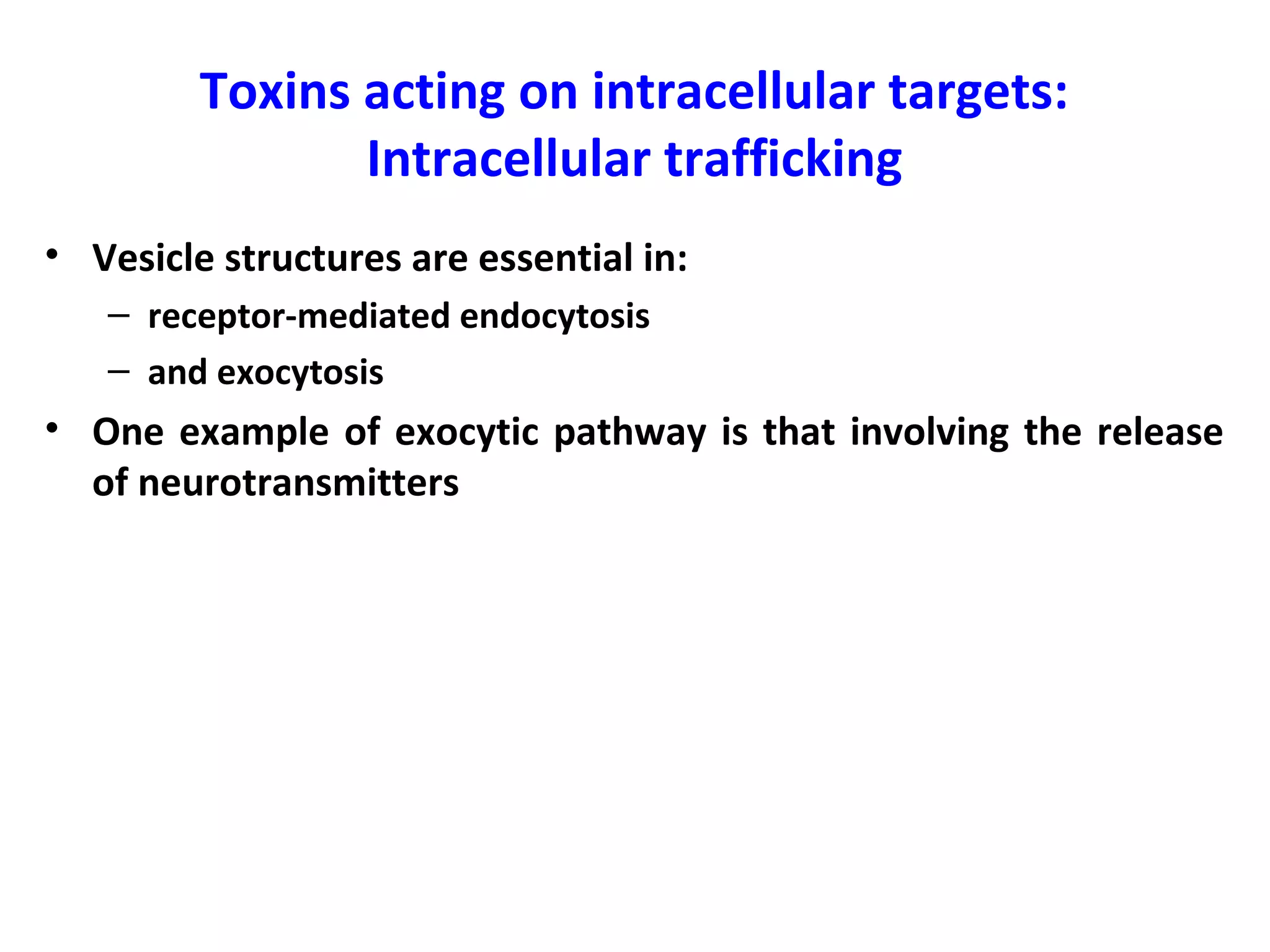
Toxins acting on intracellular targets:
Intracellular trafficking
• Vesicle structures are essential in:
– receptor-mediated endocytosis
– and exocytosis
• One example of exocytic pathway is that involving the release
of neurotransmitters
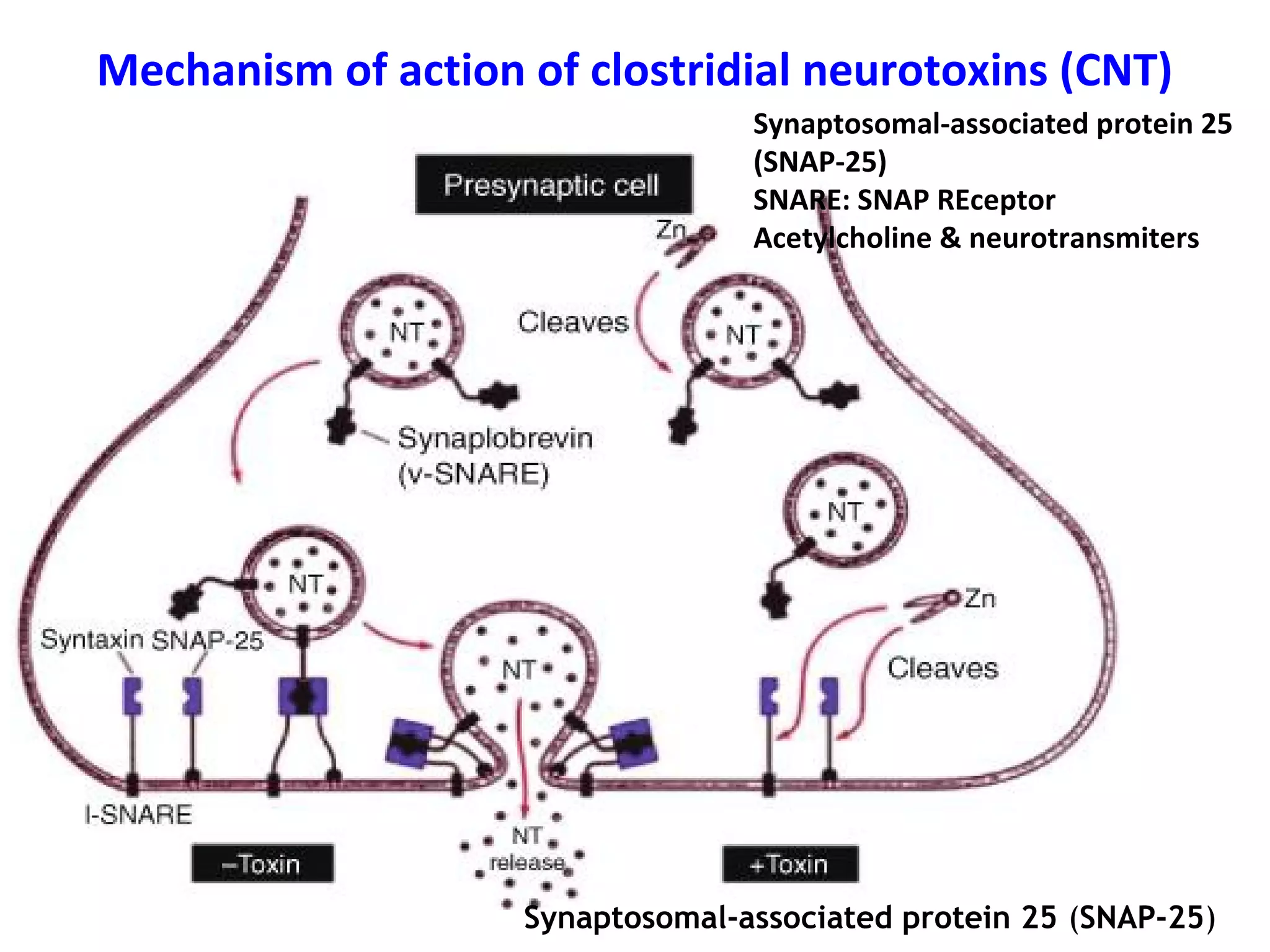
Mechanism of action of clostridial neurotoxins (CNT)
Synaptosomal-associated protein 25 (SNAP-25)
Synaptosomal-associated protein 25
(SNAP-25)
SNARE: SNAP REceptor
Acetylcholine & neurotransmiters
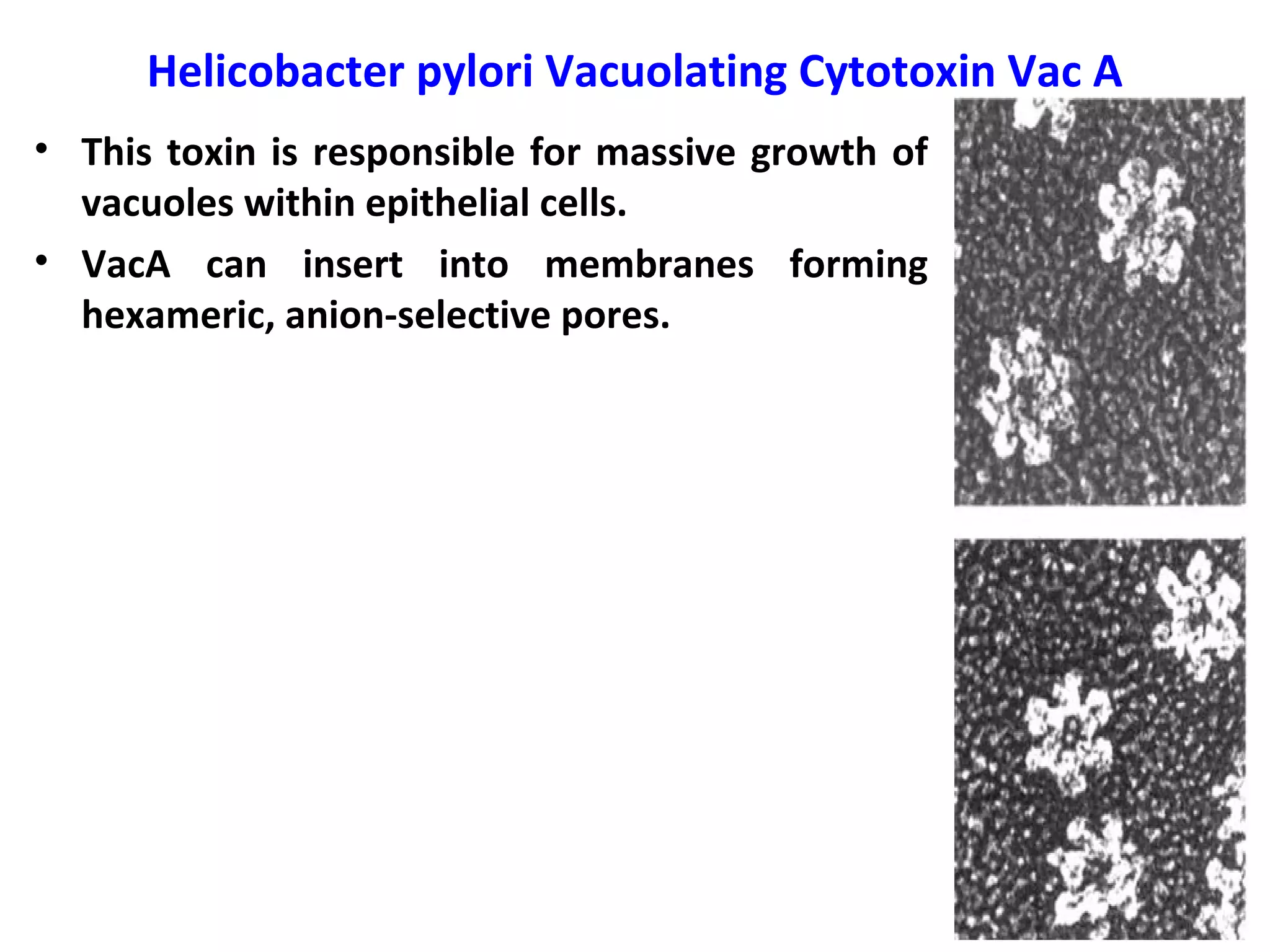
Helicobacter pylori Vacuolating Cytotoxin Vac A
• This toxin is responsible for massive growth of
vacuoles within epithelial cells.
• VacA can insert into membranes forming
hexameric, anion-selective pores.
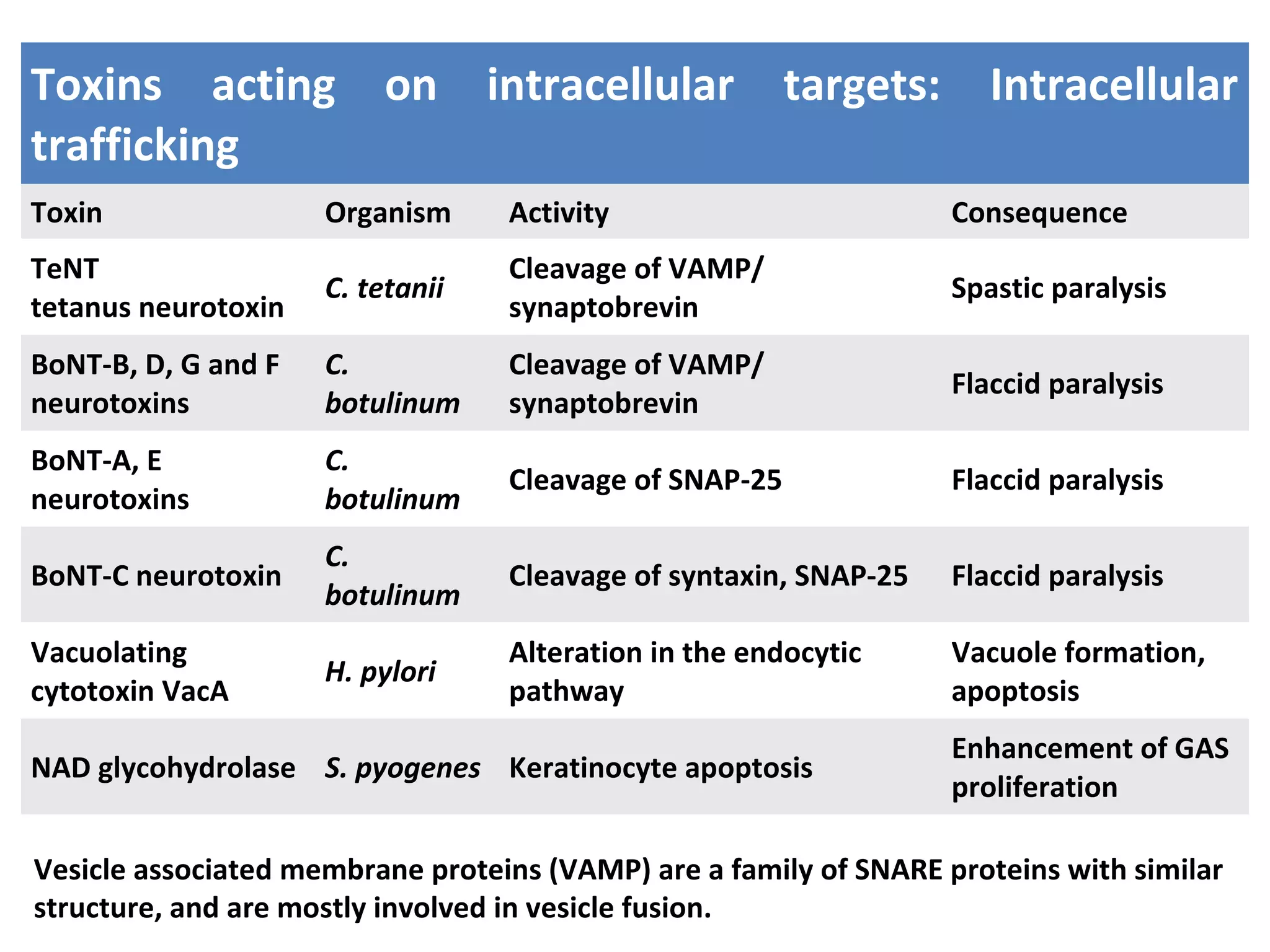
Toxins acting on intracellular targets: Intracellular
trafficking
Toxin Organism Activity Consequence
TeNT
tetanus neurotoxin
C. tetanii
Cleavage of VAMP/
synaptobrevin
Spastic paralysis
BoNT-B, D, G and F
neurotoxins
C.
botulinum
Cleavage of VAMP/
synaptobrevin
Flaccid paralysis
BoNT-A, E
neurotoxins
C.
botulinum
Cleavage of SNAP-25 Flaccid paralysis
BoNT-C neurotoxin
C.
botulinum
Cleavage of syntaxin, SNAP-25 Flaccid paralysis
Vacuolating
cytotoxin VacA
H. pylori
Alteration in the endocytic
pathway
Vacuole formation,
apoptosis
NAD glycohydrolase S. pyogenes Keratinocyte apoptosis
Enhancement of GAS
proliferation
Vesicle associated membrane proteins (VAMP) are a family of SNARE proteins with similar
structure, and are mostly involved in vesicle fusion.
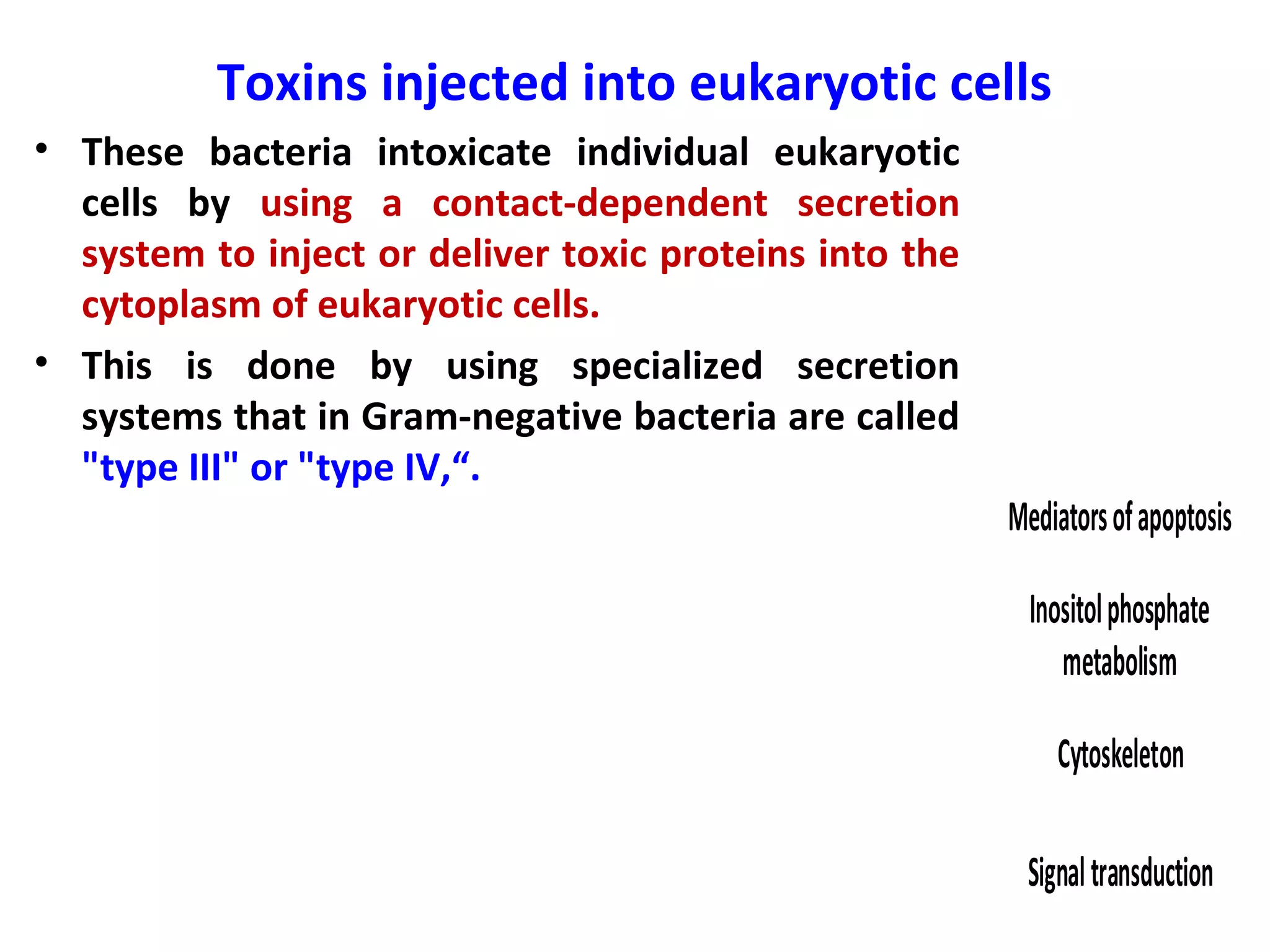
Toxins injected into eukaryotic cells
• These bacteria intoxicate individual eukaryotic
cells by using a contact-dependent secretion
system to inject or deliver toxic proteins into the
cytoplasm of eukaryotic cells.
• This is done by using specialized secretion
systems that in Gram-negative bacteria are called
"type III" or "type IV,“.
Actingon
intracellular
targets
Injectedinto
eukaryoticcells
Actingonthe
cellsurface
Immunesystem
(Superantigens)
Class
Surfacemolecules
Cellmembrane
Largepore-formingtoxins
Proteinsynthesis Mediatorsofapoptosis
Signaltransduction
Cytoskeletonstructure
Intracellulartrafficking
Inositolphosphate
metabolism
Cytoskeleton
Signaltransduction
Toxins injected into eukaryotic cells: Mediators of
apoptosis: IpaB in Shigella
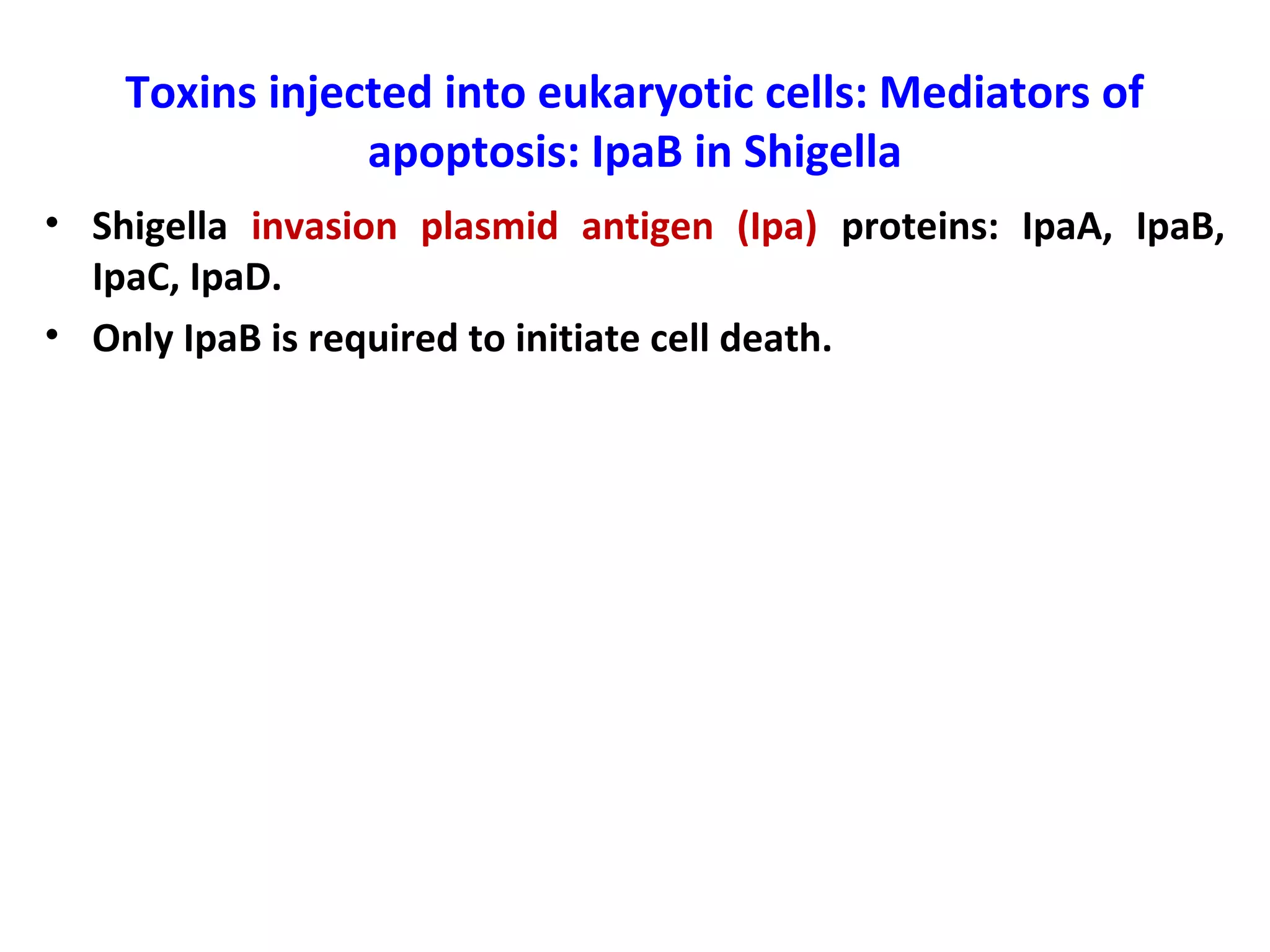
• Shigella invasion plasmid antigen (Ipa) proteins: IpaA, IpaB,
IpaC, IpaD.
• Only IpaB is required to initiate cell death.
Toxins injected into eukaryotic cells: Mediators of
apoptosis: SipB in Salmonella
• Salmonella invasion protein B (SipB) is an analog of Shigella
invasin IpaB.
• In contrast to Shigella, Salmonella does not escape from the
phagosome, but it survives and multiplies within the
macrophages.
• Salmonella virulence genes are encoded by a chromosomal
operon named sip containing five genes (sipEBCDA).
Toxins injected into eukaryotic cells: Mediators of
apoptosis
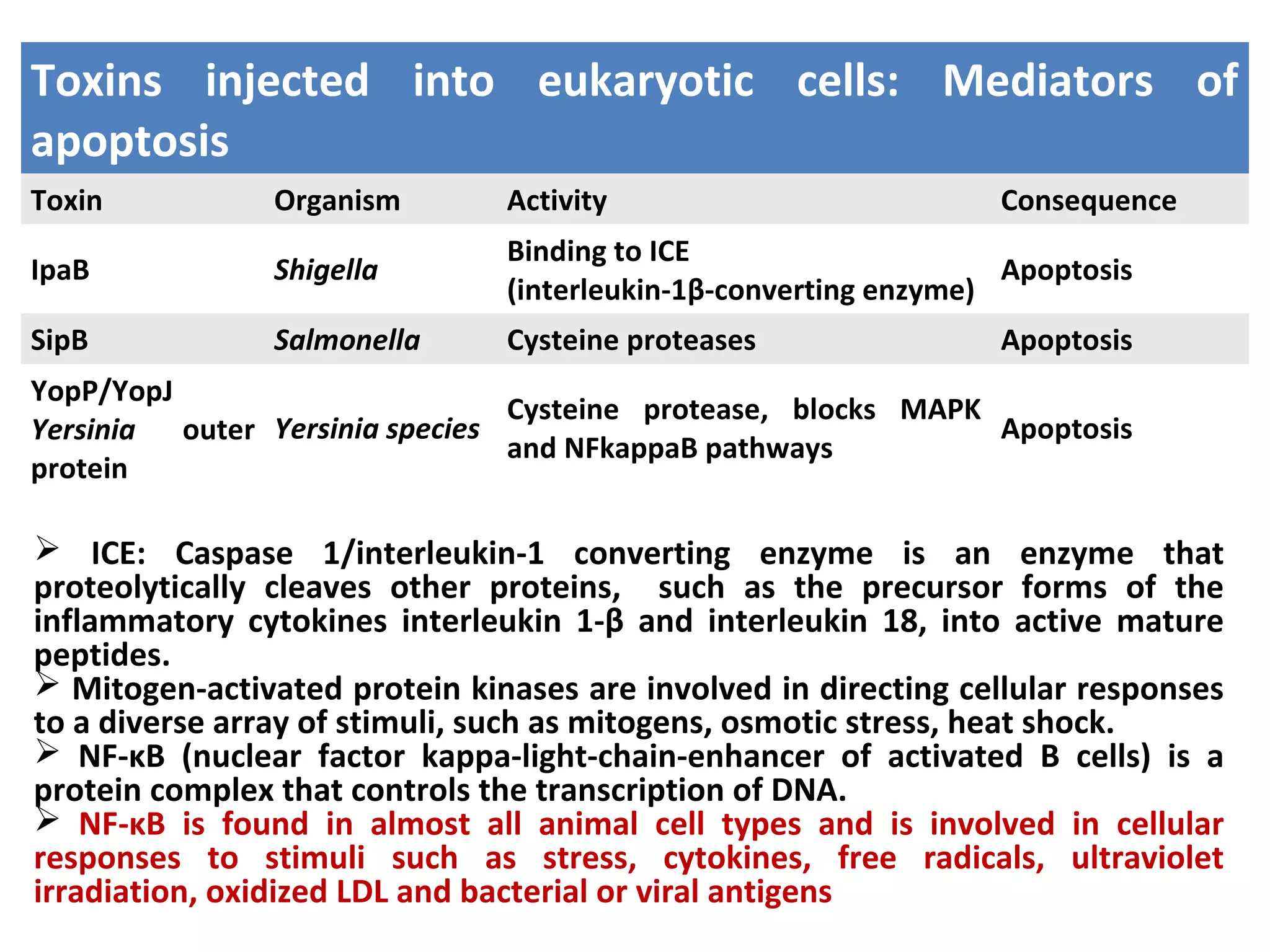
Toxin Organism Activity Consequence
IpaB Shigella
Binding to ICE
(interleukin-1β-converting enzyme)
Apoptosis
SipB Salmonella Cysteine proteases Apoptosis
YopP/YopJ
Yersinia outer
protein
Yersinia species
Cysteine protease, blocks MAPK
and NFkappaB pathways
Apoptosis
 ICE: Caspase 1/interleukin-1 converting enzyme is an enzyme that
proteolytically cleaves other proteins, such as the precursor forms of the
inflammatory cytokines interleukin 1-β and interleukin 18, into active mature
peptides.
 Mitogen-activated protein kinases are involved in directing cellular responses
to a diverse array of stimuli, such as mitogens, osmotic stress, heat shock.
 NF-κB (nuclear factor kappa-light-chain-enhancer of activated B cells) is a
protein complex that controls the transcription of DNA.
 NF-κB is found in almost all animal cell types and is involved in cellular
responses to stimuli such as stress, cytokines, free radicals, ultraviolet
irradiation, oxidized LDL and bacterial or viral antigens
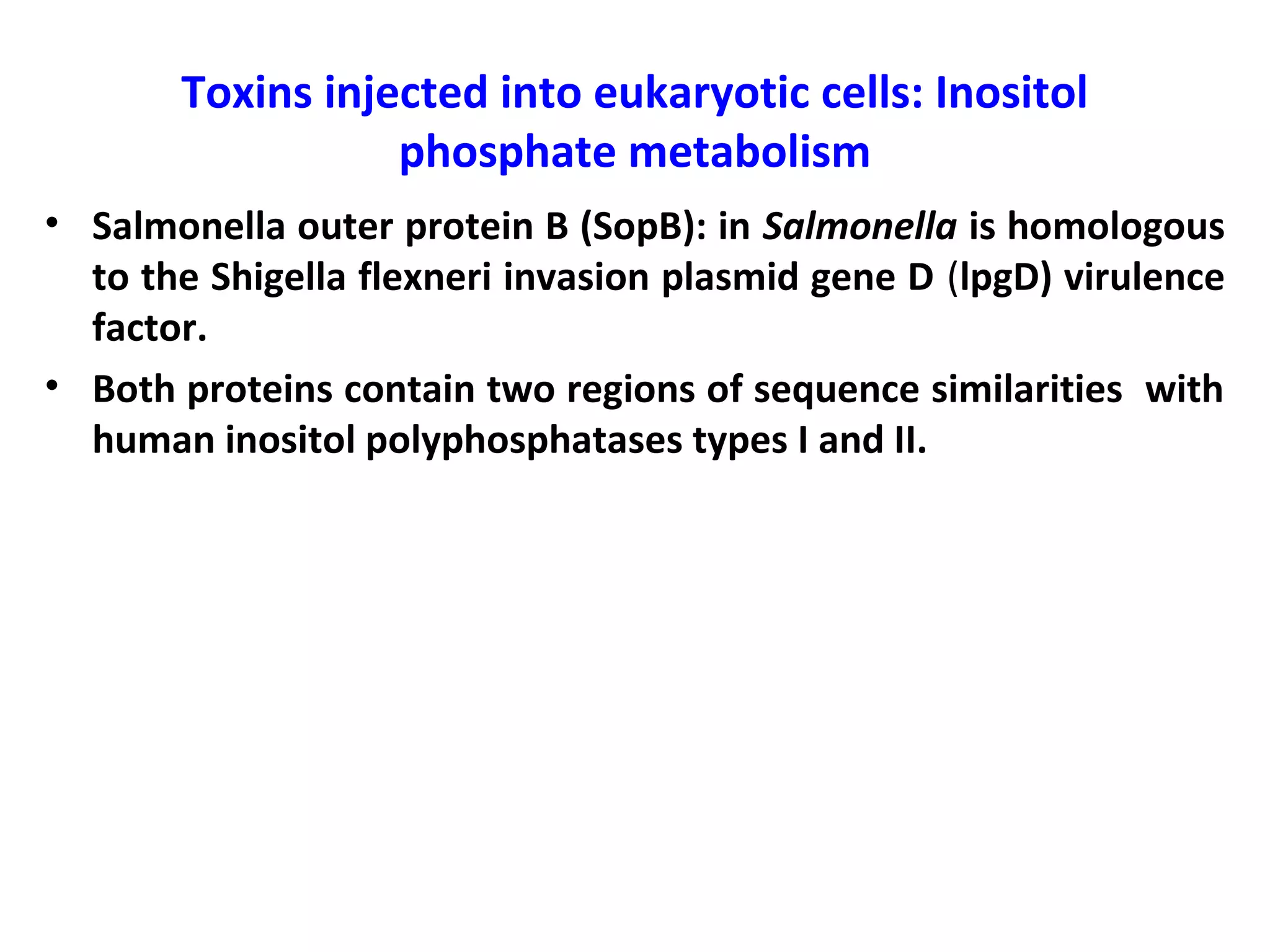
Toxins injected into eukaryotic cells: Inositol
phosphate metabolism
• Salmonella outer protein B (SopB): in Salmonella is homologous
to the Shigella flexneri invasion plasmid gene D (lpgD) virulence
factor.
• Both proteins contain two regions of sequence similarities with
human inositol polyphosphatases types I and II.
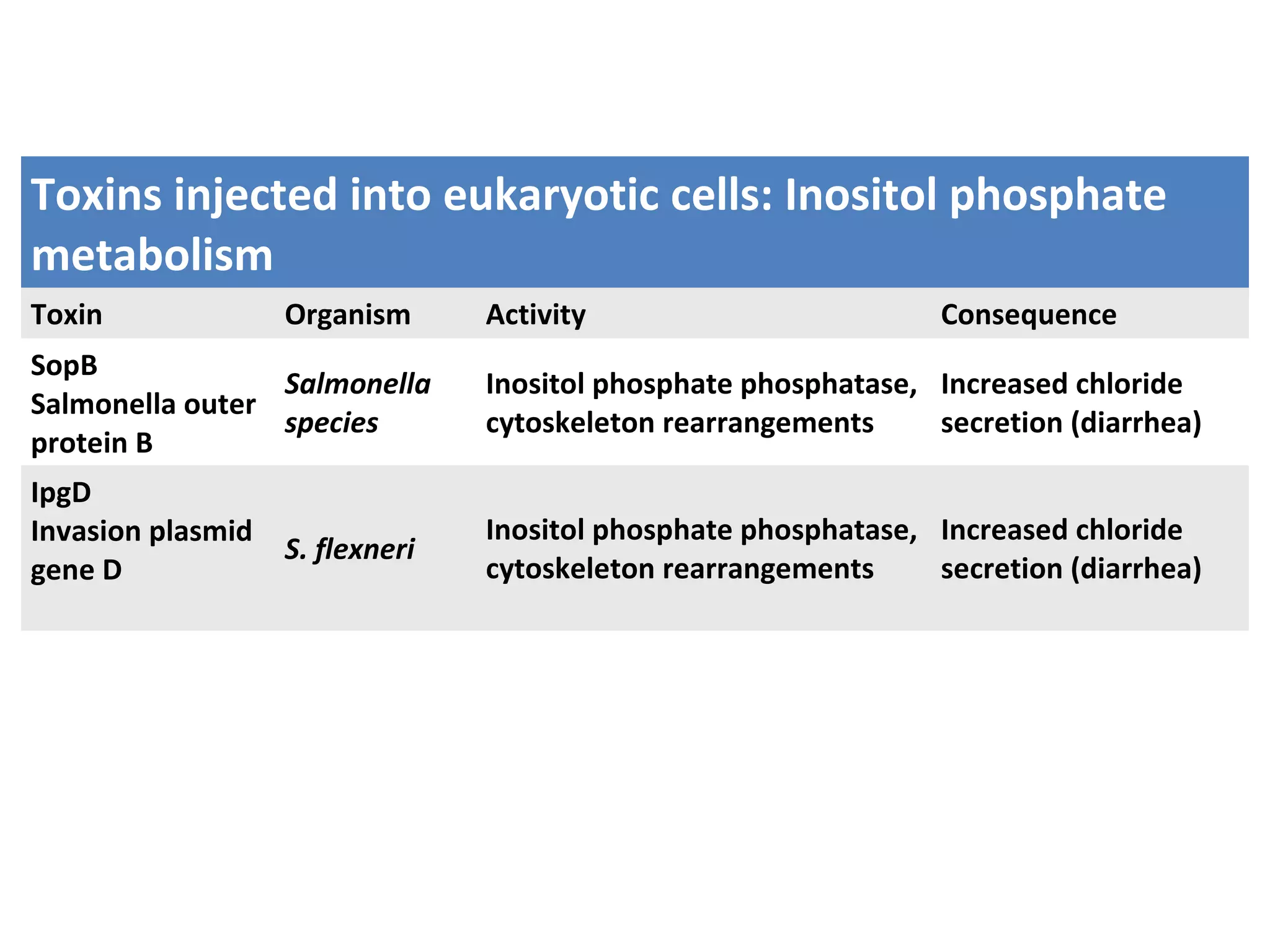
Toxins injected into eukaryotic cells: Inositol phosphate
metabolism
Toxin Organism Activity Consequence
SopB
Salmonella outer
protein B
Salmonella
species
Inositol phosphate phosphatase,
cytoskeleton rearrangements
Increased chloride
secretion (diarrhea)
IpgD
Invasion plasmid
gene D
S. flexneri
Inositol phosphate phosphatase,
cytoskeleton rearrangements
Increased chloride
secretion (diarrhea)
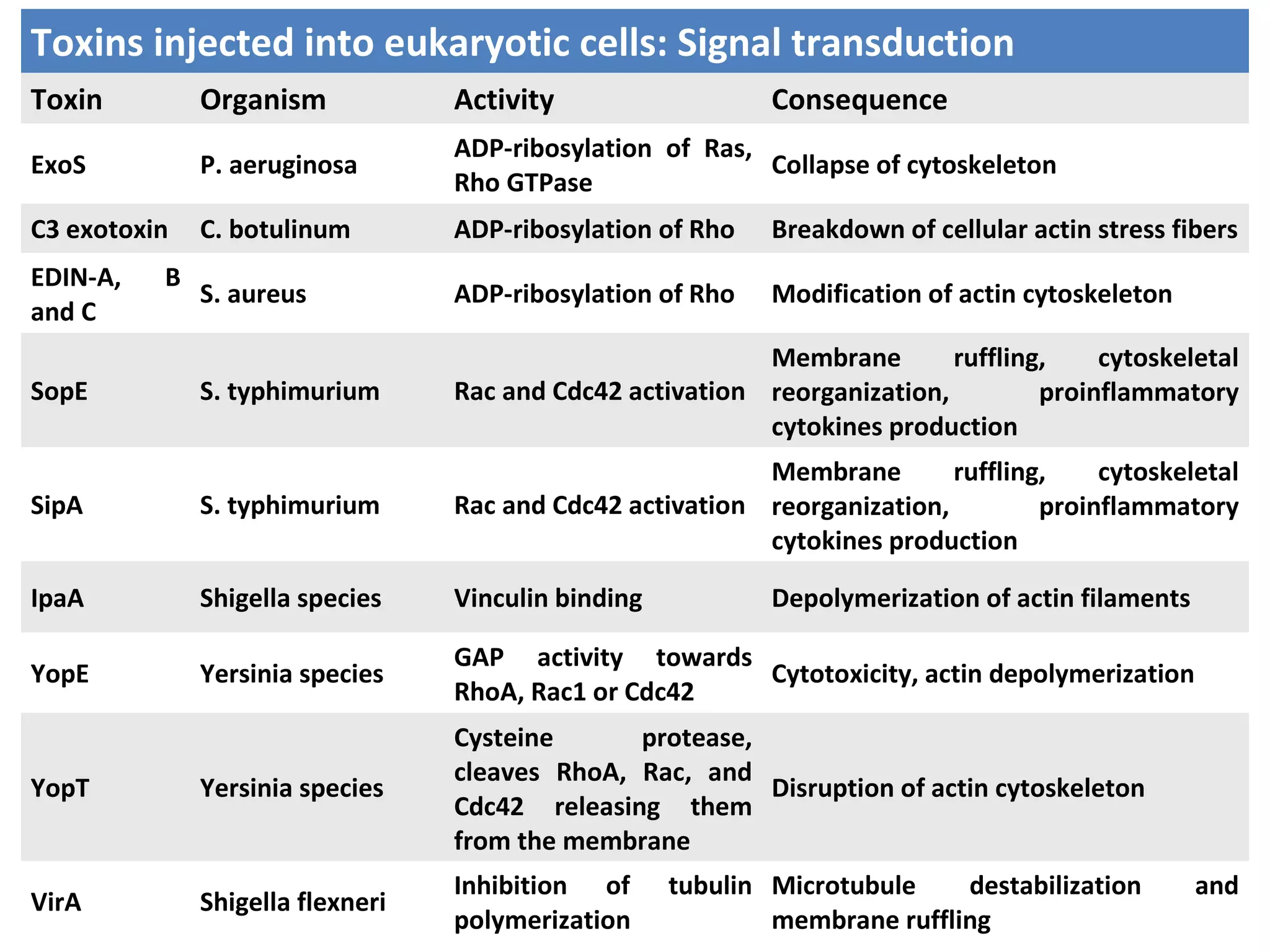
Toxins injected into eukaryotic cells: Signal transduction
Toxin Organism Activity Consequence
ExoS P. aeruginosa
ADP-ribosylation of Ras,
Rho GTPase
Collapse of cytoskeleton
C3 exotoxin C. botulinum ADP-ribosylation of Rho Breakdown of cellular actin stress fibers
EDIN-A, B
and C
S. aureus ADP-ribosylation of Rho Modification of actin cytoskeleton
SopE S. typhimurium Rac and Cdc42 activation
Membrane ruffling, cytoskeletal
reorganization, proinflammatory
cytokines production
SipA S. typhimurium Rac and Cdc42 activation
Membrane ruffling, cytoskeletal
reorganization, proinflammatory
cytokines production
IpaA Shigella species Vinculin binding Depolymerization of actin filaments
YopE Yersinia species
GAP activity towards
RhoA, Rac1 or Cdc42
Cytotoxicity, actin depolymerization
YopT Yersinia species
Cysteine protease,
cleaves RhoA, Rac, and
Cdc42 releasing them
from the membrane
Disruption of actin cytoskeleton
VirA Shigella flexneri
Inhibition of tubulin
polymerization
Microtubule destabilization and
membrane ruffling
Toxins injected into eukaryotic cells: Signal transduction
Toxin Organism Activity Consequence
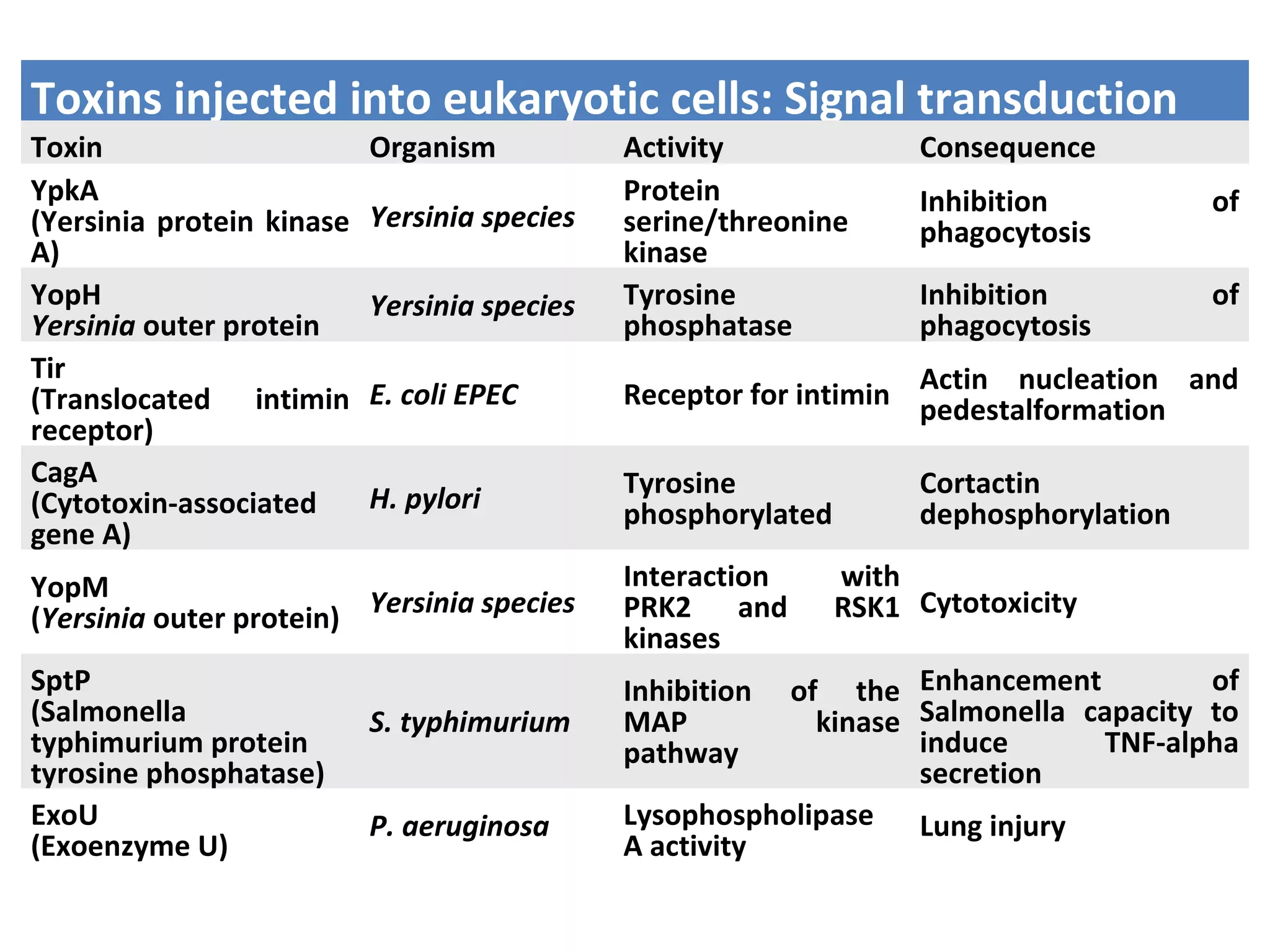
YpkA
(Yersinia protein kinase
A)
Yersinia species
Protein
serine/threonine
kinase
Inhibition of
phagocytosis
YopH
Yersinia outer protein
Yersinia species Tyrosine
phosphatase
Inhibition of
phagocytosis
Tir
(Translocated intimin
receptor)
E. coli EPEC Receptor for intimin Actin nucleation and
pedestalformation
CagA
(Cytotoxin-associated
gene A)
H. pylori Tyrosine
phosphorylated
Cortactin
dephosphorylation
YopM
(Yersinia outer protein) Yersinia species
Interaction with
PRK2 and RSK1
kinases
Cytotoxicity
SptP
(Salmonella
typhimurium protein
tyrosine phosphatase)
S. typhimurium
Inhibition of the
MAP kinase
pathway
Enhancement of
Salmonella capacity to
induce TNF-alpha
secretion
ExoU
(Exoenzyme U)
P. aeruginosa Lysophospholipase
A activity
Lung injury
Toxins with unknown mechanism of action
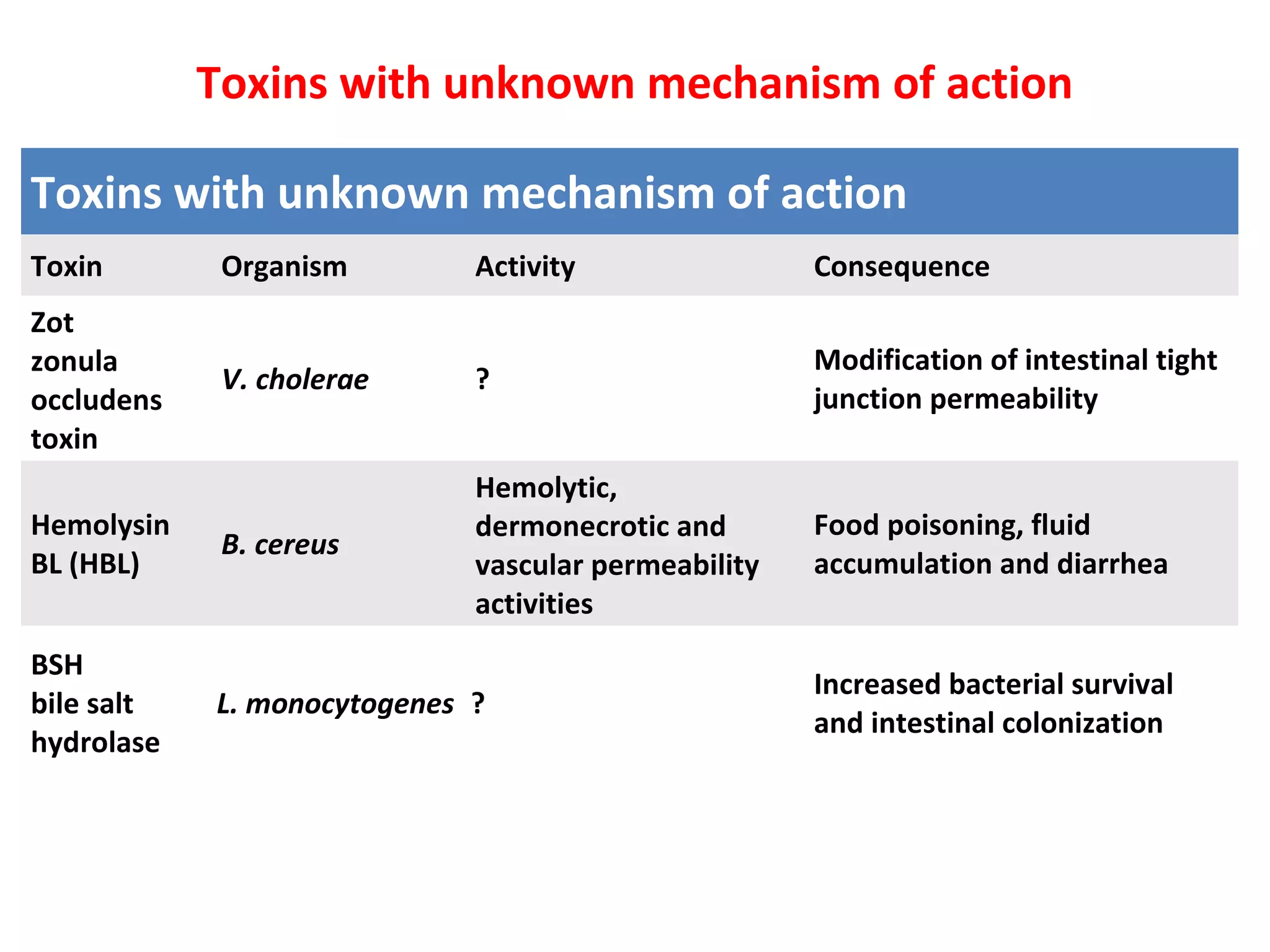
Toxin Organism Activity Consequence
Zot
zonula
occludens
toxin
V. cholerae ?
Modification of intestinal tight
junction permeability
Hemolysin
BL (HBL)
B. cereus
Hemolytic,
dermonecrotic and
vascular permeability
activities
Food poisoning, fluid
accumulation and diarrhea
BSH
bile salt
hydrolase
L. monocytogenes ?
Increased bacterial survival
and intestinal colonization
Toxins with unknown mechanism of action
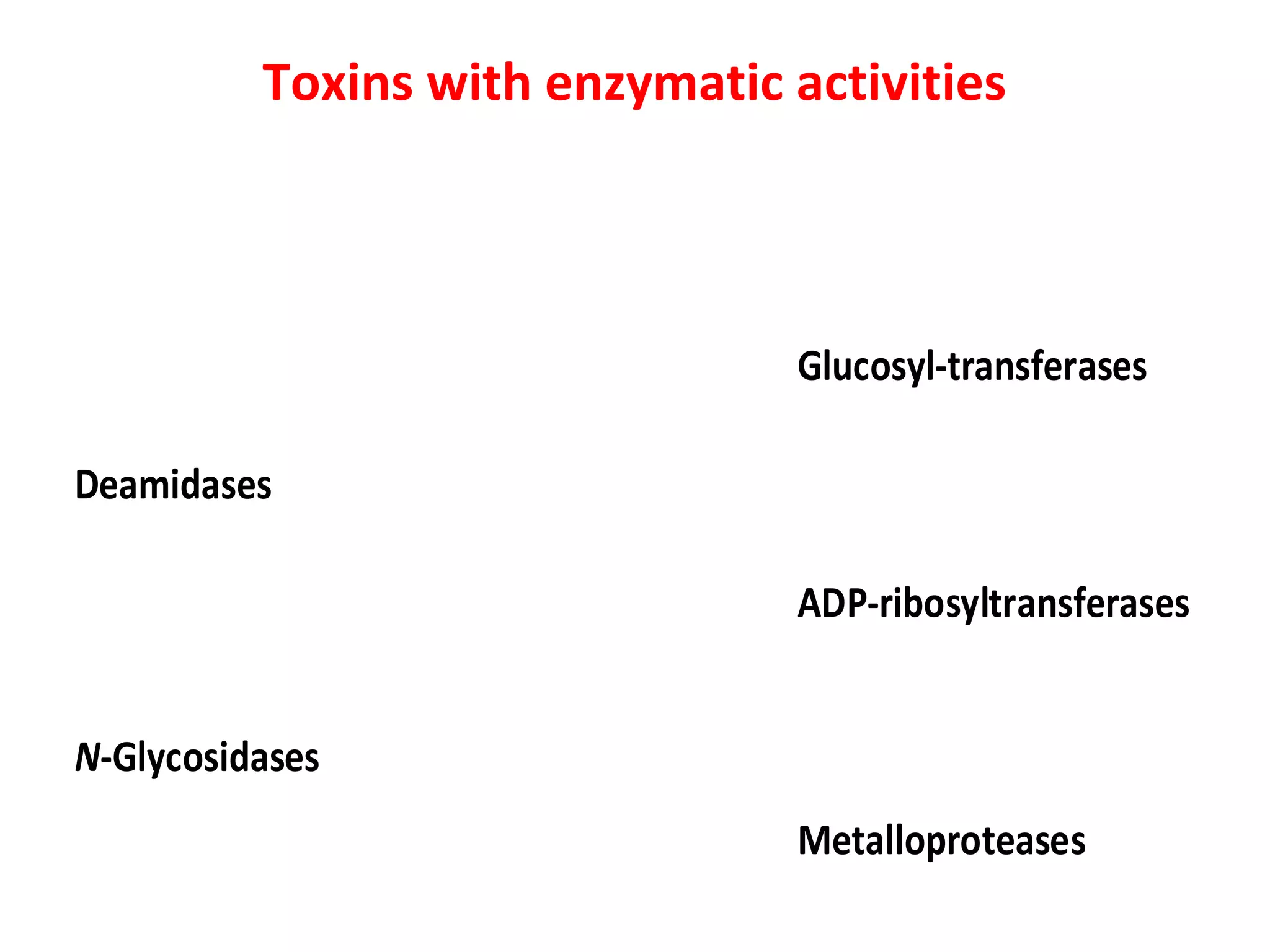
Toxins with enzymatic activities
Enzymatic activities
Glucosyl-transferases
Deamidases
ADP-ribosyltransferases
N-Glycosidases
Metalloproteases
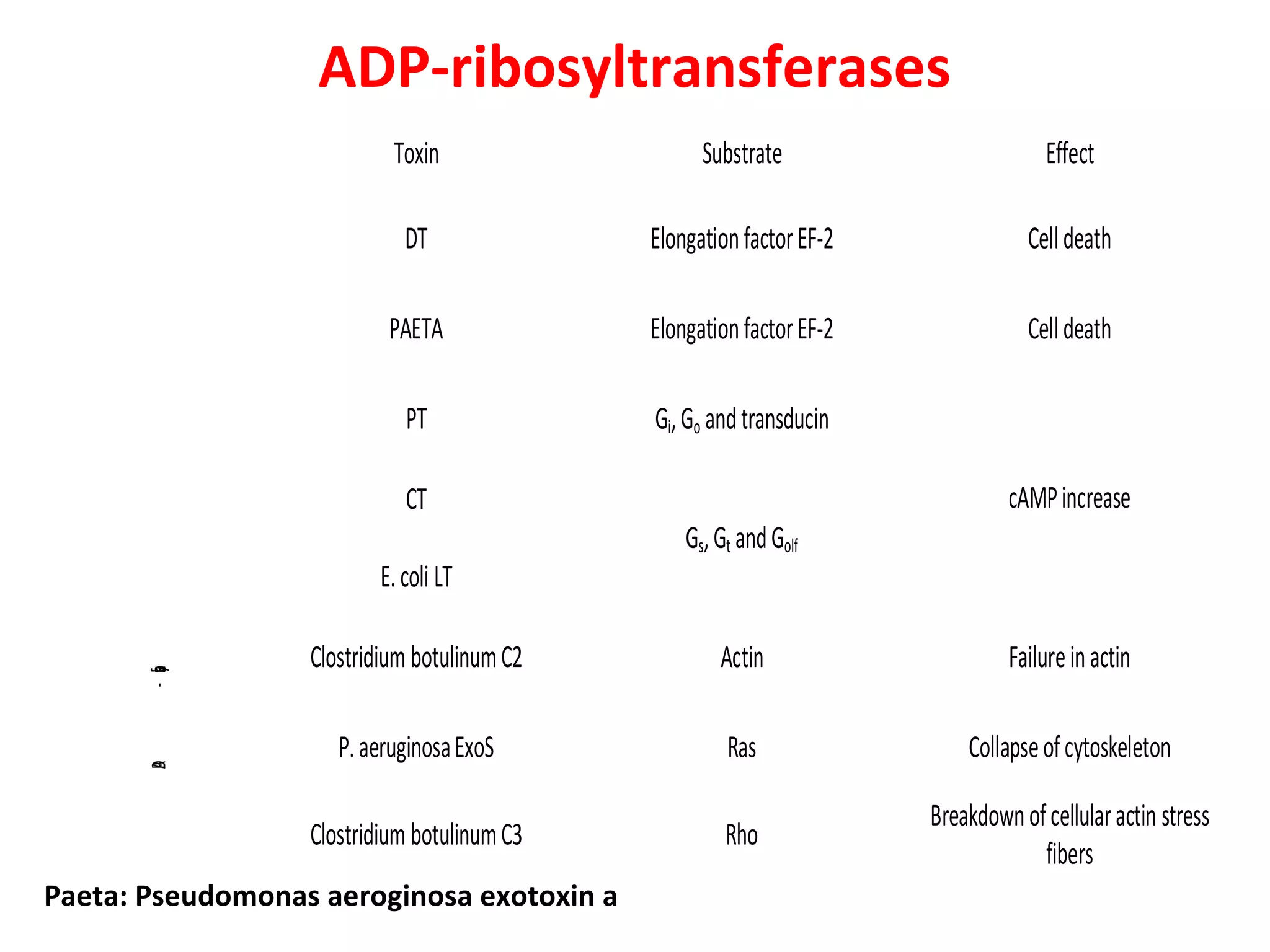
ADP-ribosyltransferases
DT ElongationfactorEF-2 Celldeath
PAETA ElongationfactorEF-2 Celldeath
PT Gi,Go andtransducin
CT
Gs,Gt andGolf
cAMPincrease
E.coli LT
Clostridium botulinumC2 Actin Failureinactin
P.aeruginosaExoS Ras Collapseofcytoskeleton
Clostridium botulinumC3 Rho
Breakdownofcellularactin stress
fibers
ADP-ribosyltransferases Toxin Substrate Effect
Paeta: Pseudomonas aeroginosa exotoxin a
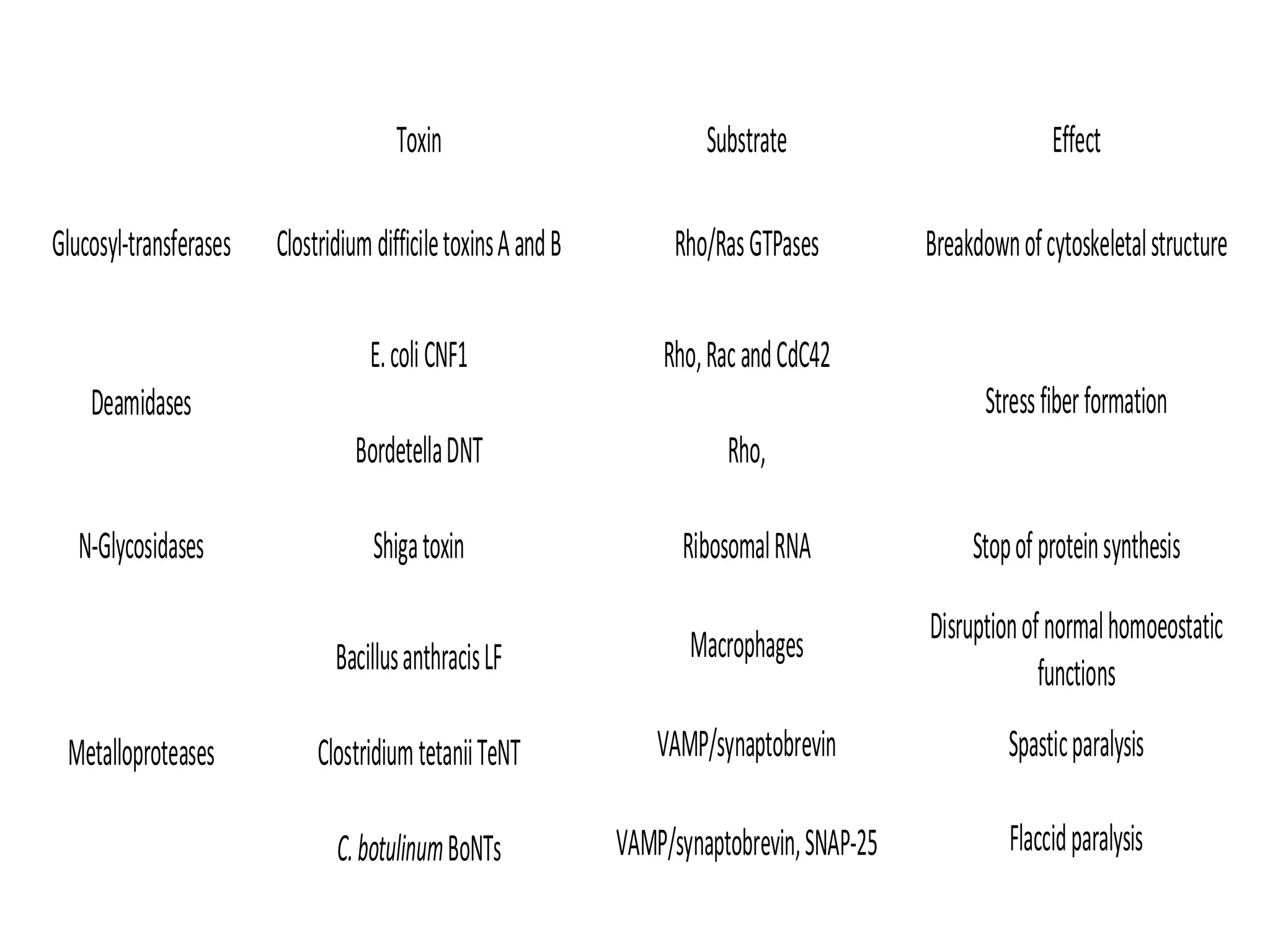
ClostridiumdifficiletoxinsAandB Rho/RasGTPases Breakdownofcytoskeletalstructure
Toxin Substrate Effect
Glucosyl-transferases
Deamidases
E.coliCNF1 Rho,RacandCdC42
BordetellaDNT Rho,
Stressfiberformation
Shigatoxin RibosomalRNA
Disruptionofnormalhomoeostatic
functions
N-Glycosidases
Metalloproteases
BacillusanthracisLF Macrophages
ClostridiumtetaniiTeNT VAMP/synaptobrevin Spasticparalysis
FlaccidparalysisC.botulinumBoNTs VAMP/synaptobrevin,SNAP-25
Stopofproteinsynthesis
Thanks
Acknowledgement: All the presentations available online on the
subject are duly acknowledged.
Disclaimer: The author bear no responsibility with regard to the
source and authenticity of the content.

Classification and nomenclature of bacterial toxins

  • 1.
    Classification of BacterialToxins Dr Ravi Kant Agrawal, MVSc, PhD, Senior Scientist (Veterinary Microbiology) Food Microbiology Laboratory Division of Livestock Products Technology ICAR-Indian Veterinary Research Institute Izatnagar 243122 (UP) India
  • 2.
    Chemical Poisons VsBiological Toxins • Poison: A chemical substance that can cause illness or death when it enters our bodies. • Toxin: A poison of biological origin, specifically a protein molecule produced by a plant, animal or microbe. • The terms are often used interchangeably. • Toxins from bacteria are large protein molecules. • Mycotoxins from molds are much smaller. • Frequently toxins are the main pathogenic factor. • Toxigenicity: Ability of a microbe to produce toxins. • Toxemia: Presence of toxins in the blood. • Toxin effects: May include fever, cardiovascular problems, diarrhea, shock, destruction of red blood cells and blood vessels, and nervous system disruptions. • Of 220 known bacterial toxins, 40% damage eucaryotic cell membranes. • Two types of toxins: • Exotoxins • Endotoxins
  • 3.
    What are toxins? A toxin (from Ancient Greek Ancient Greek: toxikon) is a poisonous substance produced within living cells or organisms). Synthetic toxicants created by artificial processes are thus excluded.  The term was first used by organic chemist Ludwig Brieger.  Toxins can be small molecules, peptides, or proteins that are capable of causing disease on contact with or absorption by body tissues interacting with biological macromolecules such as enzymes or cellular receptors.  Toxins vary greatly in their severity, ranging from usually minor (such as a bee sting) to almost immediately deadly (such as Botulinum toxin).  Toxins were the first bacterial virulence factors to be identified (Diphtheria toxin isolated in 1888), and were also the first link between bacteria and cell biology.  Cellular microbiology was, in fact, naturally born a long time ago with the study of toxins, and only recently, thanks to the sophisticated new technologies, has it expanded to include the study of many other aspects of the interactions between bacteria and host cells.
  • 4.
     There goesan ongoing terminological dispute between NATO and the Warsaw pact over whether to call a toxin a biological or chemical agent, in which NATO opted for biological agent, and the Warsaw pact, for chemical agent.  According to Title 18 of united states code, the term “toxin” means toxic material or product of plants, animals, microorganisms (including but not limited to bacteria, viruses, fungi, or protozoa) or infectious substances, whatever their origin and method of production. Radioactive symbol Toxic hazard symbol Biohazard symbol
  • 5.
    Types of toxicity •There are generally three types of toxic entities; chemical, biological, and physical: • Chemical toxicants include inorganic substances such as lead, mercury, hydrofluoric acid, and chlorine gas, and organic compounds such as methyl alcohol, most medications, and poisons from living things. • Biological toxicants include bacteria and viruses that can induce disease in living organisms. Biological toxicity can be difficult to measure because the "threshold dose" may be a single organism. Theoretically one virus, bacterium or worm can reproduce to cause a serious infection. • Physical toxicants are substances that, due to their physical nature, interfere with biological processes. Examples include coal dust, asbestos fibers or finely divided silicon dioxide, all of which can ultimately be fatal if inhaled. Corrosive chemicals possess physical toxicity because they destroy tissues, but they're not directly poisonous unless they interfere directly with biological activity.
  • 6.
    Toxicity definition • Thedegree to which a substance (a toxin or poison) can harm humans or animals. • Toxicity is the degree to which a substance can damage an organism. • Toxicity can refer to the effect on a whole organism, such as an animal , bacterium , or plant , as well as the effect on a sub-structure of the organism, such as a cell (cytotoxicity) or an organ such as the liver (hepatotoxicity). • By extension, the word may be metaphorically used to describe toxic effects on larger and more complex groups, such as the family unit or society at large. Types: • Acute toxicity involves harmful effects in an organism through a single or short- term exposure. • Subchronic toxicity is the ability of a toxic substance to cause effects for more than one year but less than the lifetime of the exposed organism. • Chronic toxicity is the ability of a substance or mixture of substances to cause harmful effects over an extended period, usually upon repeated or continuous exposure, sometimes lasting for the entire life of the exposed organism. • Toxicity depends on dose. • A central concept of toxicology is that effects are dose-dependent; even water can lead to water intoxication when taken in too high a dose, whereas for even a very toxic substance such as snake venom there is a dose below which there is no detectable toxic effect. • Some substances are beneficial at low concentration and toxic at high conc.
  • 7.
    Measuring toxicity • Assessingall aspects of the toxicity of cancer-causing agents involves additional issues, since it is not certain if there is a minimal effective dose for carcinogens , or whether the risk is just too small to see. • It is more difficult to determine the toxicity of chemical mixtures than a pure chemical, because each component displays its own toxicity, and components may interact to produce enhanced or diminished effects. Common mixtures include gasoline, cigarette smoke, and industrial waste. Even more complex are situations with more than one type of toxic entity, such as the discharge from a malfunctioning sewage treatment plant, with both chemical and biological agents. • The preclinical toxicity testing on various biological systems reveals the species-, organ- and dose- specific toxic effects of an investigational product. • The toxicity of substances can be observed by (a) studying the accidental exposures to a substance (b) in vitro studies using cells/ cell lines (c) in vivo exposure on experimental animals. • Toxicity tests are mostly used to examine specific adverse events or specific end points such as cancer, cardiotoxicity, and skin/eye irritation. • Toxicity testing also helps calculate the “No Observed Adverse Effect Level” (NOAEL) dose and is helpful for clinical studies.
  • 8.
    Antitoxin • An antitoxinis an antibody with the ability to neutralize a specific toxin. • This procedure involves injecting an animal with a safe amount of a particular toxin. Then, the animal’s body makes the antitoxin needed to neutralize the toxin. Later, the blood is withdrawn from the animal. When the antitoxin is obtained from the blood, it is purified and injected into a human or other animal, inducing passive immunity. • Antitoxin, antibody, formed in the body by the introduction of a bacterial poison, or toxin, and capable of neutralizing the toxin. People who have recovered from bacterial illnesses often develop specific antitoxins that confer immunity against recurrence. • To prevent serum sickness, it is often best to use antitoxin generated from the same species . (e.g. use human antitoxin to treat humans). • Antitoxins to diphtheria and tetanus toxins were produced by Emil Adolf von Behring and his colleagues from 1890 onwards. • The use of diphtheria antitoxin for the treatment of diphtheria was regarded by the Lancet as the "most important advance of the [19th] Century in the medical treatment of acute infectious disease". • For medical use in treating human infectious diseases, antitoxins are produced by injecting an animal with toxin; the animal, most commonly a horse, is given repeated small doses of toxin until a high concentration of the antitoxin builds up in the blood. The resulting highly concentrated preparation of antitoxins is called an antiserum.
  • 9.
    Two Main Categoriesof Toxins • Exotoxin: Easily inactivated by formaldehyde, iodine, and other chemicals to form immunogenic toxoids.
  • 10.
  • 11.
    Characteristic of endotoxinand exotoxin Property Exotoxin Endotoxin Chemical nature Protein (50-100kDa) Polysaccharide (10kDa) Relationship to cell Extracelluler Part of outer membrane Denatured by boiling Usually No Form toxoid Yes No Potency High (1 µg) Low (> 100 µg) Antigenic Yes Yes Specificity High degree Low degree Pyrogenicity Occasionally Yes Enzymatic activity Usually No
  • 12.
  • 13.
  • 15.
    Role of bacterialexotoxins in disease •In the first example, the exotoxin is produced by bacteria growing in food. When food is consumed, the preformed exotoxin is also consumed. The classical example is staphylococcal food poisoning caused solely by the ingestion of preformed enterotoxin. Since the bacteria (Staphylococcus aureus) cannot colonize the gut, they pass through the body without producing any more exotoxin; thus, this type of bacterial disease is self- limiting. •In the second example, bacteria colonize a mucosal surface but do not invade underlying tissue or enter the bloodstream. The toxin either causes disease locally or enters the bloodstream and is distributed systemically where it can cause disease at distant sites. The classical example here is the disease cholera caused by Vibrio cholerae. Once the bacteria enter the body, they adhere to the intestinal mucosa where they are not invasive but secrete the cholera toxin, which is an AB exotoxin that catalyzes an ADP – ribosylation similar to that of diphtheria exotoxin. As a result, cholera toxin stimulates hypersecretion of water and chloride ions and the patient loses massive quantities of water. •The third example of exotoxins in disease pathogenesis occurs when bacteria grow in a wound or abscess. The exotoxin causes local tissue damage or kills phagocytes that enter the infected area. A disease of this type is gas gangrene in which the exotoxin (-toxin) of Clostridium perfringens causes the tissue destruction in the wound.
  • 17.
    EXOTOXINS Can be classifiedon the basis of  Site of action  Mode of action  Biochemical target  Structure
  • 18.
    By Site ofAction, cellular or anatomical  Neurotoxins  Enterotoxins  Cytotoxins - Nephrotoxin, Hepatotoxin, Cardiotoxin  Cytolytic toxins - haemolysins, Leucotoxins/leucocidins  Dermonecrotic toxins  Superantigens Specific Host Site Exotoxins
  • 19.
    By Mode ofAction  ADP-ribosyltransferase e.g. Cholera toxin  Glucosyltransferase e.g. Clostridium difficile toxin A (TcdA)  Zinc endopeptidases e.g. Clostridium tetani neurotoxin  N-glycosidase e.g. Shigella dysenteriae Shiga toxin  Deamidase e.g. Bordetella pertussis Dermonecrotic toxin  Metalloprotease e.g. Bacillus anthracis Lethal factor  Adenylate cyclase e.g. Bordetella pertussis and Bacillus anthracis (Oedema factor)  Phospholipases C (lecithinase, sphingomyelinase) e.g. Staphylococcus aureus β-toxin  Pore-forming toxins e.g. Staphylococcus aureus α-toxin  Superantigens e.g. Staphylococcus aureus Toxic Shock Syndrome Toxin (TSST-1)
  • 20.
    By Biochemical TargetSite  Cholesterol e.g. streptolysin O (SLO) of Streptococcus pyogenes  Elongation factor 2 e.g. diphtheria toxin (DT)  Guanylate cyclase e.g. ST enterotoxin of Escherichia coli  28 S rRNA e.g. Shiga toxin  Rho family of small GTP-binding proteins e.g. Bordetella pertussis dermonecrotic toxin  Synaptobrevin e.g. Clostridium tetani neurotoxin  G-actin e.g. C2 toxin of Clostridium botulinum
  • 21.
    By structure ofBacterial Toxins  Single chain polypeptides e.g. botulinum toxin, diphtheria toxin  Oligomeric molecules – Multimeric complexes comprising two or more non- covalently linked subunits, e.g., cholera toxin, shiga toxin  Macromolecular complexes associated with non-toxic moieties, e.g. botulinum neurotoxins (HA and non-HA proteins)  Binary toxins – composed of two independent polypeptide chains e.g. anthrax toxin (LF + PA or EF + PA)  Protoxins – toxins secreted in inactive forms (proenzymes) that are converted to active forms by proteolytic enzymes, e.g., iota toxin of Clostridium perfringens, botulinum C2 toxin
  • 22.
    three groups ofbacterial toxins. •Group 1 toxins act on cell membrane act either by binding receptors => sending a signal to the cell or by forming pores => perturbing the cell permeability barrier. •Group 2 toxins are A/B toxins, binding domain (B subunit), enzymatically active (A subunit). •Group 3 toxins are injected directly from the bacterium into the cell by a specialized secretion apparatus (type III or type IV secretion system). • Group 4 toxins are toxins with unknown mechanism of action. Classification by Entrance Mechanism
  • 23.
    Acting on intracellular targets Injected into eukaryoticcells Unknown mechanism of action Acting on the cell surface Immune system (Superantigens) ClassTarget Surface molecules Cell membrane Large pore- forming toxins Small pore- forming toxins Insecticidal toxins Membrane-perturbing toxins Other pore- forming toxins RTX toxins Protein synthesis Mediators of apoptosis Signal transduction Cytoskeleton structure Intracellular trafficking Inositol phosphate metabolism Cytoskeleton Signal transduction
  • 26.
    Toxins acting onthe cell surface: Immune system (Superantigens) • Superantigens are bacterial and viral proteins that share the ability to activate a large fraction of T- lymphocytes. Acting on the cell surface Immune system (Superantigens) ClassTarget Surface molecules Cell membrane Large pore- forming toxins Small pore- forming toxins Insecticidal toxins Membrane-perturbing toxins Other pore- forming toxins RTX toxins
  • 27.
    Toxins acting onthe cell surface: Immune system (Superantigens) Toxin Organism Activity Consequence SEA-SEI, TSST-1, SPEA, SPEC, SPEL, SPEM, SSA, and SMEZ SPE-streptococcal exotoxin; SMEZ, streptococcal mitogenic exotoxin z SSA, streptococcal superantigen Staphylococcus aureus and Streptococcus pyogenes Binding to MHC class II molecules and to Vβ or Vγ of T cell receptor T cell activation and cytokines secretion MAM (Mycoplasma arthritidis mitogen) Mycoplasma arthritidis Binding to MHC class II molecules and to Vβ or Vγ of T cell receptor Chronic inflammation YPMa Y. pseudotuberculosis- derived mitogen Yersinia pseudotuberculosis Binding to MHC class II molecules and to Vβ or Vγ of T cell receptor Chronic Inflammation SPEB streptococcal exotoxin S. pyogenes Cysteine protease Alteration in Immunoglobulin binding properties ETA, ETB, and ETD exfoliative toxins S. aureus Trypsin-like serine proteases T-cell proliferation, intraepidermal layer separation
  • 28.
    Toxins acting onthe cell surface: Surface molecules  BFT enterotoxin: The pathogenicity of ETBF is ascribed to a heat-labile 20-kDa toxin (∼ B. fragilis toxin [BFT], also called fragilysin).  This toxin binds to a specific intestinal epithelial cell receptor and stimulates cell proliferation.
  • 29.
    Toxins acting onthe cell surface: Surface molecules Toxin Organism Activity Consequence BFT enterotoxin Bacteroides fragilis Metalloprotease, cleavage of E- cadherin Alteration of epithelial permeability AhyB Aeromonas hydrophyla E l a s t a s e , metalloprotease Hydrolization of casein and elastine Aminopeptidase Pseudomonas aeruginosa E l a s t a s e , metalloprotease Corneal infection, inflammation and ulceration ColH (collagenase) Clostridium histolyticum Collagenase, metalloprotease Collagenolytic activity Nhe (nonhemolytic entertoxin) Bacillus cereus Metalloprotease and collagenase Collagenolytic activity
  • 30.
    Toxins acting onthe cell surface: Pore-Forming • Protein toxins forming pores in biological membranes occur frequently in Gram-positive and Gram-negative bacteria. • Pore-forming toxins, also known as “lytic factors”. • Some of them which act on RBCs are also called “hemolysins”.
  • 31.
    Toxins acting onthe cell surface: Large Pore-Forming Toxins • Generally secreted by diverse species of Gram-positive bacteria. • Binding selectively to cholesterol on the eukaryotic cell membrane.
  • 32.
    Toxins acting onthe cell surface: Large pore forming toxins Toxin Organism Activity Consequence PFO perfringolysin O C. perfringens Thiol-activated cytolysin, cholesterol Binding Gas gangrene SLO streptolysin O S. pyogenes Thiol-activated cytolysin, cholesterol Binding Transfer of other toxins, cell death LLO listeriolysin O L. monocytogenes Induction of Lymphocyte apoptosis Membrane damage Pneumolysin S. pneumoniae Induction of Lymphocyte Apoptosis Complement activation, cytokine production, apoptosis
  • 33.
    Toxins acting onthe cell surface: Small pore forming toxins • Creating very small pores 1-1.5 nm diameter. • Selective permeabilization to solutes with a molecular mass less than 2 kDa.
  • 34.
    Toxins acting onthe cell surface: Small pore forming toxins Toxin Organism Activity Consequence Alveolysin B. alveis Induction of lymphocyte Apoptosis Complement activation, cytokine production, apoptosis ALO anthrolisin O B. anthracis Induction of lymphocyte apoptosis Complement activation, cytokine production, Apoptosis α-Toxin S. aureus Binding of erythrocytes Release of cytokines, cell lysis, apoptosis PVL leukocidin (LukS-LukF) S. aureus Cell membrane permeabilization Necrotic enteritis, rapid shock- like syndrome γ-Hemolysins (HlgA- HlgB and HlgC- HlgB) S. aureus Cell membrane permeabilization Necrotic enteritis, rapid shock- like syndrome β-Toxin C. perfringens Cell membrane permeabilization Necrotic enteritis, neurologic effects
  • 35.
    Toxins acting onthe cell surface: RTX toxins • The RTX toxin family is a group of cytotoxins produced by Gram-negative bacteria. • There are over 1000 known members with a variety of functions. • The RTX family is defined by two common features: characteristic repeats in the toxin protein sequences, and extracellular secretion by the type I secretion system (T1SS). • The name RTX (repeats in toxin) refers to the glycine and aspartate-rich repeats located at the C-terminus of the toxin proteins.
  • 36.
    Genomic Structure • Thetoxin is encoded by four genes, one of which, hlyA, encodes the 110-kDa hemolysin. The other genes are required for its post-translational modification (hlyC) and secretion (hlyB and hlyD).
  • 37.
    Toxins acting onthe cell surface: RTX toxins Toxin Organism Activity Consequence Hemolysin II B. cereus Cell membrane permeabilization Hemolytic activity CytK B. cereus Cell membrane Permeabilization Necrotic enteritis HlyA E. coli Calcium-dependent formation of transmembrane Pores Cell permeabilization and lysis
  • 38.
    Toxins acting onthe cell surface: Membrane perturbing toxins • Soap like structure. • The toxin binds nonspecifically parallel to the surface of any membrane without forming transmembrane channels. • Cells first become permeable to small solutes and eventually swell and lyse, releasing cell intracellular content.
  • 39.
    Toxins acting onthe cell surface: Membrane perturbing toxins Toxin Organism Activity Consequence ApxI, ApxII, and ApxIII A. pleuropneumoniae Exotoxin I, II and III A. pleuropneumoniae Calcium-dependent formation of transmembrane Pores Lysis of erythrocytes and other nucleated Cells LtxA Leucotoxin A A. actinomycetemcomitans Calcium-dependent formation of transmembrane Pores Apoptosis LtxA Leucotoxin A P. haemolytica Calcium-dependent formation of transmembrane Pores Activity specific versus ruminant leukocytes
  • 40.
    Toxins acting onthe cell surface: Other pore forming toxin • Like other functionally related toxins, aerolysin changes its topology in a multi-step process from a completely water- soluble form to a membrane-soluble heptameric transmembrane channel that destroys sensitive cells by breaking their permeability barriers.
  • 41.
    Toxins acting onthe cell surface: Other pore forming toxins Toxin Organism Activity Consequence δ-Hemolysin S. aureus Perturbation of the lipid bilayer Cell permeabilization and lysis Aerolysin A. hydrophila Perturbation of the lipid bilayer Cell permeabilization and lysis AT α-toxin C. septicum Perturbation of the lipid bilayer Cellpermeabilization and lysis
  • 42.
    Toxins acting onthe cell surface: Insecticidal toxins  The class of insecticidal proteins, also known as δ-endotoxins, includes a number of toxins produced by Bacillus thuringiensis.  These exert their toxic activity by making pores in the epithelial cell membrane of the insect midgut.  δ-Endotoxins form two multigenic families, cry and cyt;  members of the cry family are toxic to insects of Lepidoptera, Diptera and Coleoptera orders (Hofmann et al., 1988),  whereas members of the cyt family are lethal specifically to the larvae of Dipteran insects (Koni and Ellar, 1994).  Lepidoptera is a large order of insects that includes moths and butterflies.  True flies are insects of the order Diptera.  Coleoptera is an order of insects commonly called beetles.
  • 43.
    Toxins acting onthe cell surface: Insecticidal toxins Toxin Organism Activity Consequence PA B. anthracis Perturbation of the lipid bilayer Cell permeabilization and lysis HlyE E. coli Perturbation of the lipid bilayer Osmotic lysis of cells lining the Midgut CryIA, CryIIA, CryIIIA, etc Bacillus thuringiensis Destruction of the transmembrane Potential Osmotic lysis of cells lining the Midgut CytA, CytB B. thuringiensis Destruction of the transmembrane Potential Osmotic lysis of cells lining the Midgut BT toxin B. thuringiensis Destruction of the transmembrane Potential Cytocidal activity on human cells
  • 44.
    Toxins Acting onIntracellular Targets • The group of toxins with an intracellular target (A/B toxins) contains many toxins with different structures that have only one general feature in common: they are composed of two domains generally identified as “A” and “B”.  The A domain is the active portion of the toxin; it usually has enzymatic activity and can recognize and modify a target molecule within the cytosol of eukaryotic cells.  The B domain is usually the carrier for the A subunit; it bind the receptor on the cell surface and facilitates the translocation of A across the cytoplasmic membrane. Actingon intracellular targets Actingonthe cell surface Immune system (Superantigens) Class Surface molecules Cellmembrane Largepore-forming toxins Proteinsynthesis Signal transduction Cytoskeletonstructure Intracellulartrafficking
  • 45.
    Toxins acting onintracellular targets: Protein synthesis • These toxins are able to cause rapid cell death at extremely low concentrations. • The reaction leads to the formation of a completely inactive EF2-ADP- ribose complex. • A very important step in the elucidation of the mechanism of enzymatic activity has been the determination of the crystal structure for the complex of diphtheria toxin with NAD. • Upon the addition of NAD to nucleotide-free DT crystals, a significant structural change occurs. • This change lead to recognition and binding of the acceptor substrate EF-2. • This would explain why DT recognizes EF-2 only after NAD has bound.
  • 46.
    Toxins acting onintracellular targets: Protein synthesis Toxins acting on intracellular targets: Protein synthesis Toxin Organism Activity Consequence DT Corynebacterium diphtheriae ADP-ribosylation of EF-2 Cell death PAETA P. aeruginosa ADP-ribosylation of EF-2 Cell death SHT S. dysenteriae N-glycosidase activity on 28S RNA Cell death, apoptosis
  • 47.
    Toxins acting onintracellular targets: Signal transduction • Two types of transduction mechanism: – Tyrosine phosphorylation – Modification of a receptor-coupled GTP-binding protein • cyclic AMP • inositol triphosphate • diacylglycerol
  • 48.
    Pertussis toxin • TheA domain acts on eukaryotic cells by ADP-ribosylating their GTP-binding proteins • The B domain is a nontoxic oligomer that binds the receptors on the surface of eukaryotic cells and allows the toxic subunit S1 to reach its intracellular target proteins. • Role of many residues of S1 has been tested by site-directed mutagenesis to produce nontoxic mutants of the toxin to be used as vaccines. PT Subunits A B
  • 49.
    Cholera toxin (CT)and E. coli heat-labile enterotoxins (LT-I and LT-II) • Cholera toxin (CT) and E. coli heat-labile enterotoxins (LT-I and LT-II) share an identical mechanism of action and homologous primary and 3D structures. • While V. cholerae exports the CT toxin into the culture medium, LT remains associated to the outer membrane bound to lipopolysaccharide. • The corresponding genes of CT and LT are organized in a bicistronic operon and are located on a filamentous bacteriophage and on a plasmid, respectively.
  • 50.
    Clostridium difficile Toxins •Enterotoxin A (TcdA) and cytotoxin B (TcdB) of Clostridium difficile are the two virulence factors responsible for the induction of antibiotic-associated diarrhea. • The toxin genes tcdA and tcdB together with three accessory genes (tcdC- E) constitute the pathogenicity locus (PaLoc) of C. difficile.
  • 51.
    Toxins acting onintracellular targets: Signal transduction 1 Toxin Organism Activity Consequence PT Bordetella pertussis ADP-ribosylation of Gi cAMP increase CT Vibrio cholerae ADP-ribosylation of Gi cAMP increase LT E. coli ADP-ribosylation of Gi cAMP increase α-Toxin (PLC) C. perfringens Zinc-phospholipase C, hydrolase Gas gangrene Toxins A and B (TcdA and TcdB) C. difficile Monoglucosylation of Rho, Rac, Cdc42 Breakdown of cellular actin stress fibers Adenylate cyclase (CyaA) B. pertussis Binding to calmodulin ATP→cAMP conversion cAMP increase
  • 52.
    Anthrax Edema andLethal Factors • The EF and LF genes are located on a large plasmids. • Cleavage of the N-terminal signal peptides yields mature EF and LF proteins. • LF, is able to cause apoptosis in human endothelial cells.
  • 53.
    E. coli CytotoxinNecrotizing Factors (CNF) and Bordetella Dermonecrotic Toxin (DNT) • CNF1 & CNF2: produced by a number of uropathogenic and neonatal meningitis- causing pathogenic E. coli strains. • cnf1 is chromosomally encoded, cnf2 is carried on a large transmissible F-like plasmid called “Vir”. • DNT is a transglutaminase, which causes alteration of cell morphology, re-organization of stress fibers, and focal adhesions on a variety of animal models.
  • 54.
    Cytolethal Distending Toxins •HdCDT is a complex of three proteins (CdtA, CdtB and CdtC) encoded by three genes that are part of an operon. • Members of this family have been identified in E. coli, Shigella, Salmonella, Campylobacter, Actinobacillus and Helicobacter hepaticus.
  • 55.
    Toxins acting onintracellular targets: Signal transduction 2 Toxin Organism Activity Consequence Anthrax edema factor (EF) B. anthracis Binding to calmodulin ATP→cAMP conversion cAMP increase Anthrax lethal factor (LF) B. anthracis Cleavage of MAPKK1 and MAPKK2 Cell death, apoptosis Cytotoxin necrotizing factors 1 and 2 (CNF1, 2) E. coli Deamidation of Rho, Rac and Cdc42 Ruffling, stress fiber formation. DNT Bordetella species Transglutaminase, deamidation or polyamination of Rho GTPase Ruffling, stress fiber formation CDT Several species DNA damage, formation of actin stress fibers via activation of RhoA Cell-cycle arrest, cytotoxicity, apoptosis
  • 56.
    Toxins acting onintracellular targets: Cytoskeleton structure • The cytoskeleton is a cellular structure that consists of a fiber network composed of microfilaments, microtubules, and the intermediate filaments. • It controls a number of essential functions in the eukaryotic cell:  Exo- and endocytosis  Vesicle transport  Cell-cell contact and  Mitosis • Most of them do it by modifying the regulatory, small G proteins, such as Ras, Rho, and Cdc42, which control cell shape.
  • 57.
    Lymphostatin • Lymphostatin isa very recently identified protein in enteropathogenic strains of E. coli. • Lymphostatin selectively block the production of IL-2, IL-4, IL-5 and γ- interferon by human cells and inhibit proliferation of these cells, thus interfering with the cellular immune response.
  • 58.
    Toxins acting onintracellular targets: Cytoskeleton structure Toxin Organism Activity Consequence Toxin C2 and related proteins C. botulinum ADP-ribosylation of monomeric G actin Failure in actin polymerization Lymphostatin E. coli Block of interleukin production Chronic diarrhea Iota toxin and related proteins C. perfringens Block of interleukin production Chronic diarrhea
  • 59.
    Toxins acting onintracellular targets: Intracellular trafficking • Vesicle structures are essential in: – receptor-mediated endocytosis – and exocytosis • One example of exocytic pathway is that involving the release of neurotransmitters
  • 60.
    Mechanism of actionof clostridial neurotoxins (CNT) Synaptosomal-associated protein 25 (SNAP-25) Synaptosomal-associated protein 25 (SNAP-25) SNARE: SNAP REceptor Acetylcholine & neurotransmiters
  • 61.
    Helicobacter pylori VacuolatingCytotoxin Vac A • This toxin is responsible for massive growth of vacuoles within epithelial cells. • VacA can insert into membranes forming hexameric, anion-selective pores.
  • 62.
    Toxins acting onintracellular targets: Intracellular trafficking Toxin Organism Activity Consequence TeNT tetanus neurotoxin C. tetanii Cleavage of VAMP/ synaptobrevin Spastic paralysis BoNT-B, D, G and F neurotoxins C. botulinum Cleavage of VAMP/ synaptobrevin Flaccid paralysis BoNT-A, E neurotoxins C. botulinum Cleavage of SNAP-25 Flaccid paralysis BoNT-C neurotoxin C. botulinum Cleavage of syntaxin, SNAP-25 Flaccid paralysis Vacuolating cytotoxin VacA H. pylori Alteration in the endocytic pathway Vacuole formation, apoptosis NAD glycohydrolase S. pyogenes Keratinocyte apoptosis Enhancement of GAS proliferation Vesicle associated membrane proteins (VAMP) are a family of SNARE proteins with similar structure, and are mostly involved in vesicle fusion.
  • 63.
    Toxins injected intoeukaryotic cells • These bacteria intoxicate individual eukaryotic cells by using a contact-dependent secretion system to inject or deliver toxic proteins into the cytoplasm of eukaryotic cells. • This is done by using specialized secretion systems that in Gram-negative bacteria are called "type III" or "type IV,“. Actingon intracellular targets Injectedinto eukaryoticcells Actingonthe cellsurface Immunesystem (Superantigens) Class Surfacemolecules Cellmembrane Largepore-formingtoxins Proteinsynthesis Mediatorsofapoptosis Signaltransduction Cytoskeletonstructure Intracellulartrafficking Inositolphosphate metabolism Cytoskeleton Signaltransduction
  • 64.
    Toxins injected intoeukaryotic cells: Mediators of apoptosis: IpaB in Shigella • Shigella invasion plasmid antigen (Ipa) proteins: IpaA, IpaB, IpaC, IpaD. • Only IpaB is required to initiate cell death.
  • 65.
    Toxins injected intoeukaryotic cells: Mediators of apoptosis: SipB in Salmonella • Salmonella invasion protein B (SipB) is an analog of Shigella invasin IpaB. • In contrast to Shigella, Salmonella does not escape from the phagosome, but it survives and multiplies within the macrophages. • Salmonella virulence genes are encoded by a chromosomal operon named sip containing five genes (sipEBCDA).
  • 66.
    Toxins injected intoeukaryotic cells: Mediators of apoptosis Toxin Organism Activity Consequence IpaB Shigella Binding to ICE (interleukin-1β-converting enzyme) Apoptosis SipB Salmonella Cysteine proteases Apoptosis YopP/YopJ Yersinia outer protein Yersinia species Cysteine protease, blocks MAPK and NFkappaB pathways Apoptosis  ICE: Caspase 1/interleukin-1 converting enzyme is an enzyme that proteolytically cleaves other proteins, such as the precursor forms of the inflammatory cytokines interleukin 1-β and interleukin 18, into active mature peptides.  Mitogen-activated protein kinases are involved in directing cellular responses to a diverse array of stimuli, such as mitogens, osmotic stress, heat shock.  NF-κB (nuclear factor kappa-light-chain-enhancer of activated B cells) is a protein complex that controls the transcription of DNA.  NF-κB is found in almost all animal cell types and is involved in cellular responses to stimuli such as stress, cytokines, free radicals, ultraviolet irradiation, oxidized LDL and bacterial or viral antigens
  • 67.
    Toxins injected intoeukaryotic cells: Inositol phosphate metabolism • Salmonella outer protein B (SopB): in Salmonella is homologous to the Shigella flexneri invasion plasmid gene D (lpgD) virulence factor. • Both proteins contain two regions of sequence similarities with human inositol polyphosphatases types I and II.
  • 68.
    Toxins injected intoeukaryotic cells: Inositol phosphate metabolism Toxin Organism Activity Consequence SopB Salmonella outer protein B Salmonella species Inositol phosphate phosphatase, cytoskeleton rearrangements Increased chloride secretion (diarrhea) IpgD Invasion plasmid gene D S. flexneri Inositol phosphate phosphatase, cytoskeleton rearrangements Increased chloride secretion (diarrhea)
  • 69.
    Toxins injected intoeukaryotic cells: Signal transduction Toxin Organism Activity Consequence ExoS P. aeruginosa ADP-ribosylation of Ras, Rho GTPase Collapse of cytoskeleton C3 exotoxin C. botulinum ADP-ribosylation of Rho Breakdown of cellular actin stress fibers EDIN-A, B and C S. aureus ADP-ribosylation of Rho Modification of actin cytoskeleton SopE S. typhimurium Rac and Cdc42 activation Membrane ruffling, cytoskeletal reorganization, proinflammatory cytokines production SipA S. typhimurium Rac and Cdc42 activation Membrane ruffling, cytoskeletal reorganization, proinflammatory cytokines production IpaA Shigella species Vinculin binding Depolymerization of actin filaments YopE Yersinia species GAP activity towards RhoA, Rac1 or Cdc42 Cytotoxicity, actin depolymerization YopT Yersinia species Cysteine protease, cleaves RhoA, Rac, and Cdc42 releasing them from the membrane Disruption of actin cytoskeleton VirA Shigella flexneri Inhibition of tubulin polymerization Microtubule destabilization and membrane ruffling
  • 70.
    Toxins injected intoeukaryotic cells: Signal transduction Toxin Organism Activity Consequence YpkA (Yersinia protein kinase A) Yersinia species Protein serine/threonine kinase Inhibition of phagocytosis YopH Yersinia outer protein Yersinia species Tyrosine phosphatase Inhibition of phagocytosis Tir (Translocated intimin receptor) E. coli EPEC Receptor for intimin Actin nucleation and pedestalformation CagA (Cytotoxin-associated gene A) H. pylori Tyrosine phosphorylated Cortactin dephosphorylation YopM (Yersinia outer protein) Yersinia species Interaction with PRK2 and RSK1 kinases Cytotoxicity SptP (Salmonella typhimurium protein tyrosine phosphatase) S. typhimurium Inhibition of the MAP kinase pathway Enhancement of Salmonella capacity to induce TNF-alpha secretion ExoU (Exoenzyme U) P. aeruginosa Lysophospholipase A activity Lung injury
  • 71.
    Toxins with unknownmechanism of action Toxin Organism Activity Consequence Zot zonula occludens toxin V. cholerae ? Modification of intestinal tight junction permeability Hemolysin BL (HBL) B. cereus Hemolytic, dermonecrotic and vascular permeability activities Food poisoning, fluid accumulation and diarrhea BSH bile salt hydrolase L. monocytogenes ? Increased bacterial survival and intestinal colonization Toxins with unknown mechanism of action
  • 72.
    Toxins with enzymaticactivities Enzymatic activities Glucosyl-transferases Deamidases ADP-ribosyltransferases N-Glycosidases Metalloproteases
  • 73.
    ADP-ribosyltransferases DT ElongationfactorEF-2 Celldeath PAETAElongationfactorEF-2 Celldeath PT Gi,Go andtransducin CT Gs,Gt andGolf cAMPincrease E.coli LT Clostridium botulinumC2 Actin Failureinactin P.aeruginosaExoS Ras Collapseofcytoskeleton Clostridium botulinumC3 Rho Breakdownofcellularactin stress fibers ADP-ribosyltransferases Toxin Substrate Effect Paeta: Pseudomonas aeroginosa exotoxin a
  • 74.
    ClostridiumdifficiletoxinsAandB Rho/RasGTPases Breakdownofcytoskeletalstructure ToxinSubstrate Effect Glucosyl-transferases Deamidases E.coliCNF1 Rho,RacandCdC42 BordetellaDNT Rho, Stressfiberformation Shigatoxin RibosomalRNA Disruptionofnormalhomoeostatic functions N-Glycosidases Metalloproteases BacillusanthracisLF Macrophages ClostridiumtetaniiTeNT VAMP/synaptobrevin Spasticparalysis FlaccidparalysisC.botulinumBoNTs VAMP/synaptobrevin,SNAP-25 Stopofproteinsynthesis
  • 75.
    Thanks Acknowledgement: All thepresentations available online on the subject are duly acknowledged. Disclaimer: The author bear no responsibility with regard to the source and authenticity of the content.

Editor's Notes

  • #10 Exotoxin: Easily inactivated by formaldehyde, iodine, and other chemicals to form immunogenic toxoids.
  • #15 Vasodilation:انبساط Kupffer:Anatomy a phagocytic liver cell, involved in the breakdown of red blood cells.
  • #17 In the first example (figure 34.7a), the exotoxin is produced by bacteria growing in food. When food is consumed, the preformed exotoxin is also consumed. The classical example is staphylococcal food poisoning (see section 39.4) caused solely by the ingestion of preformed enterotoxin. Since the bacteria (Staphylococcus aureus) cannot colonize the gut, they pass through the body without producing any more exotoxin; thus, this type of bacterial disease is self-limiting. In the second example (figure 34.7b), bacteria colonize a mucosal surface but do not invade underlying tissue or enter the bloodstream. The toxin either causes disease locally or enters the bloodstream and is distributed systemically where it can cause disease at distant sites. The classical example here is the disease cholera caused by Vibrio cholerae (see section 39.4). Once the bacteria enter the body, they adhere to the intestinal mucosa where they are not invasive but secrete the cholera toxin, which is an AB exotoxin that catalyzes an ADP– ribosylation similar to that of diphtheria exotoxin (figure 34.5b). As a result, cholera toxin stimulates hypersecretion of water and chloride ions and the patient loses massive quantities of water. The third example of exotoxins in disease pathogenesis occurs when bacteria grow in a wound or abscess (figure 34.7c). The exotoxin causes local tissue damage or kills phagocytes that enter the infected area. A disease of this type is gas gangrene (see section 39.3) in which the exotoxin (-toxin) of Clostridium perfringens causes the tissue destruction in the wound.
  • #25 three groups of bacterial toxins. Group 1 toxins act either by binding receptors => sending a signal to the cell or by forming pores => perturbing the cell permeability barrier. Group 2 toxins are A/B toxins, binding domain (B subunit) enzymatically active (A subunit). Group 3 toxins are injected directly from the bacterium into the cell by a specialized secretion apparatus (type III or type IV secretion system).
  • #27 Major histocompatibility complex (MHC) and the T-cell receptor variable domains of T-lymphocytes. اتصال غیرعادی سوپرآنتی ژن باعث میشه 2تا15 درصد سلولهای T فعال بشن. و درنتیجه تکثیر اونا زیاد میشه، سیتوکاینهای زیادی آزاد میشه و منجر به بروز اثرات سایتوتوکسیک میشه.
  • #28 فقط چهار باکتری دارای سوپر آنتیژن هستن. عمدتاً توسط Staphylococcus and Streptococcus ترشح میشن MaM هم روی Tcellها اثر میزاره و باعش التهاب مزمن میشه و اثر ماتوژنیک و تحریک کننده تقسیم داره
  • #29 بیماریزایی باکتریوئیدس فراژلیس بستگی به توکسین اون با نام فراژلین داره. این توکسین به گیرنده اختصاصی روی سلول اپیتلیال متصل میشه و باعث تحریک تقسیم سلول میشه.
  • #30 همه دارای خاصیت متالوپروتئاز هستن
  • #31 این دسته معمولاً در گرم مثبت ها دیده میشه و به توکسین های لایتیک هم مشهوره. با ایجاد حفره در غشائ پلاسمایی باعث خروج ملکول ها و ورود آب به سلول میشن. چون اکثراً از RBC ها برای تشخیص اونا استفاده میشه، به اونا همولایزین هم گفته میشه. ولی در شرایط واقعی همه ی سلولها از حساسیت یکسانی در برابر این توکسین ها برخوردارن.
  • #32 این توکسین ها عمدتاً توسط گرم + ها ترشح میشن و حدود 20 نوع توکسین هستن. بطور اختصاصی به کلسترول متصل میشن. This class of cytolysins (Fig. 2, panel 2) comprises more than 20 family members, which are generally secreted by taxonomically diverse species of Gram-positive bacteria and which have the common property of binding selectively to cholesterol on the eukaryotic cell membrane (Alouf and Geoffrey, 1991). Each toxin consists of a single 50- to 80-kDa polypeptide chain, and they are characterized by a pretty remarkable sequence similarity, also suggesting possible similar 3D structures.
  • #34 بطور انتخابی باعث خروج یا ورود مود کمتر از 2 کیلو دالتون میشن. عمدتاً توسط staphylococcal and streptococcal ترشح میشن. ابتدا بصورت یک زیرواحد محلول در آب ترشح میشن بصورت هپتامر درمیان.
  • #35 بشترشون باعث تغییر نفوذپذیری غشا میشن ولی چندتاشونم باعث القای آپوپتوز در لمفوسیتها میشن.
  • #36 RTXها توسط گرم منفی ها تولید میشن و بیش از 1000 نوع دارن ک داری انواعی از عملکردهاست.
  • #37 این توکسینا توسط چهار ژن ساخته میشن ک بخش HlyA دارای خاصیت همولیزینه. بقیه ژنها هم برای انجام تغغیرات پس از ترجمه لازمن.
  • #39 دارای خاصیت دوقطبی مثل صابون هستن و بطور غیر اختصاصی به غشا متصل میشن. نحوه قرارگرفتنشون طوریه ک با غشا موازی هستن و در غشا ایجاد کانال نمیکنن. نفوذپذیری سلول هدف در ابتدا افزایش پیدا میکنه و نهایتاً در اثر تورم باعث لیزشدن و خروج محتویات سلول میشه. زیر واحد های توکسین در بافر آبی دارای شکل خاصی نیستن ولد در مایعات بدن دارای شکل هلیکس میشن.
  • #40 یون کلسیم در فعالیت این توکسین ها نقش مهمی داره.
  • #41 آئروتوکسین هم طی چند مرحله از حالت محلول در آب به شکلی درمیاد ک بتونه در غشا قرار بگیره.
  • #42 دلتا توکسین استاف ک بصورت ی هلیکسه و کانالیو برای عبور یونها فراهم میکنه.
  • #43 این توکسینا ک خاصیت حشره کشی دارن به دلتا توکسین ها مشهورن و تعدادی ازونا توسط Bacillus thuringiensis ترشح میشن. اثر این توکسین ها بصورت ایجاد منافذی در لوله گوارش حشرات پدیدار میشه.
  • #44 بعضیاشون لیپید 2لایه رو تخریب میکنن و توکسینای B. Thuringiensis هم پتانسیل غشاییو تغییر میده.
  • #45 عمدتاً دارای ساختار دوقسمتی هستن.
  • #46 این توکسین ها قادرن در غلظت های پایین بسرعت باعث مرگ سلولی بشن. فعالیت این توکسین ها باعث غیر فعال شدن دائمی EF-2 میشه.
  • #48 Signal transduction از مکانیزم های بسیار حیاطی برای زنده موندن هر سلوله. در سلولهای یوکاریوتی، پیامی ک به سطح سلول میرسه به دو روش به داخل منتقل میشه. ... ... تجمع این ترکیبات حد واسط باعث بهم خوردن مکانیسم های داخل سلول شده و منجر به مرگ میشود.
  • #49 The A domain acts on eukaryotic cells by ADP-ribosylating their GTP-binding proteins The B domain is a nontoxic oligomer that binds the receptors on the surface of eukaryotic cells and allows the toxic subunit S1 to reach its intracellular target proteins role of many residues of S1 has been tested by site-directed mutagenesis to produce nontoxic mutants of the toxin to be used as vaccines.
  • #50 A mRNA molecule is said to be monocistronic when it contains the genetic information to translate only a single protein chain (polypeptide). CT کلرا و توکسین LT ایکولای از لحاظ ساختاری و عملکرد بسیار شبیه هم هستن. CT در محیط کشت پخش میشه ولی توکسین LT در غشا خارجی و متصل به LPS باقی میمونه. ژن توکسین CT بوسیله و فاژ فیلامنتوس منتقل میشه ولی ژن توکسین LT روی پلاسمید قرار داره.
  • #51 انتروتوکسین A کلستریدیوم دیفیسیل و سایتو توکسین B اون، در ایجاد اسهال آنتی بیوتیکی نقش زیادی دارن. ژنهای این توکسین ها در لوکوس PaLoc است که حاوی ژنهای اصلی A و B، و ژنهای کمکی C-D است.
  • #52 آلفا توکسین مهمترین توکسین کلستریدیوم پرفرینجنس هست و باعث بروز گانگرن میشه. این توکسی در انتشار باکتری نقش مهمی داره. باعث سرکوب ایمنی میزبان و تحریک واکنش های التهابی و تغییر در غلظت کلسیم داخل سلولی میشه. Cel Division Cycle Human CDC42 is a small GTPase of the Rho-subfamily, which regulates signaling pathways that control diverse cellular functions including cell morphology, migration, endocytosis and cell cycle progression.
  • #54 Stress fibers are high order structures in non-muscle cells which consist of actin filaments, crosslinking proteins, and myosin II motors. stress fibers have since been shown to play an important role in cell motility and, providing force for a number of cell functions such as cell adhesion and morphogenesis.[2]
  • #58 لیمفوستاتین، پروتئینیه ک توسط ایکولای ترشح میشه و بتازگی کشف شده. نقش توکسینی داره و بطور انتخابی تولید انترلوکین های 2 و4 و 5 و اینترفرون گامارو متوقف میکنه، در نتیجه تکثیر سلول های ایمنی متوقف میشه و در ایمنی اختلال ایجاد میشه.
  • #59 iota-like toxins: C. perfringens iota toxin and C. spiroforme and C. difficile ADP-ribosylating toxins
  • #60 وزیکول ها از ساختارهای ضروری در فرایند هایی مثل اندوسیتوز به واسطه ریسپتور و اگزوسیتوز هستن. وزیکول ها عمدتاً در شبکه آندوپلاسمی ساخته میشن و پس از تغییراتی در گلژی به سطح سلول میرن. یک نمونه از کاربرد اگزوسیتوز در تنزیم فرایندهای بدن، نقش اون در رهاسازی نوروترنسمیترهاست.
  • #61 Synaptosomal-associated protein 25 (SNAP-25) SNARE: SNAP REceptor Acetylcholine & neurotransmiters
  • #63 Vesicle associated membrane proteins (VAMP) are a family of SNARE proteins with similar structure, and are mostly involved in vesicle fusion.
  • #64 سلولهای میزبانو بصورت تکی مورد هدف قرار میده و با سیستم ترشحی وابسته به اتصال، توکسین به سیتوپلاسم سلول هدف منتقل میشه. This definition failed to explain the pathogenicity of many virulent bacteria such as Salmonella, Shigella and Yersinia, which did not release toxic proteins into the culture supernatant.
  • #65 فقط شیگلا هایی ک موفق به ترک فاگوزوم میشن میتونن توی میزبان خودشون، آپوپتوز الغا کنن. Ipa توسط سیستم ترشحی نوع 3 به خارج شیگلا فرستاده میشه و بیان ژنهای زیرمجموعه آغاز میشه. بین این زیر واحدها، وجود زیرواحد IpaB برای شروع الغای مرگ سلولی ضروریه. این مکلول روی interleukin-1β ک یکی از افکتورهای مرگ سلولیه اثر میزاره و زمینه گسترش باکتری فراهم میشه.
  • #66 مشابه اینویزین شیگلاست و برعکس شیگلا ، سالمونلا از فاگوزوم فرار نمیکنه و داخل فاگوزوم زنده میمونه و تکثیر میکنه.
  • #67 ICE: Caspase 1/interleukin-1 converting enzyme is an enzyme that proteolytically cleaves other proteins, such as the precursor forms of the inflammatory cytokines interleukin 1-β and interleukin 18, into active mature peptides. Mitogen-activated protein kinases are involved in directing cellular responses to a diverse array of stimuli, such as mitogens, osmotic stress, heat shock. NF-κB (nuclear factor kappa-light-chain-enhancer of activated B cells) is a protein complex that controls the transcription of DNA. NF-κB is found in almost all animal cell types and is involved in cellular responses to stimuli such as stress, cytokines, free radicals, ultraviolet irradiation, oxidized LDL, and bacterial or viral antigens
  • #70 اگزوتوکسین S سودوموناس آئروژینوزا ی توکسینه بادو عملکرد. ADP-ribosyltransferase در دامین سی ترمینال این توکسین قرار داره و بتازگی مسخص شده ک توالی واقع در اِن ترمینال این توکسین باعث گردشدن میزبان میشه. In mammalian cells, vinculin is a membrane-cytoskeletal protein in focal adhesion plaques that is involved in linkage of integrin adhesion molecules to the actin cytoskeleton.
  • #74 Paeta: Pseudomonas aeroginosa exotoxin a