Download to read offline
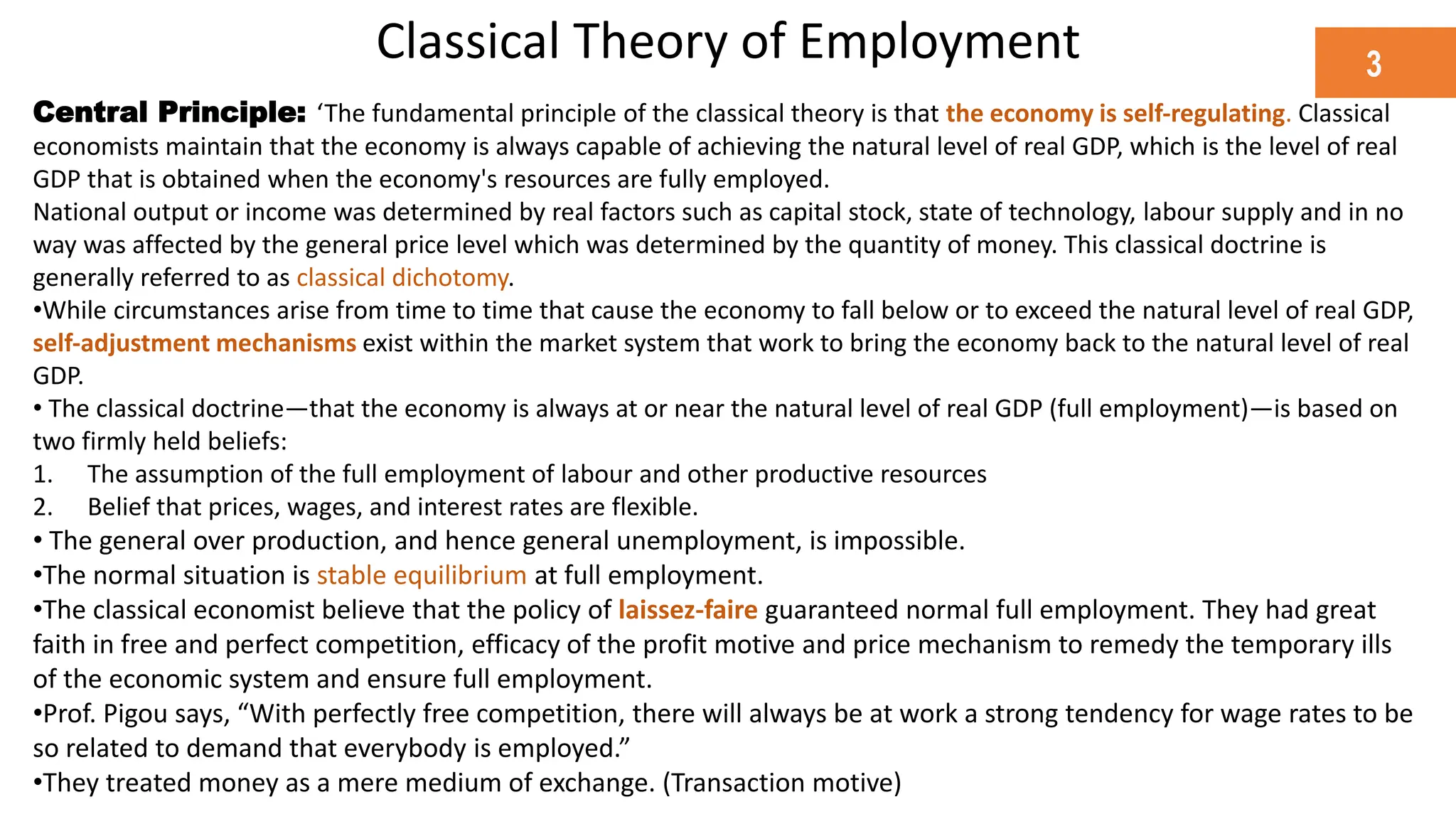

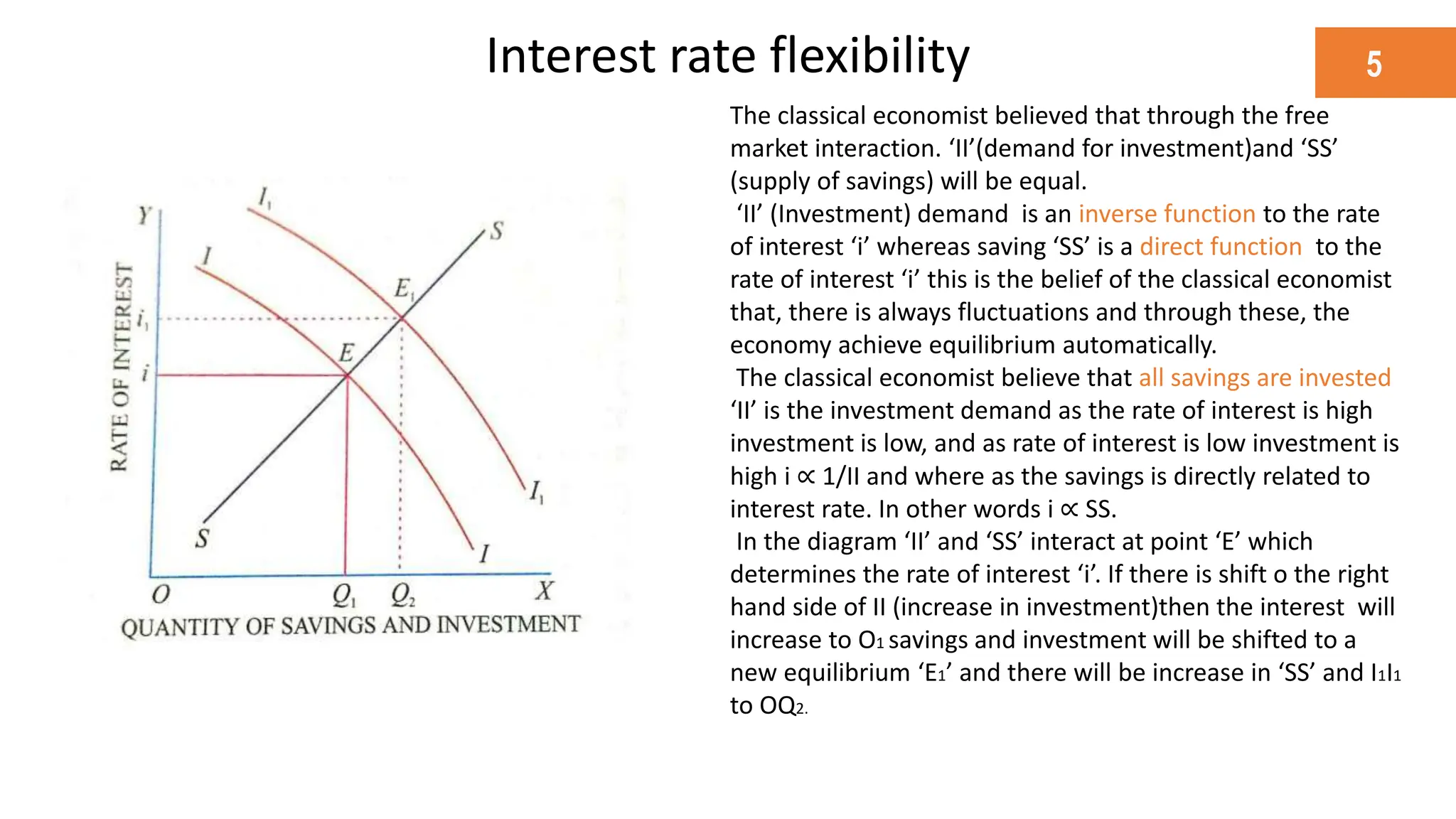
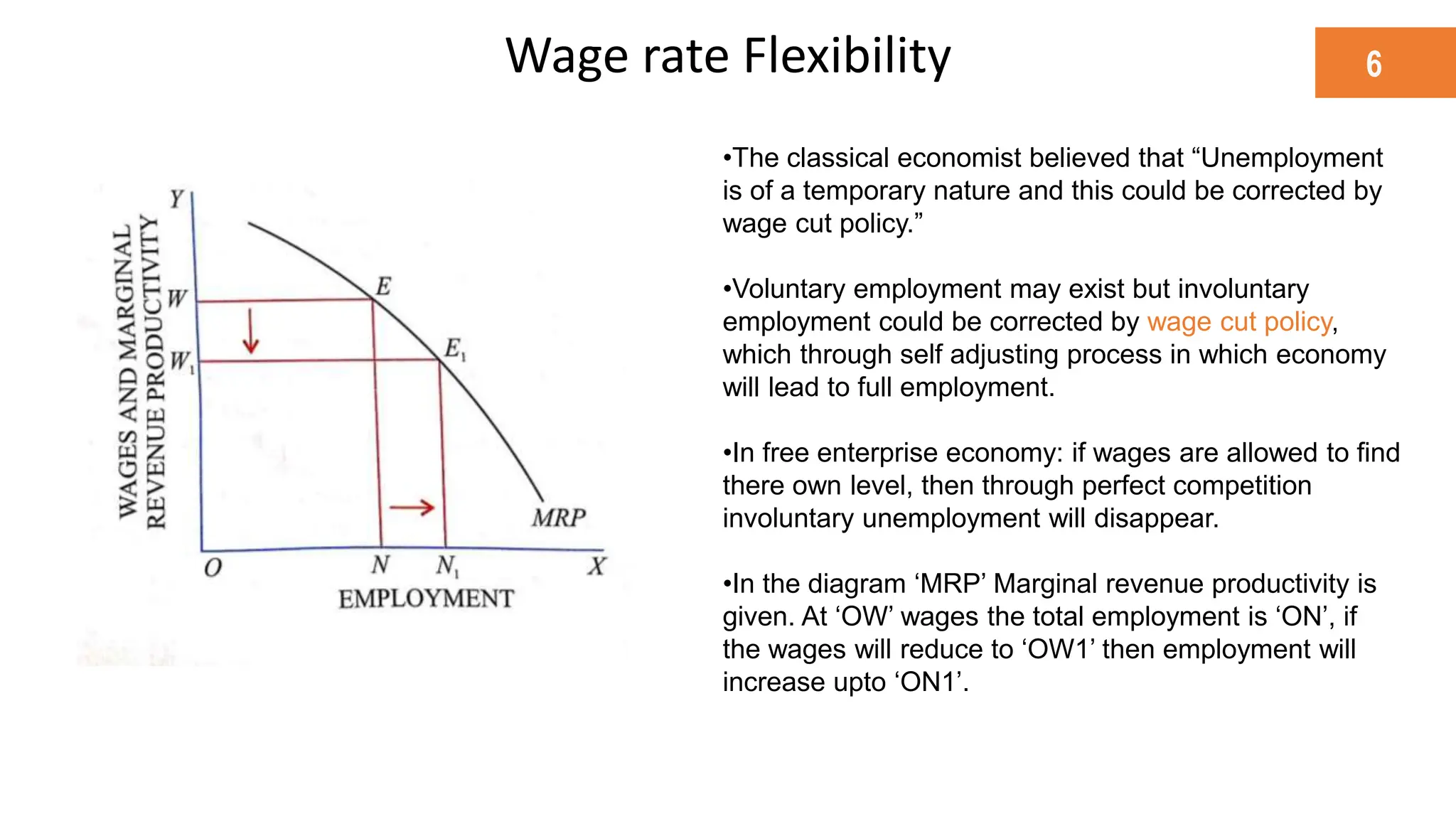
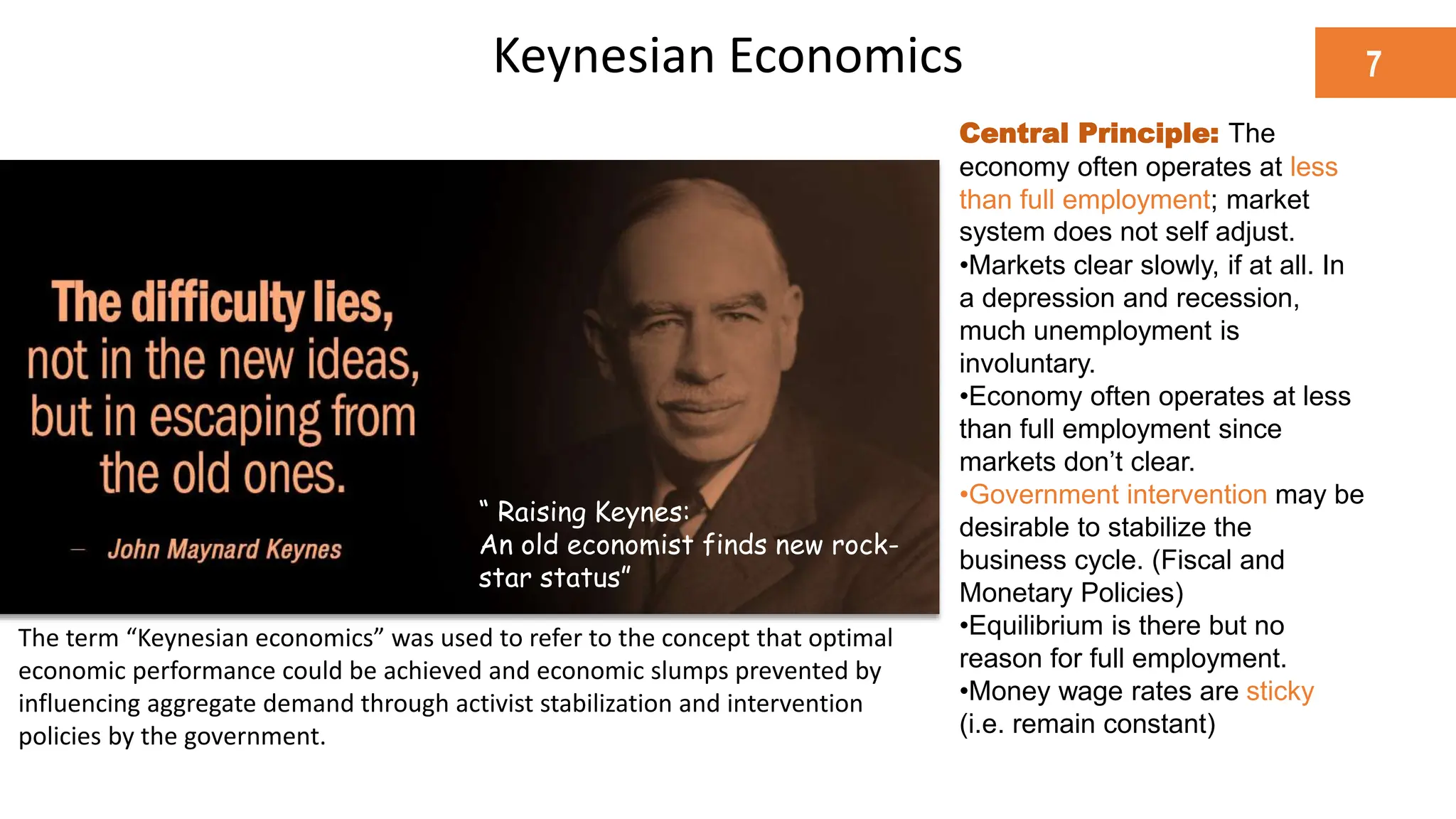
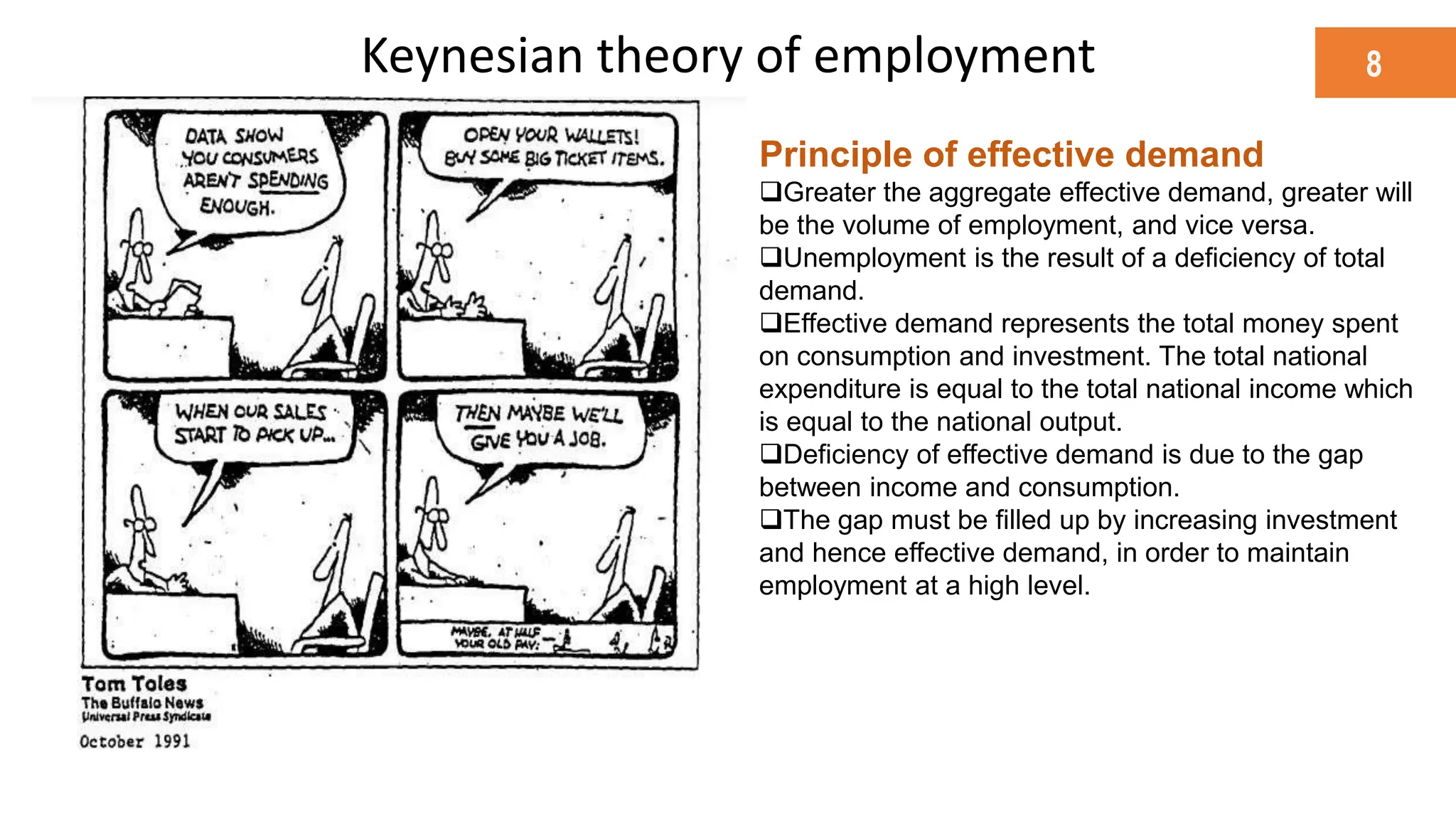

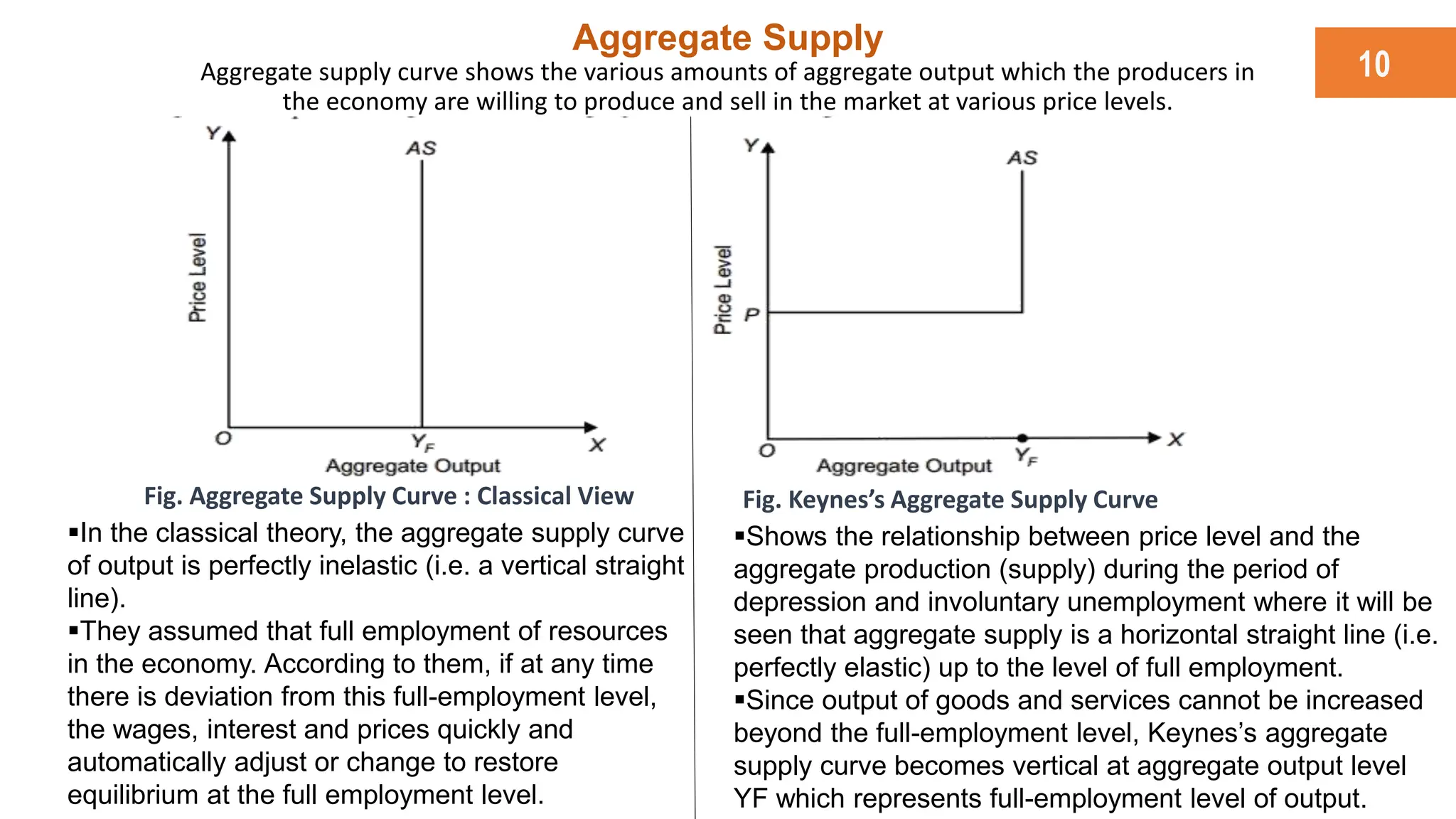

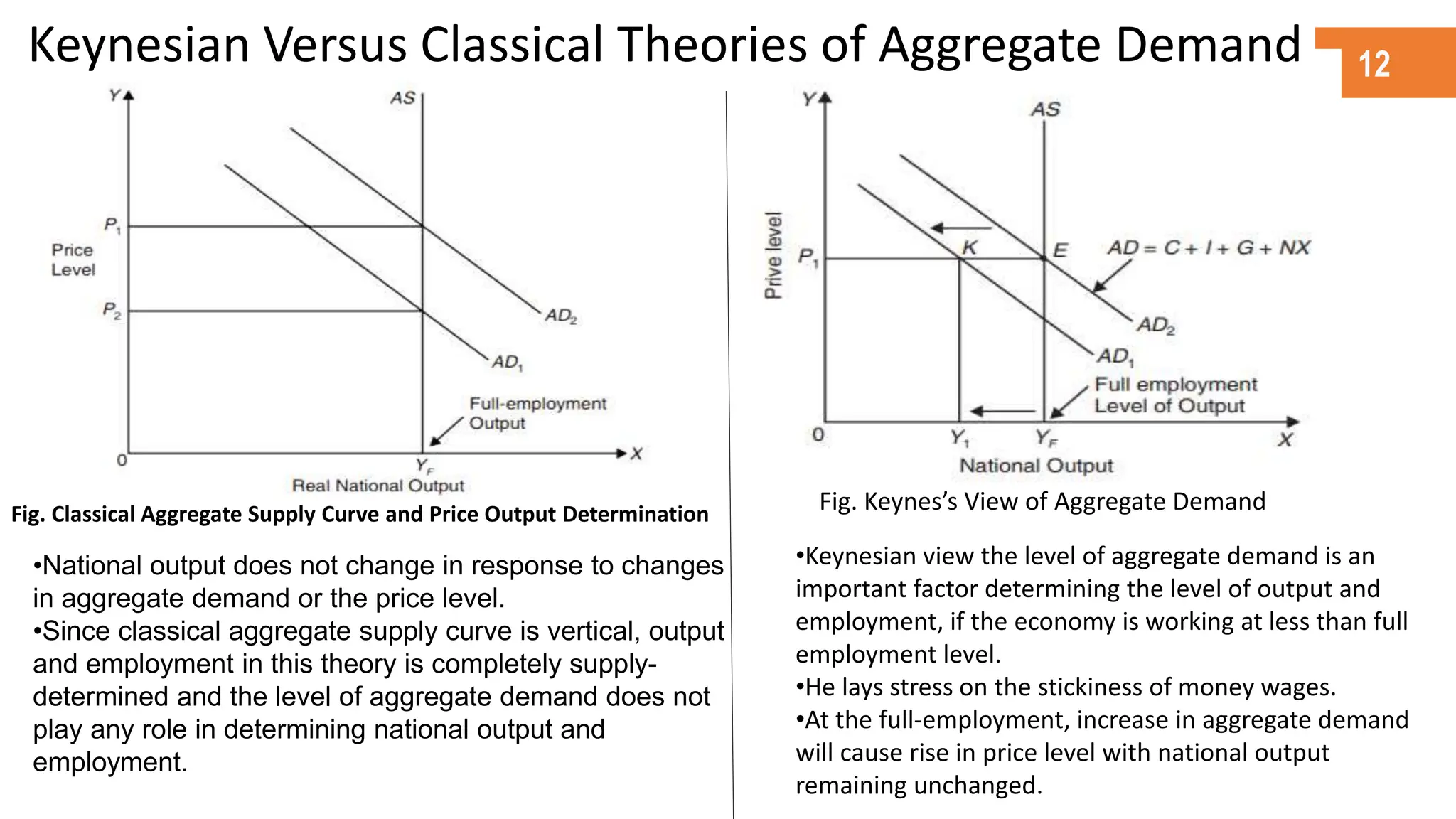

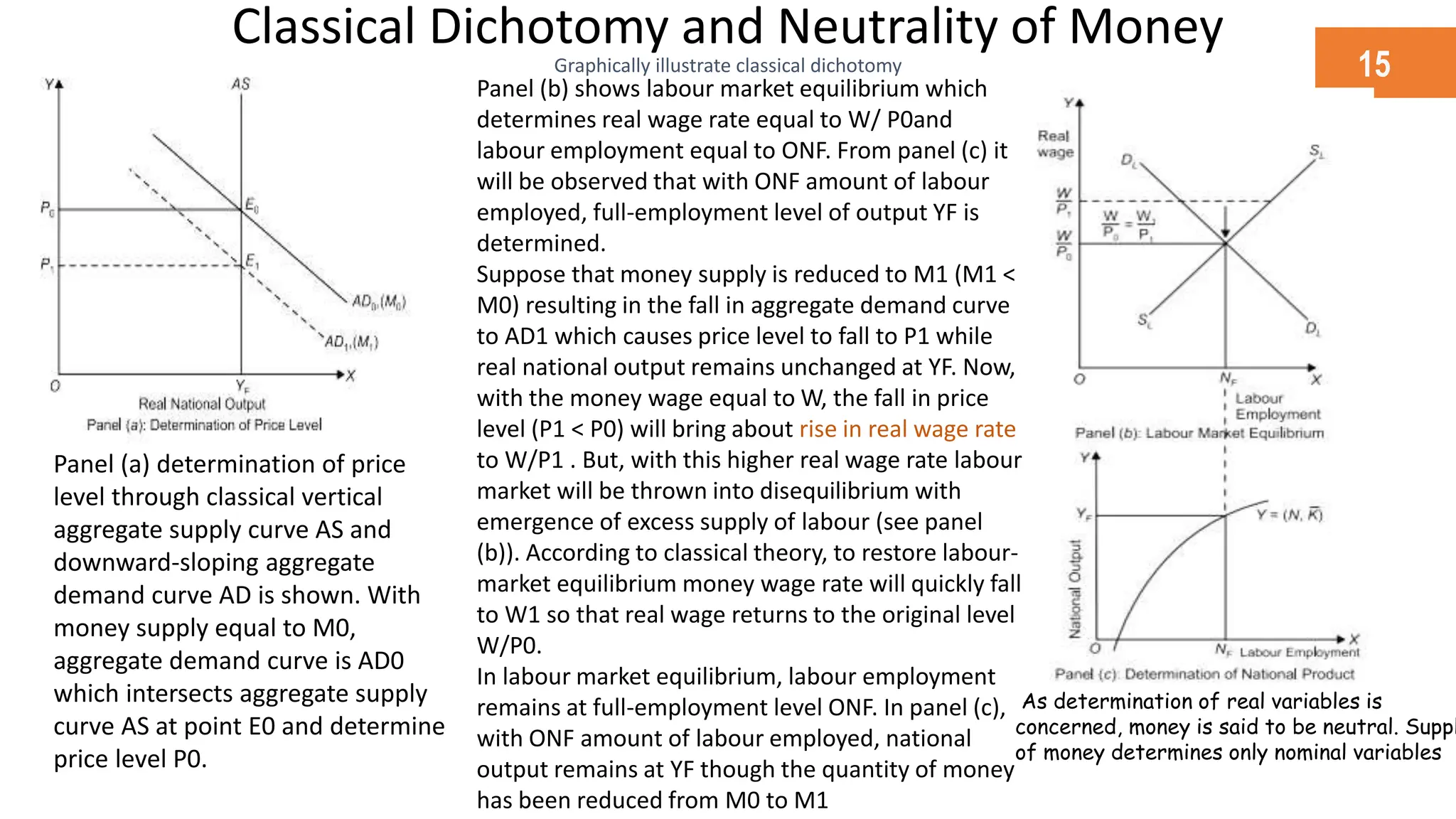


This document compares classical and Keynesian economic theories, focusing on employment, aggregate demand, and the roles of money and government intervention. The classical theory asserts that the economy is self-regulating, capable of achieving full employment through flexible wages and prices, while the Keynesian perspective emphasizes that economies often operate below full employment and may require government measures to stabilize demand. Key points of discussion include the impact of wage and interest rate flexibility on unemployment and the differing views on the neutrality of money in determining real economic variables.


