CS8792 – Cryptography and
Network Security
~ S. Janani, AP/CSE
KCET
Classical Encryption Techniques
Contents
• Basic Terminology
• Symmetric Encryption model
• Classical Encryption Techniques
• Substitution Cipher
• Transposition Cipher
• Steganography
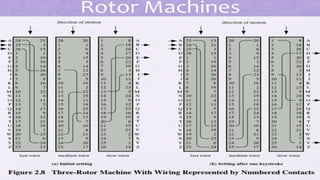
• Rotar Machines
Basic Terminology
• Plaintext – The original message
• Ciphertext – Coded message
• Enciphering/Encryption – Process of converting from PT to
CT
• Deciphering/Decryption – Process of converting from CT to
PT
• Cryptography – Study of encryption
• Cryptanalysis – Techniques used to decrypt a message
without any knowledge of encrypting details
• Cryptology – Cryptography + Cryptanalysis
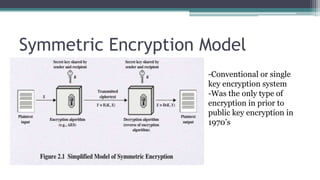
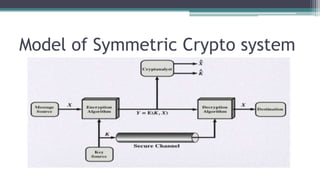
Symmetric Encryption Model
-Conventional or single
key encryption system
-Was the only type of
encryption in prior to
public key encryption in
1970’s
Model of Symmetric Crypto system
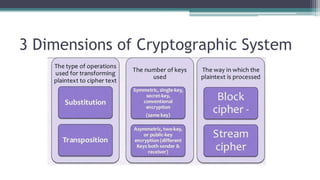
3 Dimensions of Cryptographic System
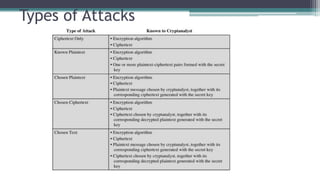
Types of Attacks
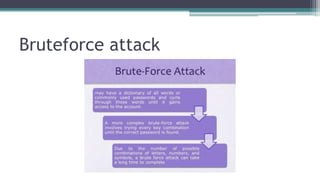
Bruteforce attack
Classical
Encryption
Techniques
Substitution
Techniques
Caesar Cipher Monoalphabetic
Cipher
Polyalphabetic
Cipher
Vigenere
Cipher
Playfair Cipher Hill Cipher Vernam Cipher
Transposition
Techniques
Railfence
Row Column
Transposition
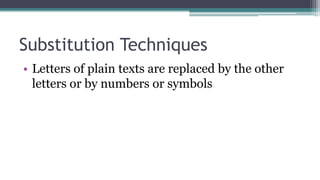
Substitution Techniques
• Letters of plain texts are replaced by the other
letters or by numbers or symbols
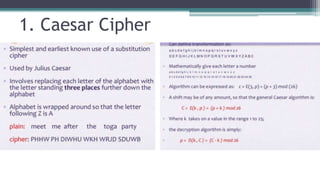
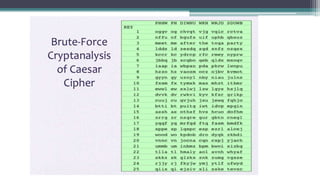
1. Caesar Cipher
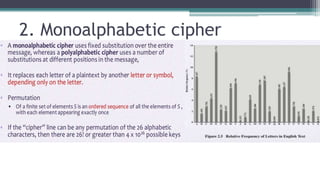
2. Monoalphabetic cipher
3. Polyalphabetic cipher
• Uses number of substitutions at different
positions of a message
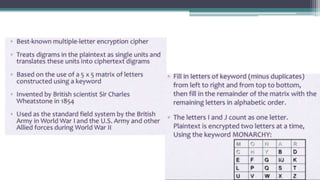
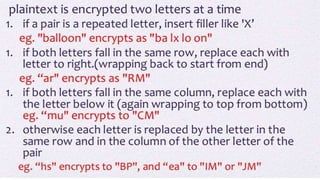
Playfair Cipher
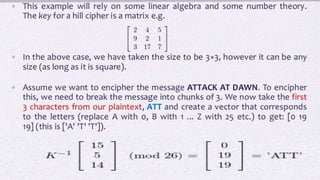
Hill Cipher
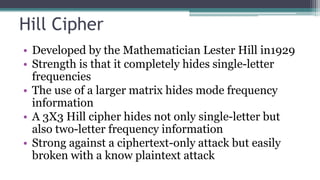
• Developed by the Mathematician Lester Hill in1929
• Strength is that it completely hides single-letter
frequencies
• The use of a larger matrix hides mode frequency
information
• A 3X3 Hill cipher hides not only single-letter but
also two-letter frequency information
• Strong against a ciphertext-only attack but easily
broken with a know plaintext attack
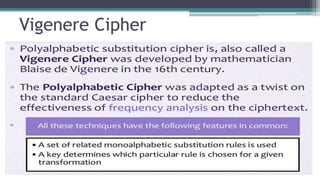
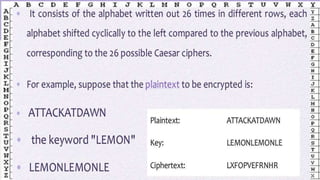
Vigenere Cipher
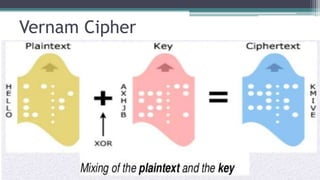
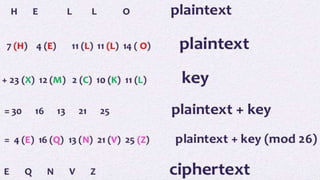
Vernam Cipher
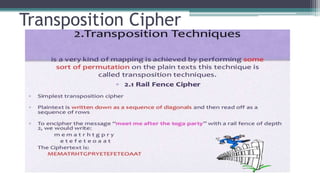
Transposition Cipher
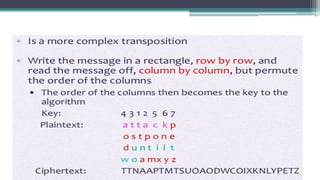
Row Columnar Transposition
Classical Encryption Techniques

Classical Encryption Techniques