JAVA CLASSES AND
OBJECT
Introduction
 Java is an object-oriented
programming language.
 Classes and objects are
fundamental concepts in Java.
Class definition
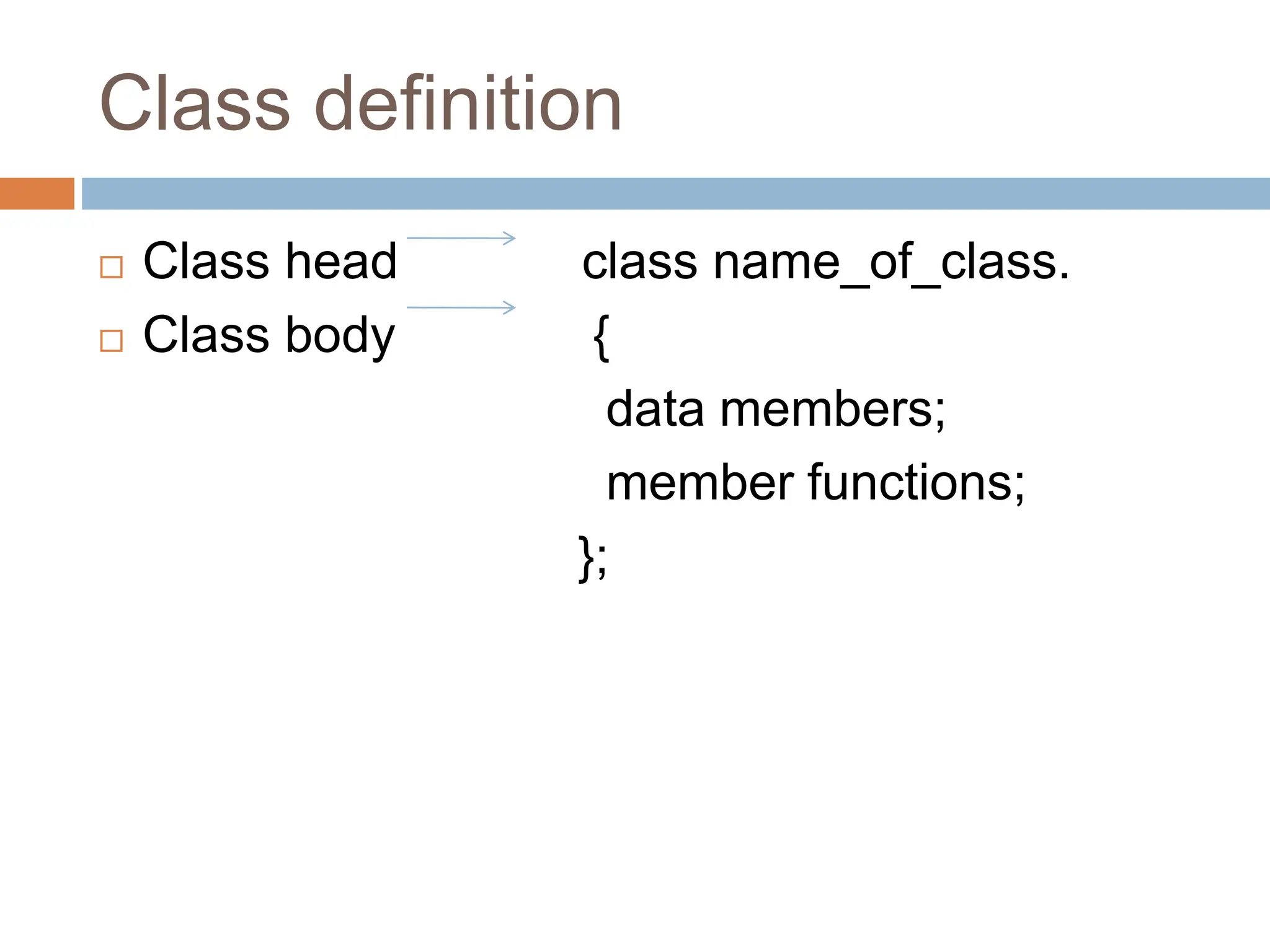
 Class head class name_of_class.
 Class body {
data members;
member functions;
};
Example
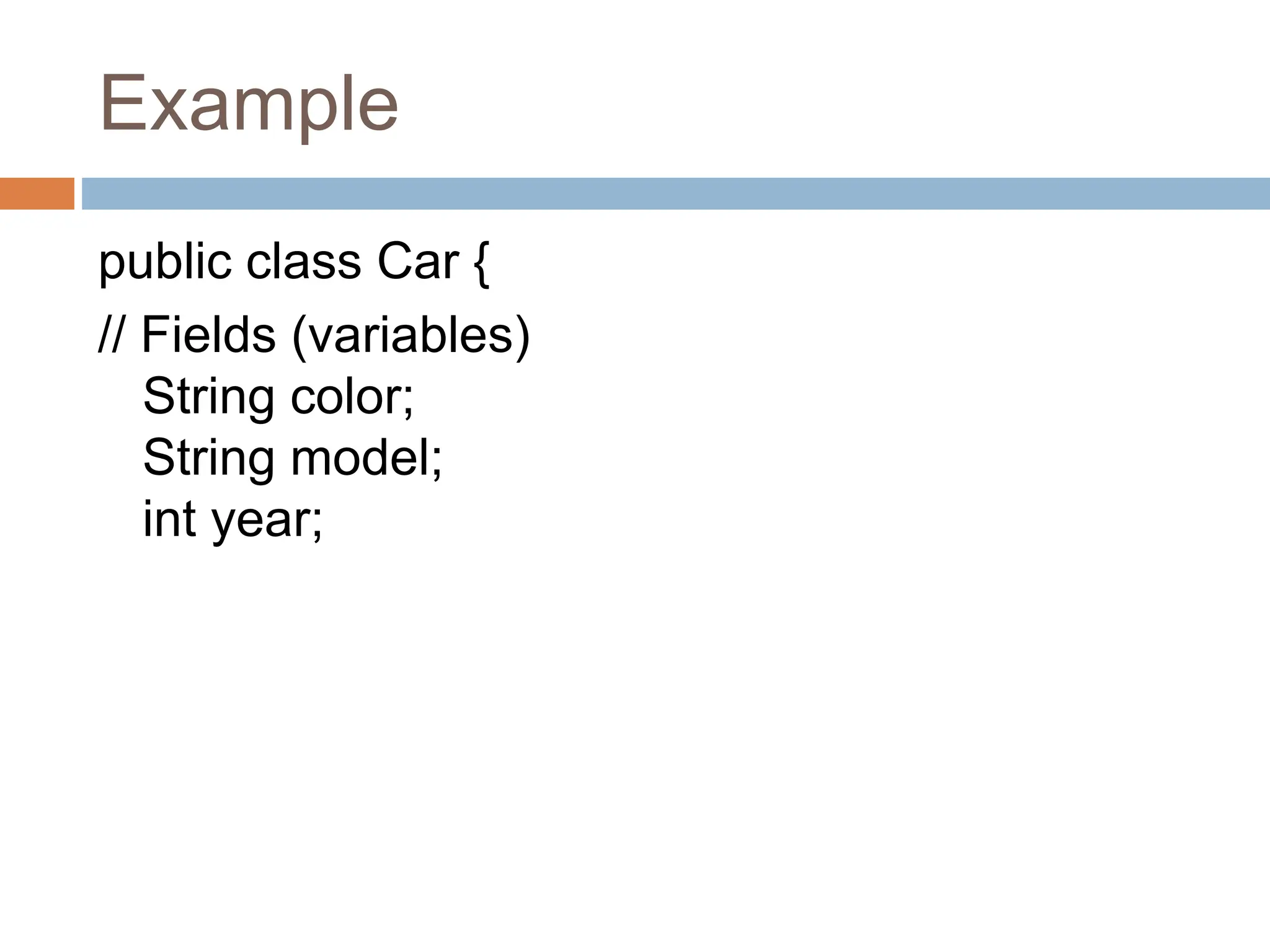
public class Car {
// Fields (variables)
String color;
String model;
int year;
What is a Class?
 A class is a blueprint for creating
objects.
 It defines a datatype by bundling data
and methods that operate on the data
into a single unit.
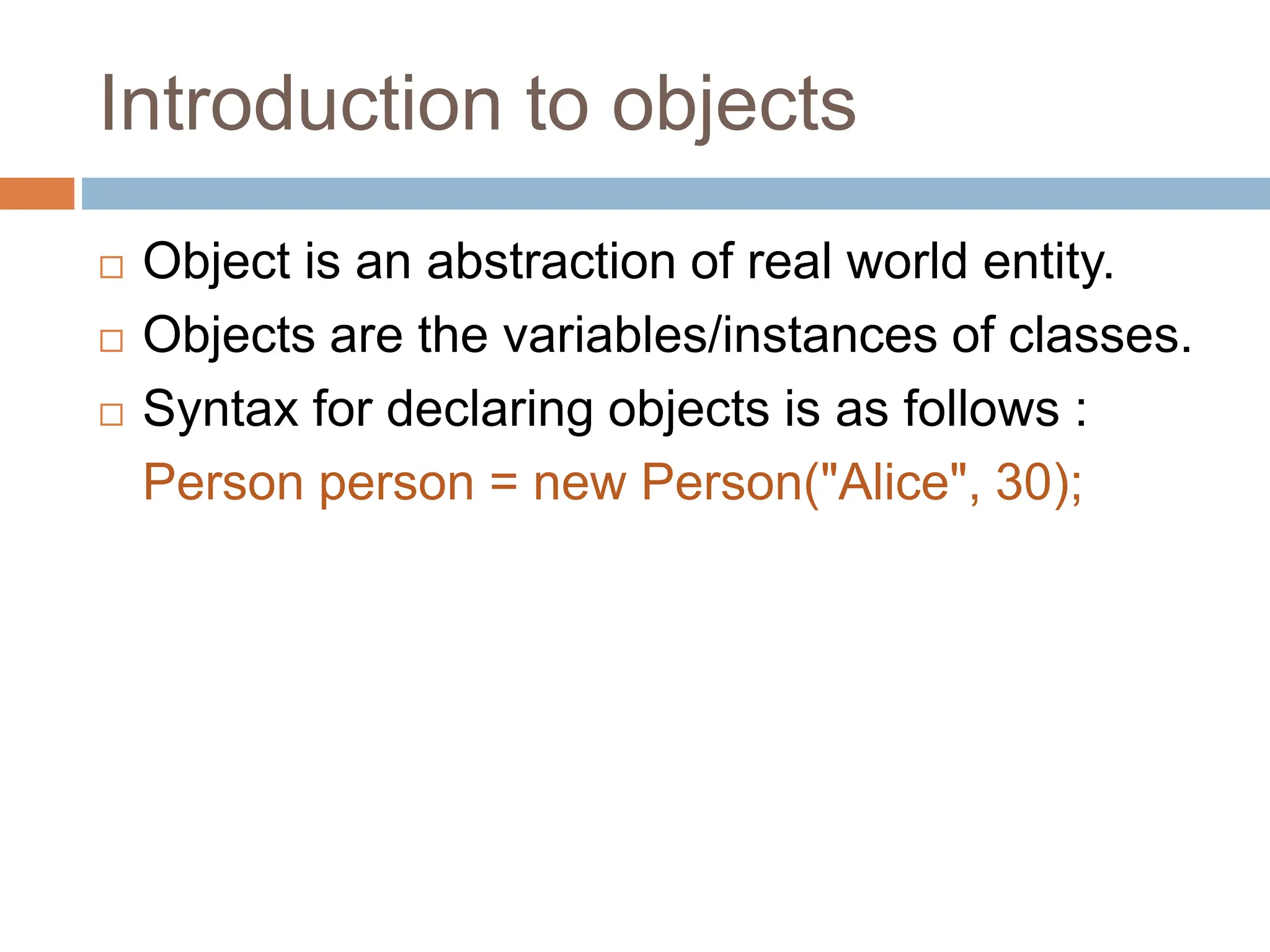
Introduction to objects
 Object is an abstraction of real world entity.
 Objects are the variables/instances of classes.
 Syntax for declaring objects is as follows :
Person person = new Person("Alice", 30);
What is an Object?
 An object is an instance of a
class.
 It has state (fields) and behavior
(methods).
Characteristics of objects:
 It can have its own copy of data members.
 The scope of an object is determined by the
place in which the object is defined.
 It can be passed to a function like normal
variables.
 The members of the class can accessed by
the object using the object to member access
operator or dot operator(.).
Access Modifiers
 public: Accessible from anywhere.
 private: Accessible only within the class.
 protected: Accessible within the same package
and subclasses.
 default (no modifier): Accessible within the
same package.
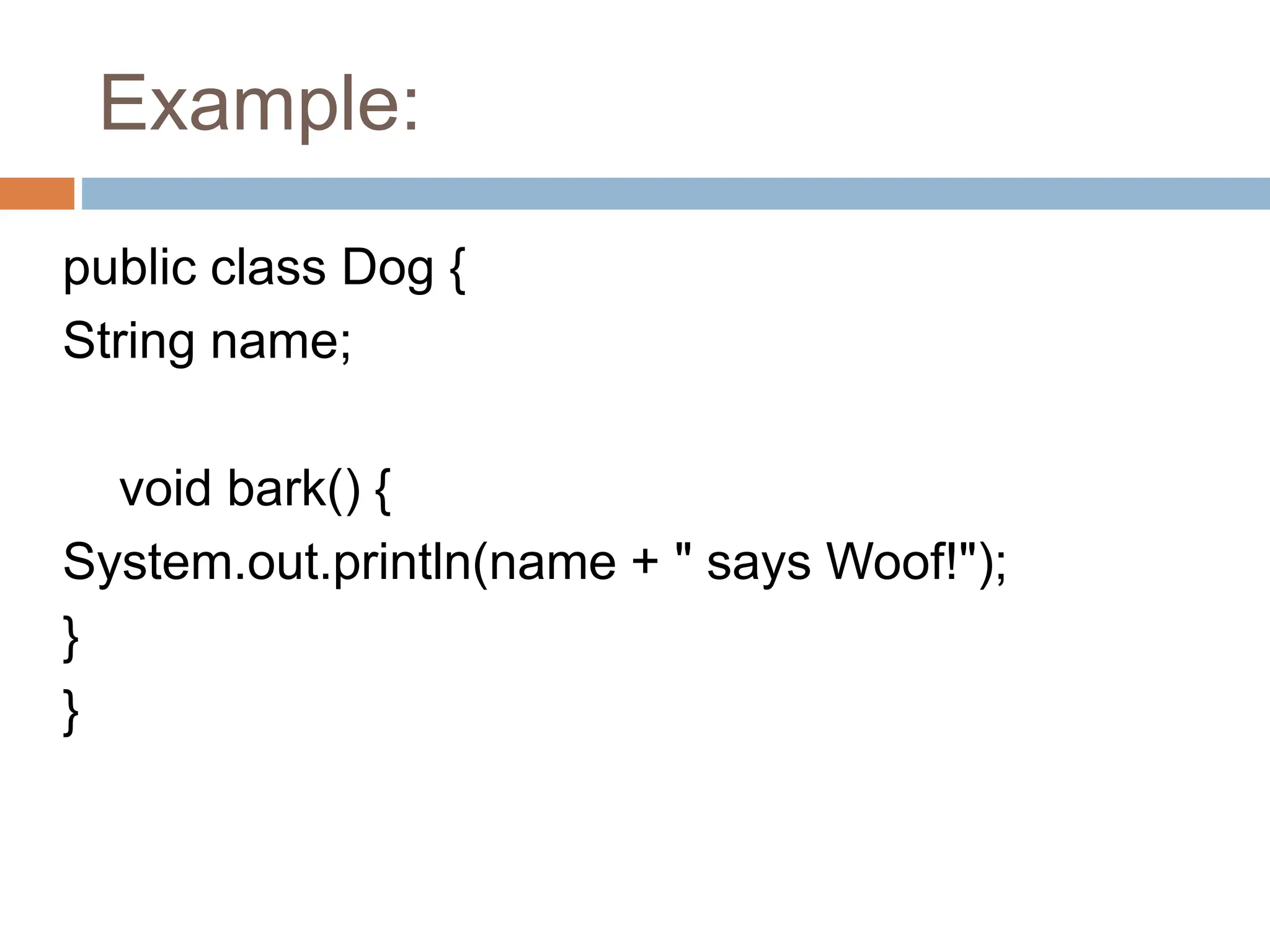
Example:
public class Dog {
String name;
void bark() {
System.out.println(name + " says Woof!");
}
}
Example:
public class Main {
public static void main(String[] args) {
// Declare and create an object of the Dog class
Dog myDog = new Dog();
// Set the name field
myDog.name = "Buddy";
// Call the bark method
myDog.bark();
}
}
Conclusion
 Classes and objects are core components of
Java's object-oriented programming.
 Mastering these concepts is crucial for
effective Java programming.
CLASSES AND OBJECT SAMPLE use for discussion.pptx

  • 1.
  • 2.
    Introduction  Java isan object-oriented programming language.  Classes and objects are fundamental concepts in Java.
  • 3.
    Class definition  Classhead class name_of_class.  Class body { data members; member functions; };
  • 4.
    Example public class Car{ // Fields (variables) String color; String model; int year;
  • 5.
    What is aClass?  A class is a blueprint for creating objects.  It defines a datatype by bundling data and methods that operate on the data into a single unit.
  • 6.
    Introduction to objects Object is an abstraction of real world entity.  Objects are the variables/instances of classes.  Syntax for declaring objects is as follows : Person person = new Person("Alice", 30);
  • 7.
    What is anObject?  An object is an instance of a class.  It has state (fields) and behavior (methods).
  • 8.
    Characteristics of objects: It can have its own copy of data members.  The scope of an object is determined by the place in which the object is defined.  It can be passed to a function like normal variables.  The members of the class can accessed by the object using the object to member access operator or dot operator(.).
  • 9.
    Access Modifiers  public:Accessible from anywhere.  private: Accessible only within the class.  protected: Accessible within the same package and subclasses.  default (no modifier): Accessible within the same package.
  • 10.
    Example: public class Dog{ String name; void bark() { System.out.println(name + " says Woof!"); } }
  • 11.
    Example: public class Main{ public static void main(String[] args) { // Declare and create an object of the Dog class Dog myDog = new Dog(); // Set the name field myDog.name = "Buddy"; // Call the bark method myDog.bark(); } }
  • 12.
    Conclusion  Classes andobjects are core components of Java's object-oriented programming.  Mastering these concepts is crucial for effective Java programming.
Editor's Notes

  • #12 // Output: Buddy says Woof!