THE
CINEMATOGRAPHER
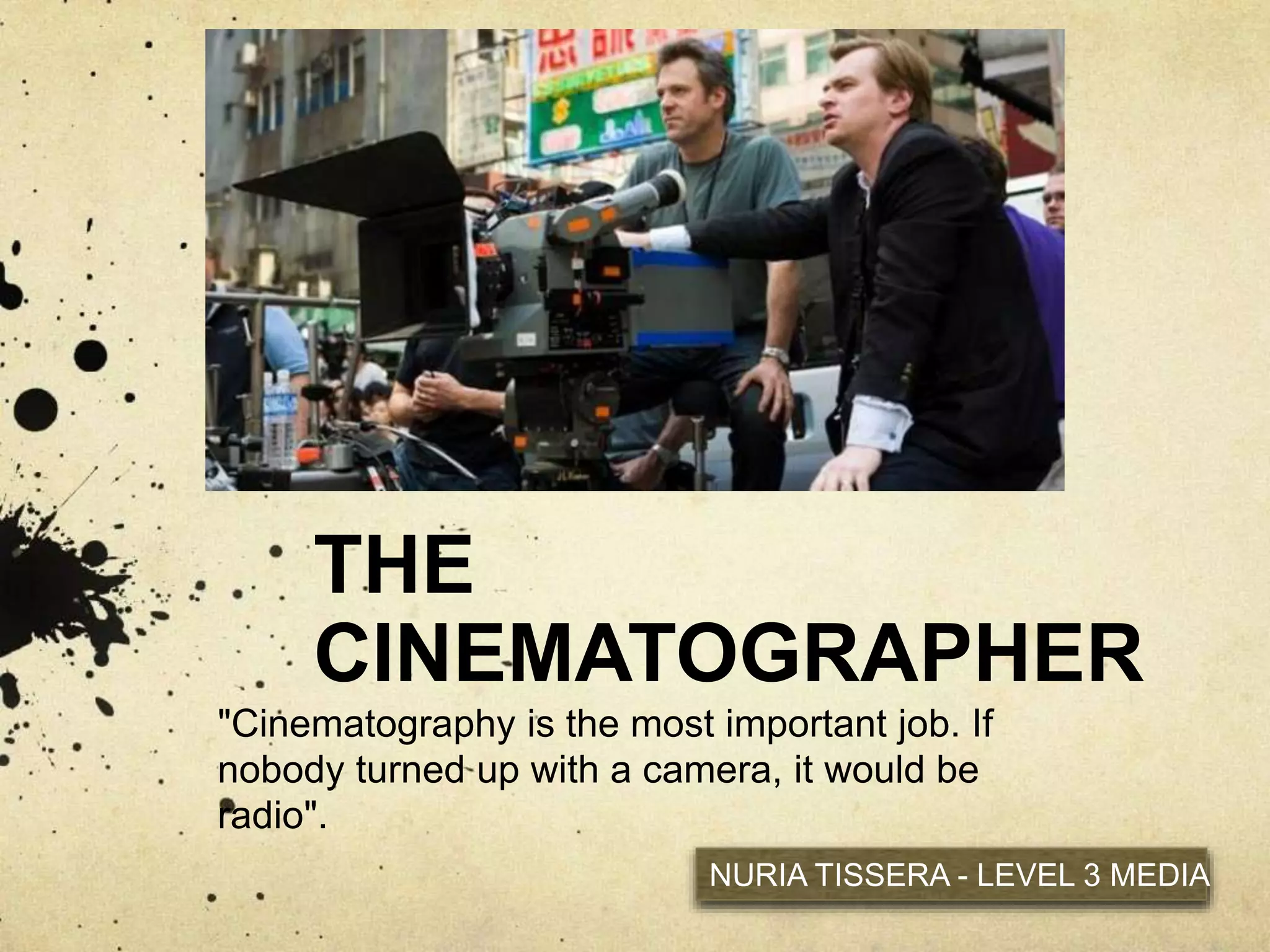
"Cinematography is the most important job. If
nobody turned up with a camera, it would be
radio".
NURIA TISSERA - LEVEL 3 MEDIA
DEFINITION
A cinematographer or director of photography
(sometimes shortened to DP or DOP) is the chief
over the camera crews working on a film, television
production or other live action piece and is
responsible for achieving artistic and technical
decisions related to the image and recording.
Cinematographers play a crucial role in the
development, feel and look of movies and television
by leading the lighting and camera crews.
SKILLS
ARTISTIC
Having a good artistic
eye for photography.
Being able to frame
shots and recognize
good shots, different
angles and how to use
them in every single
moment during the
production.
TECNICAL
Using the technical basics of
photography – The lighting,
use lenses, exposures…etc
Knowledge about the
equipment such as film
cameras on dollies, hand-
held cameras. This includes
both set-up and operation.
Computer skills are
necessary relative to
softwares for many editing
and other related tasks
The
cinematographer
does…
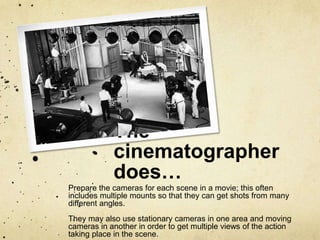
Prepare the cameras for each scene in a movie; this often
includes multiple mounts so that they can get shots from many
different angles.
They may also use stationary cameras in one area and moving
cameras in another in order to get multiple views of the action
taking place in the scene.
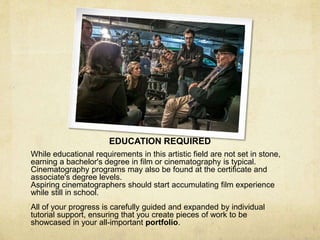
EDUCATION REQUIRED
While educational requirements in this artistic field are not set in stone,
earning a bachelor's degree in film or cinematography is typical.
Cinematography programs may also be found at the certificate and
associate's degree levels.
Aspiring cinematographers should start accumulating film experience
while still in school.
All of your progress is carefully guided and expanded by individual
tutorial support, ensuring that you create pieces of work to be
showcased in your all-important portfolio.
Cinematography Certificate
Students work in labs and learn filmmaking technique
necessities. Common learning areas include:
 Understanding film stocks
 Cinematography techniques
 Role of cinematographers
 Cameras, lens and lighting
 Using exposure meters

Cinematographer

  • 1.
    THE CINEMATOGRAPHER "Cinematography is themost important job. If nobody turned up with a camera, it would be radio". NURIA TISSERA - LEVEL 3 MEDIA
  • 2.
    DEFINITION A cinematographer ordirector of photography (sometimes shortened to DP or DOP) is the chief over the camera crews working on a film, television production or other live action piece and is responsible for achieving artistic and technical decisions related to the image and recording. Cinematographers play a crucial role in the development, feel and look of movies and television by leading the lighting and camera crews.
  • 3.
    SKILLS ARTISTIC Having a goodartistic eye for photography. Being able to frame shots and recognize good shots, different angles and how to use them in every single moment during the production. TECNICAL Using the technical basics of photography – The lighting, use lenses, exposures…etc Knowledge about the equipment such as film cameras on dollies, hand- held cameras. This includes both set-up and operation. Computer skills are necessary relative to softwares for many editing and other related tasks
  • 4.
    The cinematographer does… Prepare the camerasfor each scene in a movie; this often includes multiple mounts so that they can get shots from many different angles. They may also use stationary cameras in one area and moving cameras in another in order to get multiple views of the action taking place in the scene.
  • 5.
    EDUCATION REQUIRED While educationalrequirements in this artistic field are not set in stone, earning a bachelor's degree in film or cinematography is typical. Cinematography programs may also be found at the certificate and associate's degree levels. Aspiring cinematographers should start accumulating film experience while still in school. All of your progress is carefully guided and expanded by individual tutorial support, ensuring that you create pieces of work to be showcased in your all-important portfolio.
  • 6.
    Cinematography Certificate Students workin labs and learn filmmaking technique necessities. Common learning areas include:  Understanding film stocks  Cinematography techniques  Role of cinematographers  Cameras, lens and lighting  Using exposure meters