MANAGEMENT
OF
CHRONIC KIDNEY DISEASE
(CKD)
Dr Sharanya Rajan
AGENDA
 DEFINITION
 ETIOLOGY
 PATHOPHYSIOLOGY
 CLINICAL PRESENTATION
 DIAGNOSIS
 TREATMENT
 COMPLICATIONS
 INDICATIONS FOR DIALYSIS
WHAT IS CHRONIC KIDNEY DISEASE?
 It is kidney damage (structurally or functionally) for ≥ 3 months with or
without decrease glomerular filtration rate (GFR)
OR
 GFR < 60ml/min for ≥ 3 months with or without kidney damage
OR
 Persistent microalbuminuria/Persistent proteinuria/Persistent hematuria
OR
 Structural abnormalities of the kidneys (polycystic kidney disease, reflux
nephropathy) proven by ultrasound
Causes and Incidence
 Chronic renal failure occurs in approximately 1 out of 1,000 people.
 Causative diseases include any type:
1. Diabetes mellitus - most common cause
2. Hypertension
3. Glomerulonephritis
4. Others
 chronic pyelonephritis, PKD /polycystic kidney disease, obstructive uropathy
(stones, BPH, cancer, etc), Alport syndrome, and
drug-induced nephropathy
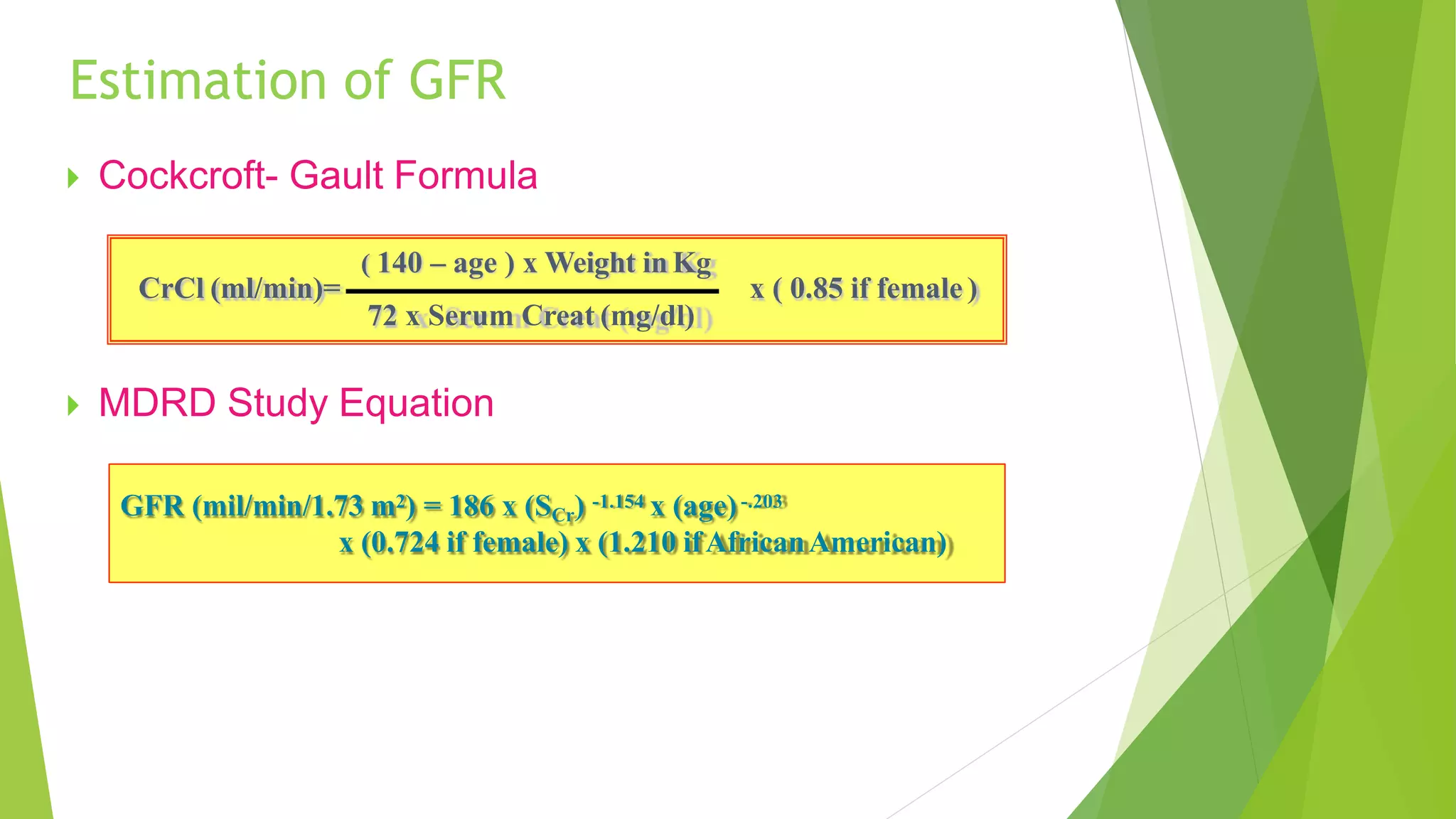
Estimation of GFR
CrCl (ml/min)=
 Cockcroft- Gault Formula
( 140 – age ) x Weight inKg
72 x Serum Creat (mg/dl)
 MDRD Study Equation
x ( 0.85 if female )
GFR (mil/min/1.73 m2) = 186 x (SCr) -1.154 x (age)-.203
x (0.724 if female) x (1.210 ifAfricanAmerican)
ETIOLOGY OF CHRONIC KIDNEY DISEASE?
 Diabetes mellitus
 Hypertension
 Glomerulonephritis
 Pyelonephritis
 Renal artery stenosis
 Renal calculi
 Polycystic kidney disease
 Congenital defects of the kidney or bladder
 Secondary causes (SLE, rheumatoid arthritis, HIV, drugs-
gold, heroin use etc.)
 Drugs (NSAIDS, Aminoglycoside etc.)
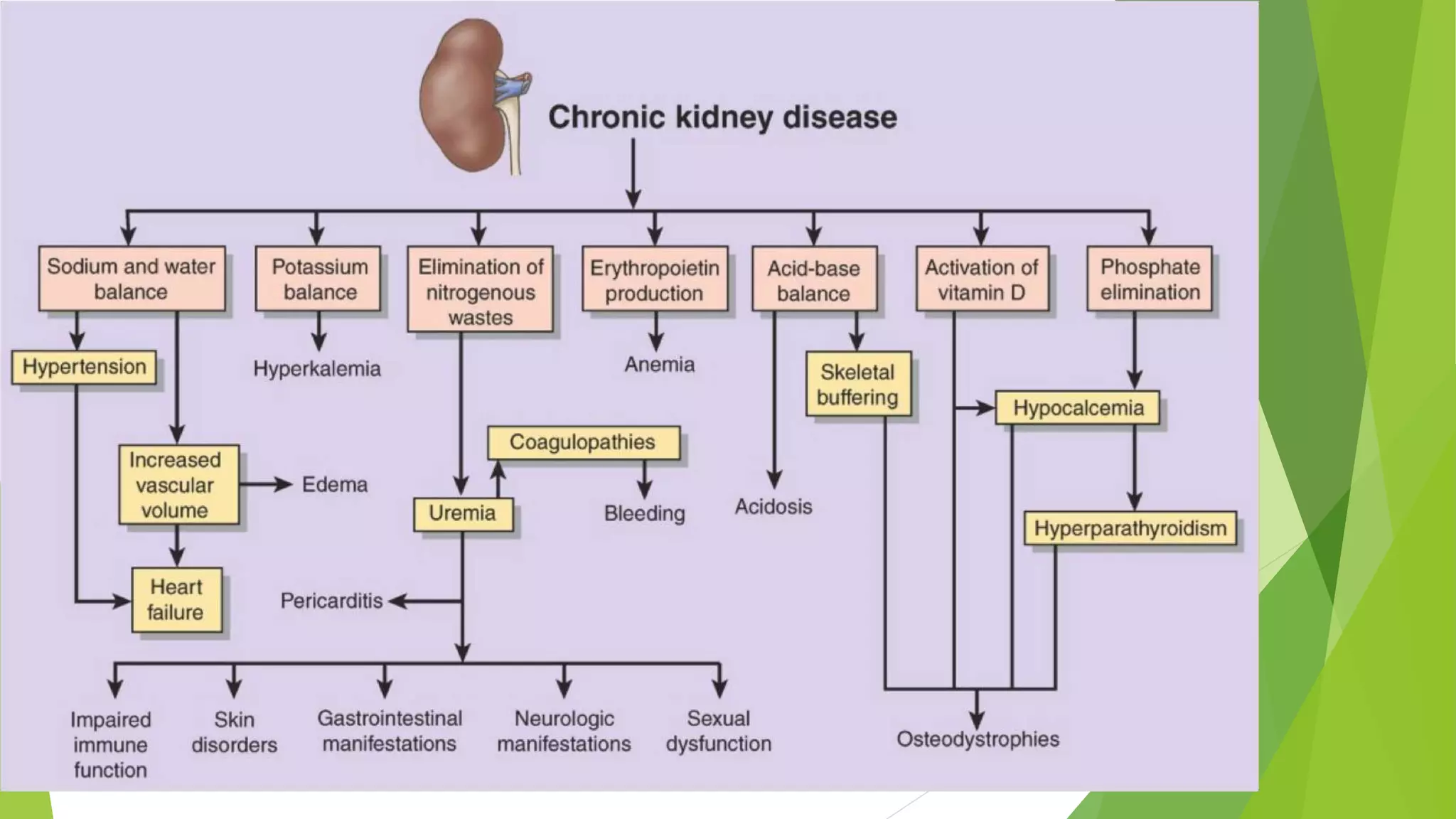
PATHOPHYSIOLOGY OF CKD?
Symptoms
INITIAL (non-specific)
unintentional weight
loss
nausea, vomiting
general ill feeling
fatigue
headache
frequent hiccups
generalized itching
(pruritus)
INITIAL (non-specific)
increase or decrease urine
output
need to urinate at night
anasarca
easy bruising or bleeding
blood in the vomit or stools
breath odor (uremic fetor)
muscle twitching or cramps
restless legs syndrome
increased skin pigmentation
uremic frost
decreased sensation
decreased alertness/
Signs and Tests
Blood pressure may be high
Urinalysis may show protein, blood, pus or
other abnormalities
Creatinine and BUN levels progressively increase
Creatinine clearance progressively decreases
Potassium elevated
Calcium low and Phosphorus high
Arterial blood gas show metabolic acidosis
Xray of bones may show osteodystrophy
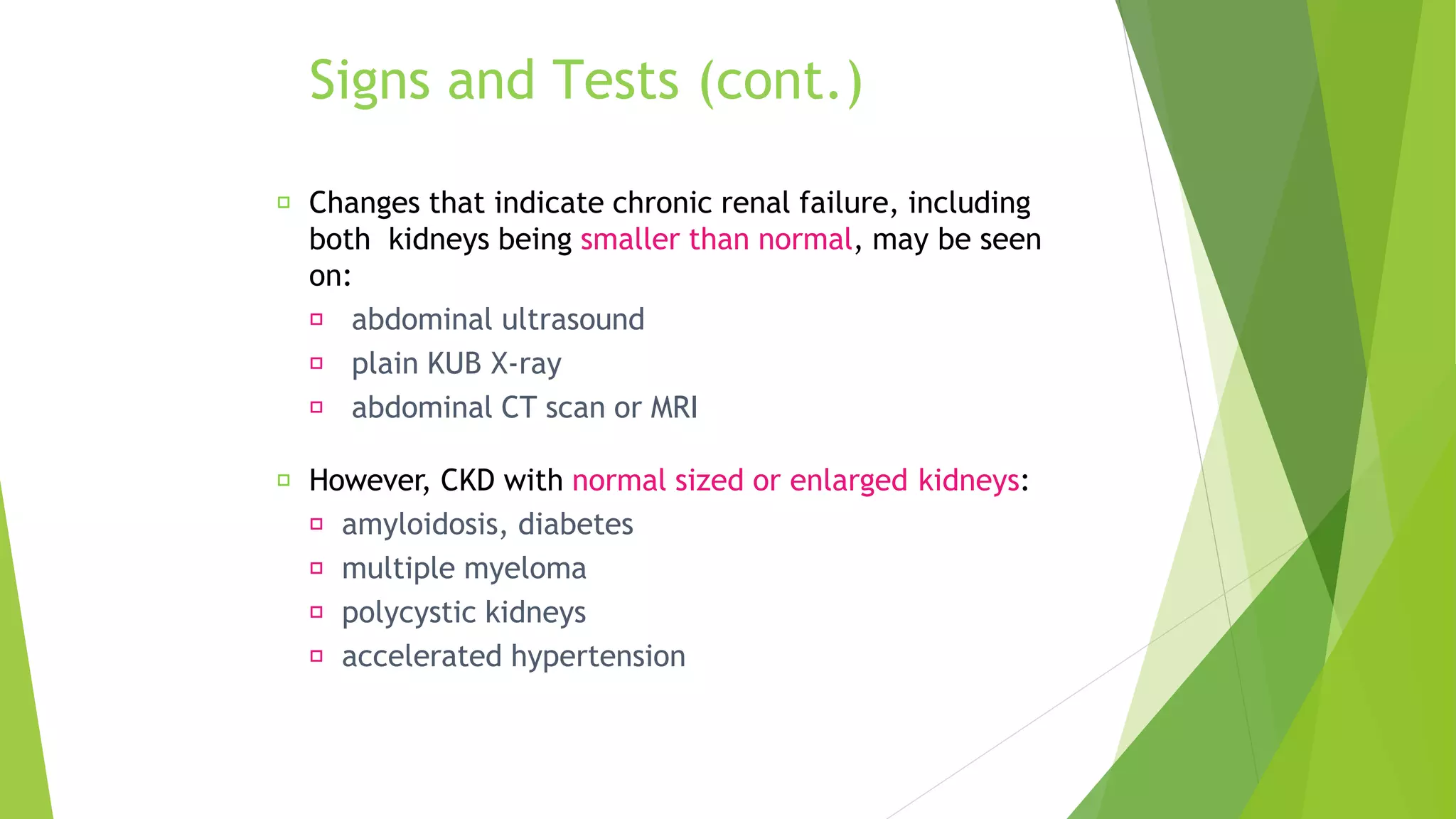
Signs and Tests (cont.)
Changes that indicate chronic renal failure, including
both kidneys being smaller than normal, may be seen
on:
abdominal ultrasound
plain KUB X-ray
abdominal CT scan or MRI
However, CKD with normal sized or enlarged kidneys:
amyloidosis, diabetes
multiple myeloma
polycystic kidneys
accelerated hypertension
PATHOPHYSIOLOGY OF CKD?
 Regardless of the primary cause of nephron loss, some usually survive
or are less severely damaged
 These nephrons then adapt and enlarge, and clearance per nephron
markedly increases.
 The RAAS is activated causing renal hypertension
 If the initiating process progress, renal failure may ensue with the
rapid development of ESRD.
 Focal glomerulosclerosis develops in the glomeruli, and they
eventually become non-functional.
 proteinuria markedly increases and systemic hypertension worsens.
 Adapted nephrons enhance the ability of the kidney to postpone
uremia, but ultimately the adaptation process leads to the demise of
these nephrons.
 Adapted nephrons have not only an enhanced GFR but also enhanced
tubular functions in terms of, for example, potassium and proton
secretion.
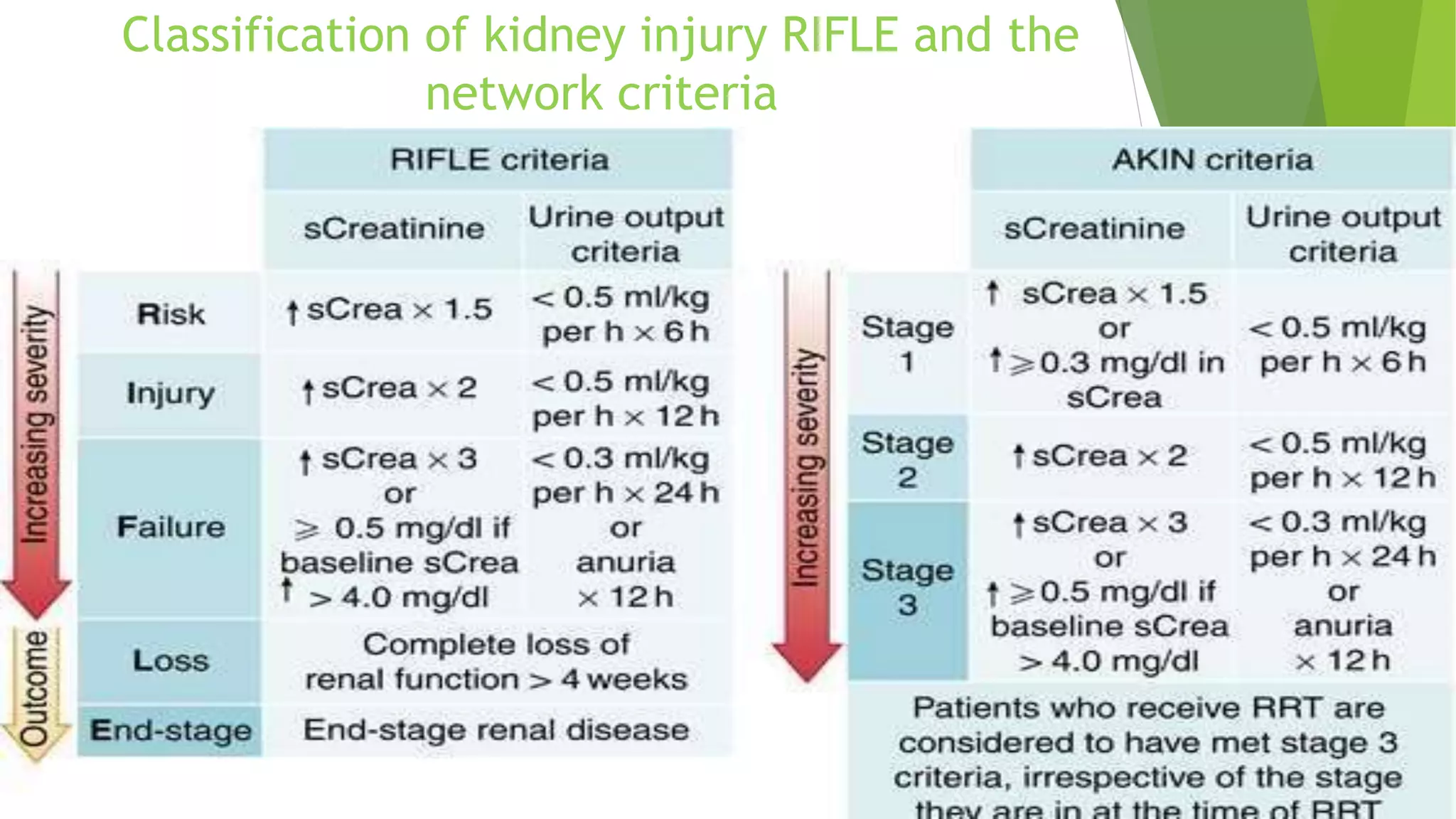
Classification of kidney injury RIFLE and the
network criteria
CLINICAL PRESENTATION OF CKD?
 Asymptomatic in stage 1-3 with GFR > 30ml/min
 Symptomatic in stage 4-5 with GFR < 30ml/min
1. Early signs :Polyuria/oliguria, Hematuria, Edema
2. Late signs
a. hypertension
b. Signs of anemia (pallor)
c. Signs of hyperurecemia:
i. Brain ( uremic encephalopathy): low concentration, confusion, lethargy,
asterixis, coma,
ii. Heart: pericarditis
iii. GIT: nausea & vomiting, anorexia, diarrhea
iv. Reproductive system: erectile dysfunction, decreased libido, amenorrhea
v. Blood system: platelet dysfunction with tendency to bleed, infections due to WBCs
dysfunction
vi. peripheral neuropathy: numbness, paraesthesia, restless leg syndrome
vii. Skin: dry skin, pruritus, ecchymosis
viii. Others: fatigue, hiccups, muscle cramps,
DIAGNOSIS OF CKD?
 Kidney injury with or without decrease GFR for ≥ 3 months
 FBC: Anemia (normochromic, normocytic), leukopenia,
thrombocytopenia
 Urinalysis:
i. Dipstick proteinuria, if positive, do daily or 24hrs proteinuria test
a. If proteinuria is ≤1g/24hrs, then consider urinary syndrome
b. If proteinuria is 1 to 3g/24hrs, nephritic syndrome/ tubulointerstitial
c. If proteinuria is ≥3.5g/24hrs, consider nephrotic syndrome
i. RBCs, RBC casts, suggests glomerulonephritis
ii. Pyuria or/and WBC casts are suggestive of interstitial
nephritis/pyelonephritis
 GFR evaluation; usually decreased
Diagnosis (cont.)
 Biochemical blood test:
i. High creatinine, high BUN
ii. Electrolytes: Hyperkalemia, hyperphosphatemia, hypermagnesemia,
hypocalcemia, low bicarbonate
iii. pH of blood: acidosis (metabolic)
iv. Hypoalbuminemia/hypoproteinemia
 Plain abdominal x-ray (useful to look for radio-opaque stones or
nephrocalcinosis)
 Renal biopsy (reveals underlying primary cause but may be nonspecific)
 Ultrasound findings: small echogenic kidneys in ESRD, hydronephrosis,
polycystic kidneys
Ultrasound findings: small echogenic
kidneys in ESRD
TREATMENT OF CKD?
 Treatment objectives
• To detect chronic kidney disease early in susceptible individuals.
• To control hypertension
• To control blood glucose
• To treat other underlying causes
• To prevent complications and further worsening of kidney function
Non-pharmacological treatment
 Admit patient especially in stage of exacerbation
 Diet: Restrict dietary protein to< 40 g/day, Restrict Na+, K+, PO4-
intake, avoid potassium containing foods e.g. banana
 Water and electrolyte balance:
i. Daily fluid intake = previous day’s urine output + 600 ml (for
insensible losses)
ii. Strict fluid input and output chart
 Daily weighing
 General health advice e.g. smoking cessation
 • Avoid nephrotoxins e.g. NSAIDs , Herbal medication
Pharmacological treatment
 Treatment of underlying condition (diabetes, HPT, autoimmune d’ses etc.)
 Treatment of fluid overload
Diuretics: Furosemide, oral /IV, 40-120 mg daily
 Treatment of hypertension (goal of BP<130/8OmmHg):
i. ACEIs- Lisinopril, oral, 5-40 mg daily Or Ramipril, oral, 2.5-10 mg daily Or
ii. ARBs- Losartan, oral, 25-100 mg daily or Valsatan, oral, 80-160 mg daily
 Treatment of anemia
i. Injection erythropoietin 50-100units IV/SC 3times weekly
Treatment is initiated at Hb <10g/dl
i. Tab. Ferrous sulphate 200mg 3times daily
 Treatment of hyperkalaemia/metabolic acidosis
• 10% Calcium gluconate, IV, 10-20 ml over 2-5 minutes Plus
• Sodium Bicarbonate, IV, 8.4% 50mEq, over 5 minutes Plus
• Regular Insulin, IV, 10 units in 50-100 ml Glucose 50%
Pharmacological treatment (cont.)
 Treatment of hyperphosphatemia:
i. Phosphate binders (calcium acetate/ calcium carbonate 2 capsules (1334mg )
orally with food)
 Treatment of hypocalcemia:
i. Calcium citrate 1g/day
ii. Vitamin D supplement; 2 tablets (800 IU) once daily
 Treatment of pruritus:
Capsaicin cream or cholestyramine
 Treatment of bleeding:
Desmopressin 0.3 mcg/kg IV over 15-30mins
Renal replacement therapy (RRT)
 Dialysis (hemodialysis or peritoneal dialysis)
 Kidney transplant with immunosuppressant usage
hemodialysis= peritoneal dialysis in terms of efficiency
But hemodialysis is superior to peritoneal dialysis due to the
complication (peritonitis then subsequent septic shock) associated with
peritoneal dialysis
Indications for dialysis are:
1. fluid overload
2. severe acidosis
3. hyperkalemia
4. pericarditis
5. encephalopathy
Hemodialysis: 3-4hrs, 3 times per week
(Monday, Wednesday and Friday)
Peritoneal dialysis
Kidney transplant
plus immunosuppressant therapy
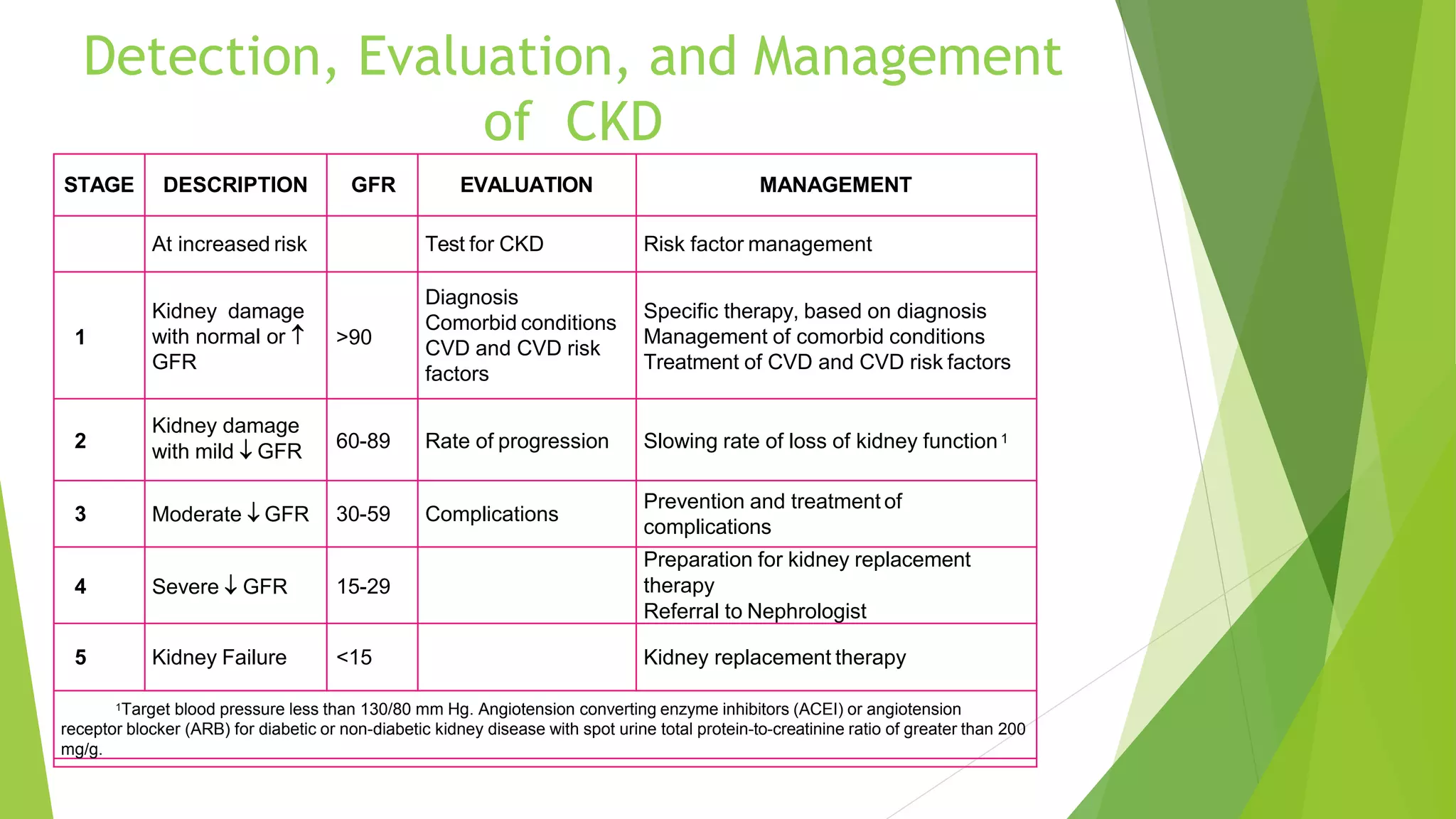
Detection, Evaluation, and Management
of CKD
STAGE DESCRIPTION GFR EVALUATION MANAGEMENT
At increased risk Test for CKD Risk factor management
1
Kidney damage
with normal or 
GFR
>90
Diagnosis
Comorbid conditions
CVD and CVD risk
factors
Specific therapy, based on diagnosis
Management of comorbid conditions
Treatment of CVD and CVD risk factors
2
Kidney damage
with mild  GFR 60-89 Rate of progression Slowing rate of loss of kidney function1
3 Moderate  GFR 30-59 Complications
Prevention and treatment of
complications
4 Severe  GFR 15-29
Preparation for kidney replacement
therapy
Referral to Nephrologist
5 Kidney Failure <15 Kidney replacement therapy
1Target blood pressure less than 130/80 mm Hg. Angiotension converting enzyme inhibitors (ACEI) or angiotension
receptor blocker (ARB) for diabetic or non-diabetic kidney disease with spot urine total protein-to-creatinine ratio of greater than 200
mg/g.
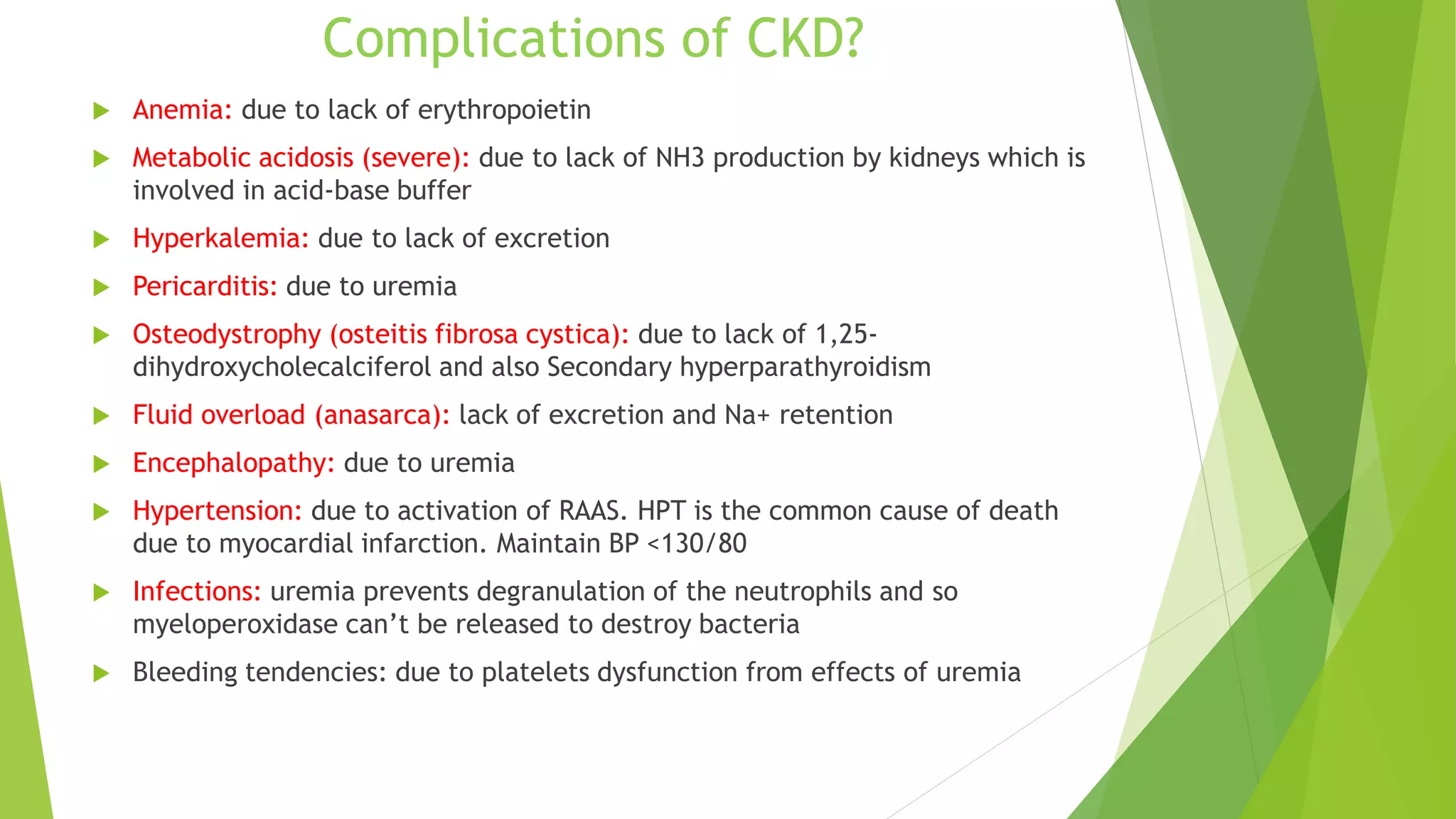
Complications of CKD?
 Anemia: due to lack of erythropoietin
 Metabolic acidosis (severe): due to lack of NH3 production by kidneys which is
involved in acid-base buffer
 Hyperkalemia: due to lack of excretion
 Pericarditis: due to uremia
 Osteodystrophy (osteitis fibrosa cystica): due to lack of 1,25-
dihydroxycholecalciferol and also Secondary hyperparathyroidism
 Fluid overload (anasarca): lack of excretion and Na+ retention
 Encephalopathy: due to uremia
 Hypertension: due to activation of RAAS. HPT is the common cause of death
due to myocardial infarction. Maintain BP <130/80
 Infections: uremia prevents degranulation of the neutrophils and so
myeloperoxidase can’t be released to destroy bacteria
 Bleeding tendencies: due to platelets dysfunction from effects of uremia
Stay Healthy Always

Management of Chronic Kidney Disorder (CKD)

  • 1.
  • 2.
    AGENDA  DEFINITION  ETIOLOGY PATHOPHYSIOLOGY  CLINICAL PRESENTATION  DIAGNOSIS  TREATMENT  COMPLICATIONS  INDICATIONS FOR DIALYSIS
  • 3.
    WHAT IS CHRONICKIDNEY DISEASE?  It is kidney damage (structurally or functionally) for ≥ 3 months with or without decrease glomerular filtration rate (GFR) OR  GFR < 60ml/min for ≥ 3 months with or without kidney damage OR  Persistent microalbuminuria/Persistent proteinuria/Persistent hematuria OR  Structural abnormalities of the kidneys (polycystic kidney disease, reflux nephropathy) proven by ultrasound
  • 4.
    Causes and Incidence Chronic renal failure occurs in approximately 1 out of 1,000 people.  Causative diseases include any type: 1. Diabetes mellitus - most common cause 2. Hypertension 3. Glomerulonephritis 4. Others  chronic pyelonephritis, PKD /polycystic kidney disease, obstructive uropathy (stones, BPH, cancer, etc), Alport syndrome, and drug-induced nephropathy
  • 5.
    Estimation of GFR CrCl(ml/min)=  Cockcroft- Gault Formula ( 140 – age ) x Weight inKg 72 x Serum Creat (mg/dl)  MDRD Study Equation x ( 0.85 if female ) GFR (mil/min/1.73 m2) = 186 x (SCr) -1.154 x (age)-.203 x (0.724 if female) x (1.210 ifAfricanAmerican)
  • 6.
    ETIOLOGY OF CHRONICKIDNEY DISEASE?  Diabetes mellitus  Hypertension  Glomerulonephritis  Pyelonephritis  Renal artery stenosis  Renal calculi  Polycystic kidney disease  Congenital defects of the kidney or bladder  Secondary causes (SLE, rheumatoid arthritis, HIV, drugs- gold, heroin use etc.)  Drugs (NSAIDS, Aminoglycoside etc.)
  • 8.
  • 9.
    Symptoms INITIAL (non-specific) unintentional weight loss nausea,vomiting general ill feeling fatigue headache frequent hiccups generalized itching (pruritus) INITIAL (non-specific) increase or decrease urine output need to urinate at night anasarca easy bruising or bleeding blood in the vomit or stools breath odor (uremic fetor) muscle twitching or cramps restless legs syndrome increased skin pigmentation uremic frost decreased sensation decreased alertness/
  • 10.
    Signs and Tests Bloodpressure may be high Urinalysis may show protein, blood, pus or other abnormalities Creatinine and BUN levels progressively increase Creatinine clearance progressively decreases Potassium elevated Calcium low and Phosphorus high Arterial blood gas show metabolic acidosis Xray of bones may show osteodystrophy
  • 11.
    Signs and Tests(cont.) Changes that indicate chronic renal failure, including both kidneys being smaller than normal, may be seen on: abdominal ultrasound plain KUB X-ray abdominal CT scan or MRI However, CKD with normal sized or enlarged kidneys: amyloidosis, diabetes multiple myeloma polycystic kidneys accelerated hypertension
  • 12.
    PATHOPHYSIOLOGY OF CKD? Regardless of the primary cause of nephron loss, some usually survive or are less severely damaged  These nephrons then adapt and enlarge, and clearance per nephron markedly increases.  The RAAS is activated causing renal hypertension  If the initiating process progress, renal failure may ensue with the rapid development of ESRD.  Focal glomerulosclerosis develops in the glomeruli, and they eventually become non-functional.  proteinuria markedly increases and systemic hypertension worsens.  Adapted nephrons enhance the ability of the kidney to postpone uremia, but ultimately the adaptation process leads to the demise of these nephrons.  Adapted nephrons have not only an enhanced GFR but also enhanced tubular functions in terms of, for example, potassium and proton secretion.
  • 13.
    Classification of kidneyinjury RIFLE and the network criteria
  • 14.
    CLINICAL PRESENTATION OFCKD?  Asymptomatic in stage 1-3 with GFR > 30ml/min  Symptomatic in stage 4-5 with GFR < 30ml/min 1. Early signs :Polyuria/oliguria, Hematuria, Edema 2. Late signs a. hypertension b. Signs of anemia (pallor) c. Signs of hyperurecemia: i. Brain ( uremic encephalopathy): low concentration, confusion, lethargy, asterixis, coma, ii. Heart: pericarditis iii. GIT: nausea & vomiting, anorexia, diarrhea iv. Reproductive system: erectile dysfunction, decreased libido, amenorrhea v. Blood system: platelet dysfunction with tendency to bleed, infections due to WBCs dysfunction vi. peripheral neuropathy: numbness, paraesthesia, restless leg syndrome vii. Skin: dry skin, pruritus, ecchymosis viii. Others: fatigue, hiccups, muscle cramps,
  • 15.
    DIAGNOSIS OF CKD? Kidney injury with or without decrease GFR for ≥ 3 months  FBC: Anemia (normochromic, normocytic), leukopenia, thrombocytopenia  Urinalysis: i. Dipstick proteinuria, if positive, do daily or 24hrs proteinuria test a. If proteinuria is ≤1g/24hrs, then consider urinary syndrome b. If proteinuria is 1 to 3g/24hrs, nephritic syndrome/ tubulointerstitial c. If proteinuria is ≥3.5g/24hrs, consider nephrotic syndrome i. RBCs, RBC casts, suggests glomerulonephritis ii. Pyuria or/and WBC casts are suggestive of interstitial nephritis/pyelonephritis  GFR evaluation; usually decreased
  • 16.
    Diagnosis (cont.)  Biochemicalblood test: i. High creatinine, high BUN ii. Electrolytes: Hyperkalemia, hyperphosphatemia, hypermagnesemia, hypocalcemia, low bicarbonate iii. pH of blood: acidosis (metabolic) iv. Hypoalbuminemia/hypoproteinemia  Plain abdominal x-ray (useful to look for radio-opaque stones or nephrocalcinosis)  Renal biopsy (reveals underlying primary cause but may be nonspecific)  Ultrasound findings: small echogenic kidneys in ESRD, hydronephrosis, polycystic kidneys
  • 17.
    Ultrasound findings: smallechogenic kidneys in ESRD
  • 18.
    TREATMENT OF CKD? Treatment objectives • To detect chronic kidney disease early in susceptible individuals. • To control hypertension • To control blood glucose • To treat other underlying causes • To prevent complications and further worsening of kidney function
  • 19.
    Non-pharmacological treatment  Admitpatient especially in stage of exacerbation  Diet: Restrict dietary protein to< 40 g/day, Restrict Na+, K+, PO4- intake, avoid potassium containing foods e.g. banana  Water and electrolyte balance: i. Daily fluid intake = previous day’s urine output + 600 ml (for insensible losses) ii. Strict fluid input and output chart  Daily weighing  General health advice e.g. smoking cessation  • Avoid nephrotoxins e.g. NSAIDs , Herbal medication
  • 20.
    Pharmacological treatment  Treatmentof underlying condition (diabetes, HPT, autoimmune d’ses etc.)  Treatment of fluid overload Diuretics: Furosemide, oral /IV, 40-120 mg daily  Treatment of hypertension (goal of BP<130/8OmmHg): i. ACEIs- Lisinopril, oral, 5-40 mg daily Or Ramipril, oral, 2.5-10 mg daily Or ii. ARBs- Losartan, oral, 25-100 mg daily or Valsatan, oral, 80-160 mg daily  Treatment of anemia i. Injection erythropoietin 50-100units IV/SC 3times weekly Treatment is initiated at Hb <10g/dl i. Tab. Ferrous sulphate 200mg 3times daily  Treatment of hyperkalaemia/metabolic acidosis • 10% Calcium gluconate, IV, 10-20 ml over 2-5 minutes Plus • Sodium Bicarbonate, IV, 8.4% 50mEq, over 5 minutes Plus • Regular Insulin, IV, 10 units in 50-100 ml Glucose 50%
  • 21.
    Pharmacological treatment (cont.) Treatment of hyperphosphatemia: i. Phosphate binders (calcium acetate/ calcium carbonate 2 capsules (1334mg ) orally with food)  Treatment of hypocalcemia: i. Calcium citrate 1g/day ii. Vitamin D supplement; 2 tablets (800 IU) once daily  Treatment of pruritus: Capsaicin cream or cholestyramine  Treatment of bleeding: Desmopressin 0.3 mcg/kg IV over 15-30mins
  • 22.
    Renal replacement therapy(RRT)  Dialysis (hemodialysis or peritoneal dialysis)  Kidney transplant with immunosuppressant usage hemodialysis= peritoneal dialysis in terms of efficiency But hemodialysis is superior to peritoneal dialysis due to the complication (peritonitis then subsequent septic shock) associated with peritoneal dialysis Indications for dialysis are: 1. fluid overload 2. severe acidosis 3. hyperkalemia 4. pericarditis 5. encephalopathy
  • 23.
    Hemodialysis: 3-4hrs, 3times per week (Monday, Wednesday and Friday)
  • 24.
  • 25.
  • 26.
    Detection, Evaluation, andManagement of CKD STAGE DESCRIPTION GFR EVALUATION MANAGEMENT At increased risk Test for CKD Risk factor management 1 Kidney damage with normal or  GFR >90 Diagnosis Comorbid conditions CVD and CVD risk factors Specific therapy, based on diagnosis Management of comorbid conditions Treatment of CVD and CVD risk factors 2 Kidney damage with mild  GFR 60-89 Rate of progression Slowing rate of loss of kidney function1 3 Moderate  GFR 30-59 Complications Prevention and treatment of complications 4 Severe  GFR 15-29 Preparation for kidney replacement therapy Referral to Nephrologist 5 Kidney Failure <15 Kidney replacement therapy 1Target blood pressure less than 130/80 mm Hg. Angiotension converting enzyme inhibitors (ACEI) or angiotension receptor blocker (ARB) for diabetic or non-diabetic kidney disease with spot urine total protein-to-creatinine ratio of greater than 200 mg/g.
  • 27.
    Complications of CKD? Anemia: due to lack of erythropoietin  Metabolic acidosis (severe): due to lack of NH3 production by kidneys which is involved in acid-base buffer  Hyperkalemia: due to lack of excretion  Pericarditis: due to uremia  Osteodystrophy (osteitis fibrosa cystica): due to lack of 1,25- dihydroxycholecalciferol and also Secondary hyperparathyroidism  Fluid overload (anasarca): lack of excretion and Na+ retention  Encephalopathy: due to uremia  Hypertension: due to activation of RAAS. HPT is the common cause of death due to myocardial infarction. Maintain BP <130/80  Infections: uremia prevents degranulation of the neutrophils and so myeloperoxidase can’t be released to destroy bacteria  Bleeding tendencies: due to platelets dysfunction from effects of uremia
  • 28.