CASE PRESENTATION ON
CHRONIC RENAL FAILURE
PRESETNED BY; D.DILIP
PHARM.D 4th
year [214T1T0016]
PRESENTED TO ;
Dr. SAI CHARITHA madam PHARM.D
Asst.PROFFESSOR
SRI LAKSHMI VENKATESWARA INSTITUTE OF
PHARMACEUTICAL SCIENCES
DEPARTMENT OF PHARMACY PRACTICE
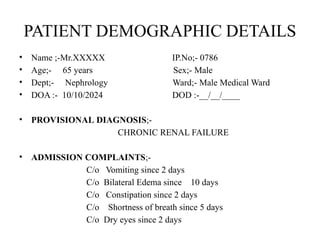
PATIENT DEMOGRAPHIC DETAILS
• Name ;-Mr.XXXXX IP.No;- 0786
• Age;- 65 years Sex;- Male
• Dept;- Nephrology Ward;- Male Medical Ward
• DOA :- 10/10/2024 DOD :-__/__/____
• PROVISIONAL DIAGNOSIS;-
CHRONIC RENAL FAILURE
• ADMISSION COMPLAINTS;-
C/o Vomiting since 2 days
C/o Bilateral Edema since 10 days
C/o Constipation since 2 days
C/o Shortness of breath since 5 days
C/o Dry eyes since 2 days
• HISTORY OF PRESENT ILLNESS ;-
H/o High blood pressure
H/o Itching
H/o Loss of appetite
• PAST MEDICAL HISTORY ;-
HYPERTENSION
KIDNEY STONES
• PAST MEDICATION HISTORY ;-
-NOT KNOWN-
• FAMILY HISTORY ;-
His mother has chronic kidney failure
• PERSONAL HISTORY ;-
Allergy ;- yes Drug abuse ;- NSAID’s
Smoking ;- yes [since 10 years] Substance abuse ;- No
. Alcohol ;- yes[since 20 years]
• HABITS ;-
Food ;- Mixed Appetite ;- Loss of appetite
Sleep ;- Abnormal Bowel ;- Irregular
Bladder ;- Abnormal
• GENERAL EXAMINATION ;-
DAY TEMP PR RR BP
1 99.6℉ 82 bpm 25 cpm 160/90 mm Hg
2 98.5 ℉ 80 bpm 23 cpm 150/87 mm Hg
3 97. 4 ℉ 74 bpm 20 cpm 135/82 mm Hg
4 98.6 ℉ 72 bpm 20 cpm 130/80 mm Hg
NORMAL TEMPERATURE [ in ] :- 98.6
℉ ℉
NORMAL PULSE RATE :- 60-100 bpm
NORMAL RESPIRATORY RATE :- 12-20cpm
NORAML BLOOD PRESSURE :- < 120/80mm Hg
• SYSTEMS EXAMINATION ;-
CVS ;- Abnormal [Hypertension]
CNS ;- Abnormal [Confusion]
RS ;- Abnormal [ Dyspnea because fluid .
. accumulation in lungs ]
GU/GI ;- Abnormal [constipation , vomiting , loss
. decrease urine output, decrease GFR]
EENT ;- Abnormal [dry eyes]
DERM ;- Abnormal [ itchy skin]
EXTREMITIES[UL/LL] ;- Abnormal
OTHERS :- Anemia
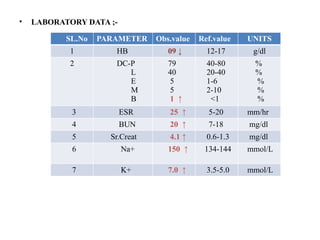
• LABORATORY DATA ;-
SL.No PARAMETER Obs.value Ref.value UNITS
1 HB 09 ↓ 12-17 g/dl
2 DC-P
L
E
M
B
79
40
5
5
1 ↑
40-80
20-40
1-6
2-10
<1
%
%
%
%
%
3 ESR 25 ↑ 5-20 mm/hr
4 BUN 20 ↑ 7-18 mg/dl
5 Sr.Creat 4.1 ↑ 0.6-1.3 mg/dl
6 Na+ 150 ↑ 134-144 mmol/L
7 K+ 7.0 ↑ 3.5-5.0 mmol/L
SL.No PARAMETER Obs.Value Ref.Value UNITS
8 Cl- 109 ↑ 96-108 mmol/L
9 Uric acid 08 ↑ 2.6-7.2 mmol/L
URINALYSIS;-
10 PROTEIN ;- Increase levels of protein in urine [PROTEINURIA]
11 BLOOD ;- Presence of blood in urine [HEMATURIA]
12 pH ;- Acidic
> 24-Hr URINE COLLECTION;-
13 ↓ the amount of
creatinine excretion
from the body
0.5↓ 0.8-1.3 mg/dL
IMAGING STUDIES :-
14 CT SCAN ;- 8cm of kidney length [10-12 cm]
STAGE 3A OF CKD*
{GFR RATE ;- 45-59 mg/mmoL}
[Moderate to severe cause to kidney]
*CKD=CHRONIC KIDNEY DISEASE
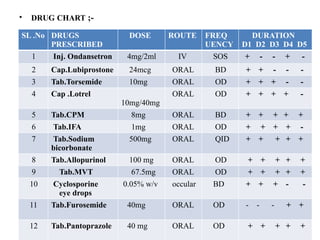
• DRUG CHART ;-
SL .No DRUGS
PRESCRIBED
DOSE ROUTE FREQ
UENCY
DURATION
D1 D2 D3 D4 D5
1 Inj. Ondansetron 4mg/2ml IV SOS + - - + -
2 Cap.Lubiprostone 24mcg ORAL BD + + - - -
3 Tab.Torsemide 10mg ORAL OD + + + - -
4 Cap .Lotrel
10mg/40mg
ORAL OD + + + + -
5 Tab.CPM 8mg ORAL BD + + + + +
6 Tab.IFA 1mg ORAL OD + + + + -
7 Tab.Sodium
bicorbonate
500mg ORAL QID + + + + +
8 Tab.Allopurinol 100 mg ORAL OD + + + + +
9 Tab.MVT 67.5mg ORAL OD + + + + +
10 Cyclosporine
eye drops
0.05% w/v occular BD + + + - -
11 Tab.Furosemide 40mg ORAL OD - - - + +
12 Tab.Pantoprazole 40 mg ORAL OD + + + + +
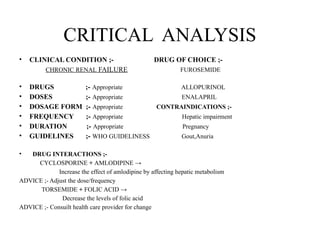
CRITICAL ANALYSIS
• CLINICAL CONDITION ;- DRUG OF CHOICE ;-
CHRONIC RENAL FAILURE FUROSEMIDE
• DRUGS ;- Appropriate ALLOPURINOL
• DOSES ;- Appropriate ENALAPRIL
• DOSAGE FORM ;- Appropriate CONTRAINDICATIONS ;-
• FREQUENCY ;- Appropriate Hepatic impairment
• DURATION ;- Appropriate Pregnancy
• GUIDELINES ;- WHO GUIDELINESS Gout,Anuria
• DRUG INTERACTIONS ;-
CYCLOSPORINE + AMLODIPINE →
Increase the effect of amlodipine by affecting hepatic metabolism
ADVICE ;- Adjust the dose/frequency
TORSEMIDE + FOLIC ACID →
Decrease the levels of folic acid
ADVICE ;- Consuilt health care provider for change
PHARMACIST NOTES
• DISEASE INFORMATION ;-
 DEFINITION ;-
• Chronic renal failure, also known as chronic kidney disease (CKD), is a long-term,
progressive condition where the kidneys gradually lose their ability to function properly. The
kidneys are crucial organs responsible for filtering waste products and excess fluids from the
blood, maintaining electrolyte balance, and regulating blood pressure. Chronic renal failure affects
these vital functions, leading to a build-up of waste products and fluid in the body, which can have
widespread effects on overall health.
 STAGES ;-
CKD is often classified into stages based on the level of kidney function,
which is measured by the glomerular filtration rate (GFR)
•Stage 1: Normal or high GFR (>90 mL/min) with kidney damage.
•Stage 2: Mild reduction in GFR (60-89 mL/min) with kidney damage.
•Stage 3: Moderate reduction in GFR (30-59 mL/min).
•Stage 4: Severe reduction in GFR (15-29 mL/min).
•Stage 5: Kidney failure (GFR <15 mL/min), also known as
end-stage renal disease (ESRD). At this stage, dialysis or kidney
transplantation is typically required.
 CAUSES ;-
Chronic renal failure can result from various underlying conditions , including ;-
Diabetes Mellitus: High blood sugar levels damage kidney blood vessels over time.
– Hypertension: High blood pressure puts strain on the kidneys' blood vessels.
– Glomerulonephritis: Inflammation of the glomeruli (the filtering units of the kidneys).
– Polycystic Kidney Disease: Genetic disorder causing fluid-filled cysts to form
in the kidneys.
– Chronic Urinary Tract Obstruction: Conditions like kidney stones or enlarged
prostate that obstruct urine flow.
– Chronic Use of Certain Medications: Some medications can cause kidney damage
over long-term use.
 SIGNS AND SYMPTOMS ;-
• Fatigue and Weakness: Decreased kidney function can lead to anemia, which often causes
fatigue and weakness.
• Swelling (Edema): Fluid retention can cause swelling in the legs, ankles, feet, or around the eyes.
• Changes in Urination: You might notice changes in the frequency or amount of urine, or you
might experience difficulty urinating.
• Urine with Blood or Protein: Blood or protein in the urine can be a sign of kidney damage.
[Hematuria or Proteinuria]
• Persistent Itching: Accumulation of waste products in the blood can cause itching.
• Nausea and Vomiting: Toxin buildup can lead to nausea and vomiting.
• Loss of Appetite: A decrease in appetite is common.
• Bad Breath: Uremia (a buildup of waste products) can cause bad breath.
• Shortness of Breath: Fluid buildup in the lungs or anemia can cause difficulty breathing.
• High Blood Pressure: CKD can contribute to or worsen high blood pressure.
• Confusion or Difficulty Concentrating: Toxin buildup can affect brain function.
• Metabolic acidosis ; Due to increase production of acids
 PATHOPHYSIOLOGY ;-
ETIOLOGY
Renal vasoconstriction Arteriolar ↓ functions damaged tisue
constriction of nephrons cells and RBC’s
↓ GFR
HTN failure of excretion disturbance of
Na+ and water of H2 ions Na+and K+
retension ↑circulatory exchange
overload ↑production of
EDEMA and Na + acids ↑ extracellular
retention K+ overload
metabolic acidosis [HYPERKALEMIA]
• RISK FACTORS ;-
• Diabetes: High blood sugar levels can damage blood vessels in the kidneys.
• High Blood Pressure: Hypertension can cause damage to kidney blood vessels and contribute to CKD.
• Heart Disease: Conditions affecting the heart can impact kidney function.
• Family History: A family history of kidney disease can increase your risk.
• Age: The risk increases with age, particularly after 60.
• Chronic Glomerulonephritis: Inflammation of the kidney's filtering units can lead to CKD.
• Obesity: Excess body weight can contribute to conditions like diabetes and hypertension.
• Smoking: Tobacco use can harm blood vessels and worsen kidney function.
• Frequent Use of Certain Medications: Long-term use of medications such as nonsteroidal anti-inflammatory
drugs (NSAIDs) can harm the kidneys.
• Autoimmune Diseases: Conditions like lupus can affect kidney function.
 COMPLICATIONS ;-
• Cardiovascular Disease: CKD increases the risk of heart disease and stroke.
• Anemia: Reduced kidney function can lead to decreased production of erythropoietin, a hormone that helps
produce red blood cells.
• Bone Disease: CKD can affect calcium and phosphate balance, leading to bone weakening and pain.
• Fluid Retention: This can lead to swelling, high blood pressure, and heart failure.
• Electrolyte Imbalances: Imbalances in potassium, sodium, and other electrolytes can occur.
• Acidosis: The buildup of acid in the blood can lead to a condition called metabolic acidosis.
• Gastrointestinal Issues: Nausea, vomiting, and loss of appetite can occur.
• Mental Health Issues: Depression and cognitive impairment can be related to CKD.
• End-Stage Renal Disease (ESRD): CKD can progress to ESRD, where kidneys fail completely, necessitating
dialysis or kidney transplantation.
• DIAGNOSIS ;
 Medical History
 Physical Examination;- This may include checking for signs of fluid retention,
• high blood pressure, and other physical indicators of CKD.
 Laboratory Tests ;-
1. Blood Tests:
– Serum Creatinine: Elevated levels can indicate reduced kidney function.
– Blood Urea Nitrogen (BUN): High levels can suggest impaired kidney function.
– Glomerular Filtration Rate (GFR): A key indicator of kidney function; a reduced GFR
suggests CKD.
– Electrolytes: Tests for sodium, potassium, calcium, and phosphate levels.
Hemoglobin and Hematocrit: To check for anemia. .
2. Urine Tests:
– Urinalysis: To detect the presence of protein, blood, or other abnormalities in the urine.
– Urine Albumin-to-Creatinine Ratio (UACR): Measures protein levels in the urine,
which can indicate kidney damage.
3. Imaging Studies
• Ultrasound: Commonly used to assess kidney size, structure, and to detect any
obstructions or abnormalities.
• CT Scan: May be used if more detailed imaging is needed, especially if there are
concerns about structural abnormalities or blockages.
• MRI: Used less frequently but may be employed in certain cases to evaluate kidney
4. Kidney Biopsy
• Biopsy: In certain cases, a kidney biopsy may be performed to obtain a sample of
kidney tissue for examination. This is typically done if there is a need to determine
the specific cause of kidney damage or to assess the degree of kidney damage.
Urine Collection: To measure kidney function and check for proteinuria and other
abnormalities
• MANAGEMENT ;-
Non Pharmacological treatment ;-
1. Dietary Modifications:
- Low-Protein Diet: Reducing protein intake can help decrease the kidneys' workload.
- Low-Sodium Diet: Reducing sodium helps control blood pressure and fluid retention.
- Potassium and Phosphorus Control: Managing potassium and phosphorus intake can prevent
complications related to imbalances.
- Fluid Management: Monitoring and adjusting fluid intake to avoid dehydration or fluid
overload.
2. Blood Pressure Management:
- Regular monitoring and maintaining blood pressure within recommended ranges, often with
lifestyle changes like reducing salt intake and increasing physical activity.
3. Blood Sugar Control:
- For individuals with diabetes, keeping blood sugar levels well-controlled is crucial.
4. Weight Management:
- Maintaining a healthy weight through a balanced diet and regular exercise.
5. Physical Activity:
- Engaging in regular, moderate exercise can improve overall health and help manage
symptoms
6. Smoking Cessation:
- Quitting smoking is important as it can help improve cardiovascular health and slow CKD progression.
7. Stress Management:
- Techniques such as mindfulness, meditation, or counseling can help manage stress, which can impact
overall health.
8. Regular Monitoring and Check-ups:
• - Regular visits to a healthcare provider for monitoring kidney function and adjusting treatment plans
as necessary
• Pharmacological management ;-
1. Antihypertensives {Ex. Beta-blockers }
2. Diuretics {Ex.Frusemide,Torsemide}
3. Phosphate Binders {Ex. Calcium carbonate}
4. Erythropoiesis-Stimulating Agents (ESAs){}
5. Iron Supplements{Ex.Ferrous sulfate}
6. Statins{Ex. Provastatin,Atorvastatin}
7. Anti-Hyperglycemics{Ex. Metformin,Glimipride}
8. Vitamin D Analogs{Ex.Calcipotriol}
9. Renin-Angiotensin-Aldosterone System (RAAS) Inhibitors{Ex. Captopril,Enalapril}
• DRUG INFORMATION ;-
• Inj.Ondansetron ;- {BRAND NAME :- ZOFRAN}
Dose ;- 4mg/2ml
Category ;- 5HT3 RECEPTOR ANTAGONIST
MOA ;- Inhibition of seratonin receptor to reduce the vomiting sensation by
inhibit chemoreceptor trigger zone.
ADR’s;- Headache,Drowsiness,Constipation
Uses ;- To treat the Nausesa , Vomiting
• Cap.Lubiprostone ;- {BRAND NAME :-AMITIZA}
Dose ;- 24mcg
Category ;- LAXATIVE[CHLORIDE CHANNEL
ACTIVATOR]
MOA ;- Lubiprostone works by activating chloride channels in the intestinal
epithelium, leading to increased fluid secretion into the lumen of the intestines.
This helps soften stools and promotes bowel movements
ADR’s ;- Nausea,Diarrhea,Abdominal pain,Headache,Vomiting
Uses ;- Mainly used in the treatment of Constipation
• Tab.Torsemide ;- {BRAND NAME :- DEMADEX}
Dose ;- 10mg
Category ;- DIURETIC
MOA ;- Torsemide acts primarily on the ascending limb of the loop of Henle in the
kidneys. It inhibits the Na-K-2Cl co-transporter, which is responsible for reabsorbing
sodium, potassium, and chloride ions from the urine back into the blood. By blocking
this transporter, torsemide prevents the reabsorption of these ions, leading to increased
excretion of sodium, chloride, and water. This diuretic effect helps reduce fluid overload
in conditions like heart failure and renal dysfunction.
ADR’s ;- Rash,Pruritis,Tinnitus
Uses ;- Used in the treatment of CHF,HTN,CKD,Liver cirrhosis
Tab.Chlorpheniramine malate ;- {BRAND NAME :- DEMAZIN}
Dose ;- 8 mg
Category ;- ANTI-HISTAMINE
MOA ;- Primary Action: Blocks histamine H1 receptors, reducing the effects of
histamine in the body. Helps alleviate symptoms such as sneezing, runny nose, and itchy
eyes caused by allergies.
ADR’s ;- Drowsiness,Dizziness,Dry mouth,Constipation,Blurred vision
Uses ;- Allergic rhinitis,Allergic conjunctivitis,Urticaria (hives),Common cold
symptoms (often combined with decongestants or cough suppressants in combination
products).
• Cap. Lotrel {AMLODIPINE+BENZAPRIL} ;-
Dose ;- 10mg/40mg [Amlodepine/Benazepril]
Category ;- CALCIUM CHANNEL BLOCKER/ACE INHIBITOR
• MOA ;-Amlodipine:
• Action: Amlodipine works by blocking calcium channels in the smooth muscle
cells of the blood vessels. This prevents calcium from entering these cells, leading
to relaxation of the vascular smooth muscle. As a result, there is vasodilation
(widening) of the blood vessels, which reduces blood pressure and decreases the
workload on the heart.
• MOA ;- Benzapril :-
Benazepril is a prodrug, meaning it's converted into its active form, benazeprilat, in
the liver.
Benazeprilat inhibits the enzyme ACE, which is responsible for converting
angiotensin I into angiotensin II.
ADRs ;- cough,.dizziness,headache, vomiting
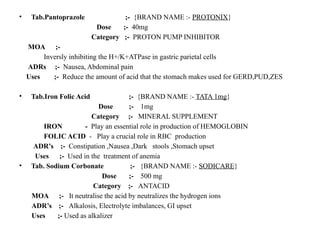
• Tab.Pantoprazole ;- {BRAND NAME :- PROTONIX}
Dose ;- 40mg
Category ;- PROTON PUMP INHIBITOR
MOA ;-
Inversly inhibiting the H+/K+ATPase in gastric parietal cells
ADRs ;- Nausea, Abdominal pain
Uses ;- Reduce the amount of acid that the stomach makes used for GERD,PUD,ZES
• Tab.Iron Folic Acid ;- {BRAND NAME :- TATA 1mg}
Dose ;- 1mg
Category ;- MINERAL SUPPLEMENT
IRON - Play an essential role in production of HEMOGLOBIN
FOLIC ACID - Play a crucial role in RBC production
ADR’s ;- Constipation ,Nausea ,Dark stools ,Stomach upset
Uses ;- Used in the treatment of anemia
• Tab. Sodium Corbonate ;- {BRAND NAME :- SODICARE}
Dose ;- 500 mg
Category ;- ANTACID
MOA ;- It neutralise the acid by neutralizes the hydrogen ions
ADR’s ;- Alkalosis, Electrolyte imbalances, GI upset
Uses ;- Used as alkalizer
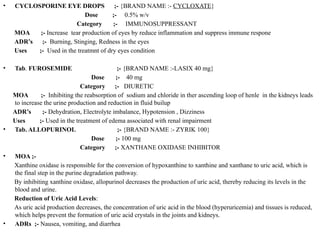
• CYCLOSPORINE EYE DROPS ;- {BRAND NAME :- CYCLOXATE}
Dose ;- 0.5% w/v
Category ;- IMMUNOSUPPRESSANT
MOA ;- Increase tear production of eyes by reduce inflammation and suppress immune respone
ADR’s ;- Burning, Stinging, Redness in the eyes
Uses ;- Used in the treatmnt of dry eyes condition
• Tab. FUROSEMIDE ;- {BRAND NAME :-LASIX 40 mg}
Dose ;- 40 mg
Category ;- DIURETIC
MOA ;- Inhibiting the reabsorption of sodium and chloride in ther ascending loop of henle in the kidneys leads
to increase the urine production and reduction in fluid builup
ADR’s ;- Dehydration, Electrolyte imbalance, Hypotension , Dizziness
Uses ;- Used in the treatment of edema associated with renal impairment
• Tab. ALLOPURINOL ;- {BRAND NAME :- ZYRIK 100}
Dose ;- 100 mg
Category ;- XANTHANE OXIDASE INHIBITOR
• MOA ;-
Xanthine oxidase is responsible for the conversion of hypoxanthine to xanthine and xanthane to uric acid, which is
the final step in the purine degradation pathway.
By inhibiting xanthine oxidase, allopurinol decreases the production of uric acid, thereby reducing its levels in the
blood and urine.
Reduction of Uric Acid Levels:
As uric acid production decreases, the concentration of uric acid in the blood (hyperuricemia) and tissues is reduced,
which helps prevent the formation of uric acid crystals in the joints and kidneys.
• ADRs ;- Nausea, vomiting, and diarrhea
• SOAP NOTES;-
• SUBJECTIVE ;- A 65 years old male patient admitted in male medical ward with vomiting,
edema, constipation , shortness of breath.
• OBJECTIVE ;- The abnormal lab findings are –
1
PARAMETER LAB
FINDING
PARAMETER LAB
FINDING
URINALYSIS
HB 09 Na+ 150 PROTEIN levels are
increase in urine
DC-B 01 K+ 7.0
ESR 23 Cl 109 Presence of BLOOD
in urine
BUN 20 Uric Acid 08
Sr.Creat 4.1 Creatinine 0.5 Urine pH is
decreased[acidic]
IMAGING STUDIES :- CT SCAN ;- 8cm of kidney length [10-12 cm]
STAGE 3A OF CKD*
{GFR RATE ;- 45-59 mL/min}
[Moderate to severe cause to kidney]
CKD*= CHRONIC KIDNEY DISEASE
STAGE 3 of CKD = 30-59 mL/min
• Abnoraml vitals are also found
• ASSESSMENT ;-
Based on SUBJECTIVE and OBJECTIVE presence of CHRONIC RENAL FAILURE
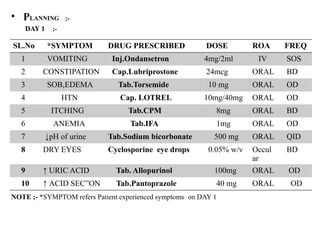
• PLANNING ;-
DAY 1 ;-
NOTE ;- *SYMPTOM refers Patient experienced symptoms on DAY 1
SL.No *SYMPTOM DRUG PRESCRIBED DOSE ROA FREQ
1 VOMITING Inj.Ondansetron 4mg/2ml IV SOS
2 CONSTIPATION Cap.Lubriprostone 24mcg ORAL BD
3 SOB,EDEMA Tab.Torsemide 10 mg ORAL OD
4 HTN Cap. LOTREL 10mg/40mg ORAL OD
5 ITCHING Tab.CPM 8mg ORAL BD
6 ANEMIA Tab.IFA 1mg ORAL OD
7 ↓pH of urine Tab.Sodium bicorbonate 500 mg ORAL QID
8 DRY EYES Cyclosporine eye drops 0.05% w/v Occul
ar
BD
9 ↑ URIC ACID Tab. Allopurinol 100mg ORAL OD
10 ↑ ACID SEC”ON Tab.Pantoprazole 40 mg ORAL OD
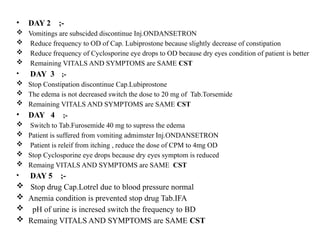
• DAY 2 ;-
 Vomitings are subscided discontinue Inj.ONDANSETRON
 Reduce frequency to OD of Cap. Lubiprostone because slightly decrease of constipation
 Reduce frequency of Cyclosporine eye drops to OD because dry eyes condition of patient is better
 Remaining VITALS AND SYMPTOMS are SAME CST
• DAY 3 ;-
 Stop Constipation discontinue Cap.Lubiprostone
 The edema is not decreased switch the dose to 20 mg of Tab.Torsemide
 Remaining VITALS AND SYMPTOMS are SAME CST
• DAY 4 ;-
 Switch to Tab.Furosemide 40 mg to supress the edema
 Patient is suffered from vomiting admimster Inj.ONDANSETRON
 Patient is releif from itching , reduce the dose of CPM to 4mg OD
 Stop Cyclosporine eye drops because dry eyes symptom is reduced
 Remaing VITALS AND SYMPTOMS are SAME CST
• DAY 5 ;-
 Stop drug Cap.Lotrel due to blood pressure normal
 Anemia condition is prevented stop drug Tab.IFA
 pH of urine is incresed switch the frequency to BD
 Remaing VITALS AND SYMPTOMS are SAME CST
• PATIENT COUNSELLING ;-
[TO PATIENT REPRESENTATIVE because patient is not able to conselled]
- Maintain regular diet
- Avoid sugar containing foods
- Followup medicines regularly
- Restrict electrolyte containing foods like ORS
- Sessation alcohol and smoking intake
- Make low protein diet
- Maintain physical exercise
• REFERANCE ;-
 CLINICAL PHARMACY andTHERAPEUTICS TEXTBOOK
[ROGER WALKER and CATE WHITTLSEA] Pg.No ;- 272
 PHARMACOTHERAPY [A Pathophysiologic Approch] Pg.No ;-765
THANK YOU
TREAT THE SYMPTOM RATHER THAN THE DISEASE

CHRONIC KIDNEY DISEASE CASE PRESENTATION

  • 1.
    CASE PRESENTATION ON CHRONICRENAL FAILURE PRESETNED BY; D.DILIP PHARM.D 4th year [214T1T0016] PRESENTED TO ; Dr. SAI CHARITHA madam PHARM.D Asst.PROFFESSOR SRI LAKSHMI VENKATESWARA INSTITUTE OF PHARMACEUTICAL SCIENCES DEPARTMENT OF PHARMACY PRACTICE
  • 2.
    PATIENT DEMOGRAPHIC DETAILS •Name ;-Mr.XXXXX IP.No;- 0786 • Age;- 65 years Sex;- Male • Dept;- Nephrology Ward;- Male Medical Ward • DOA :- 10/10/2024 DOD :-__/__/____ • PROVISIONAL DIAGNOSIS;- CHRONIC RENAL FAILURE • ADMISSION COMPLAINTS;- C/o Vomiting since 2 days C/o Bilateral Edema since 10 days C/o Constipation since 2 days C/o Shortness of breath since 5 days C/o Dry eyes since 2 days
  • 3.
    • HISTORY OFPRESENT ILLNESS ;- H/o High blood pressure H/o Itching H/o Loss of appetite • PAST MEDICAL HISTORY ;- HYPERTENSION KIDNEY STONES • PAST MEDICATION HISTORY ;- -NOT KNOWN- • FAMILY HISTORY ;- His mother has chronic kidney failure • PERSONAL HISTORY ;- Allergy ;- yes Drug abuse ;- NSAID’s Smoking ;- yes [since 10 years] Substance abuse ;- No . Alcohol ;- yes[since 20 years] • HABITS ;- Food ;- Mixed Appetite ;- Loss of appetite Sleep ;- Abnormal Bowel ;- Irregular Bladder ;- Abnormal
  • 4.
    • GENERAL EXAMINATION;- DAY TEMP PR RR BP 1 99.6℉ 82 bpm 25 cpm 160/90 mm Hg 2 98.5 ℉ 80 bpm 23 cpm 150/87 mm Hg 3 97. 4 ℉ 74 bpm 20 cpm 135/82 mm Hg 4 98.6 ℉ 72 bpm 20 cpm 130/80 mm Hg NORMAL TEMPERATURE [ in ] :- 98.6 ℉ ℉ NORMAL PULSE RATE :- 60-100 bpm NORMAL RESPIRATORY RATE :- 12-20cpm NORAML BLOOD PRESSURE :- < 120/80mm Hg
  • 5.
    • SYSTEMS EXAMINATION;- CVS ;- Abnormal [Hypertension] CNS ;- Abnormal [Confusion] RS ;- Abnormal [ Dyspnea because fluid . . accumulation in lungs ] GU/GI ;- Abnormal [constipation , vomiting , loss . decrease urine output, decrease GFR] EENT ;- Abnormal [dry eyes] DERM ;- Abnormal [ itchy skin] EXTREMITIES[UL/LL] ;- Abnormal OTHERS :- Anemia
  • 6.
    • LABORATORY DATA;- SL.No PARAMETER Obs.value Ref.value UNITS 1 HB 09 ↓ 12-17 g/dl 2 DC-P L E M B 79 40 5 5 1 ↑ 40-80 20-40 1-6 2-10 <1 % % % % % 3 ESR 25 ↑ 5-20 mm/hr 4 BUN 20 ↑ 7-18 mg/dl 5 Sr.Creat 4.1 ↑ 0.6-1.3 mg/dl 6 Na+ 150 ↑ 134-144 mmol/L 7 K+ 7.0 ↑ 3.5-5.0 mmol/L
  • 7.
    SL.No PARAMETER Obs.ValueRef.Value UNITS 8 Cl- 109 ↑ 96-108 mmol/L 9 Uric acid 08 ↑ 2.6-7.2 mmol/L URINALYSIS;- 10 PROTEIN ;- Increase levels of protein in urine [PROTEINURIA] 11 BLOOD ;- Presence of blood in urine [HEMATURIA] 12 pH ;- Acidic > 24-Hr URINE COLLECTION;- 13 ↓ the amount of creatinine excretion from the body 0.5↓ 0.8-1.3 mg/dL IMAGING STUDIES :- 14 CT SCAN ;- 8cm of kidney length [10-12 cm] STAGE 3A OF CKD* {GFR RATE ;- 45-59 mg/mmoL} [Moderate to severe cause to kidney] *CKD=CHRONIC KIDNEY DISEASE
  • 8.
    • DRUG CHART;- SL .No DRUGS PRESCRIBED DOSE ROUTE FREQ UENCY DURATION D1 D2 D3 D4 D5 1 Inj. Ondansetron 4mg/2ml IV SOS + - - + - 2 Cap.Lubiprostone 24mcg ORAL BD + + - - - 3 Tab.Torsemide 10mg ORAL OD + + + - - 4 Cap .Lotrel 10mg/40mg ORAL OD + + + + - 5 Tab.CPM 8mg ORAL BD + + + + + 6 Tab.IFA 1mg ORAL OD + + + + - 7 Tab.Sodium bicorbonate 500mg ORAL QID + + + + + 8 Tab.Allopurinol 100 mg ORAL OD + + + + + 9 Tab.MVT 67.5mg ORAL OD + + + + + 10 Cyclosporine eye drops 0.05% w/v occular BD + + + - - 11 Tab.Furosemide 40mg ORAL OD - - - + + 12 Tab.Pantoprazole 40 mg ORAL OD + + + + +
  • 9.
    CRITICAL ANALYSIS • CLINICALCONDITION ;- DRUG OF CHOICE ;- CHRONIC RENAL FAILURE FUROSEMIDE • DRUGS ;- Appropriate ALLOPURINOL • DOSES ;- Appropriate ENALAPRIL • DOSAGE FORM ;- Appropriate CONTRAINDICATIONS ;- • FREQUENCY ;- Appropriate Hepatic impairment • DURATION ;- Appropriate Pregnancy • GUIDELINES ;- WHO GUIDELINESS Gout,Anuria • DRUG INTERACTIONS ;- CYCLOSPORINE + AMLODIPINE → Increase the effect of amlodipine by affecting hepatic metabolism ADVICE ;- Adjust the dose/frequency TORSEMIDE + FOLIC ACID → Decrease the levels of folic acid ADVICE ;- Consuilt health care provider for change
  • 10.
    PHARMACIST NOTES • DISEASEINFORMATION ;-  DEFINITION ;- • Chronic renal failure, also known as chronic kidney disease (CKD), is a long-term, progressive condition where the kidneys gradually lose their ability to function properly. The kidneys are crucial organs responsible for filtering waste products and excess fluids from the blood, maintaining electrolyte balance, and regulating blood pressure. Chronic renal failure affects these vital functions, leading to a build-up of waste products and fluid in the body, which can have widespread effects on overall health.  STAGES ;- CKD is often classified into stages based on the level of kidney function, which is measured by the glomerular filtration rate (GFR) •Stage 1: Normal or high GFR (>90 mL/min) with kidney damage. •Stage 2: Mild reduction in GFR (60-89 mL/min) with kidney damage. •Stage 3: Moderate reduction in GFR (30-59 mL/min). •Stage 4: Severe reduction in GFR (15-29 mL/min). •Stage 5: Kidney failure (GFR <15 mL/min), also known as end-stage renal disease (ESRD). At this stage, dialysis or kidney transplantation is typically required.
  • 11.
     CAUSES ;- Chronicrenal failure can result from various underlying conditions , including ;- Diabetes Mellitus: High blood sugar levels damage kidney blood vessels over time. – Hypertension: High blood pressure puts strain on the kidneys' blood vessels. – Glomerulonephritis: Inflammation of the glomeruli (the filtering units of the kidneys). – Polycystic Kidney Disease: Genetic disorder causing fluid-filled cysts to form in the kidneys. – Chronic Urinary Tract Obstruction: Conditions like kidney stones or enlarged prostate that obstruct urine flow. – Chronic Use of Certain Medications: Some medications can cause kidney damage over long-term use.
  • 12.
     SIGNS ANDSYMPTOMS ;- • Fatigue and Weakness: Decreased kidney function can lead to anemia, which often causes fatigue and weakness. • Swelling (Edema): Fluid retention can cause swelling in the legs, ankles, feet, or around the eyes. • Changes in Urination: You might notice changes in the frequency or amount of urine, or you might experience difficulty urinating. • Urine with Blood or Protein: Blood or protein in the urine can be a sign of kidney damage. [Hematuria or Proteinuria] • Persistent Itching: Accumulation of waste products in the blood can cause itching. • Nausea and Vomiting: Toxin buildup can lead to nausea and vomiting. • Loss of Appetite: A decrease in appetite is common. • Bad Breath: Uremia (a buildup of waste products) can cause bad breath. • Shortness of Breath: Fluid buildup in the lungs or anemia can cause difficulty breathing. • High Blood Pressure: CKD can contribute to or worsen high blood pressure. • Confusion or Difficulty Concentrating: Toxin buildup can affect brain function. • Metabolic acidosis ; Due to increase production of acids
  • 13.
     PATHOPHYSIOLOGY ;- ETIOLOGY Renalvasoconstriction Arteriolar ↓ functions damaged tisue constriction of nephrons cells and RBC’s ↓ GFR HTN failure of excretion disturbance of Na+ and water of H2 ions Na+and K+ retension ↑circulatory exchange overload ↑production of EDEMA and Na + acids ↑ extracellular retention K+ overload metabolic acidosis [HYPERKALEMIA]
  • 14.
    • RISK FACTORS;- • Diabetes: High blood sugar levels can damage blood vessels in the kidneys. • High Blood Pressure: Hypertension can cause damage to kidney blood vessels and contribute to CKD. • Heart Disease: Conditions affecting the heart can impact kidney function. • Family History: A family history of kidney disease can increase your risk. • Age: The risk increases with age, particularly after 60. • Chronic Glomerulonephritis: Inflammation of the kidney's filtering units can lead to CKD. • Obesity: Excess body weight can contribute to conditions like diabetes and hypertension. • Smoking: Tobacco use can harm blood vessels and worsen kidney function. • Frequent Use of Certain Medications: Long-term use of medications such as nonsteroidal anti-inflammatory drugs (NSAIDs) can harm the kidneys. • Autoimmune Diseases: Conditions like lupus can affect kidney function.  COMPLICATIONS ;- • Cardiovascular Disease: CKD increases the risk of heart disease and stroke. • Anemia: Reduced kidney function can lead to decreased production of erythropoietin, a hormone that helps produce red blood cells. • Bone Disease: CKD can affect calcium and phosphate balance, leading to bone weakening and pain. • Fluid Retention: This can lead to swelling, high blood pressure, and heart failure. • Electrolyte Imbalances: Imbalances in potassium, sodium, and other electrolytes can occur. • Acidosis: The buildup of acid in the blood can lead to a condition called metabolic acidosis. • Gastrointestinal Issues: Nausea, vomiting, and loss of appetite can occur. • Mental Health Issues: Depression and cognitive impairment can be related to CKD. • End-Stage Renal Disease (ESRD): CKD can progress to ESRD, where kidneys fail completely, necessitating dialysis or kidney transplantation.
  • 15.
    • DIAGNOSIS ; Medical History  Physical Examination;- This may include checking for signs of fluid retention, • high blood pressure, and other physical indicators of CKD.  Laboratory Tests ;- 1. Blood Tests: – Serum Creatinine: Elevated levels can indicate reduced kidney function. – Blood Urea Nitrogen (BUN): High levels can suggest impaired kidney function. – Glomerular Filtration Rate (GFR): A key indicator of kidney function; a reduced GFR suggests CKD. – Electrolytes: Tests for sodium, potassium, calcium, and phosphate levels. Hemoglobin and Hematocrit: To check for anemia. . 2. Urine Tests: – Urinalysis: To detect the presence of protein, blood, or other abnormalities in the urine. – Urine Albumin-to-Creatinine Ratio (UACR): Measures protein levels in the urine, which can indicate kidney damage.
  • 16.
    3. Imaging Studies •Ultrasound: Commonly used to assess kidney size, structure, and to detect any obstructions or abnormalities. • CT Scan: May be used if more detailed imaging is needed, especially if there are concerns about structural abnormalities or blockages. • MRI: Used less frequently but may be employed in certain cases to evaluate kidney 4. Kidney Biopsy • Biopsy: In certain cases, a kidney biopsy may be performed to obtain a sample of kidney tissue for examination. This is typically done if there is a need to determine the specific cause of kidney damage or to assess the degree of kidney damage. Urine Collection: To measure kidney function and check for proteinuria and other abnormalities
  • 17.
    • MANAGEMENT ;- NonPharmacological treatment ;- 1. Dietary Modifications: - Low-Protein Diet: Reducing protein intake can help decrease the kidneys' workload. - Low-Sodium Diet: Reducing sodium helps control blood pressure and fluid retention. - Potassium and Phosphorus Control: Managing potassium and phosphorus intake can prevent complications related to imbalances. - Fluid Management: Monitoring and adjusting fluid intake to avoid dehydration or fluid overload. 2. Blood Pressure Management: - Regular monitoring and maintaining blood pressure within recommended ranges, often with lifestyle changes like reducing salt intake and increasing physical activity. 3. Blood Sugar Control: - For individuals with diabetes, keeping blood sugar levels well-controlled is crucial. 4. Weight Management: - Maintaining a healthy weight through a balanced diet and regular exercise. 5. Physical Activity: - Engaging in regular, moderate exercise can improve overall health and help manage symptoms
  • 18.
    6. Smoking Cessation: -Quitting smoking is important as it can help improve cardiovascular health and slow CKD progression. 7. Stress Management: - Techniques such as mindfulness, meditation, or counseling can help manage stress, which can impact overall health. 8. Regular Monitoring and Check-ups: • - Regular visits to a healthcare provider for monitoring kidney function and adjusting treatment plans as necessary • Pharmacological management ;- 1. Antihypertensives {Ex. Beta-blockers } 2. Diuretics {Ex.Frusemide,Torsemide} 3. Phosphate Binders {Ex. Calcium carbonate} 4. Erythropoiesis-Stimulating Agents (ESAs){} 5. Iron Supplements{Ex.Ferrous sulfate} 6. Statins{Ex. Provastatin,Atorvastatin} 7. Anti-Hyperglycemics{Ex. Metformin,Glimipride} 8. Vitamin D Analogs{Ex.Calcipotriol} 9. Renin-Angiotensin-Aldosterone System (RAAS) Inhibitors{Ex. Captopril,Enalapril}
  • 19.
    • DRUG INFORMATION;- • Inj.Ondansetron ;- {BRAND NAME :- ZOFRAN} Dose ;- 4mg/2ml Category ;- 5HT3 RECEPTOR ANTAGONIST MOA ;- Inhibition of seratonin receptor to reduce the vomiting sensation by inhibit chemoreceptor trigger zone. ADR’s;- Headache,Drowsiness,Constipation Uses ;- To treat the Nausesa , Vomiting • Cap.Lubiprostone ;- {BRAND NAME :-AMITIZA} Dose ;- 24mcg Category ;- LAXATIVE[CHLORIDE CHANNEL ACTIVATOR] MOA ;- Lubiprostone works by activating chloride channels in the intestinal epithelium, leading to increased fluid secretion into the lumen of the intestines. This helps soften stools and promotes bowel movements ADR’s ;- Nausea,Diarrhea,Abdominal pain,Headache,Vomiting Uses ;- Mainly used in the treatment of Constipation
  • 20.
    • Tab.Torsemide ;-{BRAND NAME :- DEMADEX} Dose ;- 10mg Category ;- DIURETIC MOA ;- Torsemide acts primarily on the ascending limb of the loop of Henle in the kidneys. It inhibits the Na-K-2Cl co-transporter, which is responsible for reabsorbing sodium, potassium, and chloride ions from the urine back into the blood. By blocking this transporter, torsemide prevents the reabsorption of these ions, leading to increased excretion of sodium, chloride, and water. This diuretic effect helps reduce fluid overload in conditions like heart failure and renal dysfunction. ADR’s ;- Rash,Pruritis,Tinnitus Uses ;- Used in the treatment of CHF,HTN,CKD,Liver cirrhosis Tab.Chlorpheniramine malate ;- {BRAND NAME :- DEMAZIN} Dose ;- 8 mg Category ;- ANTI-HISTAMINE MOA ;- Primary Action: Blocks histamine H1 receptors, reducing the effects of histamine in the body. Helps alleviate symptoms such as sneezing, runny nose, and itchy eyes caused by allergies. ADR’s ;- Drowsiness,Dizziness,Dry mouth,Constipation,Blurred vision Uses ;- Allergic rhinitis,Allergic conjunctivitis,Urticaria (hives),Common cold symptoms (often combined with decongestants or cough suppressants in combination products).
  • 21.
    • Cap. Lotrel{AMLODIPINE+BENZAPRIL} ;- Dose ;- 10mg/40mg [Amlodepine/Benazepril] Category ;- CALCIUM CHANNEL BLOCKER/ACE INHIBITOR • MOA ;-Amlodipine: • Action: Amlodipine works by blocking calcium channels in the smooth muscle cells of the blood vessels. This prevents calcium from entering these cells, leading to relaxation of the vascular smooth muscle. As a result, there is vasodilation (widening) of the blood vessels, which reduces blood pressure and decreases the workload on the heart. • MOA ;- Benzapril :- Benazepril is a prodrug, meaning it's converted into its active form, benazeprilat, in the liver. Benazeprilat inhibits the enzyme ACE, which is responsible for converting angiotensin I into angiotensin II. ADRs ;- cough,.dizziness,headache, vomiting
  • 22.
    • Tab.Pantoprazole ;-{BRAND NAME :- PROTONIX} Dose ;- 40mg Category ;- PROTON PUMP INHIBITOR MOA ;- Inversly inhibiting the H+/K+ATPase in gastric parietal cells ADRs ;- Nausea, Abdominal pain Uses ;- Reduce the amount of acid that the stomach makes used for GERD,PUD,ZES • Tab.Iron Folic Acid ;- {BRAND NAME :- TATA 1mg} Dose ;- 1mg Category ;- MINERAL SUPPLEMENT IRON - Play an essential role in production of HEMOGLOBIN FOLIC ACID - Play a crucial role in RBC production ADR’s ;- Constipation ,Nausea ,Dark stools ,Stomach upset Uses ;- Used in the treatment of anemia • Tab. Sodium Corbonate ;- {BRAND NAME :- SODICARE} Dose ;- 500 mg Category ;- ANTACID MOA ;- It neutralise the acid by neutralizes the hydrogen ions ADR’s ;- Alkalosis, Electrolyte imbalances, GI upset Uses ;- Used as alkalizer
  • 23.
    • CYCLOSPORINE EYEDROPS ;- {BRAND NAME :- CYCLOXATE} Dose ;- 0.5% w/v Category ;- IMMUNOSUPPRESSANT MOA ;- Increase tear production of eyes by reduce inflammation and suppress immune respone ADR’s ;- Burning, Stinging, Redness in the eyes Uses ;- Used in the treatmnt of dry eyes condition • Tab. FUROSEMIDE ;- {BRAND NAME :-LASIX 40 mg} Dose ;- 40 mg Category ;- DIURETIC MOA ;- Inhibiting the reabsorption of sodium and chloride in ther ascending loop of henle in the kidneys leads to increase the urine production and reduction in fluid builup ADR’s ;- Dehydration, Electrolyte imbalance, Hypotension , Dizziness Uses ;- Used in the treatment of edema associated with renal impairment • Tab. ALLOPURINOL ;- {BRAND NAME :- ZYRIK 100} Dose ;- 100 mg Category ;- XANTHANE OXIDASE INHIBITOR • MOA ;- Xanthine oxidase is responsible for the conversion of hypoxanthine to xanthine and xanthane to uric acid, which is the final step in the purine degradation pathway. By inhibiting xanthine oxidase, allopurinol decreases the production of uric acid, thereby reducing its levels in the blood and urine. Reduction of Uric Acid Levels: As uric acid production decreases, the concentration of uric acid in the blood (hyperuricemia) and tissues is reduced, which helps prevent the formation of uric acid crystals in the joints and kidneys. • ADRs ;- Nausea, vomiting, and diarrhea
  • 24.
    • SOAP NOTES;- •SUBJECTIVE ;- A 65 years old male patient admitted in male medical ward with vomiting, edema, constipation , shortness of breath. • OBJECTIVE ;- The abnormal lab findings are – 1 PARAMETER LAB FINDING PARAMETER LAB FINDING URINALYSIS HB 09 Na+ 150 PROTEIN levels are increase in urine DC-B 01 K+ 7.0 ESR 23 Cl 109 Presence of BLOOD in urine BUN 20 Uric Acid 08 Sr.Creat 4.1 Creatinine 0.5 Urine pH is decreased[acidic] IMAGING STUDIES :- CT SCAN ;- 8cm of kidney length [10-12 cm] STAGE 3A OF CKD* {GFR RATE ;- 45-59 mL/min} [Moderate to severe cause to kidney] CKD*= CHRONIC KIDNEY DISEASE STAGE 3 of CKD = 30-59 mL/min
  • 25.
    • Abnoraml vitalsare also found • ASSESSMENT ;- Based on SUBJECTIVE and OBJECTIVE presence of CHRONIC RENAL FAILURE
  • 26.
    • PLANNING ;- DAY1 ;- NOTE ;- *SYMPTOM refers Patient experienced symptoms on DAY 1 SL.No *SYMPTOM DRUG PRESCRIBED DOSE ROA FREQ 1 VOMITING Inj.Ondansetron 4mg/2ml IV SOS 2 CONSTIPATION Cap.Lubriprostone 24mcg ORAL BD 3 SOB,EDEMA Tab.Torsemide 10 mg ORAL OD 4 HTN Cap. LOTREL 10mg/40mg ORAL OD 5 ITCHING Tab.CPM 8mg ORAL BD 6 ANEMIA Tab.IFA 1mg ORAL OD 7 ↓pH of urine Tab.Sodium bicorbonate 500 mg ORAL QID 8 DRY EYES Cyclosporine eye drops 0.05% w/v Occul ar BD 9 ↑ URIC ACID Tab. Allopurinol 100mg ORAL OD 10 ↑ ACID SEC”ON Tab.Pantoprazole 40 mg ORAL OD
  • 27.
    • DAY 2;-  Vomitings are subscided discontinue Inj.ONDANSETRON  Reduce frequency to OD of Cap. Lubiprostone because slightly decrease of constipation  Reduce frequency of Cyclosporine eye drops to OD because dry eyes condition of patient is better  Remaining VITALS AND SYMPTOMS are SAME CST • DAY 3 ;-  Stop Constipation discontinue Cap.Lubiprostone  The edema is not decreased switch the dose to 20 mg of Tab.Torsemide  Remaining VITALS AND SYMPTOMS are SAME CST • DAY 4 ;-  Switch to Tab.Furosemide 40 mg to supress the edema  Patient is suffered from vomiting admimster Inj.ONDANSETRON  Patient is releif from itching , reduce the dose of CPM to 4mg OD  Stop Cyclosporine eye drops because dry eyes symptom is reduced  Remaing VITALS AND SYMPTOMS are SAME CST • DAY 5 ;-  Stop drug Cap.Lotrel due to blood pressure normal  Anemia condition is prevented stop drug Tab.IFA  pH of urine is incresed switch the frequency to BD  Remaing VITALS AND SYMPTOMS are SAME CST
  • 28.
    • PATIENT COUNSELLING;- [TO PATIENT REPRESENTATIVE because patient is not able to conselled] - Maintain regular diet - Avoid sugar containing foods - Followup medicines regularly - Restrict electrolyte containing foods like ORS - Sessation alcohol and smoking intake - Make low protein diet - Maintain physical exercise • REFERANCE ;-  CLINICAL PHARMACY andTHERAPEUTICS TEXTBOOK [ROGER WALKER and CATE WHITTLSEA] Pg.No ;- 272  PHARMACOTHERAPY [A Pathophysiologic Approch] Pg.No ;-765
  • 29.
    THANK YOU TREAT THESYMPTOM RATHER THAN THE DISEASE