MSc.(MB)2nd SEM. TEST
EN. NO- A07199319007
SHAISTA KHAN
SUBMITTED TO- Dr. VINEET AWASTHI
AIB.
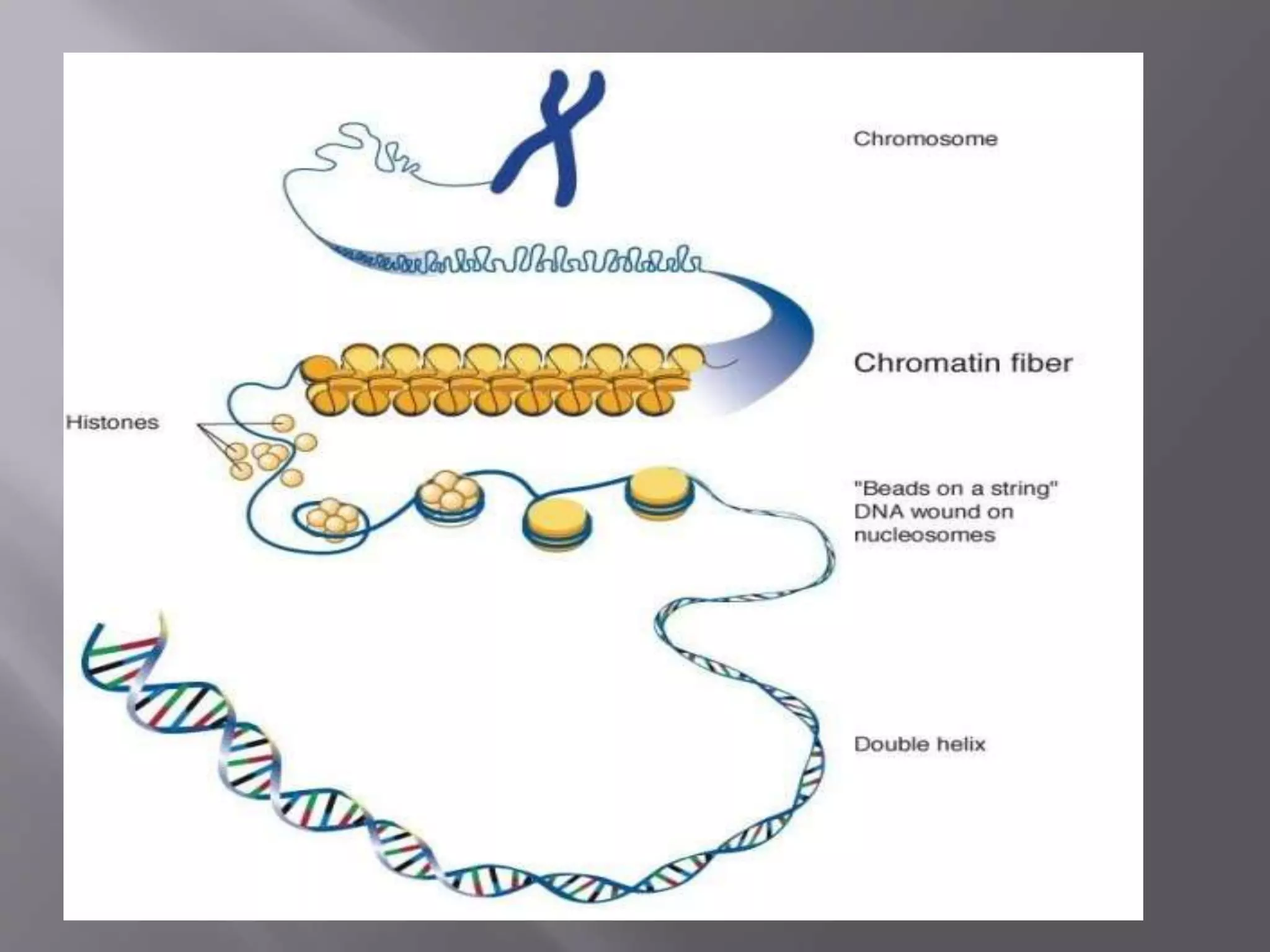
 Chromatin structure is composed of DNA and
histone that are packaged into thin, stringy
fibers.
 The chromatin undergoes further condensation
to form the chromosome.
 This condensation prevent the strands from
becoming tangled and it also plays important
roles in reinforcing the DNA during cell
division, which prevent the DNA damage, and
regulate the gene expression.
 The basic protein present in chromatin are
histones, that binds to DNA and act as anchors
where the strands are wound.
 There are three main level of organization,
explained below:
 DNA wraps around histone proteins and
forms a structure called nucleosome and a bead
like structure on a string called euchromatin.
 Many histone wrap into a 30-nanometer fibre
consist of nucleosome array in their most dense
form called heterochromatin.
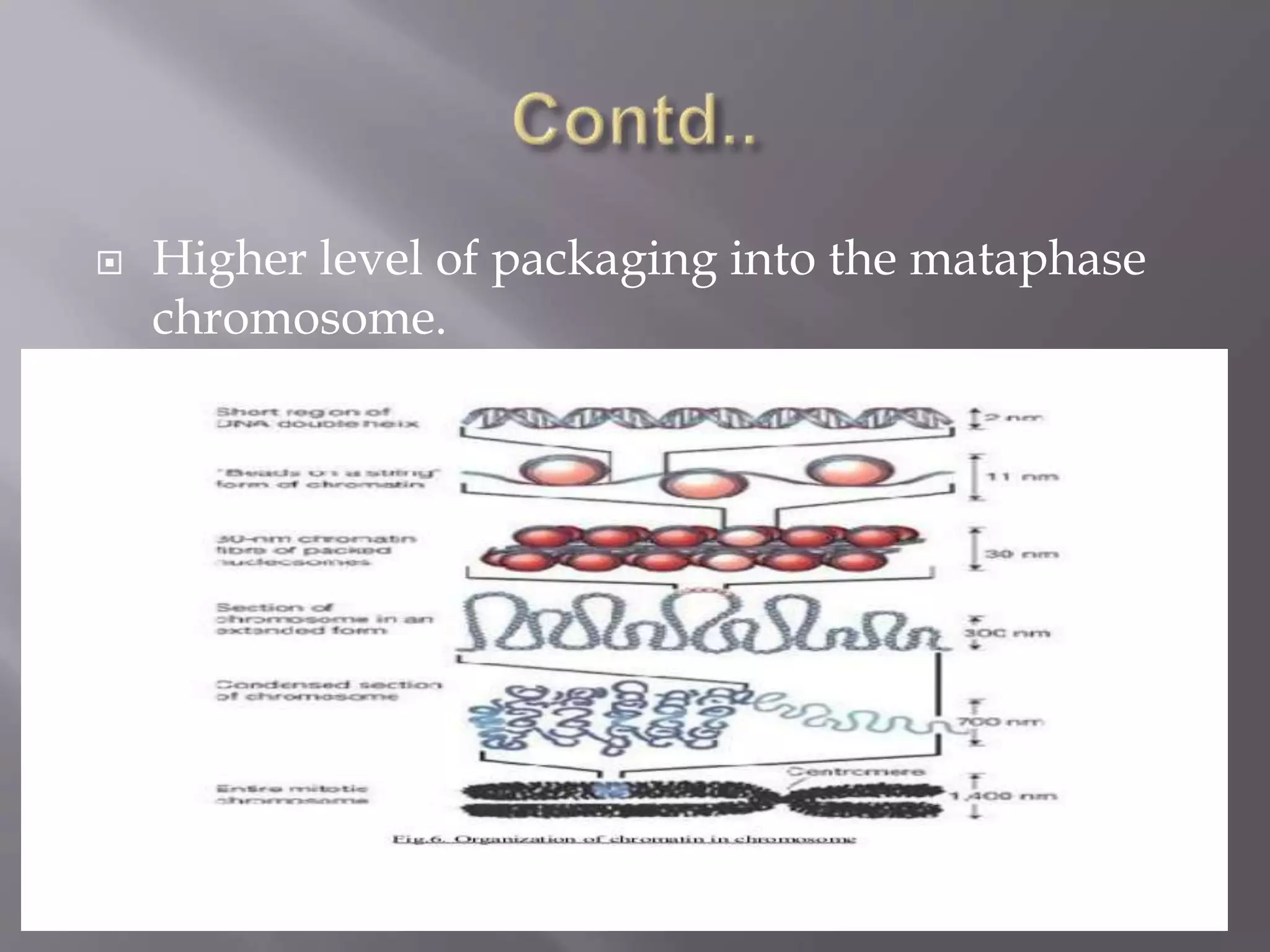
 Higher level of packaging into the mataphase
chromosome.
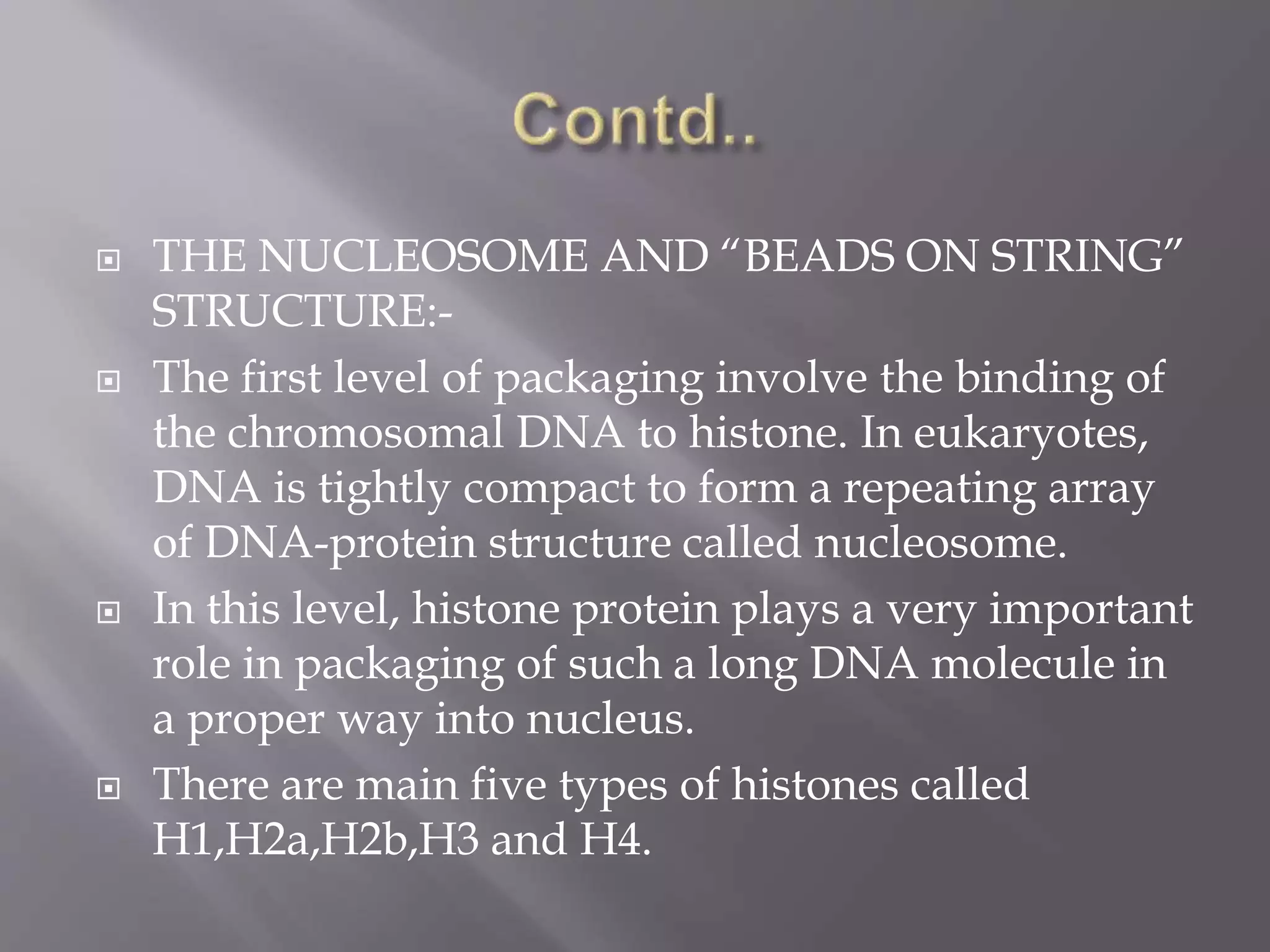
 THE NUCLEOSOME AND “BEADS ON STRING”
STRUCTURE:-
 The first level of packaging involve the binding of
the chromosomal DNA to histone. In eukaryotes,
DNA is tightly compact to form a repeating array
of DNA-protein structure called nucleosome.
 In this level, histone protein plays a very important
role in packaging of such a long DNA molecule in
a proper way into nucleus.
 There are main five types of histones called
H1,H2a,H2b,H3 and H4.
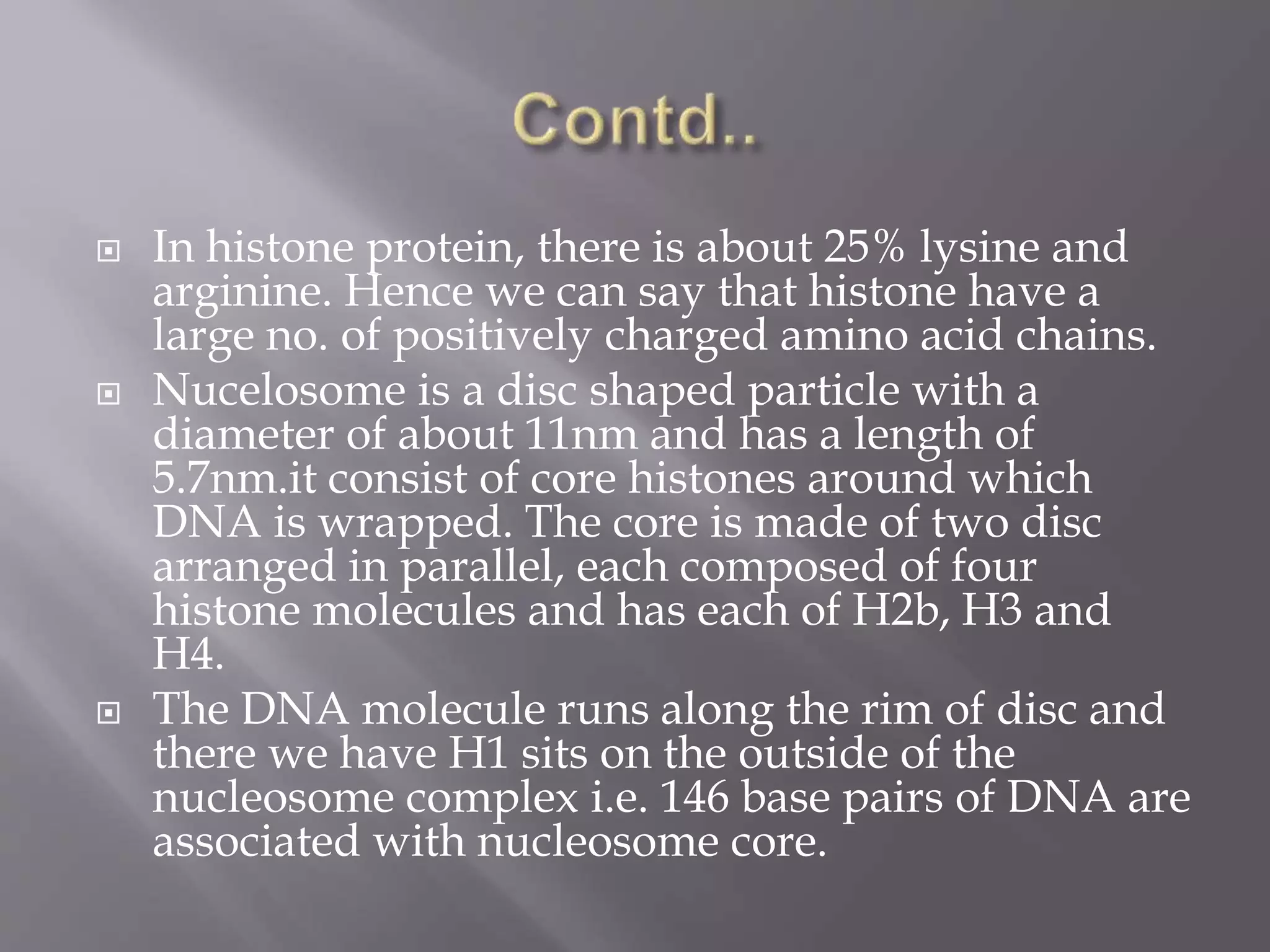
 In histone protein, there is about 25% lysine and
arginine. Hence we can say that histone have a
large no. of positively charged amino acid chains.
 Nucelosome is a disc shaped particle with a
diameter of about 11nm and has a length of
5.7nm.it consist of core histones around which
DNA is wrapped. The core is made of two disc
arranged in parallel, each composed of four
histone molecules and has each of H2b, H3 and
H4.
 The DNA molecule runs along the rim of disc and
there we have H1 sits on the outside of the
nucleosome complex i.e. 146 base pairs of DNA are
associated with nucleosome core.
 The fiber is formed by histone, H1 molecule
binding to the linker DNA of each nucleosome
at the point where it enters and leave the
nucleosome.
 Eaxh H1 molecule binda through its globular
portion to a unique site on a nucleosome and
has arms that are thought to extend to contact
with other sites the histone cores of adjacent
nucleosome.
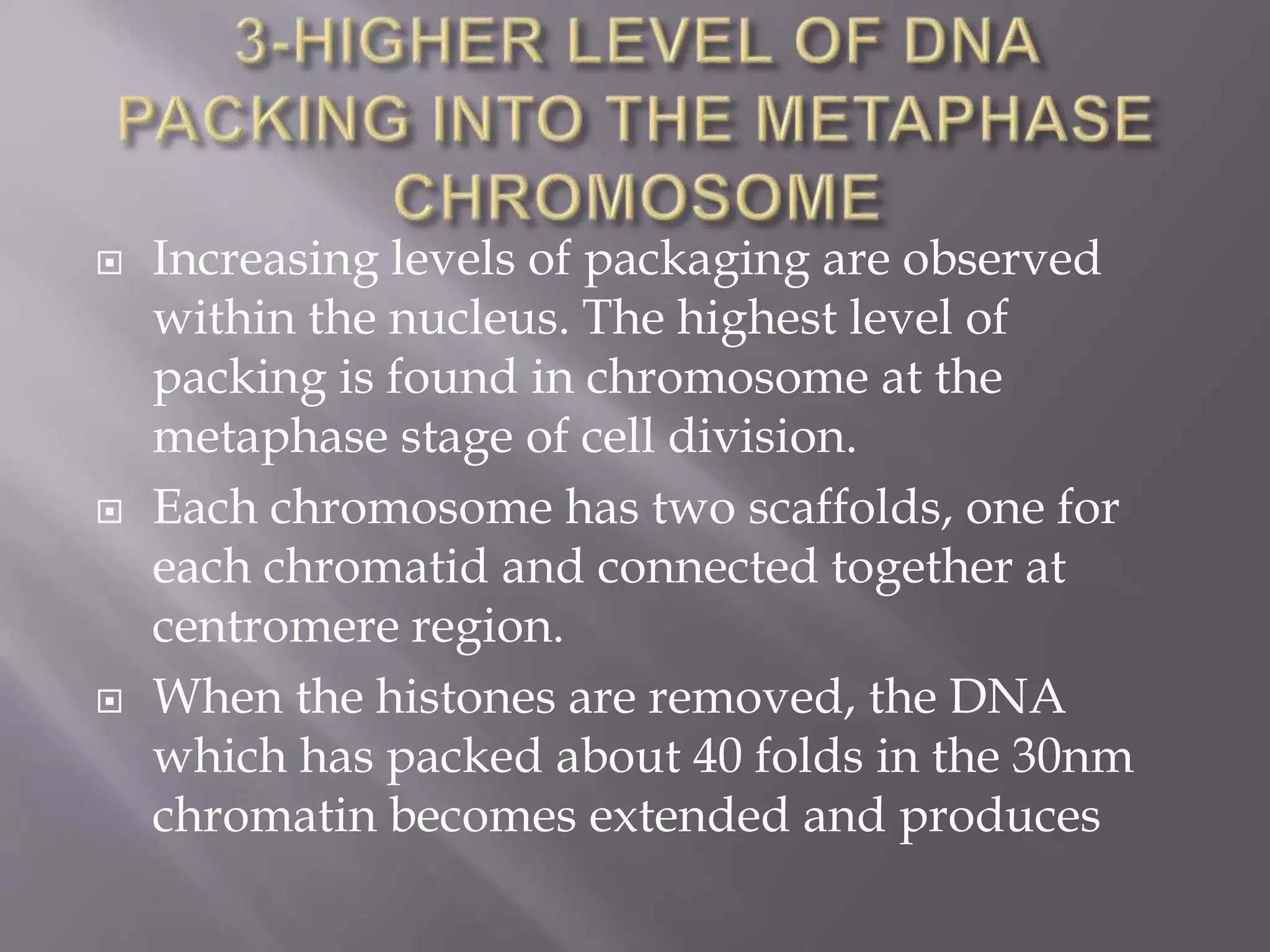
 Increasing levels of packaging are observed
within the nucleus. The highest level of
packing is found in chromosome at the
metaphase stage of cell division.
 Each chromosome has two scaffolds, one for
each chromatid and connected together at
centromere region.
 When the histones are removed, the DNA
which has packed about 40 folds in the 30nm
chromatin becomes extended and produces
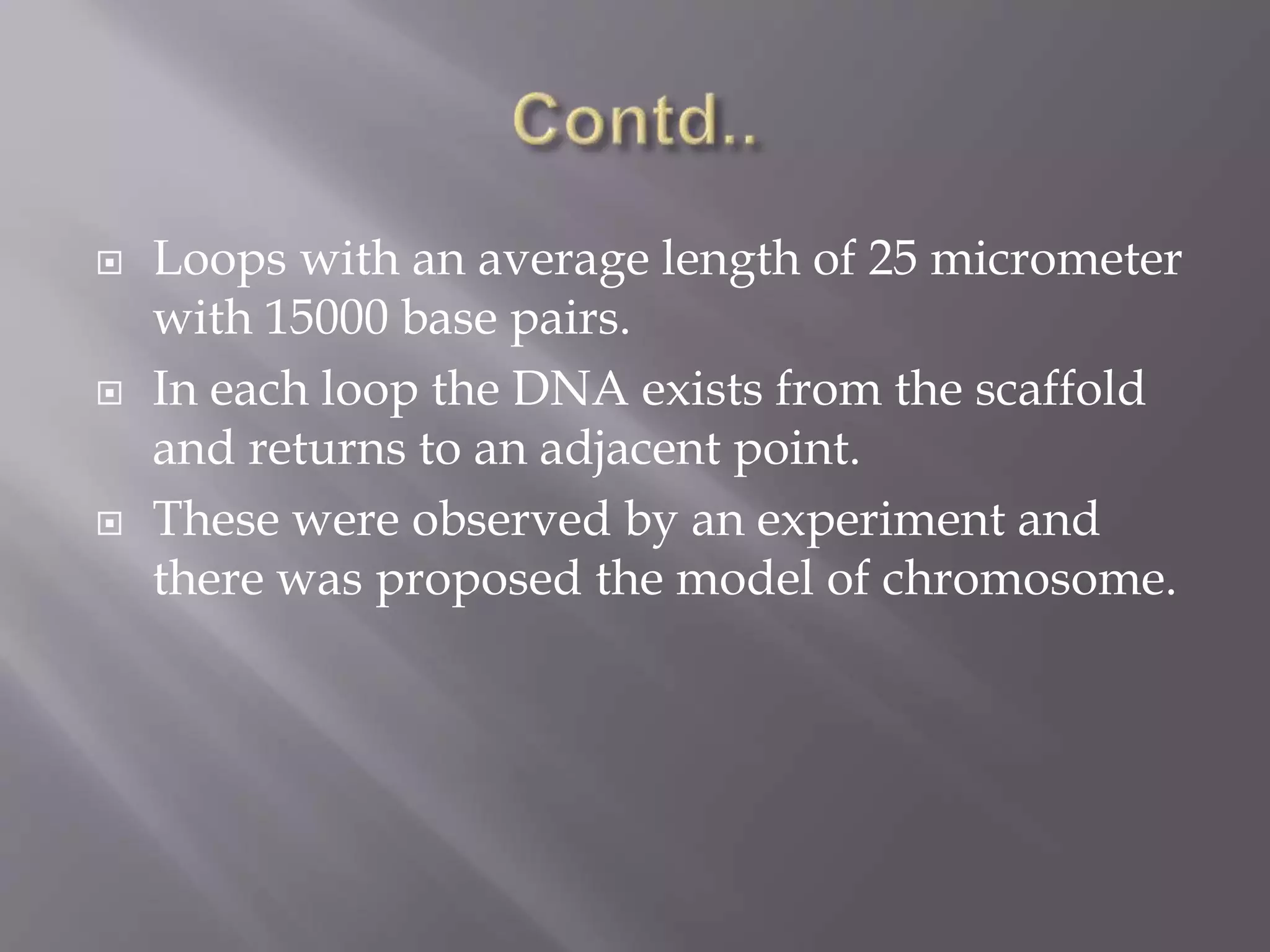
 Loops with an average length of 25 micrometer
with 15000 base pairs.
 In each loop the DNA exists from the scaffold
and returns to an adjacent point.
 These were observed by an experiment and
there was proposed the model of chromosome.
 .

Chromatin structure and organization

  • 1.
    MSc.(MB)2nd SEM. TEST EN.NO- A07199319007 SHAISTA KHAN SUBMITTED TO- Dr. VINEET AWASTHI AIB.
  • 2.
     Chromatin structureis composed of DNA and histone that are packaged into thin, stringy fibers.  The chromatin undergoes further condensation to form the chromosome.  This condensation prevent the strands from becoming tangled and it also plays important roles in reinforcing the DNA during cell division, which prevent the DNA damage, and regulate the gene expression.
  • 3.
     The basicprotein present in chromatin are histones, that binds to DNA and act as anchors where the strands are wound.  There are three main level of organization, explained below:  DNA wraps around histone proteins and forms a structure called nucleosome and a bead like structure on a string called euchromatin.  Many histone wrap into a 30-nanometer fibre consist of nucleosome array in their most dense form called heterochromatin.
  • 4.
     Higher levelof packaging into the mataphase chromosome.
  • 5.
     THE NUCLEOSOMEAND “BEADS ON STRING” STRUCTURE:-  The first level of packaging involve the binding of the chromosomal DNA to histone. In eukaryotes, DNA is tightly compact to form a repeating array of DNA-protein structure called nucleosome.  In this level, histone protein plays a very important role in packaging of such a long DNA molecule in a proper way into nucleus.  There are main five types of histones called H1,H2a,H2b,H3 and H4.
  • 6.
     In histoneprotein, there is about 25% lysine and arginine. Hence we can say that histone have a large no. of positively charged amino acid chains.  Nucelosome is a disc shaped particle with a diameter of about 11nm and has a length of 5.7nm.it consist of core histones around which DNA is wrapped. The core is made of two disc arranged in parallel, each composed of four histone molecules and has each of H2b, H3 and H4.  The DNA molecule runs along the rim of disc and there we have H1 sits on the outside of the nucleosome complex i.e. 146 base pairs of DNA are associated with nucleosome core.
  • 7.
     The fiberis formed by histone, H1 molecule binding to the linker DNA of each nucleosome at the point where it enters and leave the nucleosome.  Eaxh H1 molecule binda through its globular portion to a unique site on a nucleosome and has arms that are thought to extend to contact with other sites the histone cores of adjacent nucleosome.
  • 8.
     Increasing levelsof packaging are observed within the nucleus. The highest level of packing is found in chromosome at the metaphase stage of cell division.  Each chromosome has two scaffolds, one for each chromatid and connected together at centromere region.  When the histones are removed, the DNA which has packed about 40 folds in the 30nm chromatin becomes extended and produces
  • 9.
     Loops withan average length of 25 micrometer with 15000 base pairs.  In each loop the DNA exists from the scaffold and returns to an adjacent point.  These were observed by an experiment and there was proposed the model of chromosome.
  • 11.