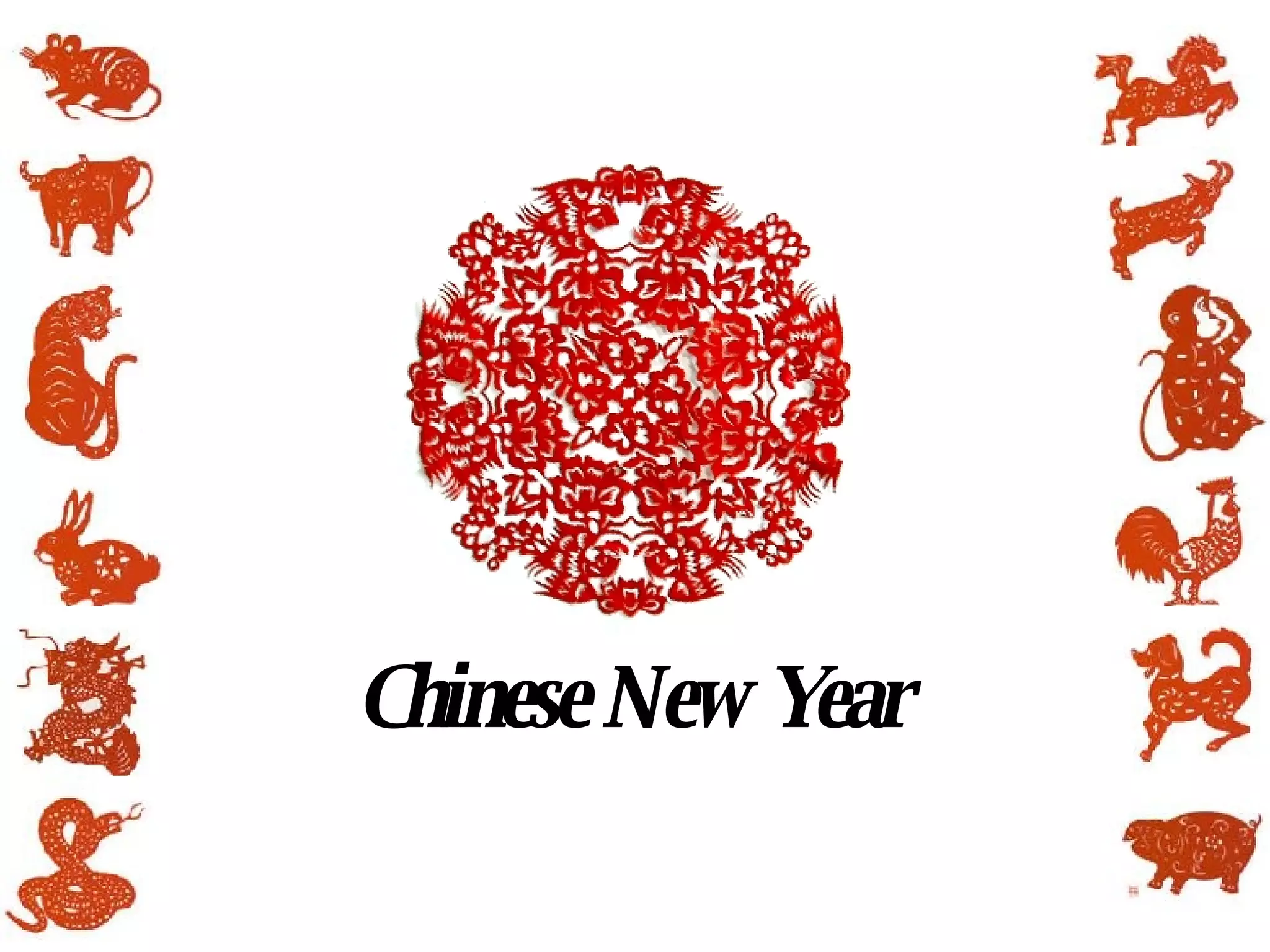
Chinese New Year
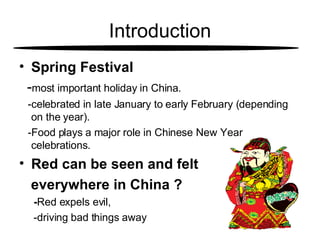
Introduction Spring Festival   - most important holiday in China.  -celebrated in late January to early February (depending  on the year). -Food plays a major role in Chinese New Year celebrations. Red can be seen and felt  everywhere in China ? - Red expels evil,  -driving bad things away
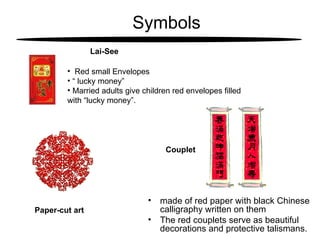
Symbols made of red paper with black Chinese calligraphy written on them  The red couplets serve as beautiful decorations and protective talismans.  Red small Envelopes  “  lucky money” Married adults give children red envelopes filled with “lucky money”.  Couplet Paper-cut art Lai-See
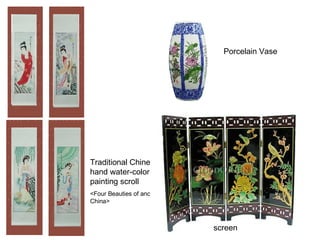
Traditional Chinese hand water-color painting scroll <Four Beauties of ancient China> screen Porcelain Vase
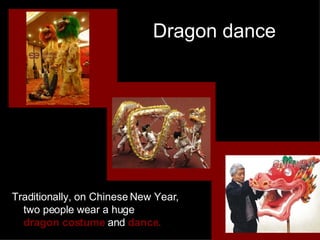
Dragon dance Traditionally, on Chinese New Year,  two people wear a huge  dragon costume  and  dance.
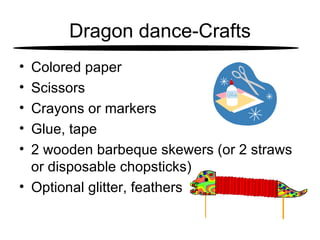
Dragon dance-Crafts Colored paper  Scissors  Crayons or markers  Glue, tape  2 wooden barbeque skewers (or 2 straws or disposable chopsticks)  Optional glitter, feathers
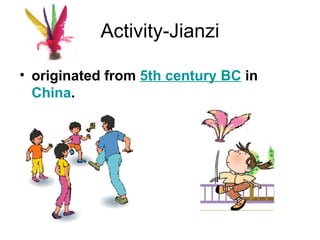
Activity-Jianzi originated from  5th century BC  in  China .
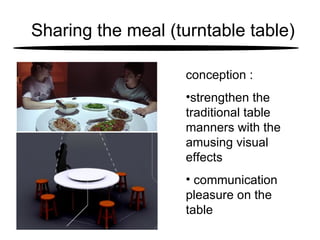
Sharing the meal (turntable table) conception : strengthen the traditional table manners with the amusing visual effects  communication pleasure on the table
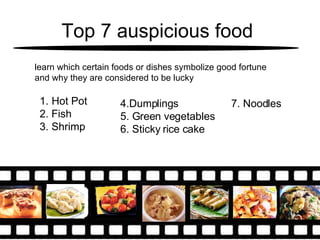
Top 7 auspicious food  learn which certain foods or dishes symbolize good fortune and why they are considered to be lucky  Hot Pot 2. Fish 3. Shrimp 4.Dumplings 5. Green vegetables 6. Sticky rice cake 7. Noodles
Menu idea  3 different menu according to the  Top 7 auspicious  food. Serve Chinese tea, but feel free to serve alcohol as well. Background Music and tea.(wiki)
Thanks for your attention!

Chinese new year -IVY

  • 1.
  • 2.
    Introduction Spring Festival - most important holiday in China. -celebrated in late January to early February (depending on the year). -Food plays a major role in Chinese New Year celebrations. Red can be seen and felt everywhere in China ? - Red expels evil, -driving bad things away
  • 3.
    Symbols made ofred paper with black Chinese calligraphy written on them The red couplets serve as beautiful decorations and protective talismans. Red small Envelopes “ lucky money” Married adults give children red envelopes filled with “lucky money”. Couplet Paper-cut art Lai-See
  • 4.
    Traditional Chinese handwater-color painting scroll <Four Beauties of ancient China> screen Porcelain Vase
  • 5.
    Dragon dance Traditionally,on Chinese New Year, two people wear a huge dragon costume and dance.
  • 6.
    Dragon dance-Crafts Coloredpaper Scissors Crayons or markers Glue, tape 2 wooden barbeque skewers (or 2 straws or disposable chopsticks) Optional glitter, feathers
  • 7.
    Activity-Jianzi originated from 5th century BC in China .
  • 8.
    Sharing the meal(turntable table) conception : strengthen the traditional table manners with the amusing visual effects communication pleasure on the table
  • 9.
    Top 7 auspiciousfood learn which certain foods or dishes symbolize good fortune and why they are considered to be lucky Hot Pot 2. Fish 3. Shrimp 4.Dumplings 5. Green vegetables 6. Sticky rice cake 7. Noodles
  • 10.
    Menu idea 3 different menu according to the Top 7 auspicious food. Serve Chinese tea, but feel free to serve alcohol as well. Background Music and tea.(wiki)
  • 11.
    Thanks for yourattention!