Charging and Discharging Objects
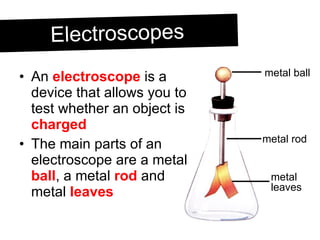
An  electroscope  is a device that allows you to test whether an object is  charged The main parts of an electroscope are a metal  ball , a metal  rod  and metal  leaves Electroscopes metal ball metal rod metal  leaves
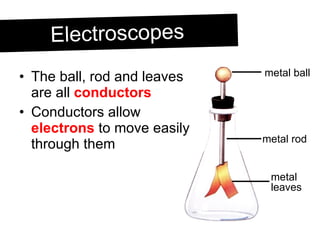
The ball, rod and leaves are all  conductors Conductors allow  electrons  to move easily through them Electroscopes metal ball metal rod metal  leaves
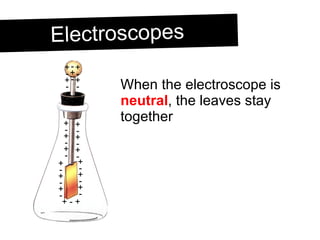
Electroscopes When the electroscope is  neutral , the leaves stay together + - + - + - + - + + - + - + - + - + - + - + - + - + - + - + - + - + - - + -
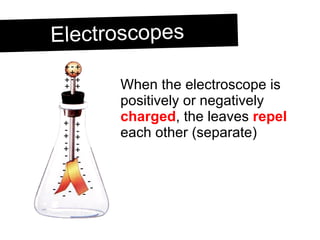
Electroscopes When the electroscope is positively or negatively  charged , the leaves  repel  each other (separate) + - + - + - - - - - - - - - - -  -  -  - + - + - + - + + + + + + + + - + -
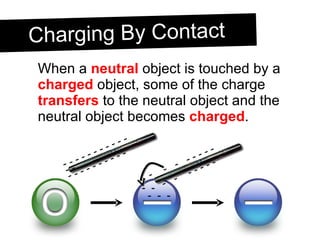
When a  neutral  object is touched by a  charged  object, some of the charge  transfers  to the neutral object and the neutral object becomes  charged . Charging By Contact - - - - - - - - - - -  - - - - - - - - -  -  -  - - - - - -  -  - - - - -  -  -  -  -  -
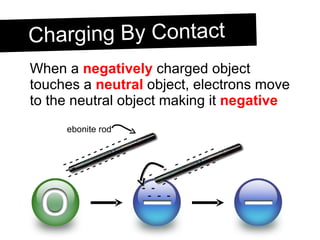
When a  negatively  charged object touches a  neutral  object, electrons move to the neutral object making it  negative Charging By Contact - - - - - - - - - - -  - - - - - - - - -  -  -  - - - - - -  -  - - - - -  -  -  -  -  - ebonite rod
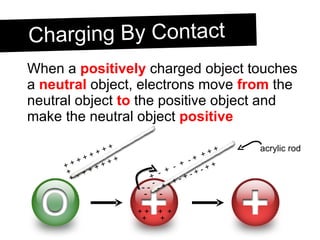
When a  positively  charged object touches a  neutral  object, electrons move  from  the neutral object  to  the positive object and make the neutral object  positive Charging By Contact + + + + + + + + + + + + + + + + + +  -  +  -  +  - +  + + + - - + - + - + - + - + +  + +  +  +  +  + - -  -  - acrylic rod
When an  insulating  material is charged by contact, the charge stays on the insulator at the  point  where it is  touched Charging By Contact
When a  conducting  material is charged by contact, the charge  spreads out  over the whole  surface  of the conductor. Charging  By Contact
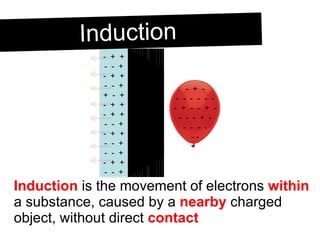
Induction  is the movement of electrons  within  a substance, caused by a  nearby  charged object, without direct  contact Induction
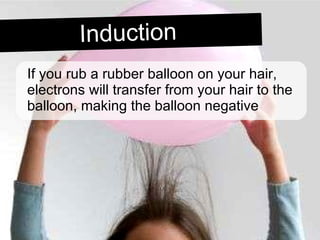
If you rub a rubber balloon on your hair, electrons will transfer from your hair to the balloon, making the balloon negative Induction
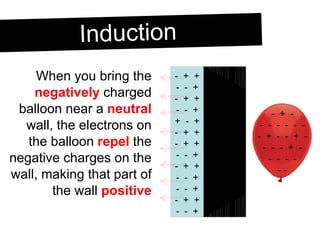
When you bring the  negatively  charged balloon near a  neutral  wall, the electrons on the balloon  repel  the negative charges on the wall, making that part of the wall  positive Induction
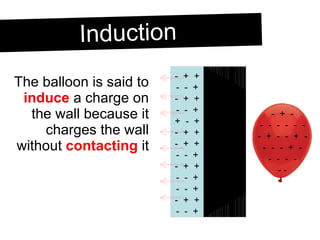
The balloon is said to  induce  a charge on the wall because it charges the wall without  contacting  it Induction
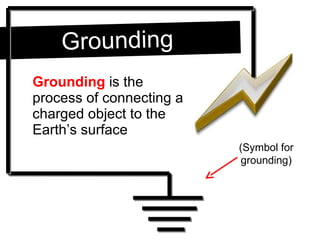
Grounding  is the process of connecting a charged object to the Earth’s surface Grounding (Symbol for grounding)
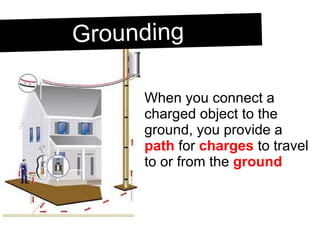
When you connect a charged object to the ground, you provide a  path  for  charges  to travel to or from the  ground Grounding
When you charge an object by  induction , you use a charged object to induce a charge in a  neutral  object Then you  ground  the newly charged object so that it retains the  charge Charging By Induction
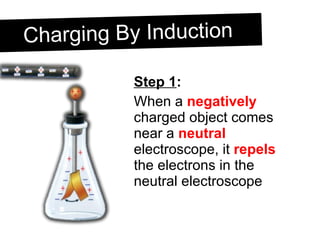
Charging By Induction Step 1 : When a  negatively  charged object comes near a  neutral  electroscope, it  repels  the electrons in the neutral electroscope
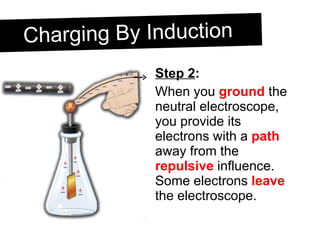
Charging By Induction Step 2 : When you  ground  the neutral electroscope, you provide its electrons with a  path  away from the  repulsive  influence.  Some electrons  leave  the electroscope.
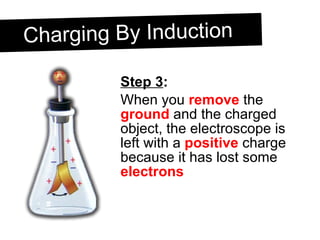
Charging By Induction Step 3 : When you  remove  the  ground  and the charged object, the electroscope is left with a  positive  charge because it has lost some  electrons
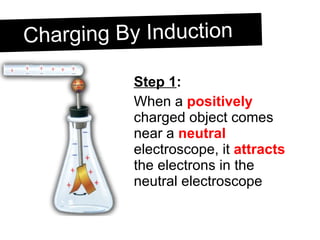
Charging By Induction Step 1 : When a  positively  charged object comes near a  neutral  electroscope, it  attracts  the electrons in the neutral electroscope
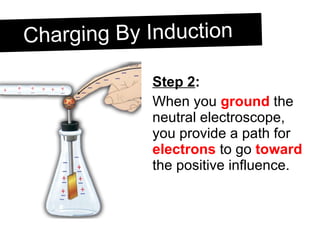
Charging By Induction Step 2 : When you  ground  the neutral electroscope, you provide a path for  electrons  to go  toward  the positive influence.
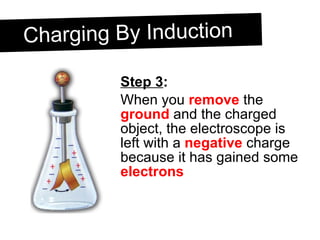
Step 3 : When you  remove  the  ground  and the charged object, the electroscope is left with a  negative  charge because it has gained some  electrons Charging By Induction
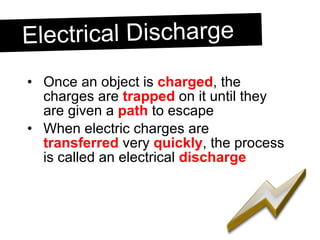
Once an object is  charged , the charges are  trapped  on it until they are given a  path  to escape When electric charges are  transferred  very  quickly , the process is called an electrical  discharge Electrical Discharge
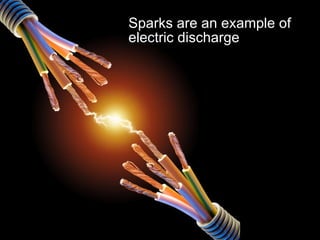
Sparks are an example of electric discharge
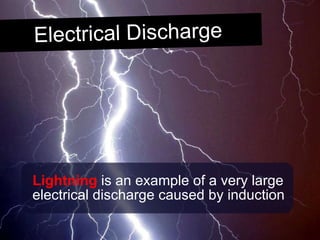
Lightning  is an example of a very large electrical discharge caused by induction Electrical Discharge
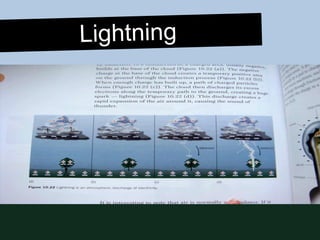
Lightning
Lightning Lightning  can strike up to 15km from where it is raining If you can hear  thunder , you are in striking distance Safe shelter includes large buildings or vehicles (provided the windows are rolled up and you do not touch  metal  parts of the vehicle)
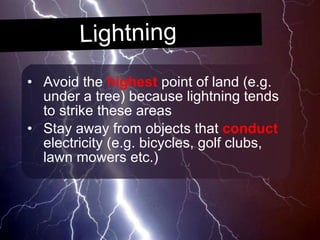
Lightning Avoid the  highest  point of land (e.g. under a tree) because lightning tends to strike these areas Stay away from objects that  conduct  electricity (e.g. bicycles, golf clubs, lawn mowers etc.)

Charging and Discharging Objects

  • 1.
  • 2.
    An electroscope is a device that allows you to test whether an object is charged The main parts of an electroscope are a metal ball , a metal rod and metal leaves Electroscopes metal ball metal rod metal leaves
  • 3.
    The ball, rodand leaves are all conductors Conductors allow electrons to move easily through them Electroscopes metal ball metal rod metal leaves
  • 4.
    Electroscopes When theelectroscope is neutral , the leaves stay together + - + - + - + - + + - + - + - + - + - + - + - + - + - + - + - + - + - - + -
  • 5.
    Electroscopes When theelectroscope is positively or negatively charged , the leaves repel each other (separate) + - + - + - - - - - - - - - - - - - - + - + - + - + + + + + + + + - + -
  • 6.
    When a neutral object is touched by a charged object, some of the charge transfers to the neutral object and the neutral object becomes charged . Charging By Contact - - - - - - - - - - - - - - - - - - - - - - - - - - - - - - - - - - - - - - -
  • 7.
    When a negatively charged object touches a neutral object, electrons move to the neutral object making it negative Charging By Contact - - - - - - - - - - - - - - - - - - - - - - - - - - - - - - - - - - - - - - - ebonite rod
  • 8.
    When a positively charged object touches a neutral object, electrons move from the neutral object to the positive object and make the neutral object positive Charging By Contact + + + + + + + + + + + + + + + + + + - + - + - + + + + - - + - + - + - + - + + + + + + + + - - - - acrylic rod
  • 9.
    When an insulating material is charged by contact, the charge stays on the insulator at the point where it is touched Charging By Contact
  • 10.
    When a conducting material is charged by contact, the charge spreads out over the whole surface of the conductor. Charging By Contact
  • 11.
    Induction isthe movement of electrons within a substance, caused by a nearby charged object, without direct contact Induction
  • 12.
    If you ruba rubber balloon on your hair, electrons will transfer from your hair to the balloon, making the balloon negative Induction
  • 13.
    When you bringthe negatively charged balloon near a neutral wall, the electrons on the balloon repel the negative charges on the wall, making that part of the wall positive Induction
  • 14.
    The balloon issaid to induce a charge on the wall because it charges the wall without contacting it Induction
  • 15.
    Grounding isthe process of connecting a charged object to the Earth’s surface Grounding (Symbol for grounding)
  • 16.
    When you connecta charged object to the ground, you provide a path for charges to travel to or from the ground Grounding
  • 17.
    When you chargean object by induction , you use a charged object to induce a charge in a neutral object Then you ground the newly charged object so that it retains the charge Charging By Induction
  • 18.
    Charging By InductionStep 1 : When a negatively charged object comes near a neutral electroscope, it repels the electrons in the neutral electroscope
  • 19.
    Charging By InductionStep 2 : When you ground the neutral electroscope, you provide its electrons with a path away from the repulsive influence. Some electrons leave the electroscope.
  • 20.
    Charging By InductionStep 3 : When you remove the ground and the charged object, the electroscope is left with a positive charge because it has lost some electrons
  • 21.
    Charging By InductionStep 1 : When a positively charged object comes near a neutral electroscope, it attracts the electrons in the neutral electroscope
  • 22.
    Charging By InductionStep 2 : When you ground the neutral electroscope, you provide a path for electrons to go toward the positive influence.
  • 23.
    Step 3 :When you remove the ground and the charged object, the electroscope is left with a negative charge because it has gained some electrons Charging By Induction
  • 24.
    Once an objectis charged , the charges are trapped on it until they are given a path to escape When electric charges are transferred very quickly , the process is called an electrical discharge Electrical Discharge
  • 25.
    Sparks are anexample of electric discharge
  • 26.
    Lightning isan example of a very large electrical discharge caused by induction Electrical Discharge
  • 27.
  • 28.
    Lightning Lightning can strike up to 15km from where it is raining If you can hear thunder , you are in striking distance Safe shelter includes large buildings or vehicles (provided the windows are rolled up and you do not touch metal parts of the vehicle)
  • 29.
    Lightning Avoid the highest point of land (e.g. under a tree) because lightning tends to strike these areas Stay away from objects that conduct electricity (e.g. bicycles, golf clubs, lawn mowers etc.)