SHRI SHIVAJI SCIENCE COLLEGE,
AMRAVATI
2022 - 2023
Department Of Biotechnology
B.Sc.Part - III (Semester- V)
Topic- Characterization of cell lines -
1) Karyotyping
2) Isozyme analysis.
Presented By - Mayur
Anant Dakhore
3
● The term cell line refer to the progogation of culture after
the first subculture.
● Once the primary culture is subculture, it becomes the cell
line.
● A given cell line contain several cell lineages of either
similar or distinct phenotype’s.
4
What does Characterization
mean?
● Many traits of the cell line.
● Some of which may be unique.
5
● Genetic instability
● Identify:- the species of origin.
● Relationship:- correlation with the tissue of origin.
● Purity – This test is used to detect a range of possible
contaminants, including bacteria, fungi, mycoplasma.
● To detect transformed cell line
6
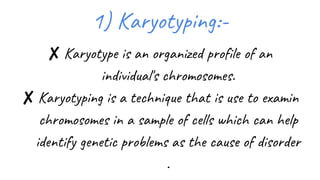
1) Karyotyping:-
✘ Karyotype is an organized profile of an
individual's chromosomes.
✘ Karyotyping is a technique that is use to examin
chromosomes in a sample of cells which can help
identify genetic problems as the cause of disorder
.
7
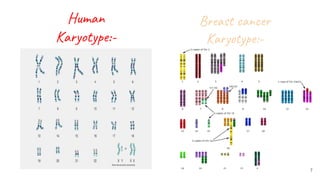
Human
Karyotype:-
Breast cancer
Karyotype:-
8
MAIN PURPOSE OF KARYOTYPING :-
✘Main purpose of the karyotyping is to
locate or visualize the changes in the
number of chromosomes and abnormality
in the structure.
✘Also to locate the evolution.
9
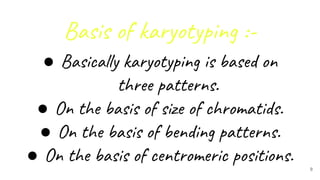
Basis of karyotyping :-
● Basically karyotyping is based on
three patterns.
● On the basis of size of chromatids.
● On the basis of bending patterns.
● On the basis of centromeric positions.
10
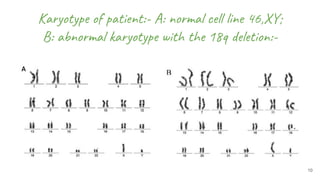
Karyotype of patient:- A: normal cell line 46,XY;
B: abnormal karyotype with the 18q deletion:-
A
11
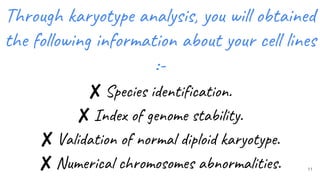
✘Species identification.
✘Index of genome stability.
✘Validation of normal diploid karyotype.
✘Numerical chromosomes abnormalities.
Through karyotype analysis, you will obtained
the following information about your cell lines
:-
12
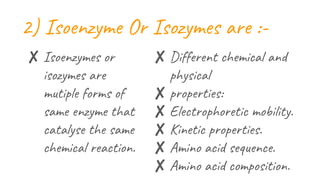
✘ Different chemical and
physical
✘ properties:
✘ Electrophoretic mobility.
✘ Kinetic properties.
✘ Amino acid sequence.
✘ Amino acid composition.
✘ Isoenzymes or
isozymes are
mutiple forms of
same enzyme that
catalyse the same
chemical reaction.
2) Isoenzyme Or Isozymes are :-
13
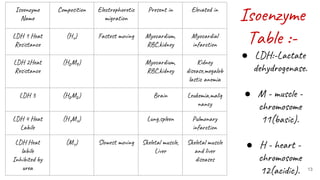
Isoenzyme
Table :-
Isoenzyme
Name
Composition Electrophoretic
migration
Present in Elevated in
LDH 1 Heat
Resistance
(H4) Fastest moving Myocardium,
RBC,kidney
Myocardial
infarction
LDH 2Heat
Resistance
(H₂M₁) Myocardium,
RBC,kidney
Kidney
disease,megalob
lastic anemia
LDH 3 (H₂M₂) Brain Leukemia,malig
nancy
LDH 4 Heat
Labile
(H1M3) Lung,spleen Pulmonary
infarction
LDH Heat
labile
Inhibited by
urea
(M4) Slowest moving Skeletal muscle,
Liver
Skeletal muscle
and liver
diseases
● LDH:-Lactate
dehydrogenase.
● M - muscle -
chromosome
11(basic).
● H - heart -
chromosome
12(acidic).
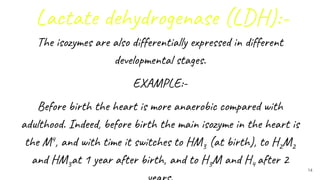
Lactate dehydrogenase (LDH):-
The isozymes are also differentially expressed in different
developmental stages.
EXAMPLE:-
Before birth the heart is more anaerobic compared with
adulthood. Indeed, before birth the main isozyme in the heart is
the M4, and with time it switches to HM3 (at birth), to H2M2
and HM3at 1 year after birth, and to H3M and H4 after 2
14
15
Isoenzyme Analysis:-
The isoenzyme analysis method utilizes
electrophoretic banding patterns to
examine slight differences from species
to species in the structure and mobility
of individual.
16
● Isoenyzyme analysis can determine the species
identity of cell line .
● determine of your cell line if it has been
contaminated by a cell line of a different
species. From the banding patterns of the
enzymes used, a "process of elimination" is
employed to determine the identity of cell line of
species.
17
Standard isoenzyme analyses included determination of the
isoenzyme gel electrophoresis banding pattern for at least three
of the following enzymes :-
● Glucose - 6 - Phosphate Dehydrogenase (G6PD)
● Lactate Dehydrogenase (LD)
● Malate Dehydrogenase (MD)
● Nucleoside Phosphorylase (NP)
● Aspartate Aminotransferase (AST)
● Peptidase B (PepB)
● G-Protein Coupled Receptors (GPCR)
● cAMP Phosphodiesterase Assay
● Protein Kinase Assay (PK)
● Other isoenzyme analyses are available
References :-
● Biotechnology,
By U Satyanarayan.
● Culture Of Animal Cells,
By R.Ian Freshney.
Thanks!
19
Any Questions?

Characterisation of cell line

  • 1.
    SHRI SHIVAJI SCIENCECOLLEGE, AMRAVATI 2022 - 2023
  • 2.
    Department Of Biotechnology B.Sc.Part- III (Semester- V) Topic- Characterization of cell lines - 1) Karyotyping 2) Isozyme analysis. Presented By - Mayur Anant Dakhore
  • 3.
    3 ● The termcell line refer to the progogation of culture after the first subculture. ● Once the primary culture is subculture, it becomes the cell line. ● A given cell line contain several cell lineages of either similar or distinct phenotype’s.
  • 4.
    4 What does Characterization mean? ●Many traits of the cell line. ● Some of which may be unique.
  • 5.
    5 ● Genetic instability ●Identify:- the species of origin. ● Relationship:- correlation with the tissue of origin. ● Purity – This test is used to detect a range of possible contaminants, including bacteria, fungi, mycoplasma. ● To detect transformed cell line
  • 6.
    6 1) Karyotyping:- ✘ Karyotypeis an organized profile of an individual's chromosomes. ✘ Karyotyping is a technique that is use to examin chromosomes in a sample of cells which can help identify genetic problems as the cause of disorder .
  • 7.
  • 8.
    8 MAIN PURPOSE OFKARYOTYPING :- ✘Main purpose of the karyotyping is to locate or visualize the changes in the number of chromosomes and abnormality in the structure. ✘Also to locate the evolution.
  • 9.
    9 Basis of karyotyping:- ● Basically karyotyping is based on three patterns. ● On the basis of size of chromatids. ● On the basis of bending patterns. ● On the basis of centromeric positions.
  • 10.
    10 Karyotype of patient:-A: normal cell line 46,XY; B: abnormal karyotype with the 18q deletion:- A
  • 11.
    11 ✘Species identification. ✘Index ofgenome stability. ✘Validation of normal diploid karyotype. ✘Numerical chromosomes abnormalities. Through karyotype analysis, you will obtained the following information about your cell lines :-
  • 12.
    12 ✘ Different chemicaland physical ✘ properties: ✘ Electrophoretic mobility. ✘ Kinetic properties. ✘ Amino acid sequence. ✘ Amino acid composition. ✘ Isoenzymes or isozymes are mutiple forms of same enzyme that catalyse the same chemical reaction. 2) Isoenzyme Or Isozymes are :-
  • 13.
    13 Isoenzyme Table :- Isoenzyme Name Composition Electrophoretic migration Presentin Elevated in LDH 1 Heat Resistance (H4) Fastest moving Myocardium, RBC,kidney Myocardial infarction LDH 2Heat Resistance (H₂M₁) Myocardium, RBC,kidney Kidney disease,megalob lastic anemia LDH 3 (H₂M₂) Brain Leukemia,malig nancy LDH 4 Heat Labile (H1M3) Lung,spleen Pulmonary infarction LDH Heat labile Inhibited by urea (M4) Slowest moving Skeletal muscle, Liver Skeletal muscle and liver diseases ● LDH:-Lactate dehydrogenase. ● M - muscle - chromosome 11(basic). ● H - heart - chromosome 12(acidic).
  • 14.
    Lactate dehydrogenase (LDH):- Theisozymes are also differentially expressed in different developmental stages. EXAMPLE:- Before birth the heart is more anaerobic compared with adulthood. Indeed, before birth the main isozyme in the heart is the M4, and with time it switches to HM3 (at birth), to H2M2 and HM3at 1 year after birth, and to H3M and H4 after 2 14
  • 15.
    15 Isoenzyme Analysis:- The isoenzymeanalysis method utilizes electrophoretic banding patterns to examine slight differences from species to species in the structure and mobility of individual.
  • 16.
    16 ● Isoenyzyme analysiscan determine the species identity of cell line . ● determine of your cell line if it has been contaminated by a cell line of a different species. From the banding patterns of the enzymes used, a "process of elimination" is employed to determine the identity of cell line of species.
  • 17.
    17 Standard isoenzyme analysesincluded determination of the isoenzyme gel electrophoresis banding pattern for at least three of the following enzymes :- ● Glucose - 6 - Phosphate Dehydrogenase (G6PD) ● Lactate Dehydrogenase (LD) ● Malate Dehydrogenase (MD) ● Nucleoside Phosphorylase (NP) ● Aspartate Aminotransferase (AST) ● Peptidase B (PepB) ● G-Protein Coupled Receptors (GPCR) ● cAMP Phosphodiesterase Assay ● Protein Kinase Assay (PK) ● Other isoenzyme analyses are available
  • 18.
    References :- ● Biotechnology, ByU Satyanarayan. ● Culture Of Animal Cells, By R.Ian Freshney.
  • 19.