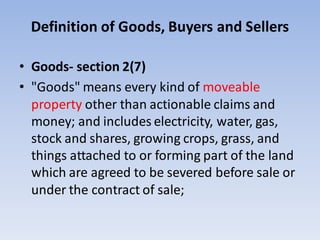
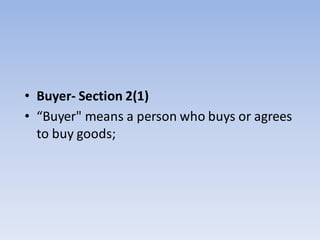
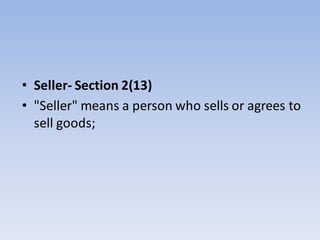
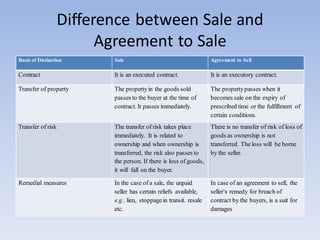
The Sale of Goods Act, 1930 defines goods and establishes the roles of buyers and sellers, differentiating between existing, future, and contingent goods. It outlines the criteria for contracts of sale, specifying the conditions for immediate sales versus agreements to sell, as well as the transfer of property, risk, and rights in cases of breach. Key principles include the doctrine of 'caveat emptor', stipulations in contracts, and the formation of hire-purchase agreements.