Slide 4.1
Dave Chaffey, E-Business and E-Commerce Management, 3rd Edition © Marketing Insights Ltd 2007
CHAPTER 4
E-ENVIRONMENT
Slide 4.2
Dave Chaffey, E-Business and E-Commerce Management, 3rd Edition © Marketing Insights Ltd 2007
Learning outcomes
 Identify the different elements of an organization
macro-environment that impact on an
organization e-business and
e-marketing strategy
 Assess the impact of legal, privacy and ethical
constraints or opportunities on a company
 Assess the role of macro-economic factors such
as governmental e-business policies,
economics, taxation and legal constraints.
Slide 4.3
Dave Chaffey, E-Business and E-Commerce Management, 3rd Edition © Marketing Insights Ltd 2007
Management issues
 What are the constraints placed on developing
and implementing an e-business strategy by the
e-environment?
 What factors influence the adoption of new
digital media and how can we estimate future
demand for online services?
 How trust and privacy can be assured for the
customer while seeking to achieve marketing
objectives of customer acquisition and
retention?
Slide 4.4
Dave Chaffey, E-Business and E-Commerce Management, 3rd Edition © Marketing Insights Ltd 2007
SLEPT Factors
 Macro-environment
 Social
 Legal
 Economic
 Political
 Technological
Slide 4.5
Dave Chaffey, E-Business and E-Commerce Management, 3rd Edition © Marketing Insights Ltd 2007
SLEPT: Social
 Include the influence of consumer perceptions
in determining usage of the Internet for
different activities
Slide 4.6
Dave Chaffey, E-Business and E-Commerce Management, 3rd Edition © Marketing Insights Ltd 2007
SLEPT: Legal and ethical
 Determine the method by which products can
be promoted and sold online
 Governments, on behalf of society, seek to
safeguard individuals right to privacy
Slide 4.7
Dave Chaffey, E-Business and E-Commerce Management, 3rd Edition © Marketing Insights Ltd 2007
SLEPT: Economic
 Variations in the economic performance in
different countries and region affects spending
patterns and international trade
Slide 4.8
Dave Chaffey, E-Business and E-Commerce Management, 3rd Edition © Marketing Insights Ltd 2007
SLEPT: Political
 National governments and transnational
organizations have an important role in
determining the future adoption and control of
the Internet and the rules by which it is
governed
Slide 4.9
Dave Chaffey, E-Business and E-Commerce Management, 3rd Edition © Marketing Insights Ltd 2007
SLEPT: Technological
 Changes in technology offer new opportunities
to the ways products can be marketed
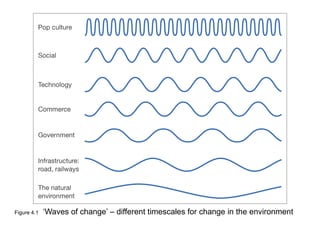
Figure 4.1 ‘Waves of change’ – different timescales for change in the environment
Slide 4.11
Dave Chaffey, E-Business and E-Commerce Management, 3rd Edition © Marketing Insights Ltd 2007
Factors governing Internet
adoption
 Cost of access
 Value proposition
 Ease of use
 Security
 Fear of the unknown
Slide 4.12
Dave Chaffey, E-Business and E-Commerce Management, 3rd Edition © Marketing Insights Ltd 2007
Internet Access
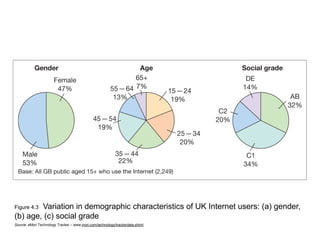
 Consumers and businesses who uses Internet
vary according to countries
 Within each country, adoption of the Internet
vary significantly according to individual
demographic characteristics
 Broadband adoption
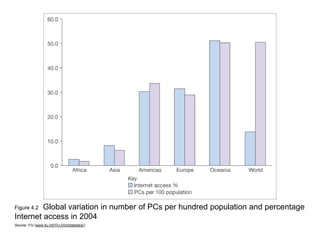
Figure 4.2 Global variation in number of PCs per hundred population and percentage
Internet access in 2004
Source: ITU (www.itu.int/ITU-D/ict/statistics/)
Figure 4.3 Variation in demographic characteristics of UK Internet users: (a) gender,
(b) age, (c) social grade
Source: eMori Technology Tracker – www.mori.com/technology/trackerdata.shtml
Slide 4.15
Dave Chaffey, E-Business and E-Commerce Management, 3rd Edition © Marketing Insights Ltd 2007
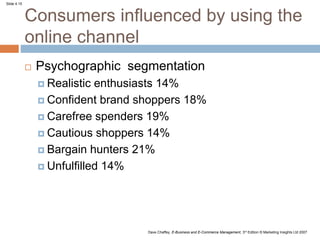
Consumers influenced by using the
online channel
 Psychographic segmentation
 Realistic enthusiasts 14%
 Confident brand shoppers 18%
 Carefree spenders 19%
 Cautious shoppers 14%
 Bargain hunters 21%
 Unfulfilled 14%
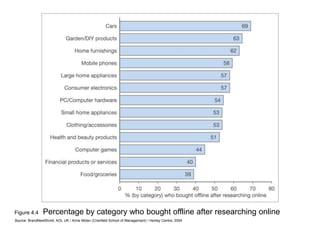
Figure 4.4 Percentage by category who bought offline after researching online
Source: BrandNewWorld: AOL UK / Anne Molen (Cranfield School of Management) / Henley Centre, 2004
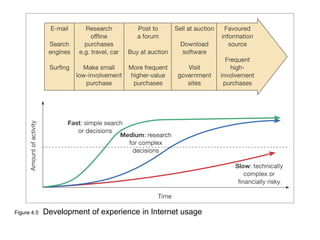
Figure 4.5 Development of experience in Internet usage
Slide 4.18
Dave Chaffey, E-Business and E-Commerce Management, 3rd Edition © Marketing Insights Ltd 2007
B2B Profiles
 The percentage of companies with access
 Influenced online
 Purchase online
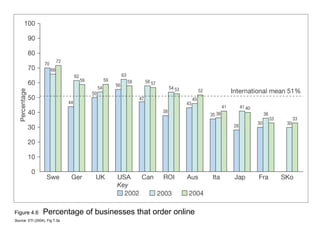
Figure 4.6 Percentage of businesses that order online
Source: DTI (2004), Fig 7.3a
Slide 4.20
Dave Chaffey, E-Business and E-Commerce Management, 3rd Edition © Marketing Insights Ltd 2007
Why personal data are
valuable?
1. Contact information
2. Profile information
3. Behavioral information (on a single site)
4. Behavioral information (on multiple site)
Slide 4.21
Dave Chaffey, E-Business and E-Commerce Management, 3rd Edition © Marketing Insights Ltd 2007
Ethical issues and data
protection
 Ethical issues concerned with personal information
ownership have been usefully summarized by Mason
(1986) into four areas:
1. Privacy – what information is held about the individual?
2. Accuracy – is it correct?
3. Property – who owns it and how can ownership be
transferred?
4. Accessibility – who is allowed to access this information,
and under which conditions?
Slide 4.22
Dave Chaffey, E-Business and E-Commerce Management, 3rd Edition © Marketing Insights Ltd 2007
Ethics – Fletcher’s view
 Fletcher (2001) provides an alternative
perspective, raising these issues of concern for
both the individual and the marketer:
1. Transparency – who is collecting what
information?
2. Security – how is information protected once
collected by a company?
3. Liability – who is responsible if data is abused?
Slide 4.23
Dave Chaffey, E-Business and E-Commerce Management, 3rd Edition © Marketing Insights Ltd 2007
The eight principles for data
protection
 Fairly and lawfully processed;
 Processed for limited purposes;
 Adequate, relevant and not excessive;
 Accurate;
 Not kept longer than necessary;
 Processed in accordance with the data subject's rights;
 Secure;
 Not transferred to countries without adequate protection.
www.dataprotection.gov.uk
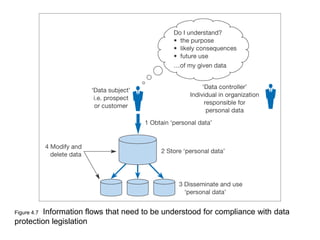
Figure 4.7 Information flows that need to be understood for compliance with data
protection legislation
Slide 4.25
Dave Chaffey, E-Business and E-Commerce Management, 3rd Edition © Marketing Insights Ltd 2007
Anti-spam legislation
 To protect individual privacy and with intention
of reducing spam or unsolicited commercial e-
mail (UCE)
 ‘Sending Persistent Annoying e-Mail’
 Anti-spam legislation can be viewed at
http://www.spamlaws.com
Slide 4.26
Dave Chaffey, E-Business and E-Commerce Management, 3rd Edition © Marketing Insights Ltd 2007
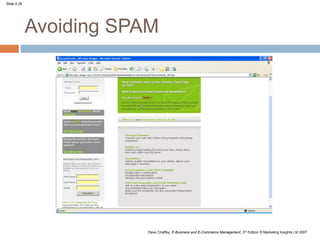
Avoiding SPAM
Slide 4.27
Dave Chaffey, E-Business and E-Commerce Management, 3rd Edition © Marketing Insights Ltd 2007
Regulations on privacy and
electronic communications
 Privacy and Electronic Communications
Regulations (PECR) Act
1. Applies to consumer marketing using email
or SMS text messages
2. Is an ‘opt-in’ regime
3. Requires an opt-out option
4. Does not apply to existing customers when
marketing similar products
5. Contact details must be provided
Slide 4.28
Dave Chaffey, E-Business and E-Commerce Management, 3rd Edition © Marketing Insights Ltd 2007
Regulations on privacy and
electronic communications
6. The ‘From’ identification of the sender must
be clear
7. Applies to direct marketing communications
8. Restricts the use of cookies
Slide 4.29
Dave Chaffey, E-Business and E-Commerce Management, 3rd Edition © Marketing Insights Ltd 2007
Understanding cookies
 A data file placed on your computer that
identifies an individual computer
 Persistent
 Temporary or session
 First-party
 Third-party
 Cookies are stored as individual text files
 dave_chaffey@british_airways.txt
 FLT_VISK:bapzRnGdxBYUUD:Jul-25-
1999british-airways.com0 425259904 293574
26 1170747936 *
Slide 4.30
Dave Chaffey, E-Business and E-Commerce Management, 3rd Edition © Marketing Insights Ltd 2007
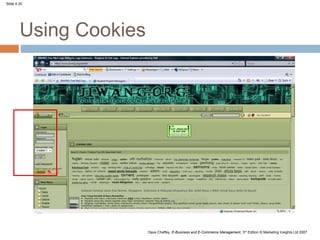
Using Cookies
Slide 4.31
Dave Chaffey, E-Business and E-Commerce Management, 3rd Edition © Marketing Insights Ltd 2007
What are cookies used for?
 Personalizing a site for individual
 Online ordering systems
 Tracking within a site
 Tracking across sites
Slide 4.32
Dave Chaffey, E-Business and E-Commerce Management, 3rd Edition © Marketing Insights Ltd 2007
Viral e-mail marketing
 To reassure web users about threats to their
personal information
 TRUSTe
 ISIS – a UK accreditation initiative
 getsafeonline
Slide 4.34
Dave Chaffey, E-Business and E-Commerce Management, 3rd Edition © Marketing Insights Ltd 2007
Checklist of compliance
 Follow privacy and consumer protection
 Inform the user
 Ask for consent for collecting sensitive personal data
 Reassure customers by providing clear privacy
statements
 Let individual know when cookies are used
 Never collect or retain personal data
 Amend incorrect data
 Only use data for marketing
 Provide the option to stop receive information
 Use appropriate security technology
Slide 4.35
Dave Chaffey, E-Business and E-Commerce Management, 3rd Edition © Marketing Insights Ltd 2007
Legal – Sparrows eight areas
1. Marketing your e-commerce business
2. Forming an electronic contract
3. Making and accepting payment
4. Authenticating contracts concluded over the
Internet
5. E-mail risks
6. Protecting Intellectual Property
7. Advertising on the Internet
8. Data protection.
Slide 4.36
Dave Chaffey, E-Business and E-Commerce Management, 3rd Edition © Marketing Insights Ltd 2007
1.Marketing your e-commerce
business
 Domain name registration
 Using competitor names and trademarks in
meta tags
 Using competitor names and trademarks in
pay-per-click advertising
 Accessibility law: hukum bagi orang
berkebutuhan khusus
Slide 4.37
Dave Chaffey, E-Business and E-Commerce Management, 3rd Edition © Marketing Insights Ltd 2007
2.Forming an electronic
contract
 E-commerce sites must contain easily
accessible content that clearly states
 The company’s identity including address
 The main features of the goods or services
 Prices information
 The period for which the offer or price is valid
 Payment, delivery and fulfillment
 Substitution
Slide 4.38
Dave Chaffey, E-Business and E-Commerce Management, 3rd Edition © Marketing Insights Ltd 2007
Economic/Political
 Ensuring companies competitive
 Funding for education and technology
 Promoting new technology e.g. broadband 12% in UK, 70%
Taiwan, South Korea
 Achieving government efficiencies
 E-government – all UK services online by 2005
 Singapore ‘Intelligent Island’
 Taxation regimes
 Legislation for offshore trading.
Slide 4.41
Dave Chaffey, E-Business and E-Commerce Management, 3rd Edition © Marketing Insights Ltd 2007
E-commerce and globalization
 The increase of international trading and
shared social and cultural values
 Language and cultural understanding
 English becoming the lingua franca of
commerce
 Tailoring e-commerce services for individual
countries or regions
Slide 4.43
Dave Chaffey, E-Business and E-Commerce Management, 3rd Edition © Marketing Insights Ltd 2007
Political factors
 Promoting the benefits of adopting the Internet
 Enacting legislation to protect privacy or
control taxation
 Providing guidelines and assistance for
compliance with legislation
 Setting up international bodies to coordinate
the Internet
Slide 4.44
Dave Chaffey, E-Business and E-Commerce Management, 3rd Edition © Marketing Insights Ltd 2007
E-government
 The application of e-commerce technologies to
government and public services
Slide 4.45
Dave Chaffey, E-Business and E-Commerce Management, 3rd Edition © Marketing Insights Ltd 2007
Technological issues
 Need to be able to assess new innovation
 Rate of change
 Which new technologies should we adopt?
 Monitoring for new techniques
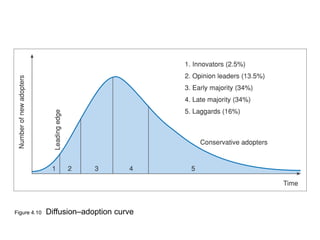
 Evaluation – are we early adopter
 Re-skilling and training
 Are our systems secure?
Figure 4.10 Diffusion–adoption curve
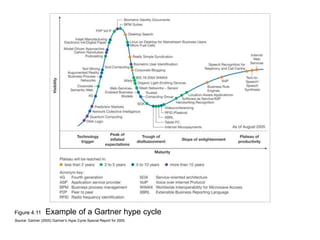
Figure 4.11 Example of a Gartner hype cycle
Source: Gartner (2005) Gartner’s Hype Cycle Special Report for 2005
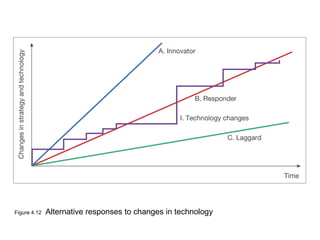
Figure 4.12 Alternative responses to changes in technology
Slide 4.49
Dave Chaffey, E-Business and E-Commerce Management, 3rd Edition © Marketing Insights Ltd 2007
Activity 4.1
 List all the social, legal and ethical issues that
the manager of a sell-side e-commerce web site
needs to consider to avoid damaging
relationships with users of his or her site or
which may leave the company facing
prosecution.
 You can base your answer on issues which may
concern you, your friends or your family when
accessing a web site.
Slide 4.50
Dave Chaffey, E-Business and E-Commerce Management, 3rd Edition © Marketing Insights Ltd 2007
Activity answer – this lecture
 Cookies – laws and consumer perception on placing
these
 Are we limiting access to information from certain sections
of society (social exclusion)?
 Privacy of personal information entered on a web site
 Sending unsolicited e-mail
 Replying promptly to e-mail
 Copyright
 Site content and promotional offers/adverts are in keeping
with the different laws in different countries
 Providing text, graphics and personality in keeping with
social mores of different countries
Slide 4.51
Dave Chaffey, E-Business and E-Commerce Management, 3rd Edition © Marketing Insights Ltd 2007
Summary
1. Environmental scanning and analysis are
necessary in order that a company can
respond to environmental changes and act
on legal and ethical constraints on its
activities
2. Environmental constraints are related to the
micro-environment variables reviewed in
chapter 5 and the macro-environment
variables in this chapter using the SLEPT
mnemonic
Slide 4.52
Dave Chaffey, E-Business and E-Commerce Management, 3rd Edition © Marketing Insights Ltd 2007
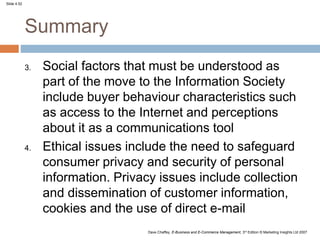
Summary
3. Social factors that must be understood as
part of the move to the Information Society
include buyer behaviour characteristics such
as access to the Internet and perceptions
about it as a communications tool
4. Ethical issues include the need to safeguard
consumer privacy and security of personal
information. Privacy issues include collection
and dissemination of customer information,
cookies and the use of direct e-mail
Slide 4.53
Dave Chaffey, E-Business and E-Commerce Management, 3rd Edition © Marketing Insights Ltd 2007
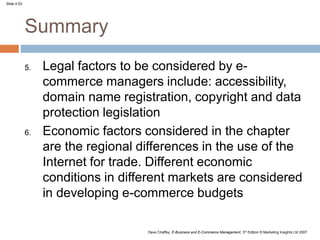
Summary
5. Legal factors to be considered by e-
commerce managers include: accessibility,
domain name registration, copyright and data
protection legislation
6. Economic factors considered in the chapter
are the regional differences in the use of the
Internet for trade. Different economic
conditions in different markets are considered
in developing e-commerce budgets
Slide 4.54
Dave Chaffey, E-Business and E-Commerce Management, 3rd Edition © Marketing Insights Ltd 2007
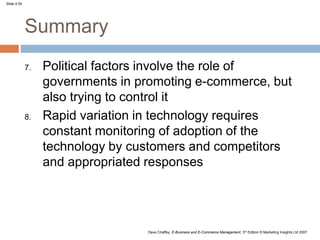
Summary
7. Political factors involve the role of
governments in promoting e-commerce, but
also trying to control it
8. Rapid variation in technology requires
constant monitoring of adoption of the
technology by customers and competitors
and appropriated responses
Slide 4.55
Dave Chaffey, E-Business and E-Commerce Management, 3rd Edition © Marketing Insights Ltd 2007
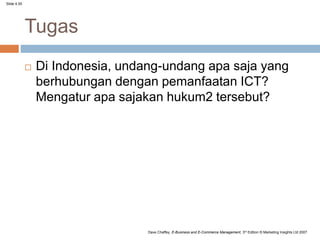
Tugas
 Di Indonesia, undang-undang apa saja yang
berhubungan dengan pemanfaatan ICT?
Mengatur apa sajakan hukum2 tersebut?

Chapter_4.ppt

  • 1.
    Slide 4.1 Dave Chaffey,E-Business and E-Commerce Management, 3rd Edition © Marketing Insights Ltd 2007 CHAPTER 4 E-ENVIRONMENT
  • 2.
    Slide 4.2 Dave Chaffey,E-Business and E-Commerce Management, 3rd Edition © Marketing Insights Ltd 2007 Learning outcomes  Identify the different elements of an organization macro-environment that impact on an organization e-business and e-marketing strategy  Assess the impact of legal, privacy and ethical constraints or opportunities on a company  Assess the role of macro-economic factors such as governmental e-business policies, economics, taxation and legal constraints.
  • 3.
    Slide 4.3 Dave Chaffey,E-Business and E-Commerce Management, 3rd Edition © Marketing Insights Ltd 2007 Management issues  What are the constraints placed on developing and implementing an e-business strategy by the e-environment?  What factors influence the adoption of new digital media and how can we estimate future demand for online services?  How trust and privacy can be assured for the customer while seeking to achieve marketing objectives of customer acquisition and retention?
  • 4.
    Slide 4.4 Dave Chaffey,E-Business and E-Commerce Management, 3rd Edition © Marketing Insights Ltd 2007 SLEPT Factors  Macro-environment  Social  Legal  Economic  Political  Technological
  • 5.
    Slide 4.5 Dave Chaffey,E-Business and E-Commerce Management, 3rd Edition © Marketing Insights Ltd 2007 SLEPT: Social  Include the influence of consumer perceptions in determining usage of the Internet for different activities
  • 6.
    Slide 4.6 Dave Chaffey,E-Business and E-Commerce Management, 3rd Edition © Marketing Insights Ltd 2007 SLEPT: Legal and ethical  Determine the method by which products can be promoted and sold online  Governments, on behalf of society, seek to safeguard individuals right to privacy
  • 7.
    Slide 4.7 Dave Chaffey,E-Business and E-Commerce Management, 3rd Edition © Marketing Insights Ltd 2007 SLEPT: Economic  Variations in the economic performance in different countries and region affects spending patterns and international trade
  • 8.
    Slide 4.8 Dave Chaffey,E-Business and E-Commerce Management, 3rd Edition © Marketing Insights Ltd 2007 SLEPT: Political  National governments and transnational organizations have an important role in determining the future adoption and control of the Internet and the rules by which it is governed
  • 9.
    Slide 4.9 Dave Chaffey,E-Business and E-Commerce Management, 3rd Edition © Marketing Insights Ltd 2007 SLEPT: Technological  Changes in technology offer new opportunities to the ways products can be marketed
  • 10.
    Figure 4.1 ‘Wavesof change’ – different timescales for change in the environment
  • 11.
    Slide 4.11 Dave Chaffey,E-Business and E-Commerce Management, 3rd Edition © Marketing Insights Ltd 2007 Factors governing Internet adoption  Cost of access  Value proposition  Ease of use  Security  Fear of the unknown
  • 12.
    Slide 4.12 Dave Chaffey,E-Business and E-Commerce Management, 3rd Edition © Marketing Insights Ltd 2007 Internet Access  Consumers and businesses who uses Internet vary according to countries  Within each country, adoption of the Internet vary significantly according to individual demographic characteristics  Broadband adoption
  • 13.
    Figure 4.2 Globalvariation in number of PCs per hundred population and percentage Internet access in 2004 Source: ITU (www.itu.int/ITU-D/ict/statistics/)
  • 14.
    Figure 4.3 Variationin demographic characteristics of UK Internet users: (a) gender, (b) age, (c) social grade Source: eMori Technology Tracker – www.mori.com/technology/trackerdata.shtml
  • 15.
    Slide 4.15 Dave Chaffey,E-Business and E-Commerce Management, 3rd Edition © Marketing Insights Ltd 2007 Consumers influenced by using the online channel  Psychographic segmentation  Realistic enthusiasts 14%  Confident brand shoppers 18%  Carefree spenders 19%  Cautious shoppers 14%  Bargain hunters 21%  Unfulfilled 14%
  • 16.
    Figure 4.4 Percentageby category who bought offline after researching online Source: BrandNewWorld: AOL UK / Anne Molen (Cranfield School of Management) / Henley Centre, 2004
  • 17.
    Figure 4.5 Developmentof experience in Internet usage
  • 18.
    Slide 4.18 Dave Chaffey,E-Business and E-Commerce Management, 3rd Edition © Marketing Insights Ltd 2007 B2B Profiles  The percentage of companies with access  Influenced online  Purchase online
  • 19.
    Figure 4.6 Percentageof businesses that order online Source: DTI (2004), Fig 7.3a
  • 20.
    Slide 4.20 Dave Chaffey,E-Business and E-Commerce Management, 3rd Edition © Marketing Insights Ltd 2007 Why personal data are valuable? 1. Contact information 2. Profile information 3. Behavioral information (on a single site) 4. Behavioral information (on multiple site)
  • 21.
    Slide 4.21 Dave Chaffey,E-Business and E-Commerce Management, 3rd Edition © Marketing Insights Ltd 2007 Ethical issues and data protection  Ethical issues concerned with personal information ownership have been usefully summarized by Mason (1986) into four areas: 1. Privacy – what information is held about the individual? 2. Accuracy – is it correct? 3. Property – who owns it and how can ownership be transferred? 4. Accessibility – who is allowed to access this information, and under which conditions?
  • 22.
    Slide 4.22 Dave Chaffey,E-Business and E-Commerce Management, 3rd Edition © Marketing Insights Ltd 2007 Ethics – Fletcher’s view  Fletcher (2001) provides an alternative perspective, raising these issues of concern for both the individual and the marketer: 1. Transparency – who is collecting what information? 2. Security – how is information protected once collected by a company? 3. Liability – who is responsible if data is abused?
  • 23.
    Slide 4.23 Dave Chaffey,E-Business and E-Commerce Management, 3rd Edition © Marketing Insights Ltd 2007 The eight principles for data protection  Fairly and lawfully processed;  Processed for limited purposes;  Adequate, relevant and not excessive;  Accurate;  Not kept longer than necessary;  Processed in accordance with the data subject's rights;  Secure;  Not transferred to countries without adequate protection. www.dataprotection.gov.uk
  • 24.
    Figure 4.7 Informationflows that need to be understood for compliance with data protection legislation
  • 25.
    Slide 4.25 Dave Chaffey,E-Business and E-Commerce Management, 3rd Edition © Marketing Insights Ltd 2007 Anti-spam legislation  To protect individual privacy and with intention of reducing spam or unsolicited commercial e- mail (UCE)  ‘Sending Persistent Annoying e-Mail’  Anti-spam legislation can be viewed at http://www.spamlaws.com
  • 26.
    Slide 4.26 Dave Chaffey,E-Business and E-Commerce Management, 3rd Edition © Marketing Insights Ltd 2007 Avoiding SPAM
  • 27.
    Slide 4.27 Dave Chaffey,E-Business and E-Commerce Management, 3rd Edition © Marketing Insights Ltd 2007 Regulations on privacy and electronic communications  Privacy and Electronic Communications Regulations (PECR) Act 1. Applies to consumer marketing using email or SMS text messages 2. Is an ‘opt-in’ regime 3. Requires an opt-out option 4. Does not apply to existing customers when marketing similar products 5. Contact details must be provided
  • 28.
    Slide 4.28 Dave Chaffey,E-Business and E-Commerce Management, 3rd Edition © Marketing Insights Ltd 2007 Regulations on privacy and electronic communications 6. The ‘From’ identification of the sender must be clear 7. Applies to direct marketing communications 8. Restricts the use of cookies
  • 29.
    Slide 4.29 Dave Chaffey,E-Business and E-Commerce Management, 3rd Edition © Marketing Insights Ltd 2007 Understanding cookies  A data file placed on your computer that identifies an individual computer  Persistent  Temporary or session  First-party  Third-party  Cookies are stored as individual text files  dave_chaffey@british_airways.txt  FLT_VISK:bapzRnGdxBYUUD:Jul-25- 1999british-airways.com0 425259904 293574 26 1170747936 *
  • 30.
    Slide 4.30 Dave Chaffey,E-Business and E-Commerce Management, 3rd Edition © Marketing Insights Ltd 2007 Using Cookies
  • 31.
    Slide 4.31 Dave Chaffey,E-Business and E-Commerce Management, 3rd Edition © Marketing Insights Ltd 2007 What are cookies used for?  Personalizing a site for individual  Online ordering systems  Tracking within a site  Tracking across sites
  • 32.
    Slide 4.32 Dave Chaffey,E-Business and E-Commerce Management, 3rd Edition © Marketing Insights Ltd 2007 Viral e-mail marketing  To reassure web users about threats to their personal information  TRUSTe  ISIS – a UK accreditation initiative  getsafeonline
  • 33.
    Slide 4.34 Dave Chaffey,E-Business and E-Commerce Management, 3rd Edition © Marketing Insights Ltd 2007 Checklist of compliance  Follow privacy and consumer protection  Inform the user  Ask for consent for collecting sensitive personal data  Reassure customers by providing clear privacy statements  Let individual know when cookies are used  Never collect or retain personal data  Amend incorrect data  Only use data for marketing  Provide the option to stop receive information  Use appropriate security technology
  • 34.
    Slide 4.35 Dave Chaffey,E-Business and E-Commerce Management, 3rd Edition © Marketing Insights Ltd 2007 Legal – Sparrows eight areas 1. Marketing your e-commerce business 2. Forming an electronic contract 3. Making and accepting payment 4. Authenticating contracts concluded over the Internet 5. E-mail risks 6. Protecting Intellectual Property 7. Advertising on the Internet 8. Data protection.
  • 35.
    Slide 4.36 Dave Chaffey,E-Business and E-Commerce Management, 3rd Edition © Marketing Insights Ltd 2007 1.Marketing your e-commerce business  Domain name registration  Using competitor names and trademarks in meta tags  Using competitor names and trademarks in pay-per-click advertising  Accessibility law: hukum bagi orang berkebutuhan khusus
  • 36.
    Slide 4.37 Dave Chaffey,E-Business and E-Commerce Management, 3rd Edition © Marketing Insights Ltd 2007 2.Forming an electronic contract  E-commerce sites must contain easily accessible content that clearly states  The company’s identity including address  The main features of the goods or services  Prices information  The period for which the offer or price is valid  Payment, delivery and fulfillment  Substitution
  • 37.
    Slide 4.38 Dave Chaffey,E-Business and E-Commerce Management, 3rd Edition © Marketing Insights Ltd 2007 Economic/Political  Ensuring companies competitive  Funding for education and technology  Promoting new technology e.g. broadband 12% in UK, 70% Taiwan, South Korea  Achieving government efficiencies  E-government – all UK services online by 2005  Singapore ‘Intelligent Island’  Taxation regimes  Legislation for offshore trading.
  • 38.
    Slide 4.41 Dave Chaffey,E-Business and E-Commerce Management, 3rd Edition © Marketing Insights Ltd 2007 E-commerce and globalization  The increase of international trading and shared social and cultural values  Language and cultural understanding  English becoming the lingua franca of commerce  Tailoring e-commerce services for individual countries or regions
  • 39.
    Slide 4.43 Dave Chaffey,E-Business and E-Commerce Management, 3rd Edition © Marketing Insights Ltd 2007 Political factors  Promoting the benefits of adopting the Internet  Enacting legislation to protect privacy or control taxation  Providing guidelines and assistance for compliance with legislation  Setting up international bodies to coordinate the Internet
  • 40.
    Slide 4.44 Dave Chaffey,E-Business and E-Commerce Management, 3rd Edition © Marketing Insights Ltd 2007 E-government  The application of e-commerce technologies to government and public services
  • 41.
    Slide 4.45 Dave Chaffey,E-Business and E-Commerce Management, 3rd Edition © Marketing Insights Ltd 2007 Technological issues  Need to be able to assess new innovation  Rate of change  Which new technologies should we adopt?  Monitoring for new techniques  Evaluation – are we early adopter  Re-skilling and training  Are our systems secure?
  • 42.
  • 43.
    Figure 4.11 Exampleof a Gartner hype cycle Source: Gartner (2005) Gartner’s Hype Cycle Special Report for 2005
  • 44.
    Figure 4.12 Alternativeresponses to changes in technology
  • 45.
    Slide 4.49 Dave Chaffey,E-Business and E-Commerce Management, 3rd Edition © Marketing Insights Ltd 2007 Activity 4.1  List all the social, legal and ethical issues that the manager of a sell-side e-commerce web site needs to consider to avoid damaging relationships with users of his or her site or which may leave the company facing prosecution.  You can base your answer on issues which may concern you, your friends or your family when accessing a web site.
  • 46.
    Slide 4.50 Dave Chaffey,E-Business and E-Commerce Management, 3rd Edition © Marketing Insights Ltd 2007 Activity answer – this lecture  Cookies – laws and consumer perception on placing these  Are we limiting access to information from certain sections of society (social exclusion)?  Privacy of personal information entered on a web site  Sending unsolicited e-mail  Replying promptly to e-mail  Copyright  Site content and promotional offers/adverts are in keeping with the different laws in different countries  Providing text, graphics and personality in keeping with social mores of different countries
  • 47.
    Slide 4.51 Dave Chaffey,E-Business and E-Commerce Management, 3rd Edition © Marketing Insights Ltd 2007 Summary 1. Environmental scanning and analysis are necessary in order that a company can respond to environmental changes and act on legal and ethical constraints on its activities 2. Environmental constraints are related to the micro-environment variables reviewed in chapter 5 and the macro-environment variables in this chapter using the SLEPT mnemonic
  • 48.
    Slide 4.52 Dave Chaffey,E-Business and E-Commerce Management, 3rd Edition © Marketing Insights Ltd 2007 Summary 3. Social factors that must be understood as part of the move to the Information Society include buyer behaviour characteristics such as access to the Internet and perceptions about it as a communications tool 4. Ethical issues include the need to safeguard consumer privacy and security of personal information. Privacy issues include collection and dissemination of customer information, cookies and the use of direct e-mail
  • 49.
    Slide 4.53 Dave Chaffey,E-Business and E-Commerce Management, 3rd Edition © Marketing Insights Ltd 2007 Summary 5. Legal factors to be considered by e- commerce managers include: accessibility, domain name registration, copyright and data protection legislation 6. Economic factors considered in the chapter are the regional differences in the use of the Internet for trade. Different economic conditions in different markets are considered in developing e-commerce budgets
  • 50.
    Slide 4.54 Dave Chaffey,E-Business and E-Commerce Management, 3rd Edition © Marketing Insights Ltd 2007 Summary 7. Political factors involve the role of governments in promoting e-commerce, but also trying to control it 8. Rapid variation in technology requires constant monitoring of adoption of the technology by customers and competitors and appropriated responses
  • 51.
    Slide 4.55 Dave Chaffey,E-Business and E-Commerce Management, 3rd Edition © Marketing Insights Ltd 2007 Tugas  Di Indonesia, undang-undang apa saja yang berhubungan dengan pemanfaatan ICT? Mengatur apa sajakan hukum2 tersebut?