Copyright © 2010 Pearson Education, Inc. Publishing as Prentice Hall
9–1
OrganizationalOrganizational
Structure andStructure and
DesignDesign
ChapterChapter
99
Management
Stephen P. Robbins Mary Coulter
tenth edition
Copyright © 2010 Pearson Education, Inc. Publishing as Prentice Hall
9–2
Designing Organizational StructureDesigning Organizational Structure
• Organizational DesignOrganizational Design
 A process involving decisions about six key elements:A process involving decisions about six key elements:
 Work specializationWork specialization
 DepartmentalizationDepartmentalization
 Chain of commandChain of command
 Span of controlSpan of control
 Centralization and decentralizationCentralization and decentralization
 FormalizationFormalization
Copyright © 2010 Pearson Education, Inc. Publishing as Prentice Hall
9–3
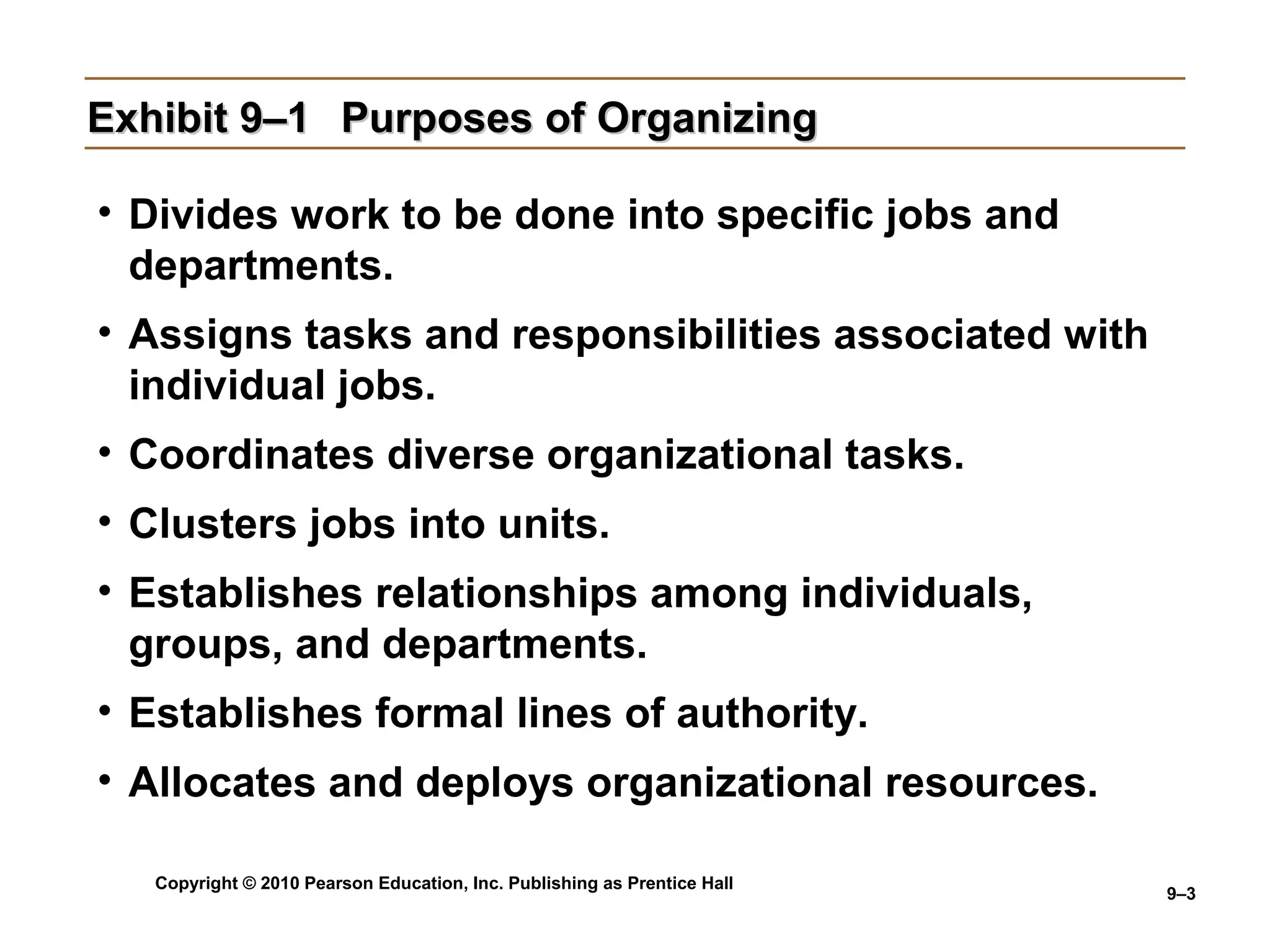
Exhibit 9–1Exhibit 9–1 Purposes of OrganizingPurposes of Organizing
• Divides work to be done into specific jobs and
departments.
• Assigns tasks and responsibilities associated with
individual jobs.
• Coordinates diverse organizational tasks.
• Clusters jobs into units.
• Establishes relationships among individuals,
groups, and departments.
• Establishes formal lines of authority.
• Allocates and deploys organizational resources.
Copyright © 2010 Pearson Education, Inc. Publishing as Prentice Hall
9–4
Organizational StructureOrganizational Structure
• Work SpecializationWork Specialization
 The degree to which tasks in the organization areThe degree to which tasks in the organization are
divided into separate jobs with each step completeddivided into separate jobs with each step completed
by a different person.by a different person.
 Overspecialization can result in human diseconomiesOverspecialization can result in human diseconomies
from boredom, fatigue, stress, poor quality, increasedfrom boredom, fatigue, stress, poor quality, increased
absenteeism, and higher turnover.absenteeism, and higher turnover.
Copyright © 2010 Pearson Education, Inc. Publishing as Prentice Hall
9–5
Departmentalization by TypeDepartmentalization by Type
• FunctionalFunctional
 Grouping jobs byGrouping jobs by
functions performedfunctions performed
• ProductProduct
 Grouping jobs by productGrouping jobs by product
lineline
• GeographicalGeographical
 Grouping jobs on theGrouping jobs on the
basis of territory orbasis of territory or
geographygeography
• ProcessProcess
 Grouping jobs on theGrouping jobs on the
basis of product orbasis of product or
customer flowcustomer flow
• CustomerCustomer
 Grouping jobs by type ofGrouping jobs by type of
customer and needscustomer and needs
Copyright © 2010 Pearson Education, Inc. Publishing as Prentice Hall
9–6
Organizational Structure (cont’d)Organizational Structure (cont’d)
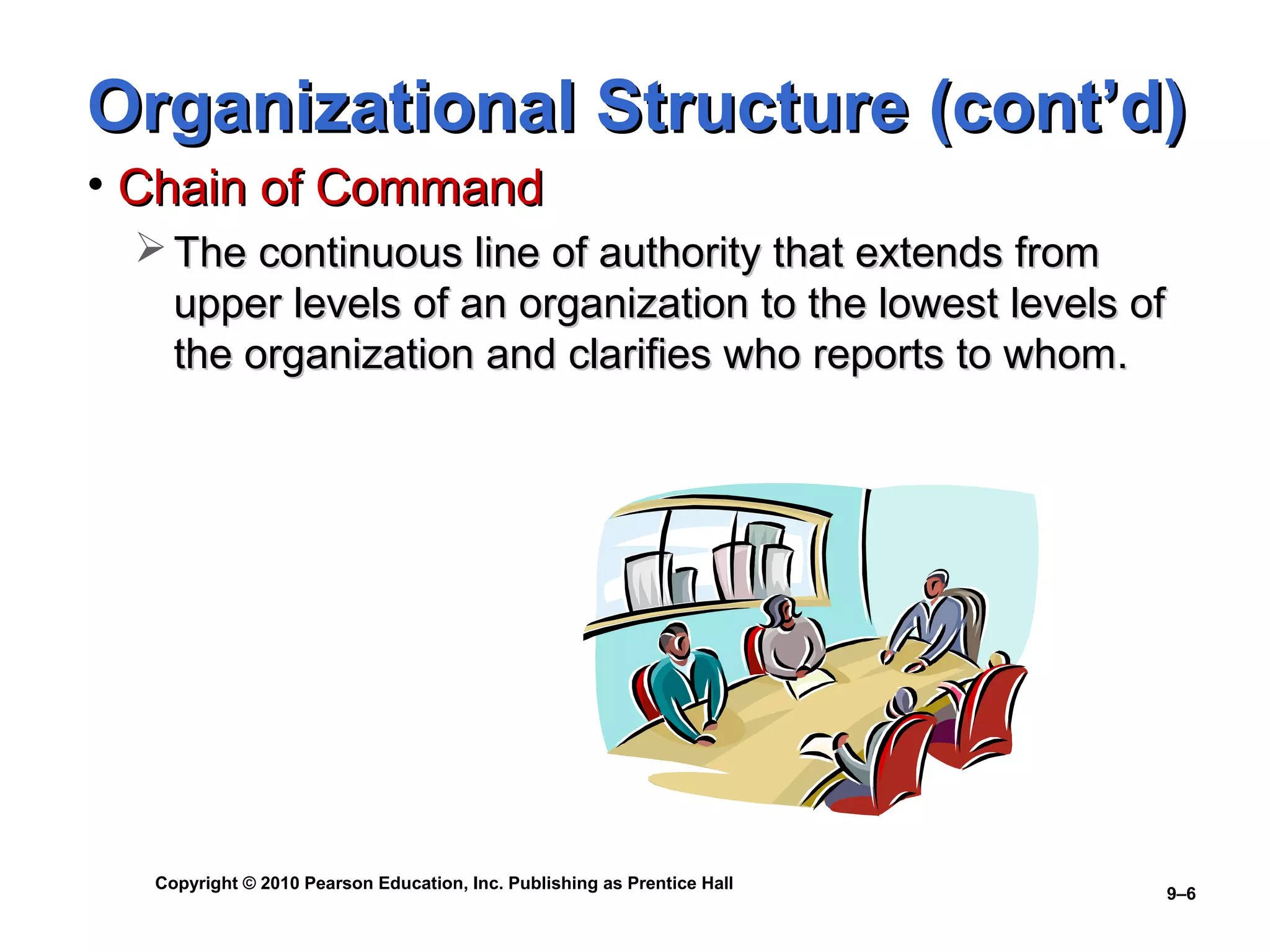
• Chain of CommandChain of Command
 The continuous line of authority that extends fromThe continuous line of authority that extends from
upper levels of an organization to the lowest levels ofupper levels of an organization to the lowest levels of
the organization and clarifies who reports to whom.the organization and clarifies who reports to whom.
Copyright © 2010 Pearson Education, Inc. Publishing as Prentice Hall
9–7
Organizational Structure (cont’d)Organizational Structure (cont’d)
• AuthorityAuthority
 The rights inherent in a managerial position to tellThe rights inherent in a managerial position to tell
people what to do and to expect them to do it.people what to do and to expect them to do it.
• ResponsibilityResponsibility
 The obligation or expectation to perform.The obligation or expectation to perform.
• Unity of CommandUnity of Command
 The concept that a person should have one boss andThe concept that a person should have one boss and
should report only to that person.should report only to that person.
Copyright © 2010 Pearson Education, Inc. Publishing as Prentice Hall
9–8
Organizational Structure (cont’d)Organizational Structure (cont’d)
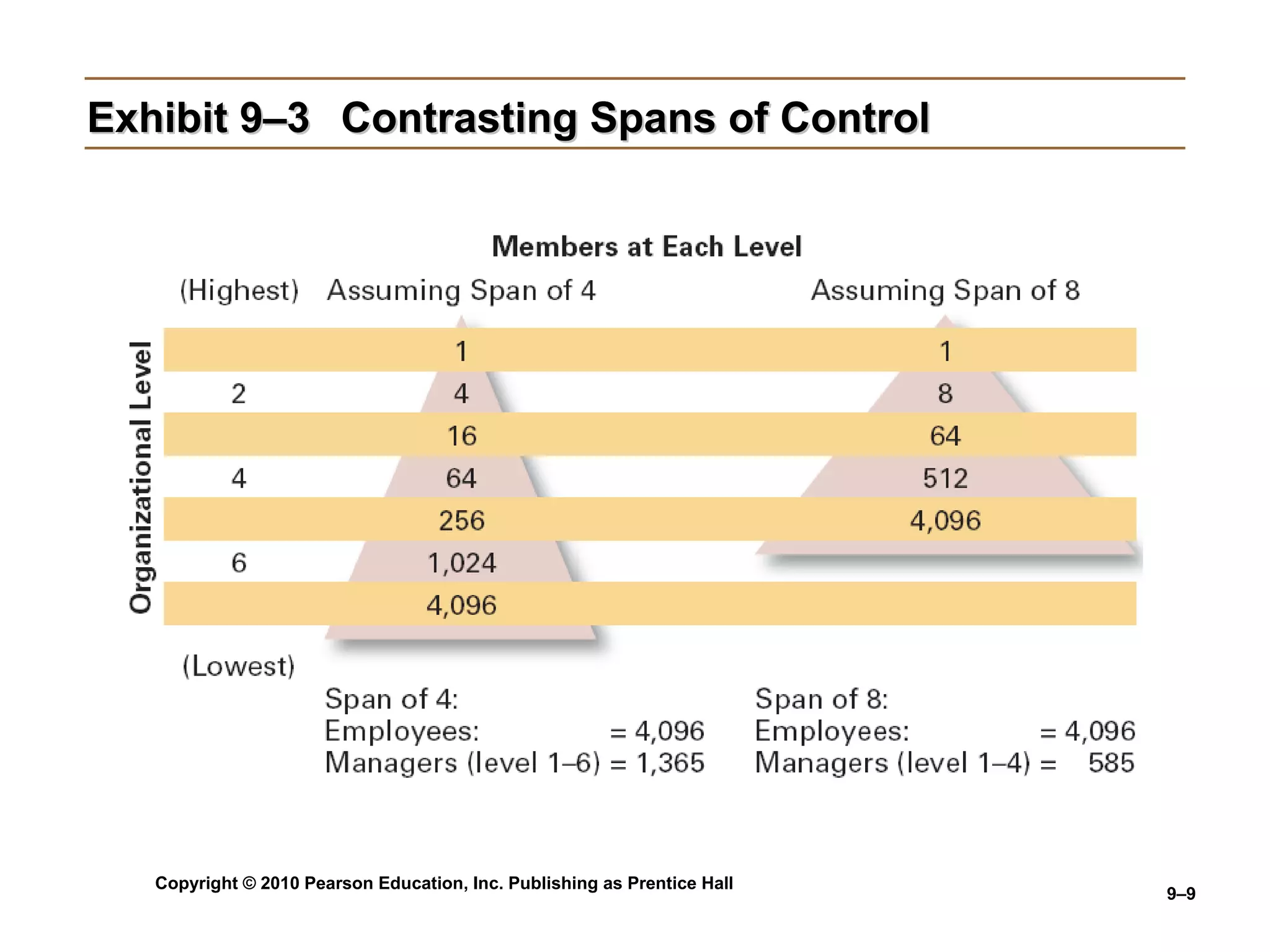
• Span of ControlSpan of Control
 The number of employees who can be effectively and efficientlyThe number of employees who can be effectively and efficiently
supervised by a manager.supervised by a manager.
Copyright © 2010 Pearson Education, Inc. Publishing as Prentice Hall
9–9
Exhibit 9–3Exhibit 9–3 Contrasting Spans of ControlContrasting Spans of Control
Copyright © 2010 Pearson Education, Inc. Publishing as Prentice Hall
9–10
Organizational Structure (cont’d)Organizational Structure (cont’d)
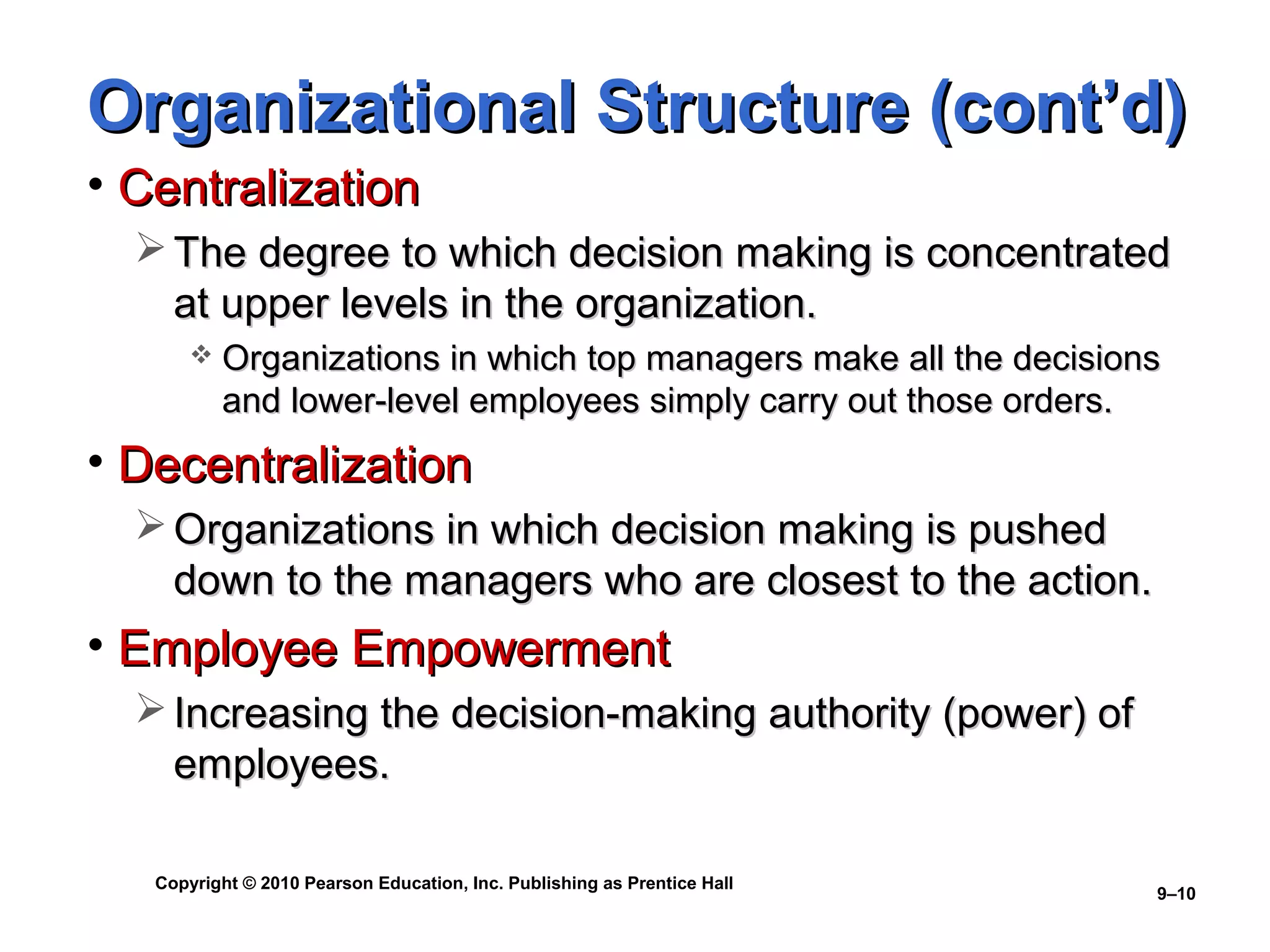
• CentralizationCentralization
 The degree to which decision making is concentratedThe degree to which decision making is concentrated
at upper levels in the organization.at upper levels in the organization.
 Organizations in which top managers make all the decisionsOrganizations in which top managers make all the decisions
and lower-level employees simply carry out those orders.and lower-level employees simply carry out those orders.
• DecentralizationDecentralization
 Organizations in which decision making is pushedOrganizations in which decision making is pushed
down to the managers who are closest to the action.down to the managers who are closest to the action.
• Employee EmpowermentEmployee Empowerment
 Increasing the decision-making authority (power) ofIncreasing the decision-making authority (power) of
employees.employees.
Copyright © 2010 Pearson Education, Inc. Publishing as Prentice Hall
9–11
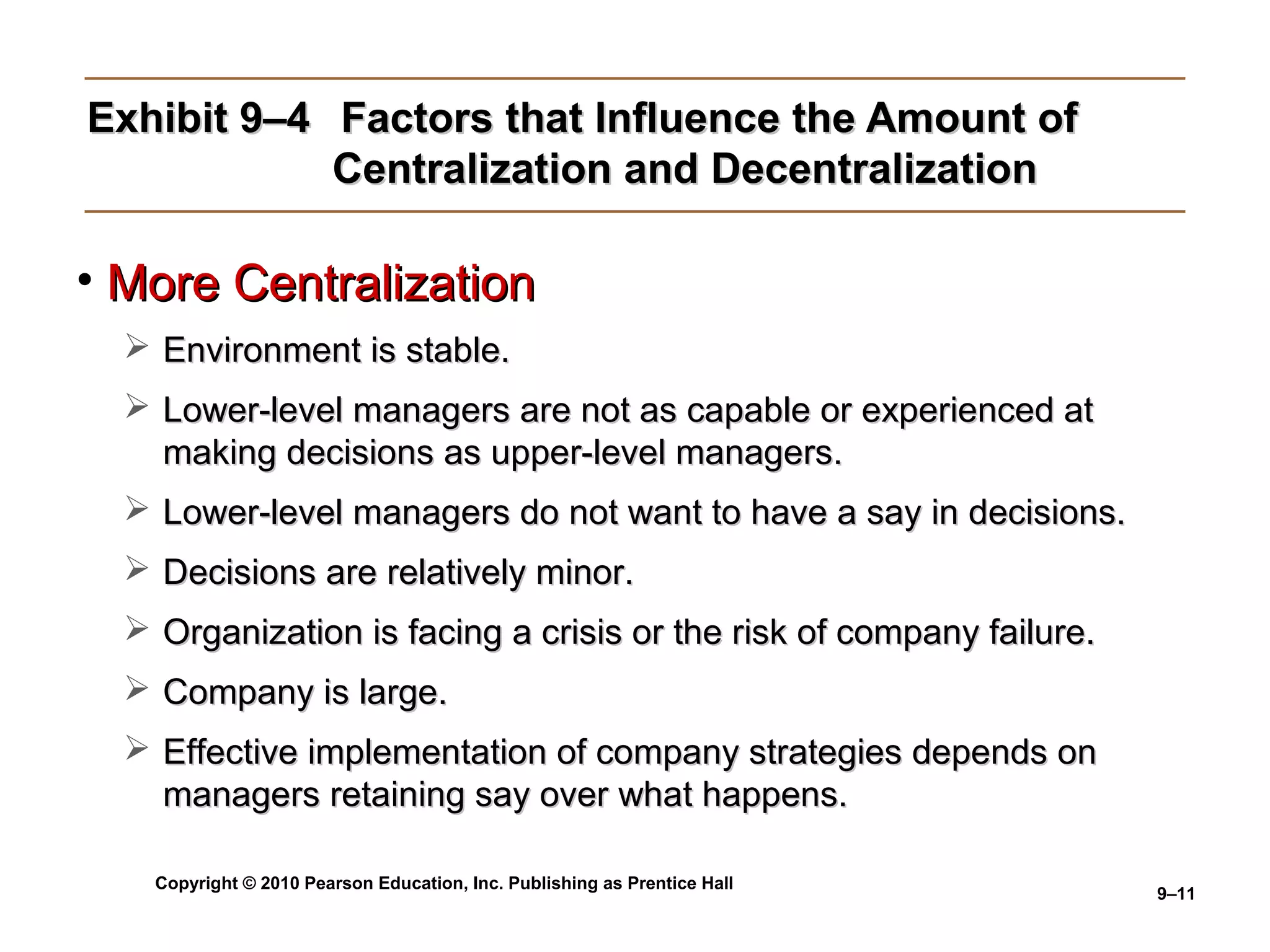
Exhibit 9–4Exhibit 9–4 Factors that Influence the Amount ofFactors that Influence the Amount of
Centralization and DecentralizationCentralization and Decentralization
• More CentralizationMore Centralization
 Environment is stable.Environment is stable.
 Lower-level managers are not as capable or experienced atLower-level managers are not as capable or experienced at
making decisions as upper-level managers.making decisions as upper-level managers.
 Lower-level managers do not want to have a say in decisions.Lower-level managers do not want to have a say in decisions.
 Decisions are relatively minor.Decisions are relatively minor.
 Organization is facing a crisis or the risk of company failure.Organization is facing a crisis or the risk of company failure.
 Company is large.Company is large.
 Effective implementation of company strategies depends onEffective implementation of company strategies depends on
managers retaining say over what happens.managers retaining say over what happens.
Copyright © 2010 Pearson Education, Inc. Publishing as Prentice Hall
9–12
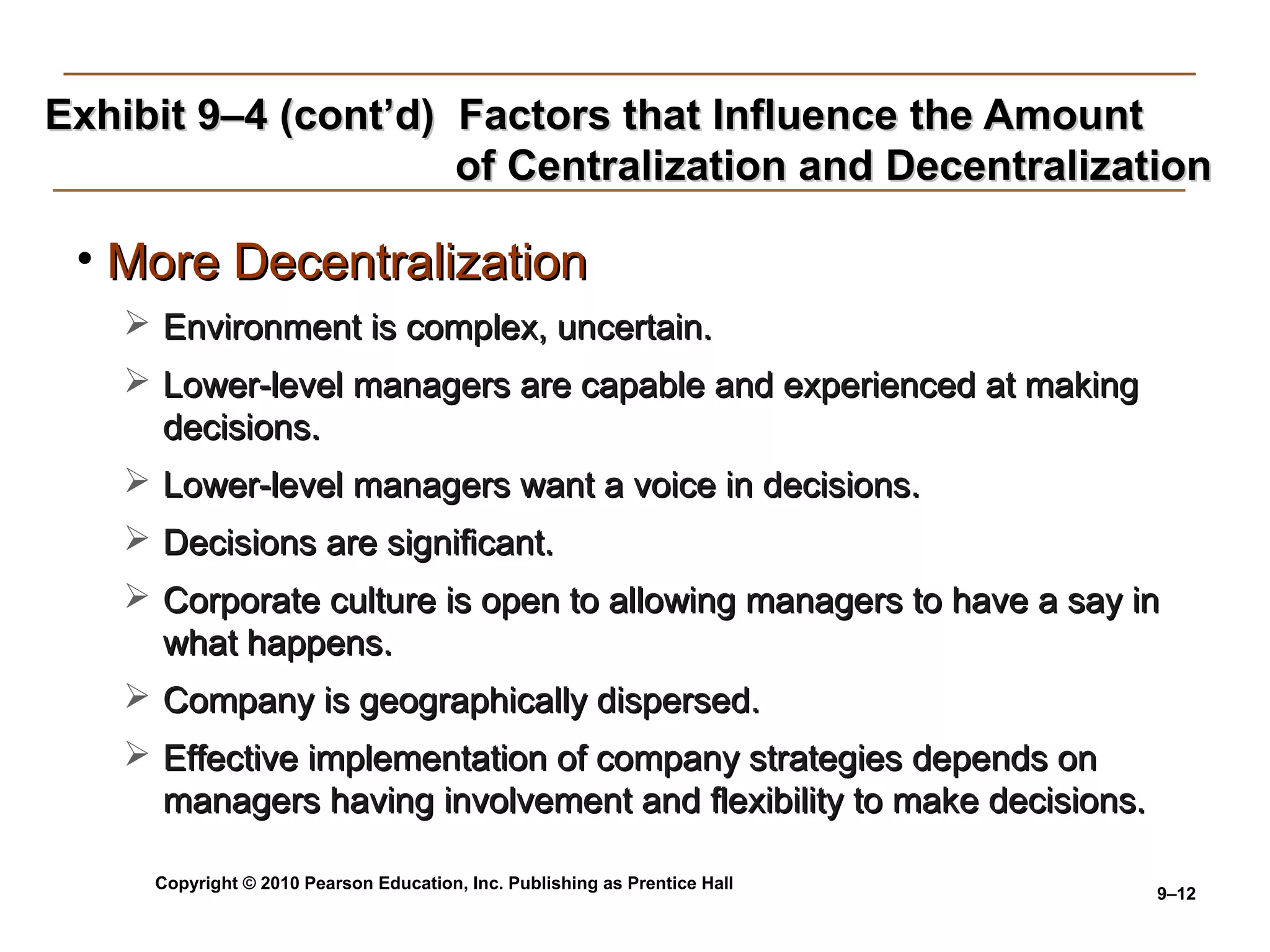
Exhibit 9–4 (cont’d) Factors that Influence the AmountExhibit 9–4 (cont’d) Factors that Influence the Amount
of Centralization and Decentralizationof Centralization and Decentralization
• More DecentralizationMore Decentralization
 Environment is complex, uncertain.Environment is complex, uncertain.
 Lower-level managers are capable and experienced at makingLower-level managers are capable and experienced at making
decisions.decisions.
 Lower-level managers want a voice in decisions.Lower-level managers want a voice in decisions.
 Decisions are significant.Decisions are significant.
 Corporate culture is open to allowing managers to have a say inCorporate culture is open to allowing managers to have a say in
what happens.what happens.
 Company is geographically dispersed.Company is geographically dispersed.
 Effective implementation of company strategies depends onEffective implementation of company strategies depends on
managers having involvement and flexibility to make decisions.managers having involvement and flexibility to make decisions.
Copyright © 2010 Pearson Education, Inc. Publishing as Prentice Hall
9–13
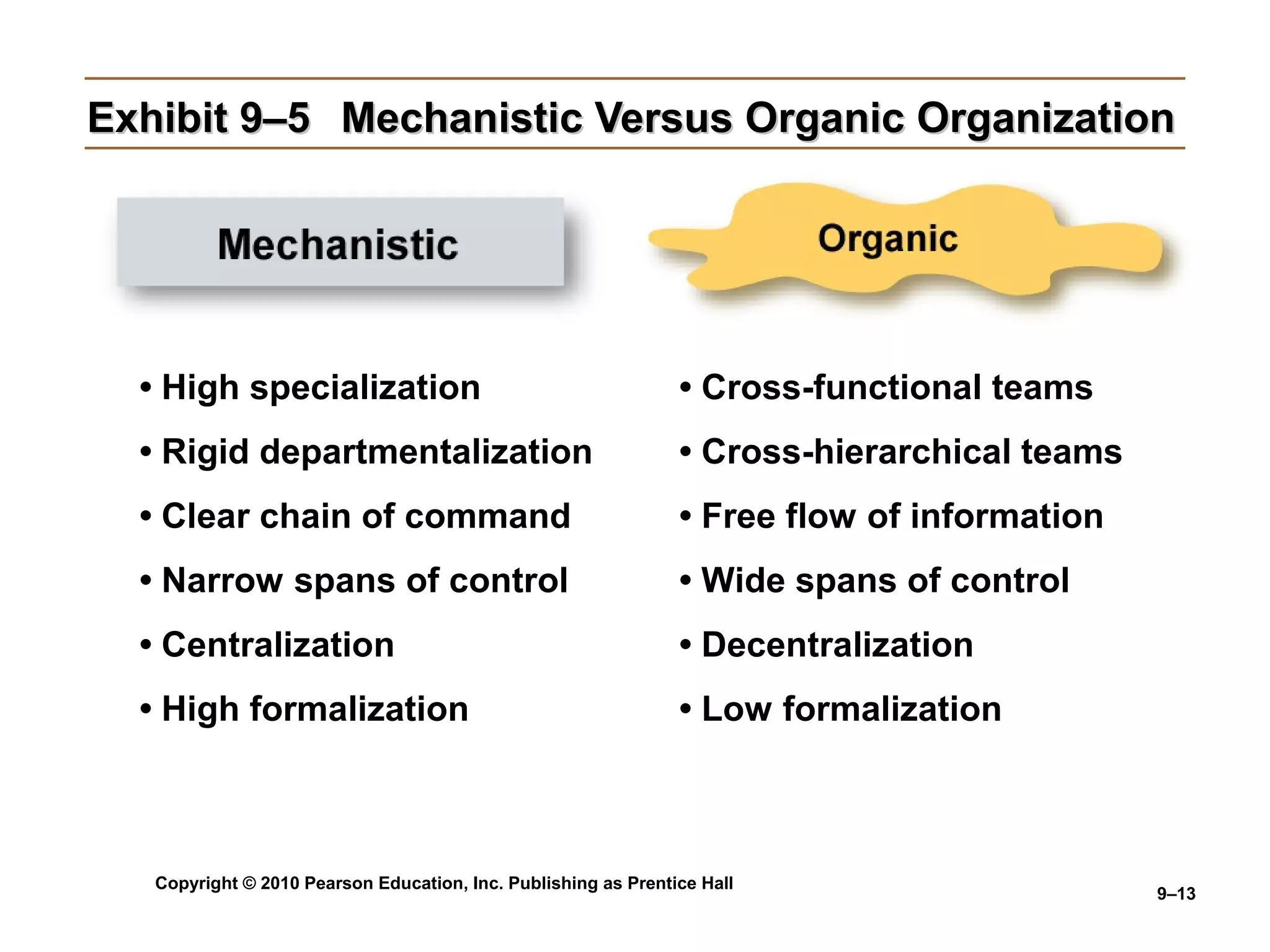
Exhibit 9–5Exhibit 9–5 Mechanistic Versus Organic OrganizationMechanistic Versus Organic Organization
• High specialization
• Rigid departmentalization
• Clear chain of command
• Narrow spans of control
• Centralization
• High formalization
• Cross-functional teams
• Cross-hierarchical teams
• Free flow of information
• Wide spans of control
• Decentralization
• Low formalization
Copyright © 2010 Pearson Education, Inc. Publishing as Prentice Hall
9–14
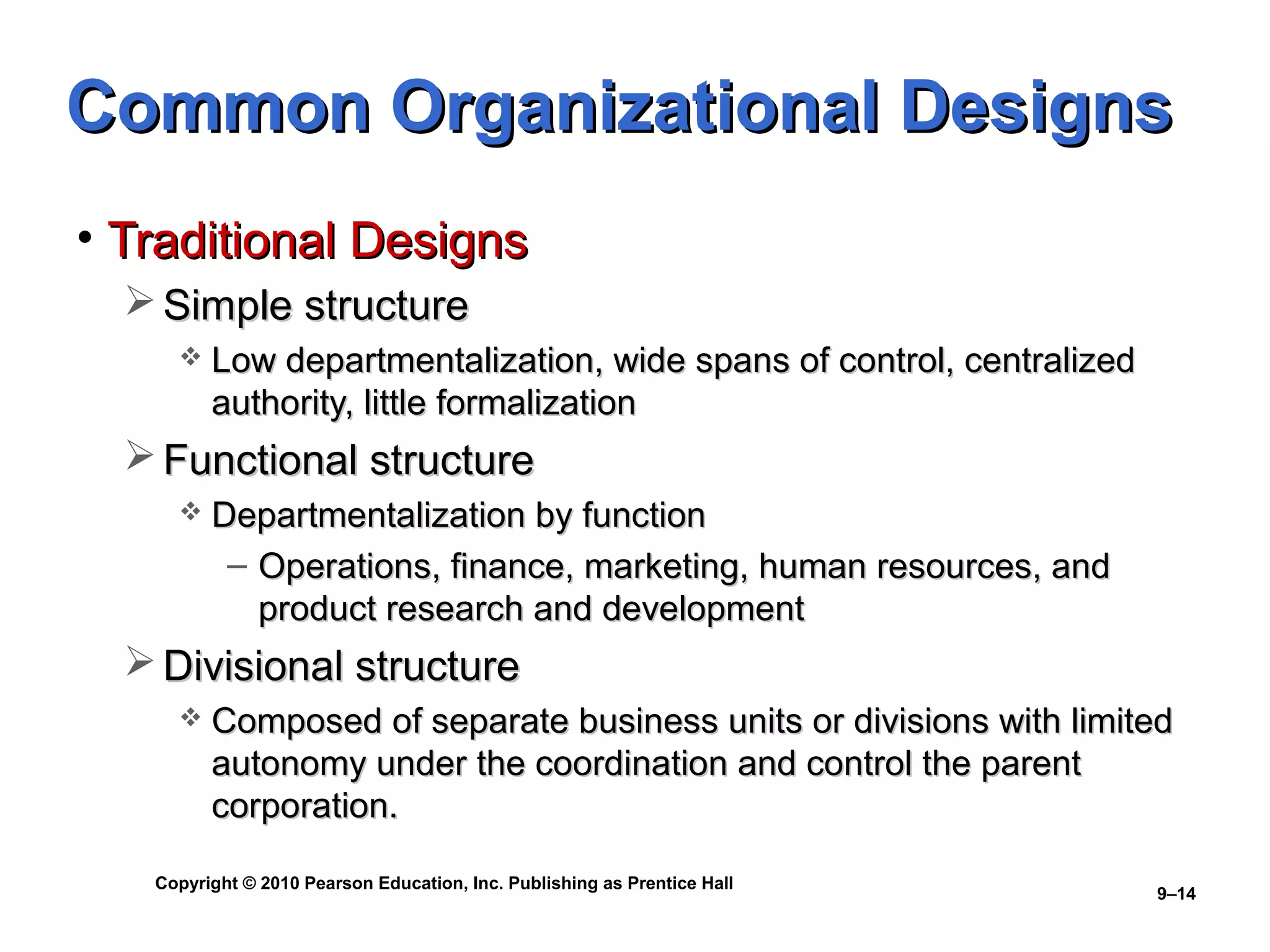
Common Organizational DesignsCommon Organizational Designs
• Traditional DesignsTraditional Designs
 Simple structureSimple structure
 Low departmentalization, wide spans of control, centralizedLow departmentalization, wide spans of control, centralized
authority, little formalizationauthority, little formalization
 Functional structureFunctional structure
 Departmentalization by functionDepartmentalization by function
– Operations, finance, marketing, human resources, andOperations, finance, marketing, human resources, and
product research and developmentproduct research and development
 Divisional structureDivisional structure
 Composed of separate business units or divisions with limitedComposed of separate business units or divisions with limited
autonomy under the coordination and control the parentautonomy under the coordination and control the parent
corporation.corporation.
Copyright © 2010 Pearson Education, Inc. Publishing as Prentice Hall
9–15
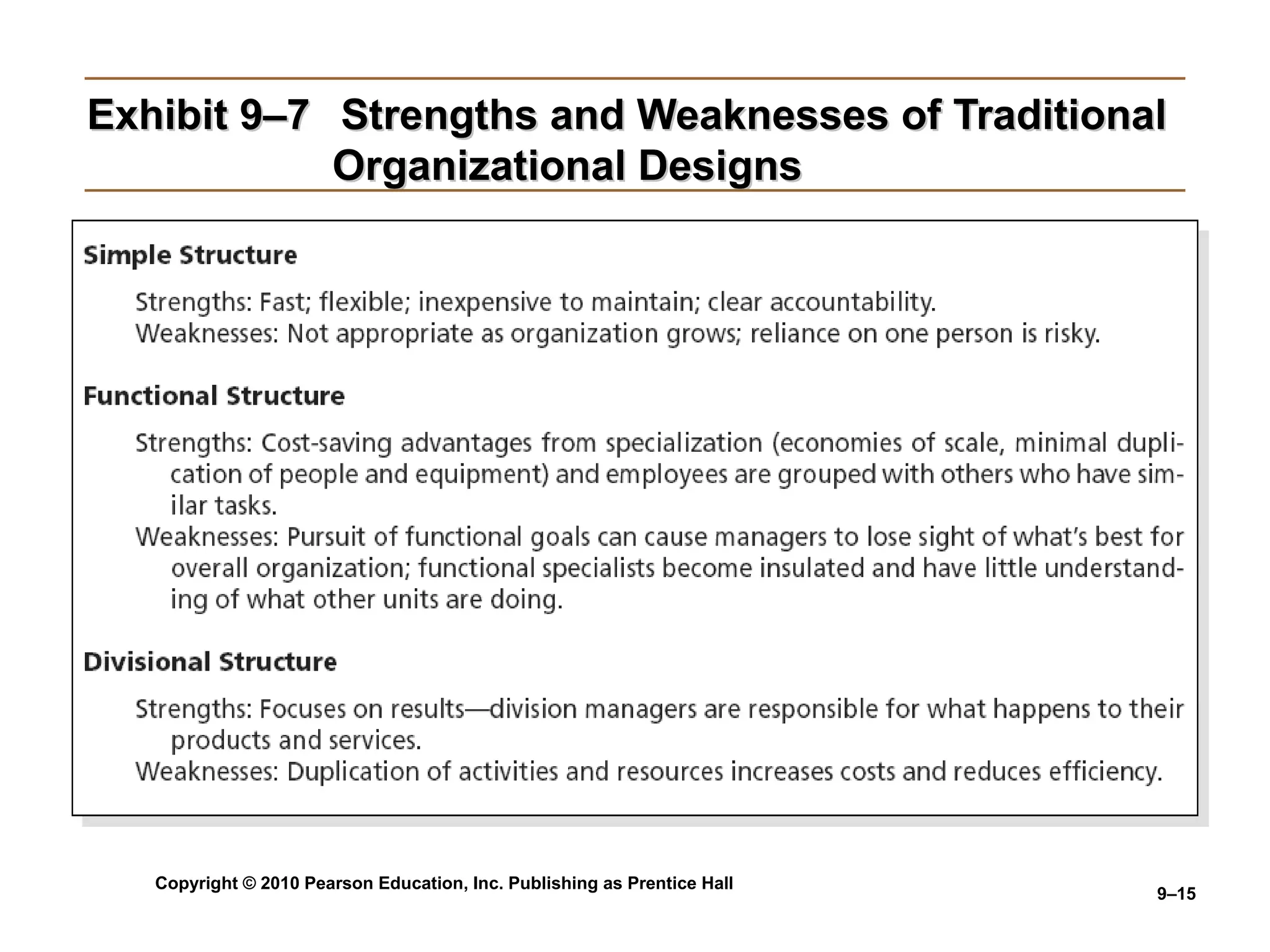
Exhibit 9–7Exhibit 9–7 Strengths and Weaknesses of TraditionalStrengths and Weaknesses of Traditional
Organizational DesignsOrganizational Designs
Copyright © 2010 Pearson Education, Inc. Publishing as Prentice Hall
9–16
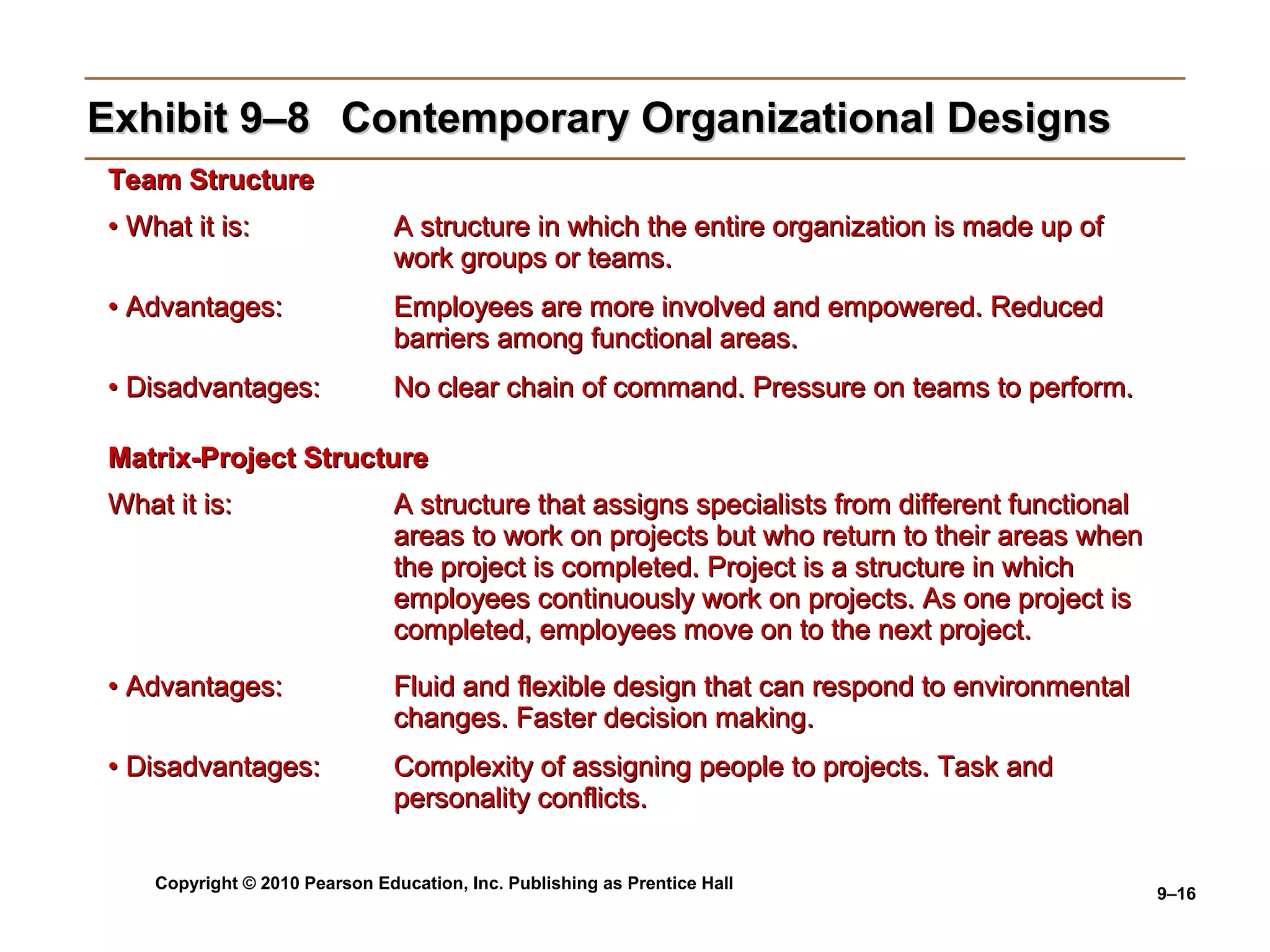
Exhibit 9–8Exhibit 9–8 Contemporary Organizational DesignsContemporary Organizational Designs
Team StructureTeam Structure
•• What it is:What it is: A structure in which the entire organization is made up ofA structure in which the entire organization is made up of
work groups or teams.work groups or teams.
•• Advantages:Advantages: Employees are more involved and empowered. ReducedEmployees are more involved and empowered. Reduced
barriers among functional areas.barriers among functional areas.
•• Disadvantages:Disadvantages: No clear chain of command. Pressure on teams to perform.No clear chain of command. Pressure on teams to perform.
Matrix-Project StructureMatrix-Project Structure
What it is:What it is: A structure that assigns specialists from different functionalA structure that assigns specialists from different functional
areas to work on projects but who return to their areas whenareas to work on projects but who return to their areas when
the project is completed. Project is a structure in whichthe project is completed. Project is a structure in which
employees continuously work on projects. As one project isemployees continuously work on projects. As one project is
completed, employees move on to the next project.completed, employees move on to the next project.
•• Advantages:Advantages: Fluid and flexible design that can respond to environmentalFluid and flexible design that can respond to environmental
changes. Faster decision making.changes. Faster decision making.
•• Disadvantages:Disadvantages: Complexity of assigning people to projects. Task andComplexity of assigning people to projects. Task and
personality conflicts.personality conflicts.
Copyright © 2010 Pearson Education, Inc. Publishing as Prentice Hall
9–17
Exhibit 9–8 (cont’dExhibit 9–8 (cont’d ) Contemporary Organizational) Contemporary Organizational
DesignsDesigns
Boundaryless StructureBoundaryless Structure
What it is:What it is: A structure that is not defined by or limited to artificialA structure that is not defined by or limited to artificial
horizontal, vertical, or external boundaries; includes virtualhorizontal, vertical, or external boundaries; includes virtual
and network types of organizations.and network types of organizations.
•• Advantages:Advantages: Highly flexible and responsive. Draws on talent wherever it’sHighly flexible and responsive. Draws on talent wherever it’s
found.found.
•• Disadvantages:Disadvantages: Lack of control. Communication difficulties.Lack of control. Communication difficulties.
Copyright © 2010 Pearson Education, Inc. Publishing as Prentice Hall
9–18
Organizational Designs (cont’d)Organizational Designs (cont’d)
• Contemporary Organizational DesignsContemporary Organizational Designs
 Team structuresTeam structures
 The entire organization is made up of work groups or self-The entire organization is made up of work groups or self-
managed teams of empowered employees.managed teams of empowered employees.
 Matrix and project structuresMatrix and project structures
 Specialists from different functional departments areSpecialists from different functional departments are
assigned to work on projects led by project managers.assigned to work on projects led by project managers.
 Matrix and project participants have two managers.Matrix and project participants have two managers.
 In project structures, employees work continuously onIn project structures, employees work continuously on
projects; moving on to another project as each project isprojects; moving on to another project as each project is
completed.completed.
Copyright © 2010 Pearson Education, Inc. Publishing as Prentice Hall
9–19
Organizational Designs (cont’d)Organizational Designs (cont’d)
• Contemporary Organizational Designs (cont’d)Contemporary Organizational Designs (cont’d)
 Boundaryless OrganizationBoundaryless Organization
 An flexible and unstructured organizational design that isAn flexible and unstructured organizational design that is
intended to break down external barriers between theintended to break down external barriers between the
organization and its customers and suppliers.organization and its customers and suppliers.
 Removes internal (horizontal) boundaries:Removes internal (horizontal) boundaries:
– Eliminates the chain of commandEliminates the chain of command
– Has limitless spans of controlHas limitless spans of control
– Uses empowered teams rather than departmentsUses empowered teams rather than departments
 Eliminates external boundaries:Eliminates external boundaries:
– Uses virtual, network, and modular organizationalUses virtual, network, and modular organizational
structures to get closer to stakeholders.structures to get closer to stakeholders.
Copyright © 2010 Pearson Education, Inc. Publishing as Prentice Hall
9–20
Removing External BoundariesRemoving External Boundaries
• Virtual OrganizationVirtual Organization
 An organization that consists of a small core of full-timeAn organization that consists of a small core of full-time
employees and that temporarily hires specialists to work onemployees and that temporarily hires specialists to work on
opportunities that arise.opportunities that arise.
• Network OrganizationNetwork Organization
 A small core organization that outsources its majorA small core organization that outsources its major
business functions (e.g., manufacturing) in order tobusiness functions (e.g., manufacturing) in order to
concentrate on what it does best.concentrate on what it does best.
• Modular OrganizationModular Organization
 A manufacturing organization that uses outside suppliers toA manufacturing organization that uses outside suppliers to
provide product components for its final assemblyprovide product components for its final assembly
operations.operations.
Copyright © 2010 Pearson Education, Inc. Publishing as Prentice Hall
9–21
Today’s Organizational DesignToday’s Organizational Design
ChallengesChallenges
• Keeping Employees ConnectedKeeping Employees Connected
 Widely dispersed and mobile employeesWidely dispersed and mobile employees
• Building a Learning OrganizationBuilding a Learning Organization
• Managing Global Structural IssuesManaging Global Structural Issues
 Cultural implications of design elementsCultural implications of design elements
Copyright © 2010 Pearson Education, Inc. Publishing as Prentice Hall
9–22
Organizational Designs (cont’d)Organizational Designs (cont’d)
• The Learning OrganizationThe Learning Organization
 An organization that has developed the capacity toAn organization that has developed the capacity to
continuously learn, adapt, and change through thecontinuously learn, adapt, and change through the
practice of knowledge management by employees.practice of knowledge management by employees.
 Characteristics of a learning organization:Characteristics of a learning organization:
 An open team-based organization design that empowersAn open team-based organization design that empowers
employeesemployees
 Extensive and open information sharingExtensive and open information sharing
 Leadership that provides a shared vision of the organization’sLeadership that provides a shared vision of the organization’s
future.future.
 A strong culture of shared values, trust, openness, and aA strong culture of shared values, trust, openness, and a
sense of community.sense of community.

Chapter 9 management (10 th edition) by robbins and coulter

  • 1.
    Copyright © 2010Pearson Education, Inc. Publishing as Prentice Hall 9–1 OrganizationalOrganizational Structure andStructure and DesignDesign ChapterChapter 99 Management Stephen P. Robbins Mary Coulter tenth edition
  • 2.
    Copyright © 2010Pearson Education, Inc. Publishing as Prentice Hall 9–2 Designing Organizational StructureDesigning Organizational Structure • Organizational DesignOrganizational Design  A process involving decisions about six key elements:A process involving decisions about six key elements:  Work specializationWork specialization  DepartmentalizationDepartmentalization  Chain of commandChain of command  Span of controlSpan of control  Centralization and decentralizationCentralization and decentralization  FormalizationFormalization
  • 3.
    Copyright © 2010Pearson Education, Inc. Publishing as Prentice Hall 9–3 Exhibit 9–1Exhibit 9–1 Purposes of OrganizingPurposes of Organizing • Divides work to be done into specific jobs and departments. • Assigns tasks and responsibilities associated with individual jobs. • Coordinates diverse organizational tasks. • Clusters jobs into units. • Establishes relationships among individuals, groups, and departments. • Establishes formal lines of authority. • Allocates and deploys organizational resources.
  • 4.
    Copyright © 2010Pearson Education, Inc. Publishing as Prentice Hall 9–4 Organizational StructureOrganizational Structure • Work SpecializationWork Specialization  The degree to which tasks in the organization areThe degree to which tasks in the organization are divided into separate jobs with each step completeddivided into separate jobs with each step completed by a different person.by a different person.  Overspecialization can result in human diseconomiesOverspecialization can result in human diseconomies from boredom, fatigue, stress, poor quality, increasedfrom boredom, fatigue, stress, poor quality, increased absenteeism, and higher turnover.absenteeism, and higher turnover.
  • 5.
    Copyright © 2010Pearson Education, Inc. Publishing as Prentice Hall 9–5 Departmentalization by TypeDepartmentalization by Type • FunctionalFunctional  Grouping jobs byGrouping jobs by functions performedfunctions performed • ProductProduct  Grouping jobs by productGrouping jobs by product lineline • GeographicalGeographical  Grouping jobs on theGrouping jobs on the basis of territory orbasis of territory or geographygeography • ProcessProcess  Grouping jobs on theGrouping jobs on the basis of product orbasis of product or customer flowcustomer flow • CustomerCustomer  Grouping jobs by type ofGrouping jobs by type of customer and needscustomer and needs
  • 6.
    Copyright © 2010Pearson Education, Inc. Publishing as Prentice Hall 9–6 Organizational Structure (cont’d)Organizational Structure (cont’d) • Chain of CommandChain of Command  The continuous line of authority that extends fromThe continuous line of authority that extends from upper levels of an organization to the lowest levels ofupper levels of an organization to the lowest levels of the organization and clarifies who reports to whom.the organization and clarifies who reports to whom.
  • 7.
    Copyright © 2010Pearson Education, Inc. Publishing as Prentice Hall 9–7 Organizational Structure (cont’d)Organizational Structure (cont’d) • AuthorityAuthority  The rights inherent in a managerial position to tellThe rights inherent in a managerial position to tell people what to do and to expect them to do it.people what to do and to expect them to do it. • ResponsibilityResponsibility  The obligation or expectation to perform.The obligation or expectation to perform. • Unity of CommandUnity of Command  The concept that a person should have one boss andThe concept that a person should have one boss and should report only to that person.should report only to that person.
  • 8.
    Copyright © 2010Pearson Education, Inc. Publishing as Prentice Hall 9–8 Organizational Structure (cont’d)Organizational Structure (cont’d) • Span of ControlSpan of Control  The number of employees who can be effectively and efficientlyThe number of employees who can be effectively and efficiently supervised by a manager.supervised by a manager.
  • 9.
    Copyright © 2010Pearson Education, Inc. Publishing as Prentice Hall 9–9 Exhibit 9–3Exhibit 9–3 Contrasting Spans of ControlContrasting Spans of Control
  • 10.
    Copyright © 2010Pearson Education, Inc. Publishing as Prentice Hall 9–10 Organizational Structure (cont’d)Organizational Structure (cont’d) • CentralizationCentralization  The degree to which decision making is concentratedThe degree to which decision making is concentrated at upper levels in the organization.at upper levels in the organization.  Organizations in which top managers make all the decisionsOrganizations in which top managers make all the decisions and lower-level employees simply carry out those orders.and lower-level employees simply carry out those orders. • DecentralizationDecentralization  Organizations in which decision making is pushedOrganizations in which decision making is pushed down to the managers who are closest to the action.down to the managers who are closest to the action. • Employee EmpowermentEmployee Empowerment  Increasing the decision-making authority (power) ofIncreasing the decision-making authority (power) of employees.employees.
  • 11.
    Copyright © 2010Pearson Education, Inc. Publishing as Prentice Hall 9–11 Exhibit 9–4Exhibit 9–4 Factors that Influence the Amount ofFactors that Influence the Amount of Centralization and DecentralizationCentralization and Decentralization • More CentralizationMore Centralization  Environment is stable.Environment is stable.  Lower-level managers are not as capable or experienced atLower-level managers are not as capable or experienced at making decisions as upper-level managers.making decisions as upper-level managers.  Lower-level managers do not want to have a say in decisions.Lower-level managers do not want to have a say in decisions.  Decisions are relatively minor.Decisions are relatively minor.  Organization is facing a crisis or the risk of company failure.Organization is facing a crisis or the risk of company failure.  Company is large.Company is large.  Effective implementation of company strategies depends onEffective implementation of company strategies depends on managers retaining say over what happens.managers retaining say over what happens.
  • 12.
    Copyright © 2010Pearson Education, Inc. Publishing as Prentice Hall 9–12 Exhibit 9–4 (cont’d) Factors that Influence the AmountExhibit 9–4 (cont’d) Factors that Influence the Amount of Centralization and Decentralizationof Centralization and Decentralization • More DecentralizationMore Decentralization  Environment is complex, uncertain.Environment is complex, uncertain.  Lower-level managers are capable and experienced at makingLower-level managers are capable and experienced at making decisions.decisions.  Lower-level managers want a voice in decisions.Lower-level managers want a voice in decisions.  Decisions are significant.Decisions are significant.  Corporate culture is open to allowing managers to have a say inCorporate culture is open to allowing managers to have a say in what happens.what happens.  Company is geographically dispersed.Company is geographically dispersed.  Effective implementation of company strategies depends onEffective implementation of company strategies depends on managers having involvement and flexibility to make decisions.managers having involvement and flexibility to make decisions.
  • 13.
    Copyright © 2010Pearson Education, Inc. Publishing as Prentice Hall 9–13 Exhibit 9–5Exhibit 9–5 Mechanistic Versus Organic OrganizationMechanistic Versus Organic Organization • High specialization • Rigid departmentalization • Clear chain of command • Narrow spans of control • Centralization • High formalization • Cross-functional teams • Cross-hierarchical teams • Free flow of information • Wide spans of control • Decentralization • Low formalization
  • 14.
    Copyright © 2010Pearson Education, Inc. Publishing as Prentice Hall 9–14 Common Organizational DesignsCommon Organizational Designs • Traditional DesignsTraditional Designs  Simple structureSimple structure  Low departmentalization, wide spans of control, centralizedLow departmentalization, wide spans of control, centralized authority, little formalizationauthority, little formalization  Functional structureFunctional structure  Departmentalization by functionDepartmentalization by function – Operations, finance, marketing, human resources, andOperations, finance, marketing, human resources, and product research and developmentproduct research and development  Divisional structureDivisional structure  Composed of separate business units or divisions with limitedComposed of separate business units or divisions with limited autonomy under the coordination and control the parentautonomy under the coordination and control the parent corporation.corporation.
  • 15.
    Copyright © 2010Pearson Education, Inc. Publishing as Prentice Hall 9–15 Exhibit 9–7Exhibit 9–7 Strengths and Weaknesses of TraditionalStrengths and Weaknesses of Traditional Organizational DesignsOrganizational Designs
  • 16.
    Copyright © 2010Pearson Education, Inc. Publishing as Prentice Hall 9–16 Exhibit 9–8Exhibit 9–8 Contemporary Organizational DesignsContemporary Organizational Designs Team StructureTeam Structure •• What it is:What it is: A structure in which the entire organization is made up ofA structure in which the entire organization is made up of work groups or teams.work groups or teams. •• Advantages:Advantages: Employees are more involved and empowered. ReducedEmployees are more involved and empowered. Reduced barriers among functional areas.barriers among functional areas. •• Disadvantages:Disadvantages: No clear chain of command. Pressure on teams to perform.No clear chain of command. Pressure on teams to perform. Matrix-Project StructureMatrix-Project Structure What it is:What it is: A structure that assigns specialists from different functionalA structure that assigns specialists from different functional areas to work on projects but who return to their areas whenareas to work on projects but who return to their areas when the project is completed. Project is a structure in whichthe project is completed. Project is a structure in which employees continuously work on projects. As one project isemployees continuously work on projects. As one project is completed, employees move on to the next project.completed, employees move on to the next project. •• Advantages:Advantages: Fluid and flexible design that can respond to environmentalFluid and flexible design that can respond to environmental changes. Faster decision making.changes. Faster decision making. •• Disadvantages:Disadvantages: Complexity of assigning people to projects. Task andComplexity of assigning people to projects. Task and personality conflicts.personality conflicts.
  • 17.
    Copyright © 2010Pearson Education, Inc. Publishing as Prentice Hall 9–17 Exhibit 9–8 (cont’dExhibit 9–8 (cont’d ) Contemporary Organizational) Contemporary Organizational DesignsDesigns Boundaryless StructureBoundaryless Structure What it is:What it is: A structure that is not defined by or limited to artificialA structure that is not defined by or limited to artificial horizontal, vertical, or external boundaries; includes virtualhorizontal, vertical, or external boundaries; includes virtual and network types of organizations.and network types of organizations. •• Advantages:Advantages: Highly flexible and responsive. Draws on talent wherever it’sHighly flexible and responsive. Draws on talent wherever it’s found.found. •• Disadvantages:Disadvantages: Lack of control. Communication difficulties.Lack of control. Communication difficulties.
  • 18.
    Copyright © 2010Pearson Education, Inc. Publishing as Prentice Hall 9–18 Organizational Designs (cont’d)Organizational Designs (cont’d) • Contemporary Organizational DesignsContemporary Organizational Designs  Team structuresTeam structures  The entire organization is made up of work groups or self-The entire organization is made up of work groups or self- managed teams of empowered employees.managed teams of empowered employees.  Matrix and project structuresMatrix and project structures  Specialists from different functional departments areSpecialists from different functional departments are assigned to work on projects led by project managers.assigned to work on projects led by project managers.  Matrix and project participants have two managers.Matrix and project participants have two managers.  In project structures, employees work continuously onIn project structures, employees work continuously on projects; moving on to another project as each project isprojects; moving on to another project as each project is completed.completed.
  • 19.
    Copyright © 2010Pearson Education, Inc. Publishing as Prentice Hall 9–19 Organizational Designs (cont’d)Organizational Designs (cont’d) • Contemporary Organizational Designs (cont’d)Contemporary Organizational Designs (cont’d)  Boundaryless OrganizationBoundaryless Organization  An flexible and unstructured organizational design that isAn flexible and unstructured organizational design that is intended to break down external barriers between theintended to break down external barriers between the organization and its customers and suppliers.organization and its customers and suppliers.  Removes internal (horizontal) boundaries:Removes internal (horizontal) boundaries: – Eliminates the chain of commandEliminates the chain of command – Has limitless spans of controlHas limitless spans of control – Uses empowered teams rather than departmentsUses empowered teams rather than departments  Eliminates external boundaries:Eliminates external boundaries: – Uses virtual, network, and modular organizationalUses virtual, network, and modular organizational structures to get closer to stakeholders.structures to get closer to stakeholders.
  • 20.
    Copyright © 2010Pearson Education, Inc. Publishing as Prentice Hall 9–20 Removing External BoundariesRemoving External Boundaries • Virtual OrganizationVirtual Organization  An organization that consists of a small core of full-timeAn organization that consists of a small core of full-time employees and that temporarily hires specialists to work onemployees and that temporarily hires specialists to work on opportunities that arise.opportunities that arise. • Network OrganizationNetwork Organization  A small core organization that outsources its majorA small core organization that outsources its major business functions (e.g., manufacturing) in order tobusiness functions (e.g., manufacturing) in order to concentrate on what it does best.concentrate on what it does best. • Modular OrganizationModular Organization  A manufacturing organization that uses outside suppliers toA manufacturing organization that uses outside suppliers to provide product components for its final assemblyprovide product components for its final assembly operations.operations.
  • 21.
    Copyright © 2010Pearson Education, Inc. Publishing as Prentice Hall 9–21 Today’s Organizational DesignToday’s Organizational Design ChallengesChallenges • Keeping Employees ConnectedKeeping Employees Connected  Widely dispersed and mobile employeesWidely dispersed and mobile employees • Building a Learning OrganizationBuilding a Learning Organization • Managing Global Structural IssuesManaging Global Structural Issues  Cultural implications of design elementsCultural implications of design elements
  • 22.
    Copyright © 2010Pearson Education, Inc. Publishing as Prentice Hall 9–22 Organizational Designs (cont’d)Organizational Designs (cont’d) • The Learning OrganizationThe Learning Organization  An organization that has developed the capacity toAn organization that has developed the capacity to continuously learn, adapt, and change through thecontinuously learn, adapt, and change through the practice of knowledge management by employees.practice of knowledge management by employees.  Characteristics of a learning organization:Characteristics of a learning organization:  An open team-based organization design that empowersAn open team-based organization design that empowers employeesemployees  Extensive and open information sharingExtensive and open information sharing  Leadership that provides a shared vision of the organization’sLeadership that provides a shared vision of the organization’s future.future.  A strong culture of shared values, trust, openness, and aA strong culture of shared values, trust, openness, and a sense of community.sense of community.