DFC2033
Course Learning Outcome
—  CLO1:Apply the fundamentals concepts of database
management and relational data model to create a database
based on an organization’s requirements. (C3, PLO1)
—  CLO2: Develop a database using a concurrency control and
data recovery technique based on Database Management
System (DBMS). (P3, C3, PLO2, PLO1)
Learning Outcome
—  Apply Entity Relationship Diagrams (ERD) in database
development
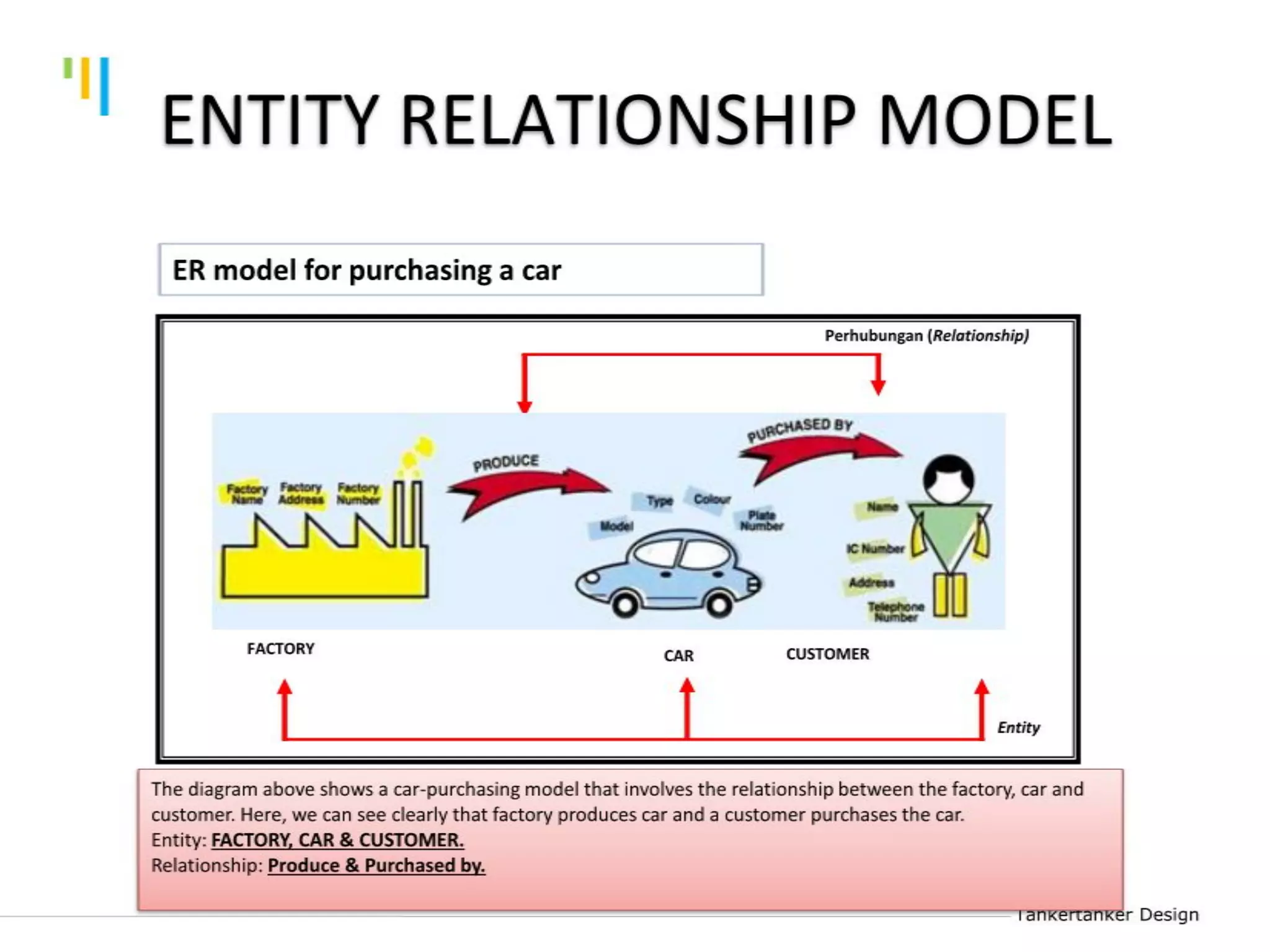
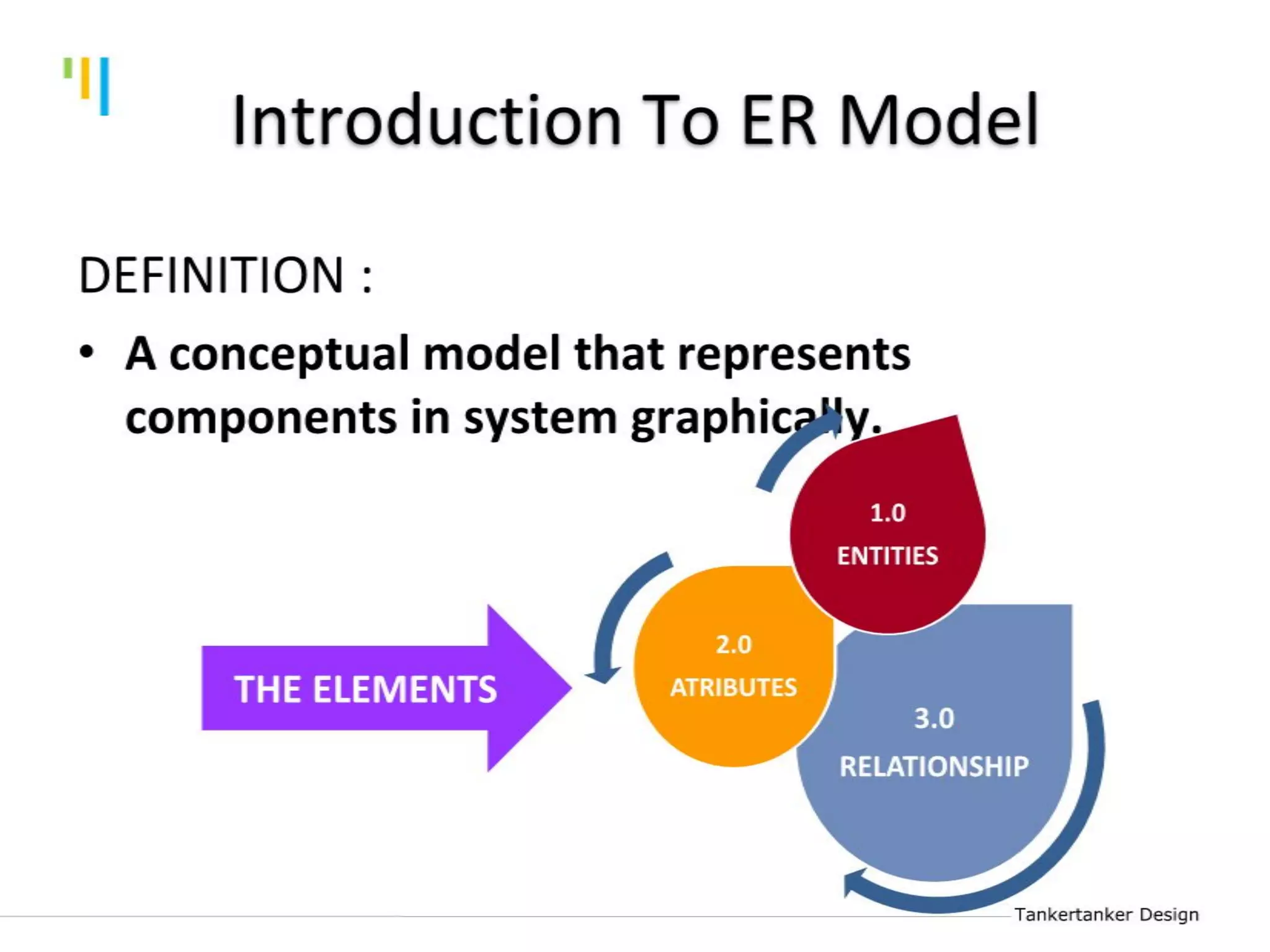
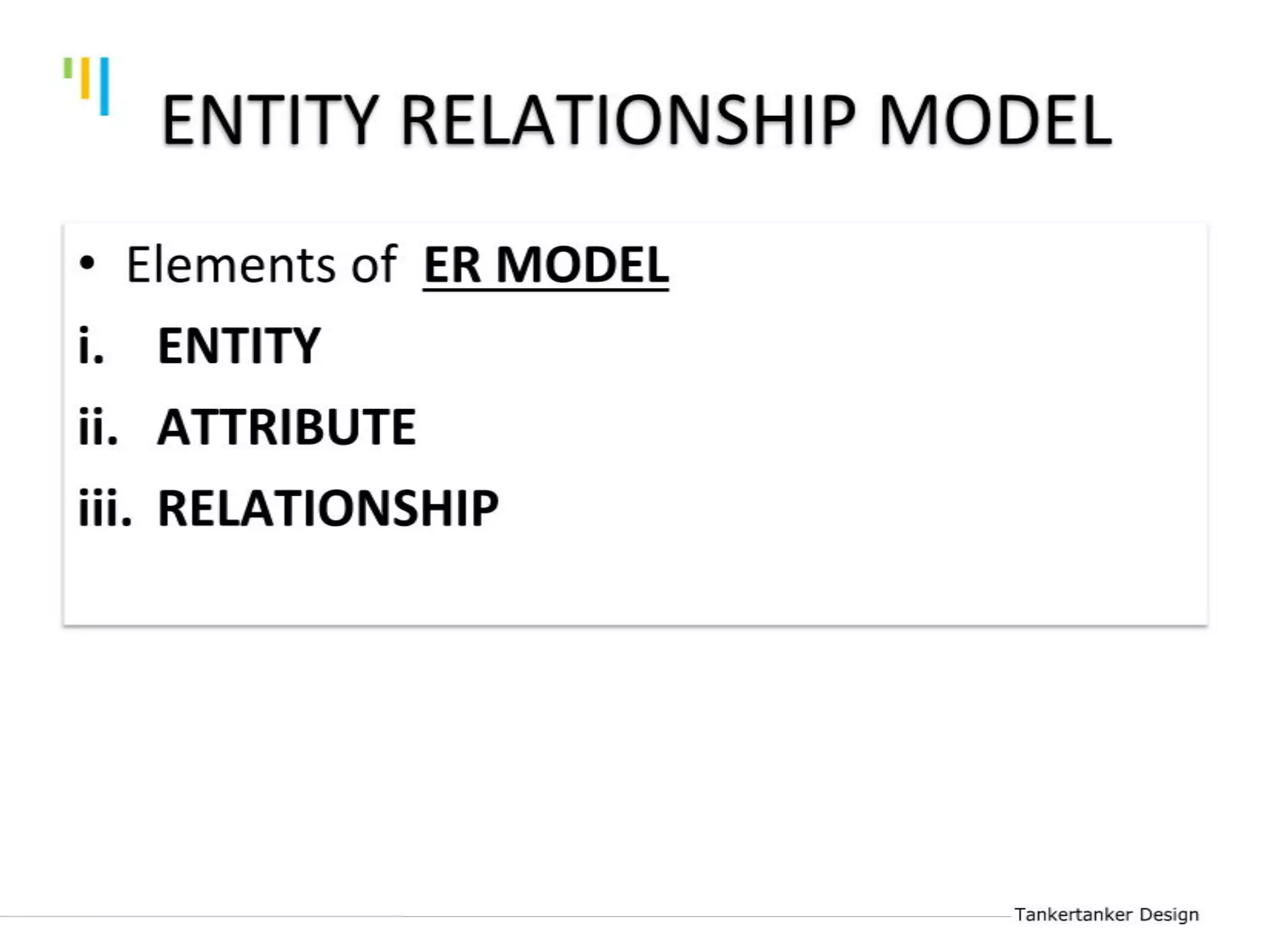
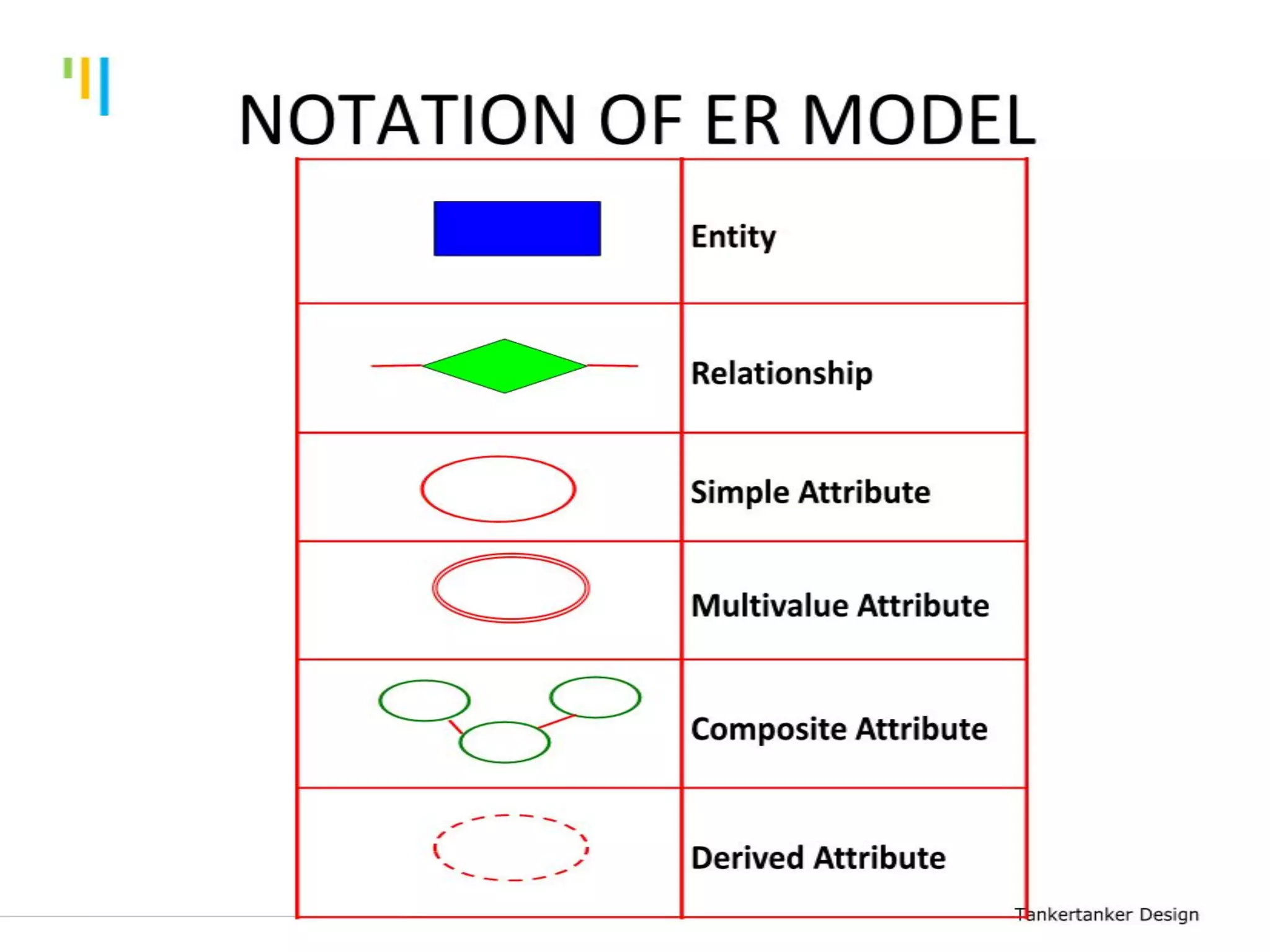
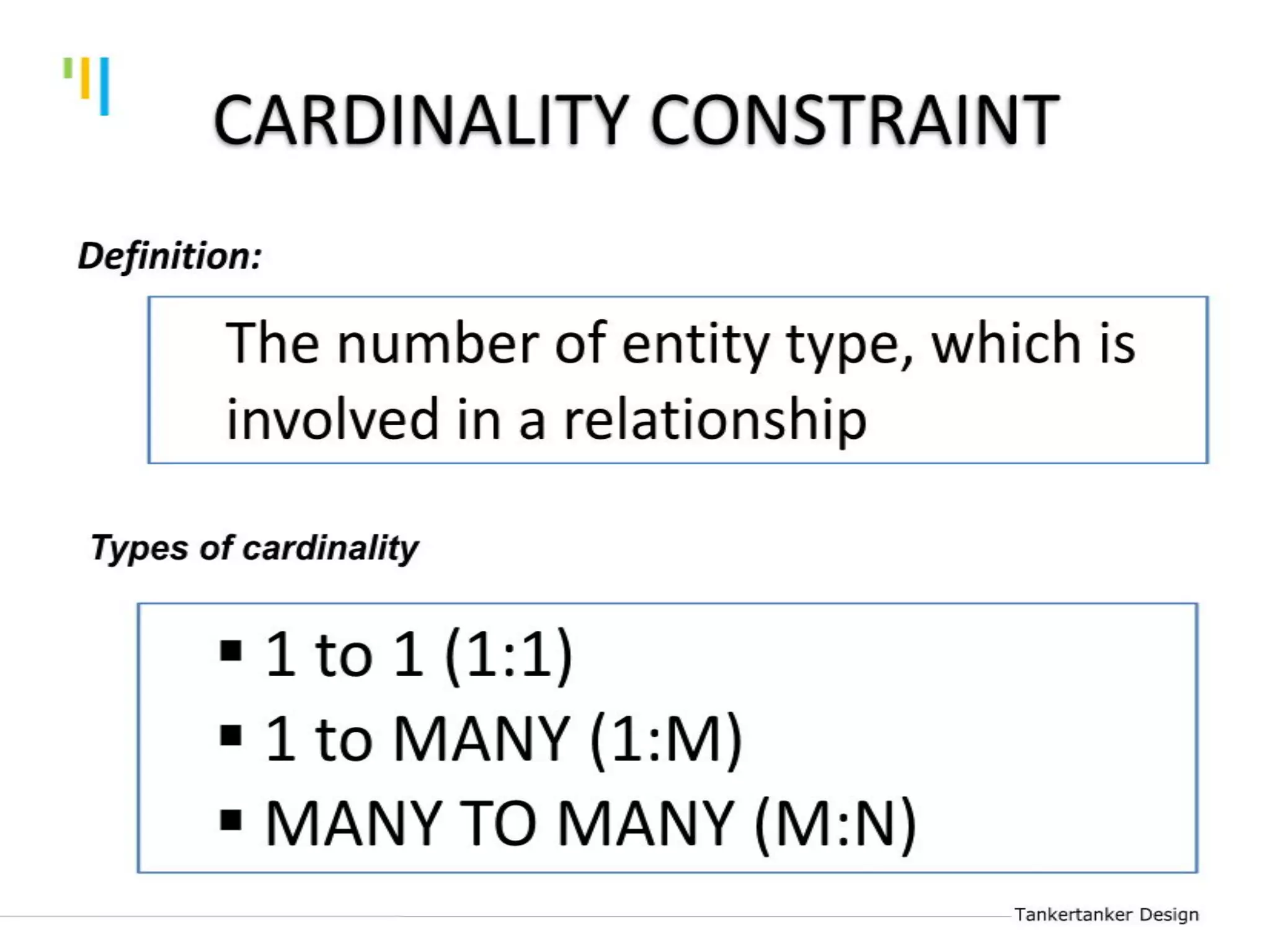
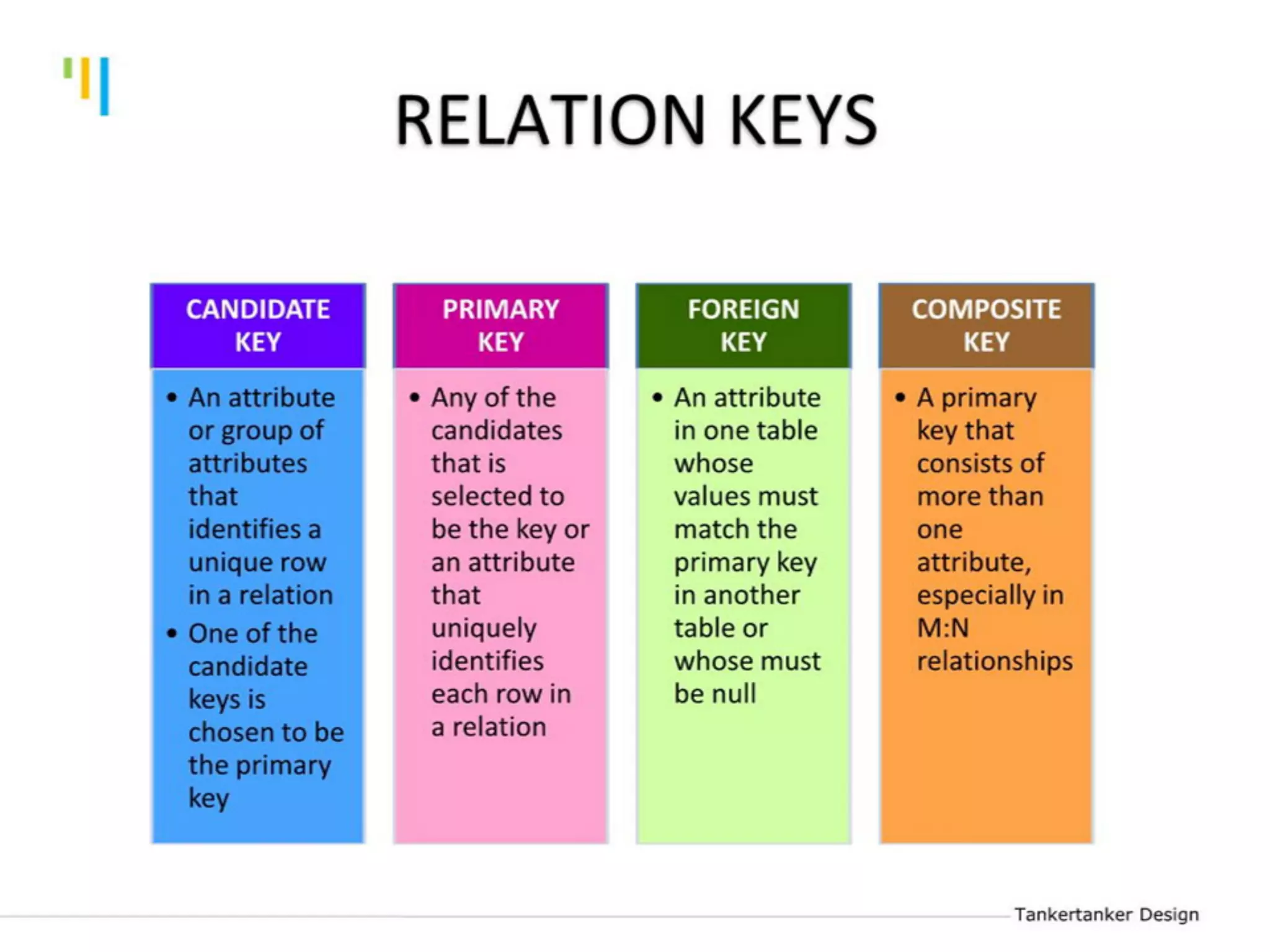
—  Define the three basic elements of ERD: entity types, relationship,
attributes and keys.
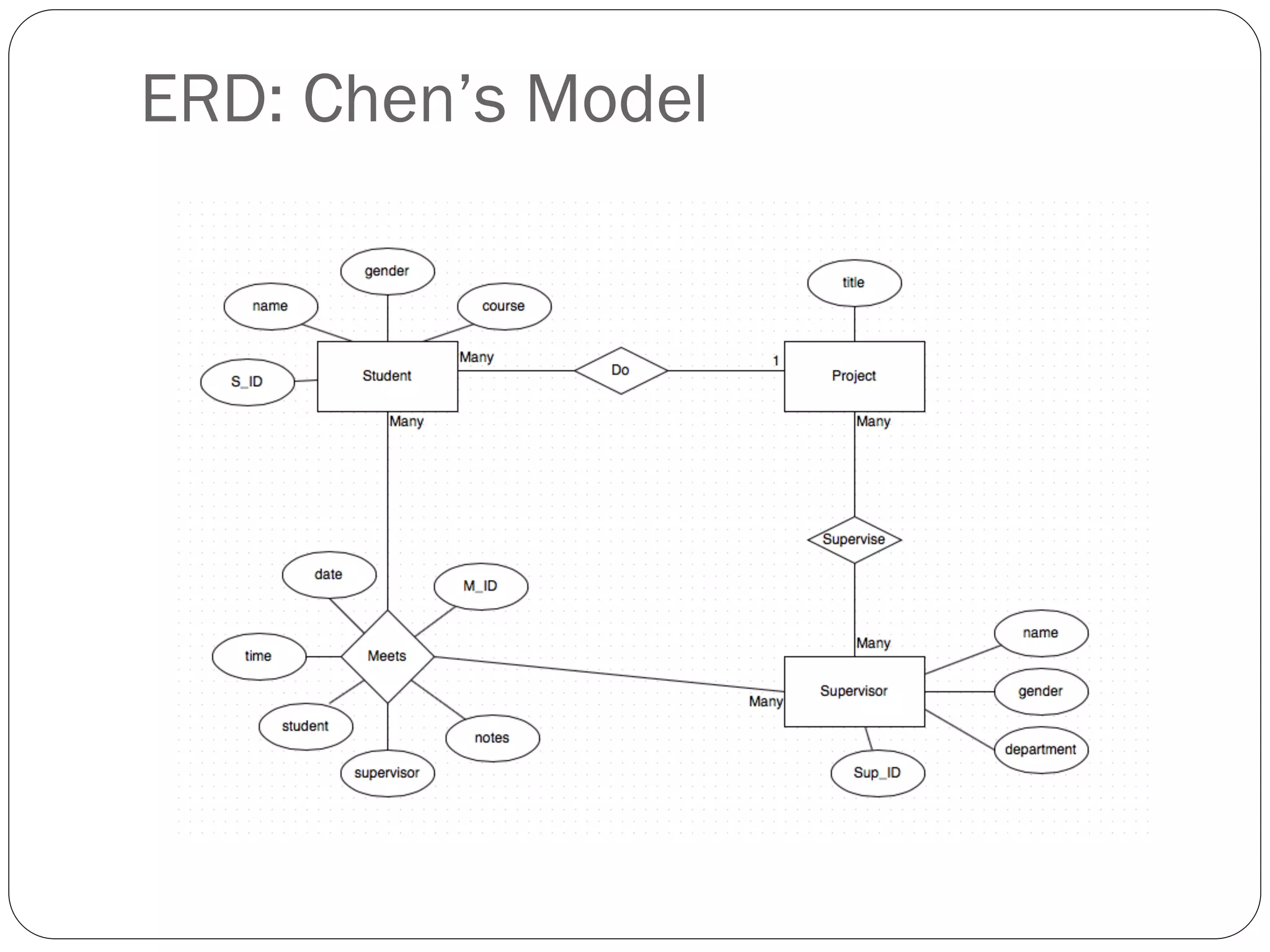
—  Use Chen’s Model to draw ERD
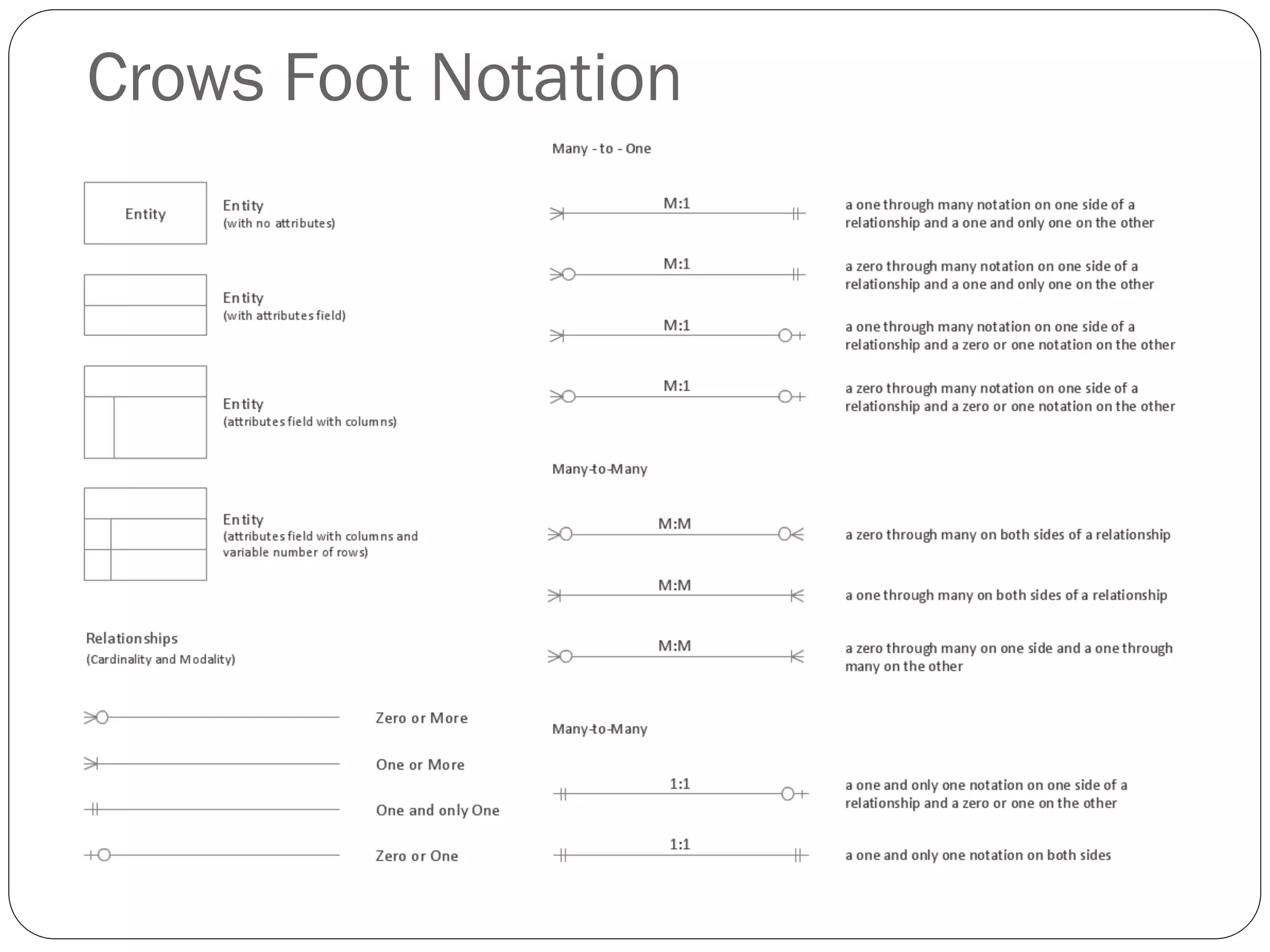
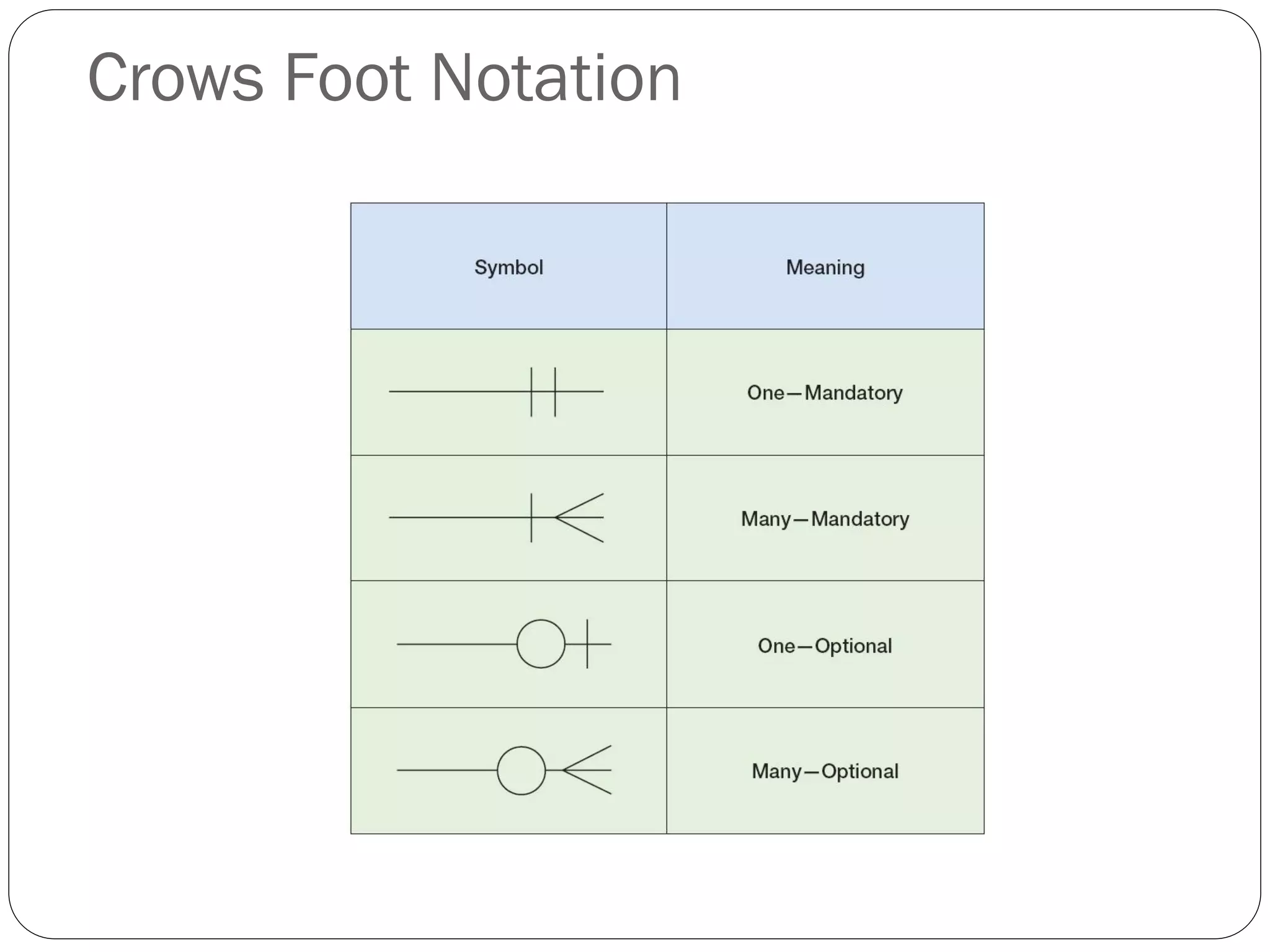
—  Use Crow’s Foot notations to draw ERD.
—  Design E-R model based on a given scenario.
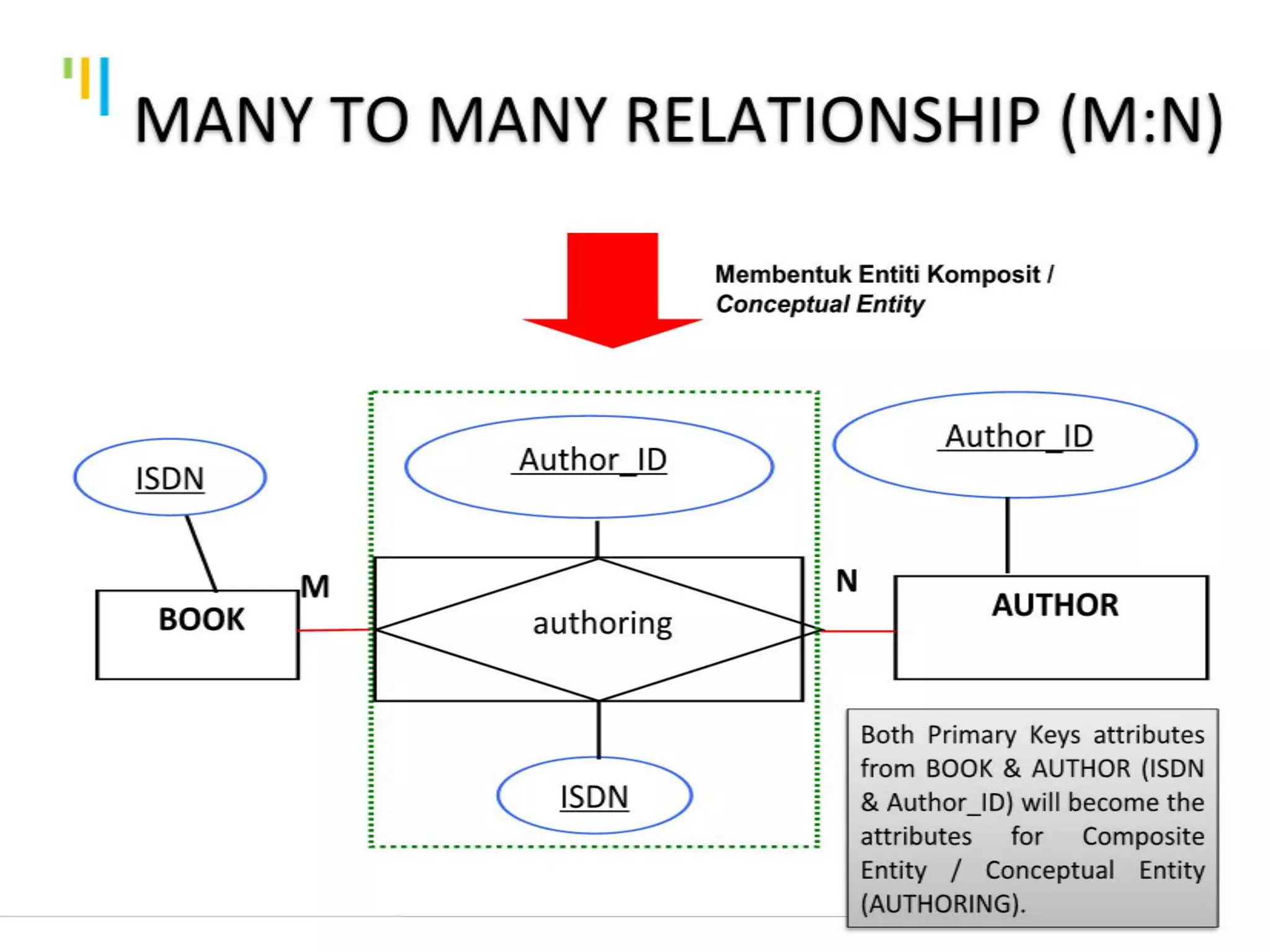
—  Describe the basic conversion rules to convert ERD into relational
tables:
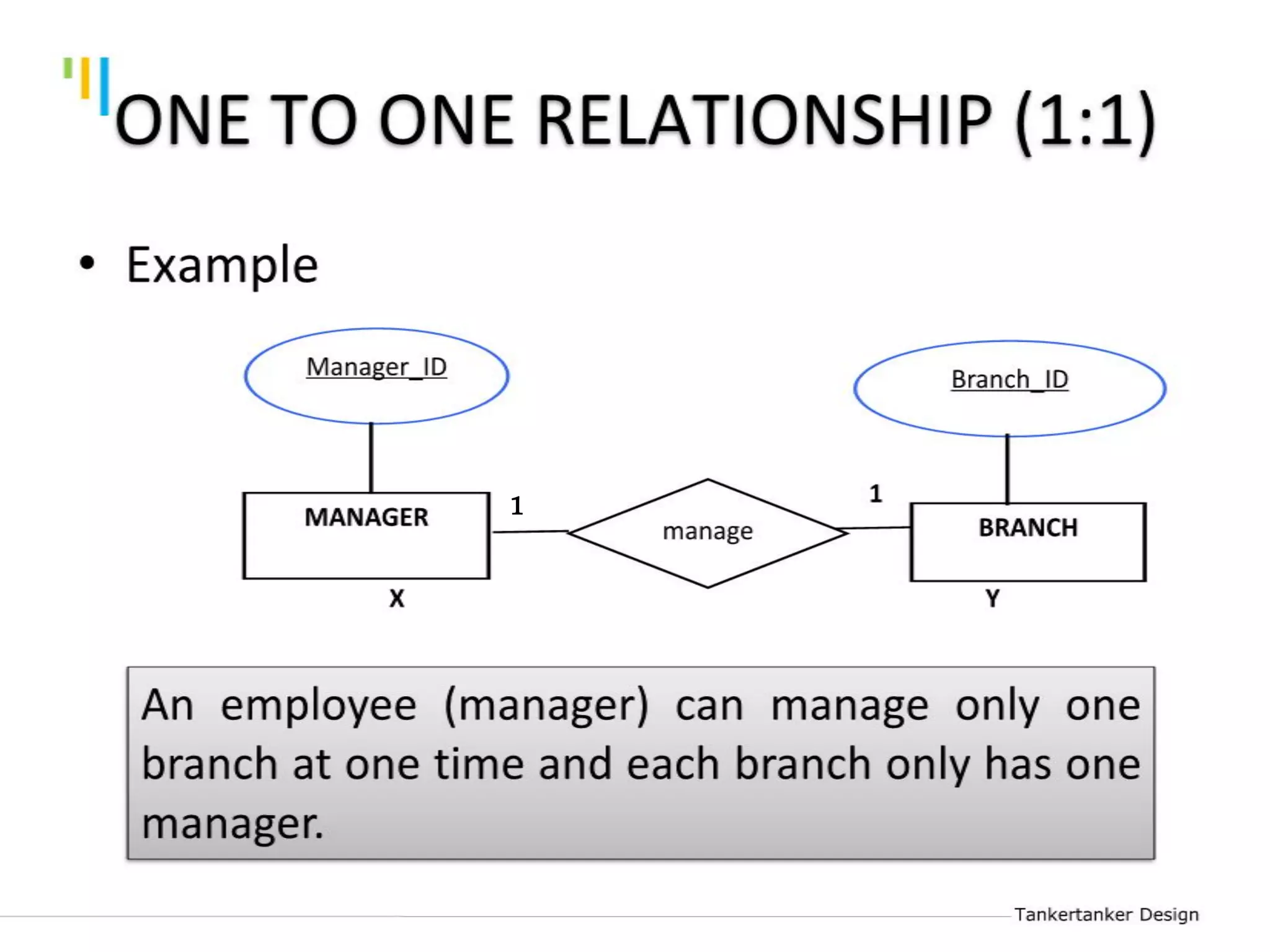
a. One to one relationship
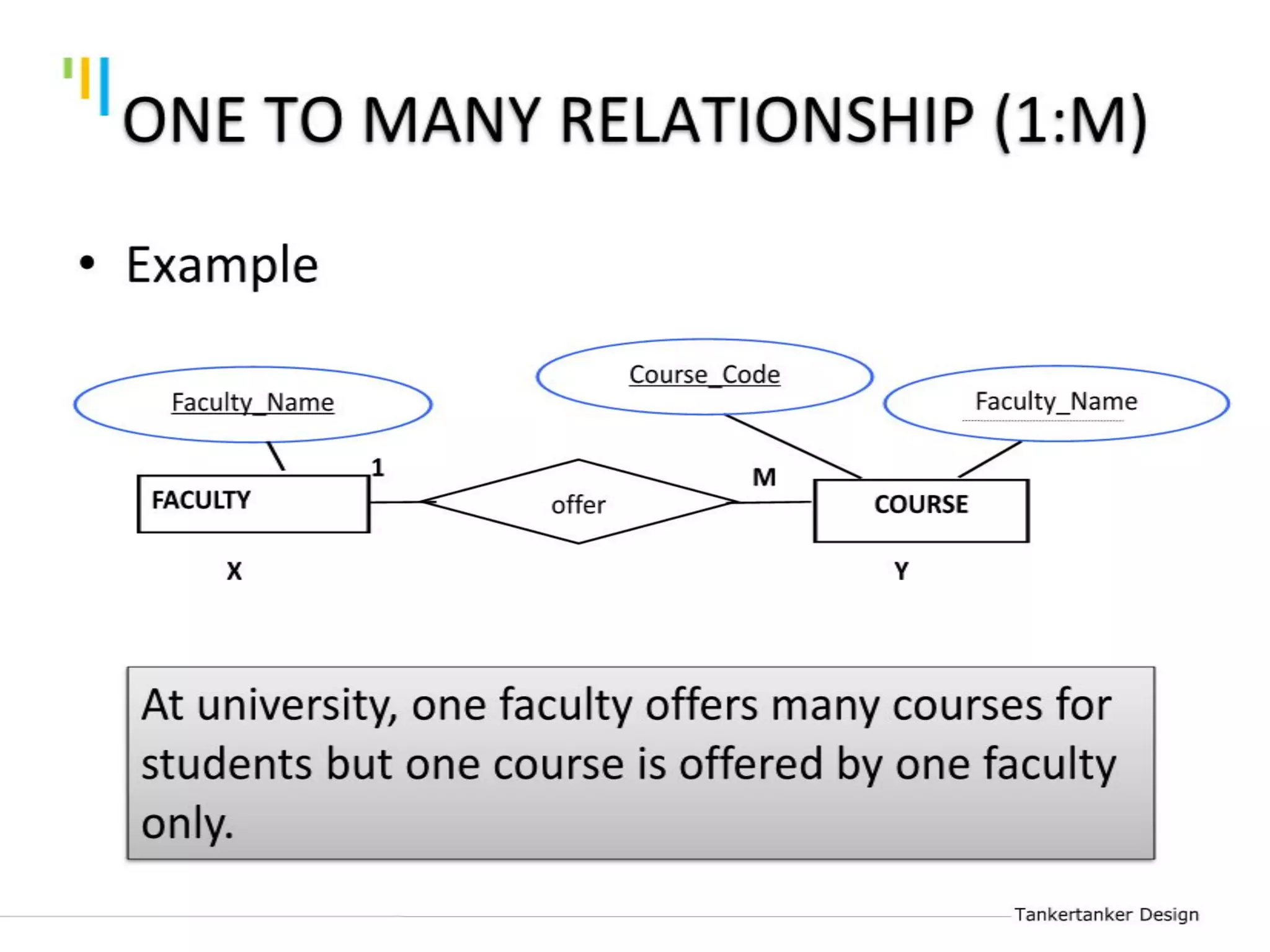
b. One to many relationship
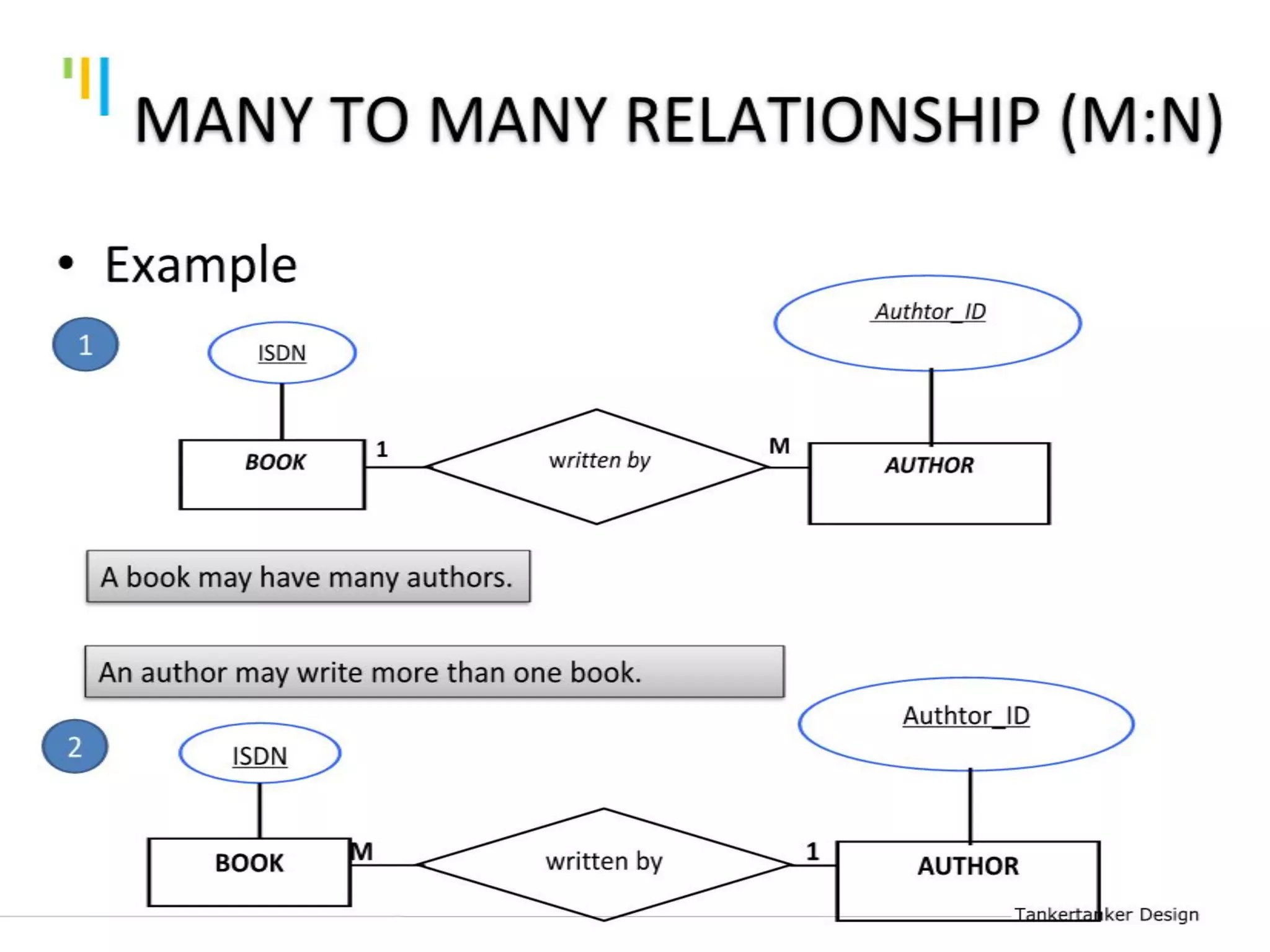
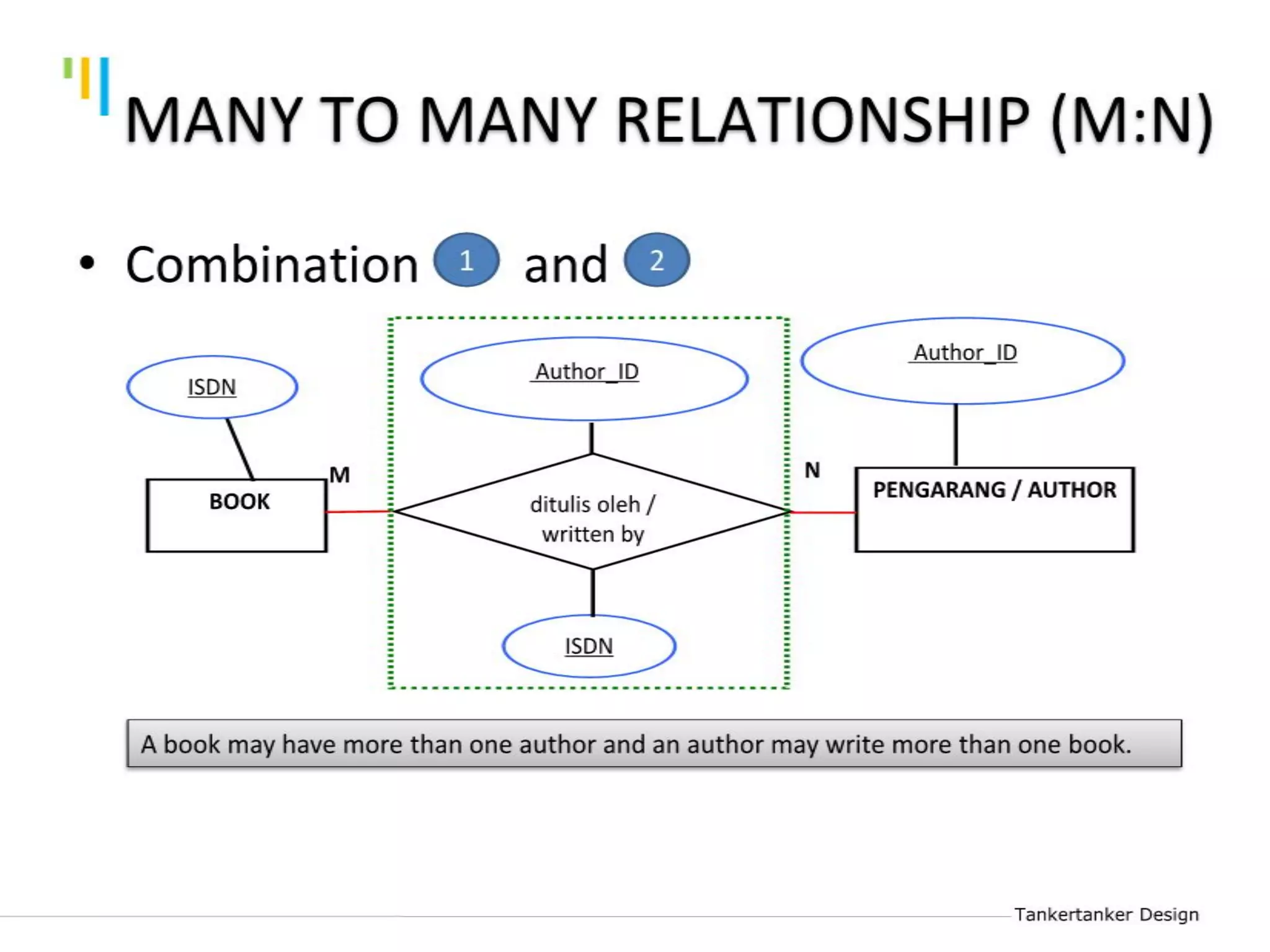
c. Many to many relationship
—  Apply the conversion rules to convert a given ERD into relational
tables
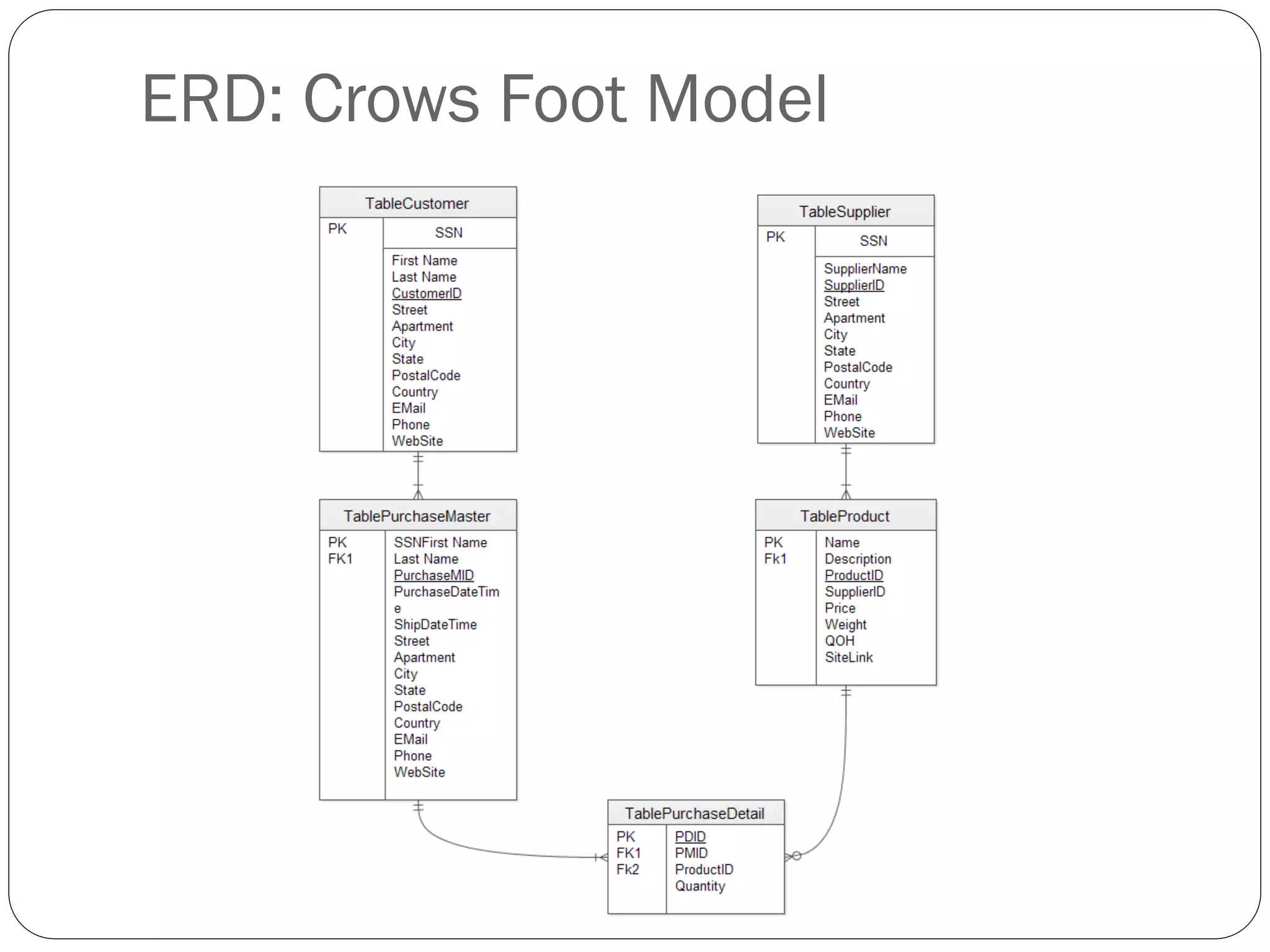
ERD: Crows Foot Model
Crows Foot Notation
Crows Foot Notation
ERD: Chen’s Model
1
Exercise
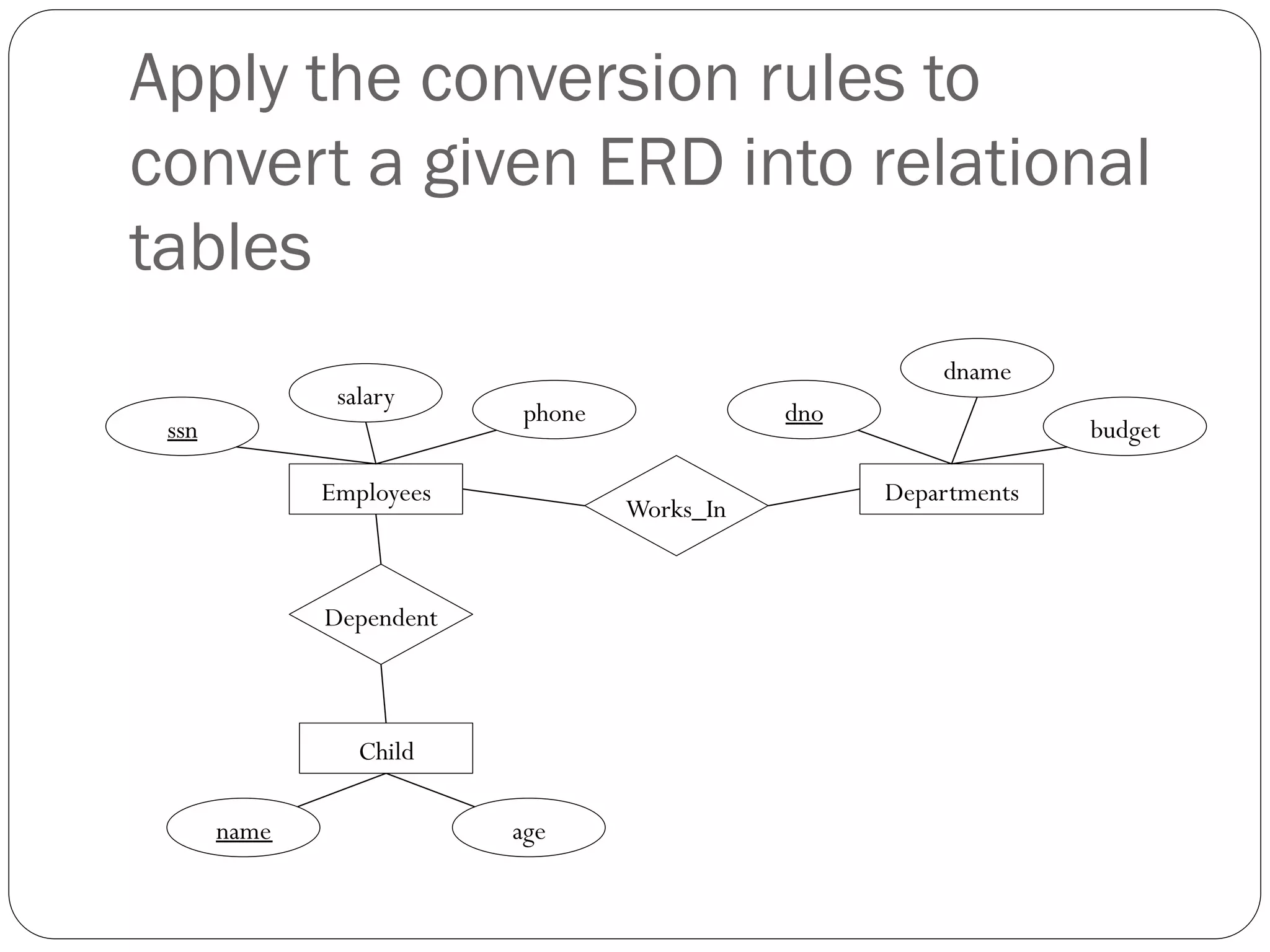
A company database needs to store information about
employees (identified by ssn, with salary and phone as
attributes), departments (identified by dno, with dname
and budget as attributes), and children of employees (with
name and age as attributes).
Analyze the problem/case
—  A company database needs to store information about
employees (identified by ssn, with salary and phone as
attributes), departments (identified by dno, with dname and
budget as attributes), and children of employees (with name
and age as attributes).
—  Employees work in departments; a child must be identified
uniquely by name when the parent (who is an employee;
assume that only one parent works for the company) is
known.
—  Draw an ER diagram that captures this information.
Apply the conversion rules to
convert a given ERD into relational
tables
Departments
Child
Employees
name age
phone
ssn
salary
Dependent
budget
dno
dname
Works_In

Chapter 3 Entity Relationship Model

  • 1.
  • 2.
    Course Learning Outcome — CLO1:Apply the fundamentals concepts of database management and relational data model to create a database based on an organization’s requirements. (C3, PLO1) —  CLO2: Develop a database using a concurrency control and data recovery technique based on Database Management System (DBMS). (P3, C3, PLO2, PLO1)
  • 3.
    Learning Outcome —  ApplyEntity Relationship Diagrams (ERD) in database development —  Define the three basic elements of ERD: entity types, relationship, attributes and keys. —  Use Chen’s Model to draw ERD —  Use Crow’s Foot notations to draw ERD. —  Design E-R model based on a given scenario. —  Describe the basic conversion rules to convert ERD into relational tables: a. One to one relationship b. One to many relationship c. Many to many relationship —  Apply the conversion rules to convert a given ERD into relational tables
  • 8.
  • 9.
  • 10.
  • 11.
  • 22.
  • 36.
    Exercise A company databaseneeds to store information about employees (identified by ssn, with salary and phone as attributes), departments (identified by dno, with dname and budget as attributes), and children of employees (with name and age as attributes).
  • 37.
    Analyze the problem/case — A company database needs to store information about employees (identified by ssn, with salary and phone as attributes), departments (identified by dno, with dname and budget as attributes), and children of employees (with name and age as attributes). —  Employees work in departments; a child must be identified uniquely by name when the parent (who is an employee; assume that only one parent works for the company) is known. —  Draw an ER diagram that captures this information.
  • 39.
    Apply the conversionrules to convert a given ERD into relational tables Departments Child Employees name age phone ssn salary Dependent budget dno dname Works_In