Chapter One
Wireless & Mobile
Computing
Lecturer: Eng Rage Abdulkadir Hussein
Introduction
to Wireless and Mobile Computing
Wireless and mobile computing have revolutionized the way people communicate, work, and
interact with technology. With the advent of wireless communication technologies, users can access
data and applications from virtually anywhere, eliminating the need for physical connections.
Wireless & Mobile Computing is a rapidly evolving field that enables communication, data
access, and computing without being tied to physical connections. It plays a crucial role in
modern technology, powering everything from smartphones and laptops to IoT devices and
smart cities.
1. Wireless Computing
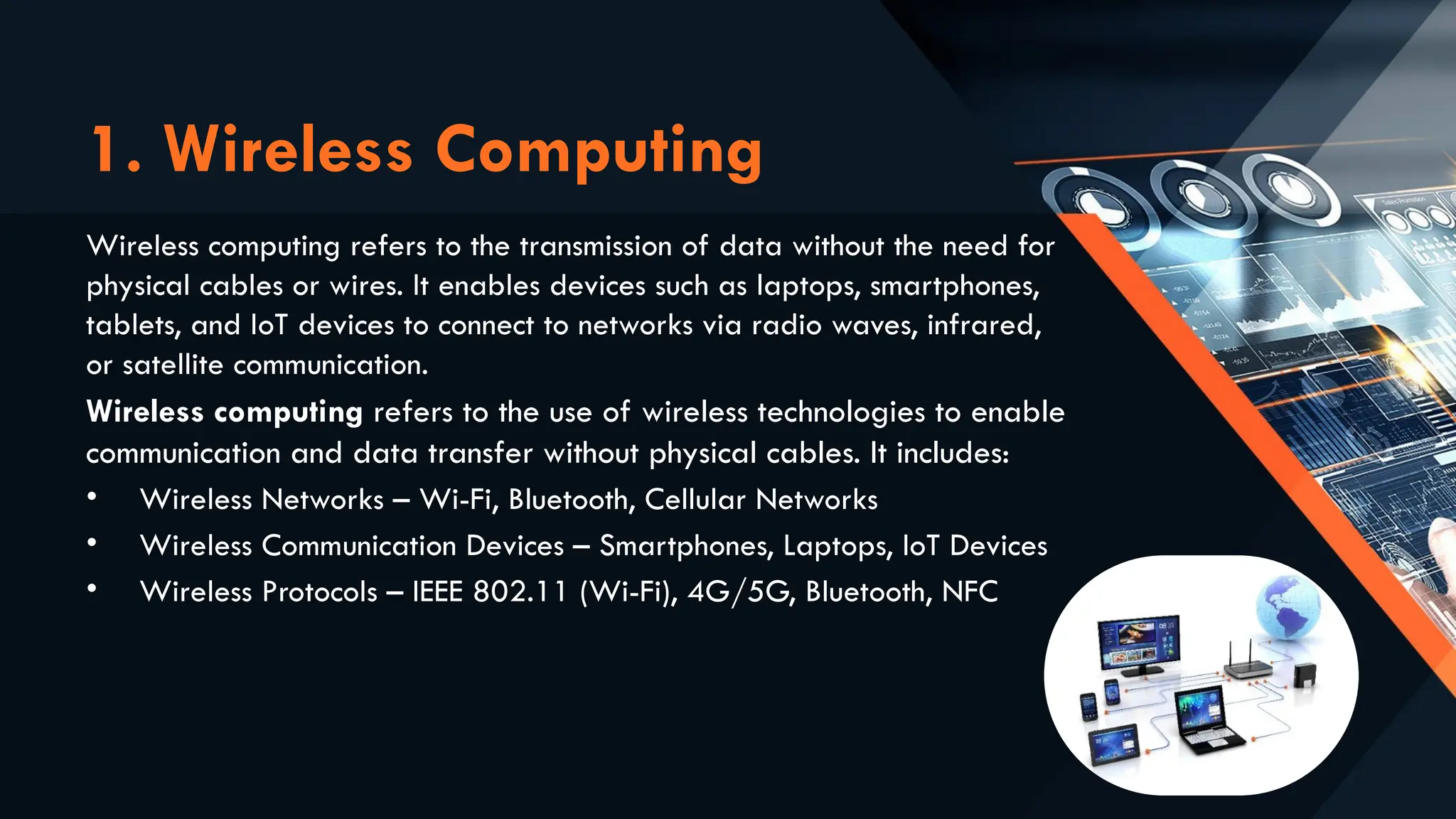
Wireless computing refers to the transmission of data without the need for
physical cables or wires. It enables devices such as laptops, smartphones,
tablets, and IoT devices to connect to networks via radio waves, infrared,
or satellite communication.
Wireless computing refers to the use of wireless technologies to enable
communication and data transfer without physical cables. It includes:
• Wireless Networks – Wi-Fi, Bluetooth, Cellular Networks
• Wireless Communication Devices – Smartphones, Laptops, IoT Devices
• Wireless Protocols – IEEE 802.11 (Wi-Fi), 4G/5G, Bluetooth, NFC
Key Features
of Wireless Computing:
Wireless Computing:
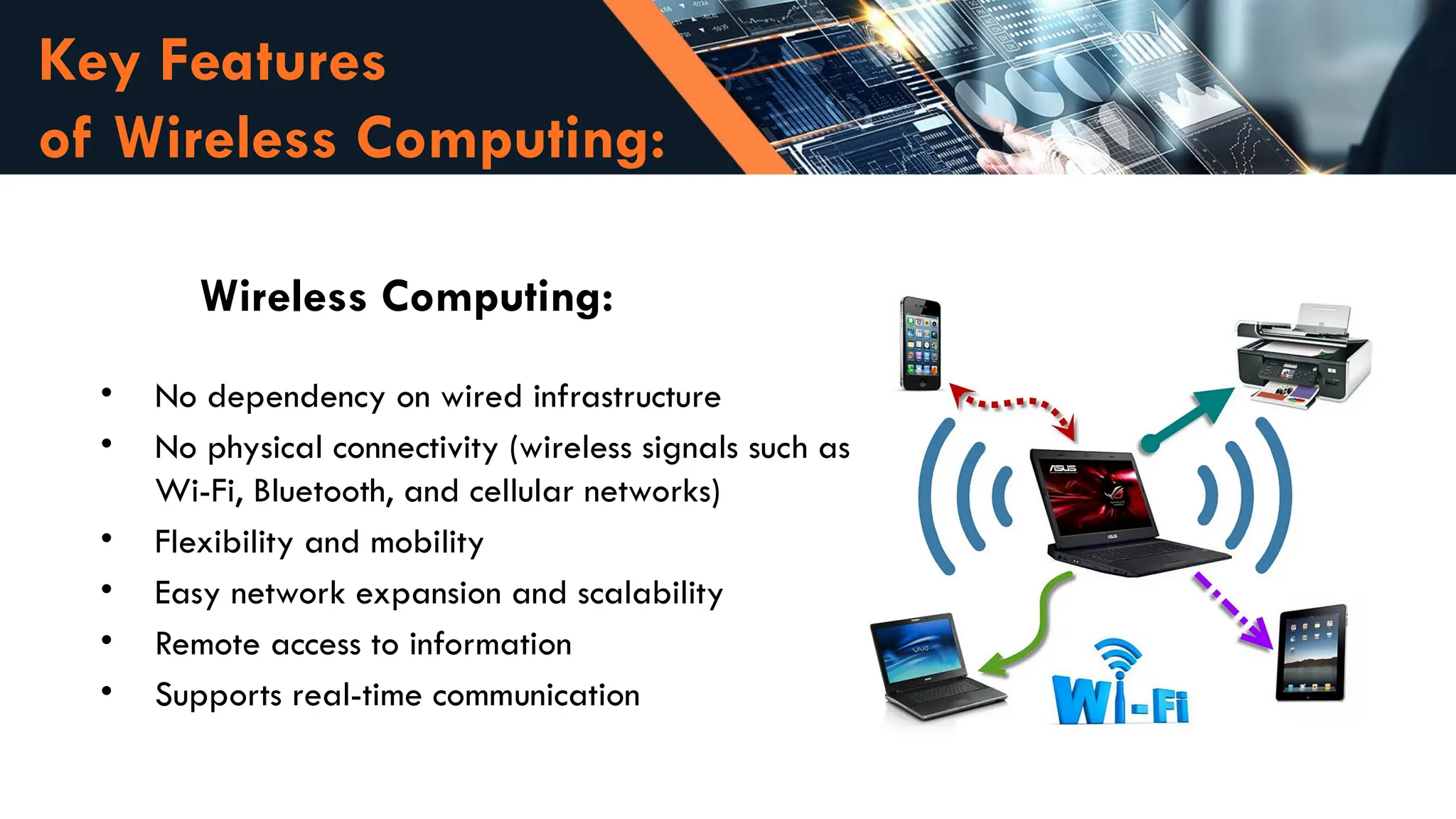
• No dependency on wired infrastructure
• No physical connectivity (wireless signals such as
Wi-Fi, Bluetooth, and cellular networks)
• Flexibility and mobility
• Easy network expansion and scalability
• Remote access to information
• Supports real-time communication
Types of Wireless
Communication Technologies:
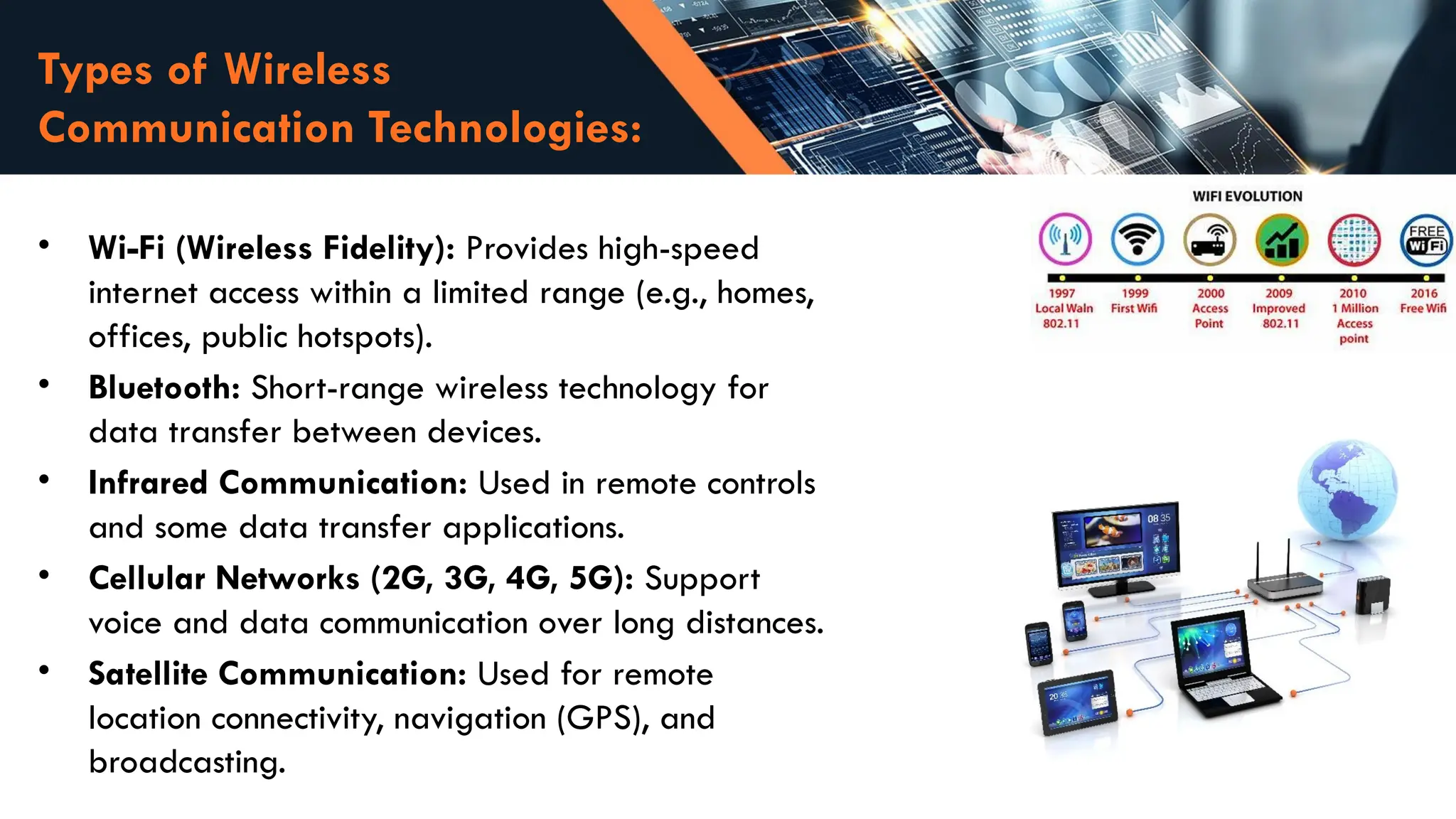
• Wi-Fi (Wireless Fidelity): Provides high-speed
internet access within a limited range (e.g., homes,
offices, public hotspots).
• Bluetooth: Short-range wireless technology for
data transfer between devices.
• Infrared Communication: Used in remote controls
and some data transfer applications.
• Cellular Networks (2G, 3G, 4G, 5G): Support
voice and data communication over long distances.
• Satellite Communication: Used for remote
location connectivity, navigation (GPS), and
broadcasting.
2. Mobile Computing
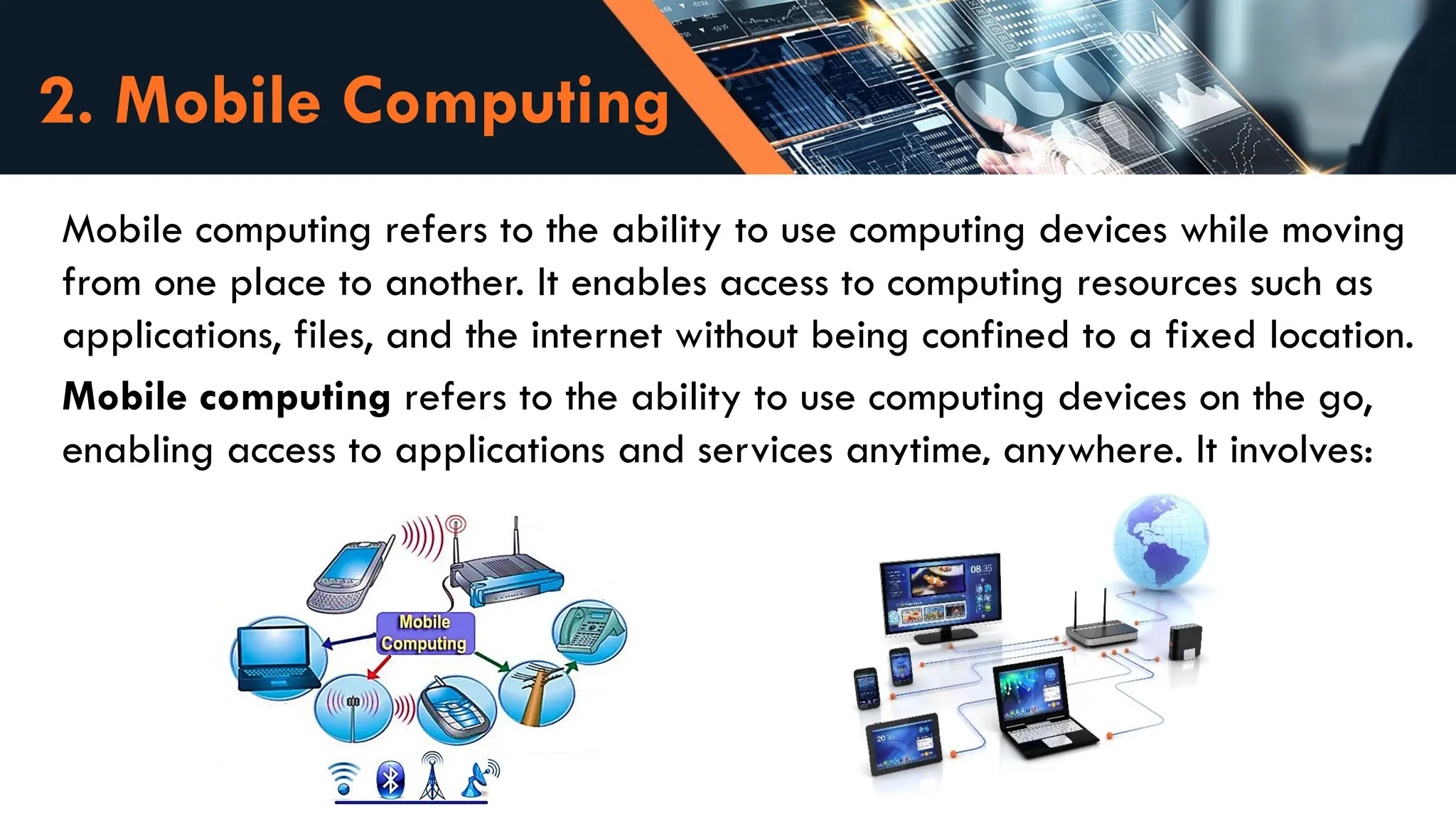
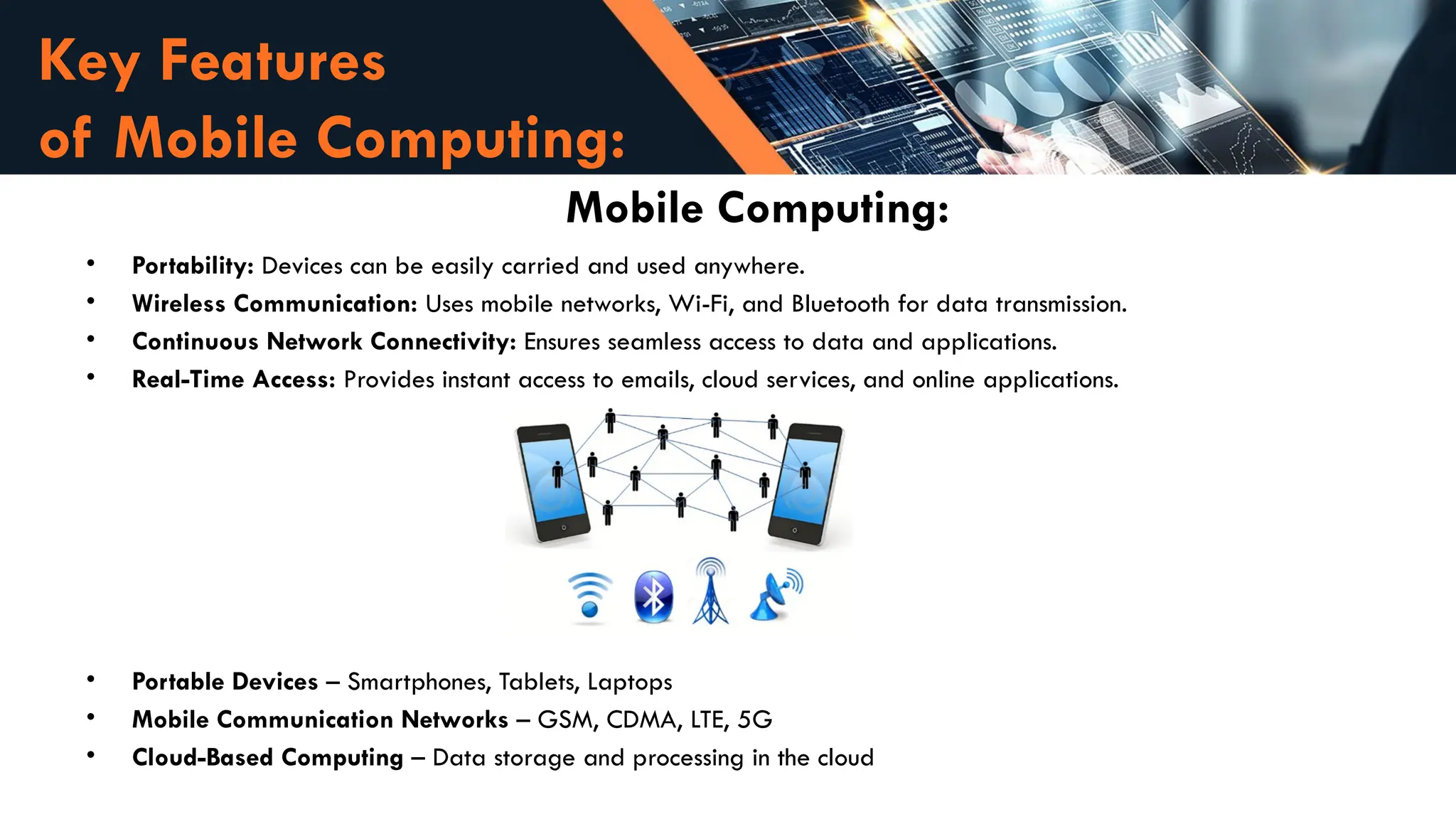
Mobile computing refers to the ability to use computing devices while moving
from one place to another. It enables access to computing resources such as
applications, files, and the internet without being confined to a fixed location.
Mobile computing refers to the ability to use computing devices on the go,
enabling access to applications and services anytime, anywhere. It involves:
Key Features
of Mobile Computing:
Mobile Computing:
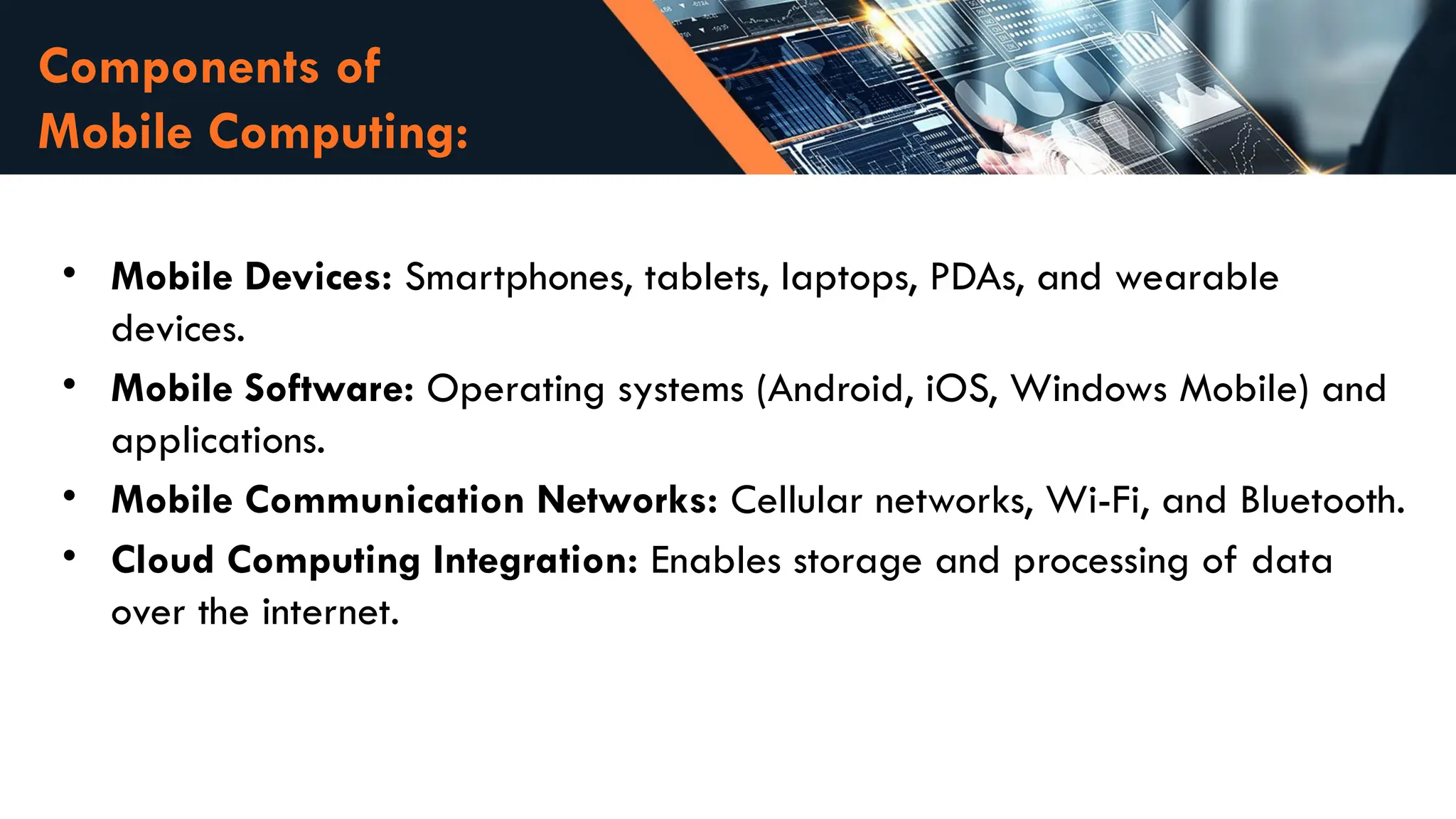
• Portability: Devices can be easily carried and used anywhere.
• Wireless Communication: Uses mobile networks, Wi-Fi, and Bluetooth for data transmission.
• Continuous Network Connectivity: Ensures seamless access to data and applications.
• Real-Time Access: Provides instant access to emails, cloud services, and online applications.
• Portable Devices – Smartphones, Tablets, Laptops
• Mobile Communication Networks – GSM, CDMA, LTE, 5G
• Cloud-Based Computing – Data storage and processing in the cloud
Components of
Mobile Computing:
• Mobile Devices: Smartphones, tablets, laptops, PDAs, and wearable
devices.
• Mobile Software: Operating systems (Android, iOS, Windows Mobile) and
applications.
• Mobile Communication Networks: Cellular networks, Wi-Fi, and Bluetooth.
• Cloud Computing Integration: Enables storage and processing of data
over the internet.
3. Applications of
Wireless and Mobile Computing
• Telecommunication: Mobile phones, VoIP, and instant messaging.
• Healthcare: Remote patient monitoring, telemedicine, and medical data access.
• Business & Commerce: Mobile banking, online shopping, and digital
payments.
• Education: E-learning, online collaboration, and virtual classrooms.
• Transportation & Navigation: GPS tracking, ride-sharing apps, and fleet
management.
• Smart Homes & IoT: Home automation, smart appliances, and security systems.
4. Advantages of Wireless
& Mobile Computing
✔️Increased mobility and flexibility
Improved productivity and efficiency
✔️
Reduced dependency on physical infrastructure
✔️
Cost-effective for businesses and individuals
✔️
Better access to cloud services and data
✔️
• First Generation (1G) – 1980s
Analog voice communication
Limited coverage & poor security
• Second Generation (2G) – 1990s
Digital voice communication (GSM, CDMA)
SMS & basic data services
• Third Generation (3G) – Early 2000s
Faster data transfer (WCDMA, HSPA)
Internet browsing & multimedia support
• Fourth Generation (4G) – 2010s
High-speed broadband (LTE)
HD streaming & VoIP services
• Fifth Generation (5G) – 2020s & Beyond
Ultra-fast speeds & low latency
IoT, AI, and smart city applications
Evolution of Wireless
& Mobile Computing
5. Challenges in Wireless
& Mobile Computing
⚠️Security threats and data breaches
Battery life and power management
⚠️
Network reliability and connectivity issues
⚠️
Bandwidth limitations and congestion
⚠️
Compatibility across devices and platforms
⚠️
Conclusion
Wireless and mobile computing have transformed modern
communication, making it easier to access information and
services from anywhere. With advancements in 5G, IoT, and
cloud computing, the future of wireless and mobile
computing is set to become even more efficient, secure, and
widely adopted across industries.
Chapter 1 Wireless.pptx lesson for Technology

Chapter 1 Wireless.pptx lesson for Technology

  • 1.
    Chapter One Wireless &Mobile Computing Lecturer: Eng Rage Abdulkadir Hussein
  • 2.
    Introduction to Wireless andMobile Computing Wireless and mobile computing have revolutionized the way people communicate, work, and interact with technology. With the advent of wireless communication technologies, users can access data and applications from virtually anywhere, eliminating the need for physical connections. Wireless & Mobile Computing is a rapidly evolving field that enables communication, data access, and computing without being tied to physical connections. It plays a crucial role in modern technology, powering everything from smartphones and laptops to IoT devices and smart cities.
  • 3.
    1. Wireless Computing Wirelesscomputing refers to the transmission of data without the need for physical cables or wires. It enables devices such as laptops, smartphones, tablets, and IoT devices to connect to networks via radio waves, infrared, or satellite communication. Wireless computing refers to the use of wireless technologies to enable communication and data transfer without physical cables. It includes: • Wireless Networks – Wi-Fi, Bluetooth, Cellular Networks • Wireless Communication Devices – Smartphones, Laptops, IoT Devices • Wireless Protocols – IEEE 802.11 (Wi-Fi), 4G/5G, Bluetooth, NFC
  • 4.
    Key Features of WirelessComputing: Wireless Computing: • No dependency on wired infrastructure • No physical connectivity (wireless signals such as Wi-Fi, Bluetooth, and cellular networks) • Flexibility and mobility • Easy network expansion and scalability • Remote access to information • Supports real-time communication
  • 5.
    Types of Wireless CommunicationTechnologies: • Wi-Fi (Wireless Fidelity): Provides high-speed internet access within a limited range (e.g., homes, offices, public hotspots). • Bluetooth: Short-range wireless technology for data transfer between devices. • Infrared Communication: Used in remote controls and some data transfer applications. • Cellular Networks (2G, 3G, 4G, 5G): Support voice and data communication over long distances. • Satellite Communication: Used for remote location connectivity, navigation (GPS), and broadcasting.
  • 6.
    2. Mobile Computing Mobilecomputing refers to the ability to use computing devices while moving from one place to another. It enables access to computing resources such as applications, files, and the internet without being confined to a fixed location. Mobile computing refers to the ability to use computing devices on the go, enabling access to applications and services anytime, anywhere. It involves:
  • 7.
    Key Features of MobileComputing: Mobile Computing: • Portability: Devices can be easily carried and used anywhere. • Wireless Communication: Uses mobile networks, Wi-Fi, and Bluetooth for data transmission. • Continuous Network Connectivity: Ensures seamless access to data and applications. • Real-Time Access: Provides instant access to emails, cloud services, and online applications. • Portable Devices – Smartphones, Tablets, Laptops • Mobile Communication Networks – GSM, CDMA, LTE, 5G • Cloud-Based Computing – Data storage and processing in the cloud
  • 8.
    Components of Mobile Computing: •Mobile Devices: Smartphones, tablets, laptops, PDAs, and wearable devices. • Mobile Software: Operating systems (Android, iOS, Windows Mobile) and applications. • Mobile Communication Networks: Cellular networks, Wi-Fi, and Bluetooth. • Cloud Computing Integration: Enables storage and processing of data over the internet.
  • 9.
    3. Applications of Wirelessand Mobile Computing • Telecommunication: Mobile phones, VoIP, and instant messaging. • Healthcare: Remote patient monitoring, telemedicine, and medical data access. • Business & Commerce: Mobile banking, online shopping, and digital payments. • Education: E-learning, online collaboration, and virtual classrooms. • Transportation & Navigation: GPS tracking, ride-sharing apps, and fleet management. • Smart Homes & IoT: Home automation, smart appliances, and security systems.
  • 10.
    4. Advantages ofWireless & Mobile Computing ✔️Increased mobility and flexibility Improved productivity and efficiency ✔️ Reduced dependency on physical infrastructure ✔️ Cost-effective for businesses and individuals ✔️ Better access to cloud services and data ✔️
  • 11.
    • First Generation(1G) – 1980s Analog voice communication Limited coverage & poor security • Second Generation (2G) – 1990s Digital voice communication (GSM, CDMA) SMS & basic data services • Third Generation (3G) – Early 2000s Faster data transfer (WCDMA, HSPA) Internet browsing & multimedia support • Fourth Generation (4G) – 2010s High-speed broadband (LTE) HD streaming & VoIP services • Fifth Generation (5G) – 2020s & Beyond Ultra-fast speeds & low latency IoT, AI, and smart city applications Evolution of Wireless & Mobile Computing
  • 12.
    5. Challenges inWireless & Mobile Computing ⚠️Security threats and data breaches Battery life and power management ⚠️ Network reliability and connectivity issues ⚠️ Bandwidth limitations and congestion ⚠️ Compatibility across devices and platforms ⚠️
  • 13.
    Conclusion Wireless and mobilecomputing have transformed modern communication, making it easier to access information and services from anywhere. With advancements in 5G, IoT, and cloud computing, the future of wireless and mobile computing is set to become even more efficient, secure, and widely adopted across industries.