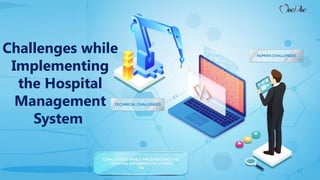
Challenges while
Implementing
the Hospital
Management
System
Hospital Management System is being used for decades. Most of the
hospitals in India make use of HMS but they face certain challenges in
implementing it. Among them, technical and human challenges are
considered to be the complicated factors while implementing HMS.
How can you face the challenges while implementing HMS?
The HMS system helps to manage every information about the patients like
their personal data, comprehensive medical data, and previous medical
histories along with their diagnoses, treatments, investigations, and other
medical decisions. Apart from that, HMS help in improving safety, and quality
as well as one of the most affordable options available in the healthcare
industry.
Despite their benefits, the healthcare industry faces many challenges.
Implementation of HMS still fails in some hospitals due to barriers.
Few Challenging problems that you face while implementing HMS
Human Challenges
While considering human factors, including
• Awareness of HMS's advantages & importance.
• In general, Experience, and knowledge of using computer applications.
• Impressions and Beliefs regarding HMS and making use of them efficiently.
The researchers in a study have identified three main human challenges that
are a barrier to adopting the HMS in healthcare industries namely.
• Shortage of professional healthcare faculty who have in-depth knowledge of
HMS and other similar technologies.
• Poor acceptance of HMS Software.
• Shortage of health informatics professionals who are well capable of
establishing and implementing the techniques.
Another few significant problems for unsuccessful HMS
implementation include.
• Healthcare specialists nature,
• the lack of time allowed for training and learning on making
use of the HMS,
• the lack of healthcare professional support, motivation, and
more.
Many studies illustrate that HMS needs more effort, and
time, and adds more work. There are high chances of HMS
to get slow down and causing a decrease in productivity.
Technical Challenges:
Other technical challenges that fail the implementation of
HMS in the healthcare industry includes Networks and
computer having different maintenance problems, lack of no
standards for Data entry and data retrieval, and difficulties in
training users technically to use HMS.
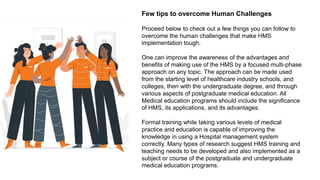
Few tips to overcome Human Challenges
Proceed below to check out a few things you can follow to
overcome the human challenges that make HMS
implementation tough.
One can improve the awareness of the advantages and
benefits of making use of the HMS by a focused multi-phase
approach on any topic. The approach can be made used
from the starting level of healthcare industry schools, and
colleges, then with the undergraduate degree, and through
various aspects of postgraduate medical education. All
Medical education programs should include the significance
of HMS, its applications, and its advantages.
Formal training while taking various levels of medical
practice and education is capable of improving the
knowledge in using a Hospital management system
correctly. Many types of research suggest HMS training and
teaching needs to be developed and also implemented as a
subject or course of the postgraduate and undergraduate
medical education programs.
Every health information management should include subjects of HMS short
courses for medical education programs and healthcare professionals. These
programs should be initiated by the health ministry and its formal channels for every
healthcare specialist at any healthcare organization and hospital. Apart from that,
developing and enhancing self-taught computer science courses in nursing
education, medical schools, and postgraduate training is also essential.
It's a good idea to develop both postgraduate and undergraduate specialized
programs in Health Information Management, Health Informatics, and Health
Information Technology, which increases the number of health informatics specialists
and technicians.
Overcoming the negative impressions of HMS's new and experienced staff can be
neglected through the development of HMS training programs and in-house hospital
orientation programs.
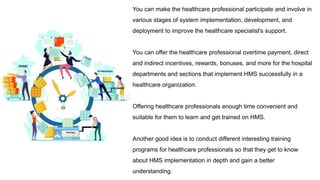
You can make the healthcare professional participate and involve in
various stages of system implementation, development, and
deployment to improve the healthcare specialist's support.
You can offer the healthcare professional overtime payment, direct
and indirect incentives, rewards, bonuses, and more for the hospital
departments and sections that implement HMS successfully in a
healthcare organization.
Offering healthcare professionals enough time convenient and
suitable for them to learn and get trained on HMS.
Another good idea is to conduct different interesting training
programs for healthcare professionals so that they get to know
about HMS implementation in depth and gain a better
understanding.
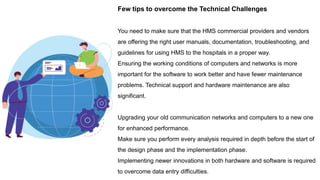
Few tips to overcome the Technical Challenges
You need to make sure that the HMS commercial providers and vendors
are offering the right user manuals, documentation, troubleshooting, and
guidelines for using HMS to the hospitals in a proper way.
Ensuring the working conditions of computers and networks is more
important for the software to work better and have fewer maintenance
problems. Technical support and hardware maintenance are also
significant.
Upgrading your old communication networks and computers to a new one
for enhanced performance.
Make sure you perform every analysis required in depth before the start of
the design phase and the implementation phase.
Implementing newer innovations in both hardware and software is required
to overcome data entry difficulties.
While considering the software innovations, the system needs to be
designed to support structured data entry instead of unstructured one. In
the case of hardware innovations, implementing hand-held devices, touch
screens, and tablets pcs helps in minimizing the gap between the
recording and data acquisition process and this leads to easier
accessibility.
Elimination of health information technology and management staff
overload can be through outsourcing a few electronic processing tasks
namely medical transcription of dictating the voice files.
Make sure about the system interface design, and check whether they are
understandable and user-friendly.
Data standards usage is one of the crucial steps for source accuracy,
quality, and reliability as well as to validate system data.
Make sure you increase the computer terminal numbers at the point of
care.
Hope the above tips will help you to get rid of all challenges while
implementing your Hospital management system. Any queries or other
information regarding the topics are welcome in the comments section.

Challenges while implementing the Hospital Management System.pptx

  • 1.
  • 2.
    Hospital Management Systemis being used for decades. Most of the hospitals in India make use of HMS but they face certain challenges in implementing it. Among them, technical and human challenges are considered to be the complicated factors while implementing HMS. How can you face the challenges while implementing HMS? The HMS system helps to manage every information about the patients like their personal data, comprehensive medical data, and previous medical histories along with their diagnoses, treatments, investigations, and other medical decisions. Apart from that, HMS help in improving safety, and quality as well as one of the most affordable options available in the healthcare industry. Despite their benefits, the healthcare industry faces many challenges. Implementation of HMS still fails in some hospitals due to barriers.
  • 3.
    Few Challenging problemsthat you face while implementing HMS Human Challenges While considering human factors, including • Awareness of HMS's advantages & importance. • In general, Experience, and knowledge of using computer applications. • Impressions and Beliefs regarding HMS and making use of them efficiently. The researchers in a study have identified three main human challenges that are a barrier to adopting the HMS in healthcare industries namely. • Shortage of professional healthcare faculty who have in-depth knowledge of HMS and other similar technologies. • Poor acceptance of HMS Software. • Shortage of health informatics professionals who are well capable of establishing and implementing the techniques.
  • 4.
    Another few significantproblems for unsuccessful HMS implementation include. • Healthcare specialists nature, • the lack of time allowed for training and learning on making use of the HMS, • the lack of healthcare professional support, motivation, and more. Many studies illustrate that HMS needs more effort, and time, and adds more work. There are high chances of HMS to get slow down and causing a decrease in productivity. Technical Challenges: Other technical challenges that fail the implementation of HMS in the healthcare industry includes Networks and computer having different maintenance problems, lack of no standards for Data entry and data retrieval, and difficulties in training users technically to use HMS.
  • 5.
    Few tips toovercome Human Challenges Proceed below to check out a few things you can follow to overcome the human challenges that make HMS implementation tough. One can improve the awareness of the advantages and benefits of making use of the HMS by a focused multi-phase approach on any topic. The approach can be made used from the starting level of healthcare industry schools, and colleges, then with the undergraduate degree, and through various aspects of postgraduate medical education. All Medical education programs should include the significance of HMS, its applications, and its advantages. Formal training while taking various levels of medical practice and education is capable of improving the knowledge in using a Hospital management system correctly. Many types of research suggest HMS training and teaching needs to be developed and also implemented as a subject or course of the postgraduate and undergraduate medical education programs.
  • 6.
    Every health informationmanagement should include subjects of HMS short courses for medical education programs and healthcare professionals. These programs should be initiated by the health ministry and its formal channels for every healthcare specialist at any healthcare organization and hospital. Apart from that, developing and enhancing self-taught computer science courses in nursing education, medical schools, and postgraduate training is also essential. It's a good idea to develop both postgraduate and undergraduate specialized programs in Health Information Management, Health Informatics, and Health Information Technology, which increases the number of health informatics specialists and technicians. Overcoming the negative impressions of HMS's new and experienced staff can be neglected through the development of HMS training programs and in-house hospital orientation programs.
  • 7.
    You can makethe healthcare professional participate and involve in various stages of system implementation, development, and deployment to improve the healthcare specialist's support. You can offer the healthcare professional overtime payment, direct and indirect incentives, rewards, bonuses, and more for the hospital departments and sections that implement HMS successfully in a healthcare organization. Offering healthcare professionals enough time convenient and suitable for them to learn and get trained on HMS. Another good idea is to conduct different interesting training programs for healthcare professionals so that they get to know about HMS implementation in depth and gain a better understanding.
  • 8.
    Few tips toovercome the Technical Challenges You need to make sure that the HMS commercial providers and vendors are offering the right user manuals, documentation, troubleshooting, and guidelines for using HMS to the hospitals in a proper way. Ensuring the working conditions of computers and networks is more important for the software to work better and have fewer maintenance problems. Technical support and hardware maintenance are also significant. Upgrading your old communication networks and computers to a new one for enhanced performance. Make sure you perform every analysis required in depth before the start of the design phase and the implementation phase. Implementing newer innovations in both hardware and software is required to overcome data entry difficulties.
  • 9.
    While considering thesoftware innovations, the system needs to be designed to support structured data entry instead of unstructured one. In the case of hardware innovations, implementing hand-held devices, touch screens, and tablets pcs helps in minimizing the gap between the recording and data acquisition process and this leads to easier accessibility. Elimination of health information technology and management staff overload can be through outsourcing a few electronic processing tasks namely medical transcription of dictating the voice files. Make sure about the system interface design, and check whether they are understandable and user-friendly. Data standards usage is one of the crucial steps for source accuracy, quality, and reliability as well as to validate system data. Make sure you increase the computer terminal numbers at the point of care. Hope the above tips will help you to get rid of all challenges while implementing your Hospital management system. Any queries or other information regarding the topics are welcome in the comments section.