   1700-1790: Several black slave revolts occurred; the Constitution of Vermont is the first to
    abolish slavery
   1790-1810: Manumission of slaves in some free states; in 1808 the importation of slaves in
    America was banned
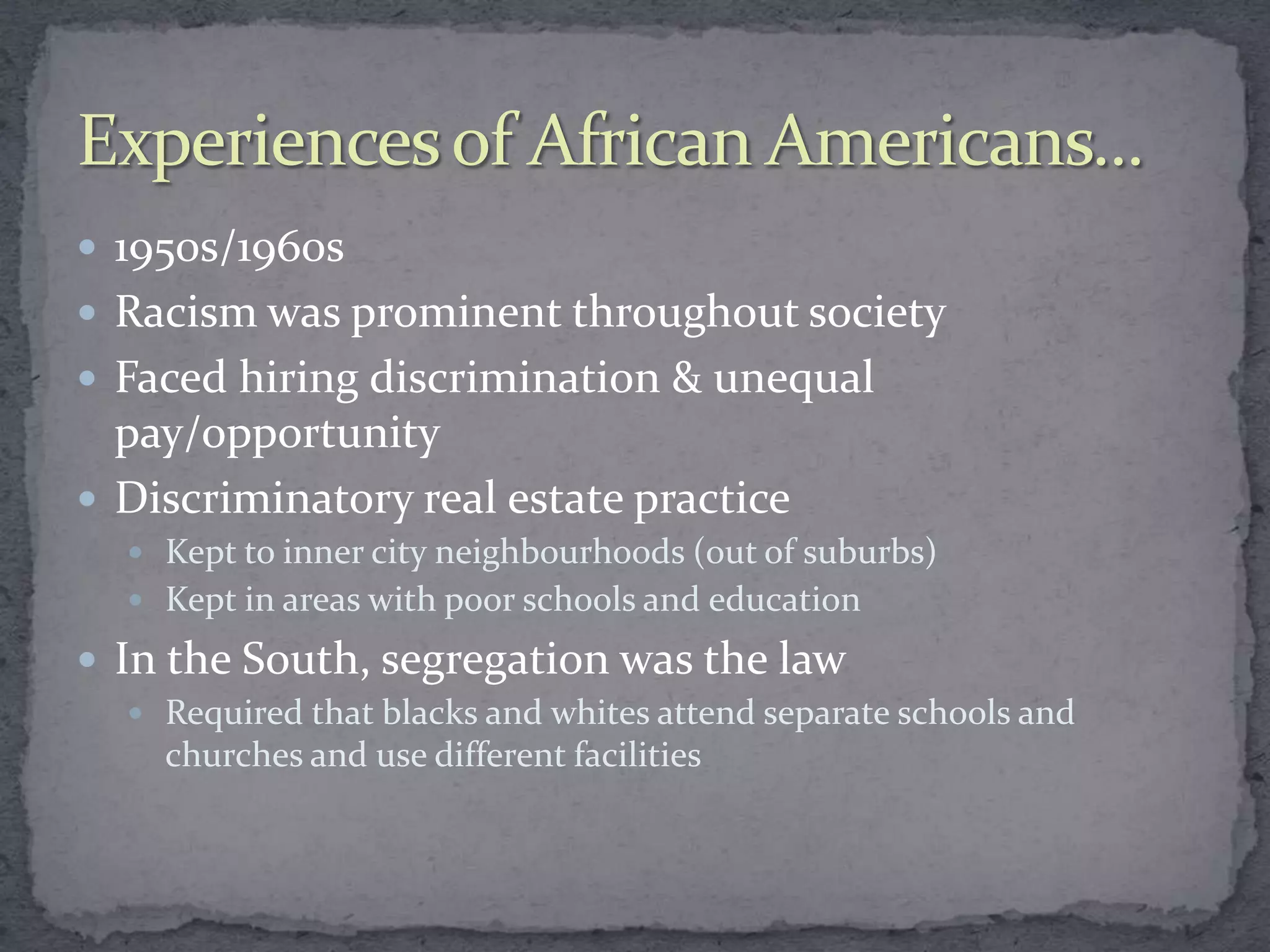
   1861-1865: Tens of thousands of enslaved African American slaves escaped to Union lines for
    freedom (Underground Railroad); the Emancipation Proclamation went into effect
   1865: The Thirteenth Amendment to the United States Constitution went into effect, the
    abolishment of slavery
   1860s: The Ku Klux Klan is formed in Tennessee by white Confederate veterans
   1870: The Fifteenth Amendment to the Constitution guarantees the right of male citizens to
    vote regardless of colour or previous condition of servitude
 Prosperity that was accessible to many whites, was not
 available to everyone

 Black Americans were largely excluded


 Example: Suburban neighbourhoods
 1950s/1960s
 Racism was prominent throughout society
 Faced hiring discrimination & unequal
  pay/opportunity
 Discriminatory real estate practice
   Kept to inner city neighbourhoods (out of suburbs)
   Kept in areas with poor schools and education

 In the South, segregation was the law
   Required that blacks and whites attend separate schools and
    churches and use different facilities
 Grew out of political organizations
  and churches (1950s)
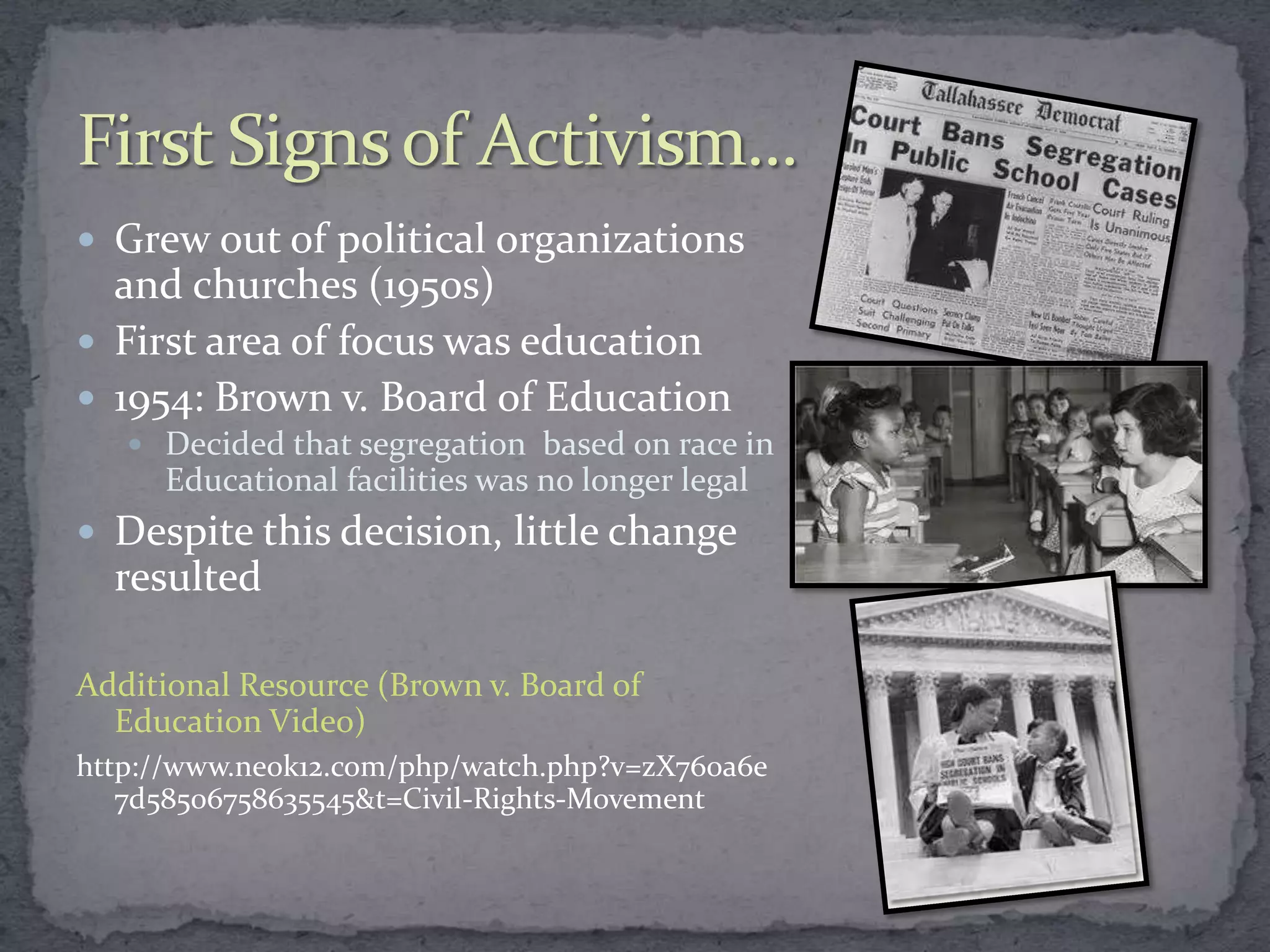
 First area of focus was education
 1954: Brown v. Board of Education
    Decided that segregation based on race in
     Educational facilities was no longer legal
 Despite this decision, little change
  resulted

Additional Resource (Brown v. Board of
  Education Video)
http://www.neok12.com/php/watch.php?v=zX760a6e
   7d58506758635545&t=Civil-Rights-Movement
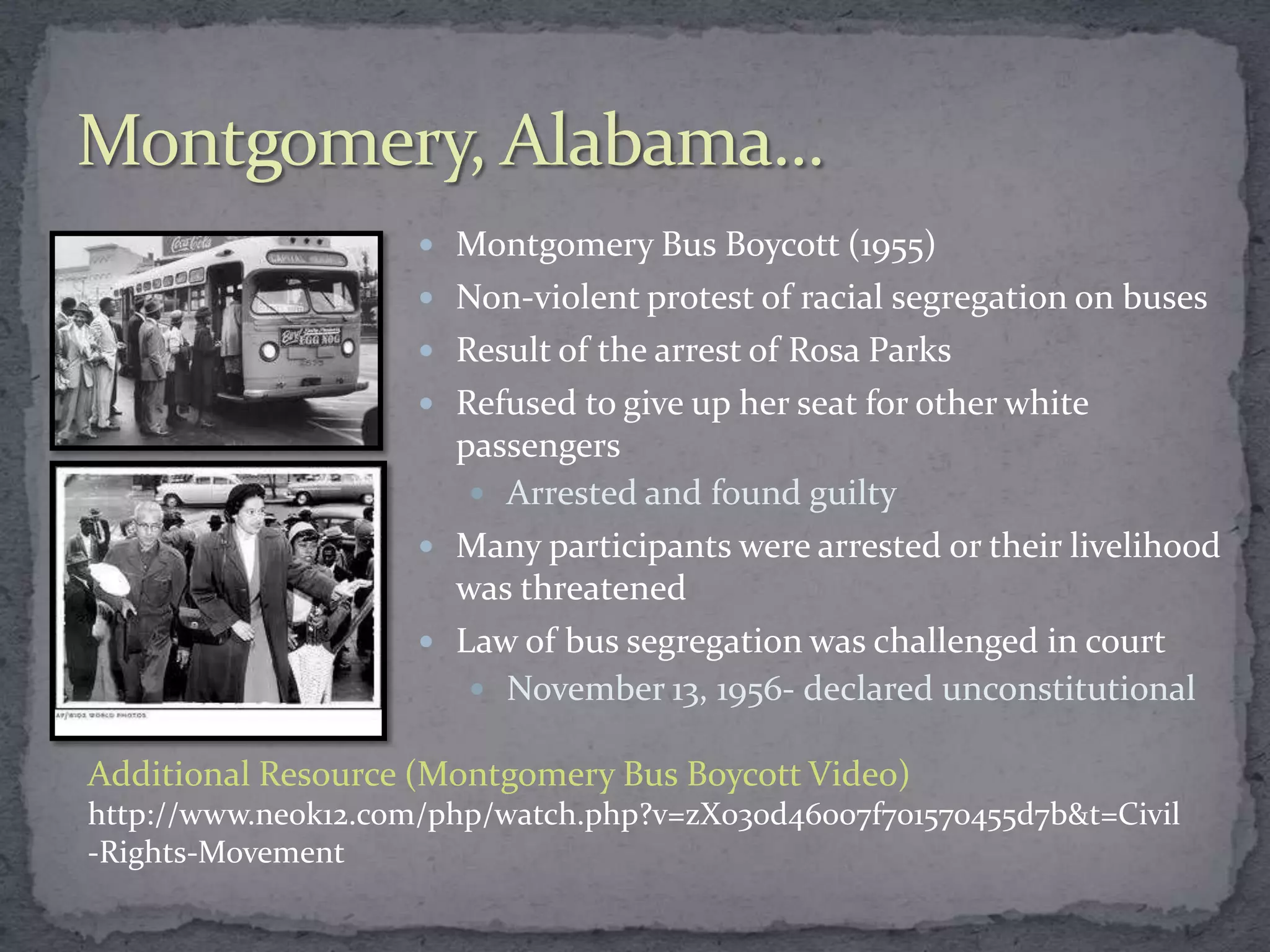
 Montgomery Bus Boycott (1955)
                      Non-violent protest of racial segregation on buses
                      Result of the arrest of Rosa Parks
                      Refused to give up her seat for other white
                       passengers
                         Arrested and found guilty
                      Many participants were arrested or their livelihood
                       was threatened
                      Law of bus segregation was challenged in court
                         November 13, 1956- declared unconstitutional

Additional Resource (Montgomery Bus Boycott Video)
http://www.neok12.com/php/watch.php?v=zX030d46007f701570455d7b&t=Civil
-Rights-Movement
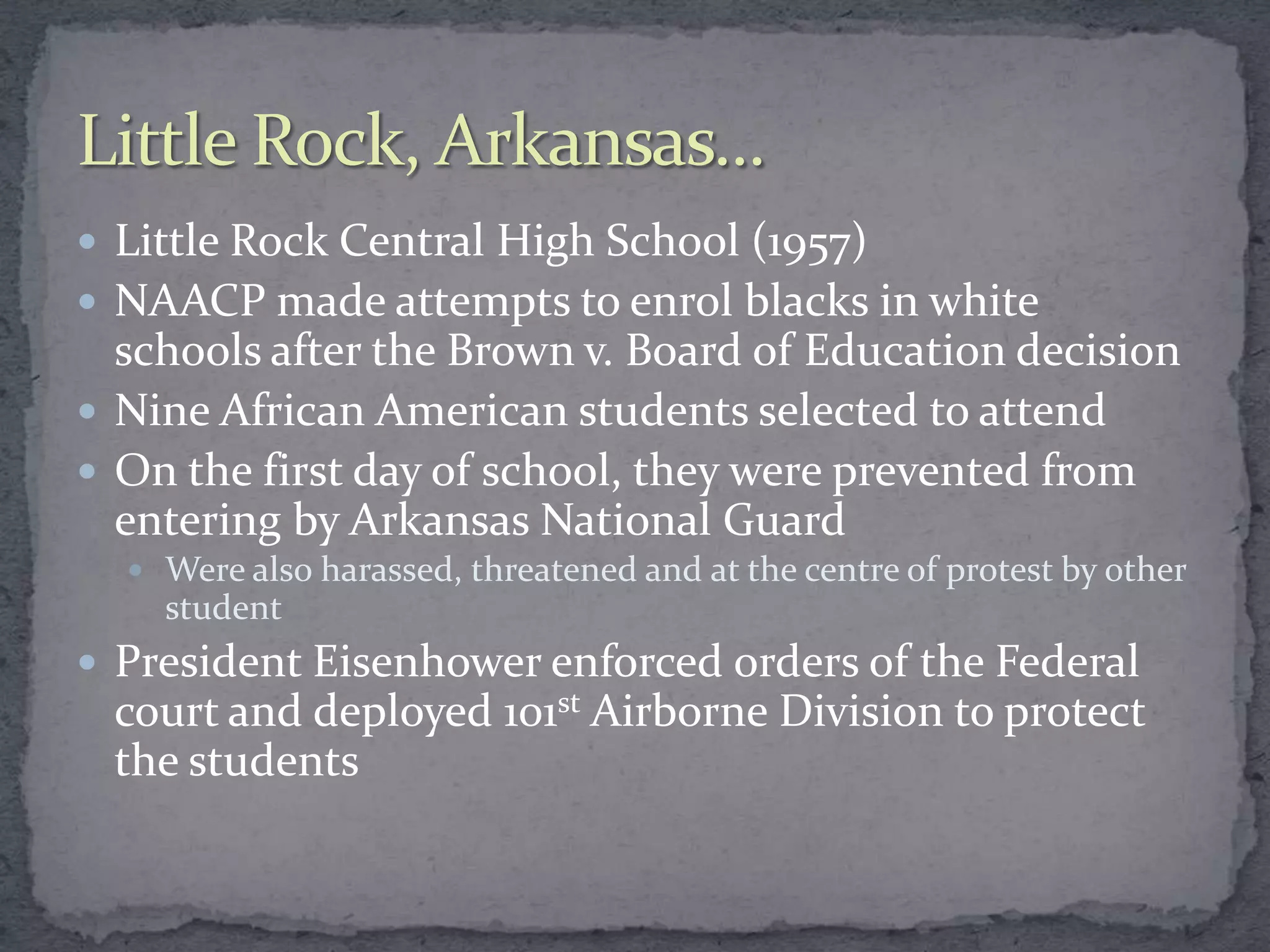
 Little Rock Central High School (1957)
 NAACP made attempts to enrol blacks in white
  schools after the Brown v. Board of Education decision
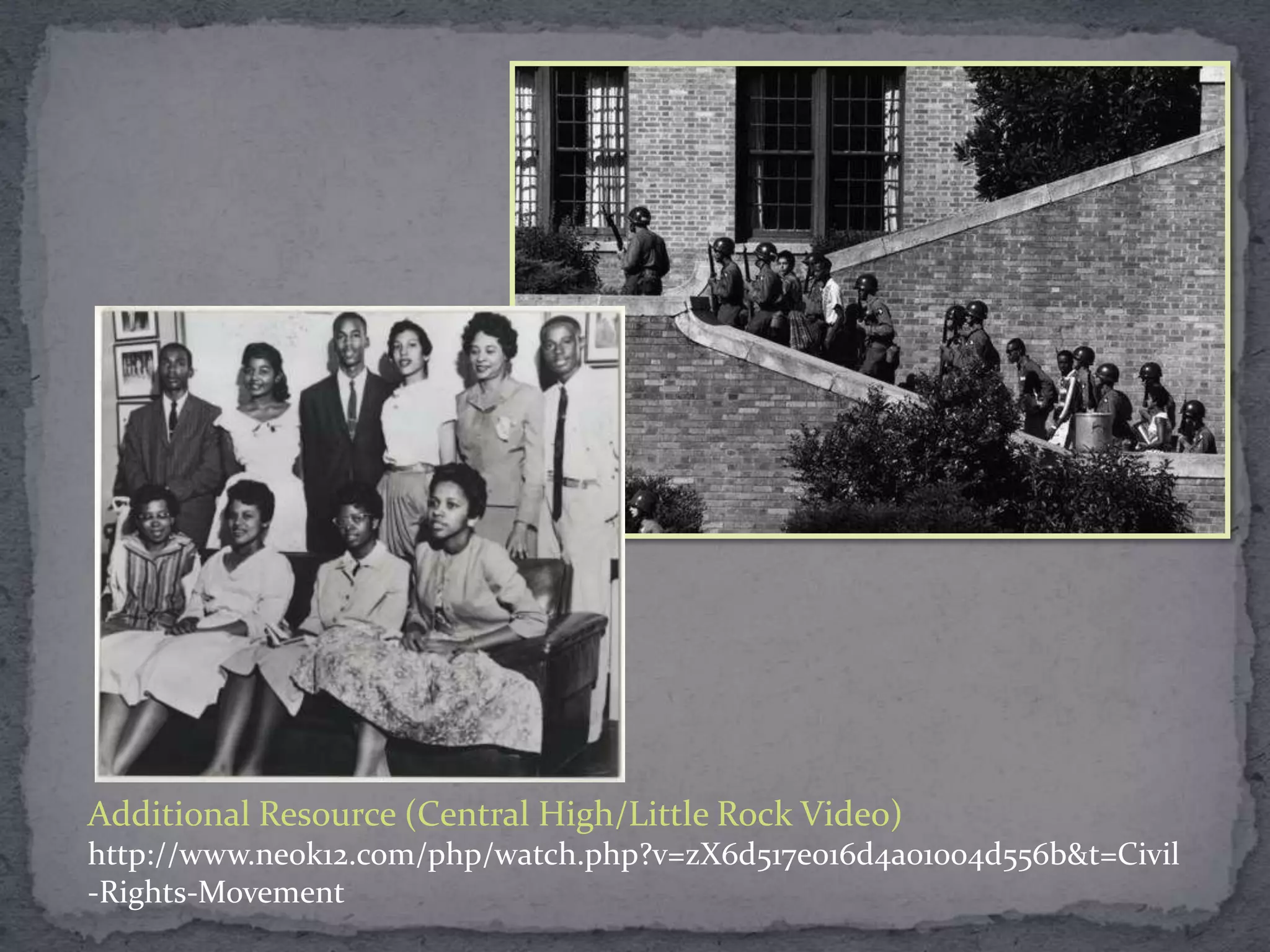
 Nine African American students selected to attend
 On the first day of school, they were prevented from
  entering by Arkansas National Guard
   Were also harassed, threatened and at the centre of protest by other
    student
 President Eisenhower enforced orders of the Federal
 court and deployed 101st Airborne Division to protect
 the students
Additional Resource (Central High/Little Rock Video)
http://www.neok12.com/php/watch.php?v=zX6d517e016d4a01004d556b&t=Civil
-Rights-Movement
 1960
 Greensboro, North Carolina
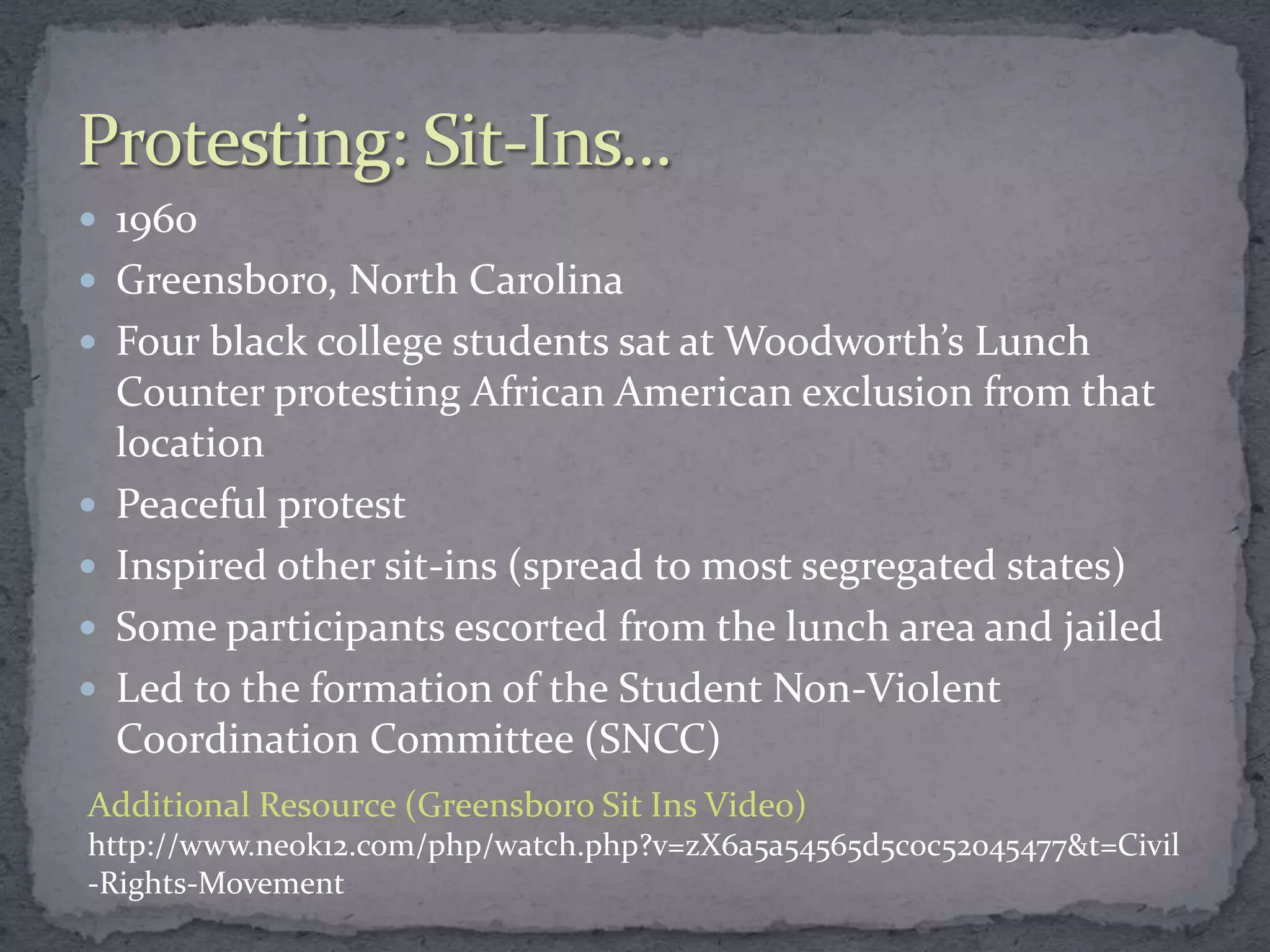
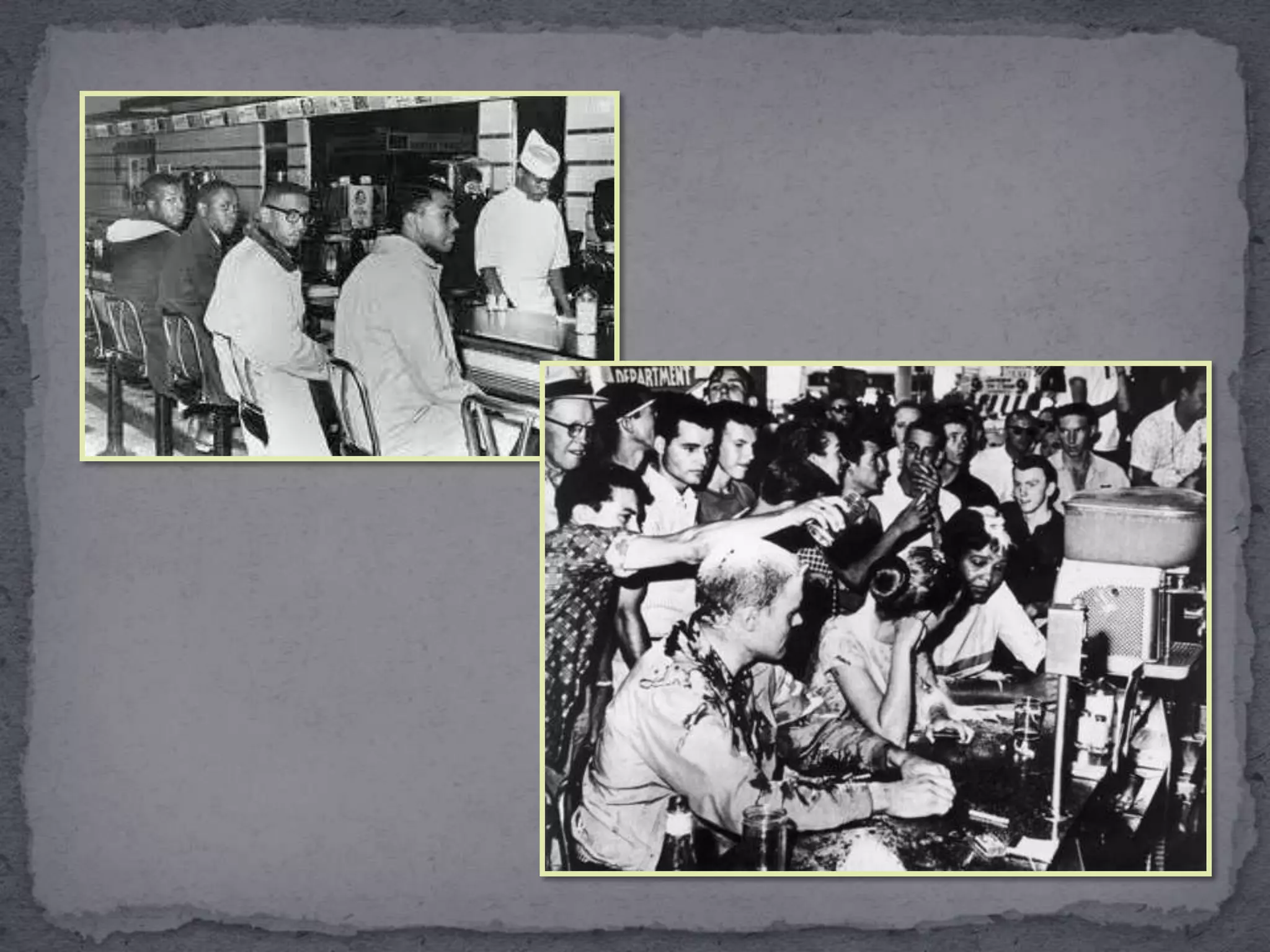
 Four black college students sat at Woodworth’s Lunch
    Counter protesting African American exclusion from that
    location
   Peaceful protest
   Inspired other sit-ins (spread to most segregated states)
   Some participants escorted from the lunch area and jailed
   Led to the formation of the Student Non-Violent
    Coordination Committee (SNCC)
Additional Resource (Greensboro Sit Ins Video)
http://www.neok12.com/php/watch.php?v=zX6a5a54565d5c0c52045477&t=Civil
-Rights-Movement
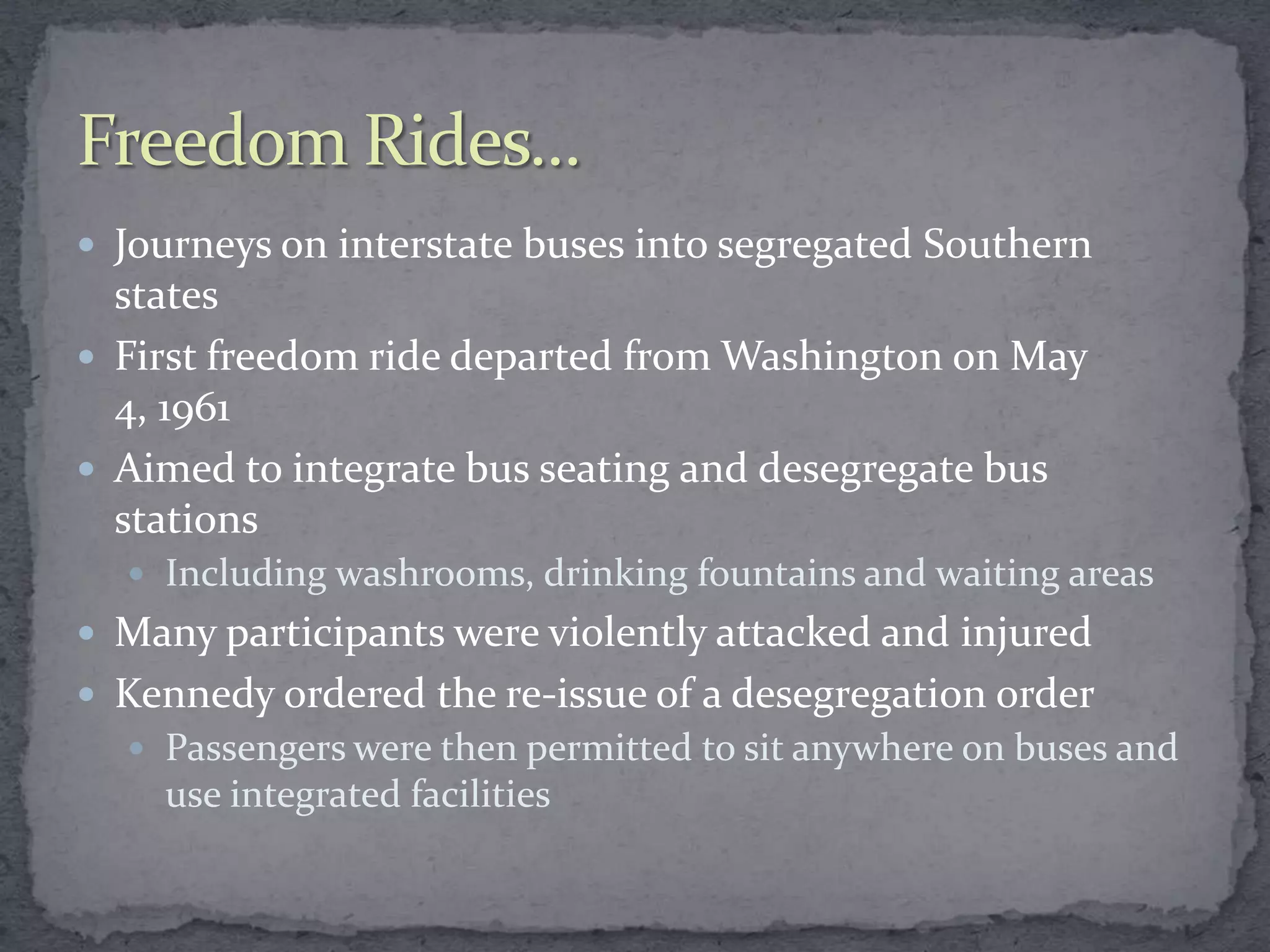
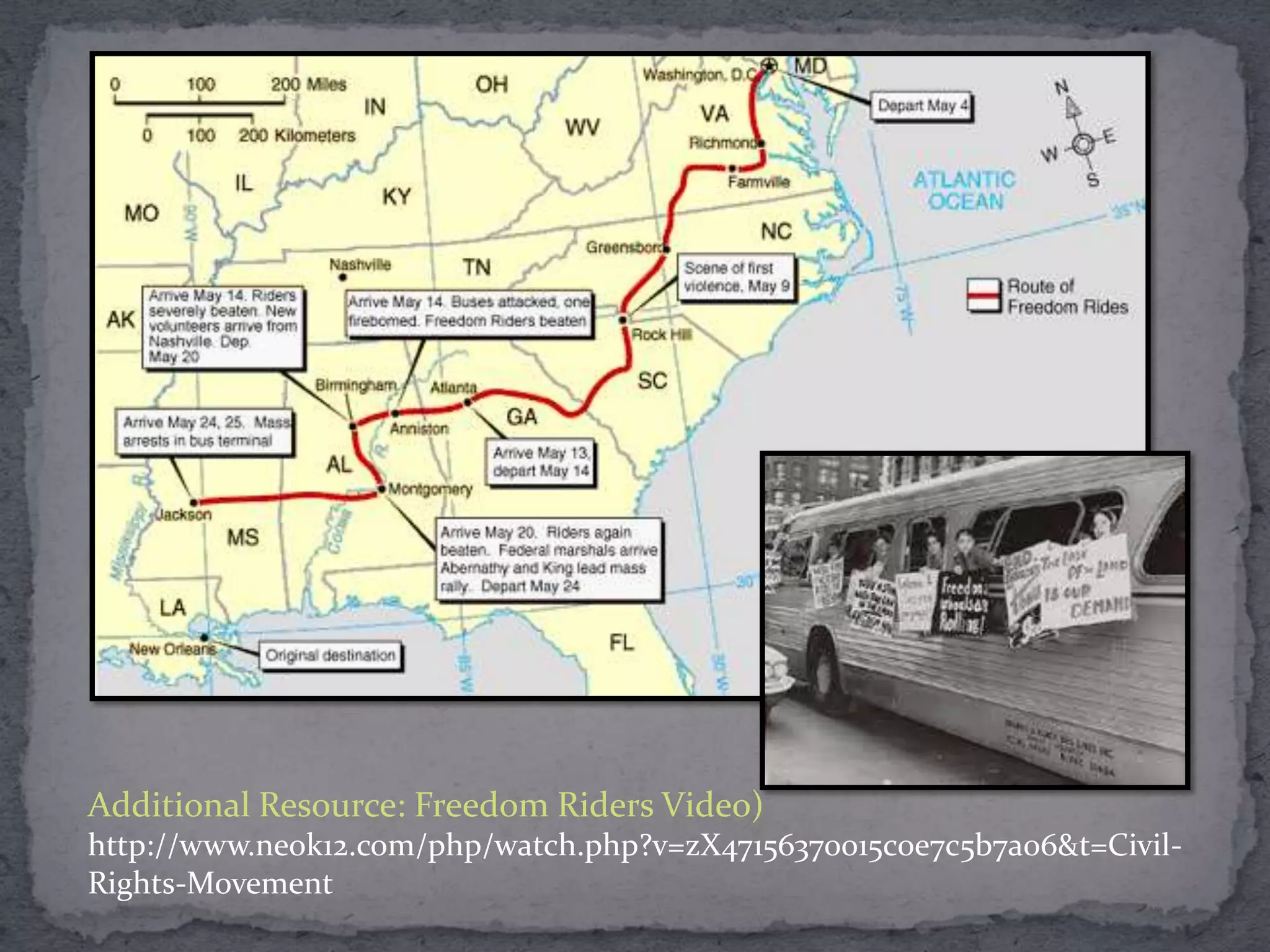
 Journeys on interstate buses into segregated Southern
  states
 First freedom ride departed from Washington on May
  4, 1961
 Aimed to integrate bus seating and desegregate bus
  stations
   Including washrooms, drinking fountains and waiting areas
 Many participants were violently attacked and injured
 Kennedy ordered the re-issue of a desegregation order
   Passengers were then permitted to sit anywhere on buses and
    use integrated facilities
Additional Resource: Freedom Riders Video)
http://www.neok12.com/php/watch.php?v=zX47156370015c0e7c5b7a06&t=Civil-
Rights-Movement
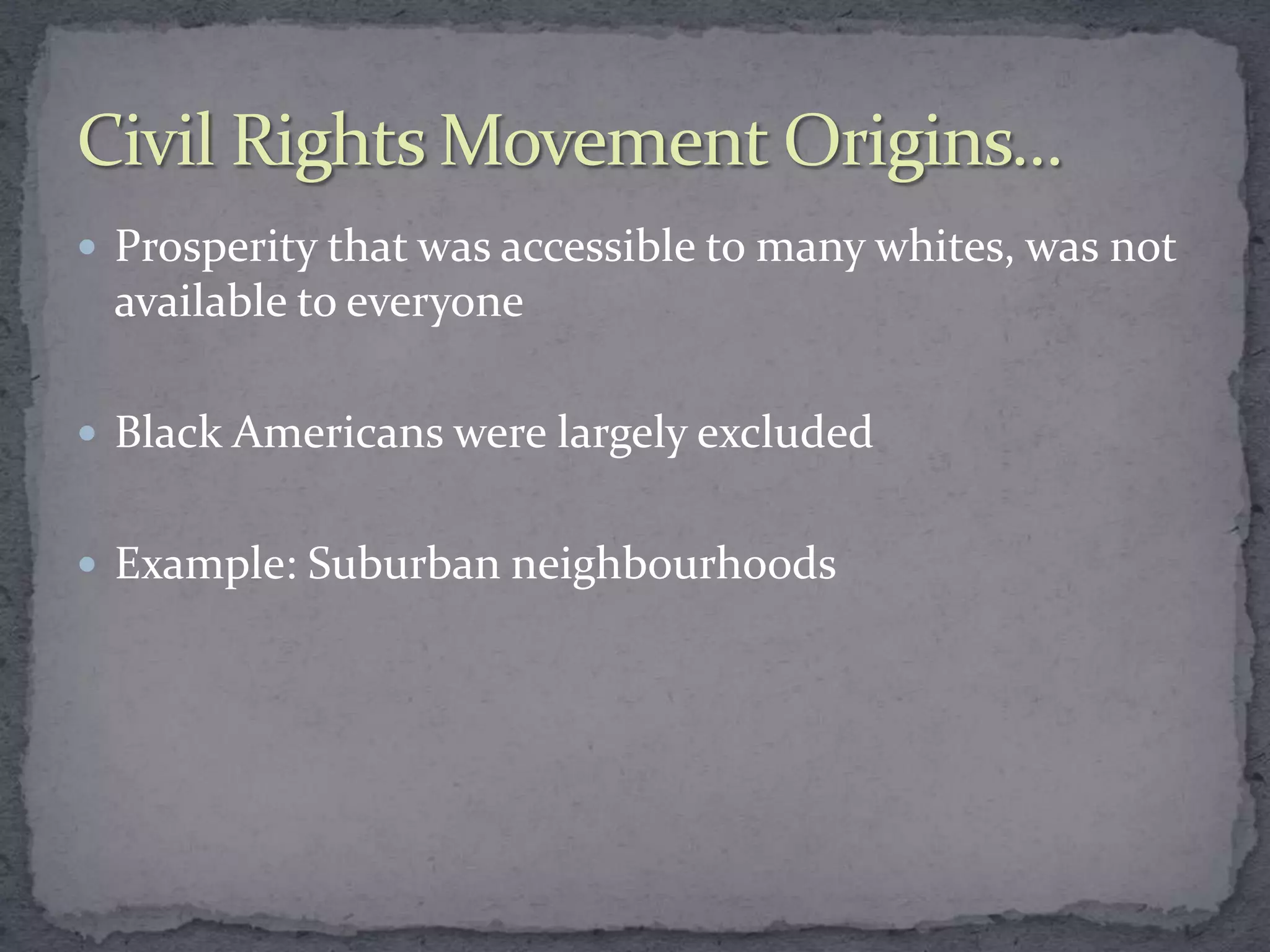
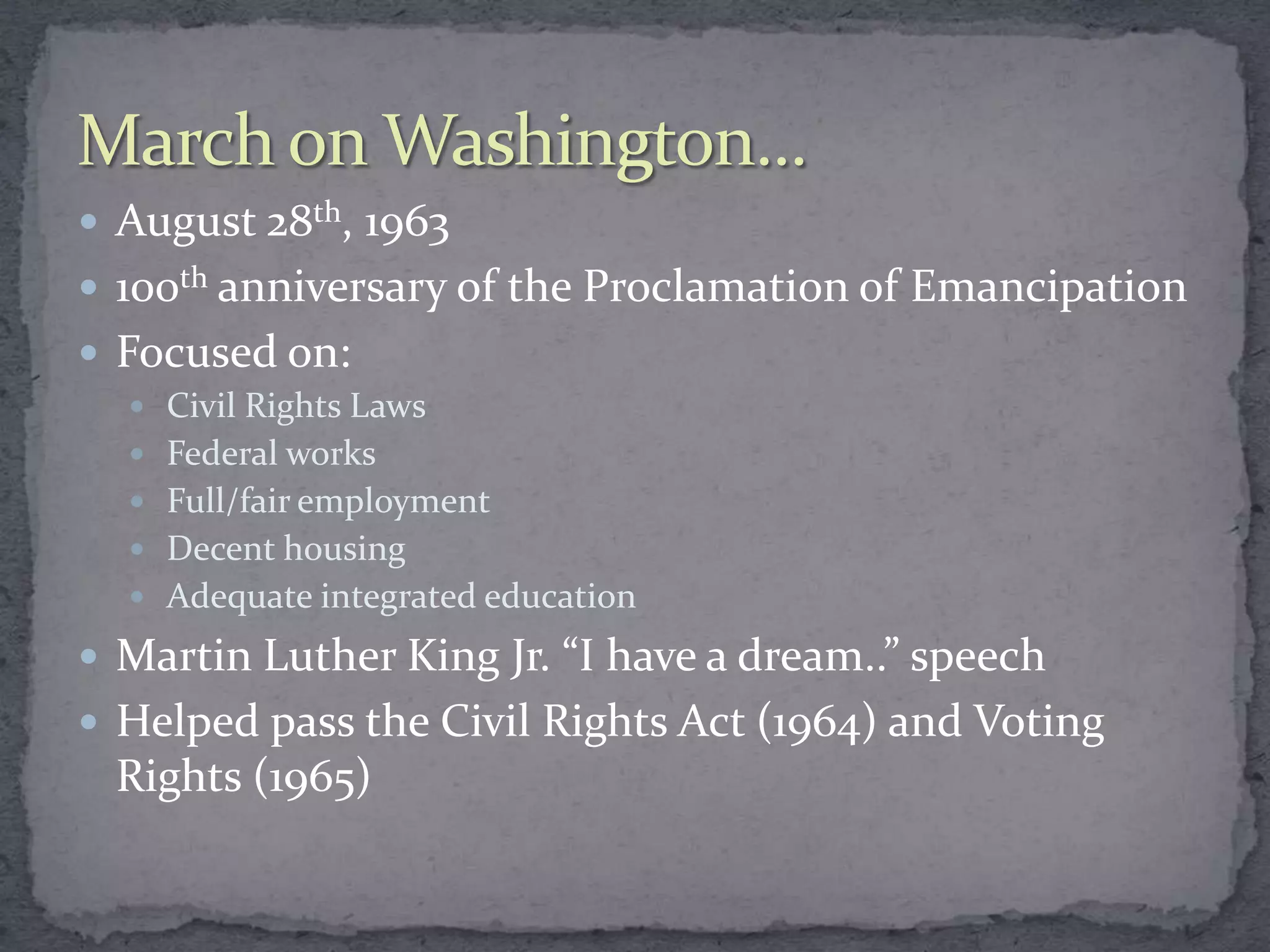
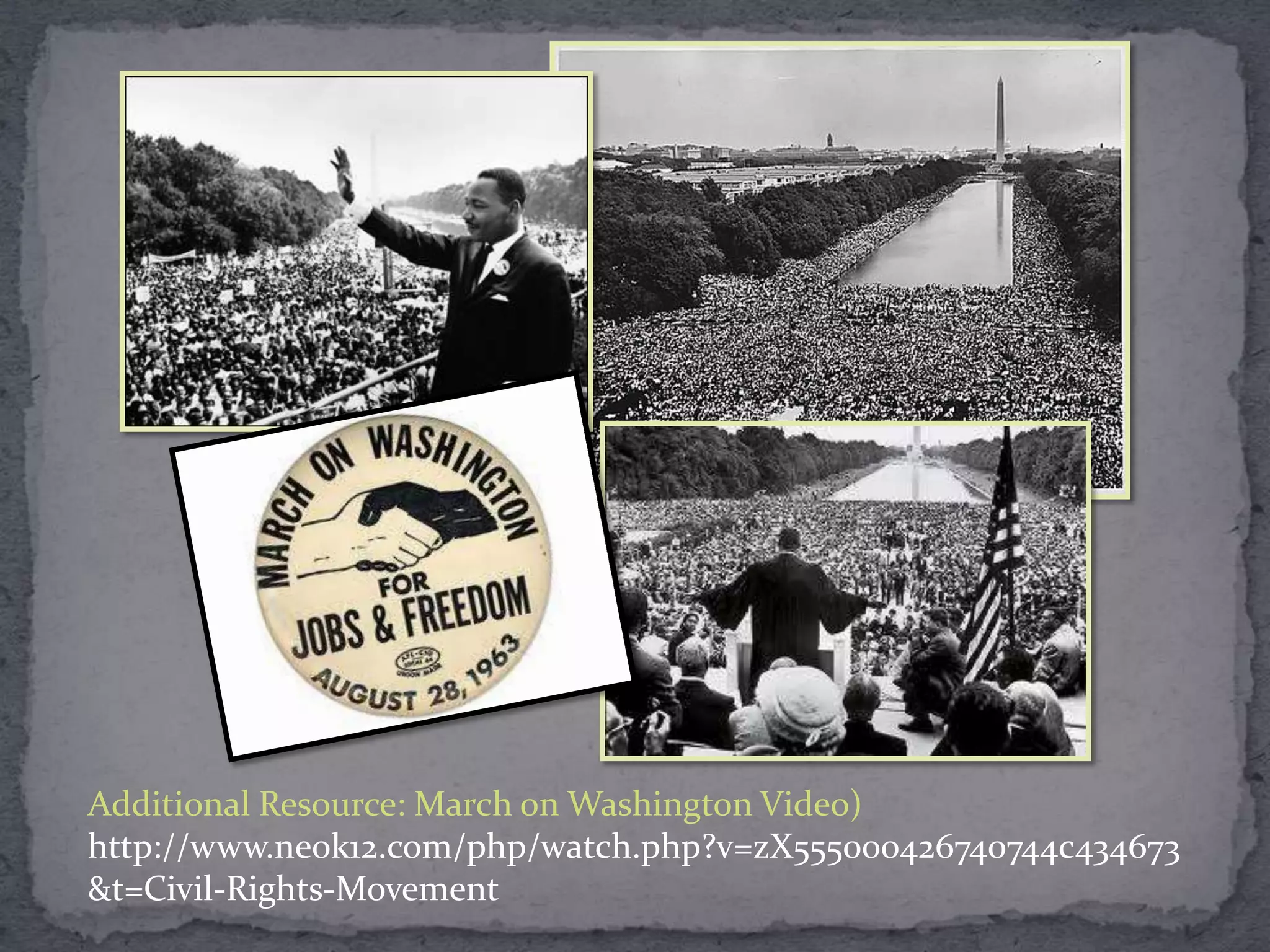
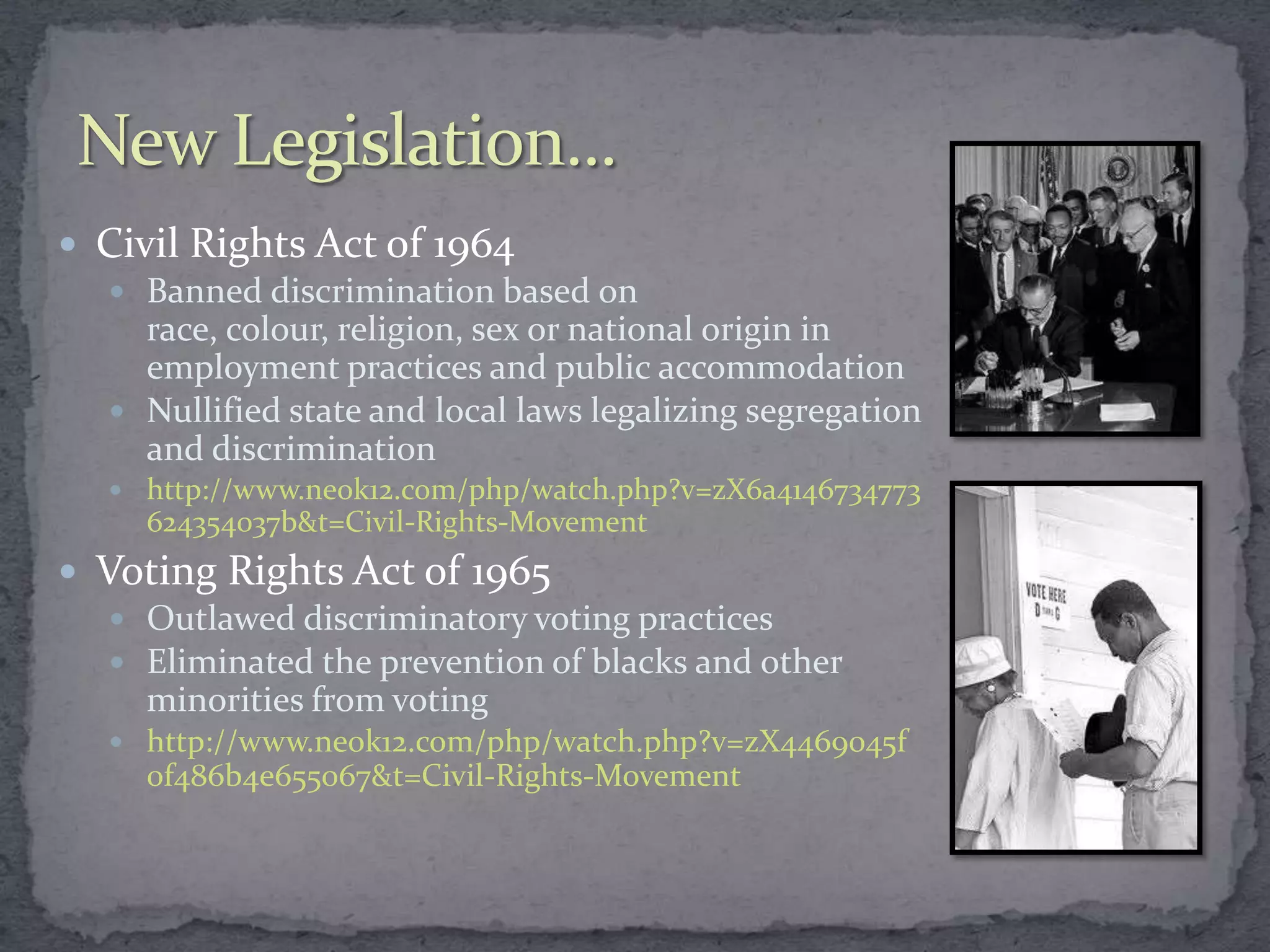
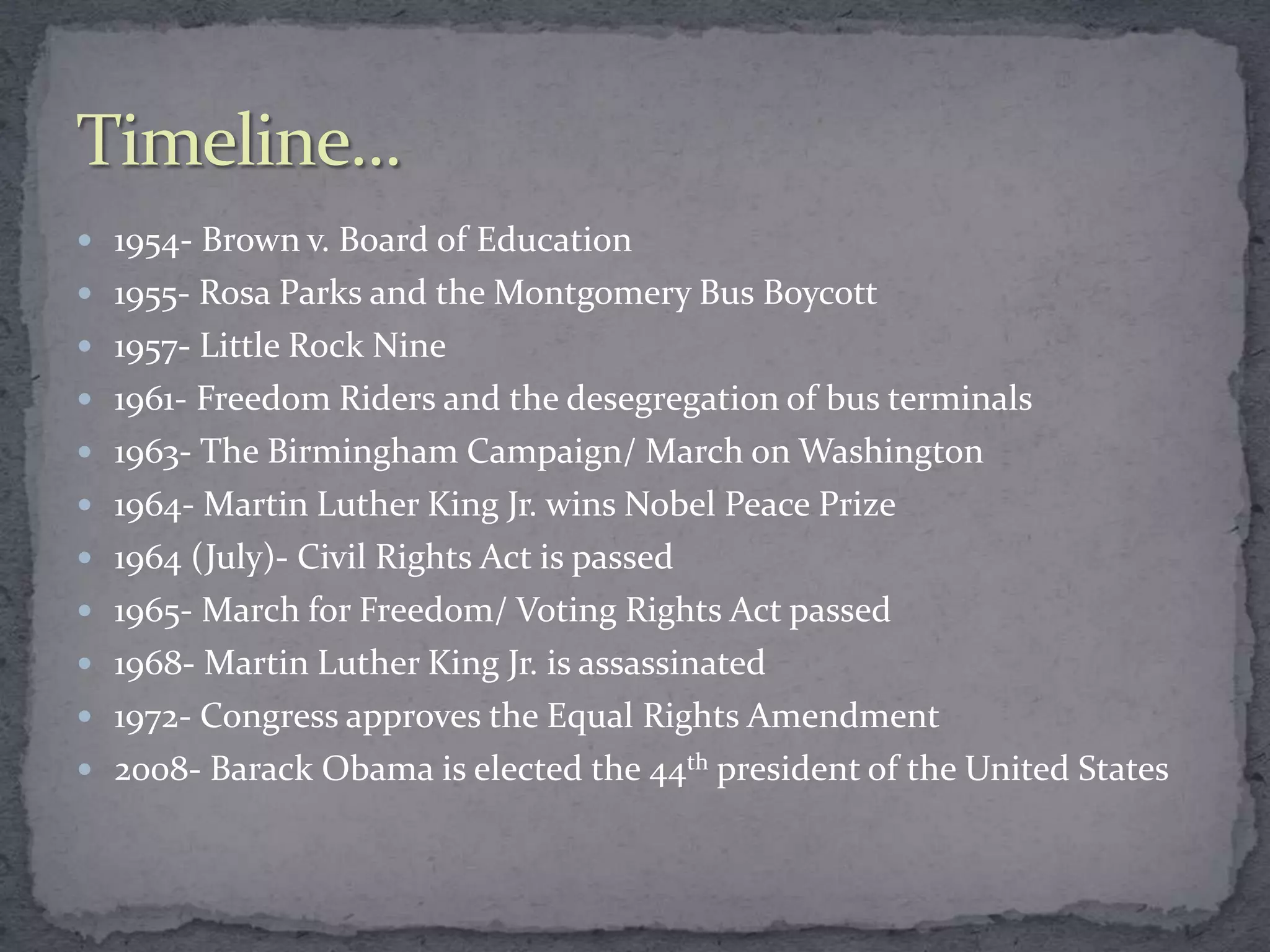
 August 28th, 1963
 100th anniversary of the Proclamation of Emancipation
 Focused on:
   Civil Rights Laws
   Federal works
   Full/fair employment
   Decent housing
   Adequate integrated education

 Martin Luther King Jr. “I have a dream..” speech
 Helped pass the Civil Rights Act (1964) and Voting
 Rights (1965)
Additional Resource: March on Washington Video)
http://www.neok12.com/php/watch.php?v=zX555000426740744c434673
&t=Civil-Rights-Movement
 Civil Rights Act of 1964
   Banned discrimination based on
     race, colour, religion, sex or national origin in
     employment practices and public accommodation
   Nullified state and local laws legalizing segregation
     and discrimination
    http://www.neok12.com/php/watch.php?v=zX6a4146734773
     624354037b&t=Civil-Rights-Movement
 Voting Rights Act of 1965
    Outlawed discriminatory voting practices
    Eliminated the prevention of blacks and other
     minorities from voting
    http://www.neok12.com/php/watch.php?v=zX4469045f
     0f486b4e655067&t=Civil-Rights-Movement
 1954- Brown v. Board of Education
 1955- Rosa Parks and the Montgomery Bus Boycott
 1957- Little Rock Nine
 1961- Freedom Riders and the desegregation of bus terminals
 1963- The Birmingham Campaign/ March on Washington
 1964- Martin Luther King Jr. wins Nobel Peace Prize
 1964 (July)- Civil Rights Act is passed
 1965- March for Freedom/ Voting Rights Act passed
 1968- Martin Luther King Jr. is assassinated
 1972- Congress approves the Equal Rights Amendment
 2008- Barack Obama is elected the 44th president of the United States
 Even though the fight for equality had begun many
 years prior to the 1950s, had much changed since the
 post Civil War era?

 What were African Americans fighting for?


 Do you believe that true equality of races has been in
 achieved in the United States? In the world?
 Martin Luther King Jr. “I have a dream...” speech (video)
   http://www.neok12.com/php/watch.php?v=zX5b7d7b6d56665342605173&t
    =Civil-Rights-Movement


 Martin Luther King Jr. “I have a dream...” speech (text)
   http://www.americanrhetoric.com/speeches/mlkihaveadream.htm


 Montgomery Bus Boycott- Online activity
   http://www.beforetheboycott.com/eLearning/index.html

CHA3U-Civil Rights Part One

  • 2.
    1700-1790: Several black slave revolts occurred; the Constitution of Vermont is the first to abolish slavery  1790-1810: Manumission of slaves in some free states; in 1808 the importation of slaves in America was banned  1861-1865: Tens of thousands of enslaved African American slaves escaped to Union lines for freedom (Underground Railroad); the Emancipation Proclamation went into effect  1865: The Thirteenth Amendment to the United States Constitution went into effect, the abolishment of slavery  1860s: The Ku Klux Klan is formed in Tennessee by white Confederate veterans  1870: The Fifteenth Amendment to the Constitution guarantees the right of male citizens to vote regardless of colour or previous condition of servitude
  • 3.
     Prosperity thatwas accessible to many whites, was not available to everyone  Black Americans were largely excluded  Example: Suburban neighbourhoods
  • 4.
     1950s/1960s  Racismwas prominent throughout society  Faced hiring discrimination & unequal pay/opportunity  Discriminatory real estate practice  Kept to inner city neighbourhoods (out of suburbs)  Kept in areas with poor schools and education  In the South, segregation was the law  Required that blacks and whites attend separate schools and churches and use different facilities
  • 5.
     Grew outof political organizations and churches (1950s)  First area of focus was education  1954: Brown v. Board of Education  Decided that segregation based on race in Educational facilities was no longer legal  Despite this decision, little change resulted Additional Resource (Brown v. Board of Education Video) http://www.neok12.com/php/watch.php?v=zX760a6e 7d58506758635545&t=Civil-Rights-Movement
  • 6.
     Montgomery BusBoycott (1955)  Non-violent protest of racial segregation on buses  Result of the arrest of Rosa Parks  Refused to give up her seat for other white passengers  Arrested and found guilty  Many participants were arrested or their livelihood was threatened  Law of bus segregation was challenged in court  November 13, 1956- declared unconstitutional Additional Resource (Montgomery Bus Boycott Video) http://www.neok12.com/php/watch.php?v=zX030d46007f701570455d7b&t=Civil -Rights-Movement
  • 7.
     Little RockCentral High School (1957)  NAACP made attempts to enrol blacks in white schools after the Brown v. Board of Education decision  Nine African American students selected to attend  On the first day of school, they were prevented from entering by Arkansas National Guard  Were also harassed, threatened and at the centre of protest by other student  President Eisenhower enforced orders of the Federal court and deployed 101st Airborne Division to protect the students
  • 8.
    Additional Resource (CentralHigh/Little Rock Video) http://www.neok12.com/php/watch.php?v=zX6d517e016d4a01004d556b&t=Civil -Rights-Movement
  • 9.
     1960  Greensboro,North Carolina  Four black college students sat at Woodworth’s Lunch Counter protesting African American exclusion from that location  Peaceful protest  Inspired other sit-ins (spread to most segregated states)  Some participants escorted from the lunch area and jailed  Led to the formation of the Student Non-Violent Coordination Committee (SNCC) Additional Resource (Greensboro Sit Ins Video) http://www.neok12.com/php/watch.php?v=zX6a5a54565d5c0c52045477&t=Civil -Rights-Movement
  • 11.
     Journeys oninterstate buses into segregated Southern states  First freedom ride departed from Washington on May 4, 1961  Aimed to integrate bus seating and desegregate bus stations  Including washrooms, drinking fountains and waiting areas  Many participants were violently attacked and injured  Kennedy ordered the re-issue of a desegregation order  Passengers were then permitted to sit anywhere on buses and use integrated facilities
  • 12.
    Additional Resource: FreedomRiders Video) http://www.neok12.com/php/watch.php?v=zX47156370015c0e7c5b7a06&t=Civil- Rights-Movement
  • 13.
     August 28th,1963  100th anniversary of the Proclamation of Emancipation  Focused on:  Civil Rights Laws  Federal works  Full/fair employment  Decent housing  Adequate integrated education  Martin Luther King Jr. “I have a dream..” speech  Helped pass the Civil Rights Act (1964) and Voting Rights (1965)
  • 14.
    Additional Resource: Marchon Washington Video) http://www.neok12.com/php/watch.php?v=zX555000426740744c434673 &t=Civil-Rights-Movement
  • 15.
     Civil RightsAct of 1964  Banned discrimination based on race, colour, religion, sex or national origin in employment practices and public accommodation  Nullified state and local laws legalizing segregation and discrimination  http://www.neok12.com/php/watch.php?v=zX6a4146734773 624354037b&t=Civil-Rights-Movement  Voting Rights Act of 1965  Outlawed discriminatory voting practices  Eliminated the prevention of blacks and other minorities from voting  http://www.neok12.com/php/watch.php?v=zX4469045f 0f486b4e655067&t=Civil-Rights-Movement
  • 16.
     1954- Brownv. Board of Education  1955- Rosa Parks and the Montgomery Bus Boycott  1957- Little Rock Nine  1961- Freedom Riders and the desegregation of bus terminals  1963- The Birmingham Campaign/ March on Washington  1964- Martin Luther King Jr. wins Nobel Peace Prize  1964 (July)- Civil Rights Act is passed  1965- March for Freedom/ Voting Rights Act passed  1968- Martin Luther King Jr. is assassinated  1972- Congress approves the Equal Rights Amendment  2008- Barack Obama is elected the 44th president of the United States
  • 17.
     Even thoughthe fight for equality had begun many years prior to the 1950s, had much changed since the post Civil War era?  What were African Americans fighting for?  Do you believe that true equality of races has been in achieved in the United States? In the world?
  • 18.
     Martin LutherKing Jr. “I have a dream...” speech (video)  http://www.neok12.com/php/watch.php?v=zX5b7d7b6d56665342605173&t =Civil-Rights-Movement  Martin Luther King Jr. “I have a dream...” speech (text)  http://www.americanrhetoric.com/speeches/mlkihaveadream.htm  Montgomery Bus Boycott- Online activity  http://www.beforetheboycott.com/eLearning/index.html