Chapter 6   Proteins     Lecture and Animation PowerPoint   Copyright © The McGraw-Hill Companies, Inc. Permission required for reproduction or display. To run the animations you must be in  Slideshow View .  Use the buttons on the animation to play, pause, and turn audio/text on or off.  Please Note : Once you have used any of the animation controls ,  you must click   in the white background before advancing to the next slide.
Overview of Protein Body is made up of thousands of proteins Contains nitrogen, carbon, hydrogen, and oxygen Functions Regulates and maintains body functions Provides essential form of nitrogen (in the form of amino acids)
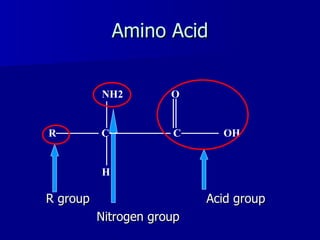
Amino Acid R group  Acid group Nitrogen group NH2  O R  C  C  OH H
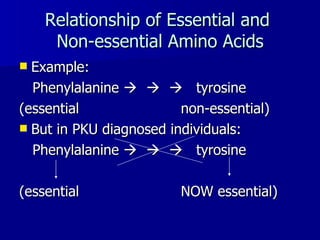
Relationship of Essential and  Non-essential Amino Acids Example: Phenylalanine           tyrosine (essential  non-essential) But in PKU diagnosed individuals: Phenylalanine           tyrosine (essential  NOW essential)
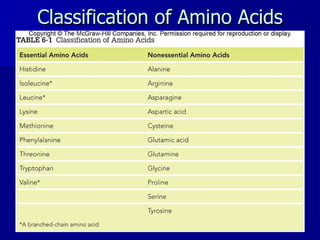
Classification of Amino Acids
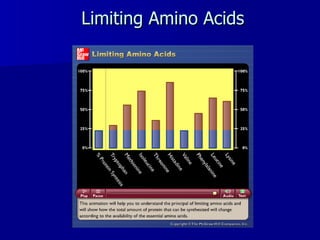
Limiting Amino Acids
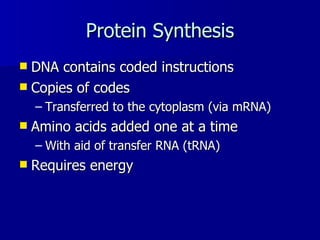
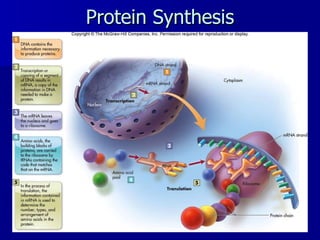
Protein Synthesis DNA contains coded instructions Copies of codes  Transferred to the cytoplasm (via mRNA) Amino acids added one at a time  With aid of transfer RNA (tRNA) Requires energy
Protein Synthesis
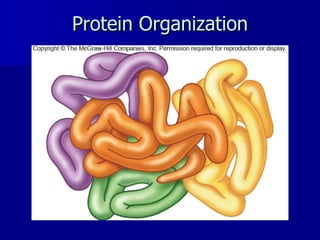
Protein Organization Order of amino acids in a protein determines its ultimate shape Protein ’s final shape determines its function in the body
Protein Organization
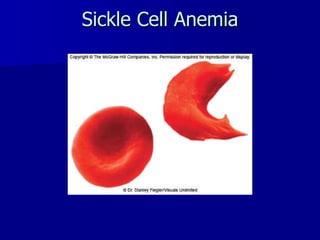
Sickle Cell Anemia
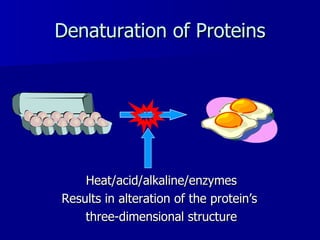
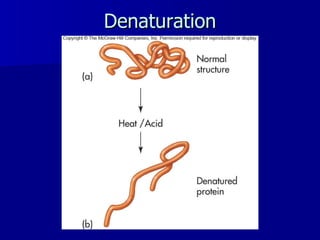
Denaturation of Proteins Heat/acid/alkaline/enzymes Results in alteration of the protein ’s  three-dimensional structure
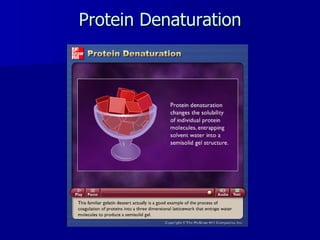
Protein Denaturation
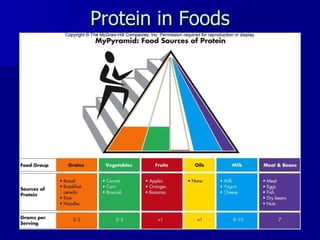
Protein in Foods
Animal Protein Contribution to our diet ~70% of our protein intake Top 5 contributors of protein in U.S. diet: Beef Poultry Milk White bread Cheese Worldwide, 35% comes from animal sources
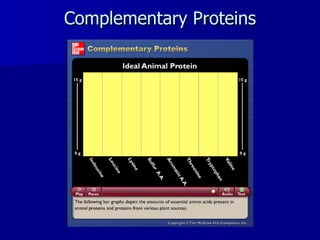
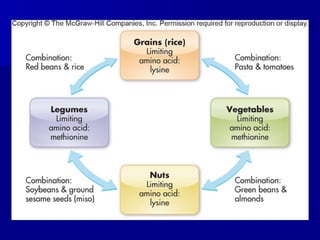
Dietary Protein High-quality Complete Low-quality Incomplete All-or-none principle in protein synthesis  Limiting amino acids Complementary proteins
Health and Plant Proteins Heart healthy Cancer-fighting Bone health Better glucose control Soy and menopausal symptoms
Plant Sources Provide protein, minerals, and dietary fiber Contain no cholesterol Limited saturated fats High fiber Time needed to adjust to the higher fiber load
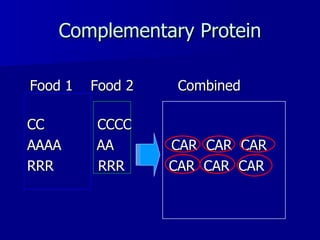
Complementary Protein Food 1  Food 2  Combined   CC  CCCC AAAA  AA  CAR  CAR  CAR RRR  RRR  CAR  CAR  CAR
Complementary Proteins
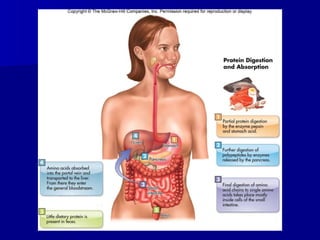
Digestion of Protein in the Stomach Denatured  By cooking and acid in the stomach Gastrin   Stimulates the release of acid and pepsin Pepsin  Breaks down proteins
Denaturation
 
Digestion of Protein in the  Small Intestine Release of CCK Pancreatic enzymes:  Trypsin, among others, into the duodenum Peptones    peptides    amino acids Small peptides and amino acids  Ready for absorption
Protein Turnover Breakdown and synthesis Responds to change Amino acids can be recycled
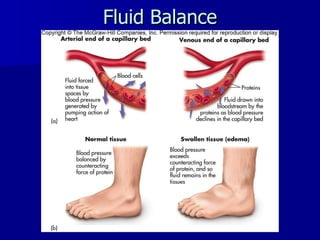
Fluid Balance
Protein Absorption Site of digestion  Microvilli surface and within absorptive cells Many different amino acid transport mechanisms  Active absorption Amino acids are sent to the liver  Via portal vein
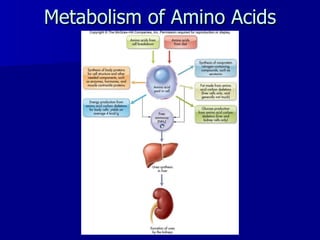
Metabolism of Amino Acids
Functions of Proteins Building blocks of body components Fluid balance maintenance Acid/base balance (contribute to) Building blocks of hormones and enzymes Immune function Gluconeogenesis Energy yielding (non-preferred source) Provides highest feeling of satiety after meal
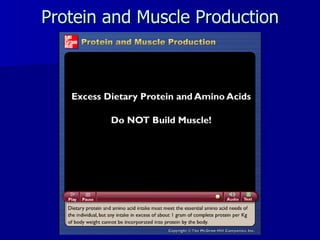
Protein and Muscle Production
RDA for Protein Promotes equilibrium 0.8 gm of protein / kg of healthy body weight 154 lb.   =  70 kg 2.2 kg/lb. 70 kg x  0.8 g protein  = 56 g protein kg healthy body weight
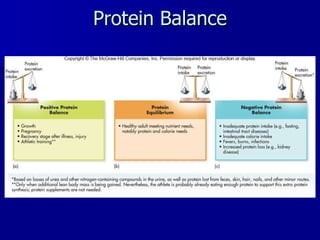
Protein Balance
RDA for Protein Increased by ~10-15 gm /day for pregnancy Endurance athletes  May  need 1.2 – 1.7 gm/kg healthy weight Provide about 8-10% of total kcal Most of us eat more than the RDA for protein Excess protein cannot be stored as protein
Is a High-Protein Diet Harmful? Low in plant foods (fiber), vitamins, phytochemicals  High in saturated fat and cholesterol Excessive intake of processed red meat is linked with colon cancer Burden on the kidney May increase calcium loss in the urine Increase urine production – increase risk for dehydration
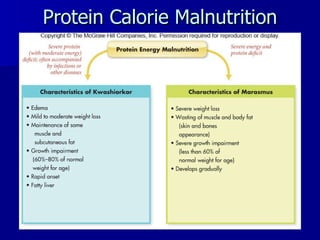
Malnutrition Protein-Energy Malnutrition Marasmus Seen in hospitalized patients Kwashiorkor
Protein Calorie Malnutrition
Vegetarian Diets Why become a vegetarian? Vegans Fruitarians Lactovegetarians Lactoovovegetarians Concerns for infants and children
 
Vegan Diets Complementary proteins Nutrient concerns Vitamin B12 Iron Zinc Calcium Omega-3 fatty acids

Ch6 Protein

  • 1.
    Chapter 6 Proteins Lecture and Animation PowerPoint Copyright © The McGraw-Hill Companies, Inc. Permission required for reproduction or display. To run the animations you must be in Slideshow View . Use the buttons on the animation to play, pause, and turn audio/text on or off. Please Note : Once you have used any of the animation controls , you must click in the white background before advancing to the next slide.
  • 2.
    Overview of ProteinBody is made up of thousands of proteins Contains nitrogen, carbon, hydrogen, and oxygen Functions Regulates and maintains body functions Provides essential form of nitrogen (in the form of amino acids)
  • 3.
    Amino Acid Rgroup Acid group Nitrogen group NH2 O R C C OH H
  • 4.
    Relationship of Essentialand Non-essential Amino Acids Example: Phenylalanine    tyrosine (essential non-essential) But in PKU diagnosed individuals: Phenylalanine    tyrosine (essential NOW essential)
  • 5.
  • 6.
  • 7.
    Protein Synthesis DNAcontains coded instructions Copies of codes Transferred to the cytoplasm (via mRNA) Amino acids added one at a time With aid of transfer RNA (tRNA) Requires energy
  • 8.
  • 9.
    Protein Organization Orderof amino acids in a protein determines its ultimate shape Protein ’s final shape determines its function in the body
  • 10.
  • 11.
  • 12.
    Denaturation of ProteinsHeat/acid/alkaline/enzymes Results in alteration of the protein ’s three-dimensional structure
  • 13.
  • 14.
  • 15.
    Animal Protein Contributionto our diet ~70% of our protein intake Top 5 contributors of protein in U.S. diet: Beef Poultry Milk White bread Cheese Worldwide, 35% comes from animal sources
  • 16.
    Dietary Protein High-qualityComplete Low-quality Incomplete All-or-none principle in protein synthesis Limiting amino acids Complementary proteins
  • 17.
    Health and PlantProteins Heart healthy Cancer-fighting Bone health Better glucose control Soy and menopausal symptoms
  • 18.
    Plant Sources Provideprotein, minerals, and dietary fiber Contain no cholesterol Limited saturated fats High fiber Time needed to adjust to the higher fiber load
  • 19.
    Complementary Protein Food1 Food 2 Combined CC CCCC AAAA AA CAR CAR CAR RRR RRR CAR CAR CAR
  • 20.
  • 21.
    Digestion of Proteinin the Stomach Denatured By cooking and acid in the stomach Gastrin Stimulates the release of acid and pepsin Pepsin Breaks down proteins
  • 22.
  • 23.
  • 24.
    Digestion of Proteinin the Small Intestine Release of CCK Pancreatic enzymes: Trypsin, among others, into the duodenum Peptones  peptides  amino acids Small peptides and amino acids Ready for absorption
  • 25.
    Protein Turnover Breakdownand synthesis Responds to change Amino acids can be recycled
  • 26.
  • 27.
    Protein Absorption Siteof digestion Microvilli surface and within absorptive cells Many different amino acid transport mechanisms Active absorption Amino acids are sent to the liver Via portal vein
  • 28.
  • 29.
    Functions of ProteinsBuilding blocks of body components Fluid balance maintenance Acid/base balance (contribute to) Building blocks of hormones and enzymes Immune function Gluconeogenesis Energy yielding (non-preferred source) Provides highest feeling of satiety after meal
  • 30.
  • 31.
    RDA for ProteinPromotes equilibrium 0.8 gm of protein / kg of healthy body weight 154 lb. = 70 kg 2.2 kg/lb. 70 kg x 0.8 g protein = 56 g protein kg healthy body weight
  • 32.
  • 33.
    RDA for ProteinIncreased by ~10-15 gm /day for pregnancy Endurance athletes May need 1.2 – 1.7 gm/kg healthy weight Provide about 8-10% of total kcal Most of us eat more than the RDA for protein Excess protein cannot be stored as protein
  • 34.
    Is a High-ProteinDiet Harmful? Low in plant foods (fiber), vitamins, phytochemicals High in saturated fat and cholesterol Excessive intake of processed red meat is linked with colon cancer Burden on the kidney May increase calcium loss in the urine Increase urine production – increase risk for dehydration
  • 35.
    Malnutrition Protein-Energy MalnutritionMarasmus Seen in hospitalized patients Kwashiorkor
  • 36.
  • 37.
    Vegetarian Diets Whybecome a vegetarian? Vegans Fruitarians Lactovegetarians Lactoovovegetarians Concerns for infants and children
  • 38.
  • 39.
    Vegan Diets Complementaryproteins Nutrient concerns Vitamin B12 Iron Zinc Calcium Omega-3 fatty acids