Downloaded 1,371 times

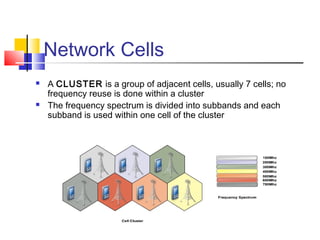
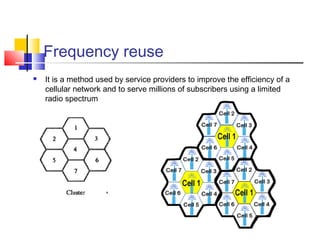
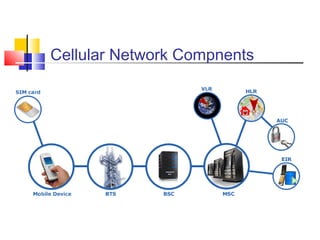
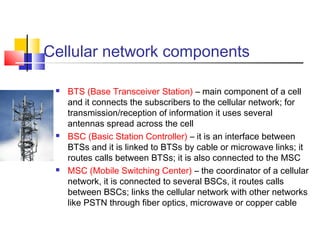
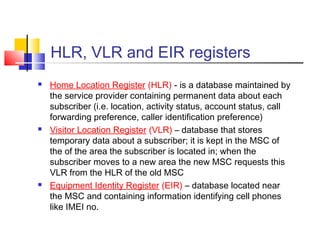
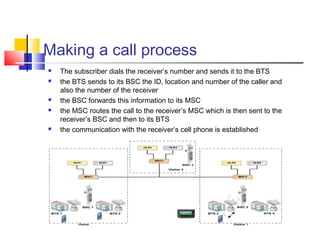
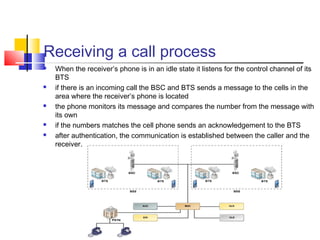
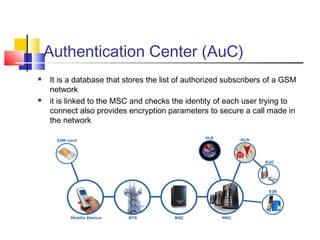
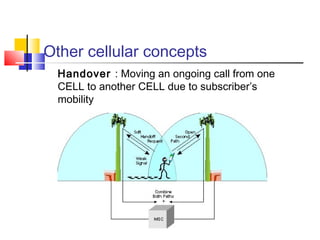
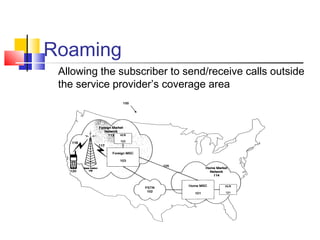
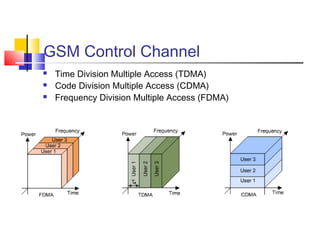
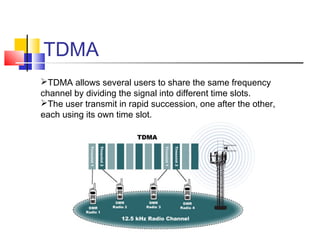
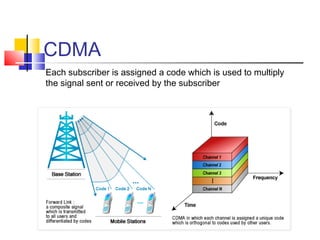
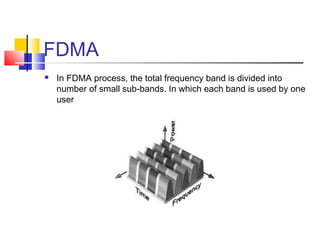


Cellular communication systems have evolved through multiple generations from analog 1G to digital 4G systems. A cellular network is divided into geographical areas called cells served by base transceiver stations. Cells are grouped into clusters where frequencies are reused to allow for more subscribers. When making a call, the cellular phone registers with the local base station which routes the call through switching centers to establish communication with the intended recipient. Modern cellular networks support additional services beyond voice like texting, internet access, and location tracking through technologies like GSM that employ protocols like TDMA for efficient frequency usage.


