How drugs act:
CELLULAR
ASPECTS
By : Dr. ELHAM KHALED
1
Learning objectives
• Regulation of Intracellular Calcium Levels
• Excitation
• Muscle contraction
• Release of chemical mediator
2
INTRODUCTION
• Cellular events can be either:
Quick processes occurring over a short timescale
(milliseconds to hours), particularly excitation,
contraction and secretion, which account for
many physiological responses.
Slower processes (generally days to months),
including cell division, growth, differentiation and cell
death, that determine the body's structure.
3
Con.
• The short-term regulation of cell function depends
mainly on the free concentration of Ca2+ in the cytosol,
[Ca2+]i.
• Ca2+ is the most important regulator of cell function.
• Many drugs and physiological mechanisms operate,
directly or indirectly, by influencing [Ca2+]i. [Ca2+]i is
regulated by:
• ion channels and transporters in the plasma membrane.
• the storage and release of Ca2+ by intracellular
organelles.
4
Con.
• In turn [Ca2+]i regulates a variety of functional
proteins, including:
Enzymes (particularly kinases and
phosphatases),
channels,
transporters,
5
6
Regulation Of Intracellular Calcium Levels
• Most of the Ca2+ in a resting cell is sequestered
in organelles, particularly the endoplasmic or
sarcoplasmic reticulum (ER or SR) and the
mitochondria.
• The free [Ca2+]i is kept to a low level
• The Ca2+ concentration in tissue fluid [Ca2+]o, is
high so there is a large concentration gradient
favouring Ca2+ entry.
7
Con.
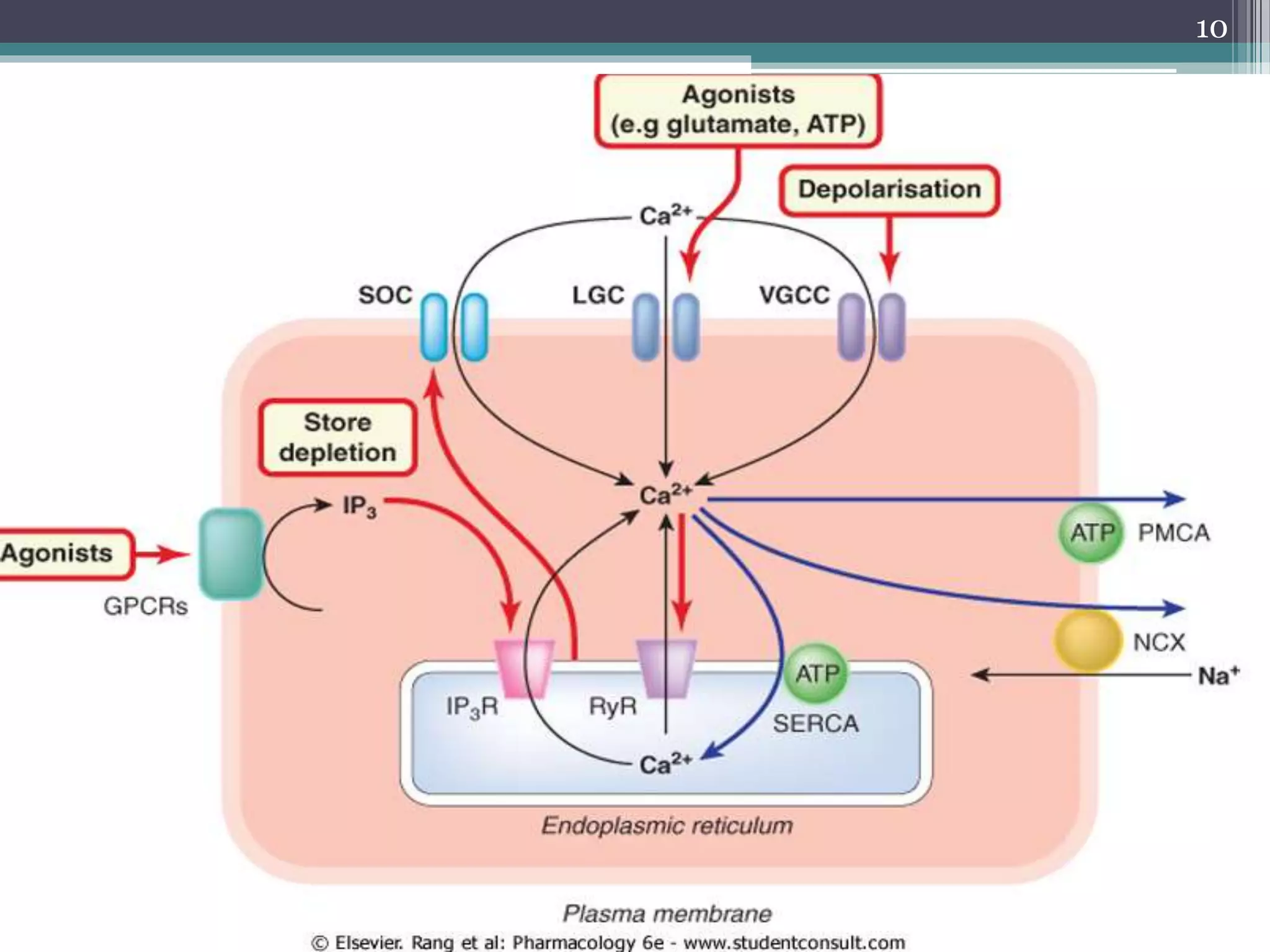
• Regulation of [Ca2+]i involves Three main
mechanisms:
control of Ca2+ entry
control of Ca2+ extrusion
exchange of Ca2+ between the cytosol
and the intracellular stores.
8
1. Calcium Entry Mechanisms
• There are Four main routes by which Ca2+ enters
cells across the plasma membrane:
voltage-gated calcium channels (VGCC)
ligand-gated calcium channels (LGCC)
store-operated calcium channels (SOCs)
Na+-Ca2+ exchange (can operate in either
direction).
9
-------
10
1. CALCIUM ENTRY MECHANISMS: VGCC
• Highly selective for Ca2+
• They are occur in excitable cells and allow
Ca2+ to enter the cell whenever the
membrane is depolarised.
11
1. CALCIUM ENTRY MECHANISMS: VGCC
• There are five distinct subtypes of
voltage-gated calcium channels:
L, long-lasting
T, transient
N, neither long-lasting nor
transient
P/Q, (two very similar types)
R
12
1. CALCIUM ENTRY MECHANISMS: VGCC
VGCC FUNCTIONS
• L channels are particularly important in
regulating contraction of cardiac and
smooth muscle.
• N channels (and also P/Q) are involved in
neurotransmitter and hormone release.
• T channels are important in cardiac
pacemaker and atria, also neuronal firing
patterns.
13
1. CALCIUM ENTRY MECHANISMS: VGCC
• Clinically used drugs that act directly on
these channels include the group of 'Ca2+
antagonists' consisting of:
dihydropyridines (e.g. nifedipine),
verapamil and diltiazem (used for
their cardiovascular effects)
14
1. CALCIUM ENTRY MECHANISMS: LGCC
• Most ligand-gated cation channels that
are activated by excitatory
neurotransmitters are relatively non-
selective, and conduct Ca2+ ions as well as
other cations.
• E.g the glutamate receptor which has a
particularly high permeability to Ca2+ and
is a major contributor to Ca2+ uptake in
the central nervous system.
15
1. CALCIUM ENTRY MECHANISMS: LGCC
• The P2X receptor activated by ATP, is the
only example of a true ligand-gated
channel in smooth muscle, and this
constitutes an important route of entry
for Ca2+.
16
1. Calcium Entry Mechanisms: SOCs
• These are channels that occur in the plasma
membrane and open to allow Ca2+ entry when
the ER stores are depleted.
17
2. Calcium Extrusion Mechanisms: Ca2+-ATPase
• Active transport of Ca2+ outwards across the
plasma membrane, and inwards across the
membranes of the ER or SR, depends on the
activity of a Ca2+-dependent ATPase
• These are similar to the Na+/K+-dependent
ATPase.
• They are found in both the plasma and the ER
membranes.
18
2. Calcium Extrusion Mechanisms: Na+-Ca2+
exchange
• Calcium is also extruded from cells in exchange for Na+,
by Na+-Ca2+ exchange.
• This is done by a transporter (exchanger), which can
operate in either direction.
• The exchanger transfers three Na+ ions for one Ca2+, and
therefore produces a net depolarising current when it is
extruding Ca2+.
• The energy for Ca2+ extrusion comes from the
electrochemical gradient for Na+, not directly from ATP
hydrolysis.
19
3. CALCIUM RELEASE MECHANISMS:
• There are two main types of calcium channel in
the ER and SR membrane, which play an
important part in controlling the release of Ca2+
from these stores.
1. The inositol trisphosphate receptor (IP3R)
2. The ryanodine receptor (RyR)
20
IP3R
• IP3R is a ligand-gated ion channel.
• It is activated by inositol trisphosphate (IP3).
• This is the main mechanism by which activation
of G-protein-coupled receptors causes an
increase in [Ca2+]i.
21
RyR:
• So called because it was first identified through the
specific blocking action of the plant alkaloid
ryanodine.
• It is particularly important in skeletal muscle.
• It is activated by a small rise in [Ca2+]i, producing
the effect known as calcium-induced calcium
release (CICR), which serves to amplify the Ca2+
signal produced by other mechanisms.
• CICR means that release tends to be regenerative.
22
CALMODULIN
• Calcium exerts its control over cell functions by
virtue of its ability to regulate the activity of
many different functional protein.
• In most cases, a Ca2+-binding protein serves as
an intermediate between Ca2+ and the regulated
functional protein
• Calmodulin is a dimer, with four Ca2+-binding
sites. When all are occupied, it undergoes a
conformational change, thereby affecting their
functional properties.
23
24
Excitability
• Excitability is defined as the ability of a cell to
show a regenerative all-or-nothing electrical
response to depolarisation of its membrane,
known as an action potential.
• It is a characteristic of most neurons, muscle cells
and many endocrine gland cells.
25
Excitability
• The excitability of the cell depends mainly on
the state of:
(a) the voltage-gated sodium and/or
calcium channels.
(b) the potassium channels of the
resting membrane.
26
Excitability
• Anything that increases the number of available
sodium or calcium channels, or reduces their
activation threshold, will tend to increase
excitability,
• whereas increasing the resting K+ conductance,
such as by opening more potassium channels,
reduces excitability (due to membrane
hyperpolarization which cause cell inhibition).
27
28
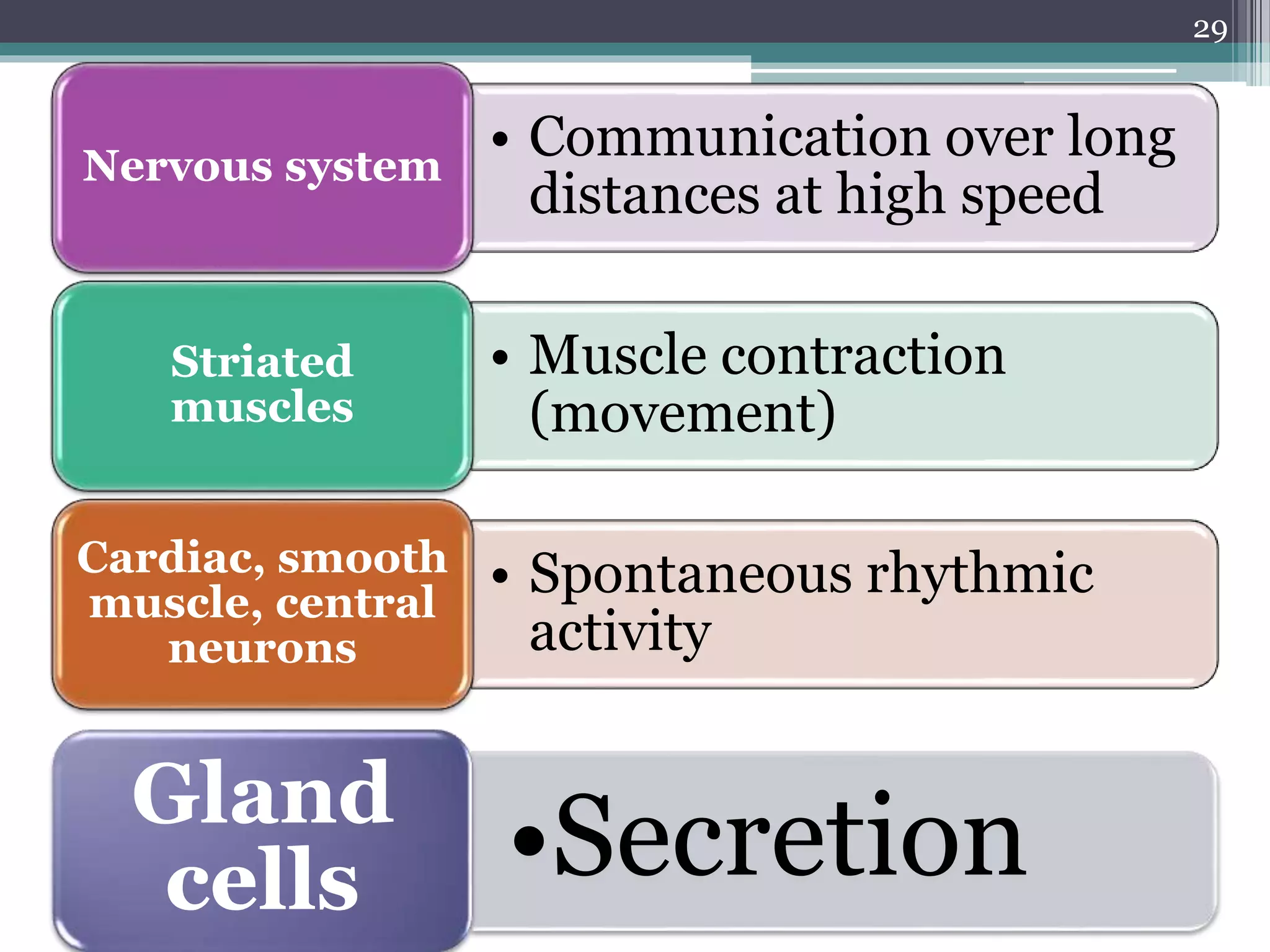
• Communication over long
distances at high speed
Nervous system
• Muscle contraction
(movement)
Striated
muscles
• Spontaneous rhythmic
activity
Cardiac, smooth
muscle, central
neurons
29
•SecretionGland
cells
THE RESTING CELL
• Under resting conditions, all cells maintain a
negative internal potential between about -30 mV
and -80 mV, depending on the cell type.
• The membrane is relatively impermeable to Na+
and Ca2+.
30
31
• The membrane is selectively permeable to K+
because potassium channels are open at rest.
• Na+ ions are actively extruded from the cell in
exchange for K+ ions by the Na+ pump (or Na+-
K+ ATPase).
• The result is that [K+]i, is higher, and [Na+]i is
lower, than the respective extracellular
concentrations.
32
GENERATION OF ACTION POTENTIAL
• Triggers:
Transmitter action
Sensory stimulus
Spontaneous pacemaker activity
33
• The first event is a small depolarisation of the
membrane.
• This opens sodium channels, allowing an inward
current of Na+ ions to flow, which depolarises the
membrane still further. The process is thus a
regenerative one.
• The increased Na+ conductance is transient,
because the channels inactivate rapidly and the
membrane returns to its resting state.
34
• In many types of cell, including most nerve cells,
repolarisation is assisted by the opening of
voltage-dependent potassium channels.
35
The action potential is generated by the
interplay of two processes:
1. a rapid, transient increase in Na+
permeability that occurs when the
membrane is depolarised
2. a slower, sustained increase in K+
permeability
36
**Note
• Because of the inequality of Na+ and K+
concentrations on the two sides of the
membrane, an increase in Na+ permeability
causes an inward current of Na+ ions, whereas
an increase in K+ permeability causes an
outward current.
37
• Voltage-gated calcium channels were discovered
later.
• They function in basically the same way as
sodium channels.
• They contribute to action potential generation in
many cells, particularly cardiac and smooth
muscle cells, but also in neurons and secretory
cells.
38
39
MUSCLE CONTRACTION
• Effects of drugs on the contractile machinery of
muscles are the basis of many therapeutic
applications.
• Smooth muscle pharmacology is the most important
(the isolated organ bath technology).
• Cardiac muscle contractility is also the target of
important drug effects.
• Striated muscle contractility is only rarely affected by
drugs.
40
MUSCLE CONTRACTION
• In all muscle types, the basic molecular basis of
contraction is similar, namely an interaction
between actin and myosin, fuelled by ATP and
initiated by an increase in [Ca2+]i,
41
▫ However there are differences between
these three kinds of muscles in:
(a) the linkage between membrane
events and increase in [Ca2+]i.
(b) the mechanism by which [Ca2+]i
regulates contraction.
42
SKELETAL MUSCLE:
• Skeletal muscle possesses an array of transverse T
tubules extending into the cell from the plasma
membrane.
• The action potential of the plasma membrane
depends on VGSCs, as in most nerve cells, and
propagates rapidly from its site of origin, the
motor endplate, to the rest of the fibre.
43
44
Con.
• The T tubule membrane contains L-type calcium
channels, which respond to membrane
depolarisation conducted passively along the T
tubule when the plasma membrane is invaded by
an action potential.
• These calcium channels are located extremely
close to ryanodine receptors in the adjacent SR
membrane, and activation of these RyRs causes
release of Ca2+ from the SR
45
Con.
• There is evidence of direct coupling between the
calcium channels of the T tubule and the RyRs of
the SR, this coupling results in Ca2+ release
following the action potential in the muscle
fibre.
• The Ca2+ binds to troponin, a protein that
normally blocks the interaction between actin
and myosin.
• When Ca2+ binds, troponin moves out of the way
and allows the contractile machinery to operate.
46
Cardiac Muscle:
• Cardiac muscle cells lack T tubules, and there is no
direct coupling between the plasma membrane and
the SR.
• commonly initiated by rapid depolarisation followed
by a 'plateau' lasting several hundred milliseconds.
• The plasma membrane contains many L-type
calcium channels, which open during this plateau
and allow Ca2+ to enter the cell, although not in
sufficient quantities to activate the contractile
machinery directly.
47
Con.
• Instead, this initial Ca2+ entry acts on RyRs to
release Ca2+ from the SR, producing a secondary
and much larger wave of Ca2+.
• With minor differences, the mechanism by
which Ca2+ activates the contractile machinery is
the same as in skeletal muscle.
48
49
SMOOTH MUSCLE:
• Smooth muscle is an important component of
most physiological systems, including blood
vessels and the gastrointestinal and respiratory
tracts.
• Therefore the contractile machinery of smooth
muscle are the basis of many therapeutic
applications.
• it propagates through the tissue much more
slowly and uncertainly
50
51
Con.
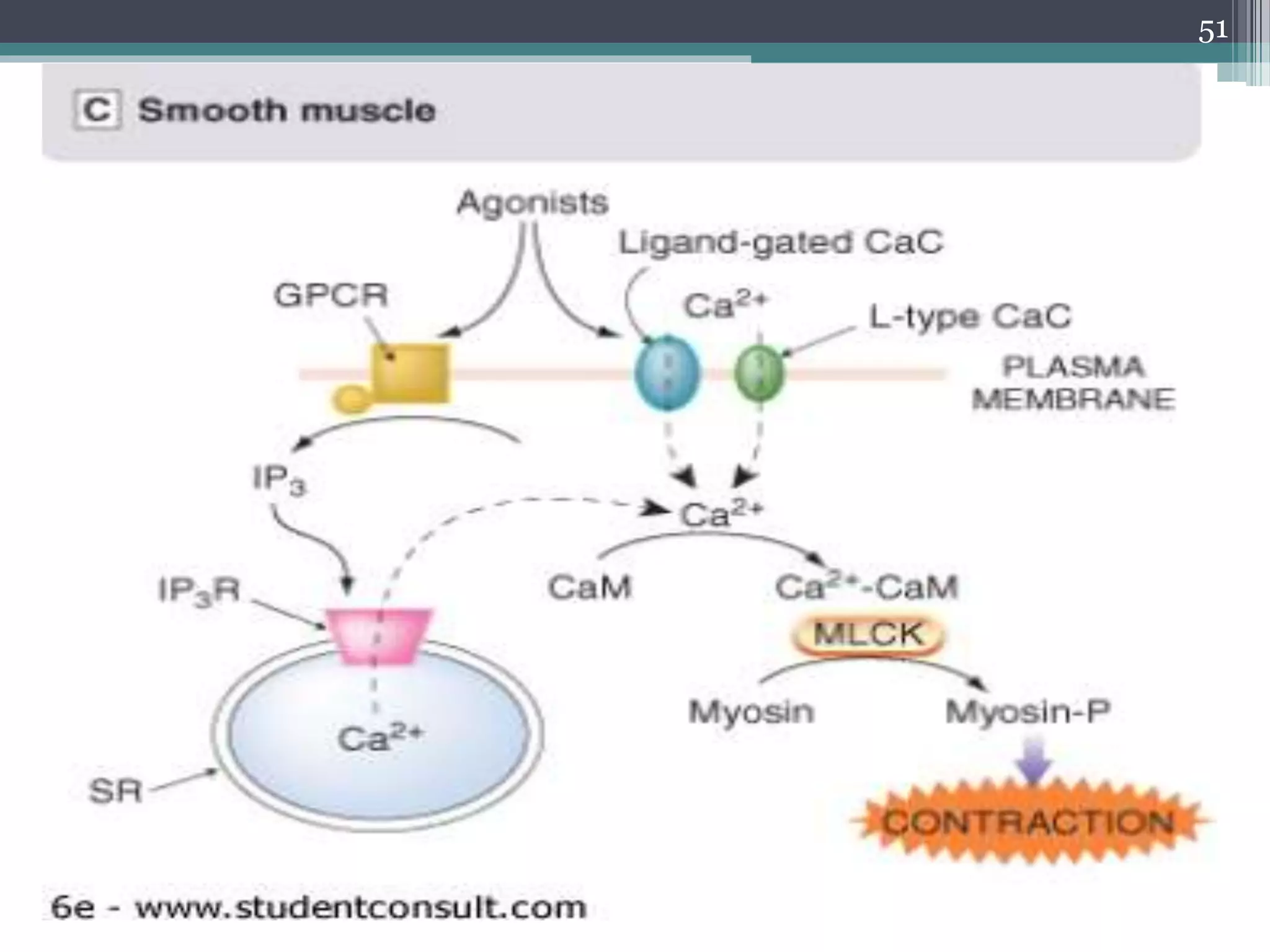
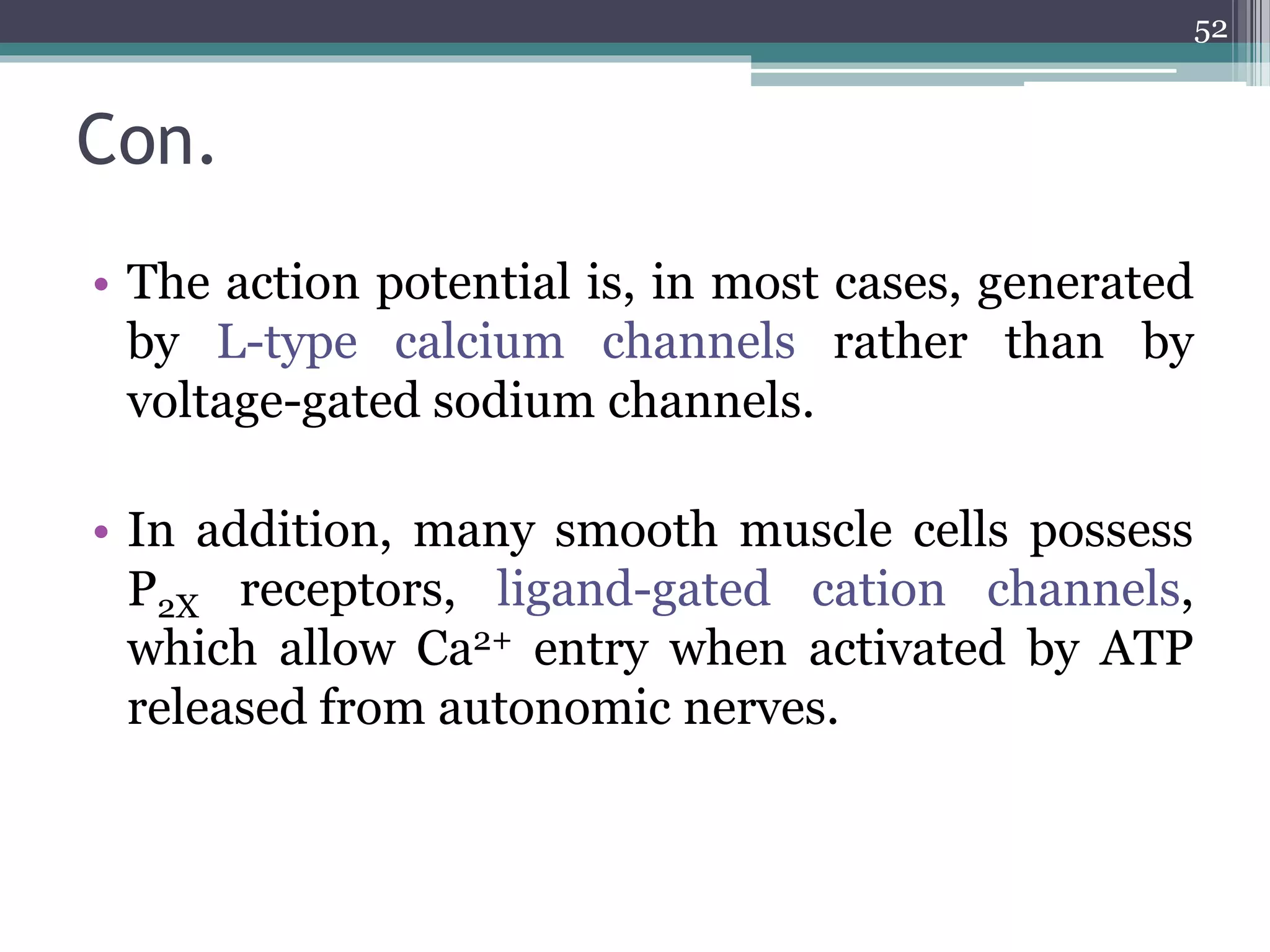
• The action potential is, in most cases, generated
by L-type calcium channels rather than by
voltage-gated sodium channels.
• In addition, many smooth muscle cells possess
P2X receptors, ligand-gated cation channels,
which allow Ca2+ entry when activated by ATP
released from autonomic nerves.
52
Con.
• Smooth muscle cells also store Ca2+ in the ER, from
which it can be released when the IP3R is activated.
• IP3 is generated by activation of many types of G-
protein-coupled receptor.
• Thus, in contrast to skeletal and cardiac muscle,
Ca2+ release and contraction can occur in smooth
muscle when such receptors are activated without
necessarily involving depolarisation and Ca2+ entry
through the plasma membrane.
53
Con.
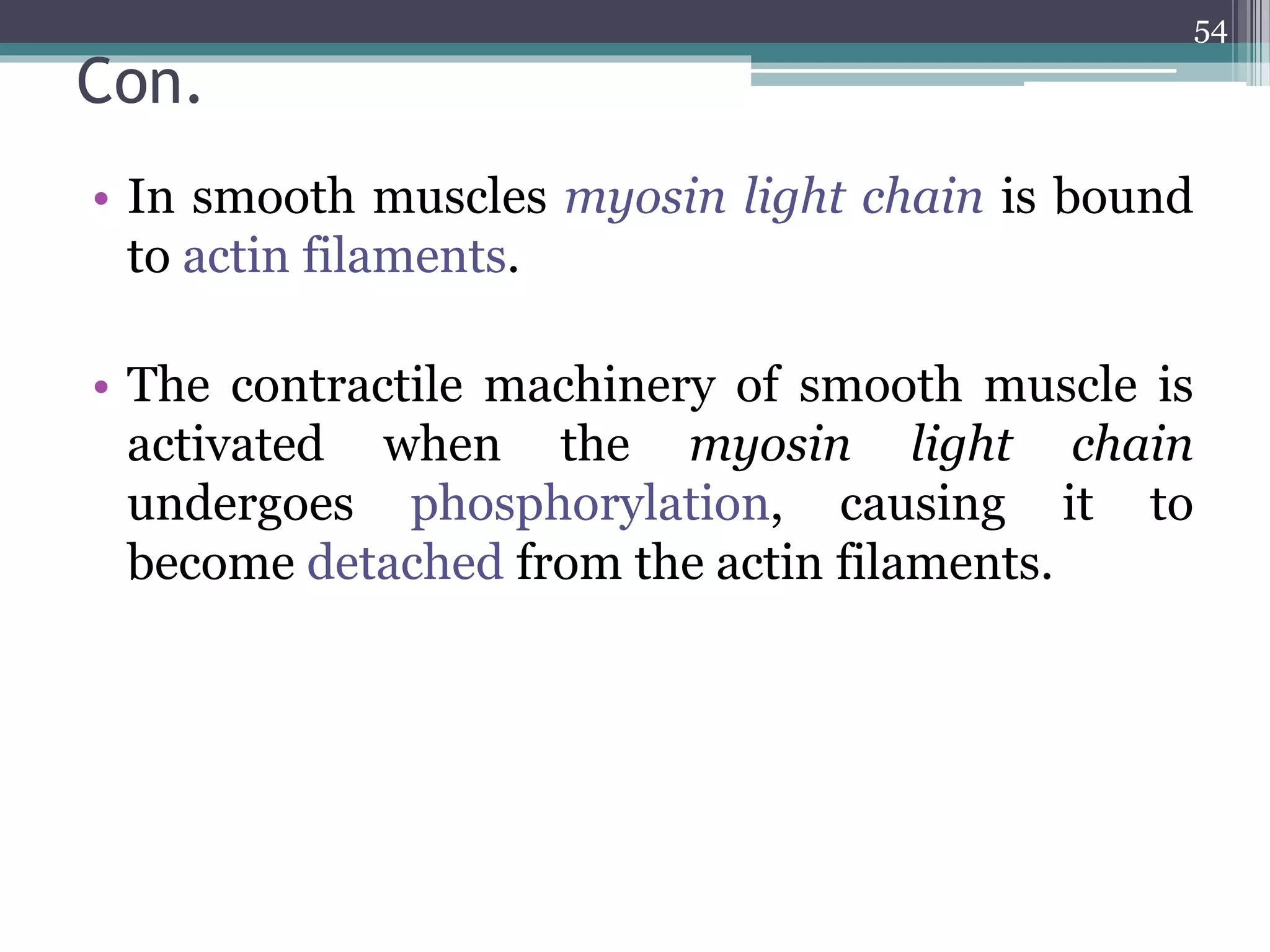
• In smooth muscles myosin light chain is bound
to actin filaments.
• The contractile machinery of smooth muscle is
activated when the myosin light chain
undergoes phosphorylation, causing it to
become detached from the actin filaments.
54
SMOOTH MUSCLE
• This phosphorylation is catalysed by a kinase,
myosin light-chain kinase (MLCK), which is
activated when it binds to Ca2+-calmodulin.
• A second enzyme, myosin phosphatase, reverses
the phosphorylation and causes relaxation.
55
SMOOTH MUSCLE
• The activity of MLCK and myosin phosphatase
thus exerts a balanced effect, promoting
contraction and relaxation, respectively.
56
SMOOTH MUSCLE
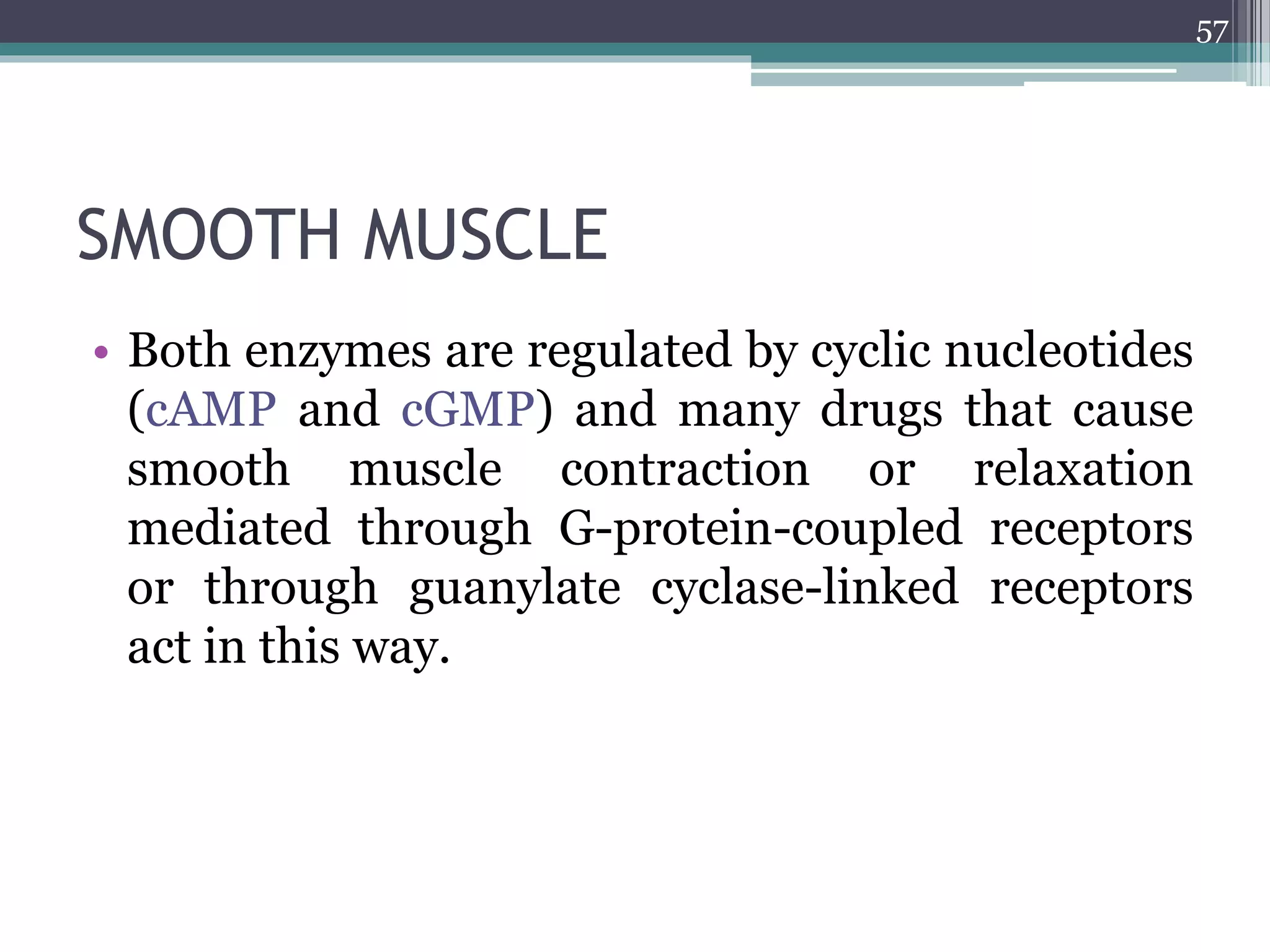
• Both enzymes are regulated by cyclic nucleotides
(cAMP and cGMP) and many drugs that cause
smooth muscle contraction or relaxation
mediated through G-protein-coupled receptors
or through guanylate cyclase-linked receptors
act in this way.
57
SMOOTH MUSCLE
• Many therapeutic drugs work by contracting or
relaxing smooth muscle, particularly those
affecting the cardiovascular, respiratory and
gastrointestinal systems
58
59
Con.
• Much of pharmacology is based on
interference with the body's own
chemical mediators, particularly:
neurotransmitters,
hormones
inflammatory mediators.
60
Release of Chemical Mediators
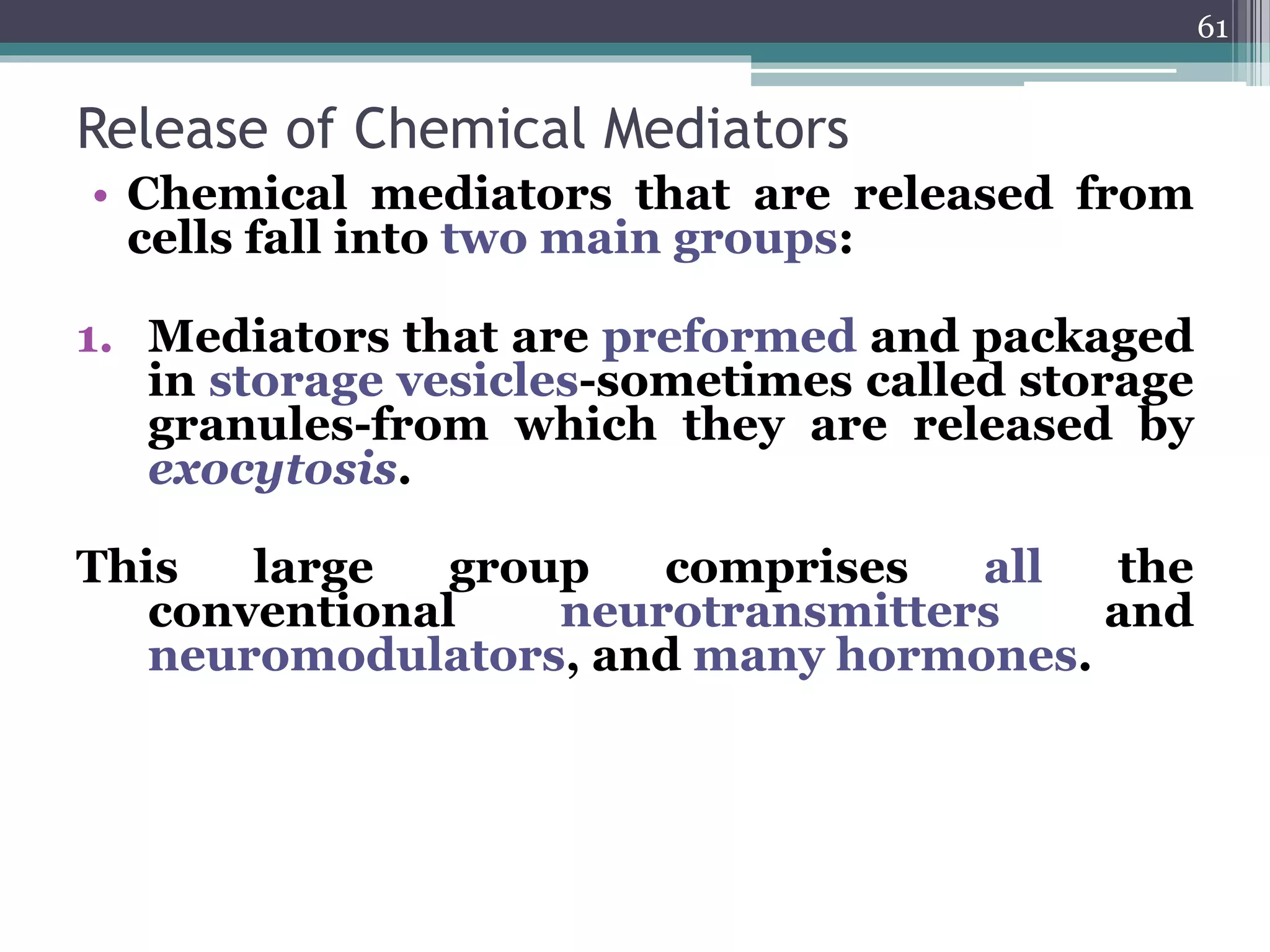
• Chemical mediators that are released from
cells fall into two main groups:
1. Mediators that are preformed and packaged
in storage vesicles-sometimes called storage
granules-from which they are released by
exocytosis.
This large group comprises all the
conventional neurotransmitters and
neuromodulators, and many hormones.
61
RELEASE OF CHEMICAL MEDIATORS
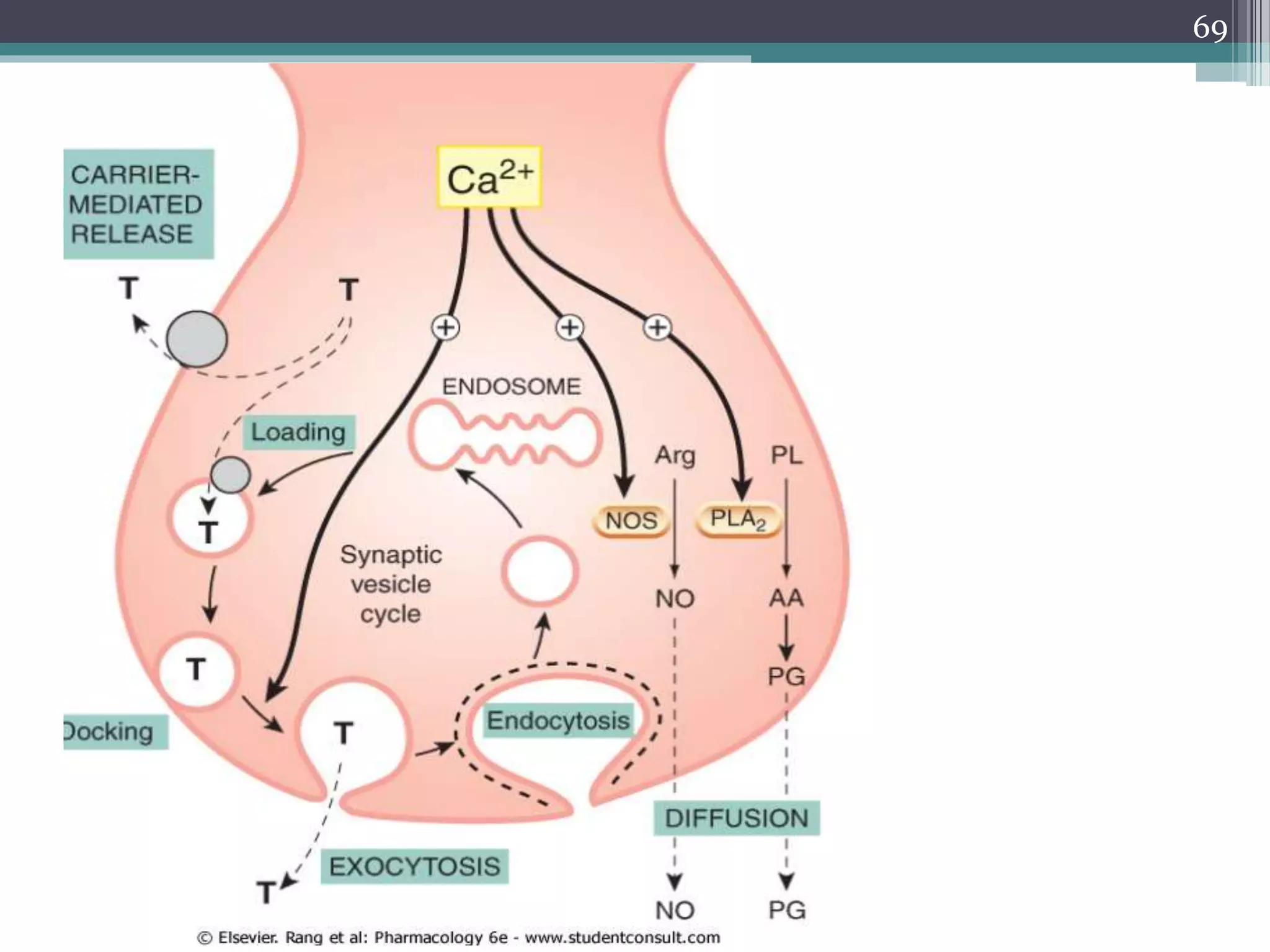
2. Mediators that are produced on demand
and are released by diffusion or by
membrane carriers.
This group includes nitric oxide and
many lipid mediators (e.g. prostanoids,
and endocannabinoids).
Calcium ions play a key role in both cases,
because a rise in [Ca2+]i initiates
exocytosis and is also the main activator
of the enzymes responsible for the
synthesis of diffusible mediators.
62
RELEASE OF CHEMICAL MEDIATORS
• Drugs and other agents that affect the
various control mechanisms that regulate
[Ca2+]i will therefore also affect mediator
release, and this accounts for many of the
physiological effects that they produce.
63
EXOCYTOSIS
• Exocytosis, occurring in response to an
increase of [Ca2+]i, is the principal
mechanism of transmitter release in the
peripheral and central nervous systems, as
well as in endocrine cells and mast cells.
• Exocytosis involves fusion between the
membrane of synaptic vesicles and the inner
surface of the plasma membrane.
• The vesicles are preloaded with stored
transmitter
64
EXOCYTOSIS
• In nerve terminals specialised for fast
synaptic transmission, Ca2+ enters
through VGCC, mainly of the N and P
type.
• Elsewhere, where speed is less critical,
Ca2+ may come from intracellular stores.
65
EXOCYTOSIS
• Calcium causes exocytosis by binding to
the vesicle-bound protein
• Synaptotagmin
• synaptobrevin
• synaptotaxin
66
EXOCYTOSIS
• This association brings the vesicle
membrane into close apposition with the
plasma membrane, causing membrane
fusion.
• This group of proteins, known collectively
as SNAREs, play a key role in exocytosis.
67
EXOCYTOSIS
• Having undergone exocytosis, the empty
vesicle is recaptured by endocytosis and
returns to the interior of the terminal,
where it fuses with the larger endosomal
membrane.
68
69
Non-vesicular Release Mechanisms:
• Some mediators are released by diffusion across
the membrane or by carrier-mediated extrusion,
rather than by exocytosis.
• The mediators are not stored but escape from
the cell as soon as they are synthesised.
70
NON-VESICULAR RELEASE MECHANISMS
• In such cases, the synthetic enzyme is activated
by Ca2+, and the moment-to-moment control of
the rate of synthesis depends on [Ca2+]i.
• This kind of release is necessarily slower than
the classic exocytotic mechanism, but in the case
of nitric oxide is fast enough for it to function as
a true transmitter.
71
NON-VESICULAR RELEASE MECHANISMS
• Some drugs act by displacing the endogenous
mediator from storage vesicles into the cytosol,
whence it escapes (leaks out) via plasma
membrane carriers, a mechanism that does not
depend on Ca2+.
• E.g. amphetamines, which release amines from
central and peripheral nerve terminals.
72
73

Cellular aspects

  • 1.
  • 2.
    Learning objectives • Regulationof Intracellular Calcium Levels • Excitation • Muscle contraction • Release of chemical mediator 2
  • 3.
    INTRODUCTION • Cellular eventscan be either: Quick processes occurring over a short timescale (milliseconds to hours), particularly excitation, contraction and secretion, which account for many physiological responses. Slower processes (generally days to months), including cell division, growth, differentiation and cell death, that determine the body's structure. 3
  • 4.
    Con. • The short-termregulation of cell function depends mainly on the free concentration of Ca2+ in the cytosol, [Ca2+]i. • Ca2+ is the most important regulator of cell function. • Many drugs and physiological mechanisms operate, directly or indirectly, by influencing [Ca2+]i. [Ca2+]i is regulated by: • ion channels and transporters in the plasma membrane. • the storage and release of Ca2+ by intracellular organelles. 4
  • 5.
    Con. • In turn[Ca2+]i regulates a variety of functional proteins, including: Enzymes (particularly kinases and phosphatases), channels, transporters, 5
  • 6.
  • 7.
    Regulation Of IntracellularCalcium Levels • Most of the Ca2+ in a resting cell is sequestered in organelles, particularly the endoplasmic or sarcoplasmic reticulum (ER or SR) and the mitochondria. • The free [Ca2+]i is kept to a low level • The Ca2+ concentration in tissue fluid [Ca2+]o, is high so there is a large concentration gradient favouring Ca2+ entry. 7
  • 8.
    Con. • Regulation of[Ca2+]i involves Three main mechanisms: control of Ca2+ entry control of Ca2+ extrusion exchange of Ca2+ between the cytosol and the intracellular stores. 8
  • 9.
    1. Calcium EntryMechanisms • There are Four main routes by which Ca2+ enters cells across the plasma membrane: voltage-gated calcium channels (VGCC) ligand-gated calcium channels (LGCC) store-operated calcium channels (SOCs) Na+-Ca2+ exchange (can operate in either direction). 9
  • 10.
  • 11.
    1. CALCIUM ENTRYMECHANISMS: VGCC • Highly selective for Ca2+ • They are occur in excitable cells and allow Ca2+ to enter the cell whenever the membrane is depolarised. 11
  • 12.
    1. CALCIUM ENTRYMECHANISMS: VGCC • There are five distinct subtypes of voltage-gated calcium channels: L, long-lasting T, transient N, neither long-lasting nor transient P/Q, (two very similar types) R 12
  • 13.
    1. CALCIUM ENTRYMECHANISMS: VGCC VGCC FUNCTIONS • L channels are particularly important in regulating contraction of cardiac and smooth muscle. • N channels (and also P/Q) are involved in neurotransmitter and hormone release. • T channels are important in cardiac pacemaker and atria, also neuronal firing patterns. 13
  • 14.
    1. CALCIUM ENTRYMECHANISMS: VGCC • Clinically used drugs that act directly on these channels include the group of 'Ca2+ antagonists' consisting of: dihydropyridines (e.g. nifedipine), verapamil and diltiazem (used for their cardiovascular effects) 14
  • 15.
    1. CALCIUM ENTRYMECHANISMS: LGCC • Most ligand-gated cation channels that are activated by excitatory neurotransmitters are relatively non- selective, and conduct Ca2+ ions as well as other cations. • E.g the glutamate receptor which has a particularly high permeability to Ca2+ and is a major contributor to Ca2+ uptake in the central nervous system. 15
  • 16.
    1. CALCIUM ENTRYMECHANISMS: LGCC • The P2X receptor activated by ATP, is the only example of a true ligand-gated channel in smooth muscle, and this constitutes an important route of entry for Ca2+. 16
  • 17.
    1. Calcium EntryMechanisms: SOCs • These are channels that occur in the plasma membrane and open to allow Ca2+ entry when the ER stores are depleted. 17
  • 18.
    2. Calcium ExtrusionMechanisms: Ca2+-ATPase • Active transport of Ca2+ outwards across the plasma membrane, and inwards across the membranes of the ER or SR, depends on the activity of a Ca2+-dependent ATPase • These are similar to the Na+/K+-dependent ATPase. • They are found in both the plasma and the ER membranes. 18
  • 19.
    2. Calcium ExtrusionMechanisms: Na+-Ca2+ exchange • Calcium is also extruded from cells in exchange for Na+, by Na+-Ca2+ exchange. • This is done by a transporter (exchanger), which can operate in either direction. • The exchanger transfers three Na+ ions for one Ca2+, and therefore produces a net depolarising current when it is extruding Ca2+. • The energy for Ca2+ extrusion comes from the electrochemical gradient for Na+, not directly from ATP hydrolysis. 19
  • 20.
    3. CALCIUM RELEASEMECHANISMS: • There are two main types of calcium channel in the ER and SR membrane, which play an important part in controlling the release of Ca2+ from these stores. 1. The inositol trisphosphate receptor (IP3R) 2. The ryanodine receptor (RyR) 20
  • 21.
    IP3R • IP3R isa ligand-gated ion channel. • It is activated by inositol trisphosphate (IP3). • This is the main mechanism by which activation of G-protein-coupled receptors causes an increase in [Ca2+]i. 21
  • 22.
    RyR: • So calledbecause it was first identified through the specific blocking action of the plant alkaloid ryanodine. • It is particularly important in skeletal muscle. • It is activated by a small rise in [Ca2+]i, producing the effect known as calcium-induced calcium release (CICR), which serves to amplify the Ca2+ signal produced by other mechanisms. • CICR means that release tends to be regenerative. 22
  • 23.
    CALMODULIN • Calcium exertsits control over cell functions by virtue of its ability to regulate the activity of many different functional protein. • In most cases, a Ca2+-binding protein serves as an intermediate between Ca2+ and the regulated functional protein • Calmodulin is a dimer, with four Ca2+-binding sites. When all are occupied, it undergoes a conformational change, thereby affecting their functional properties. 23
  • 24.
  • 25.
    Excitability • Excitability isdefined as the ability of a cell to show a regenerative all-or-nothing electrical response to depolarisation of its membrane, known as an action potential. • It is a characteristic of most neurons, muscle cells and many endocrine gland cells. 25
  • 26.
    Excitability • The excitabilityof the cell depends mainly on the state of: (a) the voltage-gated sodium and/or calcium channels. (b) the potassium channels of the resting membrane. 26
  • 27.
    Excitability • Anything thatincreases the number of available sodium or calcium channels, or reduces their activation threshold, will tend to increase excitability, • whereas increasing the resting K+ conductance, such as by opening more potassium channels, reduces excitability (due to membrane hyperpolarization which cause cell inhibition). 27
  • 28.
  • 29.
    • Communication overlong distances at high speed Nervous system • Muscle contraction (movement) Striated muscles • Spontaneous rhythmic activity Cardiac, smooth muscle, central neurons 29 •SecretionGland cells
  • 30.
    THE RESTING CELL •Under resting conditions, all cells maintain a negative internal potential between about -30 mV and -80 mV, depending on the cell type. • The membrane is relatively impermeable to Na+ and Ca2+. 30
  • 31.
  • 32.
    • The membraneis selectively permeable to K+ because potassium channels are open at rest. • Na+ ions are actively extruded from the cell in exchange for K+ ions by the Na+ pump (or Na+- K+ ATPase). • The result is that [K+]i, is higher, and [Na+]i is lower, than the respective extracellular concentrations. 32
  • 33.
    GENERATION OF ACTIONPOTENTIAL • Triggers: Transmitter action Sensory stimulus Spontaneous pacemaker activity 33
  • 34.
    • The firstevent is a small depolarisation of the membrane. • This opens sodium channels, allowing an inward current of Na+ ions to flow, which depolarises the membrane still further. The process is thus a regenerative one. • The increased Na+ conductance is transient, because the channels inactivate rapidly and the membrane returns to its resting state. 34
  • 35.
    • In manytypes of cell, including most nerve cells, repolarisation is assisted by the opening of voltage-dependent potassium channels. 35
  • 36.
    The action potentialis generated by the interplay of two processes: 1. a rapid, transient increase in Na+ permeability that occurs when the membrane is depolarised 2. a slower, sustained increase in K+ permeability 36
  • 37.
    **Note • Because ofthe inequality of Na+ and K+ concentrations on the two sides of the membrane, an increase in Na+ permeability causes an inward current of Na+ ions, whereas an increase in K+ permeability causes an outward current. 37
  • 38.
    • Voltage-gated calciumchannels were discovered later. • They function in basically the same way as sodium channels. • They contribute to action potential generation in many cells, particularly cardiac and smooth muscle cells, but also in neurons and secretory cells. 38
  • 39.
  • 40.
    MUSCLE CONTRACTION • Effectsof drugs on the contractile machinery of muscles are the basis of many therapeutic applications. • Smooth muscle pharmacology is the most important (the isolated organ bath technology). • Cardiac muscle contractility is also the target of important drug effects. • Striated muscle contractility is only rarely affected by drugs. 40
  • 41.
    MUSCLE CONTRACTION • Inall muscle types, the basic molecular basis of contraction is similar, namely an interaction between actin and myosin, fuelled by ATP and initiated by an increase in [Ca2+]i, 41
  • 42.
    ▫ However thereare differences between these three kinds of muscles in: (a) the linkage between membrane events and increase in [Ca2+]i. (b) the mechanism by which [Ca2+]i regulates contraction. 42
  • 43.
    SKELETAL MUSCLE: • Skeletalmuscle possesses an array of transverse T tubules extending into the cell from the plasma membrane. • The action potential of the plasma membrane depends on VGSCs, as in most nerve cells, and propagates rapidly from its site of origin, the motor endplate, to the rest of the fibre. 43
  • 44.
  • 45.
    Con. • The Ttubule membrane contains L-type calcium channels, which respond to membrane depolarisation conducted passively along the T tubule when the plasma membrane is invaded by an action potential. • These calcium channels are located extremely close to ryanodine receptors in the adjacent SR membrane, and activation of these RyRs causes release of Ca2+ from the SR 45
  • 46.
    Con. • There isevidence of direct coupling between the calcium channels of the T tubule and the RyRs of the SR, this coupling results in Ca2+ release following the action potential in the muscle fibre. • The Ca2+ binds to troponin, a protein that normally blocks the interaction between actin and myosin. • When Ca2+ binds, troponin moves out of the way and allows the contractile machinery to operate. 46
  • 47.
    Cardiac Muscle: • Cardiacmuscle cells lack T tubules, and there is no direct coupling between the plasma membrane and the SR. • commonly initiated by rapid depolarisation followed by a 'plateau' lasting several hundred milliseconds. • The plasma membrane contains many L-type calcium channels, which open during this plateau and allow Ca2+ to enter the cell, although not in sufficient quantities to activate the contractile machinery directly. 47
  • 48.
    Con. • Instead, thisinitial Ca2+ entry acts on RyRs to release Ca2+ from the SR, producing a secondary and much larger wave of Ca2+. • With minor differences, the mechanism by which Ca2+ activates the contractile machinery is the same as in skeletal muscle. 48
  • 49.
  • 50.
    SMOOTH MUSCLE: • Smoothmuscle is an important component of most physiological systems, including blood vessels and the gastrointestinal and respiratory tracts. • Therefore the contractile machinery of smooth muscle are the basis of many therapeutic applications. • it propagates through the tissue much more slowly and uncertainly 50
  • 51.
  • 52.
    Con. • The actionpotential is, in most cases, generated by L-type calcium channels rather than by voltage-gated sodium channels. • In addition, many smooth muscle cells possess P2X receptors, ligand-gated cation channels, which allow Ca2+ entry when activated by ATP released from autonomic nerves. 52
  • 53.
    Con. • Smooth musclecells also store Ca2+ in the ER, from which it can be released when the IP3R is activated. • IP3 is generated by activation of many types of G- protein-coupled receptor. • Thus, in contrast to skeletal and cardiac muscle, Ca2+ release and contraction can occur in smooth muscle when such receptors are activated without necessarily involving depolarisation and Ca2+ entry through the plasma membrane. 53
  • 54.
    Con. • In smoothmuscles myosin light chain is bound to actin filaments. • The contractile machinery of smooth muscle is activated when the myosin light chain undergoes phosphorylation, causing it to become detached from the actin filaments. 54
  • 55.
    SMOOTH MUSCLE • Thisphosphorylation is catalysed by a kinase, myosin light-chain kinase (MLCK), which is activated when it binds to Ca2+-calmodulin. • A second enzyme, myosin phosphatase, reverses the phosphorylation and causes relaxation. 55
  • 56.
    SMOOTH MUSCLE • Theactivity of MLCK and myosin phosphatase thus exerts a balanced effect, promoting contraction and relaxation, respectively. 56
  • 57.
    SMOOTH MUSCLE • Bothenzymes are regulated by cyclic nucleotides (cAMP and cGMP) and many drugs that cause smooth muscle contraction or relaxation mediated through G-protein-coupled receptors or through guanylate cyclase-linked receptors act in this way. 57
  • 58.
    SMOOTH MUSCLE • Manytherapeutic drugs work by contracting or relaxing smooth muscle, particularly those affecting the cardiovascular, respiratory and gastrointestinal systems 58
  • 59.
  • 60.
    Con. • Much ofpharmacology is based on interference with the body's own chemical mediators, particularly: neurotransmitters, hormones inflammatory mediators. 60
  • 61.
    Release of ChemicalMediators • Chemical mediators that are released from cells fall into two main groups: 1. Mediators that are preformed and packaged in storage vesicles-sometimes called storage granules-from which they are released by exocytosis. This large group comprises all the conventional neurotransmitters and neuromodulators, and many hormones. 61
  • 62.
    RELEASE OF CHEMICALMEDIATORS 2. Mediators that are produced on demand and are released by diffusion or by membrane carriers. This group includes nitric oxide and many lipid mediators (e.g. prostanoids, and endocannabinoids). Calcium ions play a key role in both cases, because a rise in [Ca2+]i initiates exocytosis and is also the main activator of the enzymes responsible for the synthesis of diffusible mediators. 62
  • 63.
    RELEASE OF CHEMICALMEDIATORS • Drugs and other agents that affect the various control mechanisms that regulate [Ca2+]i will therefore also affect mediator release, and this accounts for many of the physiological effects that they produce. 63
  • 64.
    EXOCYTOSIS • Exocytosis, occurringin response to an increase of [Ca2+]i, is the principal mechanism of transmitter release in the peripheral and central nervous systems, as well as in endocrine cells and mast cells. • Exocytosis involves fusion between the membrane of synaptic vesicles and the inner surface of the plasma membrane. • The vesicles are preloaded with stored transmitter 64
  • 65.
    EXOCYTOSIS • In nerveterminals specialised for fast synaptic transmission, Ca2+ enters through VGCC, mainly of the N and P type. • Elsewhere, where speed is less critical, Ca2+ may come from intracellular stores. 65
  • 66.
    EXOCYTOSIS • Calcium causesexocytosis by binding to the vesicle-bound protein • Synaptotagmin • synaptobrevin • synaptotaxin 66
  • 67.
    EXOCYTOSIS • This associationbrings the vesicle membrane into close apposition with the plasma membrane, causing membrane fusion. • This group of proteins, known collectively as SNAREs, play a key role in exocytosis. 67
  • 68.
    EXOCYTOSIS • Having undergoneexocytosis, the empty vesicle is recaptured by endocytosis and returns to the interior of the terminal, where it fuses with the larger endosomal membrane. 68
  • 69.
  • 70.
    Non-vesicular Release Mechanisms: •Some mediators are released by diffusion across the membrane or by carrier-mediated extrusion, rather than by exocytosis. • The mediators are not stored but escape from the cell as soon as they are synthesised. 70
  • 71.
    NON-VESICULAR RELEASE MECHANISMS •In such cases, the synthetic enzyme is activated by Ca2+, and the moment-to-moment control of the rate of synthesis depends on [Ca2+]i. • This kind of release is necessarily slower than the classic exocytotic mechanism, but in the case of nitric oxide is fast enough for it to function as a true transmitter. 71
  • 72.
    NON-VESICULAR RELEASE MECHANISMS •Some drugs act by displacing the endogenous mediator from storage vesicles into the cytosol, whence it escapes (leaks out) via plasma membrane carriers, a mechanism that does not depend on Ca2+. • E.g. amphetamines, which release amines from central and peripheral nerve terminals. 72
  • 73.