
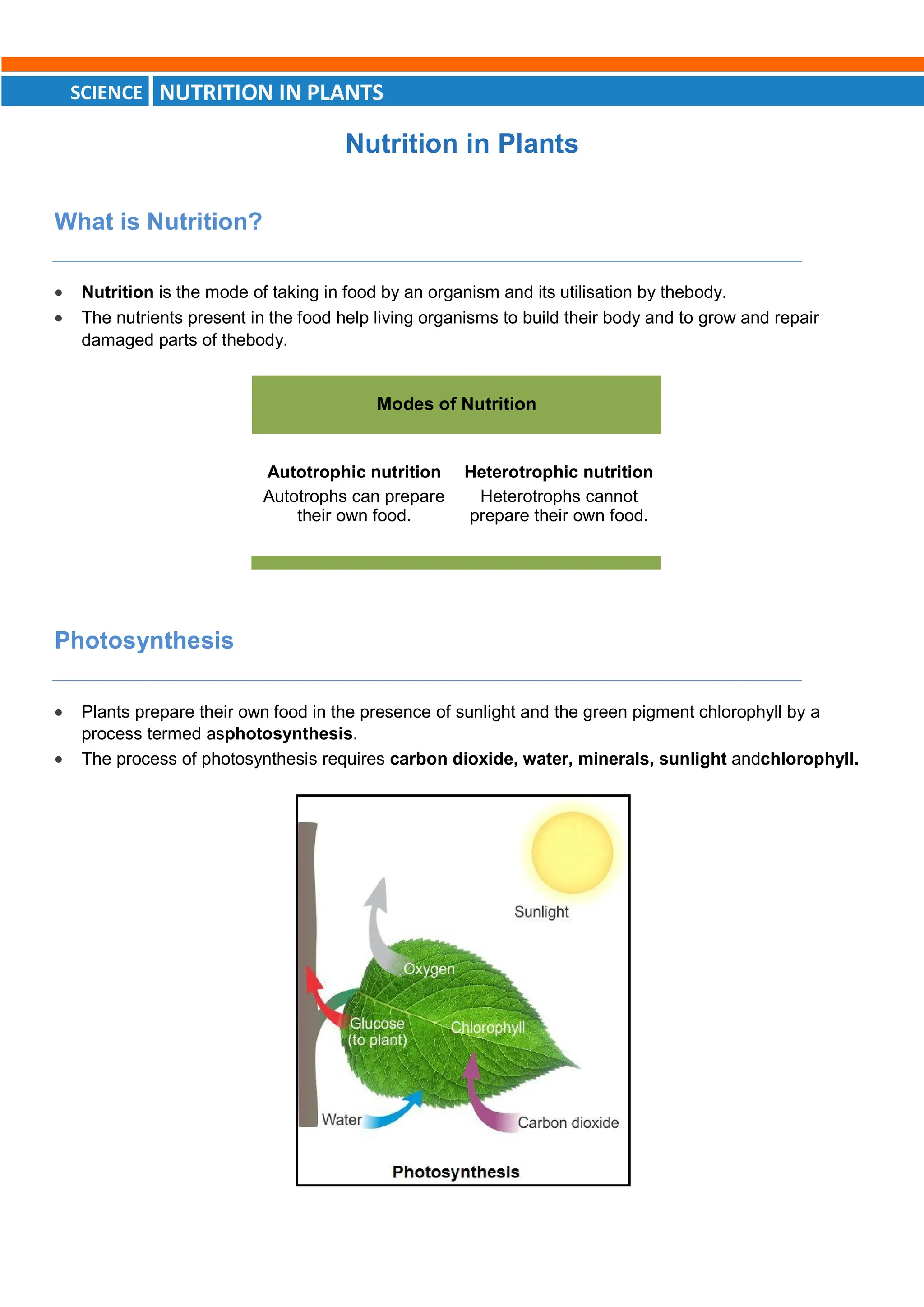


1. Nutrition: Nutrition is the process by which living organisms take in food and utilize it for growth and energy. 2. Modes of Nutrition: Autotrophic Nutrition: Organisms make their own food. Example: Green plants. Heterotrophic Nutrition: Organisms depend on others for food. Example: Animals, fungi. 3. Photosynthesis: It is the process by which green plants make food using: Carbon dioxide (from air) Water (from soil) Sunlight Chlorophyll (green pigment in leaves) Equation: Carbon dioxide + Water → Sunlight Glucose + Oxygen Carbon dioxide+Water Sunlight Glucose+Oxygen 4. Steps in Photosynthesis: Chlorophyll traps sunlight. Roots absorb water. Leaves take in CO₂ through stomata. Glucose is produced and stored as starch. 5. Other Modes of Nutrition in Plants: Parasites: Get food from other living plants. Example: Cuscuta (Amarbel) Saprotrophs: Feed on dead and decaying matter. Example: Fungi Insectivorous Plants: Trap insects for nitrogen. Example: Pitcher plant Symbiotic Plants: Share food and space. Example: Lichens (algae + fungi), Rhizobium bacteria in legume roots fix nitrogen. 6. Importance of Photosynthesis: Provides food and oxygen. Maintains oxygen-carbon dioxide balance. 7. Soil Nutrients: Plants need minerals from soil like nitrogen. Rhizobium helps in nitrogen fixation for legumes.


