15-01-26 08:35 DU
In the United States of America, notable cities which
developed or were rebuilt largely during this era include
Alameda, Astoria, Albany, Troy, Boston, the Brooklyn
Heights and Victorian Flatbush sections of New York City,
Buffalo, Chicago, Columbus, Detroit, Eureka, Galena,
Galveston, Grand Rapids, Baltimore, Jersey City/Hoboken,
Cape May, Louisville, Atlanta, New Orleans, Philadelphia,
Pittsburgh, Richmond, Saint Paul, and Angelino Heights in
Los Angeles. San Francisco is well known for its extensive
Victorian architecture, particularly in the Haight-Ashbury,
Lower Haight, Alamo Square, Noe Valley, Castro, Nob
Hill, and Pacific Heights neighborhoods.
The extent to which any one is the "largest surviving
example" is debated, with numerous qualifications. The
Distillery District in Toronto, Ontario contains the largest
and best preserved collection of Victorian-era industrial
architecture in North America.
Cabbagetown is the largest and most continuous Victorian
residential area in North America Other Toronto Victorian
neighbourhoods include The Annex, Parkdale, and
Rosedale. In the USA, the South End of Boston is
recognized by the National Register of Historic Places as
the oldest and largest Victorian neighborhood in the
country.[1][2] Old Louisville in Louisville, Kentucky also
claims to be the nation's largest Victorian neighborhood.[3]
[4] Richmond, Virginia is home to several large Victorian
neighborhoods, the most prominent being The Fan. The
Fan district is best known locally as Richmond's largest and
most 'European' of Richmond's neighborhoods and
nationally as the largest contiguous Victorian neighborhood
in the United States.[5] The Old West End neighborhood of
Toledo, Ohio is recognized as the largest collection of late
Victorian and Edwardian homes in the United States, east
of the Mississippi.[6] Summit Avenue in Saint Paul,
Minnesota has the longest line of Victorian homes in the
Case americane (ab)

Case americane (ab)

  • 1.
  • 34.
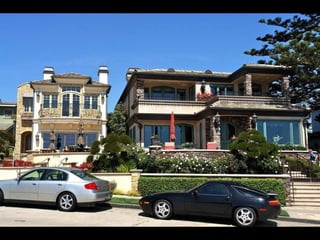
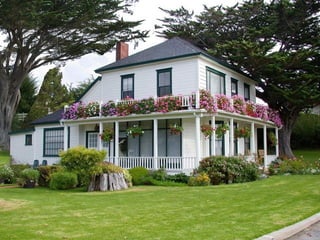
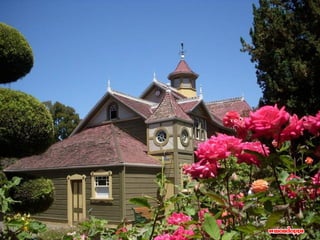
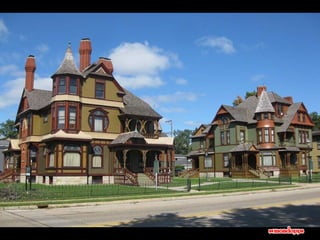
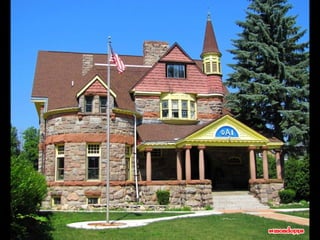
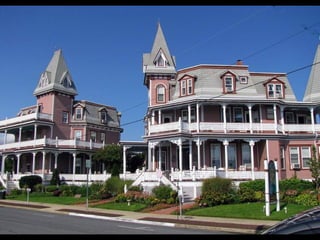
    In the UnitedStates of America, notable cities which developed or were rebuilt largely during this era include Alameda, Astoria, Albany, Troy, Boston, the Brooklyn Heights and Victorian Flatbush sections of New York City, Buffalo, Chicago, Columbus, Detroit, Eureka, Galena, Galveston, Grand Rapids, Baltimore, Jersey City/Hoboken, Cape May, Louisville, Atlanta, New Orleans, Philadelphia, Pittsburgh, Richmond, Saint Paul, and Angelino Heights in Los Angeles. San Francisco is well known for its extensive Victorian architecture, particularly in the Haight-Ashbury, Lower Haight, Alamo Square, Noe Valley, Castro, Nob Hill, and Pacific Heights neighborhoods. The extent to which any one is the "largest surviving example" is debated, with numerous qualifications. The Distillery District in Toronto, Ontario contains the largest and best preserved collection of Victorian-era industrial architecture in North America.
  • 35.
    Cabbagetown is thelargest and most continuous Victorian residential area in North America Other Toronto Victorian neighbourhoods include The Annex, Parkdale, and Rosedale. In the USA, the South End of Boston is recognized by the National Register of Historic Places as the oldest and largest Victorian neighborhood in the country.[1][2] Old Louisville in Louisville, Kentucky also claims to be the nation's largest Victorian neighborhood.[3] [4] Richmond, Virginia is home to several large Victorian neighborhoods, the most prominent being The Fan. The Fan district is best known locally as Richmond's largest and most 'European' of Richmond's neighborhoods and nationally as the largest contiguous Victorian neighborhood in the United States.[5] The Old West End neighborhood of Toledo, Ohio is recognized as the largest collection of late Victorian and Edwardian homes in the United States, east of the Mississippi.[6] Summit Avenue in Saint Paul, Minnesota has the longest line of Victorian homes in the