www.considracare.com
1-855-410-7971
wecare@considracare.com
Dementia
and you
An insight into living with
and caring for those
affected by
dementia
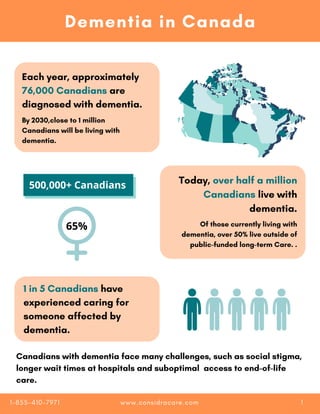
500,000+ Canadians
65%
Dementia in Canada
Each year, approximately
76,000 Canadians are
diagnosed with dementia.
By 2030,close to 1 million
Canadians will be living with
dementia.
Today, over half a million
Canadians live with
dementia.
Of those currently living with
dementia, over 50% live outside of
public-funded long-term Care. .
1 in 5 Canadians have
experienced caring for
someone affected by
dementia.
Canadians with dementia face many challenges, such as social stigma,
longer wait times at hospitals and suboptimal access to end-of-life
care.
www.considracare.com
1-855-410-7971 1
NOT USING OUR SERVICES ALREADY ?
GET AFFORDABLE HIGH-
QUALITY LIVE-IN CARE
We help you find and manage carefully screened
and experienced professional live-in caregivers
for your loved ones.
WHY USE US ?
Affordable with no upfront
costs or commitments
Fully vetted caregivers
Families choose who to hire
Trial period
Backup care
Monthly check-ins to review
and update the care plan
Ongoing caregiver training
We do payroll, taxes and WSIB
State-of-the-art platform to
guide caregivers and keep you
connected with them
1-855-410-7971
WWW.CONSIDRACARE.COM
1. Lewy Body Dementia
Lewy body dementia occurs when protein deposits (referred to as Lewy bodies) develop in the
regions of the brain responsible for motor control, movement and cognitive ability. It typically
affects those over the age of 60.
2. Frontotemporal Dementia (FTD)
FTD results from cell damage in the regions of the brain responsible for the control of movement,
speech, emotions, and judgement. FTD is sometimes called frontal lobe dementia or Pick’s disease.
It is most typically diagnosed in those aged 45 to 65.
3. Alzheimer's Disease
Alzheimer’s affects the areas of the brain involved with memory, such as the entorhinal cortex and
the hippocampus. It is the most common form of dementia and is typically diagnosed around the
age of 65.
4. Vascular Dementia
This type of dementia usually occurs as the result of a stroke. Those who have suffered a TIA
(Transient Ischemic Attack), or mini-stroke may also develop vascular dementia. This dementia is
characterized by problems with reasoning, planning, judgment, memory and other thought
processes
5. Mixed Dementia
1 in every 10 individuals with dementia will be diagnosed with more than one type - this is known as
mixed dementia. The most common combinations are Lewy Body and Alzheimer’s, and Alzheimer's
and vascular dementia. Symptoms vary from one case to another.
Types of Dementia
1. What is dementia?
The term “dementia” refers to a deterioration of mental ability. It does not refer to one,
specific disease but rather refers to the general decline in cognitive function caused by
various disorders affecting the brain. The severity of this decline can interfere with one’s daily
life. Despite its presence amongst the elderly, dementia is not a normal part of ageing.
www.considracare.com 1-855-410-7971
2
What are the early warning signs and symptoms of
dementia?
Symptoms
Each different type of dementia has its own range of symptoms. Regardless
of the specific type, most patients with dementia display the following
common symptoms:
General memory loss
Inability to follow a conversation
Confusion regarding dates, time, and daily tasks.
Changes in mood and behaviour
Inability to concentrate
Sleep disturbances
Hallucinations
Difficulty swallowing
Comprehension issues
Balance issues
Noticeable delay in thought process
Moderate to severe anxiety
Easily disoriented
Severe mood swings
Problems with speech and language
Easily distracted
Changes in personality
Problems with decision making
Issues with visual perception
Early Warning Signs
It is important to remember that the early warning signs of dementia can differ
from person to person. As well, one must factor in the different types of
dementia as the symptoms in each vary. However, there are several, general
symptoms that one may display in the early stages. They can include:
Difficulty concentrating
Difficulty in carrying out simple day-to-day tasks
Memory loss
Changes in mood, ranging from minor to severe
Inability to follow or participate in a
conversation
Confusion about the day, time, place, etc.
Withdrawal from social situations
www.considracare.com
1-855-410-7971 3
These terms are often used interchangeably, but it is important to note that they each have
different meanings. Alzheimer's refers to a specific type of disease, whereas dementia is a
general term for the decline of mental ability. Alzheimer's is the most common type of dementia.
Alzheimer's is caused by damage to the
brain’s cells - it gets progressively worse
over time. Symptoms include changes in
behaviour, confusion, and disorientation.
There is no cure for this disease. It
typically affects those over the age of 65.
Alzheimer's Dementia
Dementia is caused by damage to those
cells in the brain associated with
cognition and communication. There are
many types of dementia which each entail
a noticeable decline in the ability to
reason, memory and other cognitive skills.
Alzheimer’s is a type of dementia, as is
Lewy body dementia and Parkinson’s
disease.
What is the difference between Alzheimer's disease
and dementia?
www.considracare.com 1-855-410-7971
4
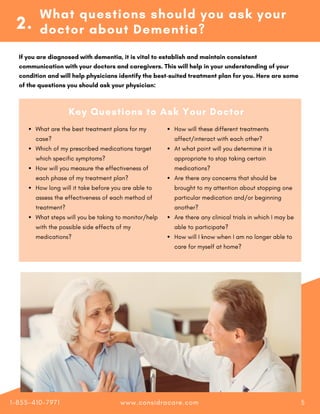
If you are diagnosed with dementia, it is vital to establish and maintain consistent
communication with your doctors and caregivers. This will help in your understanding of your
condition and will help physicians identify the best-suited treatment plan for you. Here are some
of the questions you should ask your physician:
Key Questions to Ask Your Doctor
What are the best treatment plans for my
case?
Which of my prescribed medications target
which specific symptoms?
How will you measure the effectiveness of
each phase of my treatment plan?
How long will it take before you are able to
assess the effectiveness of each method of
treatment?
What steps will you be taking to monitor/help
with the possible side effects of my
medications?
How will these different treatments
affect/interact with each other?
At what point will you determine it is
appropriate to stop taking certain
medications?
Are there any concerns that should be
brought to my attention about stopping one
particular medication and/or beginning
another?
Are there any clinical trials in which I may be
able to participate?
How will I know when I am no longer able to
care for myself at home?
2.
What questions should you ask your
doctor about Dementia?
www.considracare.com
1-855-410-7971 5
Self-Esteem Emotional Well-Being
Dementia can lead to feelings of insecurity
and an overall loss of self-esteem and self-
confidence. Those with dementia feel as
though they no longer have control over their
thoughts or actions. Additionally, one's
financial situation, career and interpersonal
relationships may change drastically as a
result of dementia - these changes can also
contribute to a decline in self-esteem.
Those with dementia may experience drastic
shifts in their emotional health, including the
loss of emotional regulation. In addition,
those with dementia are prone to rapid and
drastic mood changes. Some may have
difficulty expressing their emotions,
especially as their dementia continues to
progress.
3.
How can dementia impact an
individual?
In addition to memory and cognitive function, dementia can affect other aspects of life,
especially mentally and emotionally. The following are some of the ways dementia can affect
one's self-esteem and emotional well-being:
www.considracare.com 1-855-410-7971
6
What are the ways in which one can cope with living
with dementia?
If you are indeed diagnosed with one of the forms of dementia, you don’t need to panic. With the
correct support and care, you can still maintain your quality of life. The following are a few
helpful tips for managing dementia:
1. Be upfront with people
Don't be secretive about your diagnosis
Try to communicate with clarity - let
people know the exact ways in which they
can support you
2. Take care of your
physical health
Maintain a healthy diet
Participate in regular physical activities
Listen to your body - if you feel tired or
sore, make time to stretch and rest
3. Stay as active as possible 4. Organization is crucial
Stick to a daily, weekly, and or monthly
schedule (a printed timetable works best)
Keep a record of your medications (when
you take them, how much, etc.)
Keep in close contact with friends and
loved ones
Try your best to participate in social
activities and engagements
5. Stay on top of criticl legal
documents
6. Road Safety
Ifyou get confused or lost often during
drives, request a checkup with your
doctor
Get a driving assessment done in order to
ensure the safety on the road
Ensure you review important legal
documents early on - this includes
advance directives such as your will and
health/financial power of attorney
www.considracare.com
1-855-410-7971 7
3. Keep a record of their
toileting activities
4. Stick with a strict
bathing routine
3. Keep a record of their
toileting activities
4. Stick with a strict
bathing routine
Those with dementia often cannot
tell when their bladder or bowels are
full. Encourage them to use the
bathroom every few hours and keep
a record for medical
purposes.
Someone with Dementia may develop
a fear of water. Create a calm, but
structured bath time routine and stick
with it. Do not push the loved one to
shower if they do not feel comfortable
doing so.
4. Caregiving and dementia
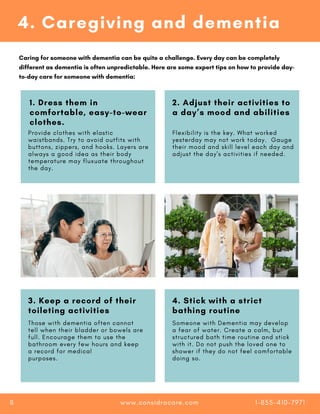
Caring for someone with dementia can be quite a challenge. Every day can be completely
different as dementia is often unpredictable. Here are some expert tips on how to provide day-
to-day care for someone with dementia:
1. Dress them in
comfortable, easy-to-wear
clothes.
2. Adjust their activities to
a day’s mood and abilities
Provide clothes with elastic
waistbands. Try to avoid outfits with
buttons, zippers, and hooks. Layers are
always a good idea as their body
temperature may fluxuate throughout
the day.
Flexibility is the key. What worked
yesterday may not work today. Gauge
their mood and skill level each day and
adjust the day's activities if needed.
www.considracare.com 1-855-410-7971
8
3. Keep a record of their
toileting activities
4. Stick with a strict
bathing routine
5. Keep mealtimes simple
and calm
6. Communicate clearly
Make sure the loved one is getting
proper nutrition. You may need to
cut their food into smaller portions.
Provide them with simple utensils
such as plastic knives and curved
plates. Maintain a calm and quiet
environment during mealtimes.
Communication is the best way to
maintain a sense of ease with a
dementia patient. Speak calmly, using
short sentences and simple phrases.
Give them time to respond and do not
interrupt them when they are
speaking.
www.considracare.com
1-855-410-7971 9
1-855-410-7971
wecare@considracare.com
www.considracare.com
Chronic diseases can be a challenge, especially for seniors, but with proper care,
it may be possible to maintain a healthy and happy lifestyle.
Our care experts can help you assess your needs and match you or your loved one
with a screened, professional and dedicated live-in caregiver experienced in
providing care for common chronic conditions. We also provide you, your family
and your caregiver with tools and support to deliver an affordable and superior
alternative to long-term care facilities.
Why is ConsidraCare's live-in home care a better alternative ?
Copyright 2021 ConsidraCare
Call us now for a free consultation from our dementia care experts
Consistent, 1-on-1 personal care
Carefully screened and vetted caregivers matched with your loved one's
care needs. Primary caregivers stay with the loved one at least 75% of the
time.
Families stay in control
We recommend but the families choose who to hire, get a trial period and
engage directly with caregivers through our smart platform.
Cost-effective, high-quality care
More affordable than hourly agencies and assisted living facilities, with
faster caregiver placement and higher quality of care.
We have your back
We assist with hiring, planning of care and daily tasks, payroll, taxes,
WSIB, backup care and more, and are always on hand to help.
How can ConsidraCare help?
1-855-410-7971
wecare@considracare.com
www.considracare.com
How does ConsidraCare work?
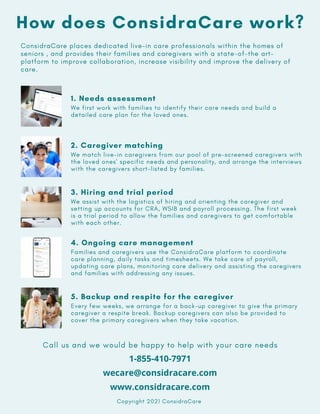
ConsidraCare places dedicated live-in care professionals within the homes of
seniors , and provides their families and caregivers with a state-of-the art-
platform to improve collaboration, increase visibility and improve the delivery of
care.
Copyright 2021 ConsidraCare
Call us and we would be happy to help with your care needs
2. Caregiver matching
We match live-in caregivers from our pool of pre-screened caregivers with
the loved ones' specific needs and personality, and arrange the interviews
with the caregivers short-listed by families.
3. Hiring and trial period
We assist with the logistics of hiring and orienting the caregiver and
setting up accounts for CRA, WSIB and payroll processing. The first week
is a trial period to allow the families and caregivers to get comfortable
with each other.
4. Ongoing care management
Families and caregivers use the ConsidraCare platform to coordinate
care planning, daily tasks and timesheets. We take care of payroll,
updating care plans, monitoring care delivery and assisting the caregivers
and families with addressing any issues.
5. Backup and respite for the caregiver
Every few weeks, we arrange for a back-up caregiver to give the primary
caregiver a respite break. Backup caregivers can also be provided to
cover the primary caregivers when they take vacation.
1. Needs assessment
We first work with families to identify their care needs and build a
detailed care plan for the loved ones.

Caring for Alzheimer's & Dementia

  • 1.
    www.considracare.com 1-855-410-7971 wecare@considracare.com Dementia and you An insightinto living with and caring for those affected by dementia
  • 2.
    500,000+ Canadians 65% Dementia inCanada Each year, approximately 76,000 Canadians are diagnosed with dementia. By 2030,close to 1 million Canadians will be living with dementia. Today, over half a million Canadians live with dementia. Of those currently living with dementia, over 50% live outside of public-funded long-term Care. . 1 in 5 Canadians have experienced caring for someone affected by dementia. Canadians with dementia face many challenges, such as social stigma, longer wait times at hospitals and suboptimal access to end-of-life care. www.considracare.com 1-855-410-7971 1
  • 3.
    NOT USING OURSERVICES ALREADY ? GET AFFORDABLE HIGH- QUALITY LIVE-IN CARE We help you find and manage carefully screened and experienced professional live-in caregivers for your loved ones. WHY USE US ? Affordable with no upfront costs or commitments Fully vetted caregivers Families choose who to hire Trial period Backup care Monthly check-ins to review and update the care plan Ongoing caregiver training We do payroll, taxes and WSIB State-of-the-art platform to guide caregivers and keep you connected with them 1-855-410-7971 WWW.CONSIDRACARE.COM
  • 4.
    1. Lewy BodyDementia Lewy body dementia occurs when protein deposits (referred to as Lewy bodies) develop in the regions of the brain responsible for motor control, movement and cognitive ability. It typically affects those over the age of 60. 2. Frontotemporal Dementia (FTD) FTD results from cell damage in the regions of the brain responsible for the control of movement, speech, emotions, and judgement. FTD is sometimes called frontal lobe dementia or Pick’s disease. It is most typically diagnosed in those aged 45 to 65. 3. Alzheimer's Disease Alzheimer’s affects the areas of the brain involved with memory, such as the entorhinal cortex and the hippocampus. It is the most common form of dementia and is typically diagnosed around the age of 65. 4. Vascular Dementia This type of dementia usually occurs as the result of a stroke. Those who have suffered a TIA (Transient Ischemic Attack), or mini-stroke may also develop vascular dementia. This dementia is characterized by problems with reasoning, planning, judgment, memory and other thought processes 5. Mixed Dementia 1 in every 10 individuals with dementia will be diagnosed with more than one type - this is known as mixed dementia. The most common combinations are Lewy Body and Alzheimer’s, and Alzheimer's and vascular dementia. Symptoms vary from one case to another. Types of Dementia 1. What is dementia? The term “dementia” refers to a deterioration of mental ability. It does not refer to one, specific disease but rather refers to the general decline in cognitive function caused by various disorders affecting the brain. The severity of this decline can interfere with one’s daily life. Despite its presence amongst the elderly, dementia is not a normal part of ageing. www.considracare.com 1-855-410-7971 2
  • 5.
    What are theearly warning signs and symptoms of dementia? Symptoms Each different type of dementia has its own range of symptoms. Regardless of the specific type, most patients with dementia display the following common symptoms: General memory loss Inability to follow a conversation Confusion regarding dates, time, and daily tasks. Changes in mood and behaviour Inability to concentrate Sleep disturbances Hallucinations Difficulty swallowing Comprehension issues Balance issues Noticeable delay in thought process Moderate to severe anxiety Easily disoriented Severe mood swings Problems with speech and language Easily distracted Changes in personality Problems with decision making Issues with visual perception Early Warning Signs It is important to remember that the early warning signs of dementia can differ from person to person. As well, one must factor in the different types of dementia as the symptoms in each vary. However, there are several, general symptoms that one may display in the early stages. They can include: Difficulty concentrating Difficulty in carrying out simple day-to-day tasks Memory loss Changes in mood, ranging from minor to severe Inability to follow or participate in a conversation Confusion about the day, time, place, etc. Withdrawal from social situations www.considracare.com 1-855-410-7971 3
  • 6.
    These terms areoften used interchangeably, but it is important to note that they each have different meanings. Alzheimer's refers to a specific type of disease, whereas dementia is a general term for the decline of mental ability. Alzheimer's is the most common type of dementia. Alzheimer's is caused by damage to the brain’s cells - it gets progressively worse over time. Symptoms include changes in behaviour, confusion, and disorientation. There is no cure for this disease. It typically affects those over the age of 65. Alzheimer's Dementia Dementia is caused by damage to those cells in the brain associated with cognition and communication. There are many types of dementia which each entail a noticeable decline in the ability to reason, memory and other cognitive skills. Alzheimer’s is a type of dementia, as is Lewy body dementia and Parkinson’s disease. What is the difference between Alzheimer's disease and dementia? www.considracare.com 1-855-410-7971 4
  • 7.
    If you arediagnosed with dementia, it is vital to establish and maintain consistent communication with your doctors and caregivers. This will help in your understanding of your condition and will help physicians identify the best-suited treatment plan for you. Here are some of the questions you should ask your physician: Key Questions to Ask Your Doctor What are the best treatment plans for my case? Which of my prescribed medications target which specific symptoms? How will you measure the effectiveness of each phase of my treatment plan? How long will it take before you are able to assess the effectiveness of each method of treatment? What steps will you be taking to monitor/help with the possible side effects of my medications? How will these different treatments affect/interact with each other? At what point will you determine it is appropriate to stop taking certain medications? Are there any concerns that should be brought to my attention about stopping one particular medication and/or beginning another? Are there any clinical trials in which I may be able to participate? How will I know when I am no longer able to care for myself at home? 2. What questions should you ask your doctor about Dementia? www.considracare.com 1-855-410-7971 5
  • 8.
    Self-Esteem Emotional Well-Being Dementiacan lead to feelings of insecurity and an overall loss of self-esteem and self- confidence. Those with dementia feel as though they no longer have control over their thoughts or actions. Additionally, one's financial situation, career and interpersonal relationships may change drastically as a result of dementia - these changes can also contribute to a decline in self-esteem. Those with dementia may experience drastic shifts in their emotional health, including the loss of emotional regulation. In addition, those with dementia are prone to rapid and drastic mood changes. Some may have difficulty expressing their emotions, especially as their dementia continues to progress. 3. How can dementia impact an individual? In addition to memory and cognitive function, dementia can affect other aspects of life, especially mentally and emotionally. The following are some of the ways dementia can affect one's self-esteem and emotional well-being: www.considracare.com 1-855-410-7971 6
  • 9.
    What are theways in which one can cope with living with dementia? If you are indeed diagnosed with one of the forms of dementia, you don’t need to panic. With the correct support and care, you can still maintain your quality of life. The following are a few helpful tips for managing dementia: 1. Be upfront with people Don't be secretive about your diagnosis Try to communicate with clarity - let people know the exact ways in which they can support you 2. Take care of your physical health Maintain a healthy diet Participate in regular physical activities Listen to your body - if you feel tired or sore, make time to stretch and rest 3. Stay as active as possible 4. Organization is crucial Stick to a daily, weekly, and or monthly schedule (a printed timetable works best) Keep a record of your medications (when you take them, how much, etc.) Keep in close contact with friends and loved ones Try your best to participate in social activities and engagements 5. Stay on top of criticl legal documents 6. Road Safety Ifyou get confused or lost often during drives, request a checkup with your doctor Get a driving assessment done in order to ensure the safety on the road Ensure you review important legal documents early on - this includes advance directives such as your will and health/financial power of attorney www.considracare.com 1-855-410-7971 7
  • 10.
    3. Keep arecord of their toileting activities 4. Stick with a strict bathing routine 3. Keep a record of their toileting activities 4. Stick with a strict bathing routine Those with dementia often cannot tell when their bladder or bowels are full. Encourage them to use the bathroom every few hours and keep a record for medical purposes. Someone with Dementia may develop a fear of water. Create a calm, but structured bath time routine and stick with it. Do not push the loved one to shower if they do not feel comfortable doing so. 4. Caregiving and dementia Caring for someone with dementia can be quite a challenge. Every day can be completely different as dementia is often unpredictable. Here are some expert tips on how to provide day- to-day care for someone with dementia: 1. Dress them in comfortable, easy-to-wear clothes. 2. Adjust their activities to a day’s mood and abilities Provide clothes with elastic waistbands. Try to avoid outfits with buttons, zippers, and hooks. Layers are always a good idea as their body temperature may fluxuate throughout the day. Flexibility is the key. What worked yesterday may not work today. Gauge their mood and skill level each day and adjust the day's activities if needed. www.considracare.com 1-855-410-7971 8
  • 11.
    3. Keep arecord of their toileting activities 4. Stick with a strict bathing routine 5. Keep mealtimes simple and calm 6. Communicate clearly Make sure the loved one is getting proper nutrition. You may need to cut their food into smaller portions. Provide them with simple utensils such as plastic knives and curved plates. Maintain a calm and quiet environment during mealtimes. Communication is the best way to maintain a sense of ease with a dementia patient. Speak calmly, using short sentences and simple phrases. Give them time to respond and do not interrupt them when they are speaking. www.considracare.com 1-855-410-7971 9
  • 12.
    1-855-410-7971 wecare@considracare.com www.considracare.com Chronic diseases canbe a challenge, especially for seniors, but with proper care, it may be possible to maintain a healthy and happy lifestyle. Our care experts can help you assess your needs and match you or your loved one with a screened, professional and dedicated live-in caregiver experienced in providing care for common chronic conditions. We also provide you, your family and your caregiver with tools and support to deliver an affordable and superior alternative to long-term care facilities. Why is ConsidraCare's live-in home care a better alternative ? Copyright 2021 ConsidraCare Call us now for a free consultation from our dementia care experts Consistent, 1-on-1 personal care Carefully screened and vetted caregivers matched with your loved one's care needs. Primary caregivers stay with the loved one at least 75% of the time. Families stay in control We recommend but the families choose who to hire, get a trial period and engage directly with caregivers through our smart platform. Cost-effective, high-quality care More affordable than hourly agencies and assisted living facilities, with faster caregiver placement and higher quality of care. We have your back We assist with hiring, planning of care and daily tasks, payroll, taxes, WSIB, backup care and more, and are always on hand to help. How can ConsidraCare help?
  • 13.
    1-855-410-7971 wecare@considracare.com www.considracare.com How does ConsidraCarework? ConsidraCare places dedicated live-in care professionals within the homes of seniors , and provides their families and caregivers with a state-of-the art- platform to improve collaboration, increase visibility and improve the delivery of care. Copyright 2021 ConsidraCare Call us and we would be happy to help with your care needs 2. Caregiver matching We match live-in caregivers from our pool of pre-screened caregivers with the loved ones' specific needs and personality, and arrange the interviews with the caregivers short-listed by families. 3. Hiring and trial period We assist with the logistics of hiring and orienting the caregiver and setting up accounts for CRA, WSIB and payroll processing. The first week is a trial period to allow the families and caregivers to get comfortable with each other. 4. Ongoing care management Families and caregivers use the ConsidraCare platform to coordinate care planning, daily tasks and timesheets. We take care of payroll, updating care plans, monitoring care delivery and assisting the caregivers and families with addressing any issues. 5. Backup and respite for the caregiver Every few weeks, we arrange for a back-up caregiver to give the primary caregiver a respite break. Backup caregivers can also be provided to cover the primary caregivers when they take vacation. 1. Needs assessment We first work with families to identify their care needs and build a detailed care plan for the loved ones.